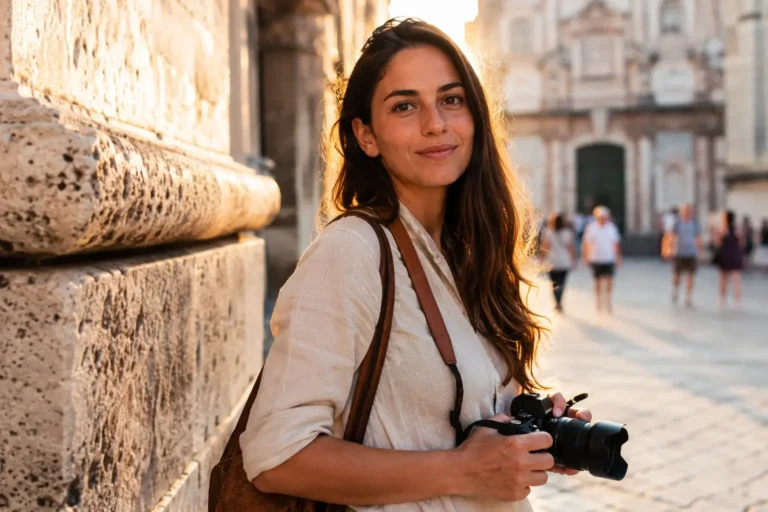
Before I became a full-time traveler, I lived in New York City. I worked a traditional 9-to-5 office job during the week. On weekends, I worked as a certified sightseeing guide. I hauled a heavy backpack all over Manhattan. It was stuffed with a bulky laptop, tangled phone chargers, a giant camera, and extra batteries. My shoulders ached by the end of every single day.
When I finally quit that office job to backpack across Europe, I made the exact same mistake. I packed way too much electronic stuff. I brought a hard shell case for my camera. I brought a huge grid board for my cables. My bag was so heavy I could barely lift it onto the trains in Italy.
I learned the hard way that heavy bags ruin the fun of a trip. You cannot enjoy exploring a new city if your back hurts. You cannot feel free if you are constantly worrying about dropping a massive bag of expensive gadgets.
Over the years, from living with a host family in Ghana to teaching English in Thailand, I perfected my packing system. I learned to ditch the giant bags. I learned to keep things incredibly simple. If you are planning a trip and wondering how to organize tech gear for travel, you are in the right place.
I am going to show you exactly how to protect your items, keep your cords neat, and keep your bag light. You do not need expensive, bulky cases. You just need a smart system. Let us break it down step by step.
Step 1: The Brutal Electronic Purge
The biggest secret to organizing your electronics is simply taking less of them. You cannot organize a messy pile of heavy gear. You have to shrink the pile first.
When I was waitressing in New York to save money for my travels, I learned a valuable lesson about carrying things. If you carry a tray with too many plates, you will drop them. The same rule applies to packing your backpack.
Do You Really Need a Laptop?
Most people pack a laptop out of fear. They think, “What if I need to send a work email?” or “What if I want to watch a movie?” Unless you are a digital nomad who must work on the road, leave the laptop at home.
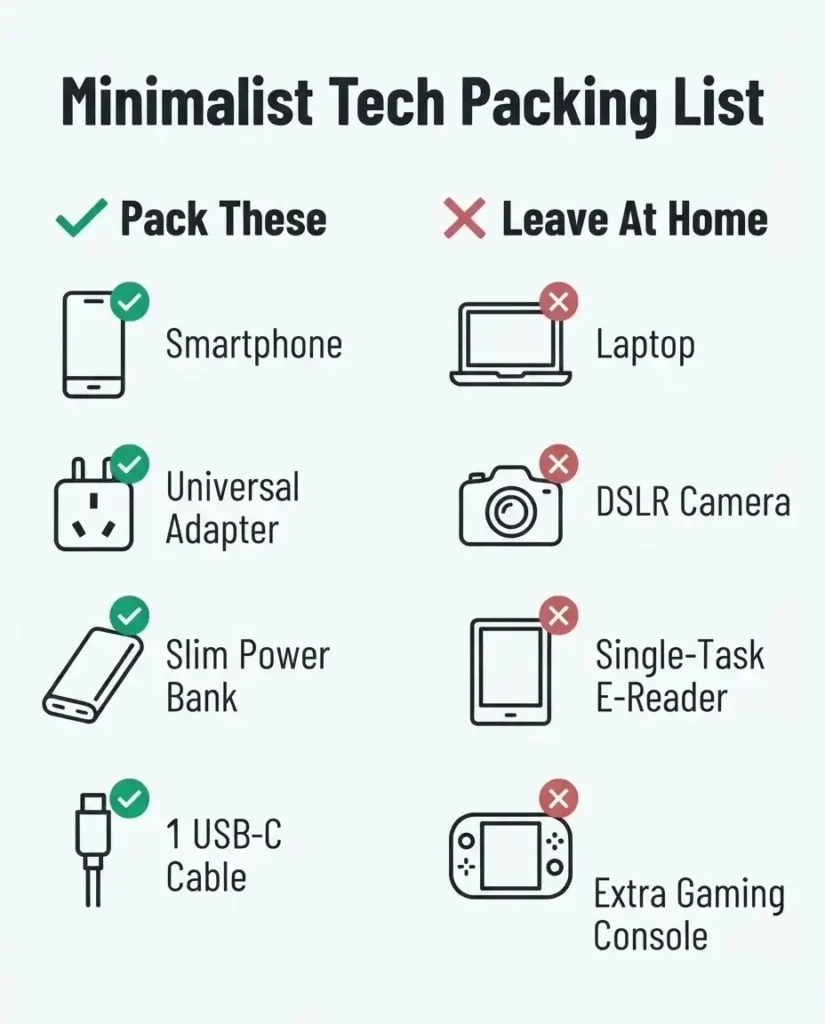
Laptops are heavy. They require big chargers. They make you a target for theft. A smartphone can do almost everything a laptop can do today. You can book flights, check bank accounts, and read books right on your phone. If you truly need a larger screen, bring a thin, lightweight tablet instead.
Ditch the Giant Camera
I love taking photos. But you do not need a massive DSLR camera with three different lenses to take good travel photos. Modern smartphones take incredible pictures. They fit right in your pocket.
If you bring a giant camera, you also have to bring a padded camera bag, extra batteries, a battery charger, and memory cards. That adds so much bulk to your luggage. Stick to your smartphone. You will feel much more present and connected to the local culture when you are not hiding behind a giant camera lens.
The “One Task, One Device” Mistake
Do not bring a device that only does one thing. Do not bring a Kindle just to read. Do not bring an iPod just for music. Do not bring a portable gaming system just to play games.

Download the Kindle app, Spotify, and a few games onto your smartphone. You just saved yourself three devices and three extra charging cables.
Step 2: Picking the Right Organizer Pouches
Once you cut down your gear, you need something to hold it. Please do not buy those heavy, hard-shell electronic cases. They take up too much room. They do not bend or squish into your backpack.
Use Soft, Flexible Pouches
I use a simple, soft zipper pouch. Actually, I use a clear, plastic-lined makeup bag. It is cheap. It is waterproof. It weighs almost nothing. Because it is clear, I can see exactly where my phone charger is without digging around.
When I taught English in Chiang Mai, I used to sit in tiny local cafes to grade papers. I would order a hot bowl of Khao Soi—a rich, creamy coconut curry noodle soup that is an absolute must-eat when you visit northern Thailand. Since I used a waterproof makeup pouch for my cords, I never worried about splashing soup on my gear.
The Built-In Pocket Trick
Before you buy a pouch, look at your main travel backpack. Does it already have small zip pockets? If so, use them! You do not need a pouch if your bag already has built-in organization.
I like to put my main phone charger in the top pocket of my backpack. That way, if I am sitting in an airport terminal and my phone dies, I can grab the charger in two seconds. I do not have to open my whole bag to find it.
Step 3: Managing Cords Without Losing Your Mind
Cords are the enemy of packing light. They tangle. They break. They get lost at the bottom of your bag. Here is how I keep them under control.
The Magic of Velcro Ties
Do not use rubber bands to tie your cords. Rubber bands snap. They also get sticky if you travel to hot, humid places.
Instead, buy a cheap pack of tiny velcro cable ties. Wrap your cord into a neat circle, then strap the velcro tie around it. It takes two seconds. It stops your cords from turning into a giant knot.
The One-Cable Rule
Look at all your devices. Does your phone use a USB-C cable? Does your tablet use a USB-C cable? Does your portable battery use a USB-C cable? Great. Bring one good USB-C cable.
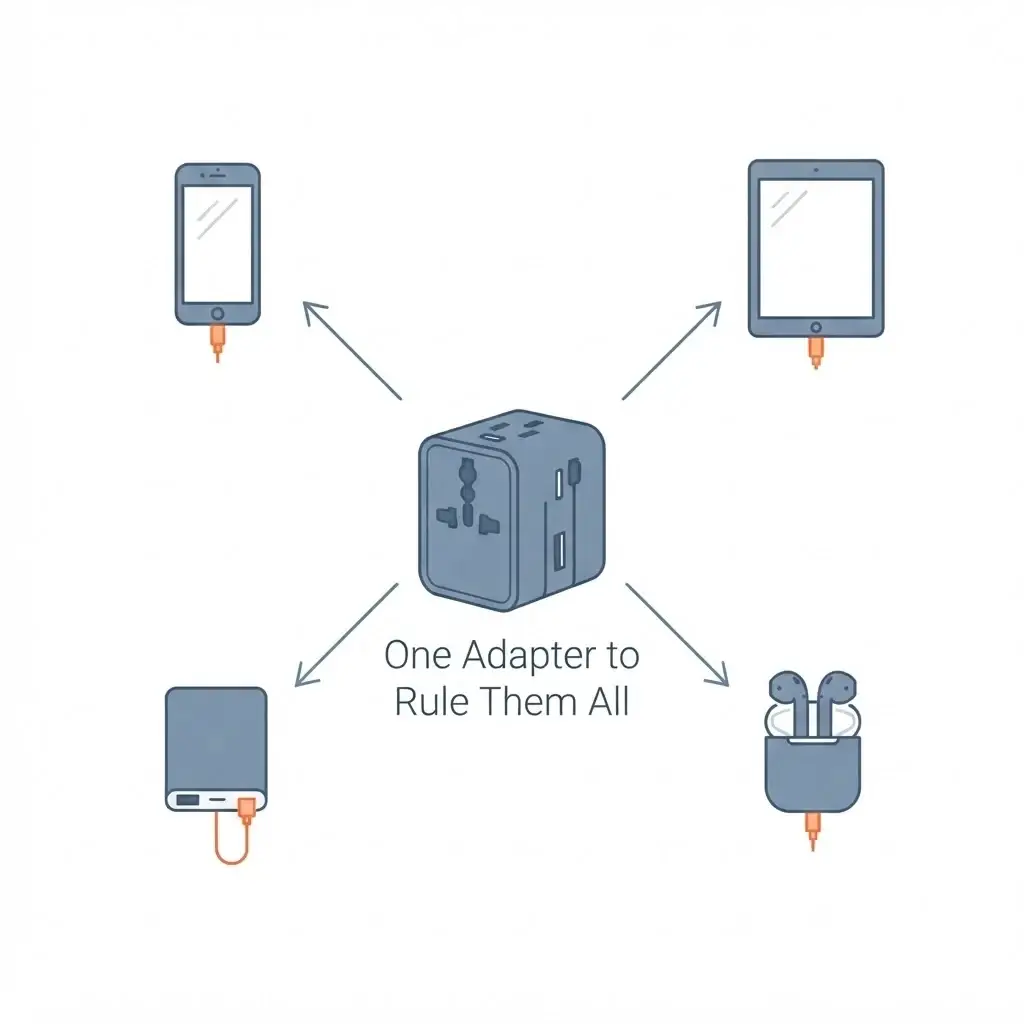
Maybe two, just in case one breaks.
You do not need a separate cable for every single device. You are only going to charge one or two things at a time anyway.
The Mighty Universal Adapter
Different countries have different wall plugs. Do not buy single adapters for every country. That takes up too much room.
Buy one universal travel adapter. Look for one that has multiple USB ports built right into the side of it. This is a game-changer.
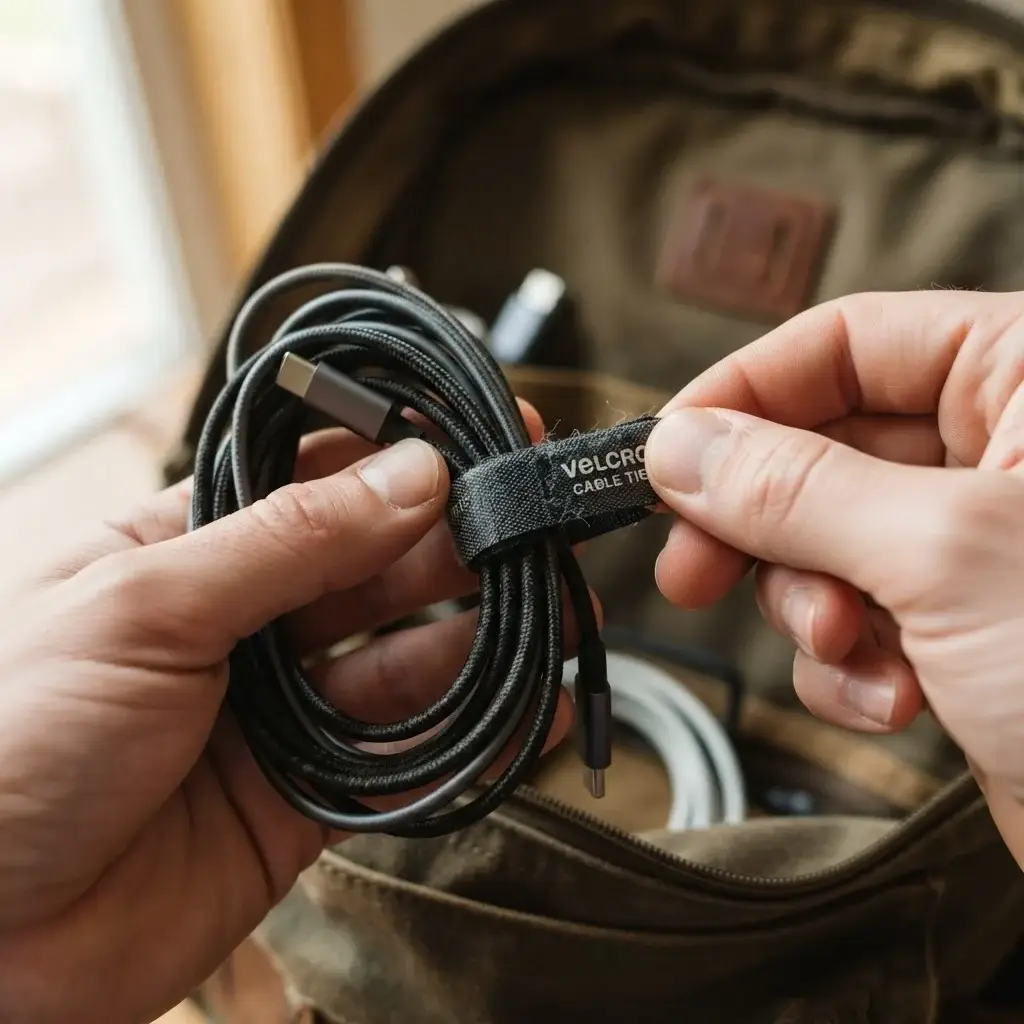
I have a small block that plugs into any wall in the world. It has three USB slots. I can charge my phone, my power bank, and my earbuds all at the same time, using just one wall outlet.
Step 4: Keeping Your Gear Safe from Weather and Thieves
When you travel, your electronics will face rain, sand, heat, and sometimes, pickpockets. You have to protect them without carrying heavy safes or hard cases.
Waterproofing on a Budget
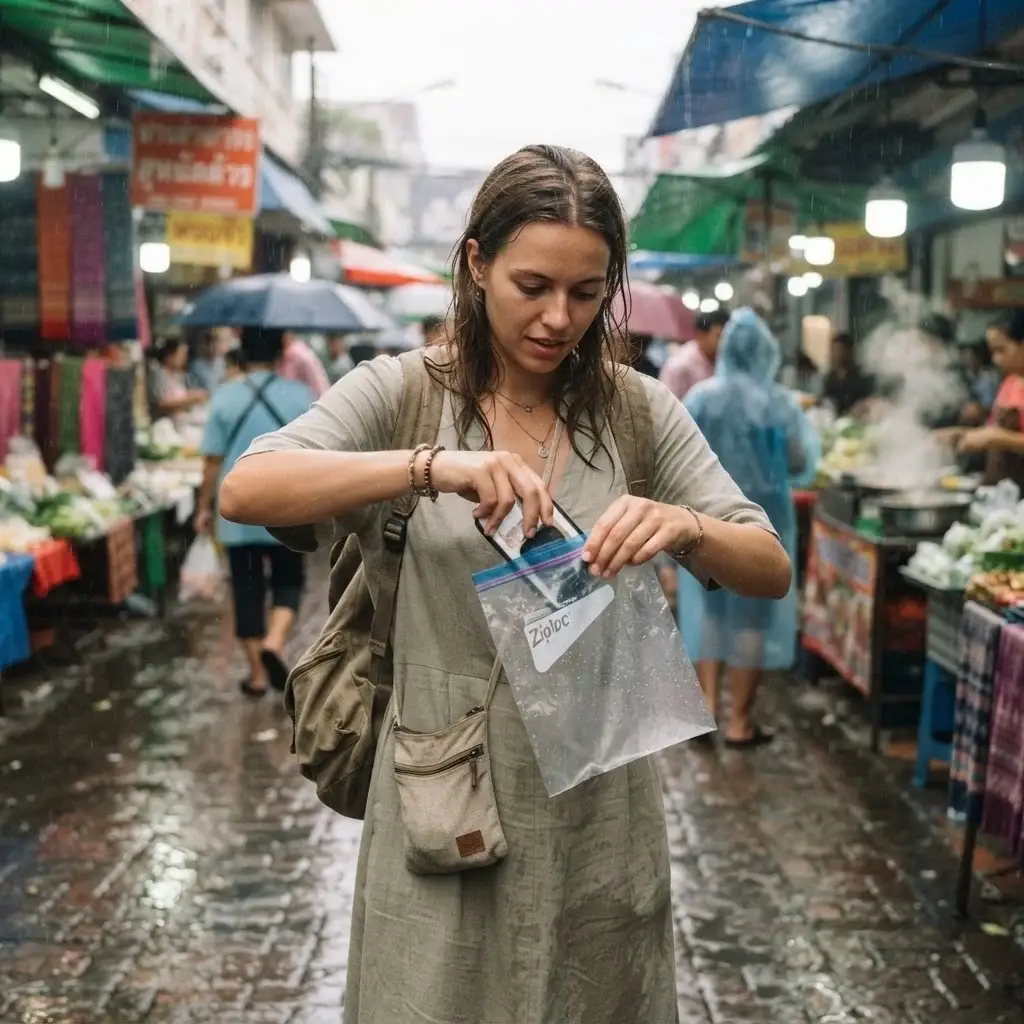
You do not need to buy expensive waterproof dry bags unless you are going on a boat trip. Heavy-duty Ziploc freezer bags work perfectly.
When I traveled through Thailand during the rainy season, it would pour down rain without warning. Whenever I stepped outside, I would slide my phone and my passport into a Ziploc bag.
If you want to know what time of year the monsoons hit, you can look up official destination guides from the Tourism Authority of Thailand website to plan your packing perfectly.
Ziploc bags weigh zero ounces. They take up zero space. They keep your gear completely dry.
Anti-Theft Tricks for Solo Travelers
As a solo female traveler, I take security very seriously. But I refuse to wear those heavy, wire-lined anti-theft backpacks. They scream “tourist” and they are heavy.
Instead, I use the “ugly bag” trick. If I am carrying my tablet or small camera to a coffee shop, I do not put it in a fancy leather bag. I put it in a cheap, worn-out canvas tote bag. Thieves do not target cheap canvas bags.
Before I go to any new country, I always check the official safety alerts from the US Department of State to see if there are specific areas where pickpocketing is common. If an area has high petty theft warnings, I leave my extra tech locked in my hotel room. I only take my phone, and I keep it in my front pocket.
If you want peace of mind, you should also look into getting insurance for your gear. You can read up on how to keep your belongings safe on the road by checking the insurance guidance and traveler safety content pages from World Nomads. Having backup coverage means you can relax and actually enjoy your trip instead of clutching your bag in fear.
Step 5: Staying Powered Up on the Go
There is nothing worse than being lost in a new city with a dead phone. You need a simple way to keep your battery full.
The Right Power Bank
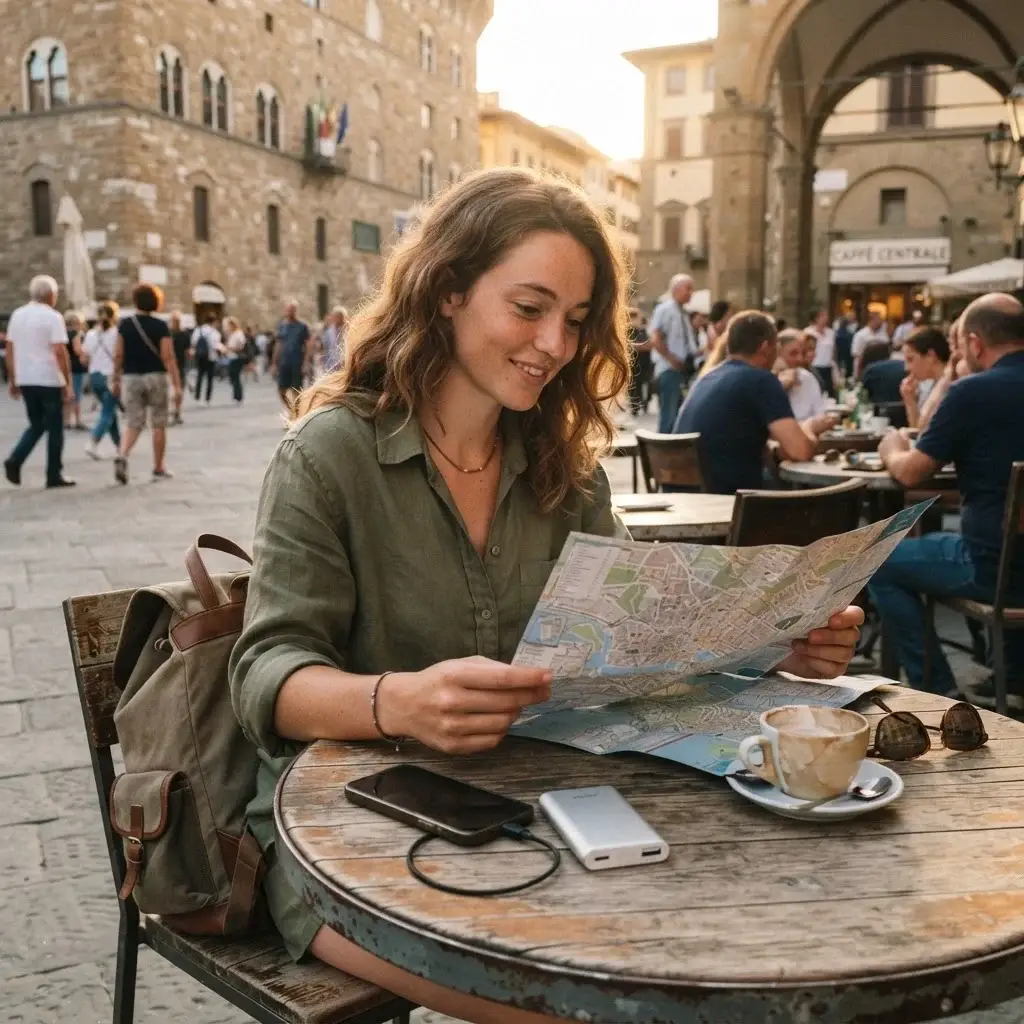
You need a portable power bank. But you do not need a massive brick that weighs two pounds. Buy a small, slim power bank. Look for one that holds about 10,000 mAh of power. That is enough to charge a normal smartphone two or three times.
It is light enough to keep in your day bag without hurting your shoulder. I plug my phone into my power bank while I am eating lunch.
Speaking of lunch, if you ever find yourself in Rome with a low battery, skip the tourist traps near the Colosseum. Walk a few blocks away into the Testaccio neighborhood. Find a small local spot and order a plate of Cacio e Pepe. It is a simple pasta with cheese and black pepper. It is life-changing. You can charge your phone from your power bank while you eat the best pasta of your life.
How to Save Battery Life
If your phone is always dying, you might be using it wrong. When you are walking around a new city, put your phone in Airplane Mode.
Your phone wastes a huge amount of battery trying to find cell towers when you move around. If you turn on Airplane Mode, your battery will last all day. You can still use the GPS map. Just make sure you download the map of the city on Google Maps while you are at your hotel on Wi-Fi. The little blue dot will still track your location, even with the data turned off.
Step 6: Using Tech to Actually Travel Better
The whole point of organizing your tech gear is so it stays out of your way. Your phone should be a tool that helps you explore, not a screen you stare at all day.
Navigating Like a Local
When you do not have heavy bags, you can move through a city like a local person. You do not need a giant paper map. You do not need to flag down expensive tourist taxis.
In many parts of Southeast Asia, the easiest way to get around safely is by using ride-hailing apps on your phone. If you are not familiar with them, you can read up on how Grab works for travelers to see how easy it is to book a scooter or a car. You type in where you want to go, and the app tells you the exact price before you get in. No haggling. No stress. You just need your phone and a small day bag.
Keep Your Phone Clean
When we travel, we touch bus handles, train poles, and street food carts. Then we touch our phones. Your phone gets really dirty on the road.
I always pack a few small, flat alcohol wipes in my tech pouch. They take up no space. At the end of the day, I wipe down my phone screen. If you are worried about getting sick on your trip, keeping your hands and your gear clean is a big deal. You can find more great tips on staying healthy abroad by checking the destination health advisories from CDC Travelers’ Health. A quick wipe-down keeps you healthy and ready for the next day.
Exploring Deep History with Just a Phone
When you travel light, you can walk for hours. A few years ago, I visited the ancient ruins of Ayutthaya in Thailand. I walked for miles in the hot sun.
Because I only had my smartphone and a tiny power bank in my pocket, I felt totally free. I did not have a heavy camera bag making me sweat. If you ever plan to visit historic places, I highly recommend you explore the UNESCO World Heritage site pages to find these amazing locations. Being able to walk through 600-year-old temples without a heavy backpack weighing you down is a beautiful feeling. You can just look at the ruins. You can just be there in the moment.
Final Thoughts on Packing Light
Traveling is not about showing off fancy gadgets. It is about personal growth, meeting new people, and stepping out of your comfort zone.
If you are scared to take your first solo trip, I promise you that packing less will make you feel braver. When you only carry a small, organized pouch of electronics, you realize how little you actually need to survive in the world. You learn to trust yourself more.
Stop waiting for the perfect time to travel. Stop overthinking your packing list. Grab your phone, a good charger, one universal plug, and a simple pouch. Pack your bag. Walk out the door. The world is waiting for you, and it is a lot easier to explore when your backpack is light.