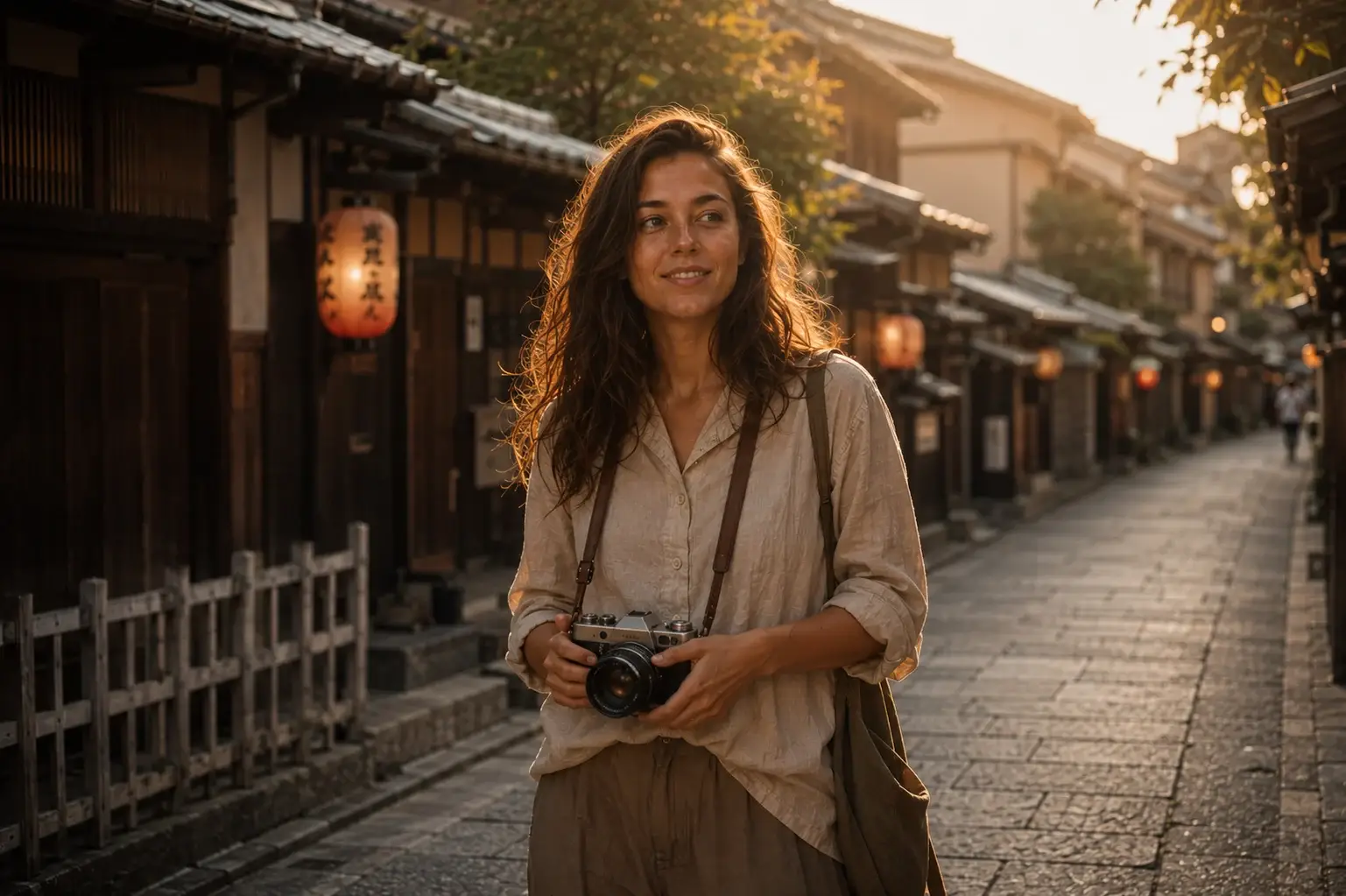
There is a moment right before you leave your apartment for a trip where everything can go wrong. For years, back when I was working a rigid 9-to-5 corporate job in a gray office building in midtown Manhattan, that moment was filled with pure panic. I used to pack for a simple two-day trip to upstate New York or a quick flight down to Washington, D.C., as if I were moving across the world. I would stuff a massive, heavy suitcase with four pairs of shoes, five extra shirts I never wore, three different jackets, and a pile of “just in case” items that did nothing but weigh me down.
I remember dragging that giant suitcase up the steep steps of the New York City subway, sweating, frustrated, and completely exhausted before my weekend had even started. It didn’t feel like an adventure. It felt like a chore.
Everything changed when I finally quit that corporate grind to build a life centered around exploration. To save up for my first long-term travels, I worked long hours waitressing and eventually spent years working as a certified sightseeing guide on the bustling streets of New York City. Later, I moved halfway across the world to teach English in Thailand.
Those jobs taught me a hard, beautiful lesson about physical items: the more stuff you carry, the less room you have for the actual experience. When you are navigating the packed night markets of Chiang Mai or guiding a group through the crowded walkways of Central Park, you quickly realize that heavy gear is a trap.
Learning how to pack for weekend getaways is not just about fitting clothes into a small bag. It is about shifting your mindset. It is about realizing that you do not need to bring your entire bedroom with you to feel safe, comfortable, and prepared. When you pack light, you move fast. You can jump off a train, skip the long luggage lines at the airport, and walk straight into a local café without a massive bag bumping against your legs. You find freedom in less gear. Let’s dive deep into exactly how to make this happen for your next short adventure.
The Psychology of Overpacking: Why We Bring Too Much
Before we touch a single piece of clothing, we need to understand why we want to overpack in the first place. Overpacking does not happen because we lack space. It happens because we feel anxious. When we stare at an empty backpack, our brains start inventing wild, worst-case scenarios.
- “What if it rains non-stop?”
- “What if I spill coffee on my only nice shirt?”
- “What if I suddenly get invited to a fancy dinner party?”
When I was a beginner traveler, these thoughts ran my life. I packed out of fear. But over the years, from backpacking solo across the rail networks of Europe to living with a local family in a small town in Ghana, I discovered a universal truth: most places in the world have stores. If you truly face an emergency, you can buy a cheap umbrella, a bar of soap, or a basic t-shirt from a local shop.
When you learn how to pack for weekend getaways, you are practicing the art of trusting yourself. You are deciding that your ability to adapt to a situation is stronger than your need to carry a heavy object “just in case.” Packing light forces you to engage with the world. If you forget toothpaste, you don’t panic; you walk into a neighborhood bodega or a small village market, smile at the clerk, and buy a local brand. Suddenly, a forgotten item becomes a small, authentic cultural interaction.
Choosing Your Container: The One-Bag Rule
The absolute first step to mastering how to pack for weekend getaways is choosing the right bag. If you use a giant suitcase, you will fill it. The human brain hates empty space inside a bag, so it will find random things to stuff into the corners. To break this cycle, you must limit your space from the very start.
For a two-day or three-day getaway, you do not need rolling luggage that belongs in the cargo hold of an airplane. You need a single, comfortable backpack or a small duffel bag that fits easily under the seat in front of you or in the overhead bin.
The Travel Backpack (28 to 35 Liters)
A 30-liter backpack is the sweet spot for a weekend trip. Look for a bag with a panel-loading design, which means it opens up flat like a suitcase rather than opening only from the top. This allows you to see all your gear at once without digging through everything to find a clean pair of socks at the bottom. Make sure the bag has wide, padded shoulder straps and a chest strap to distribute the weight evenly across your body.
The Classic Duffel Bag
If you are taking a road trip or catching a regional train, a soft-sided duffel bag works wonders. The beauty of a soft duffel is its flexibility. It can expand slightly if you buy a local souvenir, and it can be squished into tight trunk spaces or packed overhead racks. However, avoid duffels without shoulder straps if you plan to do a lot of walking from the transit station to your accommodation.
The 5-4-3-2-1 Packing System for Weekends
If you struggle with choosing what clothes to bring, you need a strict template. I use a modified version of the famous 5-4-3-2-1 rule, tailored specifically for short weekend trips.
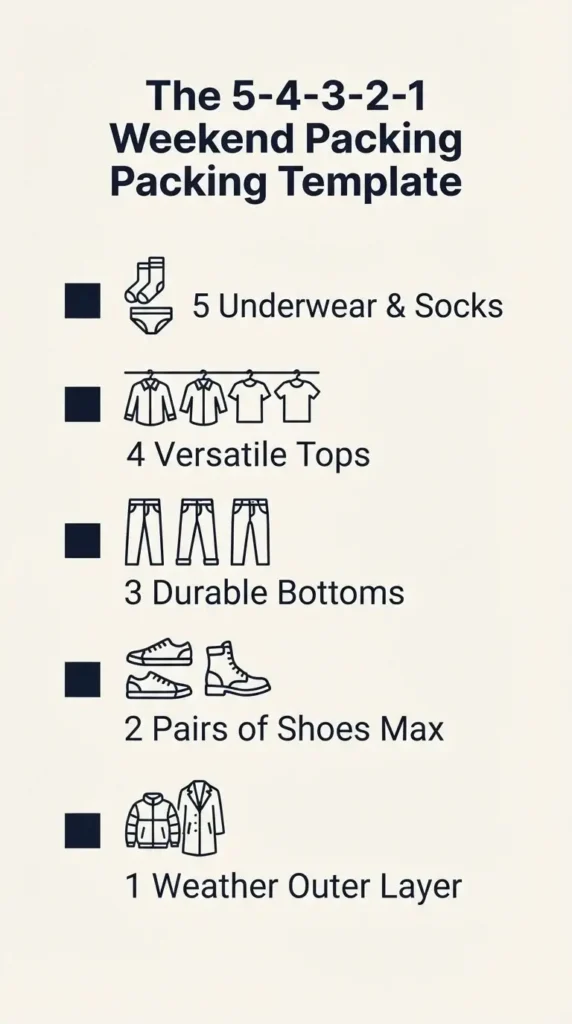
This system ensures you have fresh clothes for every day while keeping your bag incredibly light.
Here is how the breakdown works for a typical three-day, two-night weekend getaway:
- 5 Pairs of Underwear and Socks: Always bring a couple of extra pairs. They take up almost zero space, and having fresh socks can completely change your mood after a long day of walking through historic city centers.
- 4 Tops: This includes a mix of casual t-shirts, a light button-down shirt, or a breathable blouse. Choose items that can be layered easily if the temperature drops.
- 3 Bottoms: This includes the pants, jeans, shorts, or skirts you choose to bring. You should wear your heaviest pair on the transit day to save space inside the bag.
- 2 Pairs of Shoes: One comfortable pair for walking, and one slightly dressier pair for evenings out. Never bring more than two pairs of shoes for a weekend trip.
- 1 Outer Layer: A versatile jacket, sweater, or raincoat depending on the local weather forecast.
The Power of the Monochrome Palette
The secret to making this system work is color coordination. Every single top you pack must match every single bottom. If you pack a bright neon shirt that only goes with one specific pair of pants, leave it at home. Stick to neutral colors like black, navy blue, gray, white, and olive green. You can always add a pop of color with a small scarf or light accessory. By mixing and matching these few items, you can create multiple completely different outfits without adding bulk to your bag.
Smart Footwear Management: The Ultimate Space Saver
Shoes are the number one enemy of a light backpack. They are bulky, heavy, dirty, and impossible to compress. When people ask me how to pack for weekend getaways without running out of room, my answer always starts with footwear.
Rule 1: Wear Your Heaviest Pair
If you are planning to go hiking or walking through cobblestone streets, wear your sturdy boots or supportive sneakers on the plane, bus, or car. Do not pack them. The shoes inside your bag should be your lightest, flattest option, such as simple canvas slip-ons, flat sandals, or low-profile dress shoes.
Rule 2: Utilize the Inside of Your Shoes
The interior of a shoe is wasted space if it sits empty inside your bag. Roll up your socks tightly and stuff them deep into the toes of your packed shoes. This does two helpful things at once: it uses hidden space and it helps your shoes keep their natural shape so they do not get crushed by your other gear.
Rule 3: Use a Shoe Bag
Never let the dirty soles of your shoes touch your clean clothes. Slip your second pair of shoes into a thin, lightweight shoe bag, a reusable grocery bag, or even an old shower cap. Place them along the spine or the very bottom of your backpack to keep the weight balanced properly against your back.
Organizing with Packing Cubes: A Game-Changer
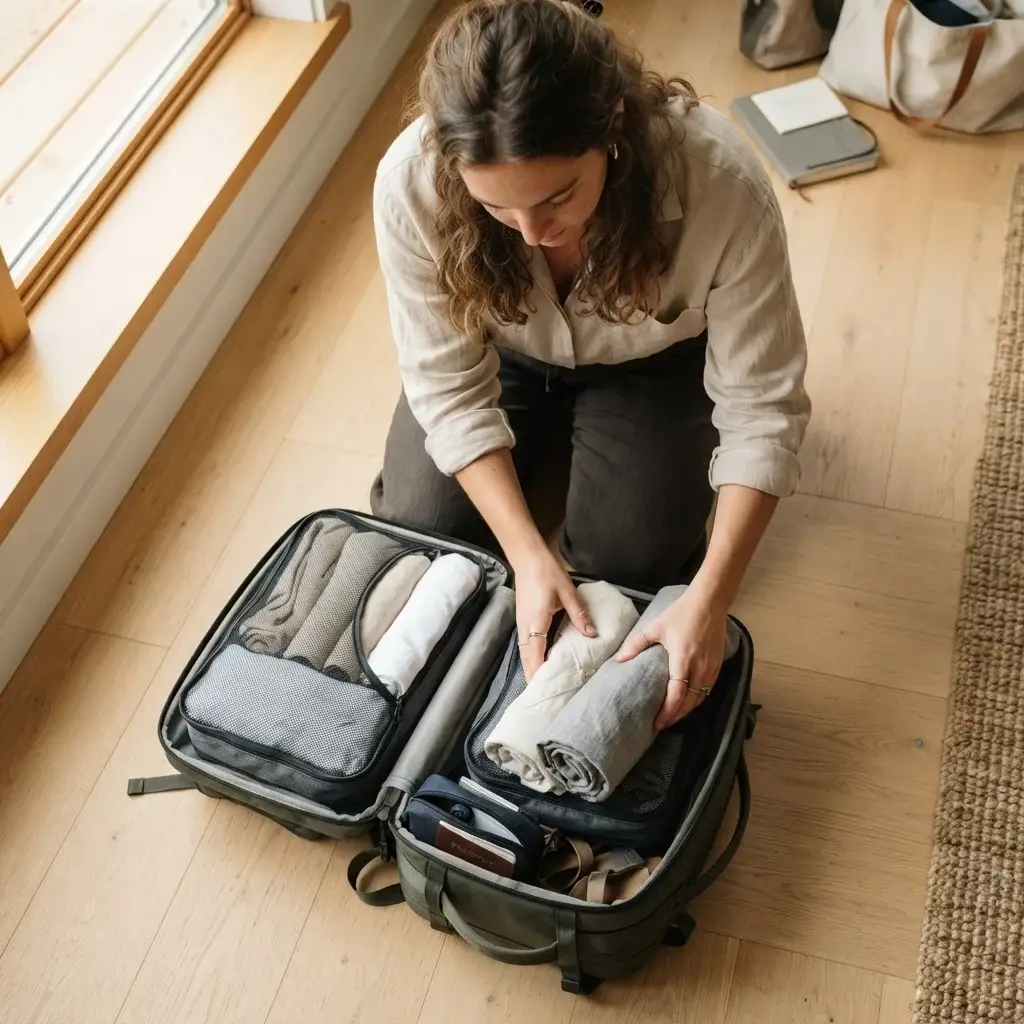
If you are still placing loose clothes directly into your luggage, you are missing out on the greatest travel tool ever invented: packing cubes. These small, zippered fabric containers act like portable drawers for your backpack. They keep your gear compressed, organized, and remarkably easy to access.
How to Use Cubes Efficiently
Instead of folding your clothes flat like you do for a bedroom dresser, you should roll them into tight, compact cylinders. Rolling removes the air pockets between layers of fabric and prevents deep wrinkles. Once rolled, line your clothes up side-by-side inside the packing cube until it is full and firm.
For a weekend getaway, you only need two cubes:
- Medium Cube: For your main clothing items like tops, pants, and your outer layer.
- Small Cube: For your underwear, socks, and sleepwear.
When you arrive at your small hostel room, your local guesthouse, or a cozy cabin, you do not need to unpack everything and scatter your clothes across the room. You simply pull the two cubes out of your bag, place them on a shelf, and your unpacking is instantly done. It keeps your headspace clear and your physical environment completely organized.
Streamlining Your Toiletries and Personal Care
When I worked as a sightseeing guide in New York, I often saw tourists carrying massive, plastic vanity cases filled with full-sized bottles of shampoo, body lotion, and hair gels for a simple two-day visit. It was exhausting just watching them carry it. Liquid products are incredibly heavy because they are mostly made of water.
To master how to pack for weekend getaways, you must embrace the TSA three-ounce rule, even if you are not flying. Nobody needs an 8-ounce bottle of conditioner for a 48-hour trip.
Transition to Solid Products
The easiest way to cut down on weight and eliminate the risk of an explosion inside your bag is to switch to solid toiletries. Today, you can easily find high-quality solid shampoo bars, solid conditioner bars, and solid body bars. They last for months, require no plastic packaging, and can be slipped into a tiny wax cloth bag.
The Tiny Container Hack
If you prefer your liquid products, buy a set of small, reusable silicone squeeze bottles. For things like face creams or targeted skin treatments, use clean contact lens cases. Each side of a contact lens case can hold a three-day supply of lotion or cream, taking up less space than a matchbox.
Health and Safety Essentials
While we want to pack light, we must never compromise on basic health necessities. When preparing your small medical kit, it is always smart to check global health recommendations. I always recommend reviewing the comprehensive medical advisories on the CDC Travelers’ Health site to see if your destination requires specific precautions, over-the-counter remedies, or regional health alerts. For a basic weekend trip, a tiny clear pouch containing a few bandages, some ibuprofen, motion sickness pills, and a small tube of antiseptic cream is all you need.
Handling Electronics and Entertainment
We live in a digital world, and it is tempting to pack a laptop, a tablet, an e-reader, a camera, and three different pairs of headphones for a weekend getaway. But ask yourself honestly: are you going away to look at a screen, or are you going away to explore a new place?
The Minimalist Tech Kit
For a weekend trip, your smartphone can handle almost everything. It is your camera, your map, your boarding pass, and your book reader all in one. Unless you are a digital nomad who absolutely must work on the road, leave the heavy laptop at home on your desk.
Your tech kit should consist of:
- Your smartphone.
- One universal charging brick with multiple USB slots.
- The necessary cords to charge your devices.
- A small, portable power bank (external battery).
When you are out exploring all day, using your phone to navigate public transit, check opening times, and take photos can drain your battery rapidly. Having a small power bank in your pocket ensures you never find yourself stranded in an unfamiliar neighborhood with a dead phone. Keep all these cords and items organized inside a single, small zippered pouch so they do not tangle up with your clothes.
Case Study: A Weekend in Historic Kyoto, Japan
To see how this packing philosophy works in the real world, let’s look at a hypothetical weekend itinerary to a culturally rich destination like Kyoto, Japan. Imagine you are taking a train from Tokyo on a Friday afternoon and returning Sunday evening. Kyoto is a city filled with ancient wooden temples, peaceful stone gardens, and traditional tea houses. You will be doing an immense amount of walking, stepping on and off trains, and entering traditional spaces where you must remove your shoes.
The Packed Bag Setup
You choose a 30-liter backpack. Inside, you have your medium packing cube with two pairs of lightweight linen trousers, three breathable linen tops, and a light cardigan for cool evening walks along the Kamo River.
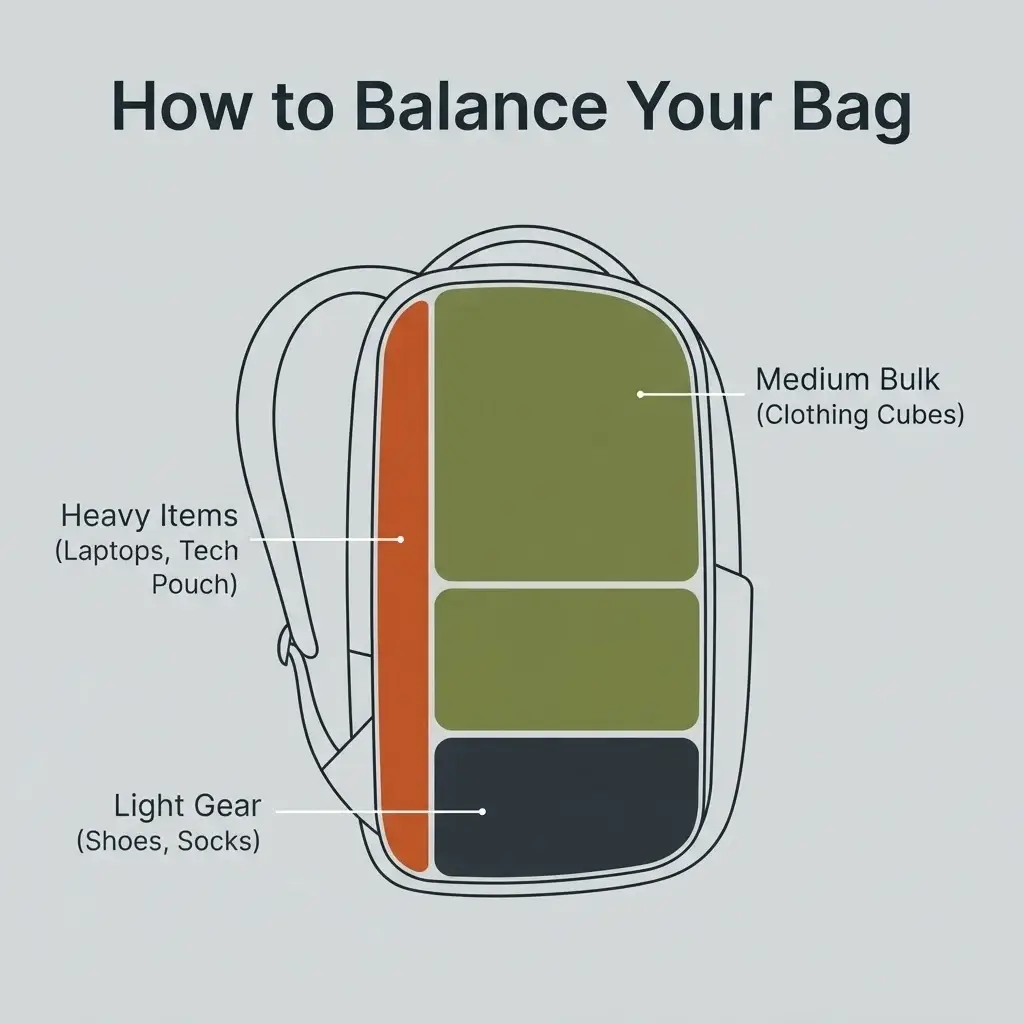
Your small cube holds your underwear and three pairs of clean, high-quality socks with no holes—essential since you will be removing your shoes frequently at temple entrances.
Navigating Local Food and Culture
On Saturday afternoon, you walk through the historic Gion district, hoping to try authentic local dishes like Kitsune Udon (thick wheat noodles in a hot broth topped with sweet fried tofu) or fresh Yaju (Kyoto-style sushi). Because you are carrying only your lightweight backpack, you do not need to hunt for a station coin locker or drag a noisy rolling suitcase over the delicate historic streets. You can easily slip into a tiny, narrow basement noodle shop, slide your backpack under your small wooden stool, and order your meal without causing a disruption or taking up valuable space in the intimate restaurant.
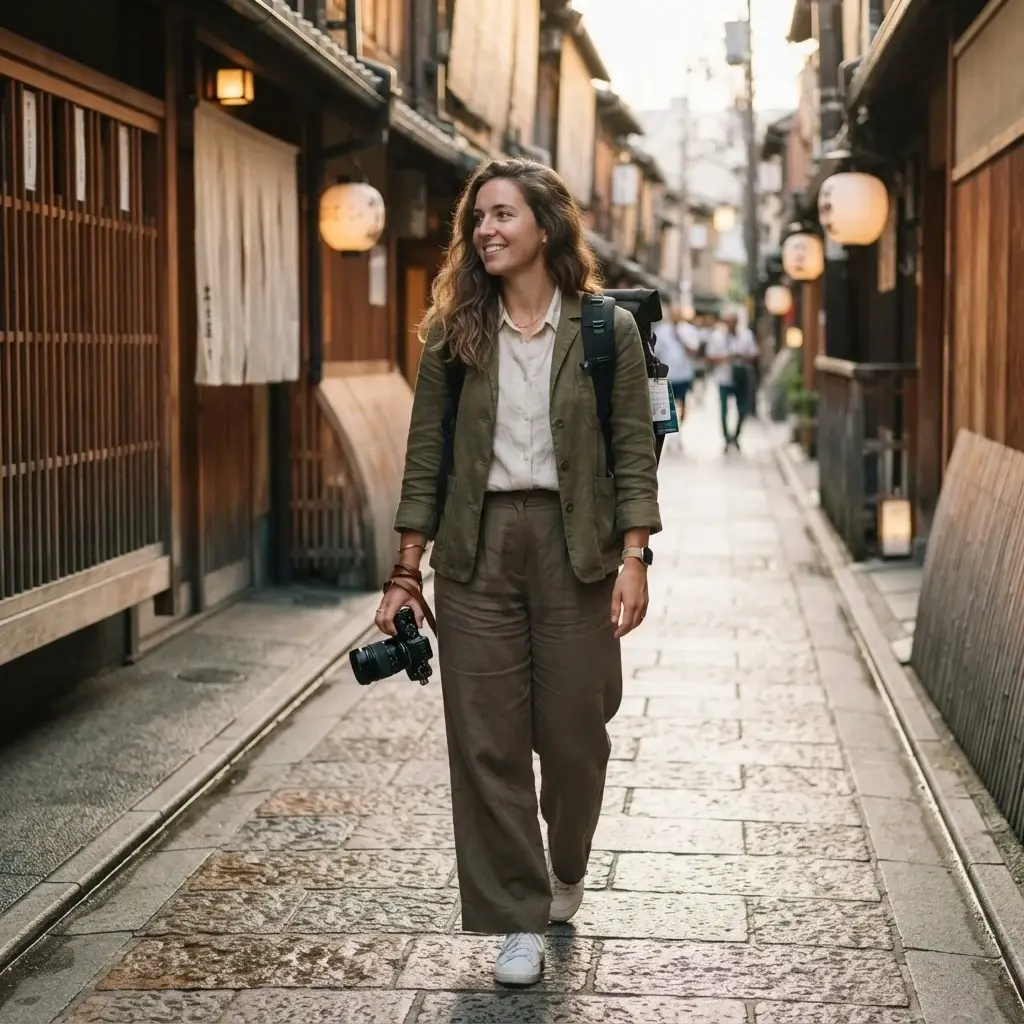
When packing for destinations that hold profound cultural and architectural value, it is highly rewarding to research the history before you arrive. To plan your daily walking routes around the city’s most significant structures, you can explore the official UNESCO World Heritage cultural properties mapping to read about the specific preservation history of Kyoto’s ancient monuments. This deepens your understanding of the local spaces you are moving through and helps you pack appropriate clothing that respects the spiritual nature of these historical locations.
Case Study: Exploring the Vibrant Streets of Bangkok, Thailand
Let’s look at another destination where packing light is a massive advantage: Bangkok, Thailand. When I was teaching English abroad, I frequently took weekend trips to this energetic metropolis. Bangkok is a beautiful sensory overload of gleaming golden temples, bustling canal boats, and world-famous street food stalls. The climate is tropical, hot, and consistently humid.
Adapting to the Tropical Climate
If you are learning how to pack for weekend getaways to hot climates, your priority is fabric selection. Pack lightweight, loose-fitting garments made of natural fibers like thin cotton, linen, or high-performance moisture-wicking fabrics.
For a weekend in Bangkok, your bag should contain:
- Three lightweight t-shirts or short-sleeve button-downs.
- One pair of loose, long cotton pants or a long skirt (needed for temple entry).
- A thin, breathable rain poncho or compact umbrella for sudden tropical downpours.
- Your toiletries, featuring a high-quality, high-SPF sunscreen and a small bottle of mosquito repellent.
Cultural Etiquette and Moving Around
When visiting holy sites like the Grand Palace or Wat Arun, local customs require your shoulders and knees to be fully covered. If you pack heavy jeans, you will melt in the intense heat.
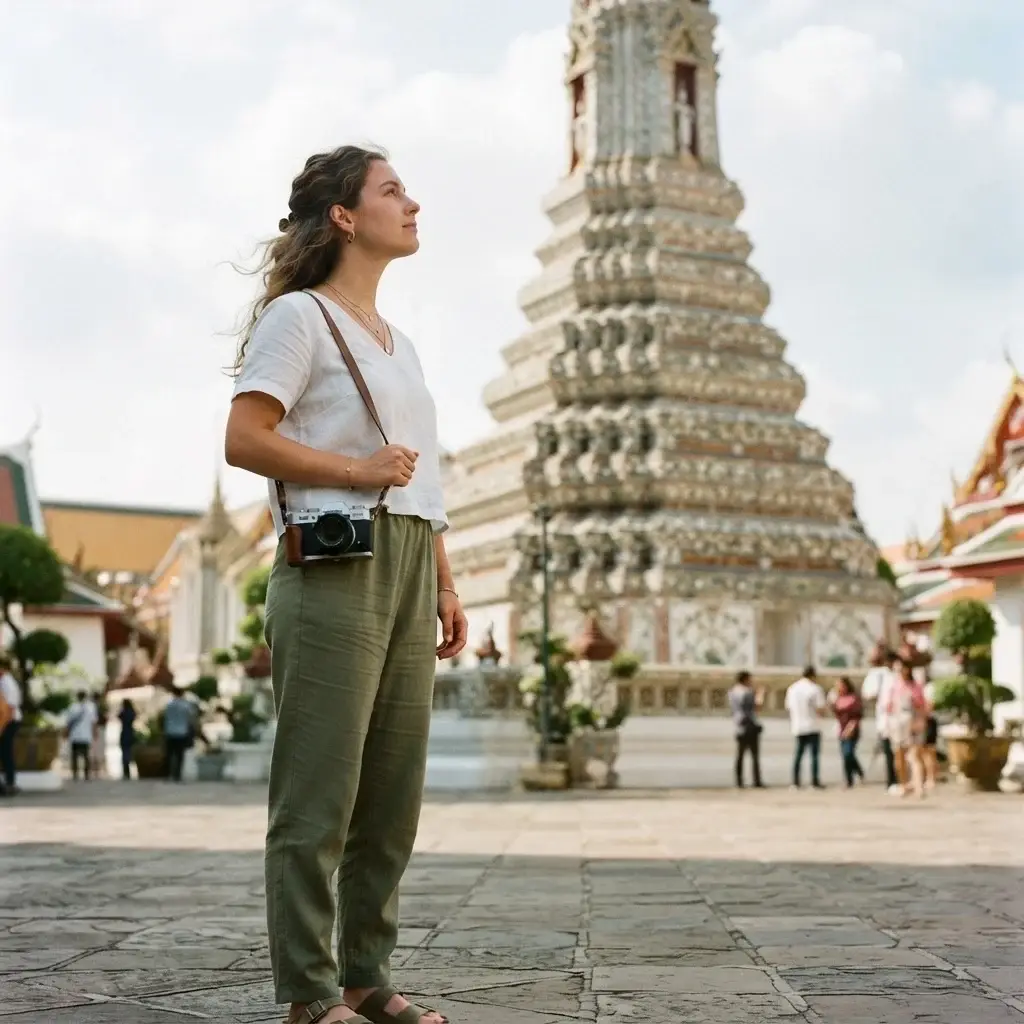
Instead, wearing loose, breathable cotton trousers keeps you perfectly cool while showing deep respect for local spiritual traditions.
Navigating a massive city can feel intimidating to a first-time solo traveler, so having a concrete plan for transportation can build immense confidence. To make your journey across the city smooth and stress-free, it helps to understand how modern transport apps operate in Southeast Asia. I highly recommend reading through the official Grab app guide for international travelers to see how you can easily hail safe, metered rides, book motorbike taxis, or order local meals directly to your guesthouse door using your smartphone. This eliminates the anxiety of negotiating fares with drivers in a language you don’t speak yet, allowing you to move through the city like a seasoned local.
The Pre-Departure Edit: The “Discard Pile” Ritual
The final step of my packing routine is the most critical. It is called the Pre-Departure Edit. Once you have laid out everything you plan to pack on your bed or floor, I want you to step back, take a deep breath, and look at the pile with a critical, honest eye.
Take your hand and physically remove one-third of the items you have laid out.
Look for the duplicates. If you have packed three casual gray t-shirts, remove two of them. If you have packed a pair of heavy jeans “just in case” the weather turns cold, but the forecast says it will be sunny and 75 degrees, put the jeans back in your closet.
This ritual requires discipline, but it is incredibly rewarding. As you physically remove the unnecessary items from your pile, you can almost feel the weight lifting off your shoulders.
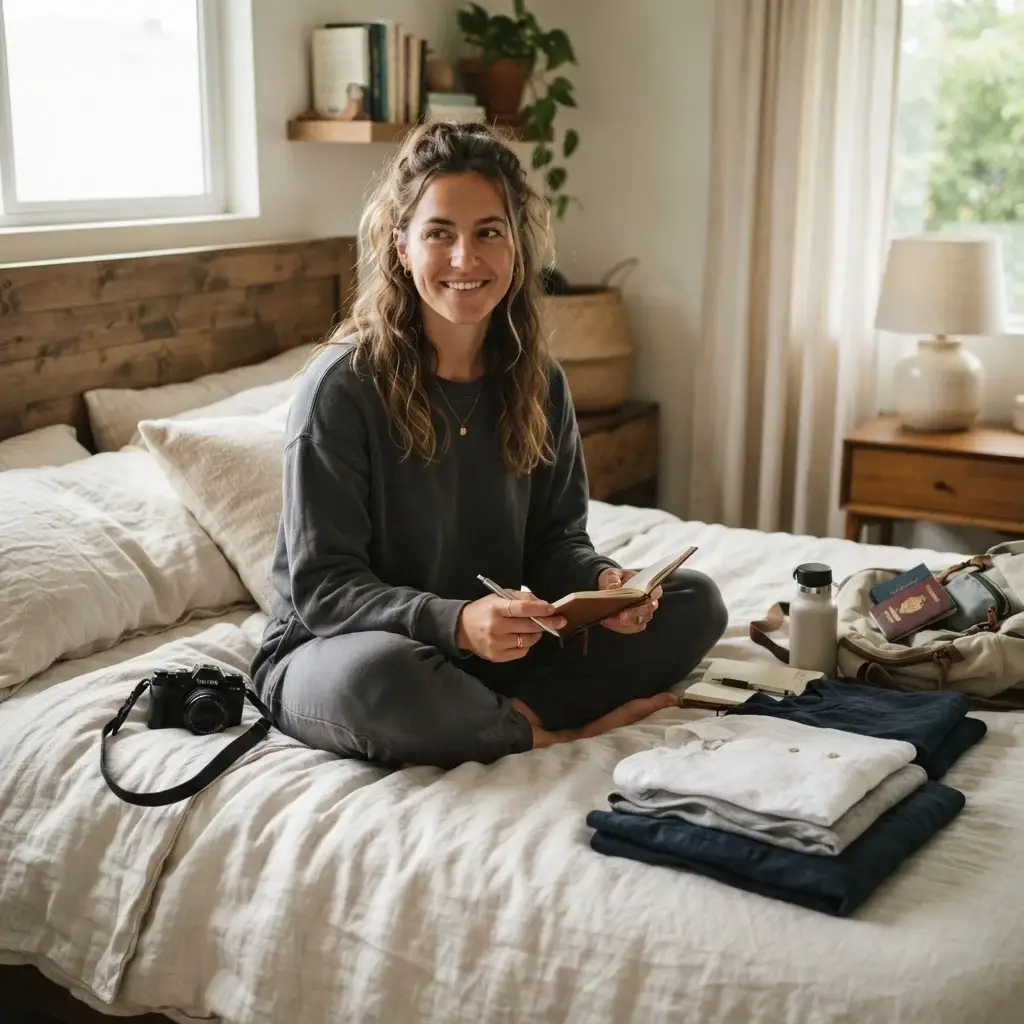
You are choosing experience over baggage. You are choosing to move through the world with ease, agility, and open-minded curiosity.
Travel Safety, Prep, and Peace of Mind
Packing light gives you a physical sense of security. When you can keep your single bag directly on your lap during a crowded bus ride or under your seat on a train, you eliminate the anxiety of watching your luggage get tossed into a dark cargo hold or left unattended on a distant baggage rack. You are in total control of your belongings at all times.
However, real peace of mind comes from combining a light bag with smart, administrative preparation. Before you set out on any trip, make sure you have digital copies of your passport, your identification, and your travel insurance documents saved securely on your smartphone for offline access. It is also highly beneficial to check international entry guidelines to ensure you do not face unexpected delays at a border. For any upcoming trip across international lines, you should always check the latest entry rules and travel advisories on the US Department of State Travel website to verify visa rules, passport expiration requirements, and local safety updates.
By keeping your physical gear minimal and your digital preparation thorough, you eliminate the unnecessary background noise of travel anxiety. You stop worrying about your stuff and start engaging with the world around you. You begin to notice the architectural details on old buildings, the smell of fresh street food cooking on a corner, and the kindness of the locals who point you in the right direction when you look lost. That is the true magic of travel, and it all starts when you choose to leave the heavy gear behind.