When I first started traveling, I was a classic over-packer. I remember standing in my New York City apartment, staring at a massive suitcase that felt like it weighed more than I did. I was worried I wouldn’t have the right outfit for a rainy day in London or a sudden dinner invitation in Paris. I thought more clothes meant more options, and more options meant feeling more secure.
I was wrong.
After years of backpacking solo through Europe, teaching English in Thailand, and living out of a carry-on, I learned the hard way that the weight of your bag is the weight of your stress. When you are traveling alone, you are your own porter. You are the one hoisting that bag onto trains, navigating cobblestone streets, and squeezing into tiny hostel elevators.
The secret to a successful solo trip isn’t a bigger bag—it’s knowing how to roll clothes for more packing space. Once I mastered this simple, game-changing technique, my entire relationship with travel shifted. I stopped worrying about baggage fees and started focusing on the street food I was about to eat or the ancient ruins I was planning to visit. Here is how you can do it, too.
Why Rolling Beats Folding Every Single Time
If you grew up watching your parents fold clothes into neat, flat stacks, you probably think that’s the only way to do it. But folding is the enemy of packing efficiency. When you fold, you create large, flat surfaces that take up significant space and, more importantly, create deep creases.
Rolling clothes is fundamentally different. It compresses the fabric, pushing out the air trapped between the threads. When you roll a shirt or a pair of jeans, you aren’t just saving space; you are creating a structure that stays firm and prevents wrinkles.
I think of my suitcase like a puzzle. When I fold, I have a bunch of awkward, flat rectangles that don’t fit well together. When I roll, I have small, firm cylinders that can be tucked into every nook and cranny of my backpack. This is especially vital when you are moving between climates. When I was prepping for a trip where I had to balance hot, humid days in Bangkok with cooler evenings in the mountains, I used these rolling techniques to keep my bag slim enough to walk through crowded night markets without needing to check it. If you are planning a trip to Southeast Asia, it is always a good idea to check the official Tourism Authority of Thailand site to understand the seasonal weather patterns so you know exactly which layers you actually need to pack.
Step-by-Step: The Master Rolling Technique
Rolling clothes isn’t just about grabbing a shirt and twisting it into a ball. There is a method to the madness. If you do it poorly, you will end up with messy piles that unspool the moment you unzip your bag.
The Standard T-Shirt Roll
Start by laying your shirt flat on a clean surface. Smooth out all the wrinkles. Fold both sleeves inward toward the center. Then, fold the shirt in half vertically. Now, starting from the neckline, begin rolling the shirt down toward the hem. Keep the roll tight. You want it to be firm, like a burrito. If you do it right, the collar remains neatly tucked inside, and the final roll is small and sturdy.
The Trouser and Jean Roll
Pants take up the most room in any bag. To roll them, start by folding them in half lengthwise, matching the legs together. Tuck the crotch flap inward so you have a straight line. Now, start rolling from the waistband down to the cuffs. You will end up with a heavy-duty cylinder that sits perfectly at the bottom of your backpack.
The “Bundle” Variation
If you are worried about wrinkles in dressier fabrics, I use a variation called the bundle. Instead of rolling individual items, you lay them flat over one another in a cross shape, then roll them together. This is a bit more advanced, but it keeps the core of your clothes wrinkle-free for those times you need to look a bit more polished for a local cultural event.
Packing for Safety and Health
When I am planning a solo trip, I always think about safety and health long before I think about my wardrobe. Packing light gives you the agility to get out of uncomfortable situations quickly. However, packing light doesn’t mean leaving behind the essentials.
Before you even start rolling your clothes, check the health requirements for your destination. I always spend time on the CDC Travelers’ Health website to see if I need specific vaccines or if there are food safety warnings for the region. It’s better to have a slightly larger medical kit than a wardrobe full of outfits you will never wear. If you have your clothes rolled tightly, you will find you have plenty of room left over for those crucial health items and a good pair of walking shoes.
How to Organize Your Rolled Clothes
Once you have rolled everything, the way you pack them into your bag matters just as much as the roll itself. I use the “bottom-up” strategy.
- The Base Layer: Place your heaviest, largest rolls (like jeans or hoodies) at the bottom of the bag. This provides a stable base.
- The Middle Layer: This is for your t-shirts and lighter tops. They act as a cushion.
- The Top Layer: This is where you put your most delicate items or things you need immediate access to, like a light rain jacket.
One of the biggest mistakes beginners make is putting their shoes in the middle of their clothes. Your shoes are dirty. They belong at the very bottom or in a separate compartment. I personally love using shoe bags to keep the dirt away from my clean, tightly rolled shirts. If you are traveling through regions with diverse landscapes, you might want to review the US Department of State Travel safety ratings for your specific route so you know exactly what kind of terrain you will be navigating. Knowing if you are heading into a busy city center or a remote rural area helps you decide if you need heavy boots or lighter slip-ons.
Secrets from My Time as a Sightseeing Guide
Back when I was working as a sightseeing guide in New York, I saw thousands of tourists struggle with their luggage. I noticed that the people who were the happiest and most engaged were the ones who were unburdened. They weren’t constantly adjusting their straps or worrying about lost bags.
One of my secret tips is to use packing cubes in addition to rolling. If you roll your clothes and then slide those rolls into a compression packing cube, you have effectively created a vacuum-sealed effect without the plastic bags. It is a game-changer.
When you arrive in a new city, don’t waste time looking for a taxi or an expensive transfer. In many parts of the world, apps like Grab have revolutionized how solo travelers move around. Understanding how Grab works for travelers can save you so much stress; you can simply input your destination, see the price upfront, and track your driver. It makes life so much easier when you aren’t struggling with oversized, poorly packed luggage.
Maintaining the Roll on the Road
You will inevitably have to take things out of your bag. This is where most people lose their organization. My rule is simple: if you take it out, you have to roll it back up before you put it back.
Don’t just shove it into a corner. If you do that, you lose the space-saving benefit of the roll. Keep your bag organized daily. It takes an extra minute in the morning, but it saves you hours of frustration when you are trying to find a clean pair of socks in the dark at 5:00 AM before a bus ride.
Navigating Culture and Packing
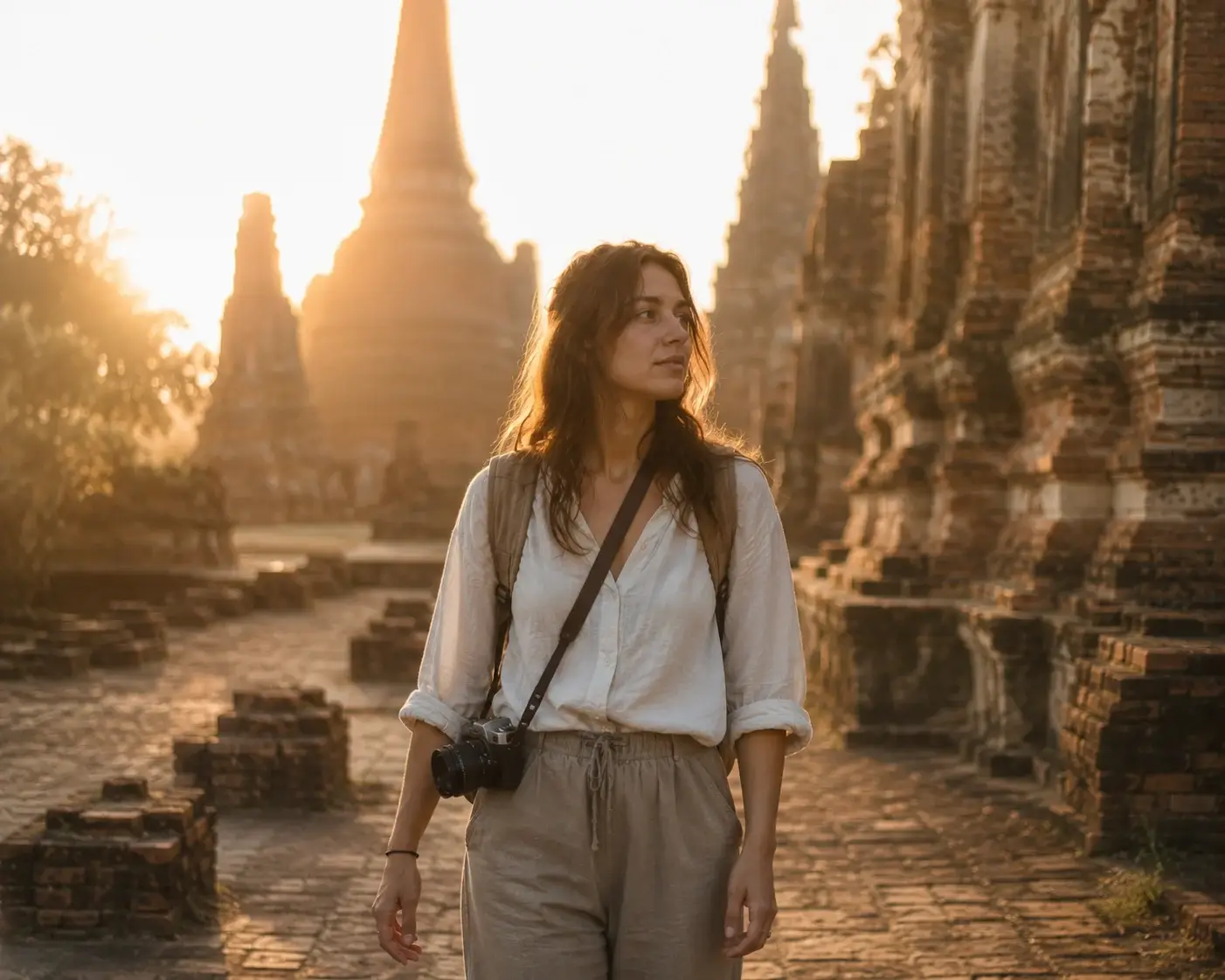
Traveling isn’t just about moving from Point A to Point B. It’s about the people you meet and the cultures you encounter. In many countries, there is a specific dress code for visiting religious sites or UNESCO World Heritage sites. For instance, when you visit a UNESCO World Heritage site like the temples in Ayutthaya or the historic centers of Europe, you are often required to cover your shoulders and knees.
If you have learned how to roll your clothes effectively, you can fit a lightweight sarong or a long, breathable skirt in your bag without it taking up space. This allows you to stay culturally respectful without having to pack a bulky, extra wardrobe. It’s about being prepared, not being loaded down.
A Note on Solo Travel Insurance
I cannot stress this enough: travel insurance is not a luxury; it is a necessity for solo travelers. When you are on your own, having a safety net is what allows you to be truly adventurous. Before you leave, read up on insurance guidance and traveler safety content to ensure you have the coverage that fits your specific style of travel. Whether you are trekking through the mountains or exploring a bustling metropolis, having that peace of mind changes your entire outlook. You aren’t just a tourist anymore; you are a traveler who is confident in your safety and prepared for the unexpected.
The Mental Shift
Learning how to roll clothes for more packing space is, at its core, a practice in letting go. When I left my corporate job, I felt like I needed to keep hold of all the “stuff” that defined my life in New York. I had to learn that the memories I was creating in Ghana or Thailand were far more valuable than the contents of my closet.
Every time I roll my clothes, I am reminded that I only need a few things to be happy: a comfortable pair of shoes, some versatile layers, and an open heart. When you travel solo, you realize that the world is much friendlier than you think. You don’t need to pack for every “what if” scenario. You just need to pack for the person you are today and the person you want to become tomorrow.
So, the next time you are preparing for a journey, don’t reach for that extra-large suitcase. Grab your backpack, lay out your clothes, and start rolling. You will be surprised by how much space you have—and by how much more freedom you feel when you finally head out the door. The world is waiting for you, and it’s much easier to say yes to adventure when your bag is light and your mind is clear.