
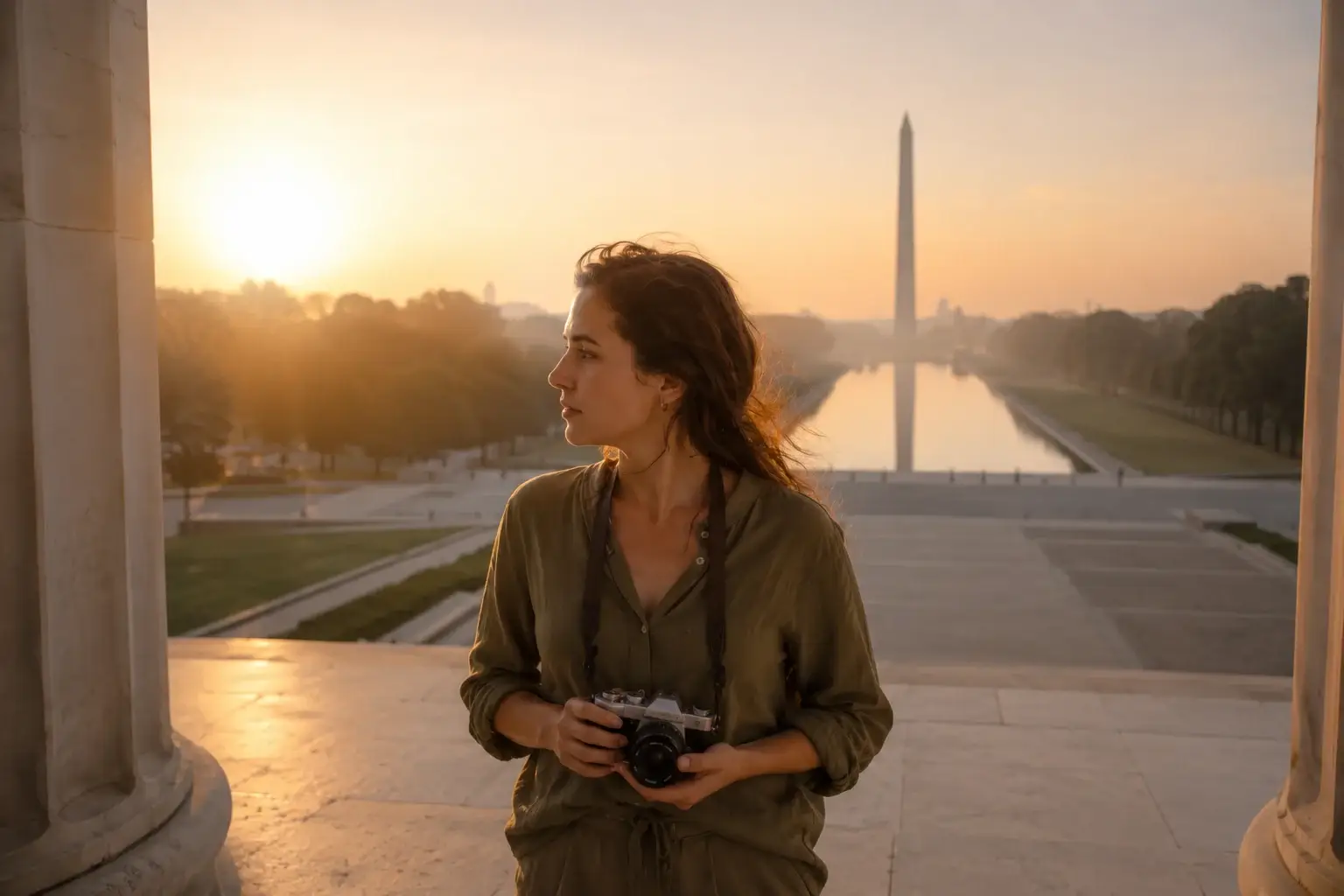
For years, I sat at a gray cubicle in New York, staring at a computer screen and counting down the minutes until 5:00 PM. I had a traditional office job that paid the bills, but it suffocated my spirit. My mind was always somewhere else—back when I was backpacking solo across Europe, living with a host family in Ghana, or waitressing extra shifts to save up for my next plane ticket.
When I finally broke free from that rigid corporate routine to become a full-time traveler, I promised myself one thing: I would never rush through a destination just to cross it off a bucket list.
That brings us to Washington, D.C.
Our nation’s capital is a place that people often treat like a frantic marathon. They arrive with a massive checklist, sprint from the Lincoln Memorial to the Capitol building, elbow their way through crowded museum lines, and leave with blistered feet and zero actual connection to the city.
But it does not have to be that way.
I used to work as a certified sightseeing guide in New York City, so I know exactly how exhausting urban travel can be if you do not have a smart strategy. You can absolutely experience the deep history, vibrant neighborhoods, and incredible food scene of this city in just two days without feeling like you are running a race.
This deep-dive guide will show you exactly how to visit Washington D.C. in a weekend at a slower, more meaningful pace that leaves you feeling inspired instead of depleted.
The Golden Rules of Slow Travel in the Capital
Before we talk about what to do on Saturday morning, we need to set the ground rules. Slow travel is a mindset. It means choosing quality over quantity. If you try to see all nineteen Smithsonian museums in forty-eight hours, you will fail, and you will hate your trip. Instead, we are going to focus on a few key areas and give ourselves permission to sit on a park bench, watch the rowboats on the water, and actually process what we are looking at.
Rule 1: Group Your Geography
Washington, D.C. looks compact on a map, but the National Mall alone is over two miles long. Walking from the Capitol steps to the Lincoln Memorial takes a solid forty-five minutes of continuous walking, and that does not include the time you spend inside the buildings. To avoid burning out, we split the weekend into geographic zones. Friday night is for the historic waterfront, Saturday is for the monumental core, and Sunday is for the historic, leafy neighborhoods.
Rule 2: Use the Metro Natively
Do not even think about renting a car or relying solely on rideshare apps. Traffic in D.C. is notorious, and parking is a nightmare that will drain your budget and your patience. The city has one of the cleanest, safest, and most efficient subway systems in the world.
Grab a SmarTrip card at any station, or simply download the digital pass to your smartphone’s wallet before you arrive. The trains are color-coded, the stations are beautifully brutalist with their vaulted concrete ceilings, and it is the absolute best way to feel like a local while saving your energy for the actual sights.
Rule 3: Balance the Big and the Small
The grand marble monuments are breathtaking, but the real soul of D.C. lives in its distinct neighborhoods. It is in the brick rowhouses of Capitol Hill, the global food stalls of Adams Morgan, and the tree-lined sidewalks of Dupont Circle. Our itinerary deliberately balances the massive national landmarks with quiet, local spaces so you get a complete picture of the city.
Friday Evening: Waterfront Vibes and Jazz History
Your weekend begins the moment you drop your bags at your hotel. Instead of rushing straight to the monuments in the dark, we are heading to a part of the city that perfectly showcases how D.C. blends its historic past with a modern, energetic present.
Strolling the Southwest Waterfront
Head straight to The Wharf, a beautifully redeveloped mile-long stretch along the Washington Channel. This area used to be a gritty commercial port, but today it is a bustling pedestrian promenade filled with fire pits, public piers, and outdoor swings. It is the perfect place to shake off the travel fatigue.
As you walk, you will smell the salty aroma of the Municipal Fish Market. This is the oldest continuously operating open-air fish market in the entire country, active since 1805. Walk out onto the piers and watch the vendors scoop steamed blue crabs covered in Old Bay seasoning out of massive metal vats.
What to Eat: A Coastal Dinner
For dinner, bypass the flashy, overpriced chain restaurants and grab a table at Del Mar if you want to splurge on coastal Spanish seafood, or keep it casual at The Brighton, an open-air pub right on the water. If you want something quick, cheap, and local, buy a hot fish sandwich or a half-dozen raw oysters directly from the fish market barges and eat them on the wooden pier while watching the water taxis glide by.
An Evening of Culture in U Street
After dinner, hop on the Green Line Metro and head north to the U Street corridor. Long before it became a nightlife hub, U Street was known as “Black Broadway.” During the early twentieth century, this neighborhood was the cultural heart of African American jazz, theater, and literature, home to legends like Duke Ellington.
Skip the noisy modern dance clubs and head straight into Bohemian Caverns or Blues Alley in nearby Georgetown if you want a classic jazz experience. If you are tired from traveling, simply grab a late-night snack at Ben’s Chili Bowl. This legendary spot has been open since 1958, surviving riots, recessions, and urban renewal. Order the “Original Chili Half-Smoke”—a smoked pork and beef sausage topped with spicy mustard, onions, and homemade chili. It is spicy, messy, and an essential piece of D.C. culinary history.
Saturday Morning: The Monumental Core Done Right
Saturday is the day we tackle the National Mall, but we are going to do it strategically to avoid the suffocating mid-day crowds and school tour groups.
The Early Bird Monument Walk
Set your alarm early and aim to arrive at the Lincoln Memorial by 7:30 AM. I know that sounds brutal for a weekend, but trust me on this. At this hour, the air is crisp, the reflection pool is perfectly still like a giant mirror, and you will share the massive marble steps with just a few local joggers.
Standing beneath the giant statue of Abraham Lincoln in absolute silence is a completely different experience than standing there at noon surrounded by hundreds of people blowing whistles. From the steps, look out toward the Washington Monument. This view is where Martin Luther King Jr. delivered his “I Have a Dream” speech in 1963.
Walk slowly down the Mall toward the World War II Memorial. On your left, you will pass the Vietnam Veterans Memorial, a deeply moving wall of reflective black granite cut into the earth. Taking your time here allows you to feel the emotional weight of these spaces, which is exactly what slow travel is all about.
Choosing Your One Smithsonian
By 9:00 AM, the city starts to wake up, and the museums open their doors at 10:00 AM. This is where most travelers make a huge mistake: they try to see three museums in one day. Don’t do it. Pick one that matches your specific curiosity and give it your full attention.
- For the Culturally Curious: The National Museum of African American History and Culture is a masterpiece. The building’s bronze, tiered exterior is inspired by West African Yoruba art. Inside, you start in the basement in absolute darkness, learning about the transatlantic slave trade, and walk upward through history into the light of cultural and musical triumphs. Note: You must book timed-entry passes online well in advance.
- For the History Buff: The National Museum of American History houses everything from the actual Star-Spangled Banner flag that inspired the national anthem to Abraham Lincoln’s top hat and Julia Child’s actual home kitchen.
- For Art Lovers: The National Gallery of Art (specifically the West Building) offers a quiet, peaceful escape filled with classical European masterpieces, including the only painting by Leonardo da Vinci in the Americas.
Whichever you choose, plan to spend two to three hours here. Walk slowly, read the placards, and don’t feel guilty about skipping the rest.
Saturday Afternoon: Power Centers and Political Pubs
After filling your mind with history, it is time to see where the modern laws of the land are actually made. We are moving east toward Capitol Hill.
Navigating the Capitol and Library of Congress
Walk or take the Metro to the Capitol South station. The U.S. Capitol building sits majestically at the eastern end of the Mall. While the exterior is iconic, the real hidden treasure sits right next door: the Library of Congress (Thomas Jefferson Building).
Many tourists skip this because they think it is just a room full of dusty books, but it is widely considered one of the most beautiful interiors in the entire country. The Great Hall is wrapped in Italian marble, stained glass, and intricate murals celebrating human knowledge.
Walk up to the visitors’ gallery and look down into the Main Reading Room—a massive, circular space beneath a soaring dome where researchers work in quiet reverence. If you love global exploration, keep an eye out for their historic map collections. When looking up historic landmarks or prepping for global journeys, I always find that looking at official geographic records, much like checking the official UNESCO World Heritage listings for cultural preservation sites, grounds my travel experience in true historical context.
What to Eat: Capitol Hill Lunch
By now, you will be starving. Avoid the mediocre cafeterias inside the government buildings. Instead, walk two blocks north into the Capitol Hill residential neighborhood. Head to Good Stuff Eatery for gourmet burgers and toasted marshmallow milkshakes, or grab a table at Hawk ‘n’ Dove, a historic tavern where politicians, lobbyists, and staffers have been talking politics over beers for decades.
Saturday Evening: A Slow Night in Adams Morgan
After a long day of walking through the grand stone corridors of power, you deserve an evening that feels completely casual, artistic, and local.
Exploring the Eclectic Streets
Take the Metro Red Line to Dupont Circle and walk north up eighteen Street into Adams Morgan. This neighborhood has long been D.C.’s epicenter of diversity, immigrant culture, and bohemian style. The streets are lined with colorful nineteenth-century rowhouses that have been converted into independent bookstores, vintage clothing shops, and international restaurants.
Spend an hour browsing the stacks at Idle Time Books, a dusty, multi-level used bookstore that feels like stepping back in time. There are no corporate displays here—just walls of literature, old poetry journals, and vintage postcards left behind by travelers from decades past.
A Culinary Journey Around the World
Adams Morgan is the ultimate place to eat if you love global flavors. D.C. has a massive Ethiopian diaspora, and this is the perfect night to experience it. Head to Almaz or Chercher and order a communal platter. You will be served a massive, spongy sourdough flatbread called injera, topped with rich, slow-simmered stews of lentils, split peas, and seasoned chicken or beef. You don’t use utensils here; you tear off pieces of the bread with your hands and scoop up the food. It is a slow, tactile, and deeply communal dining experience that embodies the spirit of cultural immersion.
Sunday Morning: Cobblestones and Canals in Georgetown
Sunday is all about slowing down the pace even further. We are heading to Georgetown, the oldest neighborhood in the city, which actually predates Washington, D.C. itself.
The Historic Architecture Walk
Georgetown does not have a Metro station—a deliberate choice made by historic preservationists decades ago—so the easiest way to get there is by taking the Foggy Bottom Metro and enjoying a scenic fifteen-minute walk across the bridge, or catching the DC Circulator bus.
Start your morning on M Street, the main commercial artery, but quickly turn off onto the residential side streets like N Street or Dumbarton Street. Here, the sidewalks are made of uneven brick, old gas lamps still stand outside front doors, and the historic brick and frame houses are painted in beautiful pastel hues.
Walk down to the Chesapeake and Ohio (C&O) Canal. This historic waterway was built in the nineteenth century to transport coal and timber from the Allegheny Mountains down to the Chesapeake Bay. Today, the old towpath is a peaceful, gravel trail shaded by massive sycamore trees. You can walk right along the stone locks and watch the water flow by, completely forgetting that you are in the middle of a major metropolitan area.
If you are a film buff, make a quick detour to the intersection of 36th and Prospect Streets to see the infamous “Exorcist Steps”—the steep, narrow stone staircase used in the climax of the classic 1973 horror movie. Climbing them is a workout, but it gives you a fantastic view of the Potomac River.
What to Eat: Coffee and Fresh Pastries
For breakfast, skip the massive, touristy line at Georgetown Cupcake. The locals know that the real magic is found at Baked & Wired on Thomas Jefferson Street. They serve exceptional artisan espresso and massive, rustic cupcakes baked in parchment paper (they call them “cakecups”). Try the “Dirty Chai” or the “Strawberry Fields.” Grab your coffee and sit on the wooden docks of the Georgetown Waterfront Park, watching the university rowing teams practice on the river.
Sunday Afternoon: Local Markets and Hidden Art
For your final afternoon, we are going to dive into the local community spirit that makes D.C. such a special place to live.
The Dupont Circle FreshFarm Market
Walk east from Georgetown into Dupont Circle. If it is Sunday afternoon, the streets surrounding the central fountain park come alive with the Dupont Circle FreshFarm Market. This is one of the premier farmers’ markets in the region, where regional growers from Maryland, Virginia, and Pennsylvania bring their fresh seasonal goods.
As you wander through the tents, you will see locals buying fresh heirloom tomatoes, artisanal goat cheeses, and locally roasted coffees. There are always live acoustic musicians playing on the corners, and the atmosphere is incredibly warm and welcoming. It is the perfect place to pick up some unique, non-touristy souvenirs like small-batch lavender honeys or hand-pressed apple ciders.
Finding Peace at The Phillips Collection
Just a few blocks from the circle sits The Phillips Collection, America’s first museum of modern art. Housed in a stunning Georgian Revival home, this museum feels completely different than the massive, echoey galleries on the National Mall. It was founded by Duncan Phillips as a “museum of modern art and a home for vibrant objects.”
The rooms still feel like an elegant private residence, complete with oak floors, fireplaces, and soft lighting. The crown jewel of the collection is Pierre-Auguste Renoir’s massive masterpiece, Luncheon of the Boating Party. The museum has placed a comfortable leather bench directly in front of this giant, sun-drenched painting of French friends dining by the river. You can sit there for thirty minutes, letting your eyes wander across the brushstrokes, without anyone rushing you along. It is a masterclass in slow, intentional art appreciation.
Smart Logistics: Staying Safe and Stress-Free
Planning a weekend trip can bring up a lot of anxiety, especially if you are traveling alone for the first time. When I first left my office job to travel, I used to get terrified about landing in a new city by myself. But preparation is the ultimate antidote to fear.
Neighborhood Safety Insights
Washington, D.C. is generally a safe city for travelers, especially within the primary tourist and residential zones like the National Mall, Dupont Circle, Capitol Hill, and Georgetown. However, like any major urban center, it requires situational awareness.
Keep your bags zipped and secure while riding the Metro, especially during busy rush hours when pickpockets might take advantage of crowded train cars. Stick to well-lit, active streets when walking at night in nightlife districts like U Street or Adams Morgan. If you ever feel uncertain about a neighborhood or find yourself lost after dark, don’t hesitate to duck into an open restaurant or hotel lobby to check your map or call a rideshare vehicle.
If you want comprehensive advice on navigating safety, health, and unexpected emergencies while exploring domestic or international cities, it is highly useful to check out the general trip preparation resources provided by World Nomads Travel Insurance before your departure date.
Choosing Your Base Camp
To keep your weekend stress-free, choose a hotel that is within a five-minute walk of a Metro station. Look for accommodations in neighborhoods like Dupont Circle (great for boutique hotels, historic charm, and walkability), Chinatown/Penn Quarter (central location close to the museums), or Navy Yard (modern, safe, and right on the riverfront). Staying near a Metro line means you can easily zip back to your room for a quick afternoon nap if you get tired, which is a key secret to maintaining a relaxed, unhurried pace.
Embracing the Journey, Mistakes and All
As your weekend in the capital comes to a close, take a deep breath and look back on everything you experienced. You might not have seen all nineteen Smithsonians. You might have missed a monument or two on your list. Maybe you took the wrong Metro train once or got caught in an unexpected afternoon rain shower.
And that is completely okay.
When I was working as a sightseeing guide, I watched so many tourists get furious over tiny disruptions to their rigid schedules. They missed the beautiful sunset right in front of them because they were angry that a specific museum exhibit was closed.
Don’t let that be you. The unexpected deviations, the quiet moments of confusion, and the spontaneous stops for street food are often the very parts of a journey that stick with us the longest. Travel is not an exam you need to pass with a perfect score. It is a living, breathing experience that is meant to stretch your comfort zone, spark your natural curiosity, and teach you something new about yourself.
By choosing to explore Washington, D.C. at a slower, more deliberate pace, you haven’t missed out on anything. In fact, you have experienced the city at a much deeper level than the crowds rushing past you on the sidewalk ever will. Keep exploring, stay curious, and remember that the world always rewards courage.



