Meditation Retreats in Latin America: What Nobody Tells You

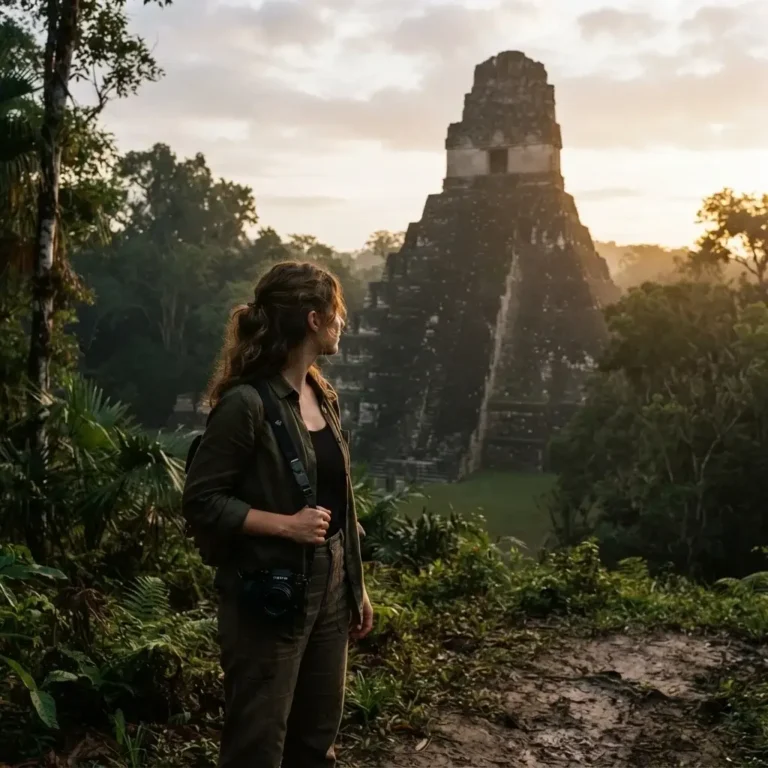
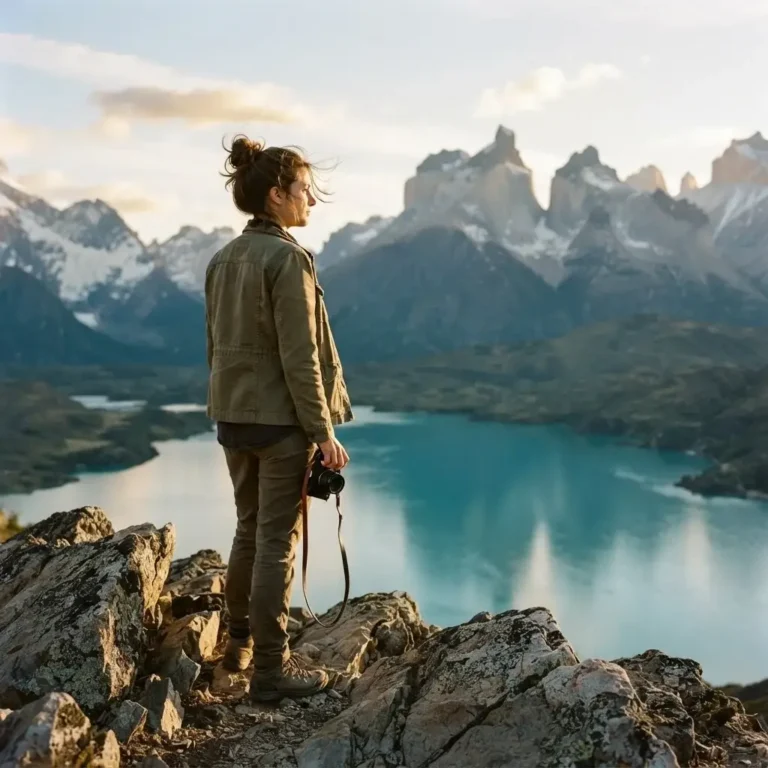
There is a version of this experience that gets posted online a lot: the golden-hour yoga photo, the serene face in lotus position, the caption about “finding yourself” somewhere between the jungle and the stars. I understand why that image is appealing. I also understand why it makes the whole thing feel slightly unreal, like it belongs to a certain kind of person in a certain kind of life. Not necessarily yours.
Here is what I want to tell you before anything else: a meditation retreat in Latin America is one of the most genuinely accessible, deeply rewarding, and sometimes wonderfully disorienting things you can do as a solo traveler. It doesn’t require a yoga practice, a spiritual background, or a budget that would cover a week in Bali. What it requires is showing up. That part is harder than it sounds, and also exactly the point.
I have spent enough time on the road, solo, in unfamiliar places, sitting with discomfort and culture shock and the quiet revelation that comes from slowing down, to know that this is not just a wellness trend. Latin America in particular has something specific going on: a living tradition of spiritual practice, landscapes that feel genuinely charged, and a retreat culture that ranges from completely free 10-day silent courses to beautifully designed jungle centers, all within a region that solo travelers can navigate with confidence. Let me give you the honest, practical breakdown.
What Kind of Retreat Are You Actually Looking For?
Before you open a single booking page, this question matters more than anything else, because “meditation retreat” covers an enormous range of experiences. Getting clear on what you want saves you from booking the wrong thing and spending a week wishing you were somewhere else.
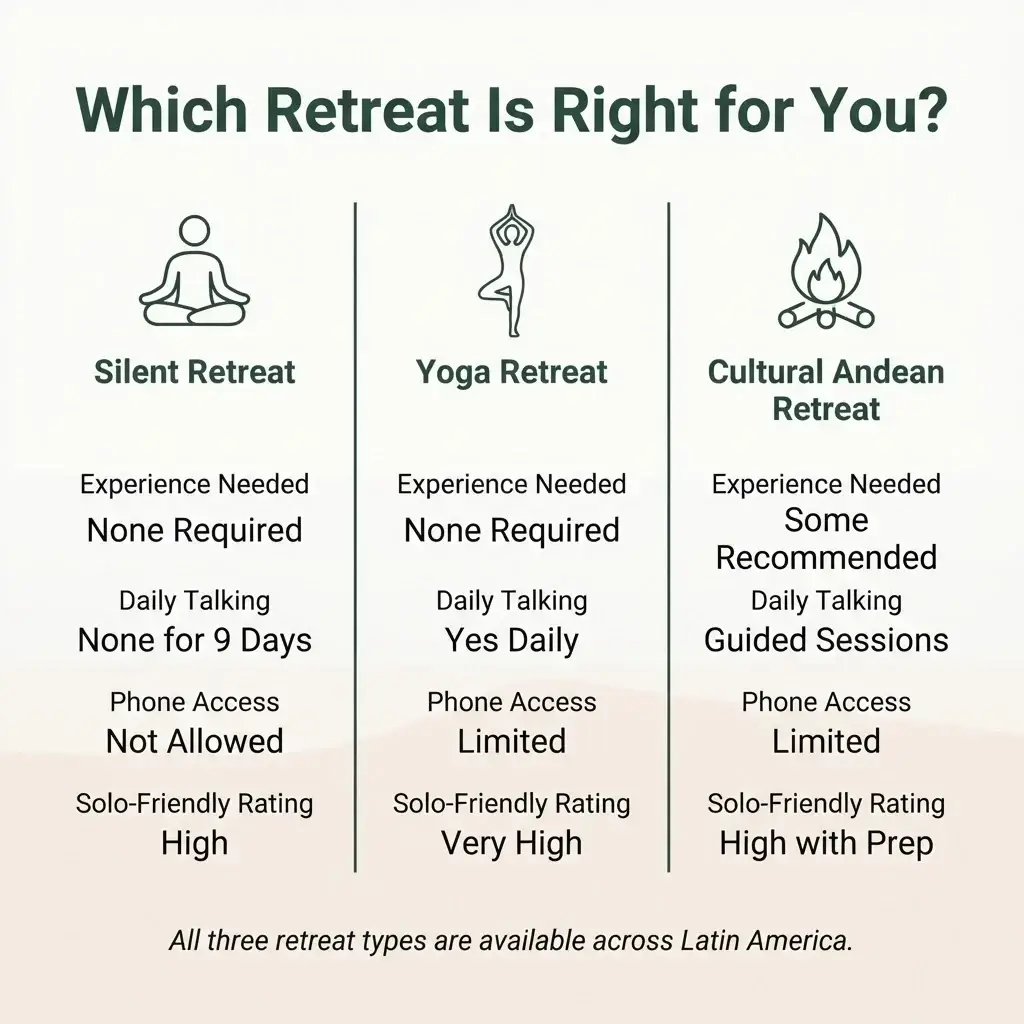
Silent retreats are exactly what they sound like. You don’t speak to other participants for the duration of the program, often five to ten days. You meditate for many hours each day, eat simple meals, and have no phone. These are intense and profoundly effective, but they are not for everyone as a first experience. If you’ve never meditated regularly and the idea of silence for ten days makes your nervous system revolt, there are gentler entry points.
Yoga-focused retreats blend asana practice with meditation, breathwork, journaling, and usually group discussions. You’ll talk to people. You’ll share meals. There’s a communal warmth that makes them genuinely solo-traveler-friendly. Most are structured around two or three practice sessions per day with free time in between, which means you also have space to explore the surrounding area.
Culturally rooted retreats in the Andean tradition, particularly in Peru, incorporate indigenous ceremony, Quechua cosmology, and in some cases sacred plants like San Pedro (Huachuma). These deserve their own careful consideration. They are not beginner casual experiences. They require research, choosing reputable and ethical facilitators, and genuine intention. I’ll say more about this in the Peru section.
As a solid starting framework, Insight Timer’s guide on what to expect at your first meditation retreat gives a clear, beginner-friendly breakdown of typical daily schedules, what silence periods feel like, and how to manage the first few uncomfortable days. Reading something like that before you book is genuinely useful.
Mexico: The Oaxacan Coast and the Tulum Circuit
Hridaya Yoga, Mazunte (Oaxaca)
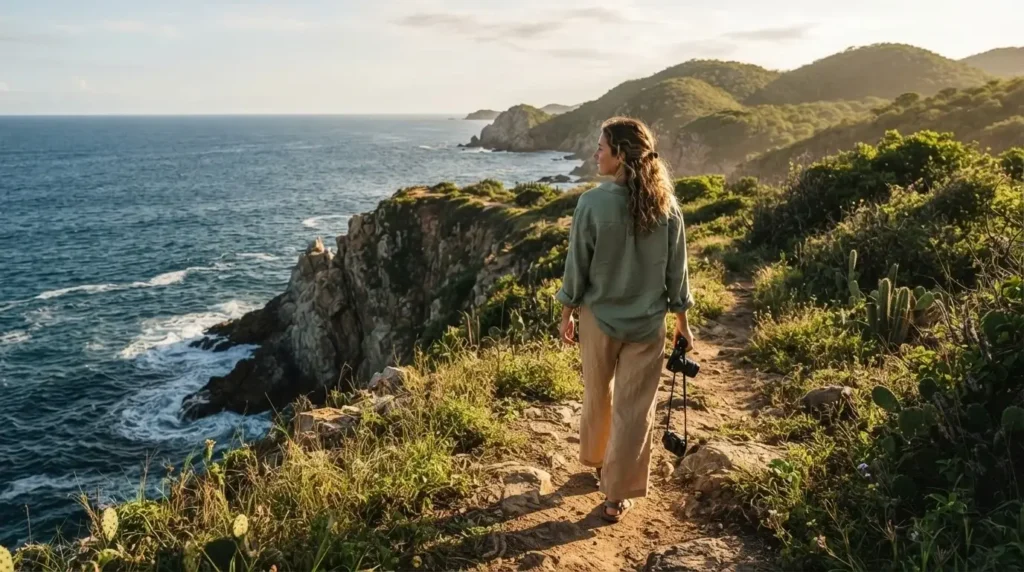
If I had to point a first-timer toward one retreat center in Latin America that balances authentic practice with a setting that will absolutely stop you in your tracks, I would talk about Mazunte. This tiny beach town on the Pacific coast of Oaxaca is not a resort destination. There is no mall, no reliable ATM, and the electricity occasionally reminds you it can leave whenever it wants. All of that is part of why it works.
Hridaya Yoga is the center that put Mazunte on the map for serious meditators. Their signature offering is the Hridaya Silent Meditation Retreat, a ten-day program rooted in non-dual tradition that focuses on self-inquiry and heart-centered awareness. But they also run three-day and shorter programs that work well for those not quite ready to commit to silence for a week and a half. The vegan kitchen has a strong reputation, and the setting, between the hills with the ocean visible below, gives you the kind of backdrop that makes sitting still feel like the most natural thing in the world. You can check current retreat dates and logistics through the Hridaya Yoga Mexico center page, which also has unusually detailed transport instructions for getting there from Huatulco or Puerto Escondido airports.
Getting there is part of the adventure, not an obstacle. From Huatulco airport, you take a shared taxi to Pochutla (around 45 Mexican pesos) and then a colectivo truck to Mazunte (around 30 pesos). The whole journey from the airport costs roughly 100 pesos if you travel like a local.
Bring all the cash you need before you arrive, as the nearest reliable ATM is back in town.
Tulum, further north on the Yucatan coast, offers a very different energy: more polished, more social, and much more visible on Instagram. There are excellent multi-day retreat programs in and around Tulum, particularly for yoga with meditation elements, and the cenotes and jungle setting give it a genuine atmosphere that the influencer photos don’t fully capture. The caveat is knowing what you’re choosing: Tulum has become expensive by Mexican standards, and some retreat programs there are priced for international travelers who have stopped questioning price tags. Shop carefully and read reviews from actual participants, not marketing copy.
Peru: The Sacred Valley and the Weight of the Andes
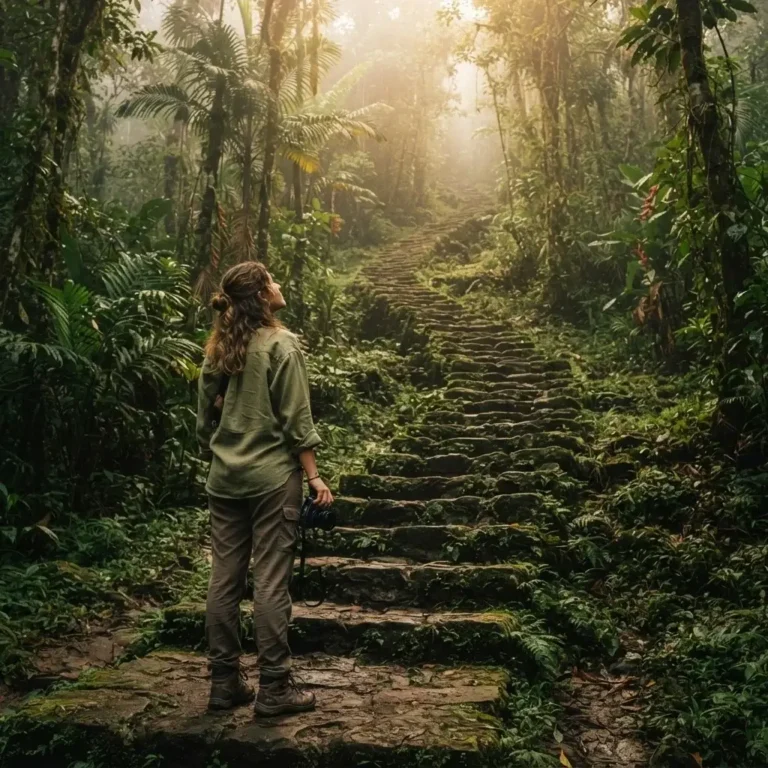
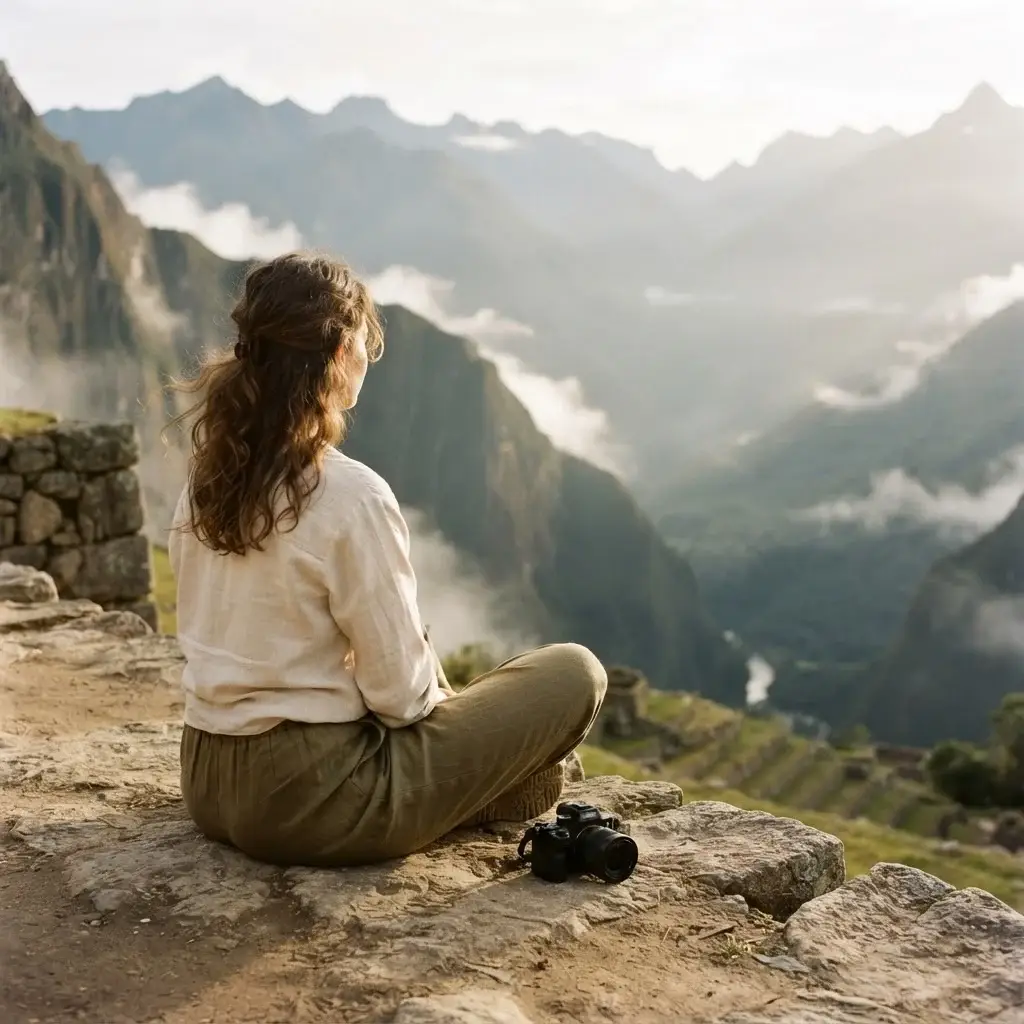
No conversation about meditation retreats in Latin America is complete without the Sacred Valley of Peru, and that’s not hyperbole. This stretch of Andean landscape between Cusco and Machu Picchu has been considered a spiritual center for centuries, since long before modern wellness culture discovered it. The Inca relationship with Pachamama (Mother Earth), the mountain spirits called Apus, and the energy that practitioners describe as running through the valley’s ley lines, this is not mysticism invented for tourists. It is a living tradition that predates the tourism industry by a very long time.
From what solo travelers consistently report, and from everything I’ve read and researched about this region, the Sacred Valley retreat experience is a different category from almost anything else on this list. Retreat centers here often include traditional Andean ceremonies led by local paqos or shamans: despacho offerings to the earth, coca leaf readings, and fire rituals. Some centers incorporate San Pedro or Ayahuasca ceremonies. These practices deserve genuine respect and careful preparation, and the best centers in the valley take that seriously with experienced facilitators, medical staff, and proper integration support. The spiritual healing retreats guide for the Sacred Valley covers the range of retreat types available and what to look for in a reputable center.
One practical reality about the Sacred Valley that most retreat articles skip: the altitude. The valley sits at roughly 2,800 meters (about 9,200 feet) above sea level, and Cusco is even higher. If you arrive and immediately jump into a multi-day retreat program, you will feel it. Altitude sickness (soroche) can hit even fit, experienced travelers, bringing headaches, nausea, and fatigue that has nothing to do with your emotional state. Build in at least two days in Cusco or the valley before your retreat begins. Drink coca tea, move slowly, skip the alcohol, and let your body adjust. Most reputable retreat centers will tell you this themselves, but not all do.
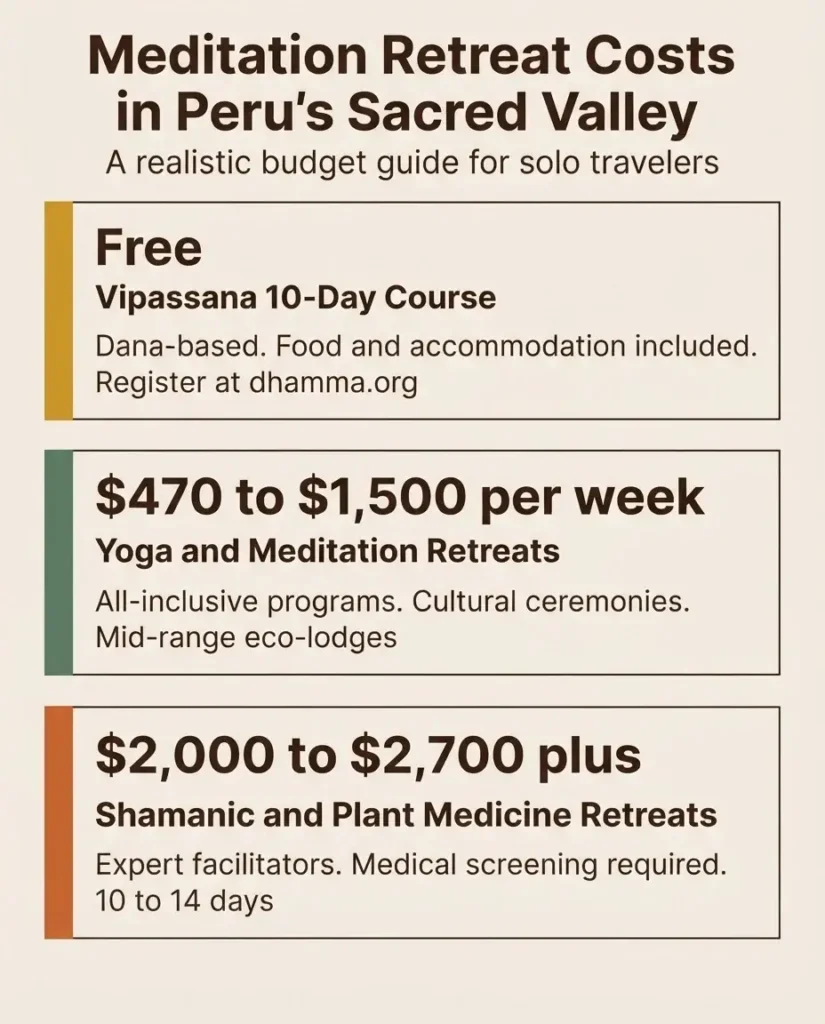
Budget-wise, the Sacred Valley range is wide. A 7-day immersion retreat starts around $470 at the more accessible end of the market, while longer shamanic or plant medicine retreats at well-established centers run from $2,000 to $2,700 or more for 10 to 13 days including accommodation and meals. For the mid-range, week-long yoga and meditation retreats with cultural elements typically run $800 to $1,500 all-inclusive.
Costa Rica: Pura Vida and the Jungle Floor
Costa Rica has built an entire national identity around the phrase pura vida, and while it can feel like a tourism slogan after a while, there is something real underneath it. The country dedicates more than 25 percent of its land to protected natural areas, and that relationship with the natural world is woven into the retreat culture here in a way that feels organic rather than manufactured.
The Osa Peninsula, on the remote southern Pacific coast, is one of the most biologically rich places on the planet, and it’s where some of the most respected retreat centers have set up. Blue Osa, a beachfront yoga and meditation retreat on the Osa Peninsula, has earned a serious reputation over many years. Their retreat packages range from $1,440 for a four-day weekend to around $2,300 for a full week, all-inclusive, and that means actual quality accommodation, farm-to-table meals, and structured daily programming. It’s not a bargain, but it’s far from the inflated luxury bracket either. The Blue Osa Costa Rica retreat website has current schedules and details on everything from teacher training to themed wellness retreats for different audiences.
Santa Teresa, on the Nicoya Peninsula, offers a more accessible and social entry point. The meditation and yoga scene there is well-established, and you’ll find more budget-friendly options, often from $250 to $600 for a three to five day program. The town itself has a loose, surfer-meets-wellness energy that works well for solo travelers who want a retreat experience but also want to have a conversation at dinner.
One timing note for Costa Rica: the country has a rainy season that runs roughly from May through November, with September and October being the wettest months. The rainforest during this period is extraordinarily lush and alive, and honestly beautiful, but it does mean more mud, more insects, and occasional flooding on the unpaved roads that lead to remote centers. It’s not a reason to avoid it, just a reason to pack appropriately and check access to your specific center before you go.
The Free Option: Vipassana Across Latin America
I would be doing this article a real disservice if I didn’t spend time on the option that is categorically unlike everything else: the ten-day Vipassana course taught in the tradition of S.N. Goenka. These courses are completely free. Not “discounted” or “donation-encouraged.” Free, including accommodation and meals, for all ten days. The only cost is the dana (donation) that graduates may choose to give to support future students, and that is entirely voluntary.
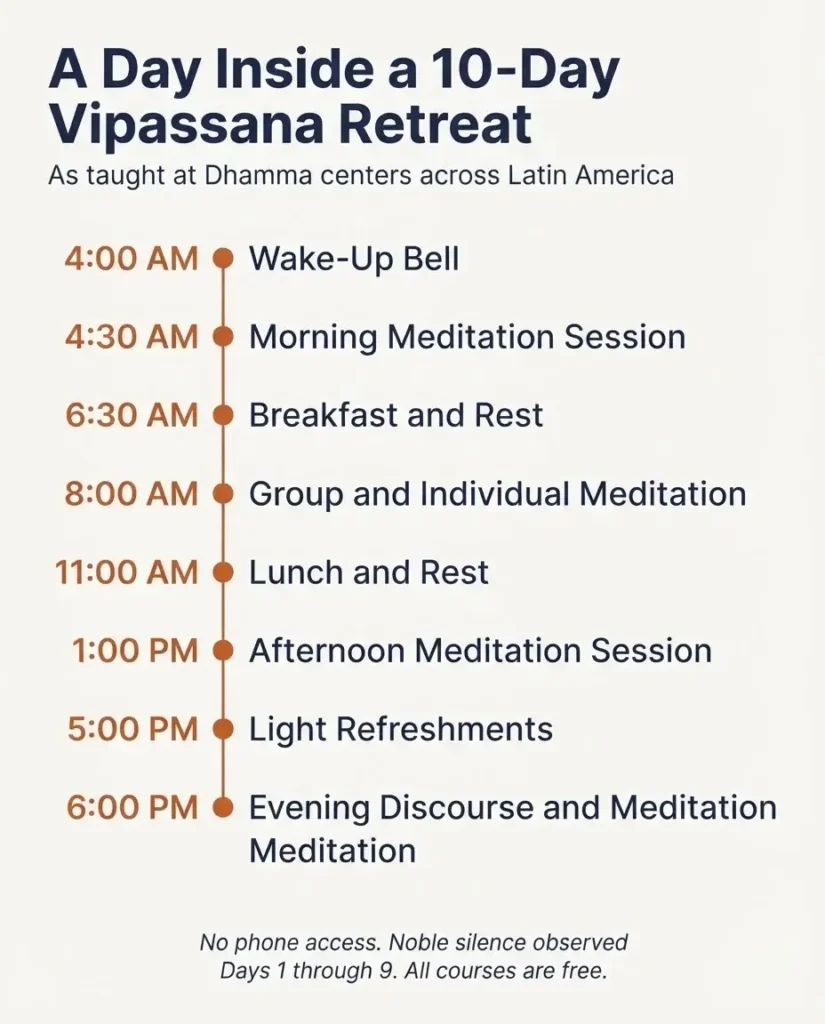
The structure is intense by design. You meditate for ten or more hours a day. You observe noble silence for the first nine days, meaning no talking, no eye contact, no phones, no reading or writing. You wake at 4:00am. You eat simple vegetarian meals twice a day. It sounds austere because it is, and people who have done it describe it as one of the most genuinely transformative experiences of their lives, not in a vague inspirational way, but in a specific, measurable shift in how their mind works.
Across Latin America and the Caribbean, there are 13 Vipassana centers and 36 non-center locations running these courses. Countries with active centers include Mexico, Peru, Costa Rica, Colombia, Argentina, Brazil, Chile, and Venezuela. You can find the complete directory of Latin American locations and current course schedules through the official Dhamma.org worldwide directory. Courses fill up well in advance, so browsing schedules several months out is the practical move.
The one preparation note that matters most: these courses are not a good fit for people with severe depression, acute anxiety disorders, or who are in an active mental health crisis. The courses themselves say this clearly. For the vast majority of people, though, this is not just a free retreat. It’s a master class in the mechanics of your own mind, available to anyone willing to show up.
Chile: The Elqui Valley and the Clearest Sky You’ve Ever Seen
Here’s a destination that most meditation retreat roundups skip entirely, which is one of the main reasons I want to give it real space: the Elqui Valley in northern Chile. About 60 kilometers inland from La Serena, this valley sits in the pre-Andean foothills where the Atacama Desert begins to breathe, and it has built a genuine reputation as what Chilean mystics and spiritual travelers call the “new Tibet.”
The claim is grounded in local cosmology: the belief that the world’s kundalini energy, which has been located in Tibet for millennia, shifted its location to Cochiguaz, a small village in the Elqui Valley. Whether or not that resonates with you spiritually, the effect on the landscape is undeniable. The valley has attracted yoga centers, meditation communities, holistic practitioners, and a Buddhist stupa that sits at the end of a mountain road as if it simply appeared there one day. Chile’s national tourism board has documented the valley’s spiritual identity and what makes it distinct in this piece on the Elqui Valley as an energetic destination.
The night skies are a separate chapter. The Elqui Valley has some of the most light-pollution-free skies in the Southern Hemisphere. Cerro Tololo Inter-American Observatory is in this valley. Retreat programs here often combine meditation with guided stargazing sessions, and there is something genuinely profound about spending the day sitting in silence and the evening watching the Milky Way from a reclining chair in the Andes.
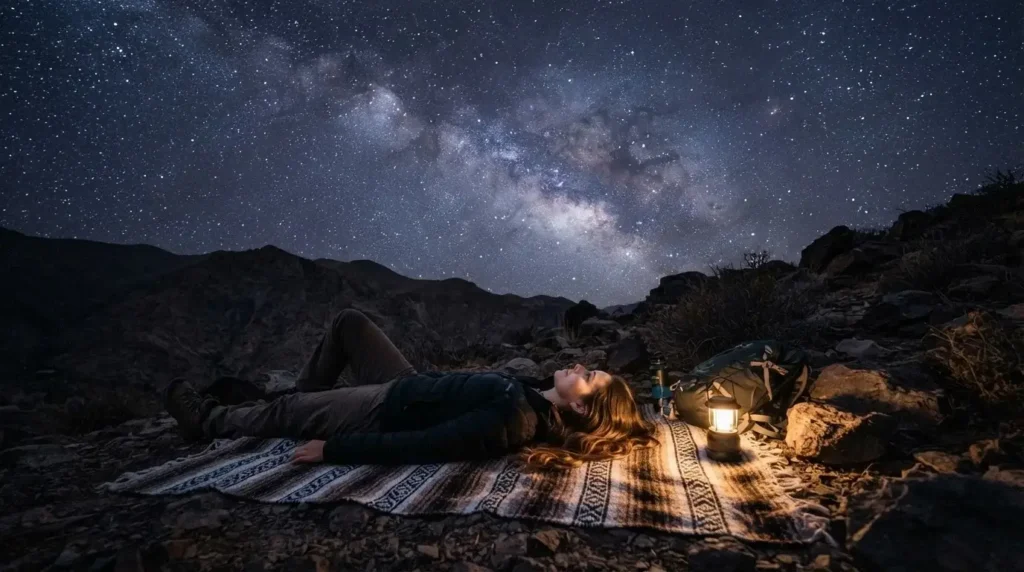
National Geographic called the Elqui Valley one of South America’s best stargazing destinations for exactly this reason.
Budget-wise, Chile sits at a higher price point than Mexico or Peru, but the Elqui Valley is far less developed than Santiago, which keeps costs relatively reasonable. You can find simple guesthouses and eco-cabins with meditation programming in Pisco Elqui and Cochiguaz, and several operators offer multi-day retreats combining yoga, sound healing, and stargazing for under $500 all-inclusive. The best visiting months for stargazing and clear skies are April through October, outside of the summer humidity.
The Practical Stuff That Actually Matters
What a retreat day actually looks like. A typical meditation or yoga retreat runs something like this: early morning practice (often starting at 6:00am or even 4:00am for Vipassana), followed by breakfast, a second morning session, lunch, free time in the afternoon, an evening session, a light dinner or herbal tea, and then lights out. The day feels long and also strangely short. Most participants report that the first two days feel uncomfortable, the middle days feel like things are actually moving, and the final days feel quietly profound. Knowing this pattern in advance makes the early discomfort far less alarming.
Solo safety at retreats. From everything solo travelers report, retreats are among the most genuinely welcoming environments for solo travel. Most participants arrive alone. The shared experience creates a kind of immediate connection that’s different from meeting strangers at a hostel bar. The communal structure (eating together, practicing together) means you are never isolated, even during silent programs where you’re not speaking. That said, do your research on any center before you commit. Look for clear facilitator credentials, transparent refund policies, and real reviews from past participants, not testimonials on the center’s own website.
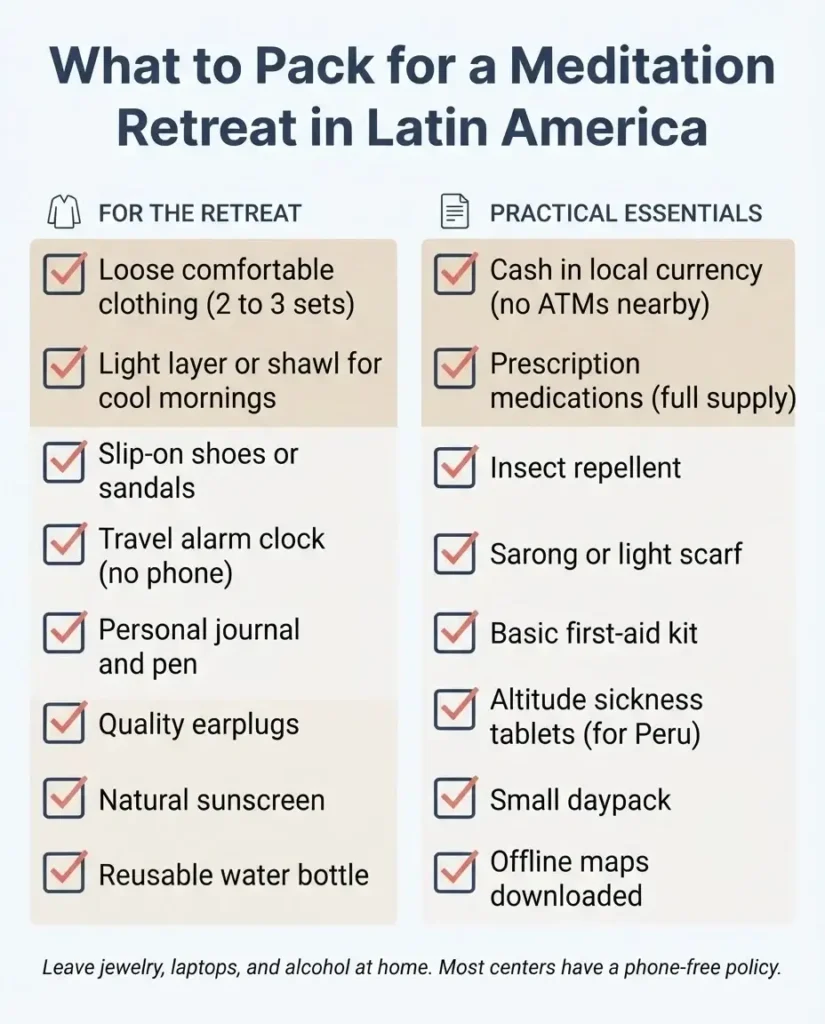
What to pack. Loose, comfortable clothing that works for seated meditation is the core of your list. Layering is important because retreats often start before sunrise when it’s cold even in tropical climates. A travel alarm clock for silent retreats (so your phone stays off). A journal. Quality earplugs. A sarong. Any personal medications, because remote retreat centers are often far from pharmacies.
Integration after the retreat. This is the part that rarely gets written about. The days immediately after a retreat, when you re-enter ordinary life, can feel genuinely strange. You’ve been living at a slower frequency, and the world has not. Give yourself at least one or two transition days before flying home or diving back into work. Many retreat programs offer post-retreat integration resources and online communities for exactly this reason, and it’s worth asking about this before you book.
How to Choose Without Getting It Wrong
The good news is that the retreat industry in Latin America, while uneven, has a significant number of genuinely excellent, ethically run centers. The less good news is that “retreat center” is not a regulated category, and doing your due diligence matters, especially for anything involving plant medicine.
For any retreat you’re seriously considering, ask: Who are the facilitators and what are their specific credentials or lineage? Is there a medical screening process? What is the refund policy if you need to leave early? Are meals included? What is the policy on phones and outside contact? How many participants will be in the group? The answers to these questions tell you more about a center’s integrity than any number of Instagram posts.
If it helps to ground this in experience: when I left a rigid career routine and started building a life where travel was the point, not the reward, the moment that most changed how I saw the world wasn’t a landmark or a famous site. It was learning to sit still long enough to actually notice where I was. That kind of stillness is available in every destination on this list, in formats ranging from free and stripped-down to beautifully supported and immersive. The only question is which one is right for you, right now, with what you have.
The perfect moment to book it is not coming. The next best moment is today.