
Eco-Lodges in the Americas: Where to Go to Actually Unwind

I’ve been thinking a lot lately about what it means to actually rest while traveling.
Not the kind of rest where you’re horizontal by a pool scrolling your phone. Real rest. The kind where you wake up and don’t immediately know what time it is, and you’re fine with that. Where the loudest sound is something with wings. Where the agenda for the day starts with coffee and a view and ends whenever it ends.
That kind of rest is harder to find than people expect. And it’s exactly what the right eco-lodge delivers, when you pick the right one.
The Americas are home to some of the most extraordinary wild places on earth, and a handful of lodges have figured out how to let you sit inside that wildness without sacrificing your comfort or your conscience. This guide is about those places. Not every eco-lodge that exists in the Western Hemisphere. Just the ones that are genuinely worth the journey, genuinely sustainable, and genuinely going to leave you feeling like a different person when you leave.
Before we get into the specifics, let’s talk briefly about what actually makes an eco-lodge eco.
What “Eco” Actually Means (and How to Spot Greenwashing)
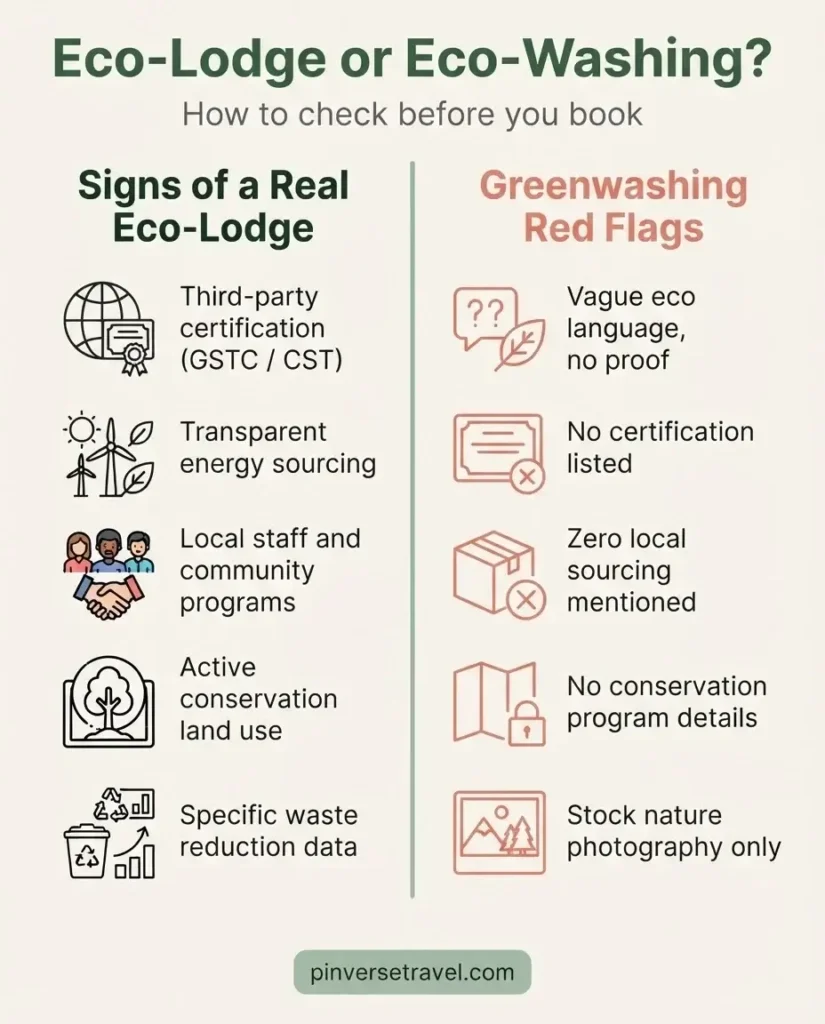
This matters. A lot of places slap the word “eco” on their website because it sounds good, not because they’ve done the work. Genuine eco-lodges typically operate with a combination of low-impact building design, renewable energy, water conservation, zero-waste or minimal-waste food systems, local employment and community integration, and active conservation programs for the land they sit on.
One of the best ways to verify a lodge’s claims before booking is to check whether it holds a certification from a credible, independent body. The Global Sustainable Tourism Council (GSTC) is the international accreditation organization for sustainable tourism standards. If a lodge’s certification is GSTC-recognized, that means it has been third-party audited against a real benchmark, not just self-reported. Costa Rica, which leads the world in ecotourism, has its own government-backed Certification for Sustainable Tourism (CST) program, which is a GSTC-recognized standard. When you see a CST rating on a Costa Rican lodge, it means something.
If a property mentions sustainability but offers zero specific certifications, zero details about energy sourcing, and zero mention of community partnerships, that is a red flag worth paying attention to.
Now, the lodges.
Costa Rica: Lapa Rios Lodge, Osa Peninsula
If someone asked me to point to one place in the Americas that most perfectly captures what an eco-lodge should be, Lapa Rios would be a very short answer.
Situated on the Osa Peninsula in southwestern Costa Rica, Lapa Rios Lodge sits on a private 1,000-acre rainforest reserve bordering Corcovado National Park, one of the most biodiverse places on the planet. It was named the number one hotel in Central America by Travel+Leisure and holds a 2025 Michelin distinction. Those accolades matter less to me than what travelers consistently report about the experience: they arrive wired, and they leave slow.
The lodge itself is a collection of open-air bungalows and villas built into the ridge above the jungle, designed so that you fall asleep to the sound of the forest and wake up to a horizon line of green meeting Pacific blue. There’s no television. The wifi is functional but you will use it less than you think. Wildlife visits uninvited: scarlet macaws in the canopy, howler monkeys at dawn, dart frogs on the trail, sloths doing absolutely nothing at an inspiring pace.
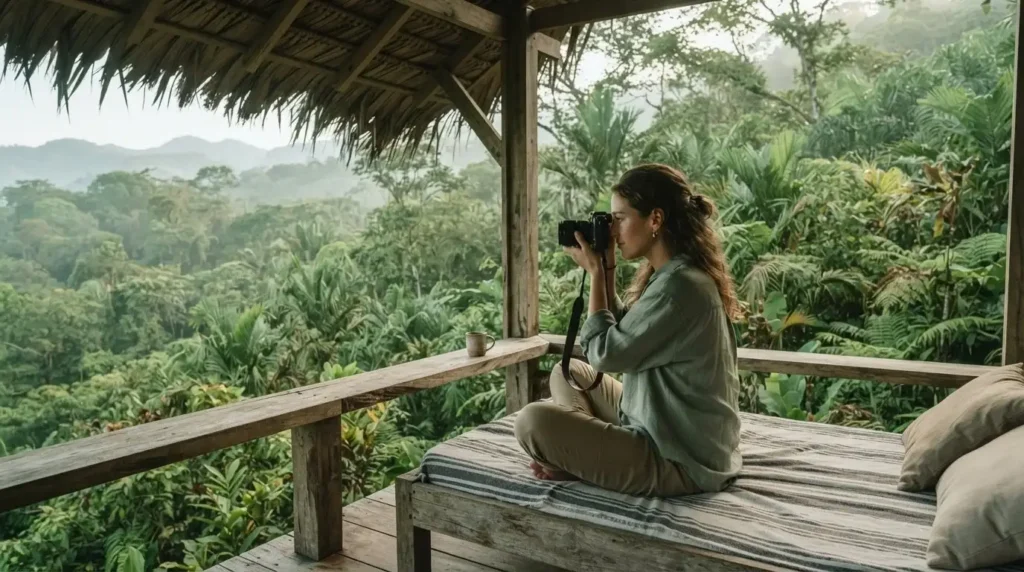
What you eat matters here. The Guapira Restaurant sources from local farms and the surrounding ecosystem. Expect fresh ceviche, hearts of palm salads, tropical fruits you may not recognize by name, grilled fish, and Costa Rican staples like gallo pinto that taste better in the jungle than anywhere else. Meals are included in most packages, so you’re never hunting for food in a remote area without options.
Getting there: Fly into San Jose (SJO), then take a domestic flight to Puerto Jimenez (roughly 45 minutes), followed by a private transfer to the lodge. It is remote. That is the point.
Best time to visit: December through April is the dry season and the most popular window. May through November brings rain (and fewer visitors, lower prices, and explosively lush forest). Both are worthwhile depending on what you want.
Lapa Rios operates on all-inclusive and bed-and-breakfast packages, so check their site directly for current rates and availability, as pricing varies by room type and season.
Chile: EcoCamp Patagonia, Torres del Paine
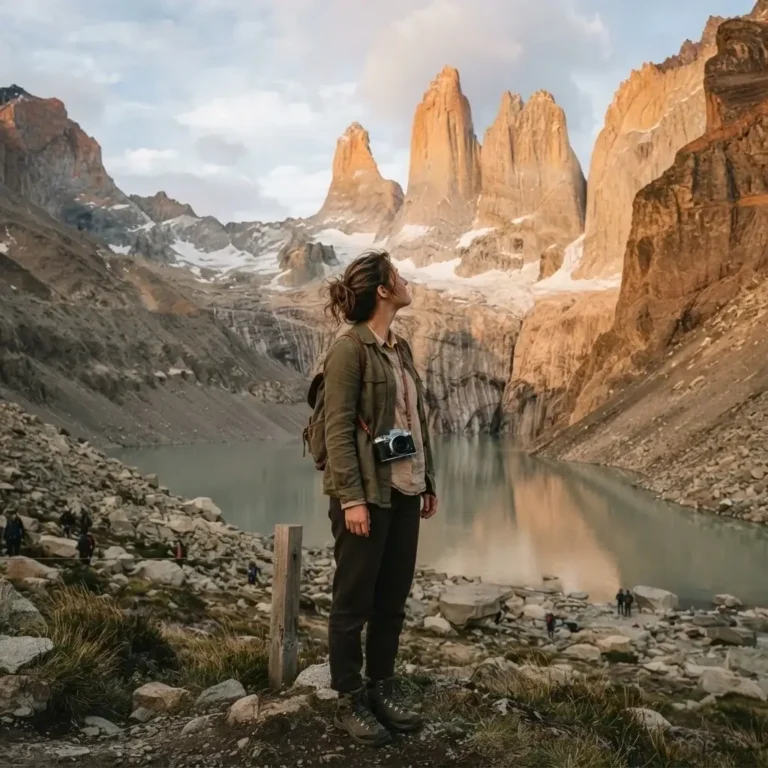
I’ll be honest: Patagonia is not a place associated with relaxation in the traditional sense. It is a place of dramatic weather, enormous landscapes, and serious hiking. But EcoCamp Patagonia earns its place on this list because of what happens between the adventures, and because for a lot of people, moving your body hard in a spectacular environment is its own form of deep restoration.
EcoCamp Patagonia is the world’s first geodesic dome hotel, sitting inside Torres del Paine National Park in Chilean Patagonia. The domes are insulated, warm, and genuinely comfortable, with panoramic skylights designed for stargazing and Patagonian-inspired decor made from local materials. There are community domes for gathering, eating, and meeting fellow travelers, and a daily yoga dome to start your mornings before heading out into the park.
The sustainability credentials here are serious. EcoCamp runs on wind and solar energy, uses composting toilets, minimizes waste, and employs local Patagonian guides who are deeply knowledgeable about the park’s ecosystems. The lodge received a Tripadvisor Travelers’ Choice Award in 2025 as one of the top 10% of hotels worldwide.
The programs range from the famous W Trek (7 days, expert guides, cozy refugios and dome nights) to multi-sport packages, wildlife tracking, and puma spotting excursions.
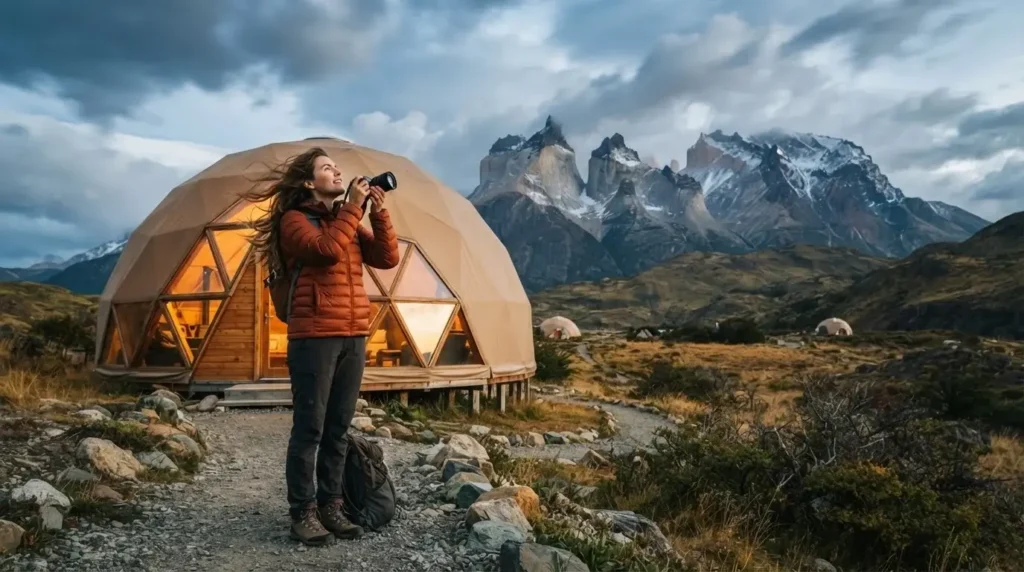
You can also book a dome-only stay if you prefer to explore independently. Food is all-inclusive and communal, served in the main community dome: think warming soups, Chilean stews, fresh bread, and locally sourced proteins. It’s hearty food for people who have been out in the wind all day, and it’s genuinely good.
A real note for planning: EcoCamp sells out 6 to 12 months in advance during peak season, which runs December through February. The 2025-2026 season opened September 6, 2025. Book very early. Getting there involves flying into Punta Arenas from Santiago, then a roughly 4-hour drive to the park, or a 2-hour drive from Puerto Natales.
Peru: Inkaterra Machu Picchu Pueblo Hotel
Most people who visit Machu Picchu treat it as a day trip. They take the train to Aguas Calientes, ride the bus up to the citadel, walk through in two hours, and leave. I understand the impulse. But there’s another way to experience this place, and it involves slowing everything down.
Inkaterra Machu Picchu Pueblo Hotel sits on 12 acres of high-mountain cloud forest in Aguas Calientes, the small town at the base of Machu Picchu. The 85 rooms are designed as whitewashed adobe casitas in the style of an Andean village, connected by stone pathways and terraced gardens that are home to hundreds of orchid species, butterflies, and birds. The UNU Spa offers treatments rooted in Andean medicinal traditions. There is a lobby fireplace. There are waterfalls. The whole property functions like a living museum of Peruvian highland ecology.
The Inkaterra Machu Picchu Pueblo Hotel is a certified B Corporation and has held a place in the Michelin Guide. Their guided birdwatching, orchid tours, and night walks through the hotel grounds are often described by guests as highlights that rival the citadel itself. The food leans into Peruvian culinary traditions: expect quinoa dishes, fresh trout from local rivers, causa, and an excellent pisco sour to round out the evening.
Nightly rates run approximately $380 to $590 depending on season, with May being the most expensive month and shoulder-season deals available in the lower hundreds. The cheapest way to reach Aguas Calientes is by Peru Rail or Inca Rail from Cusco, a journey of about 3 to 4 hours with dramatic views the entire way.
Peru: Refugio Amazonas, Tambopata
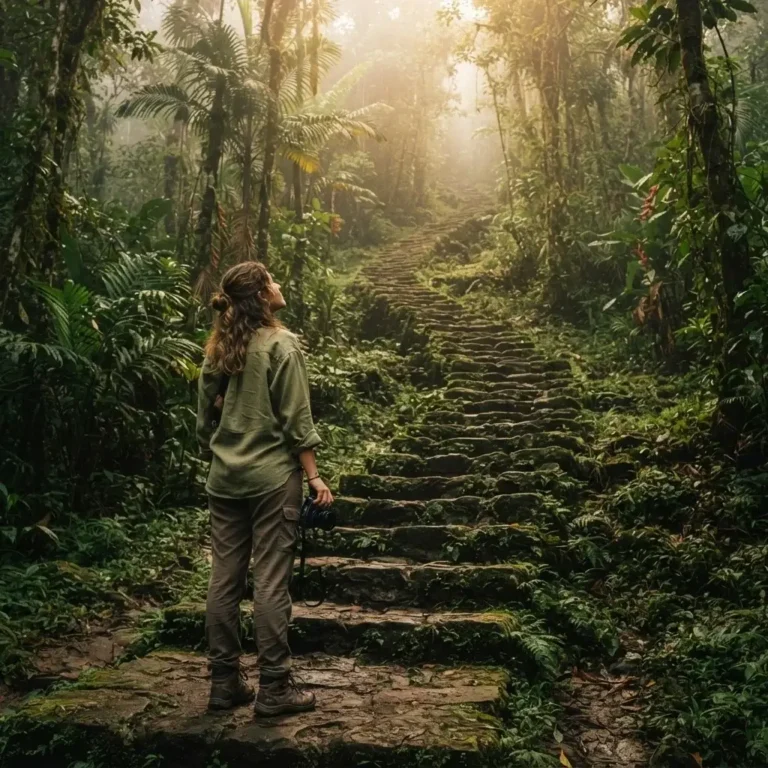
If you want to understand what the Amazon rainforest is, not as a concept but as a physical, living, breathing thing all around you, Refugio Amazonas is one of the most genuinely accessible ways to do it.
Refugio Amazonas is run by Rainforest Expeditions in the Tambopata National Reserve in southeastern Peru. It sits in a 200-hectare private buffer zone bordering one of the most biodiverse protected areas in the Amazon basin. The lodge was designed with an open fourth wall facing the forest, so there is quite literally no barrier between your room and the jungle. You hear everything. You see more than you expect.
Getting there is part of the experience. Fly into Puerto Maldonado from Lima or Cusco, then take a one-hour road trip followed by a peaceful one-hour boat ride up the Tambopata River. By the time you arrive, you are already somewhere different.

Amazonian cuisine is introduced on the way: fresh fruits, local river fish, and ingredients from the surrounding forest. The lodge departs guests from Puerto Maldonado early, so plan any flights after 11:30 AM.
Four-night packages start from approximately USD $2,060 per person, including guides, meals, and activities. Solo travelers report that the communal meals and guided excursions make it one of the easier solo lodge experiences in South America, since the group structure creates natural opportunities for connection without any pressure.
Mexico: Playa Viva, Pacific Coast
Here’s one that often surprises people who think eco-lodges are a Central or South American thing. On Mexico’s Pacific coast, about 30 minutes south of Zihuatanejo, Playa Viva has been quietly building one of the most interesting regenerative hospitality models in the Americas.
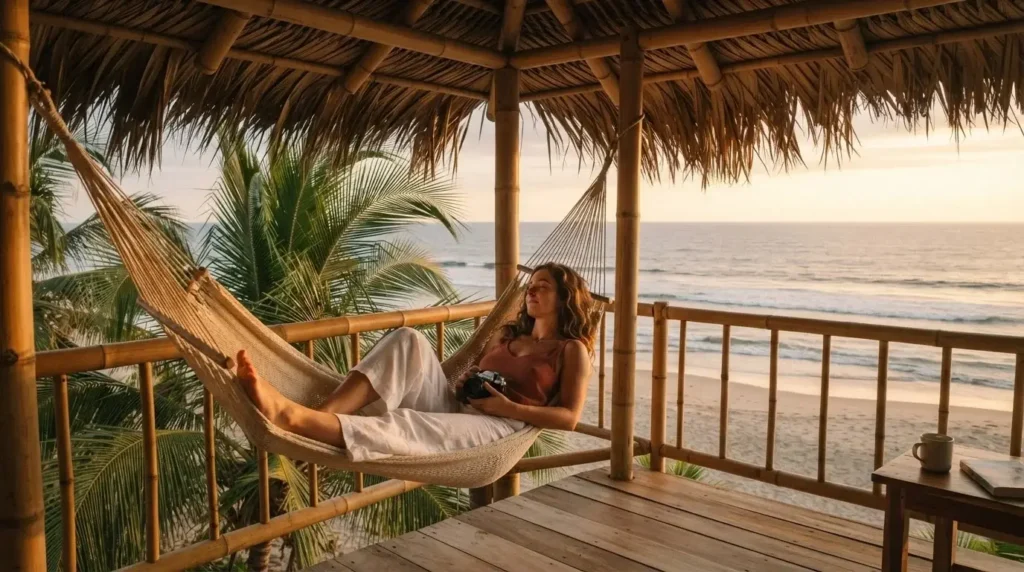
It’s a B-Corp certified boutique hotel with 12 eco-luxe rooms spread across 200 acres of beachfront land. The accommodations include oceanfront treehouses built from bamboo and reclaimed materials, designed so you are genuinely sleeping inside the natural environment. There is an onsite organic farm where Chef Jesus grows most of what goes into your meals, a yoga shala, a sea turtle sanctuary, and a permaculture education program rooted in working with the local community.
The food philosophy here is called “Food as Medicine,” and it means that every meal is built around nutrient-dense, farm-grown ingredients. Expect bright Mexican flavors: fresh salsas, herb-roasted vegetables, local seafood, handmade tortillas, and smoothies from fruit grown a few hundred feet from the kitchen. It’s the kind of food that makes you realize how tired you were of eating processed things.
Playa Viva has held two Michelin Keys for two consecutive years as of 2025/2026 and has been nominated in the 2026 Condé Nast Traveler Readers’ Choice Awards. Rates are on the boutique end, and the property welcomes solo travelers warmly. The Pacific beach is right outside the door. There are hammocks. The wifi exists but you will forget to check it.
Canada: Siwash Lake Wilderness Resort, British Columbia
The Americas are bigger than their tropical south, and Siwash Lake Wilderness Resort is a reminder that genuinely restorative wild places exist north of the equator too.
Located in British Columbia’s Cariboo region, Siwash Lake is a National Geographic-honored eco-lodge and luxury wilderness ranch accommodating just 16 guests at a time. That small capacity is intentional. The experience is designed around a genuine relationship with the landscape: horseback riding through grasslands and alpine meadows, wildlife encounters, paddling, guided hikes, and evenings around a fire with gourmet meals paired with wine. The accommodations are a mix of lodges, cabins, and luxury tents with Egyptian cotton sheets and proper beds, so the rustic setting does not mean sacrificing comfort.
It is all-inclusive, which makes budgeting straightforward. It’s also one of the few eco-lodges in North America that has consistently appeared on regenerative travel shortlists alongside properties in Costa Rica and Patagonia. If your idea of deep rest involves horses and Canadian wilderness, this one belongs on your radar.
A Note on What to Pack
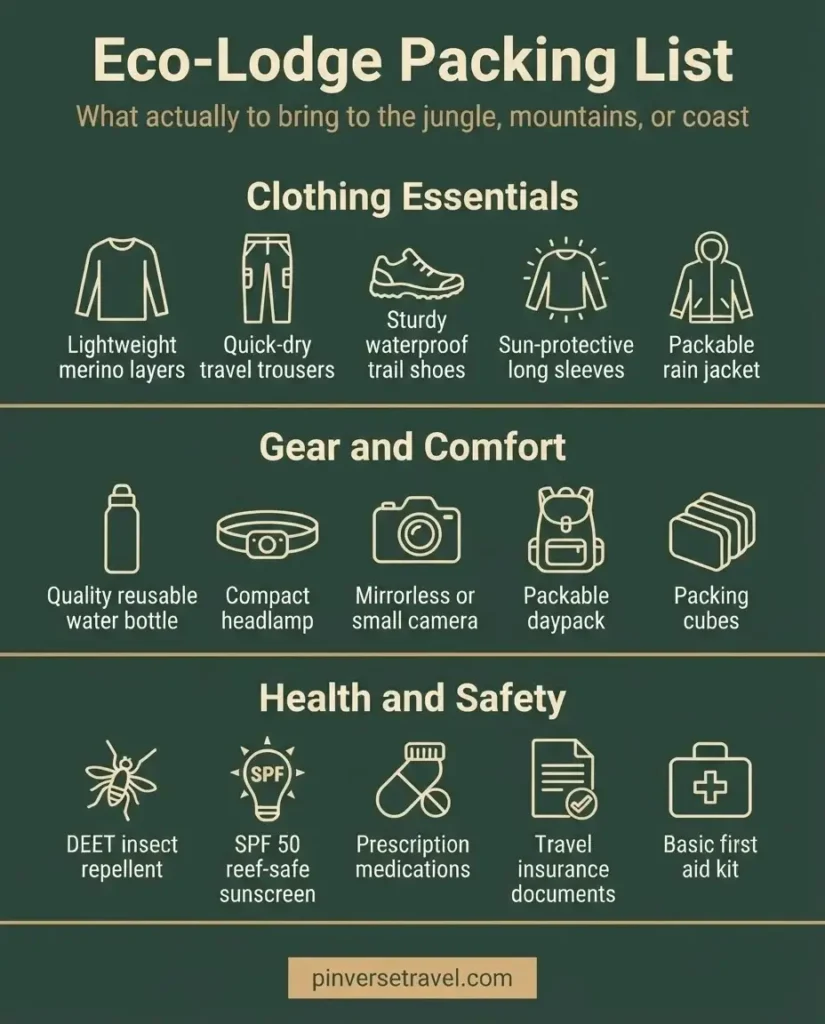
Wherever you land in the Americas for an eco-lodge stay, a few things will serve you well regardless of destination. Lightweight merino wool layers work across climates from the Amazon to Patagonia. A quality reusable water bottle is essential at most lodges that filter or provide drinking water. A headlamp is genuinely useful at night in any jungle or remote setting. Sunscreen and insect repellent with DEET are practical necessities in tropical destinations. And one thing that surprises first-time eco-lodge visitors: leave room in your bag for nothing. You are not going to need three outfit changes a day. You are going to wear the same comfortable things and stop thinking about it, which turns out to be a small and surprisingly significant freedom.
What a Day Actually Looks Like
Most eco-lodges build the day around the rhythms of the natural environment, not a hotel schedule. At a rainforest lodge like Lapa Rios or Refugio Amazonas, a typical day might start before sunrise for a birdwatching or wildlife walk when the forest is most active, followed by a large communal breakfast, a late-morning guided hike or boat excursion, lunch, and then genuinely unstructured time in the afternoon for hammocks, swimming, reading, or wandering the property. Dinner is communal and often becomes the most social part of the day. Lights tend to go out early because you will actually be tired in the best way.
At EcoCamp Patagonia, mornings often start with yoga before heading out on longer treks. At Inkaterra, the guided garden walks and spa sessions fill afternoons naturally. The structure varies, but the through-line is the same: you are not managing a packed itinerary. The lodge does the work of putting meaningful things in front of you, and you decide how much to engage.
Making the Decision
The hardest part of choosing an eco-lodge in the Americas is narrowing it down. My honest suggestion: pick the environment that pulls you most strongly, whether that is ocean, jungle, cloud forest, or high Andean altitude. Then look for a lodge with verified sustainability credentials rather than just marketing language. Then book earlier than you think you need to, especially for Patagonia and the Peruvian Amazon, where the best lodges operate with limited capacity for good ecological reasons.
The thing about a great eco-lodge is that it asks something of you too. It asks you to slow down. To be present. To let the place do what it does. If you can show up with that willingness, you will leave with something that most travel simply does not provide.
That, more than the wildlife or the food or the accommodation, is what makes this kind of travel worth planning.