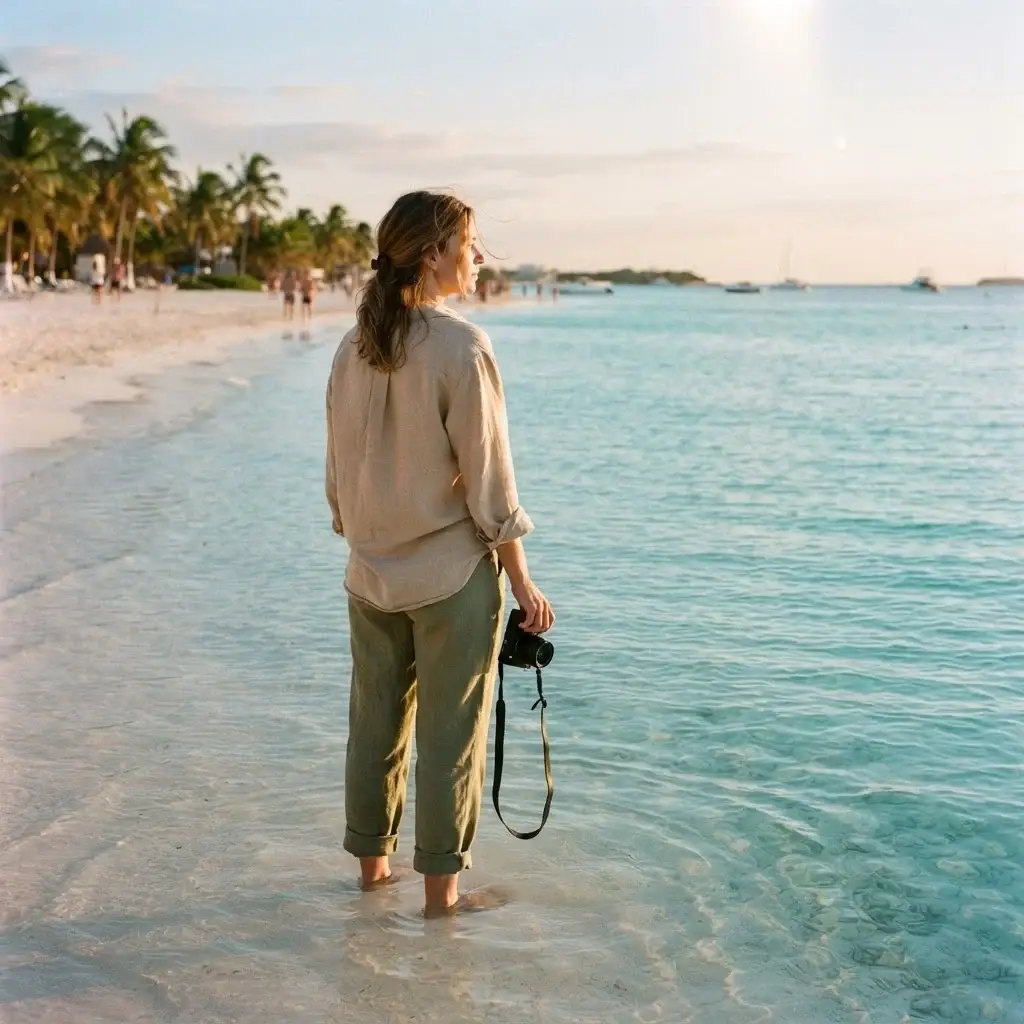
Every time I talk to someone who is planning a trip to Mexico, I hear the same thing: “I just want to find a great beach, but there are SO many options. I don’t even know where to start.”
I get it. Mexico has over 9,000 kilometers of coastline. There are beaches that get you crystal-clear Caribbean water. Beaches where big waves roll in for surfers. Beaches with ancient Mayan ruins sitting right at the cliff’s edge. Quiet coves where barely anyone shows up. And then there are the mega-resort strips where the beach is more of a backdrop than an experience.
If you’ve spent any time trying to research this, you’ve probably already seen a dozen listicles that name the same 15 beaches without ever explaining how to actually choose between them. That’s the gap I want to fill here. This guide isn’t about telling you that Tulum is beautiful. You already know that. It’s about helping you understand which coast fits what you actually want, what to expect when you get there, and how to plan a trip that delivers on the promise rather than the Instagram photo.
Let’s start at the most important fork in the road.
The Decision That Changes Everything: Pacific vs Caribbean
Most travelers don’t realize they are essentially choosing between two different countries when they pick a coast. The Mexican Caribbean and the Mexican Pacific are similar in name only.
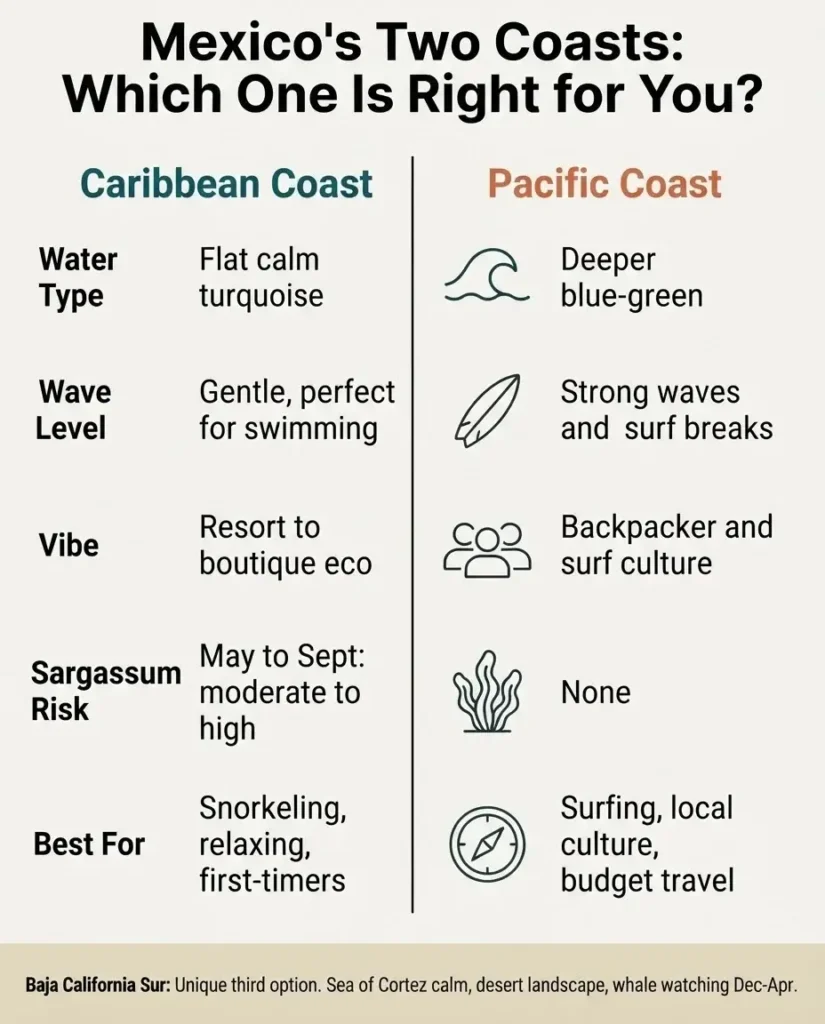
The Caribbean coast, anchored by Cancun and stretching south through Playa del Carmen, Tulum, and the Riviera Maya, is what most people picture when they say “Mexico beach.” The water is a flat-calm turquoise. It’s warm year-round. The sand is the powdery white kind that squeaks when you walk on it. It’s swimming-friendly, snorkeling-friendly, and visually spectacular. It’s also heavily developed, especially in the Cancun and Playa del Carmen corridor.
The Pacific coast is a different mood entirely. The water is deeper blue-green, the waves are bigger, and the vibe is more rugged. Places like Puerto Escondido, Sayulita, and Puerto Vallarta attract surfers, backpackers, and travelers who want a bit more local texture alongside their beach time. Prices are often slightly lower, crowds are thinner outside of peak season, and the food scene at street level is phenomenal.
There is also Baja California Sur, which sits in its own category: desert meets sea, calm turquoise water on the Sea of Cortez side, big surf on the Pacific side, and a landscape that looks like nothing else in Mexico.
According to Visit Mexico’s official tourism site, the country’s coastline spans the Gulf of Mexico, the Caribbean Sea, the Pacific Ocean, and the Sea of Cortez, which is why it genuinely feels like multiple destinations rather than one.
Here’s the honest summary:
- Choose the Caribbean if you want flat, calm, crystal-clear water, great snorkeling, and the classic “turquoise Mexico” postcard experience.
- Choose the Pacific if you want waves, surf culture, a rawer travel vibe, and less touristy energy overall.
- Choose Baja California Sur if you want something genuinely unique: dramatic desert landscapes, excellent whale watching from December to April, and the most photogenic shallow-water bay in Mexico.
Now let’s get into the specifics.
The Caribbean Coast: Where the Postcard Photos Come From
Isla Mujeres: The Caribbean in Slow Motion
If there is one Caribbean beach that consistently lives up to its reputation without the industrial-scale resort experience, it’s Playa Norte on Isla Mujeres. This small island sits just 13 kilometers off the coast of Cancun, but it feels like a completely different world.
Playa Norte is a Blue Flag certified beach, meaning it meets international standards for water quality and environmental management. The water is so shallow and calm that you can walk 20 meters out and still be knee-deep. The sand is impossibly white. Hammocks swing between palms. You can rent loungers through the beach clubs that line the strip, most with a minimum food or drink spend, but the beach itself is free to access and public.
The full guide to Isla Mujeres beaches breaks down every part of the island’s coastline in excellent detail, including the snorkeling spots, the beaches that are safe for swimming, and the ones that look beautiful but have dangerous currents (there are a few). It’s worth reading before you arrive so you know what to expect from each stretch of sand.
Getting there from Cancun is a 20-minute ferry ride from Puerto Juarez. The island itself is tiny enough to explore by golf cart, which you can rent for about $40 to $60 USD for the day. For solo travelers, Isla Mujeres has a particularly relaxed energy.
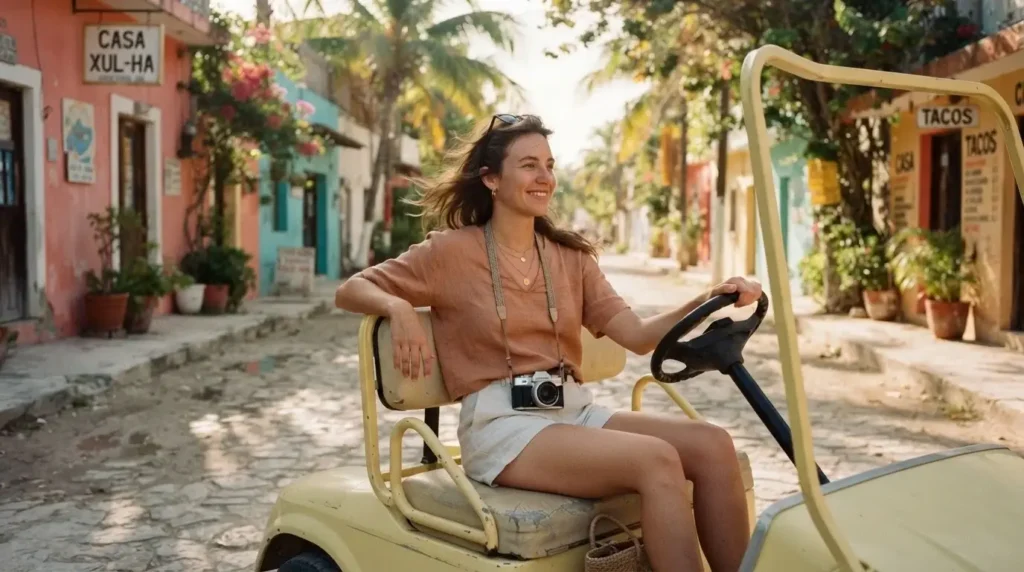
The town is walkable, safe, and easy to navigate. People linger at beach bars well into the evening. It is not a nightlife destination in the big-party sense, which, depending on what you’re looking for, is either a blessing or a reason to look elsewhere.
What to eat: Don’t leave without trying tikin xic, a traditional Mayan dish of fish marinated in achiote paste and cooked over charcoal. You’ll find it at the informal beach restaurants along the southern end of the island. Pair it with a cold Modelo and you’ve had a perfect afternoon.
The One Thing Nobody Tells You: The Sargassum Question
Before you book anything on the Caribbean coast, you need to understand sargassum. This is floating brown seaweed that washes up on Caribbean beaches in massive quantities, and it has become a significant issue for destinations across the Yucatan Peninsula, especially from late spring through early fall.
The good news is that Isla Mujeres, due to its positioning and ocean currents, tends to be largely spared compared to Playa del Carmen and Tulum. The bad news is that Tulum and parts of Playa del Carmen can have serious sargassum buildup during peak season. 2025 was recorded as one of the worst years on record for sargassum across the Caribbean, and NOAA’s Ocean Service explains why these blooms form and how they’ve grown in the North Atlantic Sargasso Sea. If you’re planning a trip between May and September and the Caribbean coast is your target, it’s smart to check real-time conditions before you commit to a specific beach destination. The CariCOOS Sargassum Tracker, which is run by the National Oceanic and Atmospheric Administration’s affiliated Caribbean regional program, gives updated assessments and is free to use.
The practical takeaway is simple: if you’re visiting the Caribbean coast in high summer, Isla Mujeres is a safer bet than Tulum for a sargassum-free beach experience.
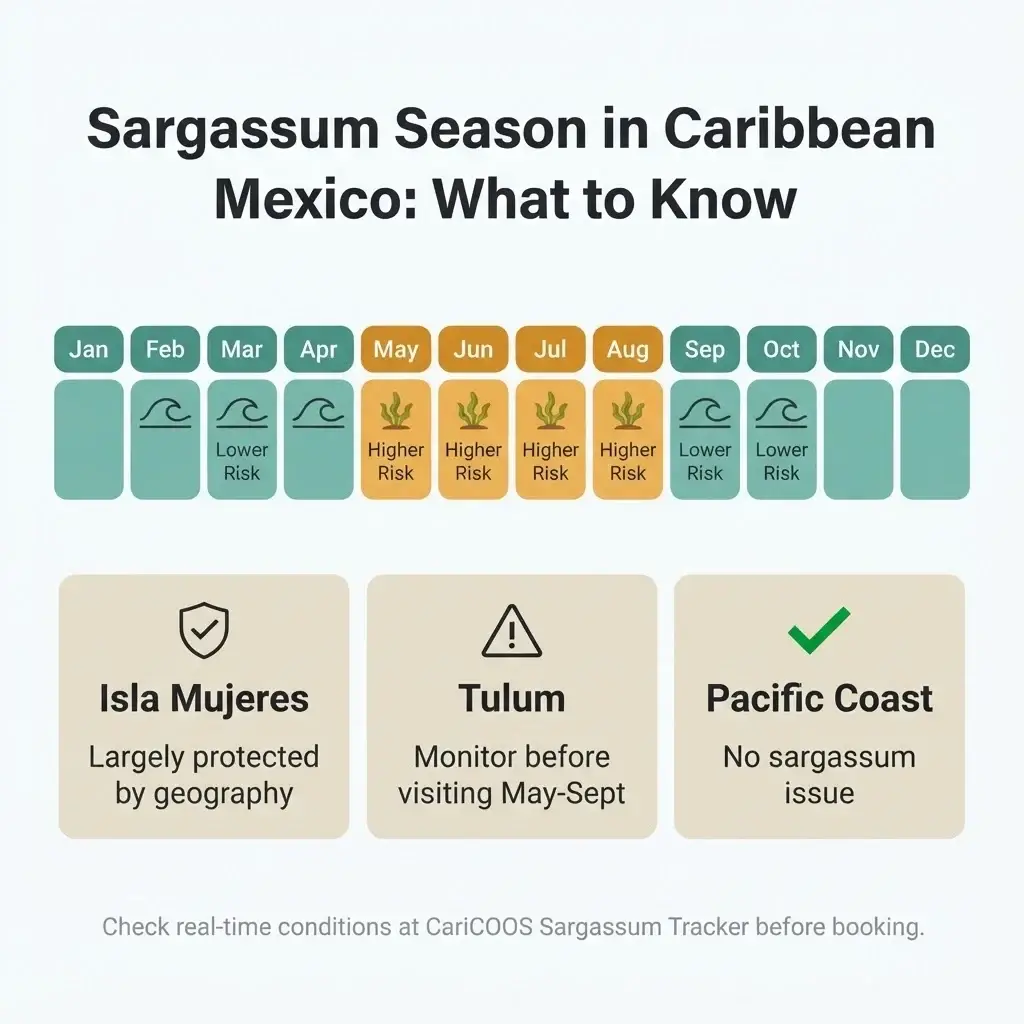
The Pacific coast and Baja California Sur are unaffected entirely.
Tulum: Ruins, Reef, and Managing Expectations
Tulum is one of the most photographed spots in all of Mexico, and for good reason. The image of ancient Mayan ruins perched on a cliff above Caribbean water is genuinely stunning and genuinely real. But if you arrive expecting a quiet, serene beach experience, you may find the reality a bit jarring.
Tulum has been heavily developed over the past decade. The beach road (Zona Hotelera) is now lined with boutique eco-hotels, beach clubs, and wellness retreats that are neither cheap nor particularly “off the beaten path.” The archaeological zone itself, the Tulum Ruins, is a national park and an extraordinary place to visit. Entry fees in early 2026 run approximately 515 MXN (around $28 USD) for foreign visitors, with the park open from 8 am to 5 pm and last access at 3:30 pm. There is a beach accessible from within the ruins where you can walk down and stand at the edge of the Caribbean, which is a pretty extraordinary experience in its own right. A comprehensive and accurate guide to the Tulum ruins and beach access covers the specific fees, logistics, and what to expect inside the park in thorough detail.
For solo travelers on a budget, the town of Tulum (a few kilometers inland from the beach zone) offers cheaper accommodation, great tacos, and easier access to transport. You don’t need to stay on the beach road to enjoy it.
What to eat in the Tulum area: Huevos motulenos for breakfast, poc chuc (slow-cooked citrus pork) for lunch, and anything from the street taco stands on the main avenue in town for dinner. Avoid eating exclusively at beach club restaurants if budget matters to you.
The Pacific Coast: Waves, Culture, and Something More Alive
Sayulita: Surfboards, Cobblestones, and Good Tacos
Sayulita is a small beach town in the state of Nayarit, about 40 kilometers north of Puerto Vallarta. It’s the kind of place that has its own gravitational pull. The streets are narrow cobblestone lanes painted in bright colors, the beach is lined with surf schools and palapa restaurants, and the overall vibe is a delightful collision of Mexican coastal town and international surf village.
From everything solo travelers and surfers consistently report, Sayulita is ideal for beginners and intermediate surfers. The main beach break is forgiving, surf lessons are widely available for around $40 to $60 USD per session, and the community of travelers who end up there tends to be social and easy to connect with. For solo travelers who are new to Pacific Mexico, Sayulita is one of the most approachable destinations on this coast.
The surf-culture publication The Inertia has a practical guide to surfing Sayulita that gives genuinely useful detail on which part of the beach works best for different skill levels, including the south end of the main beach for beginners seeking smaller waves.
Beyond the beach, the town itself is worth your time. The market on Saturday mornings sells everything from fresh fruit to handmade jewelry. The ceramics shops along the main streets are excellent for picking up something made by local artisans rather than mass-produced souvenirs. And the tacos al pastor at the informal stands near the square are reliably wonderful.
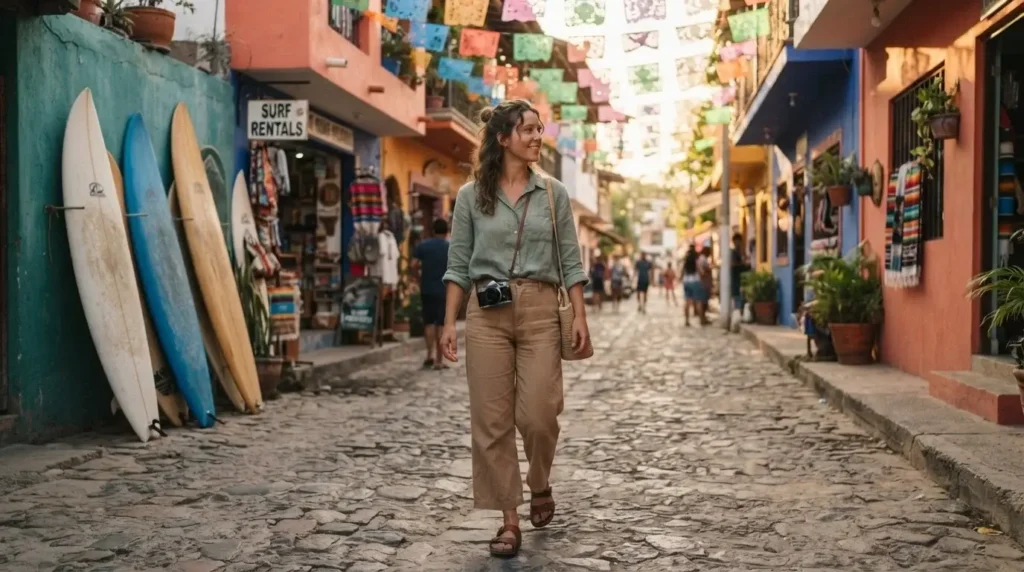
One important note on Sayulita: it sits in the state of Nayarit, which the U.S. State Department currently rates at Level 2 (Exercise Increased Caution) due to crime and terrorism. This is the same rating as Quintana Roo, where Cancun and Tulum are located. Puerto Vallarta and the Riviera Nayarit area have no specific travel restrictions for U.S. government employees under the current advisory. As with any destination, common-sense precautions apply: use app-based transportation like Uber rather than flagging down random taxis, don’t walk alone on dark roads at night, and keep your valuables out of sight on the beach.
Puerto Escondido: The Best Surf Town You Haven’t Booked Yet
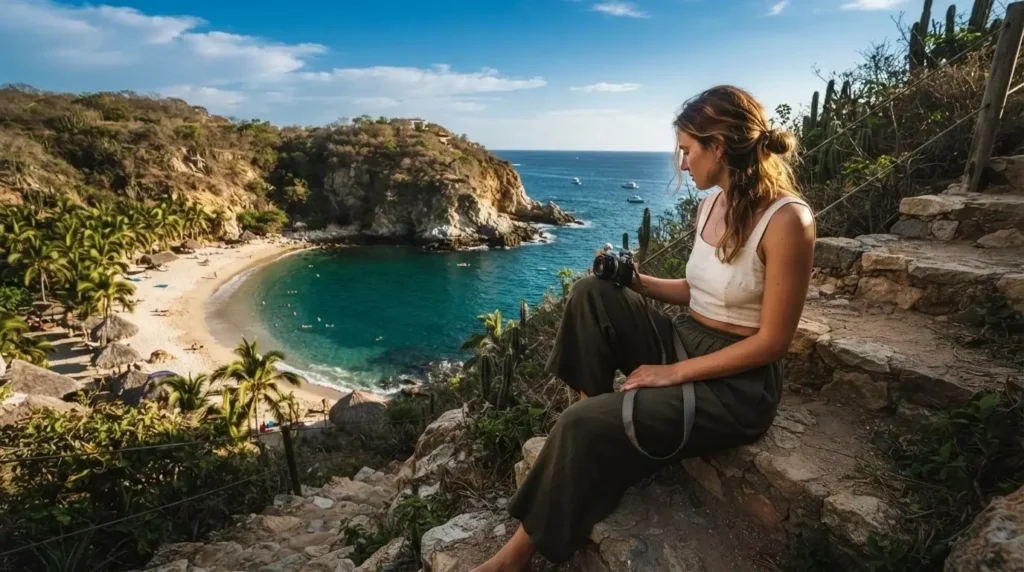
Puerto Escondido is in Oaxacan coastal territory and it operates at a different frequency from the rest of Mexico’s famous beaches. This is where serious surfers come for Zicatela Beach, one of the most powerful beach breaks in the world. But Puerto Escondido is not just for wave-chasers.
Playa Carrizalillo is a small, sheltered cove that’s ideal for swimming and snorkeling and completely calm. Playa Manzanillo is another quieter option nearby. The town has a genuine backpacker infrastructure with affordable hostels, excellent Oaxacan food, and a relaxed social scene that’s easy to tap into as a solo traveler.
Oaxacan cuisine is genuinely world-class and it’s well-represented even at casual beach spots.
Look for tlayudas (crispy flatbread with beans, cheese, and meat), fresh ceviche made with local catch, and mezcal poured properly with an orange slice and salt.
The state of Oaxaca sits at Level 2 (Exercise Increased Caution) in the current U.S. State Department advisory, and there are no specific restrictions on travel to Puerto Escondido or Huatulco. That said, reviewing the full advisory is always worth doing before any international trip. You can check the current Mexico travel advisory on the U.S. State Department website, where each state is rated individually so you can assess the exact regions you plan to visit.
Baja California Sur: The Third Coast Worth Knowing
Playa Balandra: The Calmest Water in Mexico
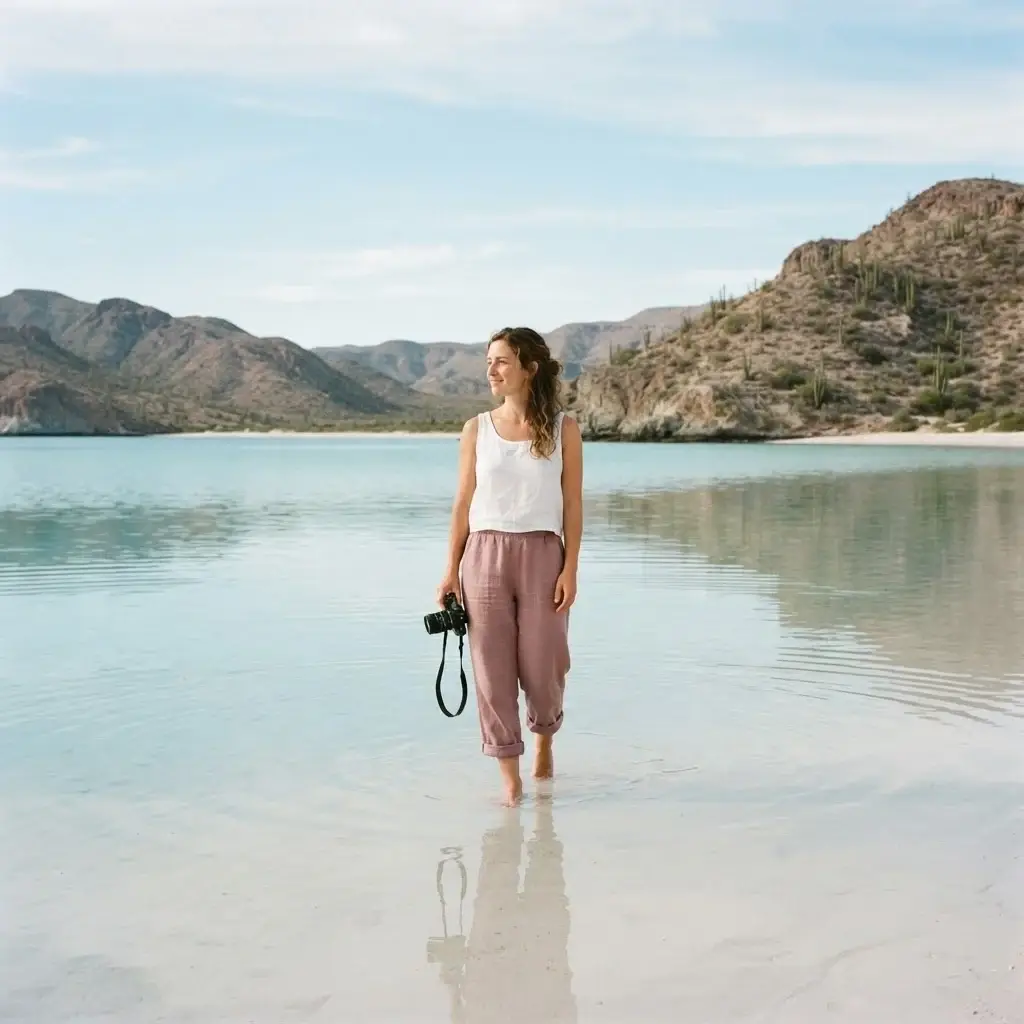
Playa Balandra, just north of La Paz in Baja California Sur, is one of those places that genuinely looks unreal in person. It’s a protected bay on the Sea of Cortez with shallow, aquamarine water so clear and still it looks like liquid glass. The sand is fine, the setting is ringed by desert hills, and the whole experience is as far from the Cancun mega-resort strip as it is possible to be while still being in Mexico.
The practical details matter here: Balandra is a protected natural area, and visitor numbers are capped at 400 people per day. Arriving early (by 8 am, ideally) is strongly recommended, especially in high season. There is no direct public bus. You can reach it by rental car, a guided day tour from La Paz, or by arranging a taxi driver for the day.
From what solo travelers who make this trip consistently report, La Paz is one of the most underrated cities in Mexico as a base.
It has a beautiful waterfront malecon, excellent seafood, a friendly local atmosphere, and serves as the launching point not only for Balandra but for snorkeling with whale sharks and swimming with sea lions in the Sea of Cortez.
Baja California Sur is rated Level 2 (Exercise Increased Caution) by the U.S. State Department, with no specific travel restrictions for U.S. government employees in the state.
What to eat: In La Paz and along the Baja coast, the fish and shrimp tacos are exceptional. The local specialty is tacos de marlin, made with smoked marlin fish, and they are worth going out of your way to find. Look for the informal stands rather than the tourist-facing restaurants for the best versions.
A Note on Safety and Smart Planning
Mexico’s safety reputation in international media is consistently more alarming than the on-the-ground reality in the beach destinations most travelers actually visit. That said, treating it lightly is not wise either. The U.S. State Department’s advisory system rates states individually, and the difference between a Level 1 and a Level 4 state is significant. Yucatan state (which includes Merida but not Tulum) is Level 1 (Exercise Normal Precautions). Quintana Roo (Cancun, Tulum, Isla Mujeres) is Level 2. Guerrero, which includes Acapulco, is Level 4 (Do Not Travel), full stop.
The practical rules that keep you safe at Mexican beach destinations are straightforward: use Uber or booked transfers rather than street taxis, avoid walking alone on unlit stretches of beach or road after dark, use ATMs inside banks or commercial buildings rather than standalone machines, and keep your passport in your accommodation safe rather than on the beach. These are habits, not fears. Once they become second nature, you spend the rest of your time simply enjoying yourself.
On beach water safety specifically: Mexico uses a beach flag warning system. A green flag means safe conditions. Yellow means moderate hazard and swim with caution. Red flags mean high hazard, strong currents, or rough conditions, and swimming is genuinely dangerous. These flags are not decorative. Rip currents are real on both coasts, particularly on the Pacific where the waves and undertow are stronger. If you’re unsure, ask a local or a beach club staff member. No beach photo is worth a riptide.
When to Go and What to Know Before You Book
The best overall window for Mexican beach travel is November through April. Temperatures are warm but not oppressive, hurricane season on the Caribbean side has passed, and sargassum levels are typically much lower. December through February is peak season for whale watching in Baja and for swimming with whale sharks near Isla Mujeres.
May through September is high summer: hot, humid on the Caribbean coast, and the period when sargassum risk is highest in Quintana Roo. The Pacific coast is less affected by humidity and sargassum is not an issue there. Budget travelers often find the best deals during shoulder months (May and October/November on the Caribbean), and the crowds are noticeably thinner.
On entry requirements: U.S. citizens do not need a visa to visit Mexico for tourism stays of up to 180 days. You need a valid passport book for any air travel into Mexico. A passport card works for land or sea entry but is not accepted at airports. Mexico issues its entry permit (FMMD) digitally at arrival in airports. There is no separate tourist card fee to pay ahead of time for air travelers.
The Bottom Line: Which Beach Is Yours?
If this is your first trip to Mexico and you want the classic turquoise-water experience with easy logistics and a safe, walkable destination, go to Isla Mujeres. Take the 20-minute ferry from Cancun, rent a golf cart, and spend two or three nights. You won’t regret it.
If you want a more social, adventure-centered experience and you’re curious about surfing, go to Sayulita. It’s approachable, affordable, and the kind of place where it’s very easy to meet other travelers.
If you want something genuinely off the usual circuit without it being difficult or remote, go to Puerto Escondido. The food, the energy, and the waves are all exceptional.
If you want the most visually unique beach experience in Mexico, make the trip to Playa Balandra in Baja. It looks like nothing else.
The one thing I’ll tell anyone planning a beach trip, whether it’s to Mexico or anywhere else: stop waiting for the perfect timing, the perfect budget, or the perfect travel companion. Mexico’s beaches have been waiting for you. The only wrong choice is not going at all.