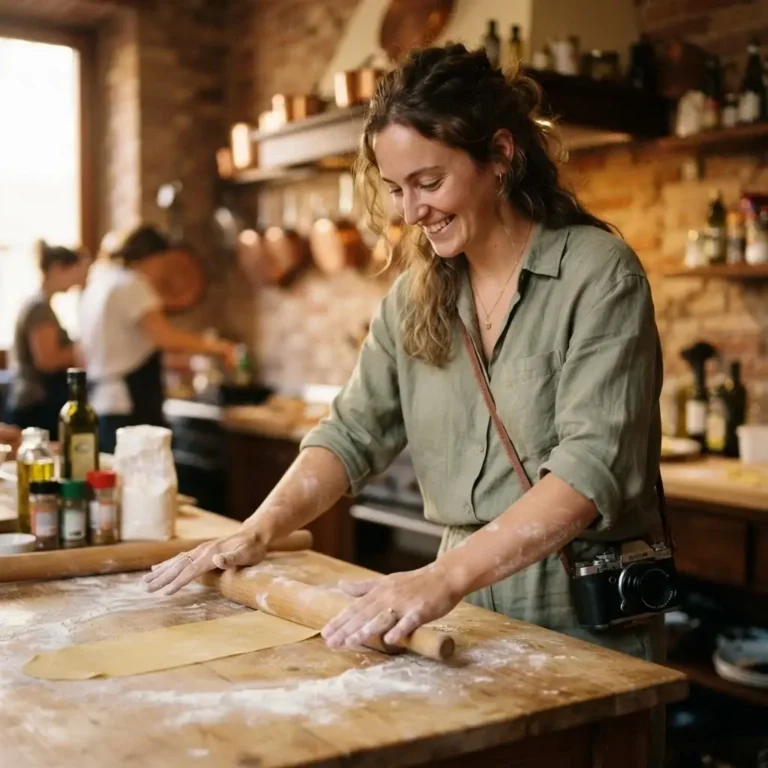
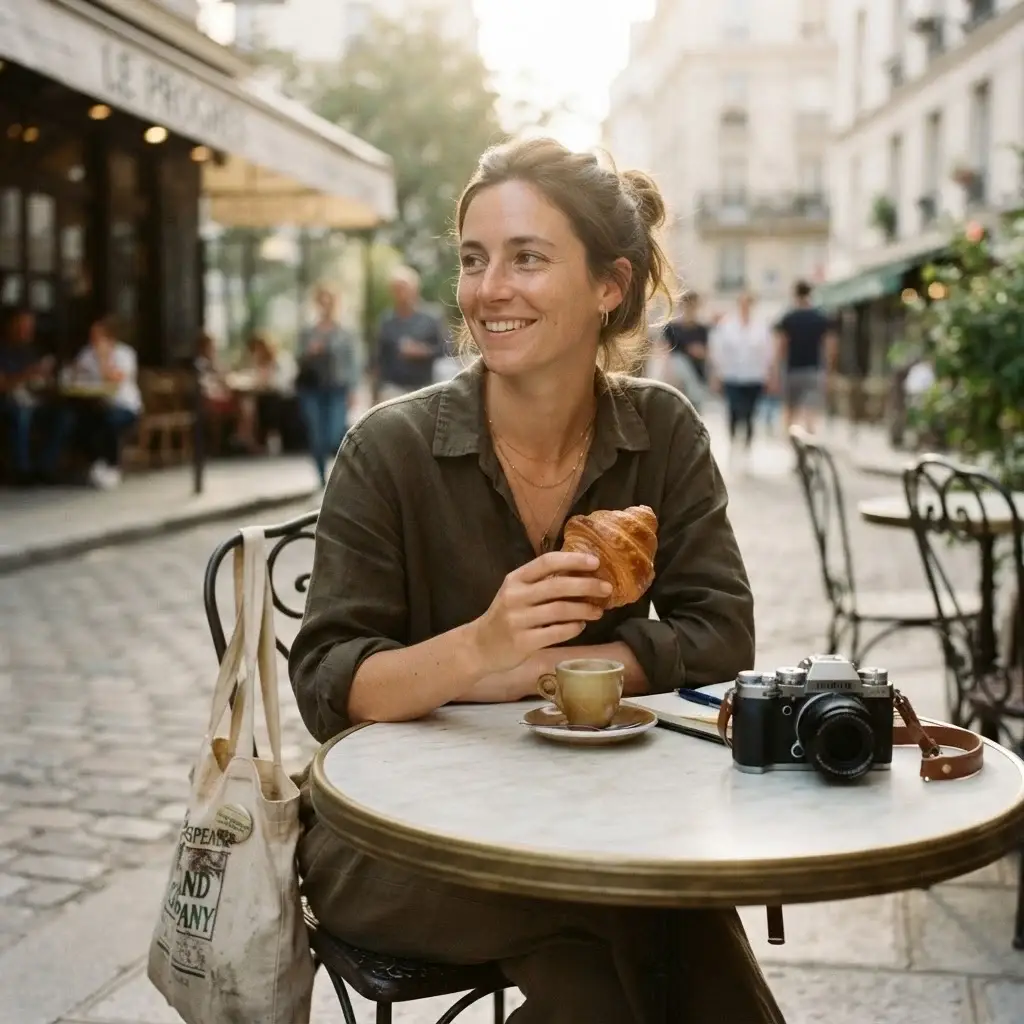
Let me tell you where a lot of my best travel memories actually live. Not on top of a famous monument. Not in a museum. They live at small tables, early in the morning, with a warm pastry in one hand and a coffee cooling next to me while I watched a city wake up.
When I first backpacked solo across Europe, I was on a tight budget. I had left my office desk in New York behind, I was working flexible jobs to fund the trip, and I counted every euro. But I quickly learned something that changed how I traveled. A single pastry, bought fresh from the right little bakery, could be the highlight of an entire day. It cost almost nothing. It taught me about the place. And sitting alone with it never once made me feel lonely. It made me feel like I belonged there.
So this is not a list of twenty desserts you’ll scroll past and forget. This is a real guide to the most delicious pastries to try in Europe, written for the traveler who wants to actually find the good ones, eat them in the right spot, and feel confident doing it alone. I’ll tell you what to order, roughly what it costs, when it’s freshest, and how to skip the tourist-trap versions. Grab a coffee. Let’s go bakery hopping.
First, A Little Vocabulary That Makes You Feel Like A Local
Before we get into specific pastries, two words will save you a lot of confusion once you’re standing on a European street corner deciding where to eat.
A boulangerie is a bakery. It focuses on bread and the buttery breakfast pastries called viennoiserie, which is the family that includes croissants and pain au chocolat. A pâtisserie is where you find the fancier, jewel-like cakes and tarts. Many shops are both. In France especially, the word “pâtisserie” on a window is a promise of something a little more special.
The other thing to know is the magic of laminated dough. Croissants, kouign-amann, and their cousins are made by folding butter into dough over and over to create dozens of paper-thin layers. That’s why a great one shatters when you bite it and a bad one just feels chewy. Once you understand lamination, you can spot quality from across the room, and that small bit of knowledge does wonders for your confidence when you walk in solo.
France: The Croissant, And Why Morning Timing Matters
You cannot talk about the most delicious pastries to try in Europe without starting in France, and honestly, the world agrees. Food and Wine named Paris the top city on the planet for pastry in 2025, and it earns that reputation on nearly every street corner.
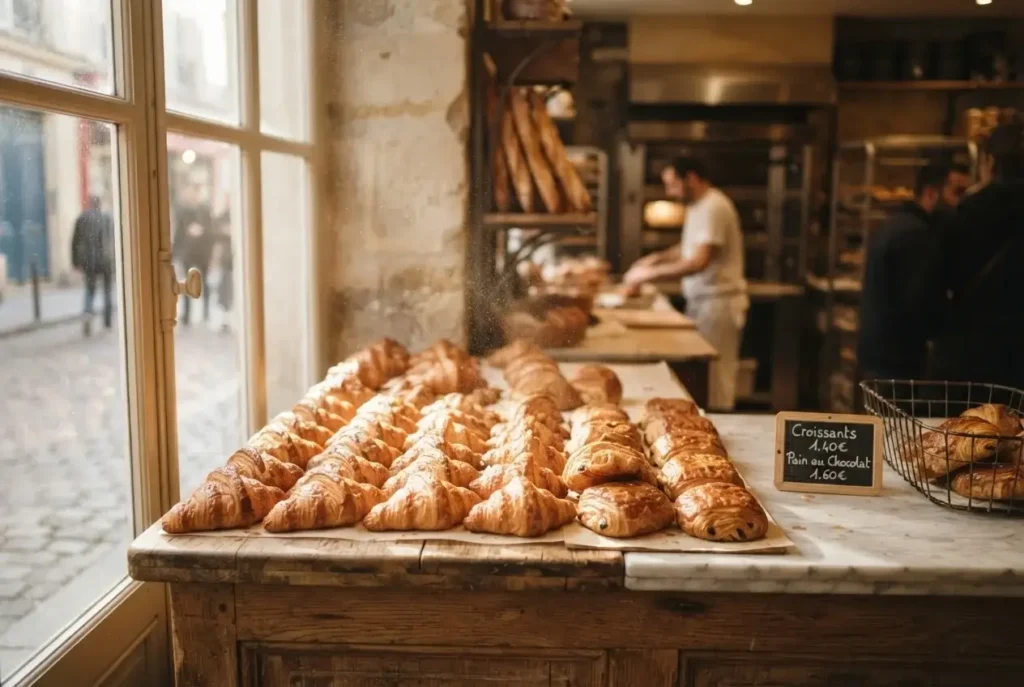
The croissant is the one everyone knows, but here’s what the listicles rarely tell you. Timing is everything. Croissants are baked in waves through the morning, and the best ones are eaten within a couple of hours of coming out of the oven. If you walk into a boulangerie at 8 or 9 in the morning, you’re getting them near their peak. Walk in at 4 in the afternoon and you may get one that has been sitting out. A fresh croissant should feel light, almost hollow, and flake all over your shirt. If it doesn’t, you didn’t do anything wrong, you just got there too late.
Order a “croissant au beurre” for the pure butter version, which is the one you want. Expect to pay somewhere around one and a half to two and a half euros for a good one. While you’re there, get a pain au chocolat too. It’s the same laminated dough wrapped around two batons of dark chocolate, and it may quietly become your favorite.
Food in France runs so deep that the country’s whole approach to eating is recognized by UNESCO, whose listing for the gastronomic meal of the French captures just how central shared food and ritual are to the culture. You don’t need a fancy restaurant to feel part of that. A croissant at a corner table counts.
If eating alone in a French café makes you nervous, here’s my honest advice from years of doing exactly that. Nobody is watching you. Solo diners are completely normal in Europe, especially at breakfast. Order at the counter, pick a small table, and let yourself enjoy it slowly. That quiet, unhurried moment is the point.
Brittany: Kouign-Amann, The Pastry Worth The Detour
Here is the pastry most travelers have never heard of and never forget once they try it. The kouign-amann, pronounced “kween-yah-MON,” comes from Brittany in northwest France. The name literally means “butter cake” in the Breton language, and it does not lie.
Imagine croissant dough, but with sugar folded into the layers along with the salted butter, then baked until the sugar caramelizes into a crackly, golden shell around a soft, rich center. It is gloriously, unapologetically indulgent. According to the official Brittany tourism board, the kouign-amann was created around 1860 in the coastal town of Douarnenez, and a proper one is baked fresh that same day, round, patterned with little diamond shapes, and caramelized but never burnt.
If you’re routing a trip through France, this is a real reason to venture beyond Paris into Brittany’s coastal towns like Douarnenez, Quimper, or Saint-Malo. You’ll find it in Parisian bakeries too, and increasingly around the world, but eating one in Brittany, near the sea where it was born, is the kind of small, specific experience that makes solo travel feel rich. Look for it fresh in the morning and eat it slightly warm if you can. One is genuinely enough. Trust me.
Portugal: Pastel De Nata, And The Original Versus The Copy
Now we head to Lisbon, and to my personal pick for the most joyful pastry-per-euro experience in Europe.
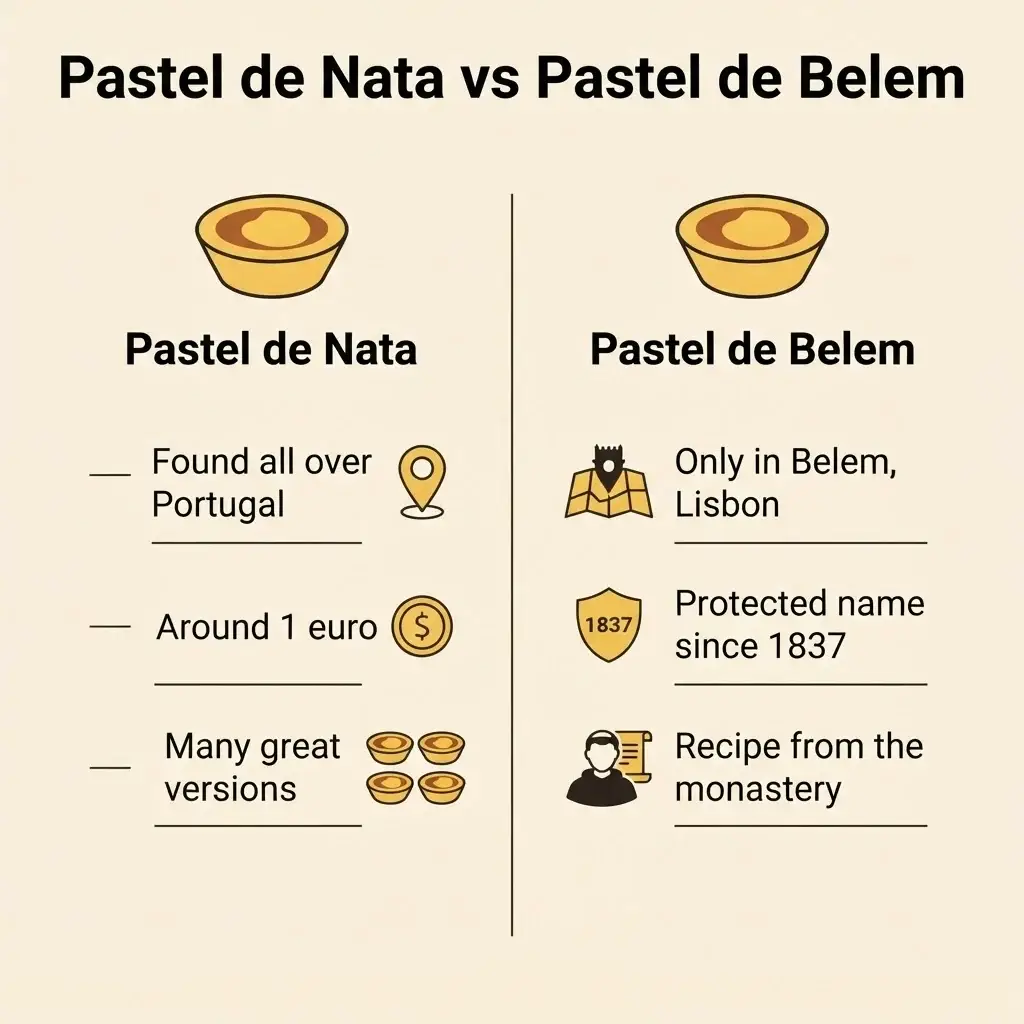
The pastel de nata is a small custard tart in a shatteringly crisp shell, the top scorched almost black in spots, the center still wobbly and warm. You’ll find good ones all over Portugal, and most cost a little over one euro, which makes it one of the great cheap thrills in European travel.
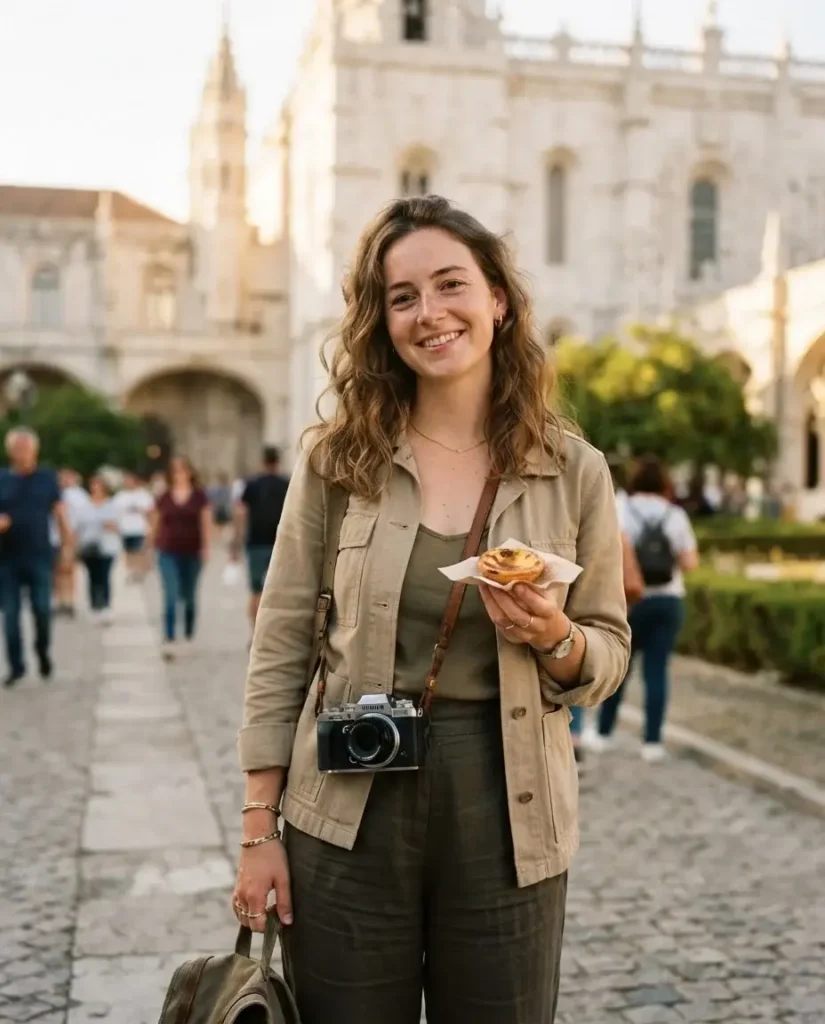
Here’s the thing every first-timer wonders. What’s the difference between a “pastel de nata” and a “pastel de Belém”? The answer is a great story. In the Belém district of Lisbon, right beside the stunning Jerónimos Monastery, sits a bakery that has been making these tarts since 1837 using a recipe descended from the monastery’s monks. Only that specific bakery can legally call its tarts “Pastéis de Belém.” Everywhere else, they’re “pastéis de nata.” So all pastéis de Belém are pastéis de nata, but only the originals from that one shop carry the protected name.
Is the original worth the line? I’d say yes, once, for the history and the ritual of it. But don’t stress if the queue is long, because Lisbon is full of excellent versions with no wait. Eat it warm, dust it with the cinnamon and powdered sugar they set out, and pair it with a small strong coffee called a “bica.” While you’re in Belém, the monastery next door is a UNESCO World Heritage site and pairs perfectly with your tart, and Portugal’s official tourism resources make it easy to plan that stretch of the city into a simple morning walk.
Austria: Sachertorte, Apple Strudel, And The Coffeehouse Ritual
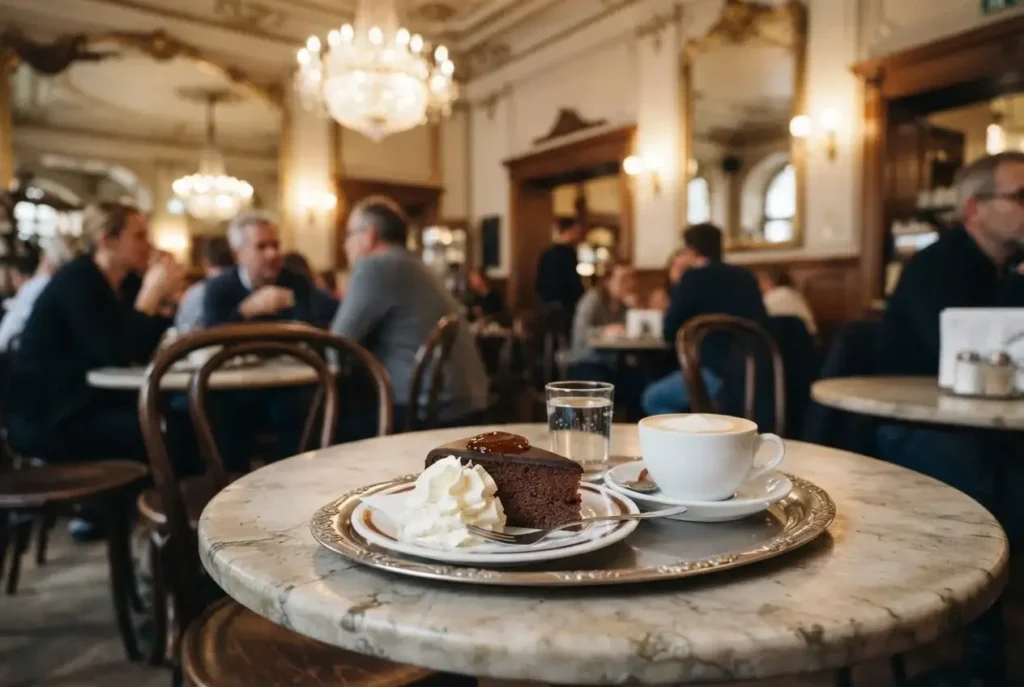
Vienna deserves its own chapter in any pastry lover’s story, and not just for the cakes. The whole ritual of sitting in a Viennese coffeehouse is so special that it’s protected as culture. The Austrian tourism board explains how Viennese coffeehouse culture has been recognized by UNESCO as intangible cultural heritage since 2011, celebrated for its marble tables, bentwood chairs, and the unhurried permission to sit for hours over a single coffee. For a solo traveler, this is heaven. In Vienna, sitting alone with a newspaper and a slice of cake is not just accepted, it is the tradition.
The most famous cake here is the Sachertorte, a dense chocolate cake with a thin layer of apricot jam and a firm dark chocolate glaze, usually served with unsweetened whipped cream. The “Original Sacher-Torte” belongs to Hotel Sacher, whose own history explains that the Original Sacher-Torte traces back to 1832, when a young Franz Sacher created it for a prince. A rival version at the elegant Demel bakery sparked one of the most famous cake feuds in history. You can taste both and pick a side, which is a genuinely fun solo mission for an afternoon.
Don’t leave without apfelstrudel, either. Real Viennese apple strudel uses dough stretched so thin you could read a newspaper through it, wrapped around spiced apples, raisins, and breadcrumbs. Order it warm with a scoop of vanilla, or with a “Melange,” Vienna’s signature coffee that’s half espresso and half steamed milk. Learning a few coffee words before you go, like Melange or Verlängerter, makes ordering feel effortless and a little bit thrilling.
Italy: Cannoli, And Why Sicily Does It Best
Italy could fill a book, but if I’m sending you toward one iconic pastry, it’s the cannolo, best of all in Sicily where it was born.
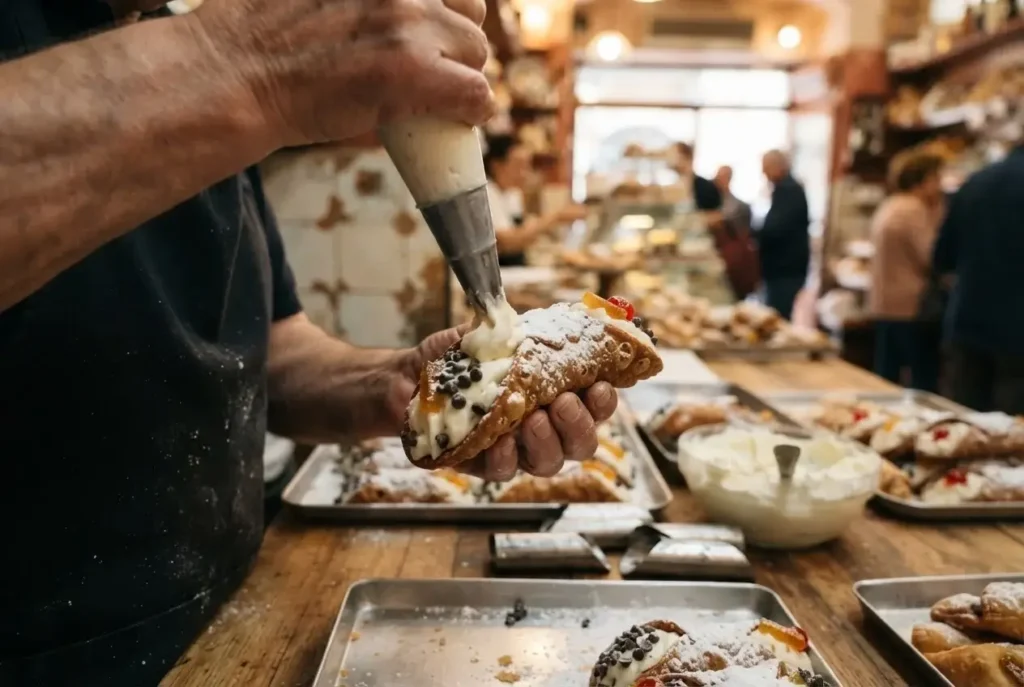
A cannolo is a crisp fried tube of dough filled with sweet, fresh ricotta, often dotted with chocolate chips or candied fruit and dusted with powdered sugar. The single most important rule, and the one tourists most often get wrong, is this. A good cannolo is filled to order, right before you eat it. If the shell has been sitting pre-filled in a case for hours, it goes soggy, and you’ve missed the entire point. Watch for a counter where they pipe the ricotta in fresh when you order. That’s your sign you’ve found the real thing.
The official Visit Sicily page describes cannoli siciliani as the island’s most typical sweet, originally a carnival treat that became a year-round icon. In Sicily you’ll also meet variations you won’t see elsewhere, and towns like Modica are famous for their distinctive chocolate. If your European route touches southern Italy, seek out a local pasticceria rather than a tourist strip near the big sights. The difference in quality is enormous, and the price is usually lower too, often just a couple of euros.
Eating a fresh cannolo standing at a Sicilian bar counter, elbow to elbow with locals having their morning coffee, is exactly the kind of unglamorous, authentic moment I’ll always choose over a fancy restaurant.
The Netherlands: Stroopwafel, Fresh Off The Iron
Let’s end the tour with something humble that I have real affection for. The stroopwafel is two thin, crisp waffle wafers pressed together with a layer of warm caramel syrup in the middle. Most travelers only ever try the packaged supermarket kind, and they’re fine, but they are not the experience.
The version you want is made fresh in front of you at a market stall, still warm and slightly gooey in the center. The city of Gouda is closely tied to the stroopwafel’s history, and the official Netherlands tourism site notes you can even visit a working Kamphuisen Siroopwafelfabriek in Gouda to see how they’re made. A classic local trick is to rest one on top of your hot coffee or tea for a minute so the steam softens the caramel inside. It’s a small ritual, it costs very little, and it’s the kind of thing you’ll want to teach every friend back home.
How To Actually Eat Your Way Through Europe (Without Overthinking It)
Now for the practical part, the stuff the pretty listicles skip.
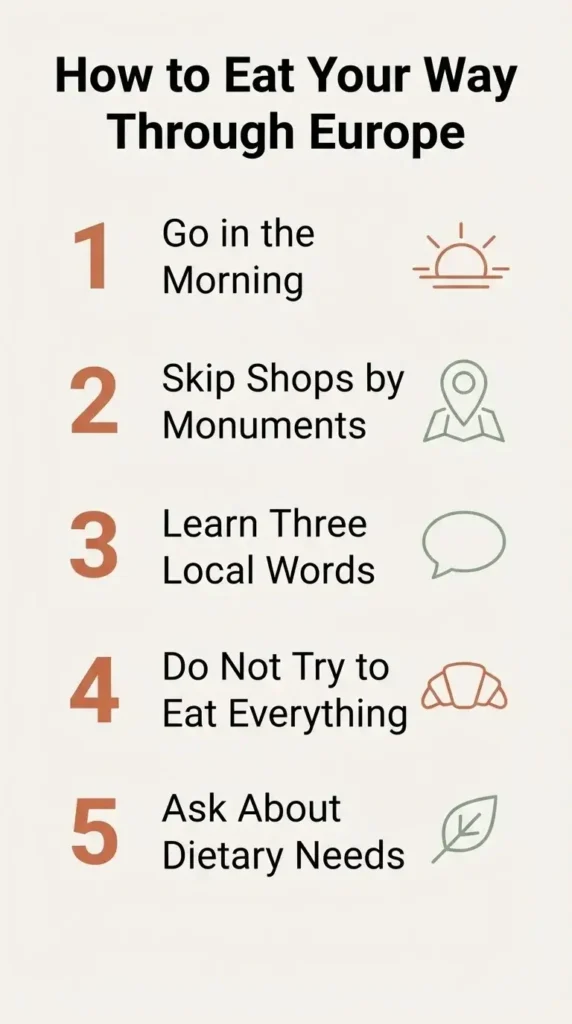
Go in the morning. Almost every pastry on this list is best fresh, and fresh means early. Build your days around a morning bakery stop. It’s cheap, it’s delicious, and it sets a lovely tone before the crowds hit the main sights.
Skip the shops right next to famous monuments. The bakery on the busiest tourist square is rarely the best one. Walk two or three streets away into a residential area and follow where locals are lining up. That short walk is almost always worth it.
Learn three words in the local language. “Hello,” “please,” and “thank you” plus the name of the pastry is genuinely all you need to order with confidence. People respond warmly to the effort, and it melts away that first-timer nervousness fast.
Don’t try to eat everything. One excellent pastry, eaten slowly and actually enjoyed, beats five rushed ones. Travel that turns into a competition stops being fun. Pick the one that speaks to you in each place and savor it.
If you have dietary needs, ask. Larger cities increasingly have bakeries with gluten-free or dairy-free options, though traditional laminated pastries are butter-heavy by nature. A quick online search for a specialty bakery in each city before you arrive saves stress. Solo travel means you’re free to plan exactly around what your body needs, which is one of its quiet gifts.
Why A Simple Pastry Belongs In Your Travel Story
I know a guide about baked goods might seem light next to grand talk of adventure and personal growth. But here’s what years on the road taught me. The confidence to travel doesn’t arrive in one big dramatic moment. It’s built in small ones. Walking into a bakery where you don’t speak the language and successfully ordering a croissant is a tiny victory. Sitting alone in a Viennese coffeehouse and feeling perfectly at ease is another. Stack enough of those small wins together and one day you realize you’ve become the kind of person who can go anywhere.
So when you finally take that trip you keep daydreaming about, don’t just photograph the pastries for later. Sit down. Eat one warm. Watch the street. Let it be the whole point of an hour. Those are the mornings you’ll remember long after the famous landmarks blur together. The world is full of small, delicious reasons to be brave. Go find yours.