Most Scenic Wilderness Cabins to Stay in Around the World

There is a specific kind of quiet you only find in the wilderness. Not the quiet of a hotel room with the curtains drawn. A deeper quiet, the kind that settles in when there are no streetlights, no distant sirens, no background noise of other lives carrying on. Just wind, or water, or the sound of nothing at all. If you have ever wondered what it would feel like to wake up inside that quiet, with mountains or fjords or ancient forest filling every window, a wilderness cabin is the experience you have been circling without quite naming it.
I spent years guiding tourists through New York City’s streets, pointing at skyscrapers and telling the story of a city I loved but also desperately needed to escape. The moment I finally allowed myself to trade the predictable for the genuinely unknown, starting with a backpack across Europe and eventually reaching forests and highlands and landscapes that felt ancient and alive, I understood something I could not have read in a book. The world is far bigger and far more accessible than most people let themselves believe. Wilderness cabins are one of the best proofs of that.
This guide is for anyone who has saved that photo of a wooden cabin perched above a fjord, or a glass-walled hut on a rocky ledge, and thought: “Maybe one day.” Let’s turn maybe into a plan.
Why a Wilderness Cabin Changes the Way You Travel
A wilderness cabin is not simply a cheaper alternative to a hotel. It is a fundamentally different kind of experience. When you stay somewhere truly remote, you stop being a visitor passing through a place and start actually being somewhere. You notice the light changing at dusk. You hear weather approaching before it arrives. You cook a simple meal and it tastes better than it should. You sleep without an agenda.
For solo travelers especially, that shift is powerful. When I traveled alone through Europe the first time, I learned more about myself in two weeks than I had in the previous two years of routine. A wilderness cabin takes that inward turn and gives it space, literally and figuratively. There is no front desk to check in with, no tour group gathering in the lobby, no itinerary pulling you somewhere else. There is just you and the landscape, and eventually you realize that combination is exactly enough.

The variety of wilderness cabin experiences available globally is also far wider than most people realize. At one end of the spectrum, you have free open huts you can walk to with a pack on your back. At the other end, you have architect-designed cabins perched on Norwegian cliff faces with floor-to-ceiling glass and a Snøhetta signature on the blueprints. In between, you have rustic DOC huts in New Zealand’s backcountry, Parks Canada log cabins beside glacier lakes, and fly-in lodges in the Alaskan interior where the nearest road is many miles away. There is a version of this that fits almost every budget and comfort level.
Norway: Fjords, Designer Cabins, and 550+ Huts for Hikers
If I were building a case for wilderness cabin travel as an art form, I would start with Norway. The combination of dramatic fjord landscapes and a deeply embedded culture of friluftsliv, or outdoor life, means that Norwegians have been perfecting the wilderness stay for generations. Today, that tradition ranges from simple mountain huts to genuinely jaw-dropping architectural experiments bolted to cliff faces above the sea.
The Fjord Norway official tourism page is one of the best places to start understanding what is available in the region, and it covers everything from treehouse cabins to cliffside glass structures. One of the most talked-about is The Bolder, four cabins designed by the celebrated firm Snøhetta, suspended above the Lysefjord near Preikestolen. The views are hundreds of meters straight down to the water, which means this one is not for anyone with a fear of heights. But for those who can handle it, waking up there is reportedly unlike anything else in Europe. Not far away, Woodnest in Odda is a treehouse cabin built around a living spruce tree above the Sørfjord, sleeping four people with a toilet and enough window space that the forest genuinely feels like the walls.
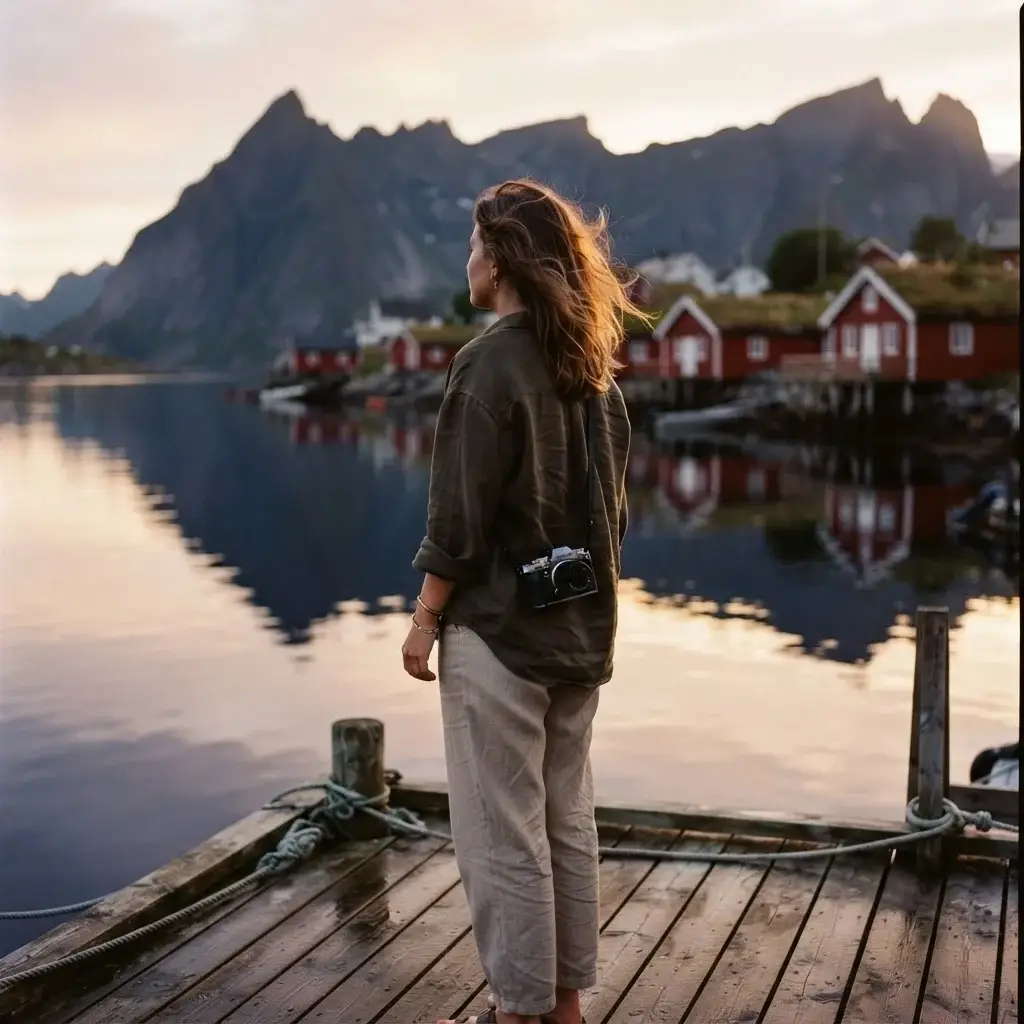
But Norway’s cabin culture goes far beyond the photogenic architectural projects. The Norwegian Trekking Association, known as DNT, operates a network you can read about on the Visit Norway hiking page that includes more than 550 cabins spread across the country, from the fjords to the high mountain plateau. These range from self-service huts where you leave payment in an honesty box to fully staffed lodges that serve three-course dinners. A DNT membership reduces the per-night cost significantly. For solo hikers who want to spend several days moving through the Norwegian mountains without carrying a tent or cooking all their own food, this network is one of the great logistical gifts in outdoor travel. The Lofoten Islands specifically offer rorbuer, the traditional red fisherman’s cabins perched directly over the water, many of which have been converted into comfortable stays. Renting a rorbu gives you the fishing village atmosphere, dramatic mountain backdrops, and the very particular light that Norwegian coastal landscapes are famous for.
Best time to go: June through September for hiking and long daylight hours. February through March for northern lights in northern Norway and Lofoten.
Alaska, USA: The Most Dramatic Wilderness on the Planet
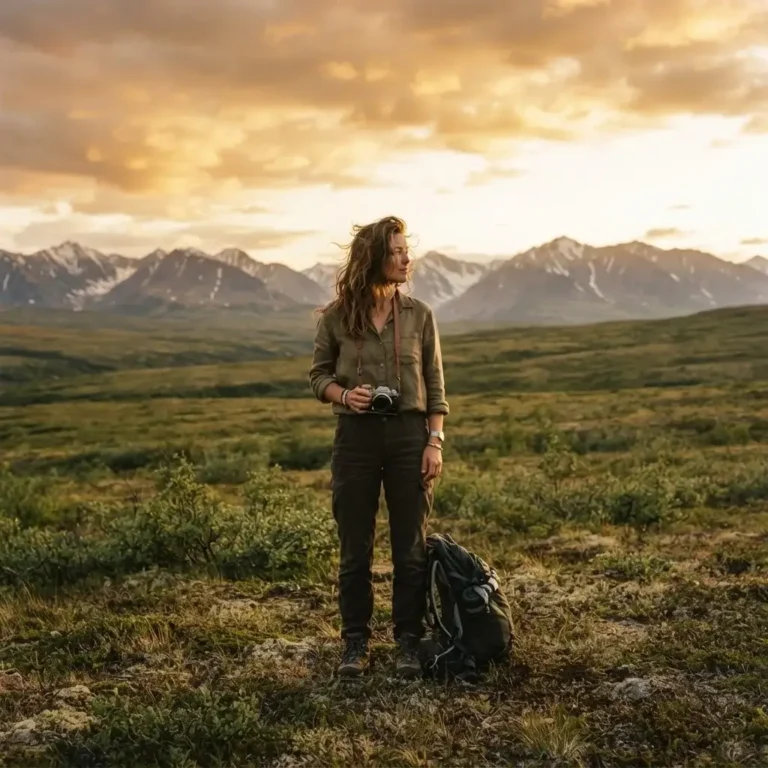
Alaska sits in a category of its own when it comes to wilderness intensity. The scale is something you truly cannot prepare for. The national parks alone cover tens of millions of acres, and deep inside one of the most famous of them, Denali National Park, a handful of privately owned lodges sit at the end of a 92-mile park road that currently has no vehicle access due to an ongoing landslide.
The most well-known of these is Camp Denali, a wilderness lodge made up of 19 hand-crafted guest cabins, each one positioned to have a direct picture-window view of Denali itself and the Alaska Range. The cabins are simple but well-appointed, and the entire experience is all-inclusive once you are on site. The rate runs approximately $1,475 per person per night with a minimum stay of three nights, plus a separate round-trip flight cost of around $800 from the park entrance to the Kantishna area. It is not a budget experience. But for what it offers, including guided naturalist programs, tundra hiking, wildlife observation, and the extraordinary fact of being genuinely surrounded by six million acres of wilderness, few places on earth compare.
For travelers who want the Denali experience with lower cost and more independence, the National Park Service lodging page for Denali lists all the options inside and outside park boundaries clearly, including the other remote lodges in the Kantishna area. The NPS page also explains the current access situation so you know exactly what to plan for before you book flights.
What Alaska wilderness cabin stays require, more than almost any other destination on this list, is advance planning. Peak summer dates at Camp Denali and similar lodges sell out months or even over a year ahead. Wildlife in this part of the world is genuinely wild, which means bear awareness and proper food storage practices are non-negotiable. Solo travelers should be comfortable with genuine remoteness here. There is no cell signal, no emergency services nearby, and the weather changes fast. That said, experienced solo travelers consistently describe the Alaska backcountry as one of the most profoundly moving experiences of their lives. Seeing a grizzly bear or a wolf from a safe distance, watching Denali emerge from cloud cover at sunset, or sitting alone on the tundra with silence extending in every direction, these are not things that translate into social media captions. They just change you.
Best time to go: Mid-June through early September for summer wildlife and long days. March for snowshoeing and possible northern lights.
New Zealand: The DOC Hut Network and Some of the Best Backcountry on Earth
New Zealand has one of the most traveler-friendly wilderness hut systems in the world, run by the Department of Conservation and genuinely accessible to anyone willing to lace up a pair of boots. The country’s landscapes cross alpine passes, dense rainforest, volcanic plateau, fiords, and sub-alpine tussock grasslands, and the hut network threads through all of it.
The DOC booking and payment page explains the system clearly. Some huts are bookable in advance, others operate first-come, first-served. A Backcountry Hut Pass gives you unlimited access to most Serviced and Standard huts for the period you purchase it for, which is excellent value if you are spending multiple weeks walking New Zealand’s trails. For Great Walks specifically, including the Milford Track, Routeburn Track, and Kepler Track, hut fees range from roughly NZD $15 to $80+ per person per night depending on the category of hut and the time of year. Great Walk season runs from late October through late April.
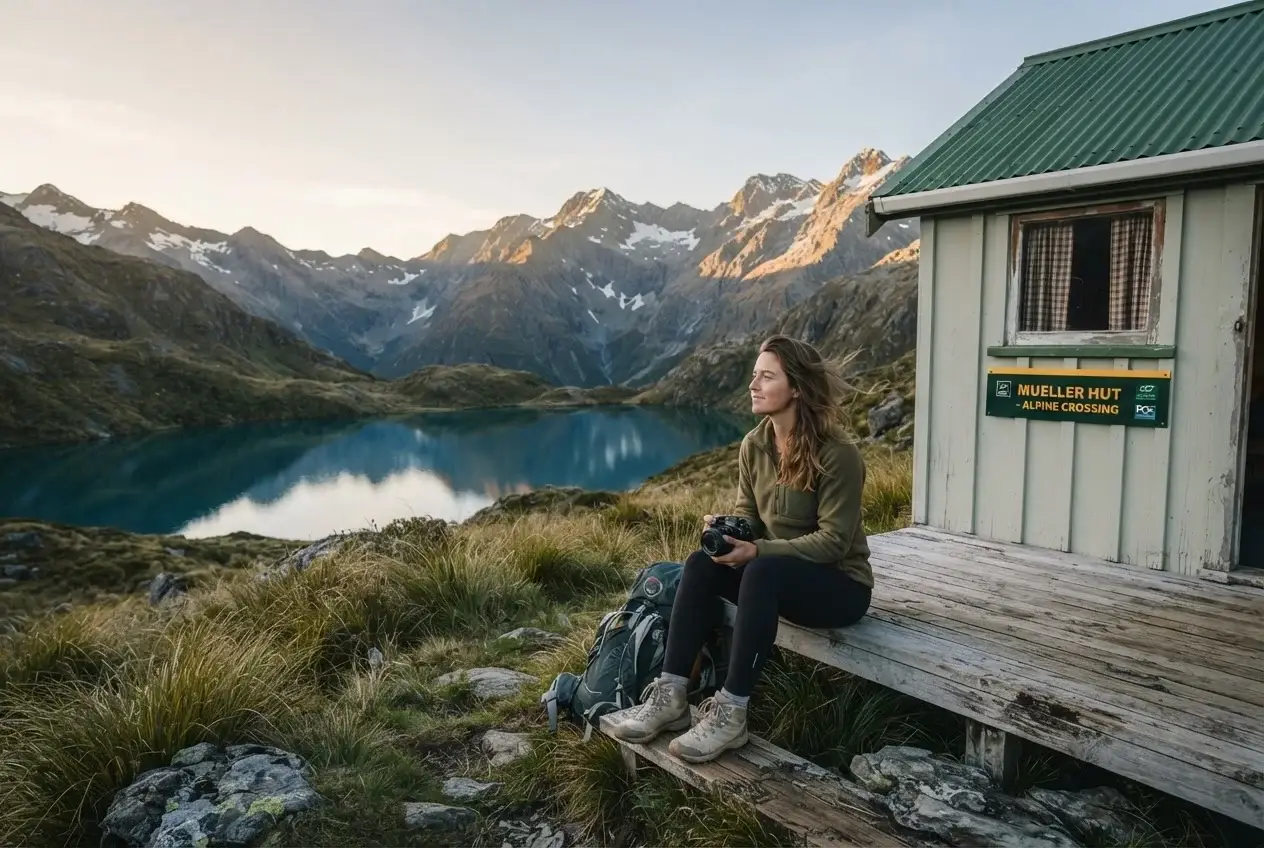
From a scenic standpoint, the huts are situated in some of the most breathtaking terrain on the planet. Mueller Hut, sitting high above the Aoraki Mount Cook village in the Southern Alps, has panoramic views of the Ben Ohau Range and the Tasman Glacier. Luxmore Hut on the Kepler Track overlooks Lake Te Anau with the Fiordland mountains stacked up behind it. Angelus Hut in the Nelson Lakes National Park sits beside a crystal alpine lake surrounded by a natural rock amphitheater.
For solo travelers, New Zealand’s hut system is genuinely one of the most encouraging entry points into wilderness cabin travel that exists anywhere. Huts are shared, which means you are almost always around other hikers even in the backcountry. You are not completely alone unless you choose to be. The infrastructure is reliable, DOC rangers are reachable, and the trails are well-marked. It is adventurous without being reckless, which makes it a wonderful first real wilderness experience.
Best time to go: November through April for Great Walks and alpine routes. Outside peak season (May through October), many tracks are quieter but some huts close.
Finland: Free Wilderness Huts and the Art of Being Alone in the Arctic
Finland has a travel secret that most people from outside Scandinavia do not know about: the country maintains a network of open wilderness huts that any hiker can use, free of charge, for one to two nights at a time. No reservation. No fee. No lock on the door.
The Finnish outdoor authority at luontoon.fi explains the system and maps all the huts across the country’s national parks and hiking areas. The huts are basic but genuinely functional: they typically have sleeping bunks, a wood-burning stove, firewood, basic cookware, and an outdoor toilet. You bring your own food and sleeping bag. The rule is simple: if someone arrives after you, you make room and move on the next day. It is one of the most civilized systems in outdoor travel.
Lapland, the vast wilderness region in northern Finland, is where these huts reach their most dramatic setting. In summer you hike through pine and birch forest, wade across crystal rivers, and watch reindeer graze across open fell (treeless arctic highlands). In winter the same landscape transforms into a snow-covered world where northern lights are a real possibility most nights between September and March. The Pallas-Yllästunturi National Park is one of the best areas to explore with these huts as your base, and solo hikers consistently describe the experience as one of the most restorative things they have ever done.
Finland’s everyman’s right (jokamiehenoikeus) also means you can camp almost anywhere in the countryside, which adds a layer of freedom to wilderness travel here that is genuinely unusual. For budget-conscious solo travelers who want a serious wilderness experience without serious costs, Finland is one of the most underrated options on earth.
Best time to go: July through September for hiking and midnight sun. February through March for snowshoeing and northern lights.
Patagonia, Chile: Wilderness Cabins at the Edge of the World
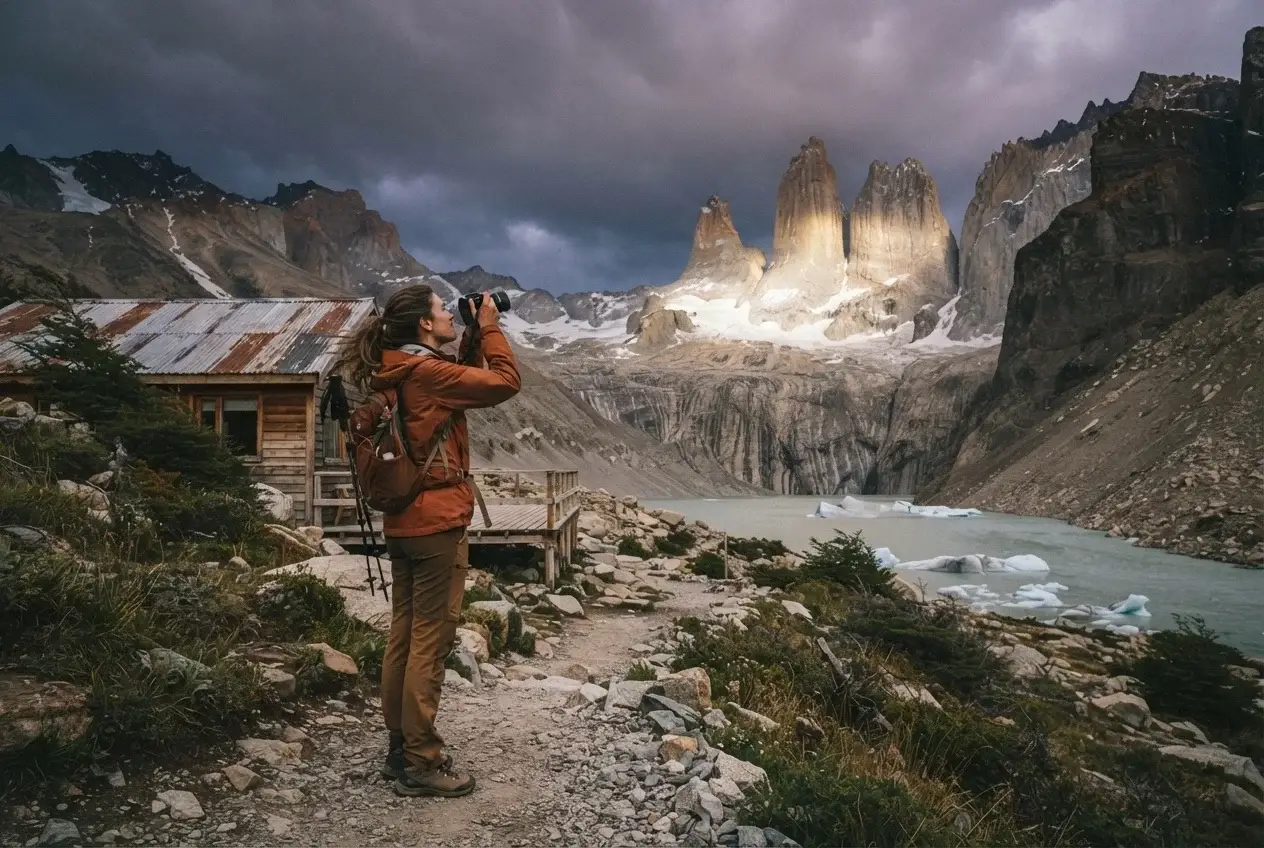
Patagonia sits at the southern tip of South America, and the Torres del Paine National Park in Chilean Patagonia is one of those landscapes that looks like it was designed specifically to make human beings feel small and grateful simultaneously. The granite towers, turquoise lakes, enormous glaciers, and almost theatrical weather make it a place that solo travelers plan for years and then return to again and again.
Accommodation inside Torres del Paine ranges from full camping to refugios (mountain huts) and small cabins along the park’s famous trekking routes. The W Trek and the O Circuit are the two main multi-day routes, and accommodation along both fills up extremely fast. The Las Torres Patagonia site, which is the primary concessioner managing lodging and trekking services inside the park, is where to begin understanding the options and checking availability. Reservations for peak season (November through March) often sell out within weeks of opening, so planning at least six months to a year in advance is not excessive here.
For solo travelers, Patagonia requires a different kind of preparation than a DOC hut in New Zealand or a DNT cabin in Norway. The weather is genuinely wild, with strong winds, rain, and rapidly changing conditions even in summer. Layering systems matter here, and gear quality makes a meaningful difference. The distances between refugios on the W Trek are manageable but the terrain is demanding in places. That said, from what experienced solo trekkers consistently report, the challenge is very much the point. The feeling of arriving at a mountain hut after a day of real effort, with the Cuernos del Paine lit by late afternoon sun and the wind finally quiet for a moment, is the kind of thing that reconfigures how you see your own capacity.
Best time to go: November through March for the main trekking season. October and April are shoulder months with fewer crowds and unpredictable but sometimes beautiful weather.
Scotland: Remote Cabins in the Highlands and Something Ancient in the Air
Scotland’s highlands carry a weight of landscape and history that is hard to describe without sounding theatrical, but it is genuinely there in the air when you are walking through the glens. The country is not huge in area, but the Scottish Highlands are vast in feel, and the network of remote bothy shelters, forest cabins, and Highland retreats offers an experience of wilderness that is accessible without requiring a transatlantic flight.
Bothies are Scotland’s version of the free wilderness hut, maintained by the Mountain Bothies Association and available to any walker, free of charge, on a no-reservation basis. They are more rustic than Finland’s huts, often old stone shepherd’s cottages, but the atmosphere is unlike anything else: a fire in the grate, hills rolling away in every direction, and an almost physical sense of history in the walls. For solo travelers who want something with a bit more comfort, options like Eagle Brae’s five-star log cabins in the remote Highlands blend genuine seclusion with quality without sacrificing the feeling of true wilderness.
From what solo travelers consistently report about the Highlands, the experience rewards slowing down. Walking a single glen over two days, sitting at a loch at dusk watching the light change from gold to gray, finding a bothy and meeting other walkers who were equally surprised by how quickly the weather shifted, these are the stories people carry home from Scotland. The landscape does not need to be dramatized. It is dramatic on its own.

Best time to go: May through September for the most stable walking weather, though Scotland is famously unpredictable year-round. Midges (small biting insects) are a real consideration June through August, especially in the west.
Practical Advice Before You Book: What Every Wilderness Cabin Traveler Should Know
Booking windows matter more than you think. Camp Denali in Alaska books out a year or more in advance for peak dates. Torres del Paine refugios are gone within weeks of reservations opening. New Zealand’s Great Walk huts open reservations in the first week of June for the following summer season. If a specific cabin or location is on your list, find out when reservations open and put it in your calendar.
Budget range is wider than people assume. Finland’s open huts are free. New Zealand’s DOC huts run from roughly NZD $15 to $80+ per night. Norway’s DNT network starts around NOK 200 to 600 depending on type and membership. Scotland’s bothies are free. Camp Denali in Alaska starts at $1,475 per person per night all-inclusive. There is a genuine wilderness cabin experience available at almost every price point.

What to pack for a remote cabin stay. The specific list depends on the destination, but the core is consistent: a quality sleeping bag rated for temperatures lower than you expect, a reliable water treatment method (filter or purification tablets), layers you can add and remove fast, waterproof outer layers, a headlamp with spare batteries, a basic first aid kit, a paper map of the area, and enough food to last at least one extra day beyond your plan. Connectivity is usually limited or nonexistent. Download offline maps, let someone know your route and expected return, and carry a personal locator beacon if you are going somewhere genuinely remote.

Solo traveler safety in remote cabins. Shared hut systems like DOC in New Zealand and DNT in Norway are genuinely friendly environments. You are almost never the only person in the building. For more remote private cabin stays, the standard practices apply: tell someone your exact plan and check-in schedule, understand the local wildlife and how to respond to it, know the nearest emergency contact point, and trust your instincts about weather and conditions. Solo wilderness travel is not the same as solo city travel. The margin for error is smaller, and preparation is how you keep it safe and enjoyable.
Connectivity and the point of it all. Most genuine wilderness cabins have no Wi-Fi and limited or no cell signal. That is not a problem to solve. It is the entire point. From everything I have come to believe after years of travel, one of the most valuable things you can do for your own sense of clarity and perspective is to spend three or four days in a place where the internet simply cannot reach you. The version of yourself that comes out the other side of that experience tends to be calmer, more present, and a little harder to impress with the ordinary noise of daily life.
One Last Thing Before You Decide “Someday”
Here is something I noticed about myself in my own early days of planning trips that felt too big: I kept using the future tense. “I want to do that.” “I’d love to go there.” “Maybe when things settle down.” But things do not settle down on their own. The inbox does not empty itself. The timing does not become perfect by waiting.
A wilderness cabin stay does not have to be a once-in-a-decade expedition. It can be a four-day trip to a DOC hut in New Zealand that costs less than a long weekend in a city hotel. It can be a solo walk into the Finnish forest to spend two nights in a free hut with a wood stove and a book. It can be that. And then, later, it can grow into Alaska or Patagonia or a Norwegian cliff face with nothing but air between you and the fjord.
Start with one. Choose the one that makes your stomach move a little when you look at the photos. Then book it before you talk yourself out of it.
The quiet will be there when you arrive. That much I can promise.
(Word count: approximately 2,950 words)