
There was a moment a few years ago when I sat at a gray desk in a New York corporate office, staring at a flashing cursor, feeling completely trapped. I had the stable job and the predictable routine, but my mind was thousands of miles away. I kept thinking about the years I spent waitressing to save money, teaching English abroad, and working as an NYC sightseeing guide. I missed the pure, unfiltered rush of stepping off a plane into a completely new culture. Shortly after that day, I left that 9-to-5 grind behind to build a life centered around slow, meaningful travel.
If you are currently sitting at your own desk daydreaming about an adventure, let me tell you about Vietnam. It is a country that rewards the curious and the brave. But when you look at a map, it can feel incredibly overwhelming. Vietnam is long and narrow, stretching over 1,000 miles from the mountainous north to the tropical south.
How do you fit the best destinations into a single trip without spending your entire vacation sitting on a noisy night bus?
How do you connect the major highlights while still finding those quiet, authentic local moments that make travel truly life-changing?
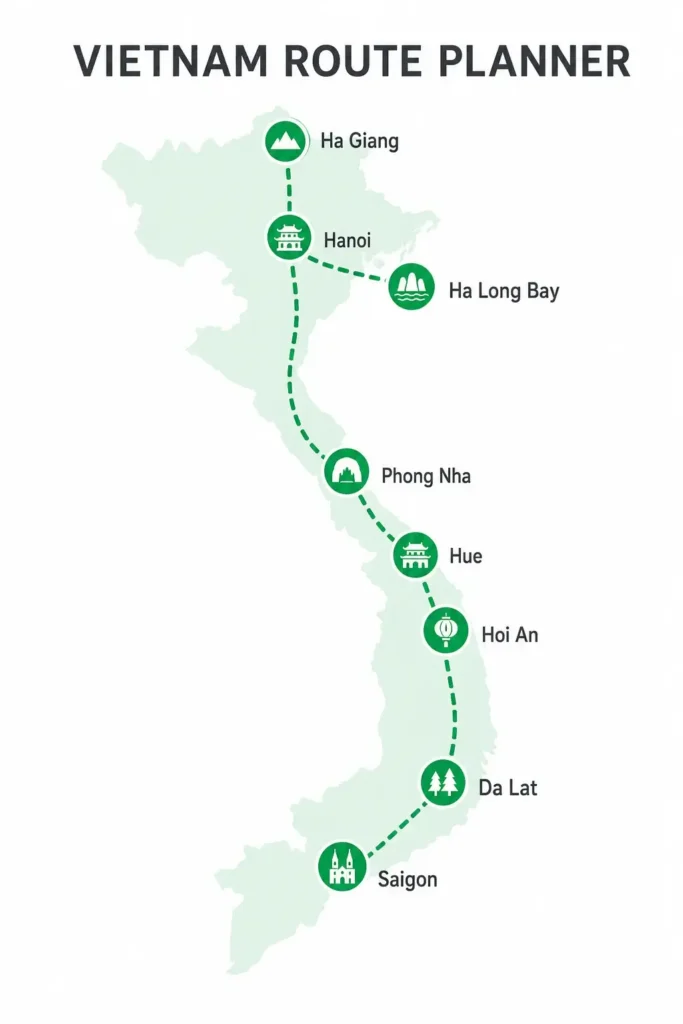
This comprehensive route planner is my answer to those questions. We are going to map out the must-visit spots in Vietnam from north to south. I will give you the exact transit hacks, neighborhood details, safety tips, and local food secrets you need to build your confidence and plan an unforgettable solo journey.
The Master Geography: Choosing Your Route Direction
Before we look at individual destinations, we need to understand the logistics of the country. Because of its elongated shape, you have two logical choices: start in the north (Hanoi) and travel south (Ho Chi Minh City), or start in the south and head north.
I highly recommend starting your journey in Hanoi. Hanoi is old, intense, and deeply traditional. It forces you to dive straight into Vietnamese culture. By the time you travel down to Ho Chi Minh City, you will be completely comfortable navigating chaotic motorcycle traffic, ordering street food, and managing local currency.
To make sure your paperwork is perfectly sorted before you fly into Hanoi, it is smart to check the official US Department of State travel advisory for entry rules to review the most up-to-date visa requirements and processing times for international arrivals.
Traveling by Train: The Reunification Express
The railway line runs all the way down the coast of the country. It is not the fastest way to travel, but it is my absolute favorite. Taking a sleeper train allows you to watch the emerald-green rice fields and rural villages roll past your window. It also saves you the cost of a hotel night. Always book a “4-berth soft sleeper” cabin for the most comfortable experience.
Traveling by Open Bus
For budget-conscious travelers, sleeper buses are everywhere. They are cheap and stop at all the main tourist towns. However, Vietnamese roads can be incredibly bumpy and chaotic. If you are tall, the tiny reclining seats can feel a bit cramped. Use buses for shorter trips under five hours, and stick to trains or flights for long-distance hops.
Hanoi: The Historic, High-Energy Launchpad
Hanoi is a city that engages every single one of your senses at the exact same time. The air smells like roasting coffee and woodsmoke. The streets ring with the sound of motorcycle horns and street vendors calling out their wares. It can feel intimidating on your first afternoon, but once you learn to find your footing, you will fall in love with its old-world charm.
Navigating the Historic Quarter
The heart of the city is the Old Quarter. This neighborhood dates back over a thousand years. It is a maze of 36 ancient streets, where each street historically specialized in selling one specific type of goods—like silver, shoes, or bamboo.
The golden rule for walking through the Old Quarter is simple: keep a slow, steady pace when crossing the road. Do not make sudden movements, do not stop, and do not run. The wave of incoming motorcycles will naturally calculate your speed and move smoothly around you like water around a rock.
What to Eat in Hanoi
Hanoi is the birthplace of Phở (noodle soup), but my absolute favorite dish here is Bún Chả. This meal consists of grilled pork patties served in a warm, sweet-and-savory broth, alongside a mountain of fresh herbs and cold rice vermicelli noodles. Look for tiny stalls with low plastic stools on the sidewalk and a charcoal grill smoking out front. That is where you will find the real deal.
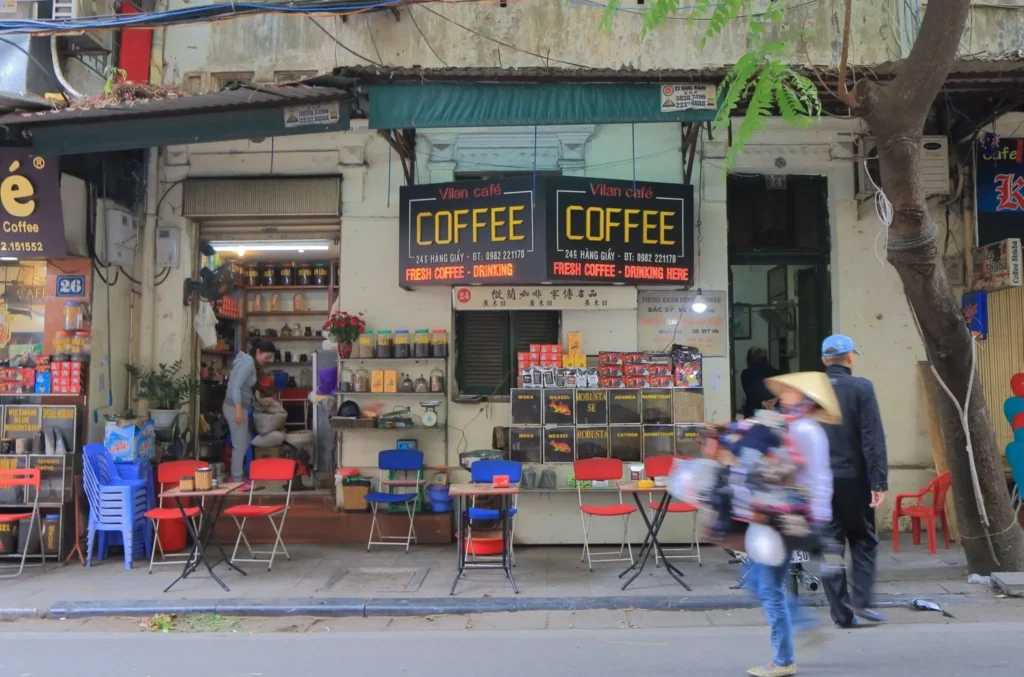
For a mid-day pick-me-up, look for a hidden cafe down a narrow alleyway to try Cà Phê Trứng (egg coffee). It is made by whipping sweet condensed milk with egg yolk until it becomes a thick, velvety foam that sits on top of intense, dark Vietnamese espresso. It tastes exactly like liquid tiramisu.
Insider Secret: The Train Street Schedule
There is a famous narrow residential street in Hanoi where an international train passes just inches away from the doorsteps of local houses. While local authorities often close sections for safety, you can still experience it safely by entering with a local cafe owner.
Ask your hostel or homestay host for the current daily train schedule, as timings can change on weekends. Sit back with an iced tea and watch the entire neighborhood clear their storefronts in less than sixty seconds as the massive locomotive rumbles past.
Sapa and Ha Giang: The Dramatic Northern Highlands
Once you have experienced the energy of Hanoi, it is time to head up into the clouds of the northern highlands. This region is home to towering limestone mountains, deep canyons, and incredible terraced rice paddies built by indigenous ethnic minority communities.
Choosing Between Sapa and Ha Giang
Sapa is the most famous mountain town in the region. It is easy to reach by taking an overnight train from Hanoi to Lao Cai, followed by a short shuttle bus. Sapa offers comfortable mountain lodges and beautiful day-hiking trails through the Muong Hoa Valley. However, it has become highly commercialized over the last decade.
If you want a raw, rugged, and completely authentic adventure, choose Ha Giang instead. Located on the remote border with China, Ha Giang is famous for its limestone loops. You can hire a local motorbike driver—known as an “Easy Rider”—to take you along the sheer cliff faces and through isolated villages where traditional culture remains completely untouched by modern commercialism.
Cultural Etiquette in Mountain Villages
When you hike through these northern communities, you will meet people from the Hmong, Dao, and Tay ethnic groups. They wear beautiful, hand-woven traditional clothing dyed with natural indigo.
Always ask for permission before taking a photo of someone, especially children. Avoid buying plastic trinkets or candy from young kids on the trail; purchasing from them encourages them to stay out of school to beg. Instead, support the local economy by booking a homestay or buying handmade textiles directly from adult weavers.
Staying Healthy in the Mountains
The weather in the northern highlands can change in an instant. It can be sunny and hot in the morning, and completely freezing and foggy by afternoon. Pack high-quality layers and a sturdy rain jacket.
Because you will be hiking through rural terrain, it is wise to consult the CDC Travelers’ Health recommendations for Vietnam to ensure you have the correct preventative medications and vaccinations for rural, forested areas.
Ha Long Bay and Lan Ha Bay: The Limestone Labyrinths
Heading south from the mountains, your next essential stop is the spectacular coast of the Gulf of Tonkin. Here, thousands of towering limestone pillars rise directly out of the calm, emerald-green water. It is a landscape that looks like a living traditional watercolor painting.
Breaking Away from the Crowds
Most travelers book a standard tourist boat tour out of Ha Long City. This can result in hundreds of boats crowding into the exact same bays, creating noise and water pollution.
To experience this natural wonder with the slow-travel mindset of Pinverse Travel, head to Cat Ba Island instead. Cat Ba sits on the edge of Lan Ha Bay. Lan Ha Bay features the exact same geological beauty as Ha Long Bay, but it sees only a tiny fraction of the cruise traffic.
The Over-Night Cruise Experience
I highly recommend spending the extra money to book a two-day, one-night cruise on a smaller wooden junk boat. There is nothing quite like waking up at dawn as the morning mist clears around the massive limestone cliffs.
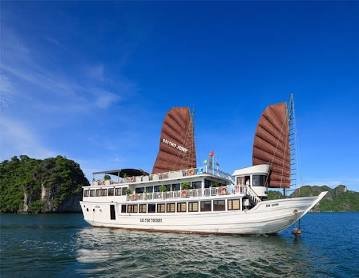
Your day will be filled with kayaking through hidden sea caves, swimming in quiet lagoons, and visiting floating fishing villages where families have lived on the water for generations.
What to Look Out For
When booking a cruise, look closely at what is included in the price. Many cheap budget operators hide extra fees for kayaking equipment, national park entry tickets, or the shuttle bus transfer from Hanoi. Read reviews carefully to find operators who practice sustainable tourism and manage their waste responsibly to protect the marine environment.
Phong Nha-Ke Bang: The Capital of Adventure
From Cat Ba Island, take an overnight sleeper bus or a train down to Phong Nha. This region was once completely overlooked by international tourists, but it has quickly become one of the most exciting must-visit spots in Vietnam for true adventure travelers.
Exploring the World’s Largest Caves
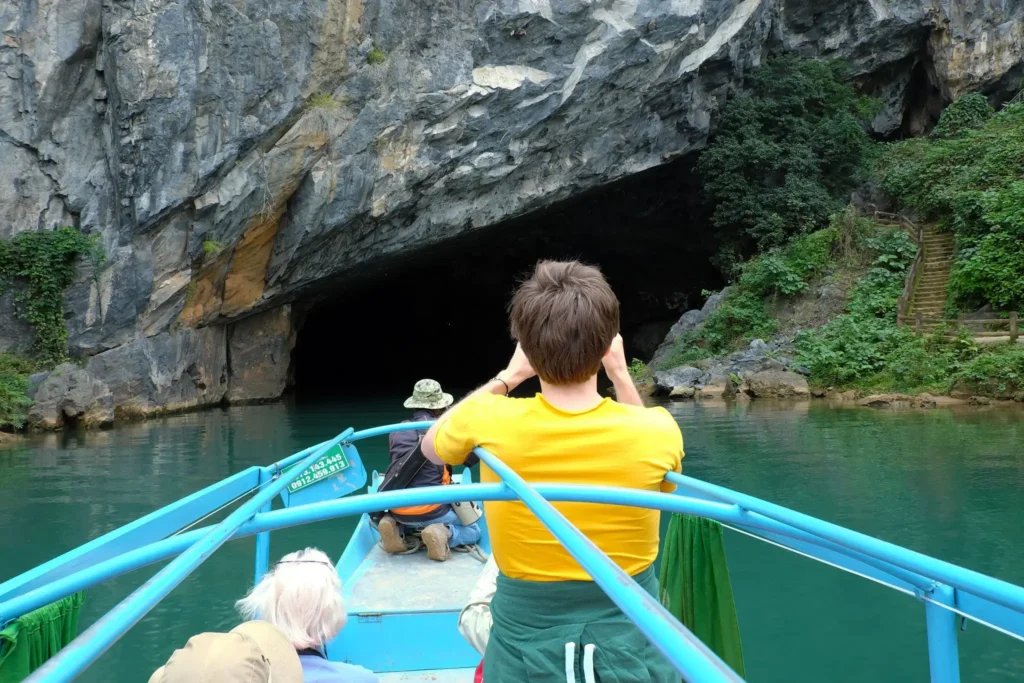
Phong Nha-Ke Bang National Park is a massive protected area filled with the oldest karst mountains in Asia. It contains hundreds of spectacular cave systems, including Hang Son Doong, which is officially the largest cave on the entire planet.
While exploring Son Doong requires an expensive multi-day expedition permit booked months in advance, you can easily explore other magnificent caves like Paradise Cave and Phong Nha Cave on a modest budget. You can learn more about why this spectacular landscape is protected globally by reading the official documentation on the UNESCO World Heritage listing for Phong Nha-Ke Bang National Park, which details its unique subterranean ecosystems.
Navigating the Countryside
The best way to see the rural landscape surrounding Phong Nha town is by renting a bicycle or a small scooter. The roads here are quiet, flat, and wind through brilliant green rice paddies dotted with water buffalo.
If you ride out into the Bong Lai Valley, make a stop at “The Pub with Cold Beer.” This legendary local spot serves incredibly fresh chicken roasted over an open fire, paired with wild morning glory greens grown right in the backyard garden.
Solo Travel Confidence Tips
Phong Nha is an incredibly welcoming place for solo travelers. Because the town consists of essentially one main street, it is very easy to meet up with other independent backpackers.
Join a group cave-trekking tour to bond with other travelers over mud baths, jungle hikes, and underground swims. It is the perfect environment to build your confidence if you are traveling alone for the very first time.
Hue: The Imperial Soul of Vietnam
After the wild jungles of Phong Nha, your next logical stop heading south is the peaceful city of Hue. Situated right on the banks of the scenic Perfume River, Hue served as the historic capital of the Nguyen Dynasty from 1802 to 1945. It is a city deeply proud of its artistic, political, and culinary heritage.
Stepping Into Imperial History
The main attraction in Hue is the Imperial City, a massive walled fortress surrounded by a deep moat. Inside, you can walk through royal palaces, ornate temples, and peaceful gardens.
To fully understand the grand scale of the architecture, check out the regional overview on the Lonely Planet guide to Hue for layout maps and historical timelines before you visit.
Beyond the city walls, rent a bicycle to visit the royal tombs scattered along the riverbanks. The Tomb of Khai Dinh is a spectacular blend of traditional Vietnamese design and European architectural influences, featuring intricate glass and porcelain mosaic art on the interior walls.
The Royal Culinary Traditions of Hue
Because Hue was home to the royal emperors, the local cuisine here is completely unique. The royal court demanded meals that were small, visually beautiful, and packed with complex flavors.
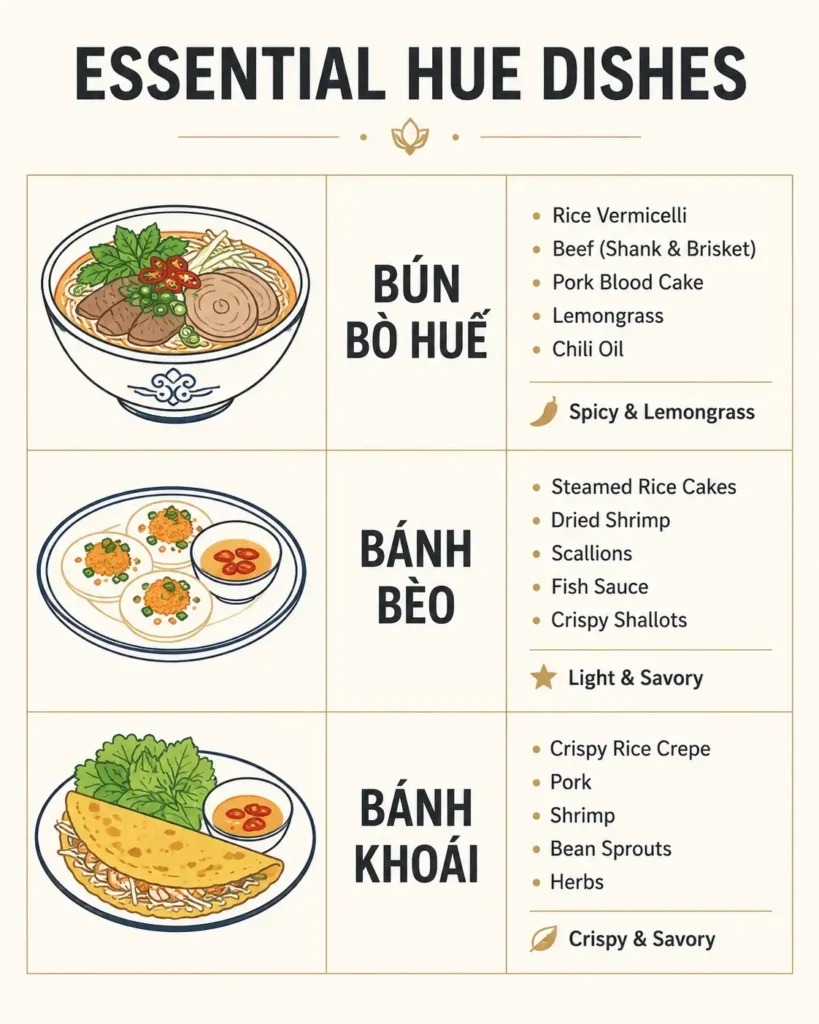
You must try Bún Bò Huế, a spicy beef noodle soup that features a rich broth flavored with lemongrass, shrimp paste, and fresh chili oil. It is much bolder and spicier than the Phở you find up north in Hanoi.
For a unique afternoon snack, look for Bánh Bèo—tiny, delicate steamed rice cakes served in individual porcelain saucers, topped with savory dried shrimp, crispy pork rinds, and scallion oil.
| Imperial Dish | Main Ingredients | Flavor Profile |
| Bún Bò Huế | Thick rice vermicelli, beef shank, lemongrass, chili oil | Spicy, savory, complex |
| Bánh Bèo | Steamed rice flour, dried shrimp, fried shallots, fish sauce | Light, savory, delicate |
| Bánh Khoái | Crispy rice flour crepe, shrimp, pork, bean sprouts, peanut sauce | Crunchy, rich, nutty |
Getting Around Safely
Hue is a very relaxed, bike-friendly city compared to the hectic hubs of Hanoi or Saigon. However, if you prefer to give your legs a rest, you can use your smartphone to book an affordable ride using the local ride-sharing network. Review how the official Grab app operates for travelers in Southeast Asia to easily set up your payment profile and book safe, fixed-price car or motorcycle rides across the city.
The Hai Van Pass: The Ultimate Coastal Road
The journey from Hue south to Da Nang and Hoi An takes you over one of the most stunning coastal roads in the world: the Hai Van Pass. The name translates directly to “Ocean Cloud Pass,” and it perfectly describes how the steep jungle mountains crash straight down into the blue waters of the East Vietnam Sea.
Choosing Your Transit Mode
You have three main options to cross the pass. You can take the coastal train, which hugs the cliffside and offers incredible windows out over isolated, empty beaches.
Alternatively, if you are a confident rider, you can rent a scooter in Hue and drive over the pass yourself, arranging for a luggage transfer service to deliver your large bags directly to your hotel in Hoi An.
The third option—and the one I recommend for solo travelers who want the views without the stress of driving—is booking an “Easy Rider” motorbike tour. You sit comfortably on the back of a motorcycle while an experienced, professional local guide navigates the winding mountain switchbacks for you.
Essential Road Stops
No matter how you cross the pass, make sure to stop at the top of the mountain to explore the old war-era bunkers and enjoy a glass of local iced coffee.
On the southern descent, you will wrap around the curve of Da Nang Bay, offering stunning, expansive views of the modern skyline of Da Nang city and the long, sandy arc of My Khe Beach.
Hoi An: The Ancient, Lantern-Lit Riverside Haven
Just a short drive south of Da Nang lies Hoi An. From the 15th to the 19th century, this yellow-hued town was one of the busiest international trading ports in Southeast Asia, welcoming merchants from Japan, China, and Europe. Today, its wonderfully preserved architecture makes it an absolute highlight of any trip to Vietnam.
Walking the Yellow Alleys
The Ancient Town of Hoi An is completely closed to motorized traffic during the day, making it an absolute dream to explore on foot. The buildings are painted a beautiful, warm mustard-yellow and are covered in bright pink bougainvillea flowers.
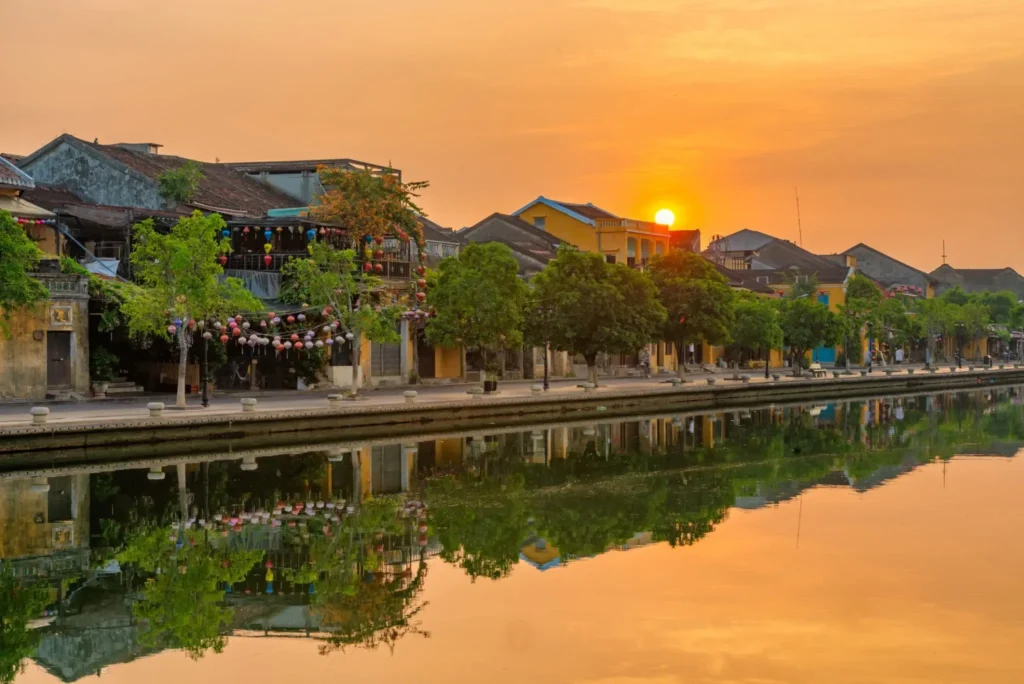
At night, the entire town switches off its electric lights and illuminates thousands of handmade silk lanterns that cast a magical, colorful glow over the Thu Bon River.
Custom Tailoring Capital
Hoi An is world-famous for its expert tailors. Walking down the streets, you will pass hundreds of shops displaying beautiful suits, dresses, and winter coats.
If you want to have custom clothing made, give yourself at least three days in town to allow time for multiple fittings. Bring photos of designs you love, choose your fabrics carefully, and do not be afraid to ask for adjustments during your second fitting to ensure the garment fits you perfectly.
What to Eat in Hoi An
Because of its unique multicultural history, Hoi An has several local dishes that you cannot find anywhere else in Vietnam. The most famous is Cao Lầu. This dish consists of thick, chewy rice noodles topped with sliced barbecue pork, fresh greens, and crispy rice crackers, all drizzled with a rich, savory pork broth.
Authentic Cao Lầu noodles must be made using clean water drawn from an ancient hidden well in the town, mixed with a specific type of ash from trees grown on the nearby Cham Islands, which gives the noodles their signature smoky flavor and dense texture.
Da Lat: The Cool, Pine-Scented Mountain Escape
Heading away from the coast and climbing high into the Central Highlands, you will arrive in Da Lat. Because of its high elevation, Da Lat enjoys a delightfully cool, spring-like climate all year round. It feels completely different from any other destination in Vietnam.
The French Colonial Architecture
Da Lat was originally developed by French colonists in the early 1900s as a hill station escape from the intense summer heat of the tropical plains.
The hillsides are dotted with beautiful, historic French colonial villas, pine forests, and expansive vegetable farms. Make sure to visit the “Crazy House,” an incredible, surrealist piece of live-in artwork designed by a local Vietnamese architect that looks like a giant, twisting tree trunk filled with hidden spiderweb rooms and winding concrete bridges.
Outdoor Adventures and Canyoning
For adventure lovers, Da Lat is the premier destination for canyoning. You can spend an adrenaline-filled morning rappelling down rushing waterfalls, sliding down natural rock waterslides, and jumping off high cliffs into deep, cool mountain river pools under the supervision of professional wilderness guides.
Local Cafe Culture and Street Food
Because of the cool mountain air, Da Lat has a phenomenal cafe culture. The surrounding hills grow incredible high-quality Arabica coffee beans.
In the evening, head down to the bustling Da Lat Night Market to warm up with Bánh Tráng Nướng, often called “Vietnamese Pizza.” It is made by grilling a thin sheet of rice paper over open hot coals, topped with egg, green onions, minced pork, and sweet chili sauce until it becomes incredibly light and crispy.
Ho Chi Minh City: The Electric, Modern Metropolis
Your final stop on this epic north-to-south route planner is Ho Chi Minh City—still warmly referred to by most locals as Saigon. This is a massive, pulsing mega-city of over nine million people where historic temples sit right next to towering modern glass skyscrapers.
Understanding the City’s History
To understand the complex history of modern Vietnam, spend a morning visiting the War Remnants Museum and the historic Independence Palace. These sites offer an intense, eye-opening look at the realities of the Vietnam War from a local perspective.
For an architectural contrast, walk through District 1 to admire the beautiful Saigon Central Post Office, designed in the late 19th century, and the historic Notre-Dame Cathedral Basilica.
Exploring the Nightlife and Street Food
Saigon truly comes alive after the sun goes down. Head to the vibrant Ben Thanh Market area or look for local street food clusters along Vinh Khanh Street in District 4.
You must try Cơm Tấm (broken rice), a classic southern comfort food dish featuring a tender grilled pork chop served over broken rice grains, topped with a fried egg, green scallion oil, and a side of sweet, garlicky fish sauce.
The Mekong Delta: The Lush, Watery World
Before you catch your flight home out of Ho Chi Minh City, take a short journey south into the Mekong Delta. Known affectionately as the “rice bowl of Vietnam,” this is a vast, maze-like network of rivers, canals, and lush tropical islands where life moves completely to the rhythm of the water.
Experiencing the Floating Markets
The best way to see the delta is to stay at a local riverside homestay in towns like Can Tho or Ben Tre. Wake up early to catch a wooden longtail boat out to the floating markets.
You will see hundreds of boats crowded together on the wide river, with vendors hanging samples of the fruits or vegetables they are selling high up on long bamboo poles so buyers can see them from far away.
Packing and Safety Essentials
The Mekong Delta is tropical, hot, and highly humid all year round. Protecting your health while exploring these waterways is essential.
Make sure to pack high-quality mosquito repellent and consider reviewing the safety guidelines on World Nomads travel insurance advice for adventurous trips to ensure you are fully covered for independent boat travel, rural bicycle excursions, and outdoor activities along the delta.
My Solo Traveler’s Checklist for Vietnam
Planning a trip to the other side of the world can feel incredibly daunting when you are looking at it all at once. But remember: confidence grows through action. Break down your planning steps into small, manageable daily tasks.

- Sort Your Paperwork: Apply for your Vietnamese e-visa at least two weeks before your flight.
- Download Essential Apps: Get the Grab app on your phone and set up your payment method before landing.
- Pack Smart Clothing: Bring modest clothes that cover your shoulders and knees for temple visits, along with durable, comfortable walking shoes.
- Stay Flexible: Don’t over-schedule every hour of your day. Leave open spaces in your itinerary to say yes to unexpected invitations from locals.
Vietnam is a country that will challenge you, inspire you, and teach you so much about resilience and warmth. Stop waiting for the absolute “perfect moment” to book that flight. The world rewards courage and curiosity—go create your own adventure.