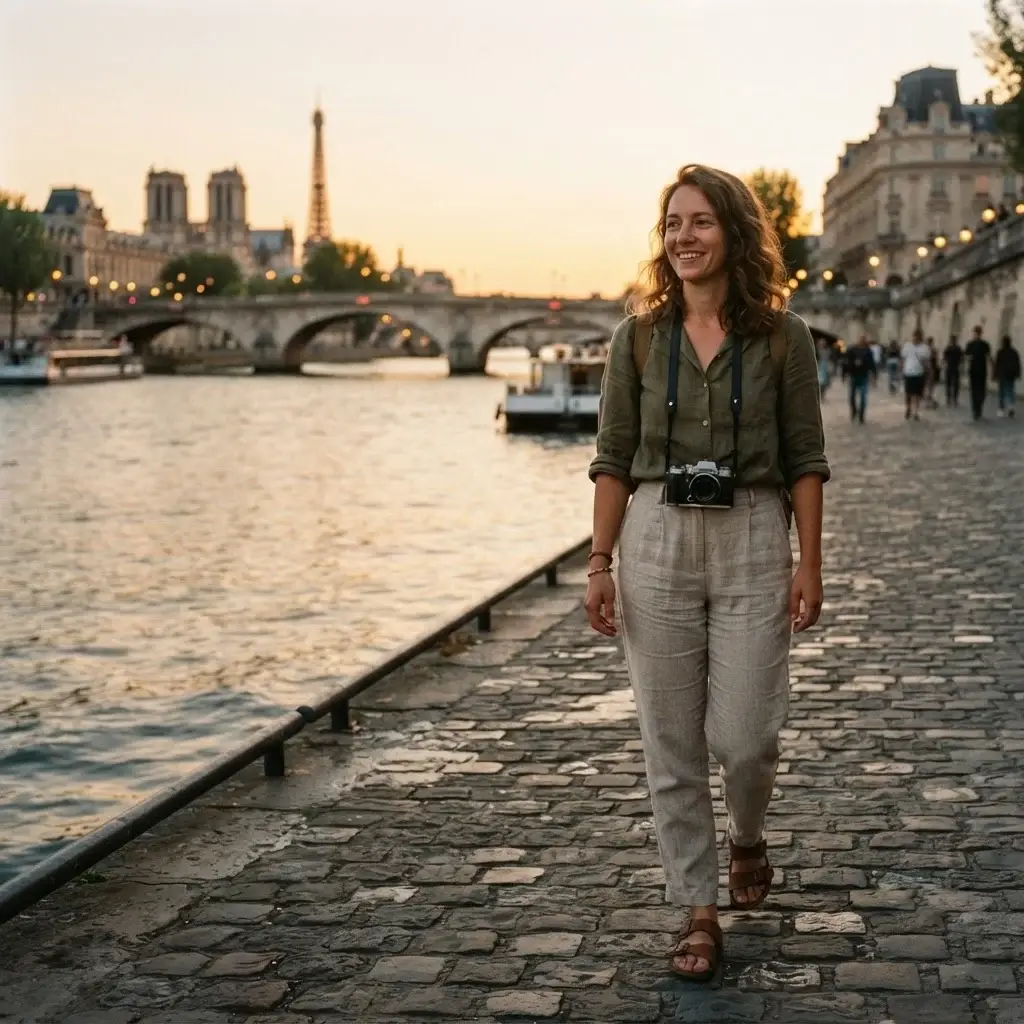
I still remember the day I quit my corporate office job. I was sitting at a gray desk under flickering lights. I looked at my tiny vacation calendar and realized something had to change. I spent months waitressing extra shifts, saving every single dollar, and dreaming of the world. Later, I worked as a certified sightseeing guide in New York City. That job taught me exactly how tourist traps operate. It showed me how companies herd people into long lines just to buy overpriced souvenirs.
When I finally landed in France, I saw the exact same pattern. Millions of travelers rush to the same three or four spots. They spend their entire trip waiting in lines, getting stressed, and eating bad food. But you do not have to travel that way. The best things to do in Paris are not found at the bottom of a three-hour ticket line. They are found when you slow down, step off the beaten path, and explore like a local.
If you are planning your first trip, or if you feel nervous about traveling solo, this guide is for you. Let us look at the classic tourist traps and explore the wonderful, authentic things you can do instead.
Rethinking the Iconic Monuments: Smarter Ways to See the Sights
The Eiffel Tower Platform Trap vs. Quiet Views from Rue Saint-Dominique
Most people think they must climb to the very top of the Eiffel Tower to experience it. They buy an expensive ticket months in advance. Then they stand in a hot, crowded line for hours. Once they get to the top, they realize the view is missing one major thing: the Eiffel Tower itself!
Instead of wasting your afternoon in a metal line, I recommend walking down Rue Saint-Dominique. This is a classic street in the 7th arrondissement. As you stroll past local bakeries and flower shops, the Eiffel Tower suddenly pops up between the beautiful stone buildings.
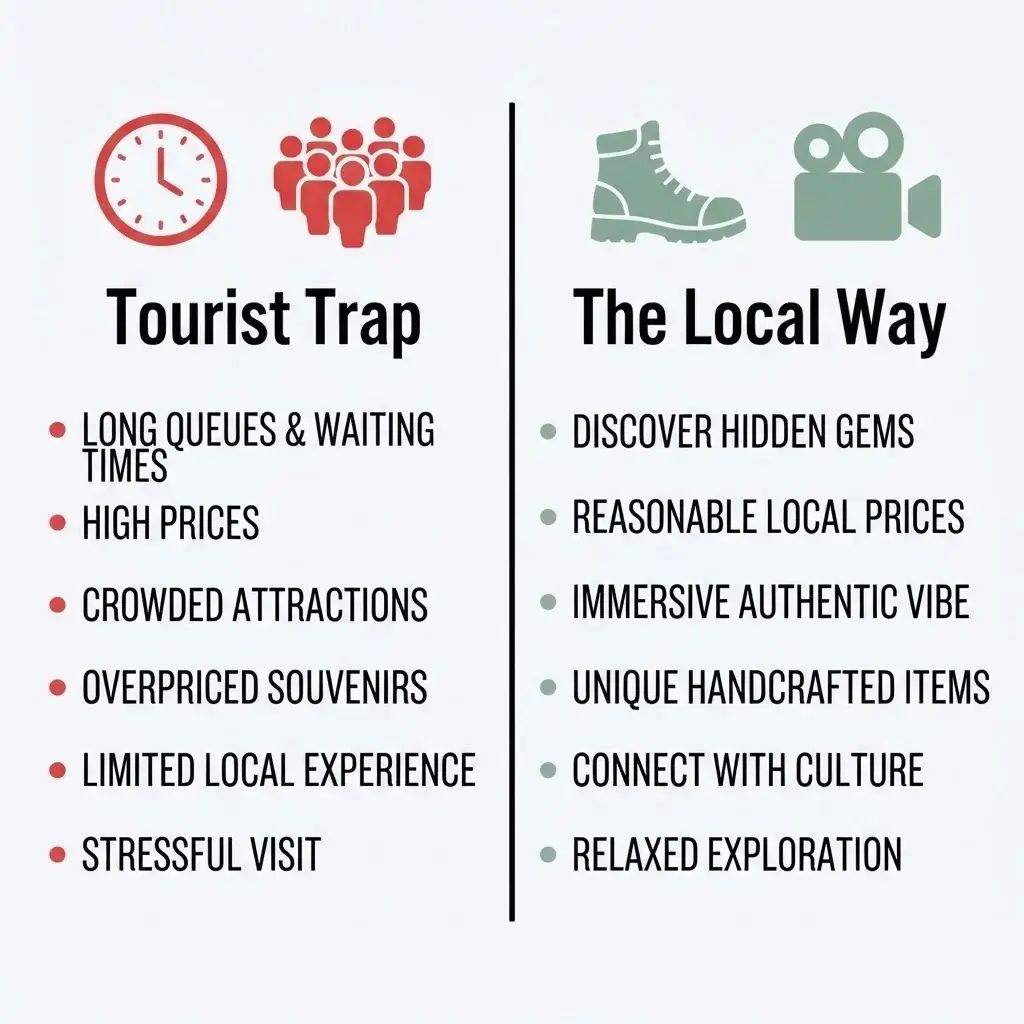
It feels huge, surprising, and completely magical. You get to see the monument in a real, living neighborhood.
Insider Secret: Walk to the corner of Rue Saint-Dominique and Boulevard de la Tour-Maubourg. There is a tiny opening between the trees where the tower frames perfectly. It is the best place to take a photo without thousands of other people in the background.
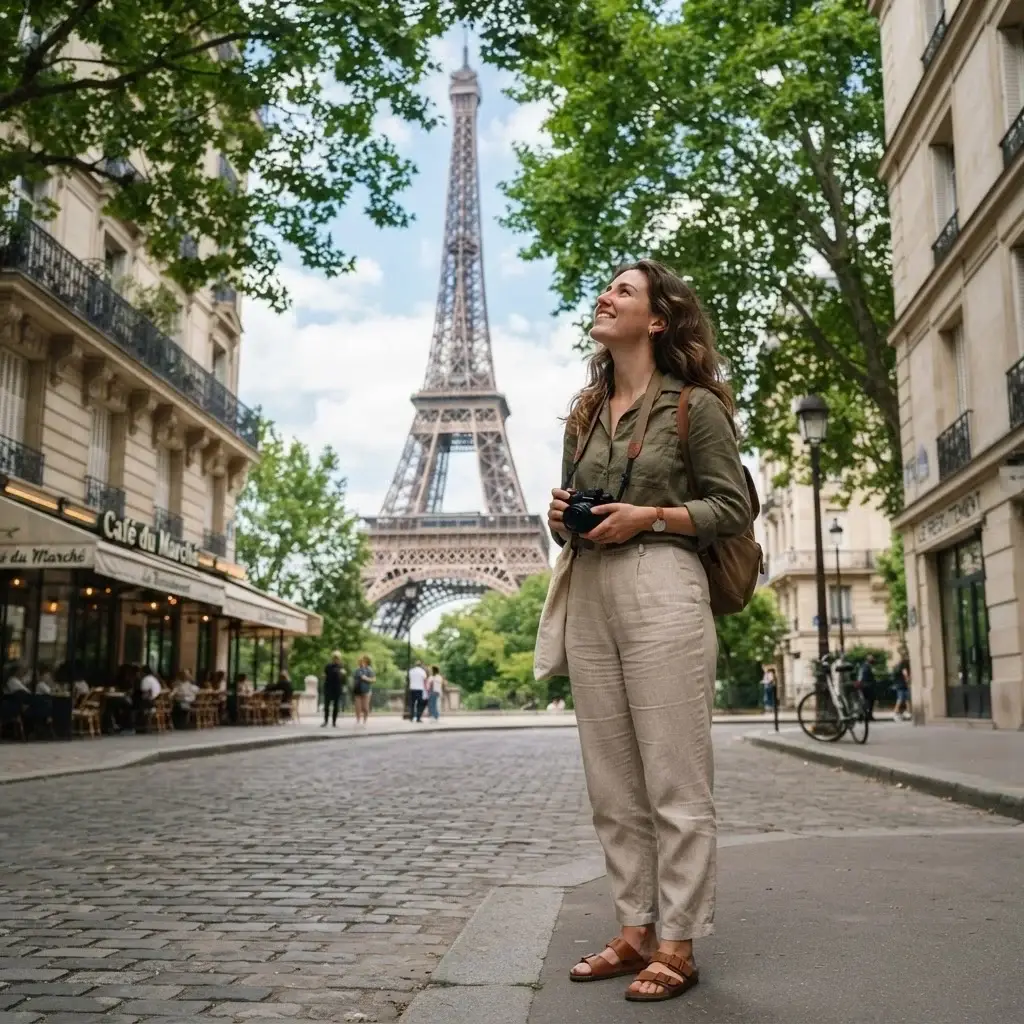
Culinary Tip: Stop by Boulangerie Nelly Julien on Rue Saint-Dominique. Grab a fresh pain au chocolat (chocolate pastry) or a traditional warm baguette. Eat it on a wooden bench while you look at the view. The pastry is cheap, buttery, and authentic.
Navigation Advice: Take Metro Line 8 and get off at the La Tour-Maubourg station. Walk west on Rue Saint-Dominique toward the green trees. You cannot miss it.
The Crowded Louvre Maze vs. The Peaceful Musée de l’Orangerie
The Louvre is the biggest art museum in the world. It is also one of the most stressful places in Europe. People pack themselves into tight rooms. They hold up their phones to get a blurry photo of the tiny Mona Lisa behind bulletproof glass. It is loud, tiring, and hard to appreciate the art.
If you want to experience deep, moving art without the anxiety, walk through the Tuileries Garden to the Musée de l’Orangerie. This smaller museum sits inside an old greenhouse. It houses Claude Monet’s massive Water Lilies paintings. The paintings hang in two bright, oval rooms with natural light coming from the ceiling. There are white benches in the center of the rooms. You can sit in complete silence and let the giant blue and purple colors wash over you. It is a peaceful space that encourages personal growth and quiet reflection.
Insider Secret: Book the very first entry slot of the morning. Most big tour groups go to the Louvre or the Musee d’Orsay first. If you arrive at L’Orangerie at 9:00 AM, you might get an entire room of Monet’s masterpieces all to yourself for ten glorious minutes.
Culinary Tip: After your museum visit, walk out into the garden and look for a small outdoor kiosk. Buy a hot espresso and a slice of lemon loaf. It is simple, but sitting under the chestnut trees makes it feel like a luxury experience.
Navigation Advice: Take Metro Line 1, 8, or 12 to the Concorde station. The museum is located right at the edge of the Place de la Concorde inside the garden walls.
Swapping Famous Streets for Real Parisian Neighborhoods
The Overpriced Champs-Élysées vs. The Relaxed Canal Saint-Martin
The Champs-Élysées is famous worldwide. But if you visit today, you will find a giant, multi-lane highway packed with heavy traffic. The sidewalks are lined with the exact same luxury stores and fast-food chains you can find in any airport or major city. It is expensive, noisy, and does not feel like France at all.
To find the true, modern soul of the city, head over to the Canal Saint-Martin in the 10th arrondissement. This is where young locals go to escape the noise. Long iron bridges cross the green water. Tall trees line the walkways. On a pleasant afternoon, you will see people sitting right on the stone edge of the canal. They bring bottles of wine, wheels of cheese, and acoustic guitars.
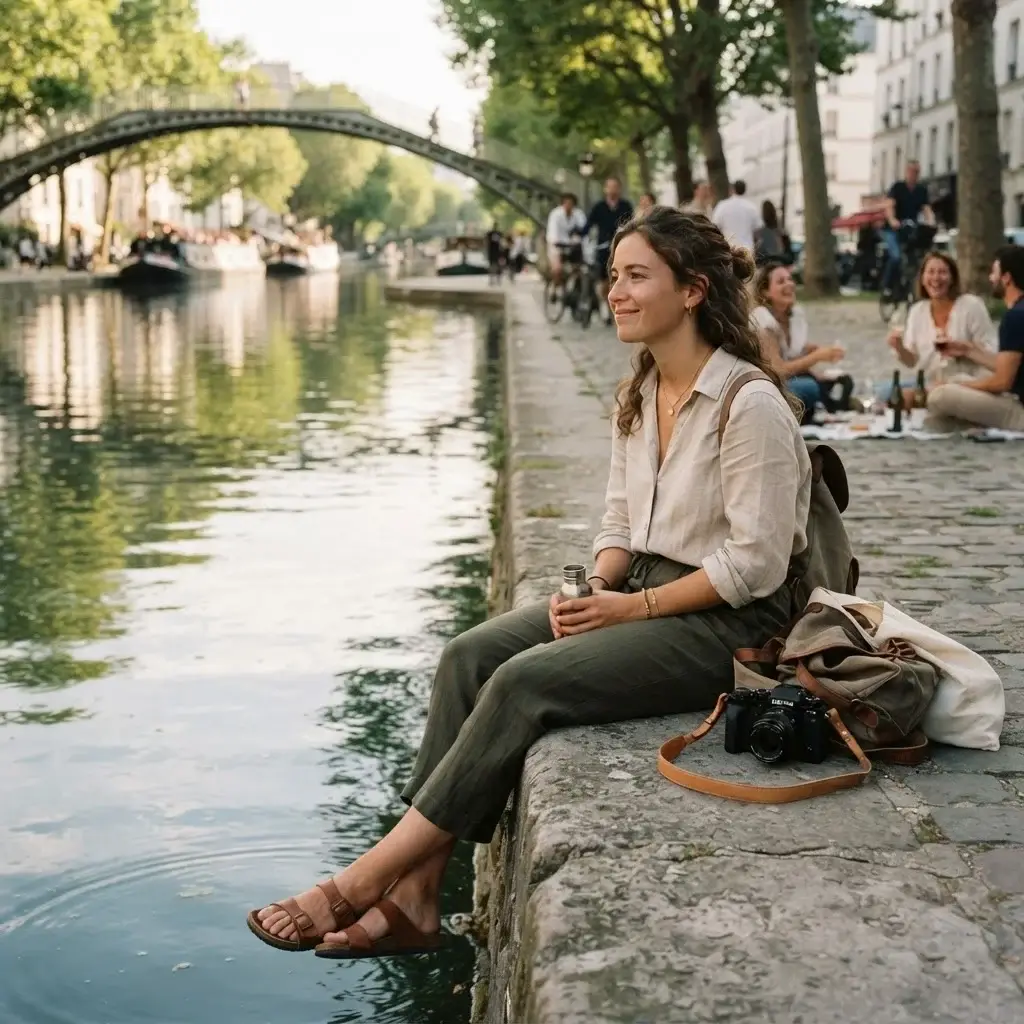
It is an amazing place to experience slow travel and watch the real life of the city move past you.
When I first started planning my cross-cultural journeys, I used to look up the classic neighborhood maps on the official Lonely Planet Paris destination guide to map out my walking routes, and switching from the heavy tourist zones to the canal area completely changed my view of the city.
Insider Secret: Walk along the canal until you reach the Recollets Lock. If you wait a few minutes, you can watch the old iron locks open up to let historical canal boats pass through. It is a slow, mesmerizing process that feels like stepping back in time.
Culinary Tip: You must visit a bakery called Du Pain et des Idées on Rue Yves Toudic. It is a short walk from the water. Order their famous Escargot Chocolat Pistache. It is a pastry shaped like a snail shell, packed with bright green pistachio paste and rich chocolate chips. It is crispy on the outside and soft on the inside.
Navigation Advice: Take Metro Line 5 to the Jacques Bonsergent station. Walk east for two blocks until you hit the water. Follow the pedestrian paths north.
The Packed Squares of Montmartre vs. The Historic Arènes de Lutèce
Montmartre is beautiful, but the central square, Place du Tertre, can feel overwhelming. Aggressive portrait artists will follow you down the street. Souvenir shops sell cheap plastic keychains made overseas. It can be hard to feel any historical magic when you are constantly dodging selfie sticks.
If you want to connect with ancient history without the crowd, visit the Arènes de Lutèce in the 5th arrondissement. This is a real Roman amphitheater built in the 1st century. It used to hold 15,000 citizens for ancient games. Today, it is tucked away behind normal apartment buildings. You walk through a regular stone archway and suddenly find yourself standing on ancient Roman sand. Instead of tourists, you will see old French men playing pétanque (a traditional bowling game) and local kids playing soccer. It is a calm, beautiful space where history lives naturally.
Insider Secret: Enter the arena through the hidden pathway at 49 Rue Monge. It looks like a private building entrance, but it opens up into the massive, hidden stone ruins.
Culinary Tip: Before you enter the ruins, walk to the nearby Rue Mouffetard. Visit the cheese shop called Androuet. Ask the clerk for a small piece of Comté cheese aged for 24 months. Combine it with a fresh roll from a local baker for an authentic, low-cost lunch in the amphitheater.
Navigation Advice: Take Metro Line 7 or 10 to the Jussieu station. Walk south on Rue Linné, then turn right onto Rue Monge.
How to Eat Real French Food on a Normal Budget
The Tricky Tourist Menus vs. The Lively Traditional Bouillons
When you walk past the major sights like Notre-Dame or the Louvre, you will see restaurants with giant signs in English. They show pictures of the food and have workers standing outside trying to pull you in. These are tourist traps. The food is frozen, heated up in microwaves, and heavily overpriced.
To eat incredible, fresh French food, look for a traditional bouillon. These are historic, massive dining halls built over a century ago. They were created to serve working-class locals hot, fresh meals for very little money. The most famous is Bouillon Chartier. Inside, you will see high ceilings, beautiful brass railings, and busy waiters wearing classic black vests and white aprons. They write your order directly onto the paper tablecloth!
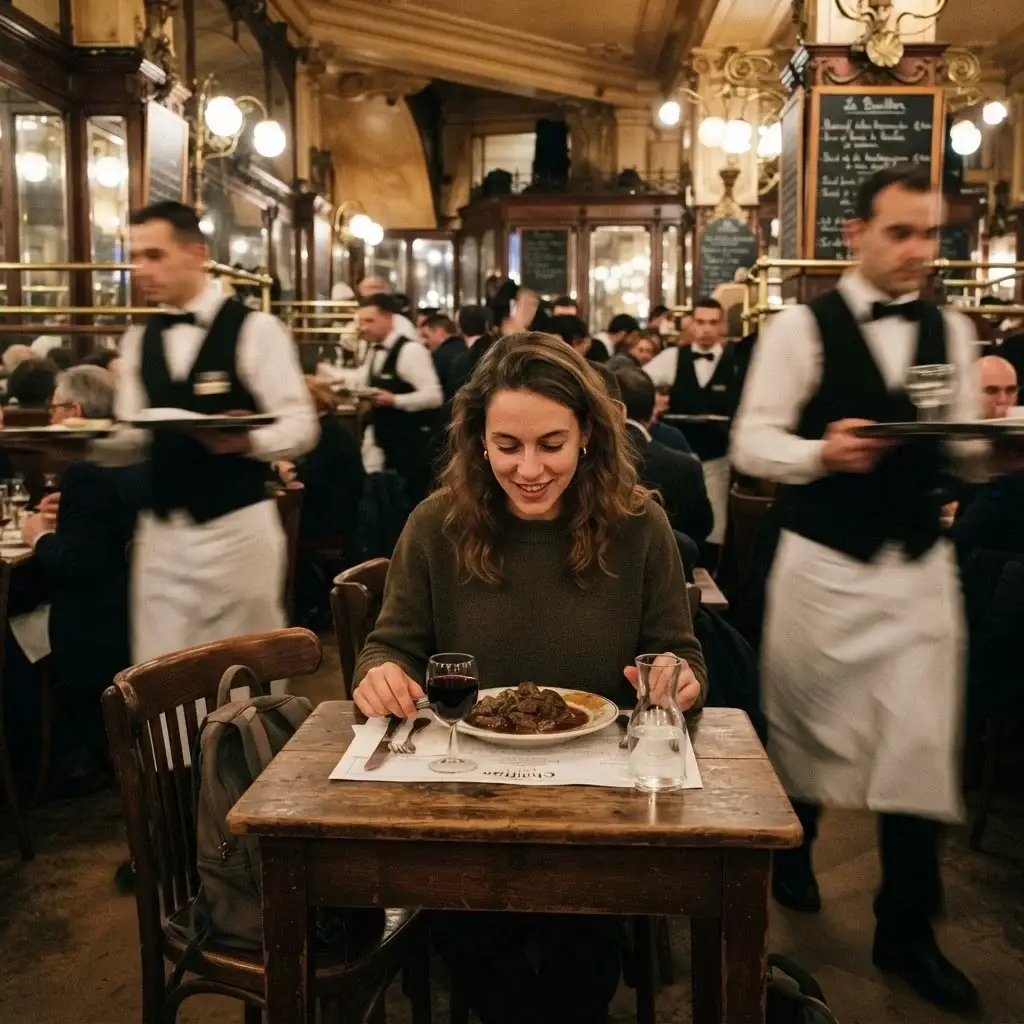
The energy is loud, fast, and incredibly fun.
Insider Secret: Arrive early! The lines for Bouillon Chartier get very long by 8:00 PM. If you show up at 11:45 AM for lunch or 6:30 PM for dinner, you can walk right in and get a prime table under the antique mirrors.
Culinary Tip: Order the oeufs mayonnaise (hard-boiled eggs with homemade mustard mayo) to start. For your main dish, get the boeuf bourguignon (slow-cooked beef stew in red wine). Finish with the baba au rhum (a soft cake soaked in rum).
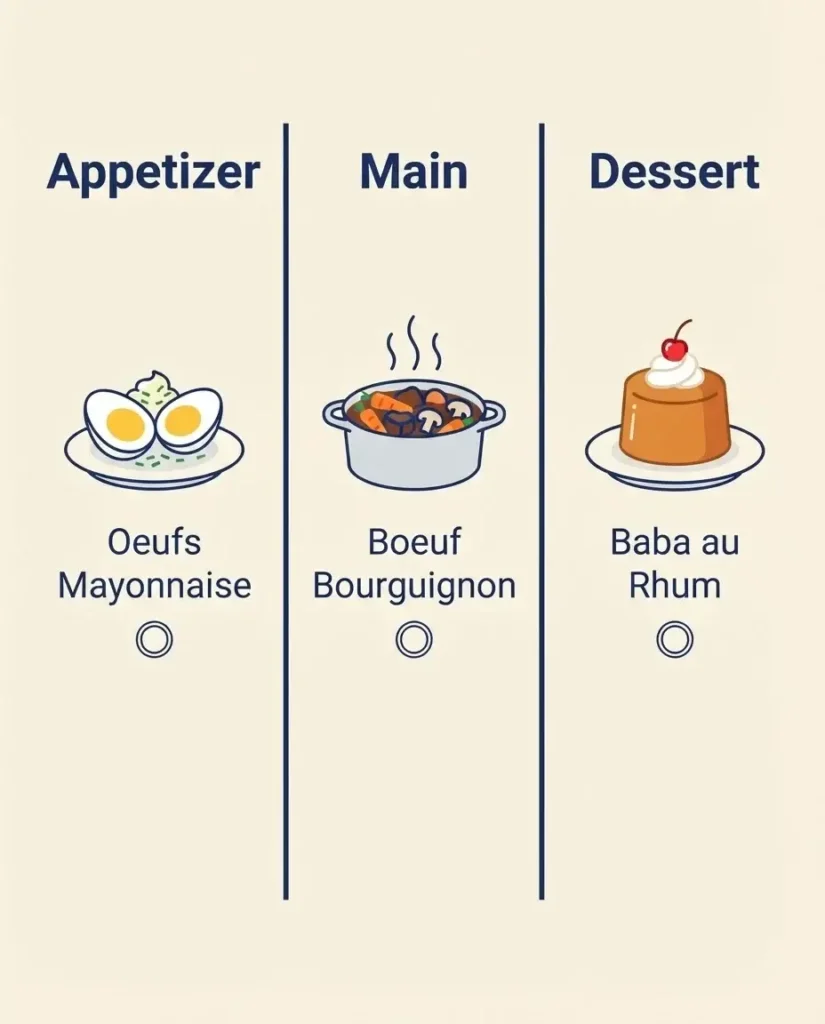
Your entire three-course meal will cost less than a single bad dish at a tourist cafe.
Navigation Advice: Take Metro Line 8 or 9 to the Grands Boulevards station. Walk two minutes west on Rue du Faubourg Montmartre. Look for the classic red neon sign.
Overpriced Cafe Terraces vs. Gathering Supplies at Marché d’Aligre
Sitting at a famous cafe on Boulevard Saint-Germain sounds romantic. But once you sit down, you might discover that a single cup of coffee costs six euros, and a plain omelet costs twenty. You are paying for the brand name, not the quality of the food.
For a true culinary adventure, go to the Marché d’Aligre in the 12th arrondissement. This is a vibrant, bustling daily market. It is split into an outdoor street market and an indoor stone market hall called the Marché Beauvau. The air smells like fresh strawberries, roasted chickens, and ripe cheeses. Vendors shout out their daily prices in French.
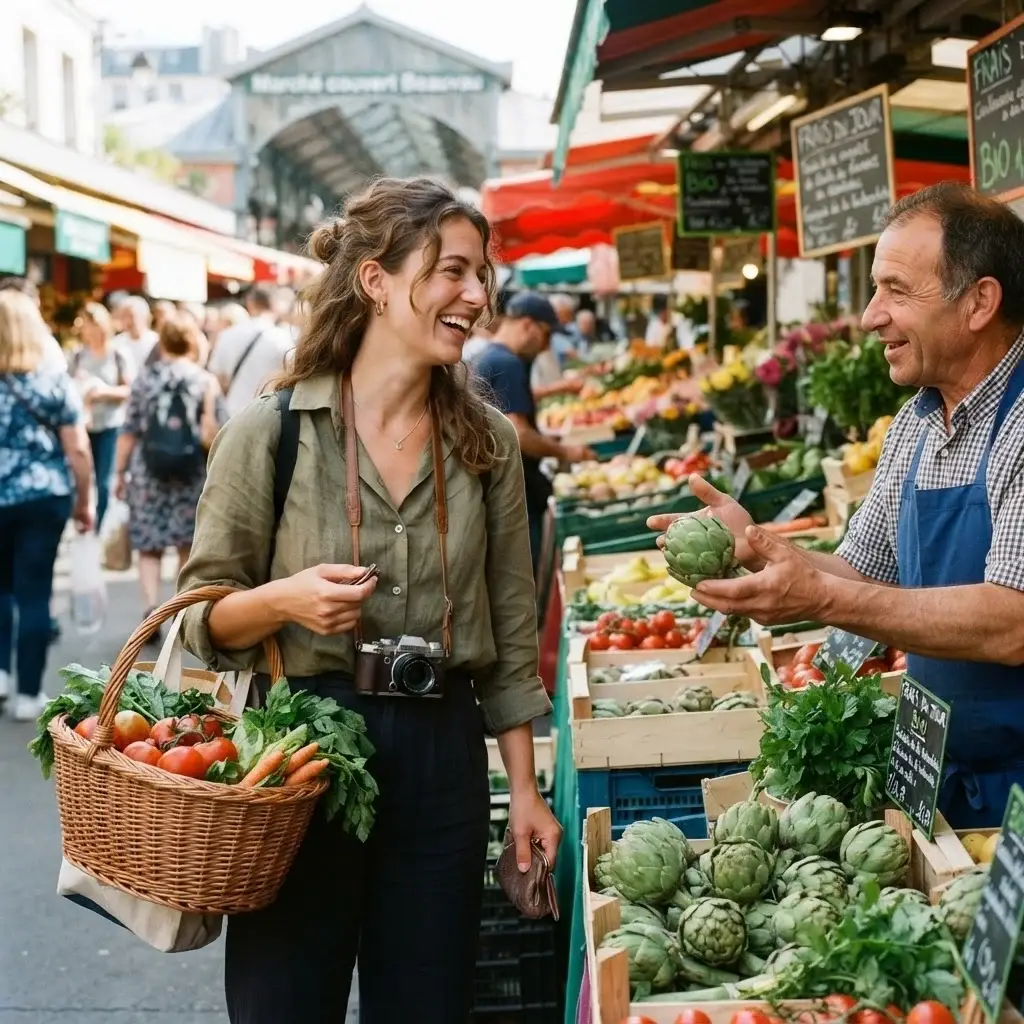
It is colorful, exciting, and full of raw human energy. Gathering your own food here builds immense travel confidence. It forces you to interact with locals and use basic French words.
Insider Secret: Walk to the very back of the covered Marché Beauvau hall. Look for the small stall selling cured meats and olives. The vendor will often give you a free slice of cured ham to try if you smile and say Bonjour politely.
Culinary Tip: Buy a pint of seasonal berries from the outdoor stalls, a small round of goat cheese from the indoor creamery, and a crusty baguette from the bakery across the street. Total cost is minimal, and you have a perfect meal.
Navigation Advice: Take Metro Line 8 to the Ledru-Rollin station. Walk south on Rue de Cotte for three blocks until you see the open outdoor market stalls.
Practical Planning, Staying Safe, and Building Your Confidence
Navigating the Metro Systems Like a Real Local
Many people are terrified of the Paris transportation system. They worry about getting lost or missing their stops. Because of this fear, they spend massive amounts of money on taxis or private cars. But riding the Paris Metro is simple once you understand the basic rules. It is fast, clean, and incredibly efficient.
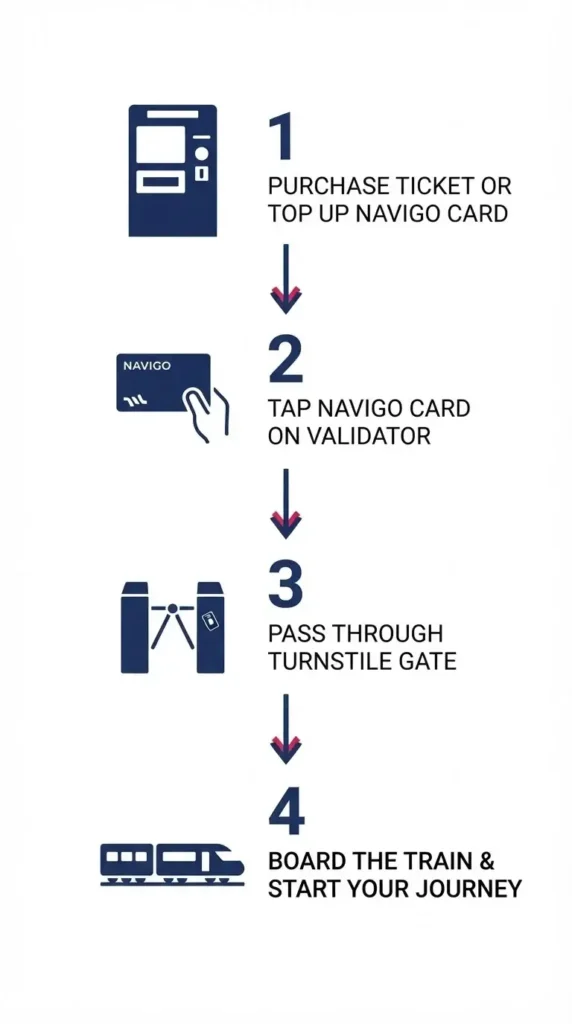
First, do not buy individual paper tickets. They demagnetize easily when placed near your phone, and the city is phasing them out. Instead, look for the big ticket machines in any station and purchase a Navigo Easy card. It costs two euros for the physical card, and you can load it with a “carnet” (a bundle of ten rides) for a heavily discounted price. You simply tap the card on the purple readers at the turnstiles to enter.
When traveling alone, safety is always a top priority. I always double-check the entry rules and safety ratings on the US Department of State travel advisory page for France before booking my flights to understand the local safety environment.
Once you are on the ground, you just need to keep your wits about you. The metro is very safe, but crowded cars are prime spots for petty pickpockets. To guard against standard pickpocket tricks, I secure my bags and grab a plan from the World Nomads travel insurance protection site to stay stress-free while moving through busy transit hubs.
- Rule 1: Always know the end station of the line you need. The trains are labeled by their final destination, not by cardinal directions like north or south.
- Rule 2: Keep your backpack zipped shut and wear it on your front when the train car gets tightly packed.
- Rule 3: Never buy tickets from random people standing near the machines. Only use the official green machines or talk to the agent inside the glass booth.
METRO ENTRY STEP-BY-STEP:
Keeping Healthy and Active on the Streets of Paris
When I was teaching English abroad and backpacking solo, I learned that a successful trip depends entirely on your physical well-being. If your feet hurt or your stomach is upset, even the most beautiful city will feel miserable. Paris is a destination built for walking. You will easily walk six to ten miles every single day without realizing it.
To stay in peak shape, always pack a lightweight, reusable water bottle. Paris has hundreds of beautiful, historic green iron fountains called Wallace Fountains. The water coming out of them is completely free, ice-cold, and perfectly safe to drink.
It helps to verify basic wellness tips and food safety updates on the CDC Travelers’ Health destination advisory portal so you do not get sick overseas, but generally, the tap water in Paris is exceptional. If you do feel under the weather, look for a building with a large, bright neon green cross outside. This is a French pharmacy. The pharmacists there are highly trained medical experts. You can walk right up to the counter, tell them your symptoms, and they will give you the exact medicine you need without a doctor’s note.
Cultural Gems That Most Travelers Miss Completely
Skipping Tourist Tour Buses for the Historic Banks of the Seine
Giant, double-decker tourist buses drive down the main avenues of Paris. They cost a lot of money, trap you behind dirty glass windows, and blast generic recorded commentary through cheap plastic headphones. It feels passive, commercial, and completely disconnected from the actual city.
Instead of riding a bus, use your own two feet to explore the heart of Paris. I love to slow down and wander along the gorgeous riverbanks listed on the UNESCO World Heritage Paris site profile without paying a single euro. The banks of the Seine River are paved with stone walkways closed to car traffic. You can walk from the Eiffel Tower all the way to the Île Saint-Louis right next to the water.
As you walk, you will pass historic stone walls covered in green ivy. You will see old floating houseboats with flower gardens on their decks. You will pass the bouquinistes—the historic open-air booksellers who sell vintage posters, old novels, and classic French magazines from large green metal boxes attached to the stone river walls. Walking here costs absolutely nothing, but it offers the deepest cultural connection in the city.
Insider Secret: Walk down the stairs to the river path right next to the Pont Neuf bridge at dusk. The city lights suddenly turn on all at once, reflecting gold and orange ripples across the dark moving water. It is a view that will stay in your heart forever.
Culinary Tip: Stop by a local grocery store like Monoprix before your walk. Buy a small container of fresh hummus, some cherry tomatoes, and a bag of salted potato chips. Sit on the stone edge of the river bank near the tip of the Île de la Cité for a peaceful, authentic sunset picnic.
Navigation Advice: You can access the lower riverbanks by taking stone stairs down from almost any major bridge in central Paris. The stairs near the Pont de l’Alma or the Pont Neuf are wide, well-lit, and easy to find.
The Stressful Versailles Lines vs. The Beautiful Parc de Sceaux
Taking a day trip to the Palace of Versailles is featured in almost every standard guidebook. But the reality of Versailles can be tough. The gold gates are beautiful, but you must shuffle through the Hall of Mirrors shoulder-to-shoulder with thousands of pushing people. It can feel like being packed into a subway car during rush hour.
If you want to experience classic, royal French architecture and landscape design in absolute peace, take a short train ride to the Parc de Sceaux. This park features a stunning 19th-century chateau surrounded by massive, formal French gardens designed by André Le Nôtre—the exact same man who designed the gardens of Versailles! You get the grand water canals, the perfectly trimmed hedges, and the beautiful white stone statues, but without the international crowds. It is incredibly quiet, vast, and completely relaxing.
Insider Secret: The park features two massive groves filled entirely with cherry blossom trees. If you visit during the spring month of April, the trees explode into a giant cloud of pink petals. Locals come to sit under the pink canopy to read books, sketch, and take slow walks.
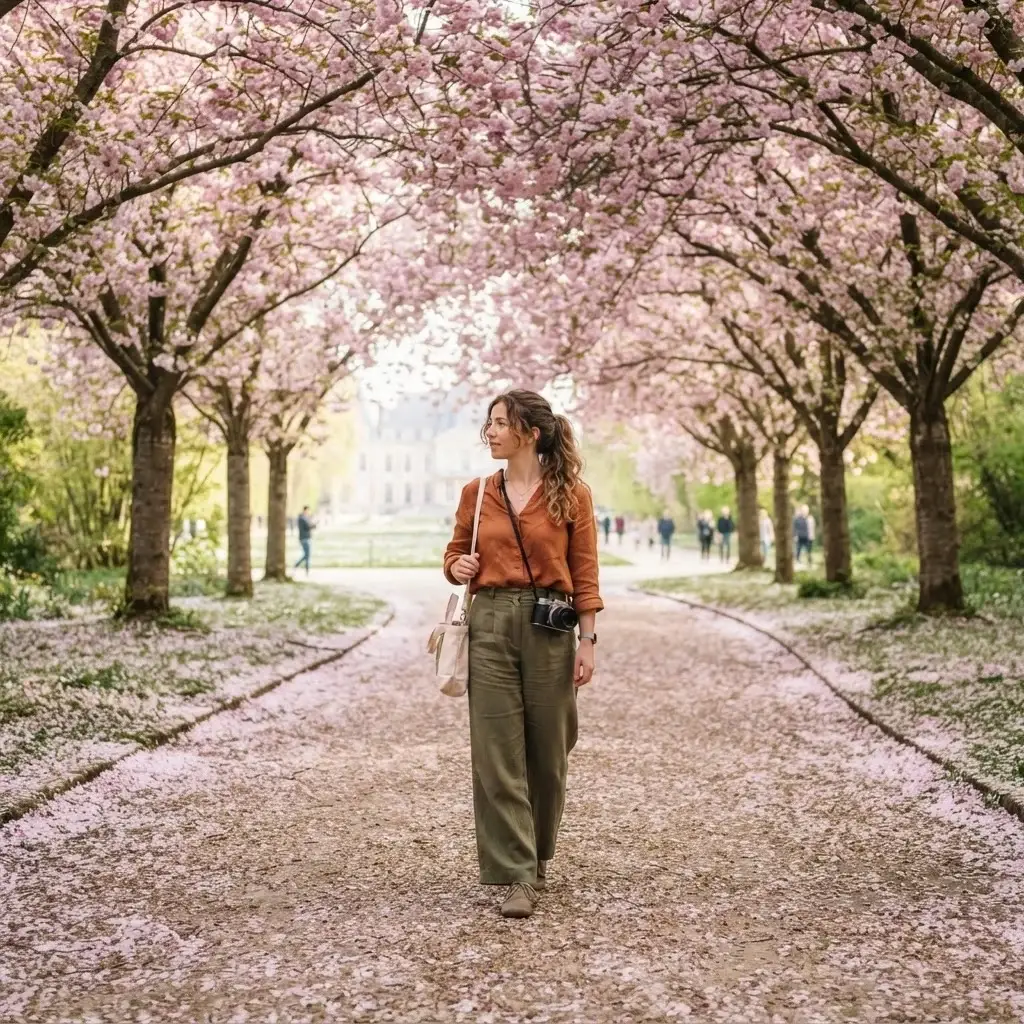
Culinary Tip: Walk into the small, charming town center of Sceaux just outside the park gates. Look for the pastry shop called Patisserie Colbert. Order a traditional Mille-Feuille (layered crispy pastry with vanilla custard cream). It is light, flaky, and intensely delicious.
Navigation Advice: Go to any station connected to the RER B commuter train line in central Paris (like Châtelet-les-Halles or Saint-Michel). Board a train heading south and get off at the Parc de Sceaux station. The walk from the station platform to the park gates takes less than five minutes through a quiet residential street.
When I left my corporate desk, I promised myself that I would look at the world with open eyes, real curiosity, and total honesty. Travel is not about showing off a perfect, expensive life on social media. It is about building your internal confidence, learning how to handle small mistakes on the road, and opening your heart to new cultures.
Paris is a spectacular city, but its true magic is not hidden inside a high-priced souvenir shop or behind a crowded museum rope. It is waiting for you along the quiet banks of the green canal. It is waiting inside the loud, energetic neighborhood dining halls. It is waiting in the small, warm interactions you have with local bakers when you try out your new French phrases.
Stop waiting for the perfect, flawless moment to book your plane ticket. The world rewards courage, action, and curiosity. Pack your comfortable walking shoes, leave the stressful tourist checklists behind, and go discover the real heart of Paris on your own terms.