Solo Travel in Sri Lanka: A 2-Week Itinerary That Works

Sri Lanka is one of those places that sounds like it has everything, because it does. Ancient rock fortresses, colonial seaside towns, a train ride through misty tea country, leopards in the wild, and beach towns where the pace slows down to almost nothing. For a solo traveler, the question is not whether Sri Lanka is worth it. The question is how to string all of it together without losing your mind or your budget.
I have not personally walked through Colombo’s streets or climbed Sigiriya, but I have planned enough solo trips through complex, unfamiliar destinations to know exactly what makes an itinerary fall apart, and what makes it sing. From what solo travelers consistently report, Sri Lanka is one of the most rewarding solo destinations in Asia, especially once you understand how the logistics work, where to slow down, and what to skip.
This is a two-week route I would hand to a friend planning their first Sri Lanka solo trip. It covers the cultural heart of the island, the most iconic train journey in Asia, a safari, and a stretch of coast, all in an order that makes geographic and logistical sense. I have also included the honest stuff about scams, safety, transport headaches, and realistic costs, because that is what actually helps you travel well.
Before You Book: Timing and Visas
Sri Lanka has two monsoon seasons running on different sides of the island at different times of year, and if you pick the wrong coast in the wrong month you will spend a lot of time watching rain. The west and south coasts are generally at their best from December through March. The east coast and cultural triangle are drier from May through September. If you are visiting the interior regions (Kandy, Ella, Sigiriya) and doing the south coast, December through March and the shoulder months of April and October are your sweet spots.
For the visa, most visitors can apply through the Sri Lanka Electronic Travel Authorization system before arrival. You apply online at eta.gov.lk and receive approval before you fly. As of May 2026, nationals of 40 countries receive the tourist ETA free of charge for 30 days. US citizens pay approximately $20 USD online. The process is straightforward: fill in the form, pay, receive your ETA by email, and print it or save it on your phone. Do not wait until the airport to sort this out. The ETA allows entry for up to 30 days, and you will need a passport valid for at least six months beyond your intended departure date.
Getting Oriented: What Kind of Trip Is This?
Two weeks in Sri Lanka is enough time to feel like you have actually been somewhere without rushing through every stop like you are checking off a list. The route in this guide flows from north to south, starting in Colombo, looping through the cultural triangle and hill country, dipping into wildlife territory, and finishing on the southern coast. You will use trains for the most scenic legs, buses when trains do not make sense, and the occasional tuk-tuk for short hops.
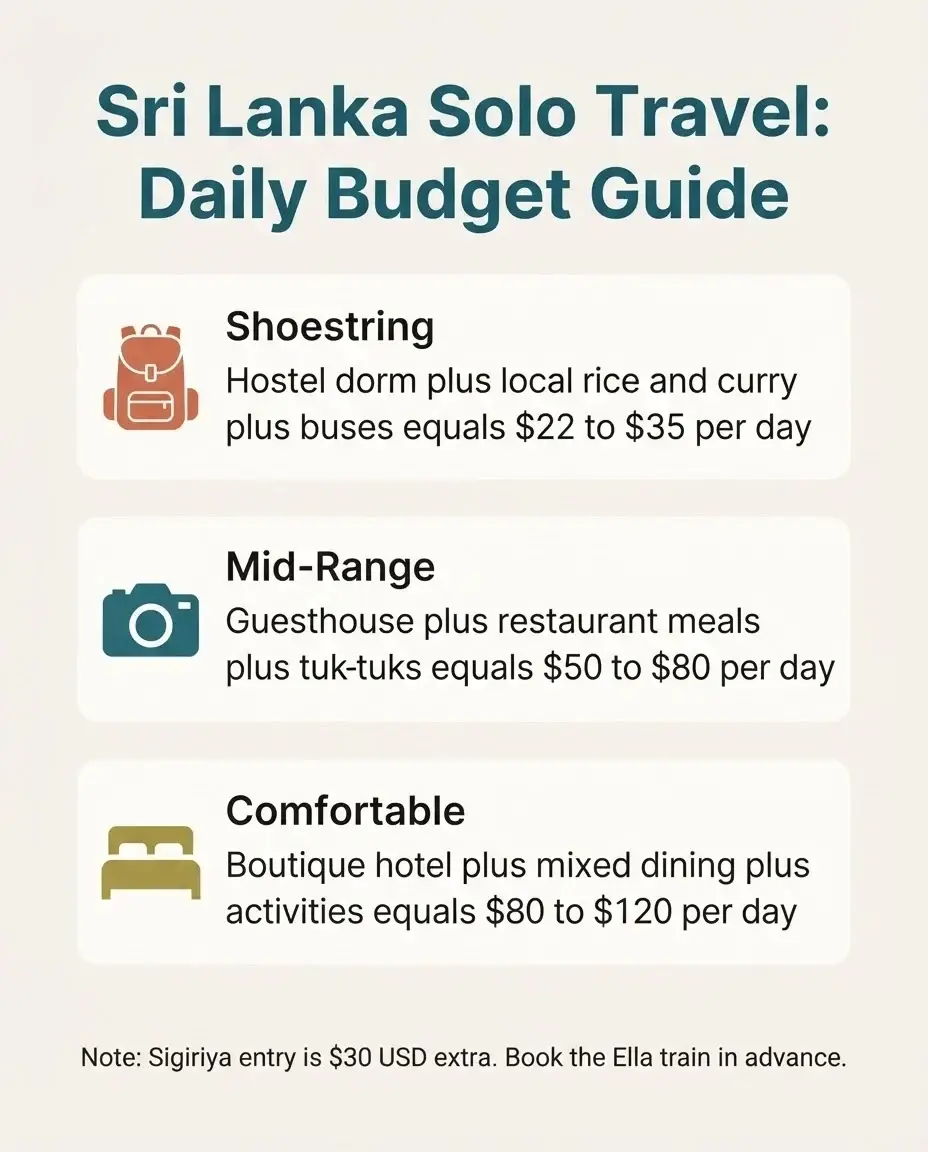
A quick note on budget: solo travelers generally land somewhere in the $50-80 USD per day range for mid-range travel, covering a decent guesthouse or small hotel, three meals, entrance fees, and a few transport costs. If you are comfortable staying in hostels and eating at local spots (which I always recommend), you can comfortably get by on $35-45 a day. Entrance fees at places like Sigiriya are significant by local standards, so factor those in.
Days 1-2: Colombo
Colombo gets a mixed reputation among travelers, and honestly a lot of people spend one night there and bolt for the hill country. I think that is a mistake. Give the city two days. It will orient you to Sri Lanka’s food, pace, and culture in a way that makes everything that follows richer.
Start in Pettah, the old market district near Colombo Fort station. It is loud, colorful, and completely alive. The covered markets sell everything from spices to saris. Nearby, Gangaramaya Temple is one of the most visited Buddhist temples in Colombo, a fascinating mix of Thai, Indian, Chinese, and Sri Lankan architectural styles. The temple opens early in the morning, and if you arrive before the tour groups, the atmosphere is genuinely calm and contemplative.
Spend your second day walking around the Colombo 3 and 7 neighborhoods, sometimes called Kollupitiya and Cinnamon Gardens, where you will find tree-lined streets, the National Museum, and some of the best cafes on the island. Barefoot Gallery on Galle Road is worth a stop: an independent bookshop, textile store, and garden cafe all in one, the kind of place that makes you want to sit for two hours.
Practical notes: get your SIM card sorted on arrival at Bandaranaike International Airport before you leave the arrivals hall. Dialog’s tourist SIM costs around Rs. 1,399 (roughly $4 USD) and comes loaded with 20GB of data, which is more than enough for two weeks of maps, translation apps, and the odd Instagram post. Having a working local number from day one saves enormous headaches.
A word about tuk-tuks in Colombo: they are everywhere and they are useful. However, always agree on a price before getting in if the driver says the meter is broken. This is a common scam where the quoted price mysteriously changes on arrival. Many drivers now use ride apps like PickMe, which is Sri Lanka’s version of Uber and far more reliable for pricing. Download it before you land.
Days 3-4: Kandy
The train from Colombo to Kandy takes about two and a half to three hours and is one of the most comfortable and scenic ways to travel in the country. Trains depart from Colombo Fort Station, and the views through the central highlands are a preview of what is coming in Ella. Trains run regularly and tickets are affordable.
Kandy sits at around 500 meters above sea level, which makes it noticeably cooler and greener than Colombo. The city is built around a lake, and the whole place has an unhurried, slightly colonial elegance to it.
The centerpiece of Kandy is Sri Dalada Maligawa, the Temple of the Sacred Tooth Relic, one of the most important Buddhist sites in the world. According to Buddhist tradition, the left canine tooth of the Buddha is enshrined here. The official site at sridaladamaligawa.lk has current visiting hours, puja ceremony times, and entry details. Puja ceremonies happen three times daily (roughly 6:30am, 9:30am, and 6:30pm), and attending one is far more meaningful than simply walking through as a tourist.
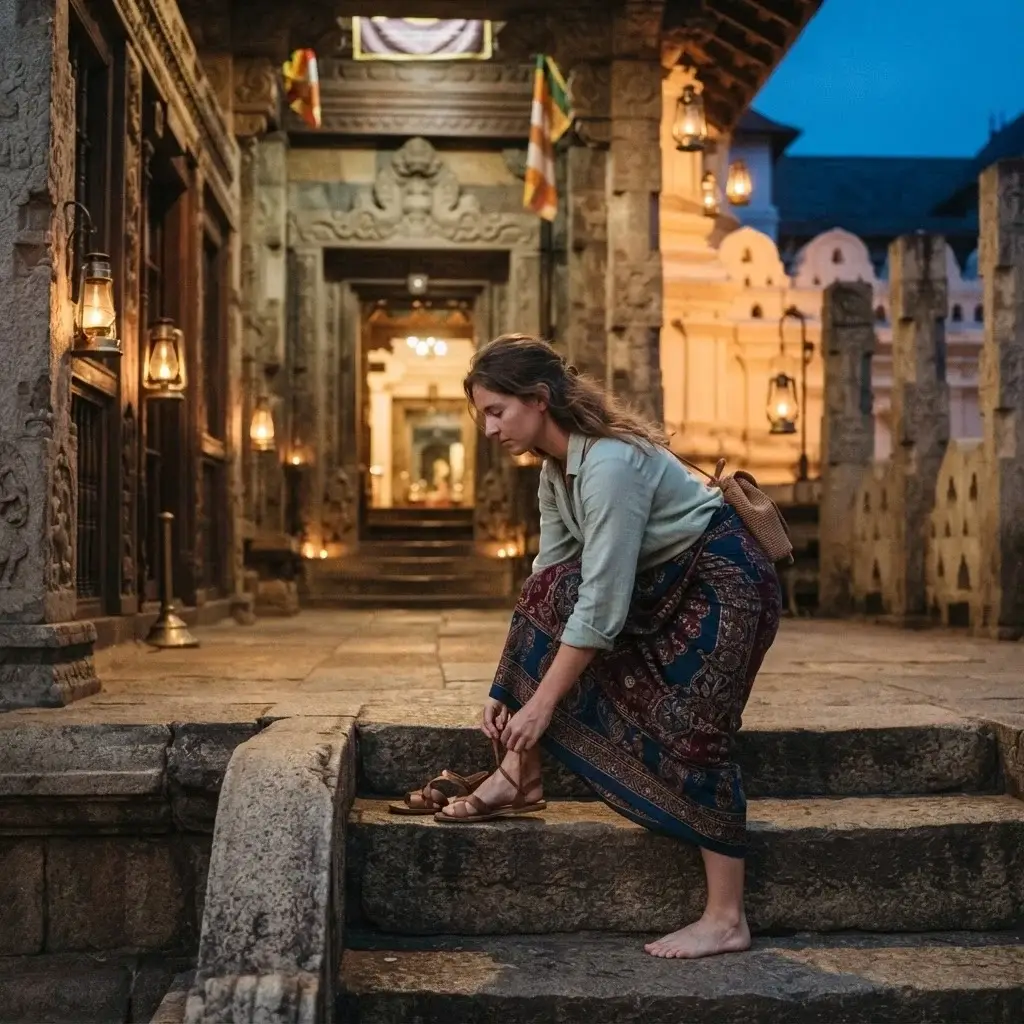
Before you visit any temple in Sri Lanka, including this one, cover your shoulders and knees. Remove your shoes before entering. Do not pose for photos with your back to a Buddha statue. This is not just considered rude; it is a criminal offense in Sri Lanka and foreign tourists have been arrested for it. A sarong is useful to carry and many temple entrances have scarves to borrow, but having your own means you are never caught out.
While in Kandy, walk up to the viewpoint above the lake at sunset. Visit the Kandy Market for lunch. The local dish you want is rice and curry, but not the tourist version: find a small local “rice and curry shop” where you get a tray loaded with different curries, dahl, and sambols for around 200-400 LKR. This is one of those meals you will remember long after the expensive restaurant dinners have faded.
Days 5-6: Sigiriya and the Cultural Triangle
Sigiriya is roughly two to three hours by bus or hired vehicle northeast of Kandy. Most solo travelers base themselves in Sigiriya town or the nearby village of Inamaluwa, which has a good range of guesthouses.
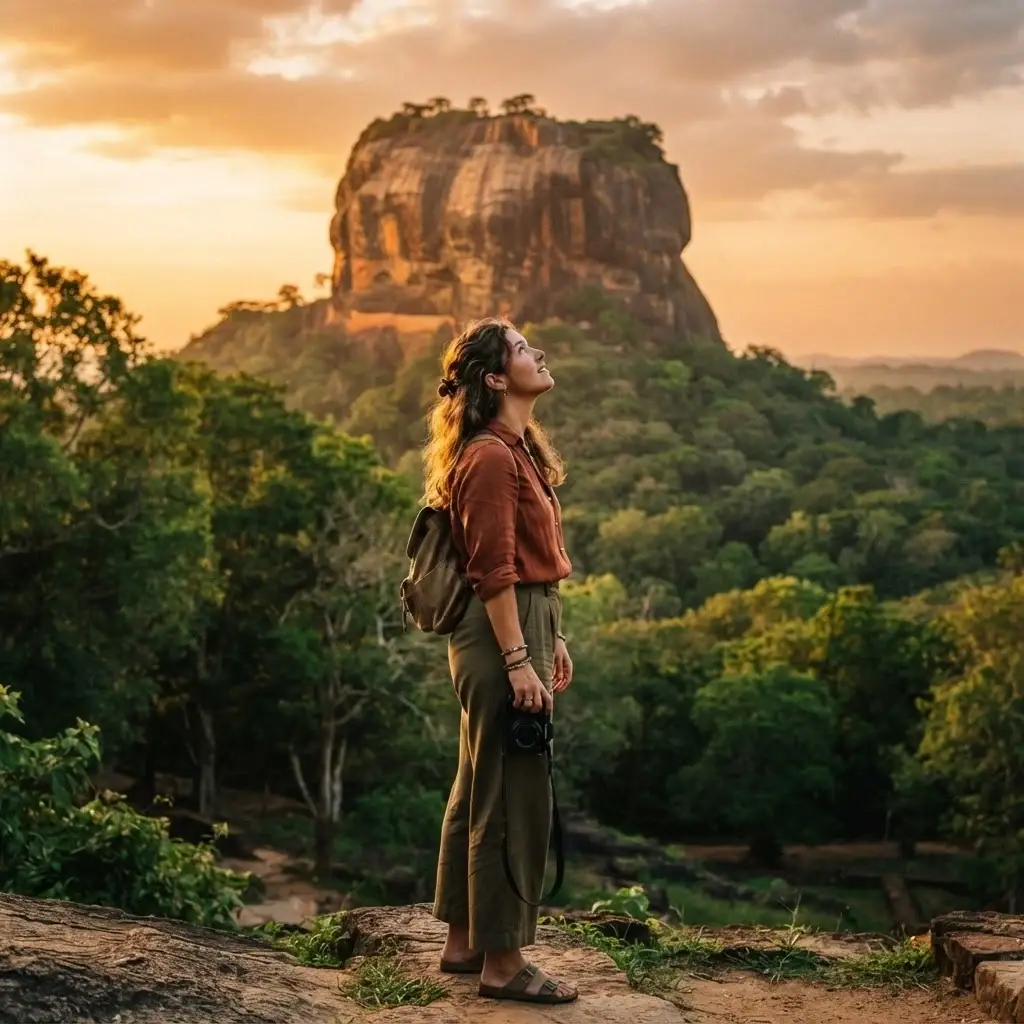
Sigiriya Rock Fortress is the standout attraction here, and it earns every bit of its reputation. The UNESCO World Heritage listing for Sigiriya describes the site as one of the best-preserved examples of ancient urban planning. The fortress was built by King Kassapa I in the 5th century and sits on a granite peak rising around 180 meters above the surrounding jungle. The climb involves staircases, a spiral staircase to see the famous frescoes of the “Sigiriya Ladies,” and the final approach through the paws of a giant lion carved into the rock.
The entrance fee for foreign visitors is $30 USD. That is not cheap, but the site is genuinely spectacular, and if you climb early (gates open around 7am), you get the frescos and the summit with far fewer people and bearable heat. Bring water, wear decent shoes, and do not be that person in flip-flops wondering why the climb is difficult.
Across the road from Sigiriya is Pidurangala Rock, which many solo travelers prefer. It costs around $3 USD, the climb is more of a scramble, and the view from the top looks directly across to Sigiriya Rock, giving you the photograph most people miss from Sigiriya’s own summit. Both in one day is achievable if you start Sigiriya early.
Days 7-9: The Train to Ella
This is the leg of the trip that solo travelers remember most vividly. The train from Kandy through Nuwara Eliya to Ella is consistently described as one of the most beautiful train journeys in the world, and from what travelers report, it absolutely lives up to that.
The route climbs through tea plantation country, winding across bridges, through tunnels, and past waterfalls. The carriage windows stay open. Mist rolls in and out of the valleys. Children at wayside stations wave at the train. It is the kind of travel that reminds you why you do this.
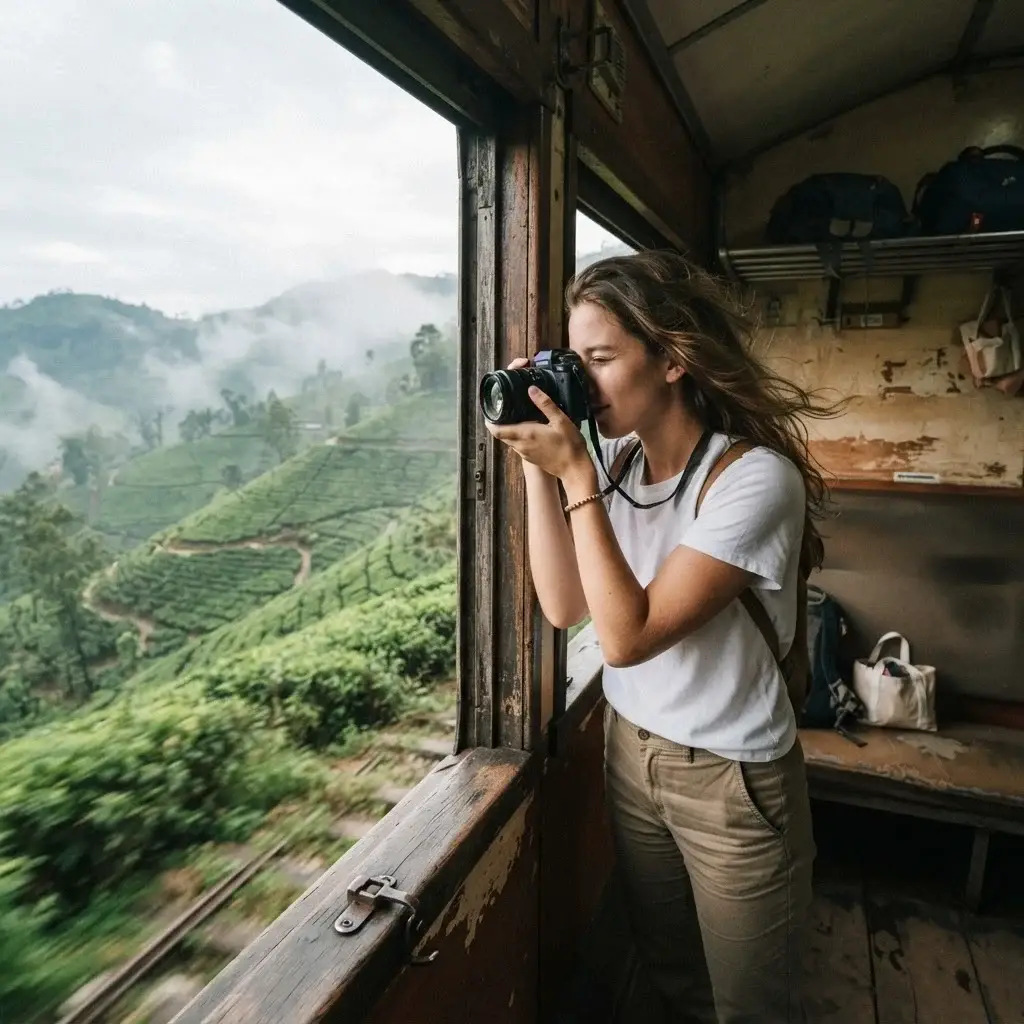
Booking your ticket in advance is important. You can book through the official Sri Lanka Railways seat reservation system at seatreservation.railway.gov.lk up to 30 days before travel. Second class reserved (approximately $2.30 USD) is the sweet spot for solo travelers: it has assigned seats, it is affordable, and it is perfectly comfortable. First class exists but the windows do not open, which defeats the purpose. For the best views from Kandy, try to get a seat on the right side of the train facing the direction of travel.
Book as soon as your dates are set. These tickets sell out weeks in advance, especially December through March.
Ella itself is a small hill country town that has been discovered by travelers but still feels genuine. The main things to do are all relatively close together and easy to reach alone. Little Adam’s Peak is a straightforward hike through tea plantations that takes about 45 minutes each way and rewards you with views across the valley. Ravana Falls is a short tuk-tuk ride from town. The Nine Arches Bridge is about a 20-minute walk from the town center: a colonial-era stone viaduct that spans a jungle gorge. The best time to see a train pass over it is around 9am or mid-afternoon (check the schedule at your guesthouse, as locals always know the timing). Spend the evening at one of Ella’s small restaurants along the main strip, order a Sri Lankan curry, and remind yourself this is your real life.
Days 10-11: Yala National Park
Getting from Ella to Yala typically means arranging a transfer or taking a combination of bus and tuk-tuk to Tissamaharama, the closest town to the park. Many guesthouses in Ella can help arrange this, and it is worth asking.
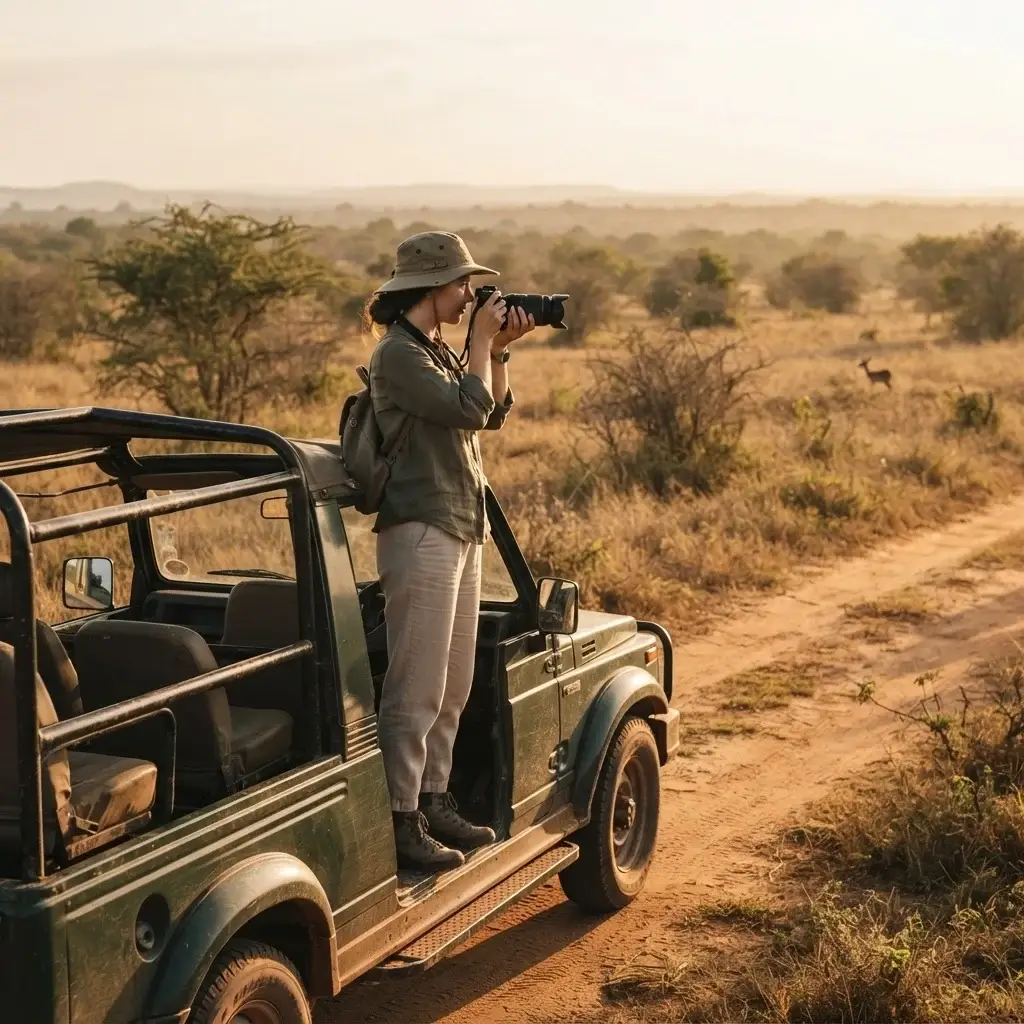
Yala is one of the best places in the world to see leopards in the wild. The park is also home to elephants, sloth bears, crocodiles, peacocks, and a vast range of birds. The official Yala National Park website has information on visiting hours (6am to 6pm), zones, and how safaris are structured.
The solo traveler’s main question about Yala is usually this: do I have to hire a private jeep? The honest answer is yes, mostly. The park does not allow you in on foot, and public transport does not enter. Your options are to book a shared safari through your guesthouse (often available, especially in peak season when operators group solo travelers together), or to hire a private jeep, which runs around $50-80 USD for a half-day morning safari including park entry fees. Book through a licensed operator in Tissamaharama or through your accommodation. Morning safaris (departing around 5:30am) give you the best leopard sightings, and a half-day is genuinely enough.
From Yala, the southern coast is close, and most travelers continue west toward Mirissa or Galle.
Days 12-14: Galle and the South Coast
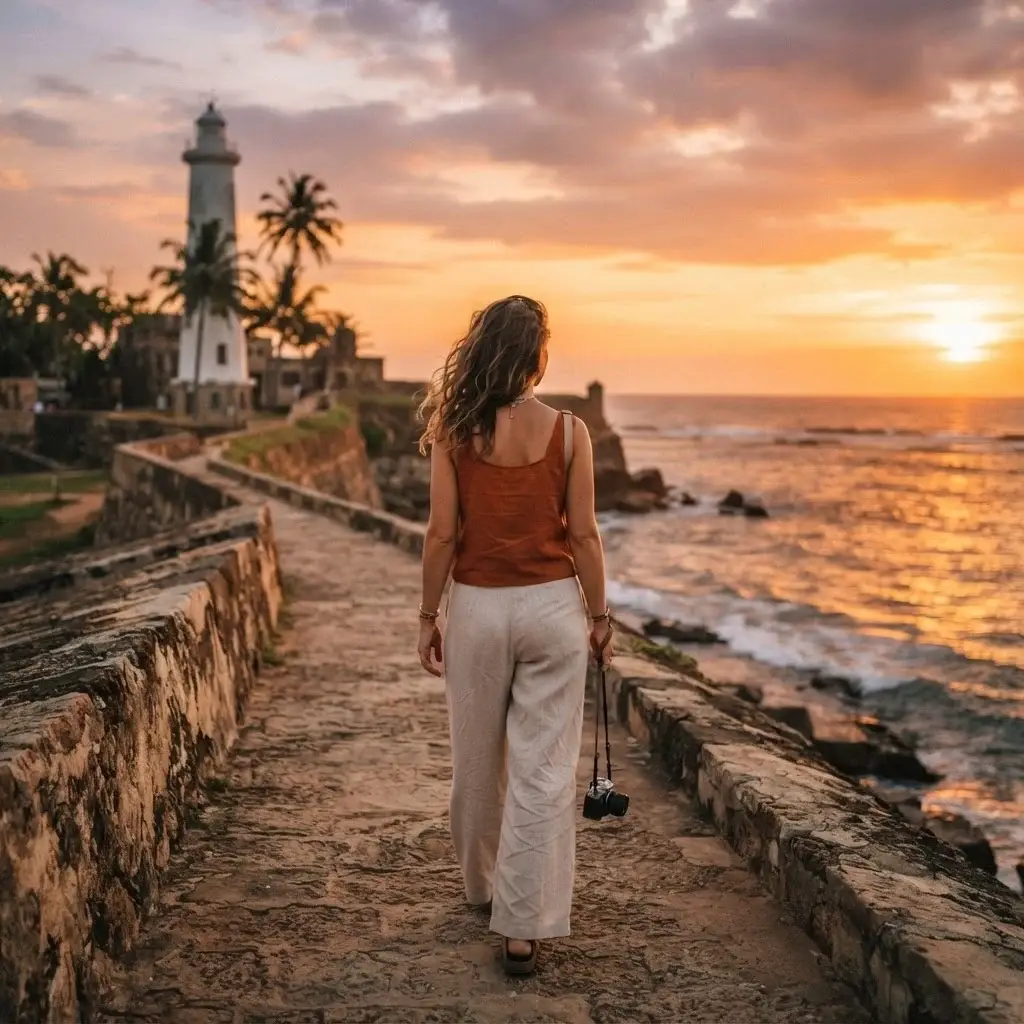
Galle Fort is one of the most charming places in Sri Lanka and one I would spend a full day or two in on any trip. The fort is a Dutch colonial walled city, a living neighborhood of narrow cobblestone streets, independent bookshops, boutique cafes, art galleries, and small hotels. Walking the ramparts at sunset, watching the ocean, is one of those travel moments that costs nothing and sticks with you.
Mirissa, about 40 minutes east of Galle by bus, is the south coast beach town where most solo travelers end up. It has a relaxed, unpretentious vibe, a long curved bay, and good food. Whale watching season runs roughly November through April, and blue whales are spotted here with some regularity. If that is on your list, book a tour through a licensed operator in town. It is worth checking independent traveler reviews to find operators who genuinely limit boat numbers and follow ethical wildlife guidelines.
Use these final days to decompress. Read on the beach. Sit with fellow travelers at a sunset spot and swap stories. Some of the best parts of solo travel are not the sights, they are the conversations you fall into when you stop rushing.
Safety and Honest Practicalities
Sri Lanka is generally a safe destination for solo travelers, including solo women. That said, the US State Department currently maintains a Level 2: Exercise Increased Caution advisory for Sri Lanka, citing civil unrest, terrorism risk, and landmines, the last of which are primarily a concern in specific areas of the far north, not the tourist route in this guide. The most recent major terrorist attack was the April 2019 Easter bombings, and security at hotels and shopping areas has been significantly heightened since then.
The practical safety concerns for a solo traveler on this route are more everyday: tuk-tuk overcharging, gem shop pressure tactics, occasional pickpocketing at busy tourist sites, and sexual harassment, which solo women in particular report experiencing in crowded areas and on public transport. Carrying yourself confidently, dressing modestly near temples and in smaller towns, using the PickMe app for reliable transport pricing, and trusting your instincts in any situation that feels off all go a long way.
When I was guiding tourists back in New York, I always told people: confidence is not about knowing everything, it is about knowing how to read a situation and act accordingly. That same principle travels with you everywhere.
Keep your passport secure but carry a clear photo of it on your phone. Sri Lankan police checkpoints are not uncommon, and having ID accessible prevents delays.
Travel insurance that covers medical evacuation is strongly recommended. Medical facilities in Colombo are reasonable, but outside the capital they are limited, and serious conditions often require evacuation.
Pacing Advice for Solo Travelers
The route above covers a lot of ground. If you have more than two weeks, add extra nights in Ella (it genuinely rewards slow time), and consider spending more time on the south coast. If you only have 10 days, cut Yala or combine the southern coast into a single shorter stop, but keep Sigiriya and the train to Ella no matter what.
One of the habits that has served me well in every destination is building in at least one completely unscheduled half-day per week. No attractions, no transport. Just wandering, eating whatever looks good, and talking to whoever is nearby. In Sri Lanka especially, where the people are genuinely welcoming and curious, that unplanned time tends to produce the moments you will actually tell people about when you get home.
Solo travel is not about doing everything perfectly. The missed bus, the guesthouse that was not what the photos suggested, the meal you ordered by accident that turned out to be your favorite thing you ate, those are the stories. Sri Lanka will give you plenty of them.
This article contains practical information researched and accurate at time of writing. Entry requirements, prices, and transport schedules are subject to change; always verify directly with official sources before you travel.