Why Tiny Home Rentals Are the Most Unique Way to Travel Now

I have stayed in a lot of places over the years. Hostels in Europe where I shared bunk beds with seven strangers. A room in a family home in Ghana where the household woke before sunrise. A guesthouse in northern Thailand where the walls were thin and the roosters were loud. Each of those places taught me something because of the way they made me feel, not in spite of the discomfort, but through it. They made me pay attention.
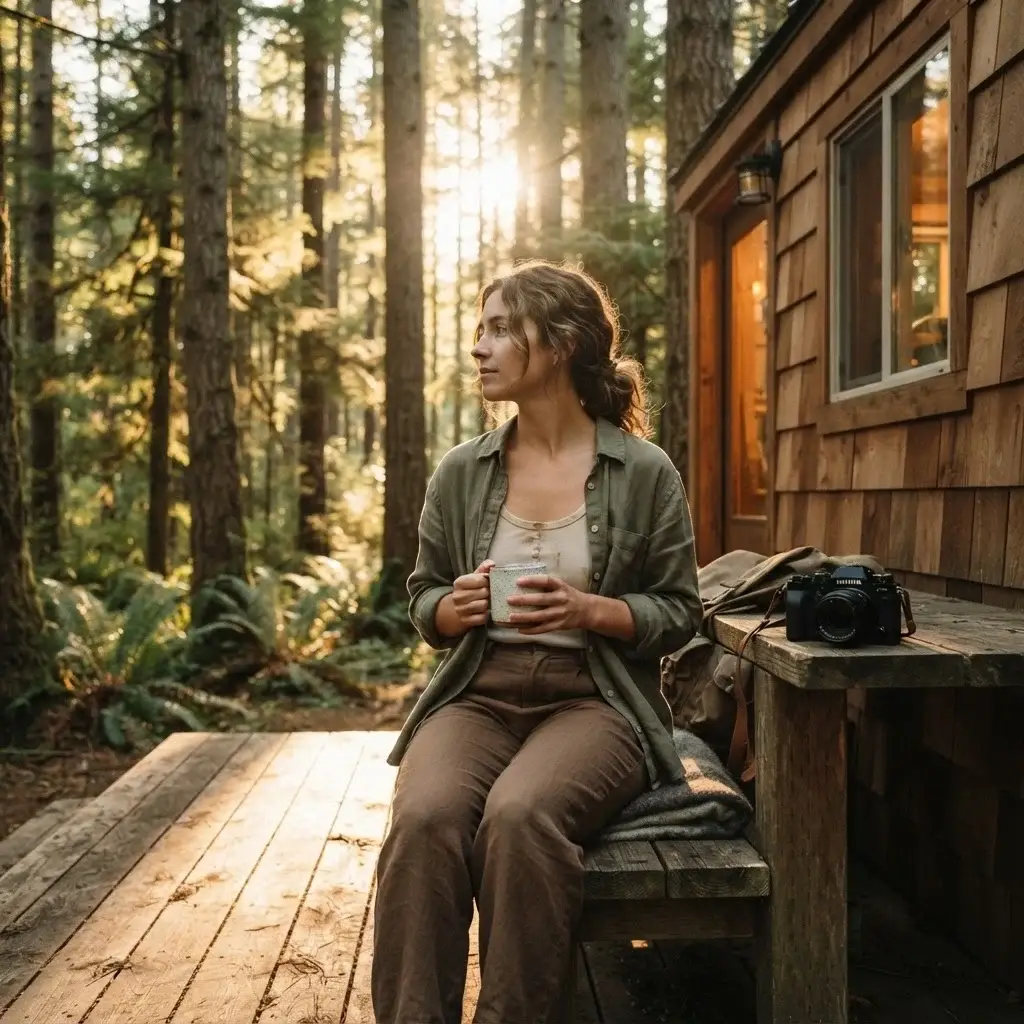
Tiny home rentals do something similar. Not because they are rough or uncomfortable, most of them are genuinely lovely, but because the small size forces a kind of presence that a standard hotel room or vacation rental simply never demands. When your entire living space is 200 square feet surrounded by a pine forest or perched above a river valley, you stop scrolling your phone. You look out the window. You sit on the porch and actually breathe.
That is what makes them worth writing about. Not because they are trendy, though they clearly are, but because of what they actually do for the person who chooses to stay in one.
Why This Trend Is Not Going Anywhere
The numbers tell an interesting story. According to a survey by IPX1031 covering 1,010 Americans, 73% of Americans would consider living in a tiny home, with Gen Z and Millennials leading the interest at 75%. Nearly one in three Americans have already stayed in an alternative living space rental, and 92% of those people enjoyed the experience. That is not a fringe curiosity. That is a genuine cultural shift in how people want to spend their time, their money, and their headspace.
Part of this is about economics. Part of it is a reaction to the idea that bigger always means better. But a growing piece of it is about the experience itself. People are tired of staying in identical hotel rooms. They want something that feels alive, situated, and real. Tiny home rentals, when chosen well, deliver exactly that.
What “Tiny Home Rental” Actually Means (Because It Covers a Lot of Ground)
Before you start searching, it helps to understand what you are actually choosing between. The term “tiny home rental” gets used loosely, and the differences in experience between types are significant.
A tiny house on wheels is exactly what it sounds like: a fully built home, typically 150 to 400 square feet, constructed on a trailer frame. These often have a lofted sleeping area, a compact kitchen, a bathroom, and a living nook. Staying in one feels like inhabiting a very well-designed ship cabin. Everything has a purpose. Nothing is wasted.
Fixed tiny cabins are smaller structures built on a permanent foundation, often in nature settings like forest clearings, lakefronts, or mountain meadows. These tend to feel more rustic and grounded. They are often what you find in tiny house villages, which are collections of individually themed or styled units set across a shared property with communal or private outdoor space.
Then there are the more unconventional options: geodesic domes with panoramic sky views, A-frame cabins that maximize verticality in a small footprint, converted shipping container homes with an industrial-modern aesthetic, and even converted railcars. The experience of each is genuinely distinct. A dome rental in the desert has almost nothing in common with a lakefront tiny cabin in Washington State except the fact that both happen to be small.

Knowing which category fits your travel mood is the first real step to booking something you will love.
The Best Platforms to Start Your Search
For variety and the widest range of unique options, Glamping Hub’s dedicated tiny house search is one of the most useful places to start. Their curated listings lean toward distinctive, experience-driven properties across the US, with filters for type, amenities, and location. You are less likely to find a generic listing there and more likely to find something with genuine personality.
For travelers who want a cohesive, organized stay at a designated tiny house destination rather than a one-off rental property, Tumbleweed Tiny House Company runs some of the most established tiny house hotel locations in the country. Their network spans Oregon, Washington, Colorado, Tennessee, Arizona, Texas, Florida, California, and New Mexico. The beauty of booking through Tumbleweed’s tiny house hotel directory is that each property has context: the setting, nearby activities, the specific style of each home, and what makes that location worth the trip. The New Mexico location, for instance, features converted historic railcars turned into tiny house suites, which is about as “unique experience” as it gets.
Airbnb’s tiny home category has grown considerably and is worth browsing for off-the-beaten-path individual listings, especially when you have a specific region in mind. Just use the filters carefully and read the reviews thoroughly. More on that below.
Three Destinations That Genuinely Deliver
From what solo travelers and couples consistently report, certain locations stand out not just for aesthetics but for the quality of the overall experience.
Mt. Hood Tiny House Village, Welches, Oregon
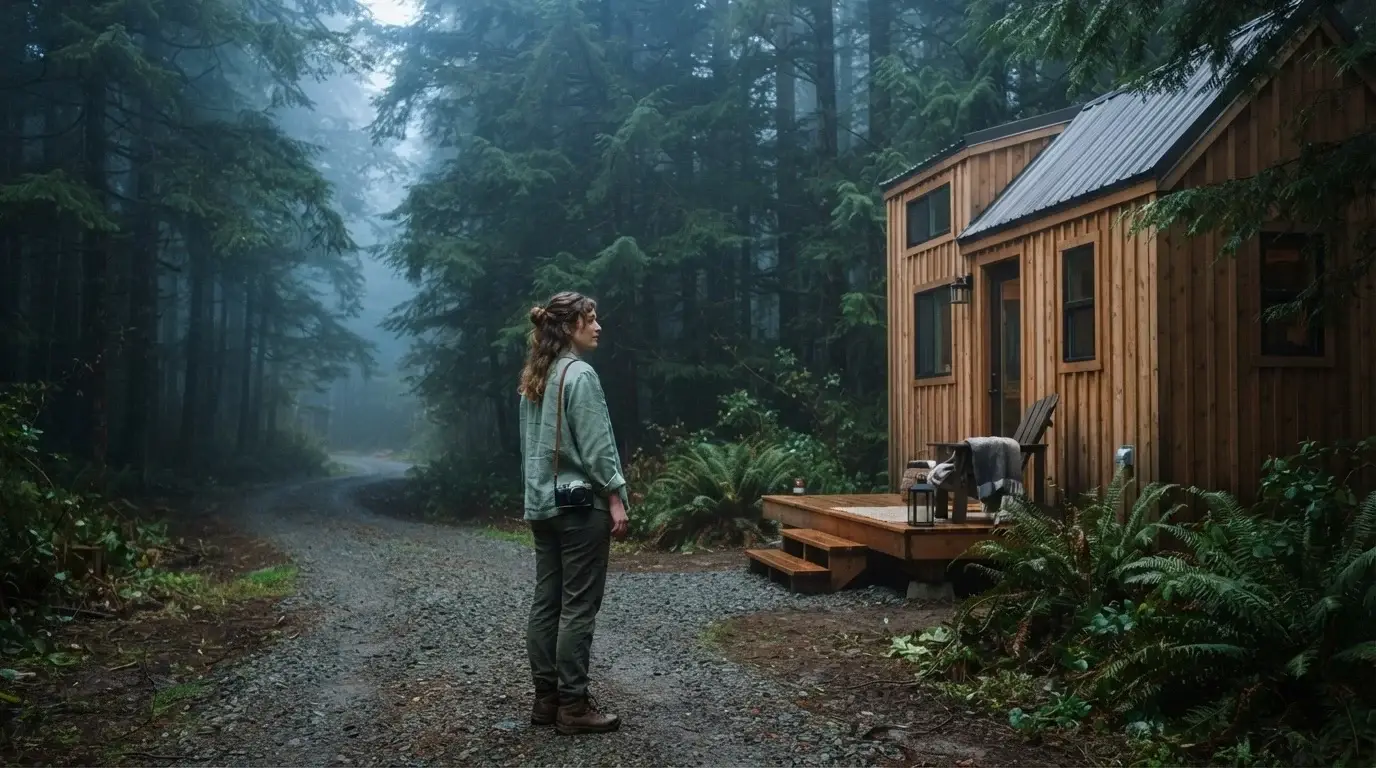
Located less than an hour from Portland, the Mt. Hood Tiny House Village sits at the edge of Mt. Hood National Forest in the Pacific Northwest. The homes range from 175 to 260 square feet, each with its own name and character. Nightly rates start from around $139 depending on the unit and season. What makes this destination stand out is the combination: you have a genuinely beautiful tiny home experience alongside easy access to forest hikes, river walks, and the mountain itself. If you want to wake up in a tiny house, step outside into towering Douglas firs, and feel genuinely far from your regular life within an hour of a major city, this delivers.
Leavenworth Tiny House Village, Leavenworth, Washington
This one is harder to explain without sounding like you made it up. Leavenworth is a Bavarian-themed mountain town in Washington State, and the Leavenworth Tiny House Village leans fully into it. Five individually themed tiny homes, ranging from 180 to 300 square feet, sit on 300 acres with over seven miles of on-site hiking trails. Rates start from $129 per night. In summer, you can kayak on Alpine Trout Lake, hike through the surrounding Cascades, and walk into town for German food and local wine. In winter, the resort is 29 miles from Stevens Pass Ski Resort and connects directly to over 200 miles of groomed snowmobile trails. The tiny homes are not the only draw here; they are the frame through which you experience everything else. That framing matters more than people realize.
Tumbleweed in Fairplay, Colorado (Whispering Aspen Village)
Tucked into the Mosquito Mountain Range just 30 minutes from Breckenridge, this is one of the more underrated tiny house stays in the country. The elevation is dramatic, the views are stunning, and the access to one of Colorado’s most beloved ski and mountain biking regions makes it versatile across seasons. Tumbleweed hosts multiple Colorado locations, so the Woodland Park property near Pikes Peak is another strong option if you prefer being close to Colorado Springs.
What the Experience Actually Feels Like
Here is the honest version, because I think the gap between expectation and reality is where most disappointment happens with tiny home rentals.
The space is small. This sounds obvious, but it affects you in subtle ways you might not anticipate. There is no separate room to retreat to if you want quiet from a travel companion. There is no room to spread out a large suitcase. Counter space in the kitchen is limited. If you have a top loft sleeping area, you will probably need to climb a steep ladder or stairs to get to bed, and doing that at 2am when you are tired and disoriented is a distinct experience.
None of this is a deal-breaker. But it does mean that the best tiny home stays come from travelers who arrive ready to adapt, not resistant to compromise.
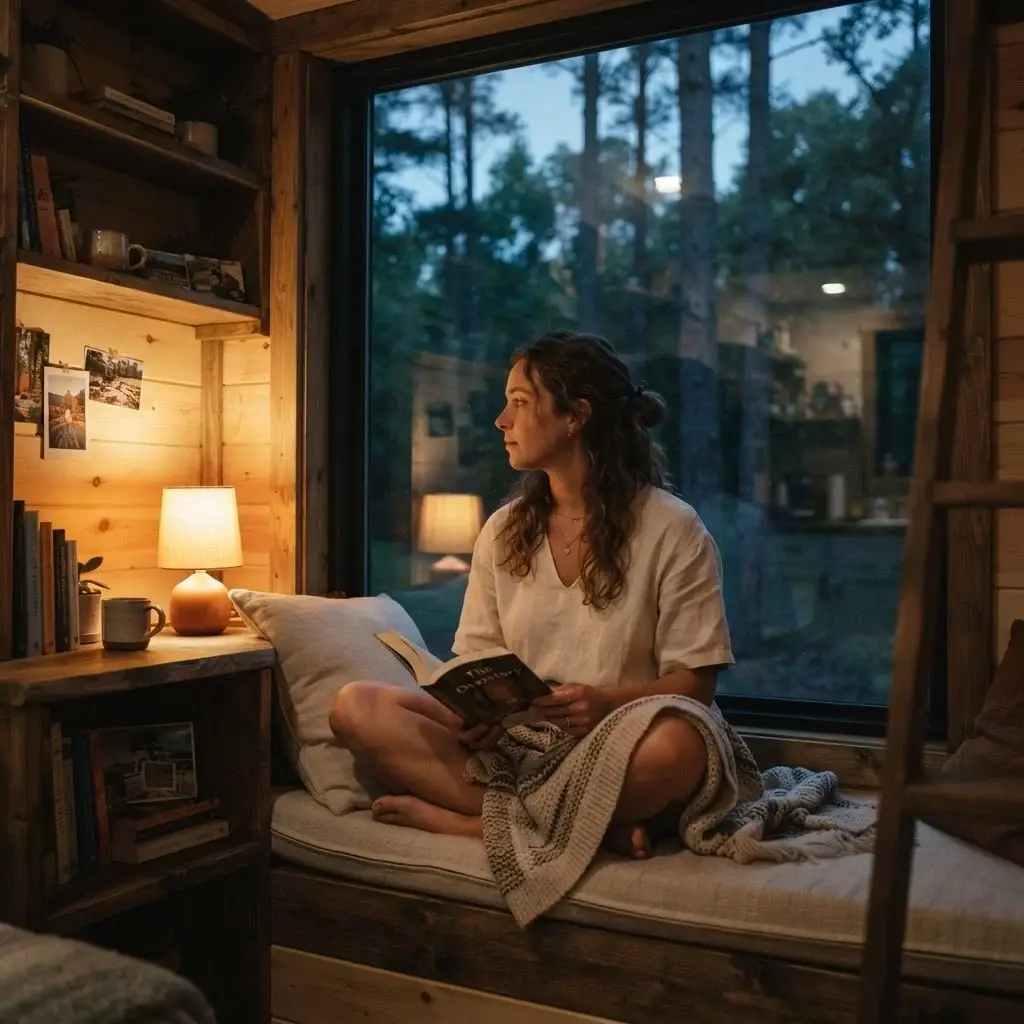
The upside is also real. The intentionality of the design means that well-built tiny homes feel cozy rather than cramped. A fireplace or wood stove in a 200-square-foot space heats the whole room within minutes. A window over a forest view becomes the focal point of the entire stay. The outdoors stops being somewhere you go for activities and becomes an extension of your living space. Solo travelers consistently report that tiny home rentals encourage a particular kind of reflection and peace that a standard hotel room never quite achieves.
Before You Book: The Questions That Save You from Disappointment
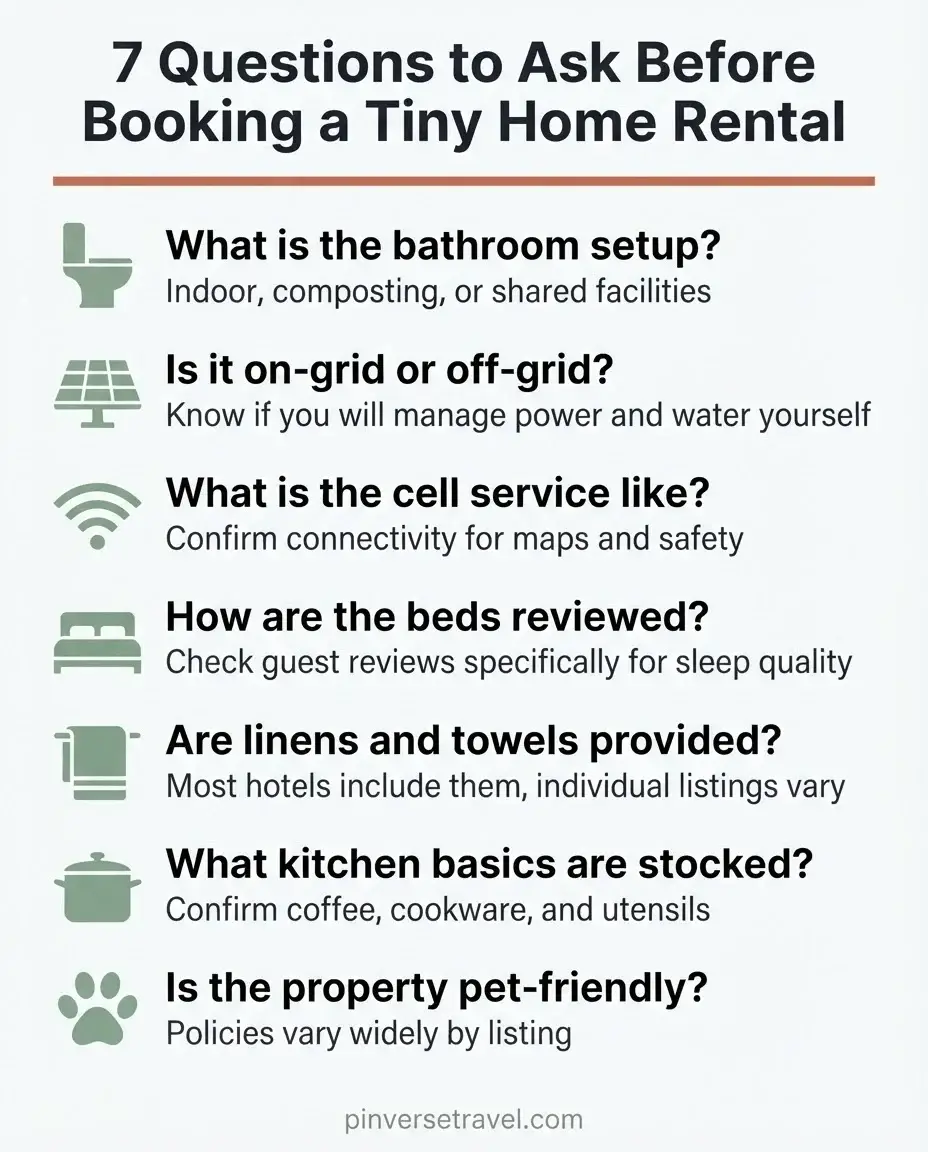
Not all tiny home listings are created equal, and a beautiful listing photo covers a multitude of shortcomings. Business Insider’s guide on what to know before renting a tiny house covers this well, and from what experienced tiny home travelers report consistently, a few specific questions make all the difference.
Ask about the bathroom setup first. Some tiny home rentals have full indoor bathrooms. Others have composting toilets, outdoor showers, or shared bathroom facilities on the property. There is no wrong answer, but you need to know which you are getting before you arrive at 9pm in the dark.
Ask whether the listing is on-grid or off-grid. Off-grid means you may be managing propane levels, water tank capacity, and generator or solar power. For some travelers that is part of the appeal. For others it is a stressor they did not sign up for.
Ask about cell service and wifi. Many of the best tiny home locations are deliberately remote, which is wonderful, but if you need connectivity for any reason including navigation or safety, confirm the situation in advance.
Ask about linens, towels, and kitchen basics. Most established tiny house hotel properties include these. Individual Airbnb-style tiny home listings vary widely, and arriving without towels is a very small problem with a disproportionately large effect on your first night.
Read reviews specifically for any mention of the beds. Loft sleeping areas in tiny homes sometimes have mattresses that do not match the photography. Reviews from past guests are the most honest source of that information.
The Sustainability Side: Why Tiny Home Rentals Are Good for the Planet Too
If you care about the environmental footprint of your travel choices, this is genuinely meaningful. According to data from NOAH (the National Organization of Alternative Housing), tiny homes produce approximately 2,000 pounds of yearly CO2 emissions compared to 28,000 pounds from a standard house, and they use about 7% of the energy a traditional home requires. Many tiny home rental properties are solar-powered, use composting or low-water sanitation systems, and are built with reclaimed or sustainably sourced materials.
For travelers who are already making choices around train travel over flying, local food over tourist restaurant chains, and slow itineraries over rushed itineraries, a tiny home rental fits naturally into that same philosophy. Staying in one is not a grand gesture toward sustainability, but it is a consistent, genuine step in the right direction.
What to Pack (and What to Leave Behind)
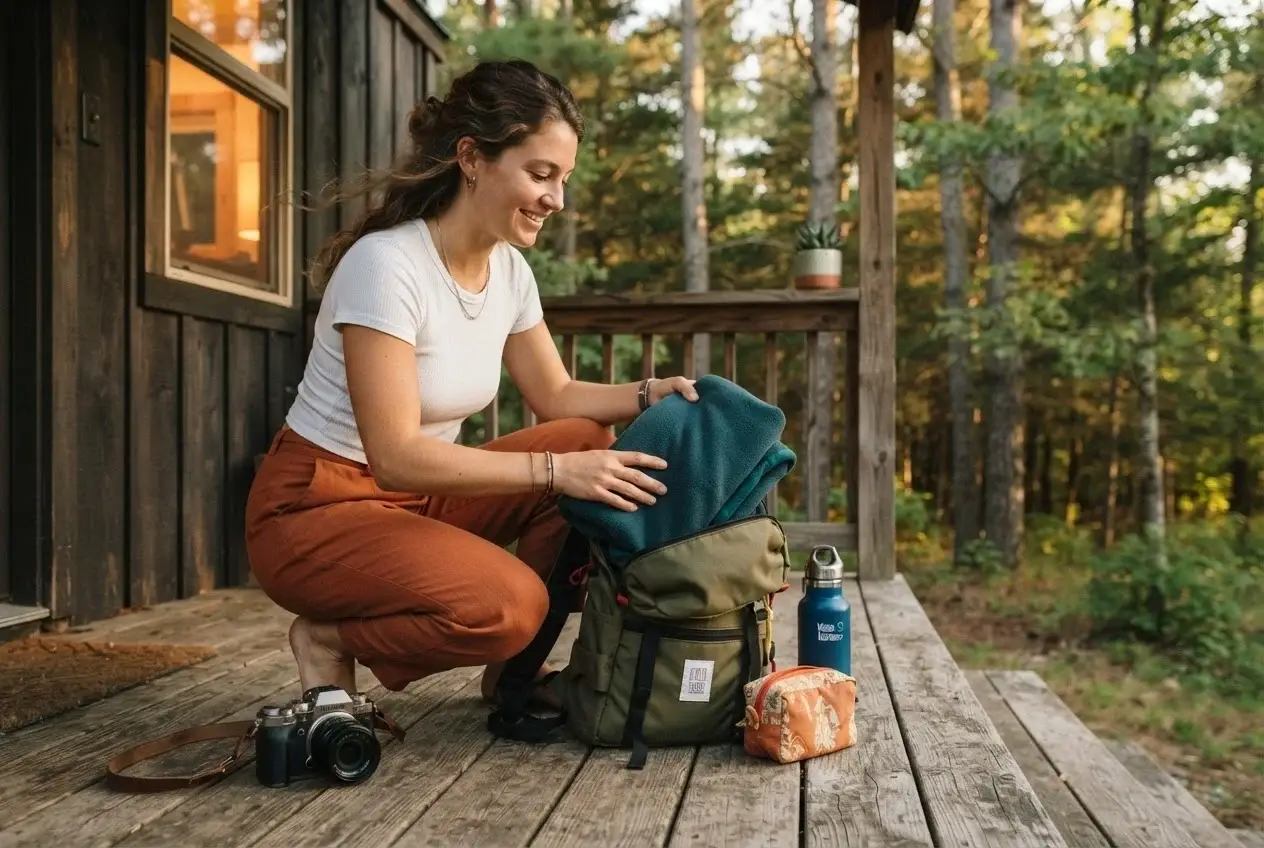
The single biggest packing mistake for a tiny home stay is bringing too much. Overpacking for a small space does not just create physical clutter; it creates psychological noise in what should be a calm, intentional environment.
Pack for the outdoors first. Whatever setting your tiny home is in, whether forest, mountain, desert, or waterfront, the experience is centered on being outside. Layers are more useful than bulk, sturdy shoes matter more than outfit variety, and a good rain jacket earns its space in a way that extra pairs of shoes never will.
In terms of what is typically provided, most established tiny house hotel properties and well-rated individual listings include bedding, towels, basic kitchen supplies, coffee and tea, and sometimes a welcome snack or firewood. Confirm these specifics with your host ahead of time, but as a general rule, the better-reviewed the property, the more thoughtfully stocked it tends to be.
Bring your own snacks and the ingredients for at least one good meal. Having a morning coffee on your tiny porch while the forest comes to life around you, cooked in your own kitchen, is one of the core pleasures of this type of stay. Plan for it.
Leave the expectations of a spa hotel at home. A tiny home rental is a different kind of experience entirely. It is less about luxury in the traditional sense and more about the specific, irreplaceable quality of living simply in a beautiful place for a few days.
Why This Works Especially Well for Solo Travelers
I have always believed that the best solo travel experiences are the ones that force you into the present moment. Tiny home rentals do this naturally. When you book a solo stay in a tiny home in the mountains, there is no room for distraction or avoidance. You are in the space, with the view, with your thoughts. For anyone working through a life transition, craving a reset, or simply wanting a few days of genuine quiet, this kind of stay offers something most travel accommodations do not.
The self-contained nature of a tiny home is also practically well-suited to solo travel. You have your own kitchen, your own bathroom, your own porch. You are not sharing common spaces with strangers in a hostel or navigating the social expectations of a guesthouse. You are completely private, but you are also not isolated in the anonymous way a hotel room can feel. You are situated somewhere, in a real place, in a home that has a personality.

That combination of solitude and presence is something I first felt years ago while backpacking solo through Europe, staying in tiny rooms above family restaurants and waking to the sound of a town rather than a hotel corridor. A tiny home rental brings that same quality of engagement with a place, just with a bit more comfort and a lot more nature.
A Word on Price and Value
Based on current market data, well-designed tiny home rentals across the US typically run between $129 and $250 per night, with established tiny house village properties sitting in the $145 to $200 range for most units. Premium locations with extraordinary views, hot tubs, or unique architectural features (like the railcar suites in New Mexico) can run higher.
Compared to a standard vacation rental of similar quality and location, tiny home rentals are often priced competitively or occasionally at a small premium for the novelty. The value calculation is not purely financial. What you are paying for is an experience that a regular rental in the same location cannot replicate, because the living space itself is part of the experience.
That said, booking directly through official tiny house village websites often gets you cleaner pricing and more host transparency than third-party platforms. It is always worth checking the property’s own site first.
The Right Mindset Going In
The travelers who walk away from a tiny home stay transformed are the ones who arrived curious rather than expectant. They did not need the experience to be Instagram-perfect. They were genuinely open to what 200 square feet in a forest or a mountain valley might teach them about how little space they actually need to feel completely content.
That is the real unique experience here. Not the architecture, not the decor, not the location. It is the quiet realization that a smaller, slower, more intentional version of travel, and of life, might actually be the better version. That is a lesson worth the nightly rate, every single time.