
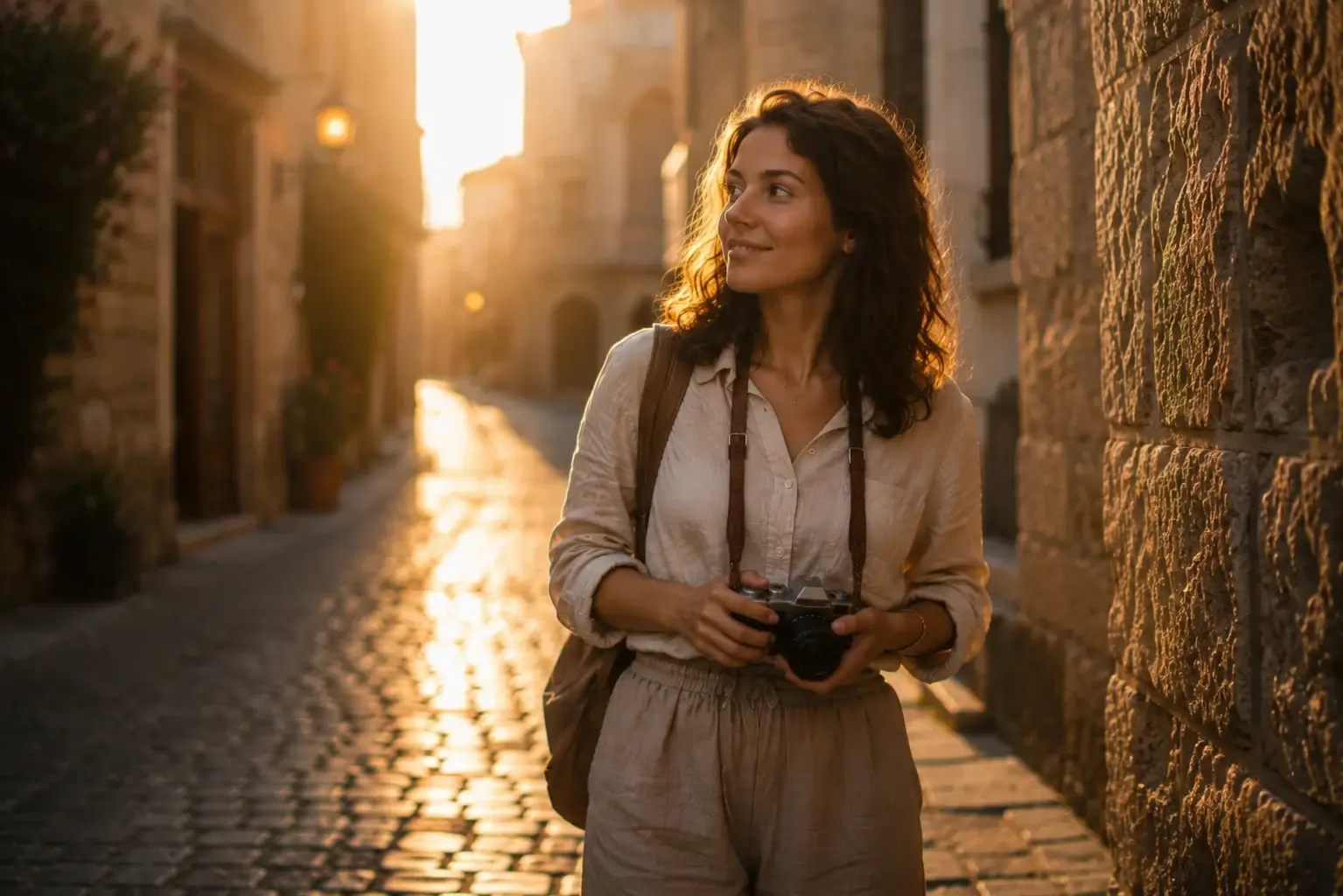
I remember sitting in my cubicle back in New York, staring at a spreadsheet that had absolutely nothing to do with my life. I was color-coding my “dream trip” to Europe. I had every hour accounted for. 8:00 AM: Coffee. 8:30 AM: Museum. 10:15 AM: Transit. By the time I finished, I felt exhausted just looking at the screen. I was treating my vacation like a corporate project, and frankly, it felt like one, too.
When I finally quit that job and started traveling for real, I realized the mistake I’d been making. I was trying to control the world instead of letting it teach me. If you are here because you are staring at a blank calendar for 2026, let’s change the way you think about travel. You don’t need a perfect, minute-by-minute plan. You need a framework that allows for the magic of the unexpected.
The Philosophy of the “Loose” Itinerary
The secret to the best travel isn’t a checklist; it’s a rhythm. When I spent time teaching English in Thailand, I stopped looking at my watch. I learned that the best conversation happens while waiting for a bus, not during a scheduled tour.
To build your own ultimate city travel itineraries for 2026, you have to prioritize curiosity over coverage. Most people try to see five landmarks in one day. You’ll end up with tired feet and a camera full of pictures you don’t remember taking. Instead, pick one “anchor” activity for the morning and let the rest of the day unfold. Whether you are navigating the chaotic beauty of Bangkok or the quiet alleyways of a European village, this approach keeps your mind open to the stories around you.
Preparing for Your 2026 Adventure
Before you even look at a flight, you need to lay a foundation. I used to ignore the boring stuff like safety and health, but I learned the hard way that a little preparation goes a long way. Before I head to any new destination, I always make it a habit to check the latest destination health advisories and food safety tips through the CDC so I can focus on eating local food without worrying about my health.
It’s also important to be realistic about entry requirements. There is nothing worse than arriving at an airport only to realize your passport doesn’t have the right stamp or that you missed a visa window. I suggest keeping a bookmark for the official US Department of State travel information page to get the most accurate, non-salesy data on safety ratings and entry rules for wherever you are heading. Getting these details sorted early is the ultimate way to lower your travel anxiety.
Designing Your Day: The “One Anchor” Rule
When you are building your ultimate city travel itineraries for 2026, start by choosing one major site per day. Let’s say you are visiting a historic capital. Maybe you want to see a UNESCO World Heritage site. I often find that the official UNESCO World Heritage list is the best place to find places that actually have meaning, rather than just popular tourist traps.
Once you have your one anchor, don’t fill the rest of the day. If you are in a bustling Asian city, consider how you will move around. I personally rely on apps that help me blend into the local flow. For instance, knowing how to use the Grab app for safe, efficient city transport has saved me countless hours of stress and negotiation with taxi drivers, giving me more time to just sit in a park or wander through a local market.
Eating Like a Local
Food is how we understand culture. I spent a long time as a sightseeing guide in New York, and I saw so many people eat at the same chains they had back home. Don’t do that. When you arrive in a new city, find the neighborhood where the locals go to grocery shop or have breakfast.
If you are in a country with street food culture, be observant. Look for the stall with the longest line of local people. That is your cue. Don’t worry about being “perfect.” You will order the wrong thing sometimes. You might even drop your food. That is not a failure; that is a memory. My most cherished stories aren’t from the five-star dinners I’ve had, but from the spicy noodles I ate on a plastic stool in a humid alleyway, laughing with a shop owner who didn’t speak a word of English.
Navigating Cultural Etiquette
We are guests when we travel. It’s easy to walk into a city and expect it to cater to us. Instead, try to enter with a “student” mindset. Before your trip, learn five phrases in the local language. Even if you butcher the pronunciation, people appreciate the effort.
If you are exploring Southeast Asia, for example, the official Tourism Authority of Thailand guide offers some really helpful context on cultural etiquette and festival dates that can completely change how you experience a place. Being aware of how to dress in temples or how to show respect in public spaces makes you a better traveler and makes your interactions with locals much warmer and more meaningful.
Building Confidence Through Solo Travel
I know the fear. I’ve felt it, too—that heart-pounding uncertainty when you step off a plane in a city where you don’t know a soul. But that fear is exactly where the growth lives. Solo travel forces you to rely on yourself, to solve problems, and to trust your gut.
Start small if you need to. Spend a day in a city nearby. Practice getting lost on purpose. When you realize that you can handle a missed train or a closed museum, you realize you can handle almost anything. This is the core of the Pinverse Travel philosophy: confidence is not the absence of fear; it is the action you take in spite of it.
Safety and Practicality
People often ask me, “Emma, aren’t you worried about being alone?” Of course I am sometimes. But I manage that worry with preparation, not by staying home. A huge part of my planning involves having the right support. I always encourage people to look into general guidance on travel insurance and safety before they leave. It’s not about being cynical; it’s about having a safety net so you can go out and be adventurous without that nagging “what if” voice in the back of your head.
Finding Your Rhythm in 2026
As we look toward 2026, don’t feel pressured to travel to the “trendiest” spots. The world is huge, and every destination has something valuable to teach you. If everyone is going to a specific city, maybe look for the second-largest city in that same country. It will likely be cheaper, less crowded, and offer a more authentic glimpse into how people actually live.
If you want a broad overview to help you narrow down your choices, sites like the destination guides on Lonely Planet are great for getting a general feel for a region without feeling pressured to book anything immediately. Use these as a starting point for your research, not as a bible for your trip.
The Art of Being Present
We live in a world that tells us to document everything. We want the perfect photo, the perfect caption, the perfect reel. But when you are looking through a screen, you are missing the light, the smell of the air, and the texture of the stone in front of you.
My best advice for your ultimate city travel itineraries for 2026? Put the phone away for at least two hours every single day. Go for a walk without a map. Sit in a plaza and watch the people walk by. Buy a coffee, find a bench, and just be there. You will notice things that no itinerary could ever put on paper. You will notice the way the light hits the buildings at 4:00 PM. You will hear the specific hum of the city. These are the moments that stay with you long after the trip is over.
Handling the “Oops” Moments
You will make mistakes. You will take the wrong train. You will find a restaurant that is closed for the holiday. You might even lose your map (or your phone). When these things happen, take a deep breath.
I remember once being stuck in a small town in Europe during a storm, with all the trains cancelled. I was frustrated, hungry, and tired. But I found a small inn that still had a room, and the owner made me the best soup I’ve ever had while telling me stories about the history of the town. If my plans had gone perfectly, I never would have met her. I never would have learned about that town. Our mistakes are often just detours to better stories. Don’t fight the friction of travel; lean into it.
Your Personal Growth Journey
Travel is not just about moving your body from one coordinate to another. It is about moving your mind. When I left the corporate world, I thought I was looking for “fun.” What I found was a version of myself I didn’t know existed. I found a person who was resilient, curious, and deeply capable of navigating the unknown.
That is what I want for you. When you plan your 2026 trips, don’t ask yourself, “What can I see?” Ask yourself, “Who do I want to be when I return?”
Maybe you want to be someone who is more patient. Maybe you want to be someone who is more observant. Choose an itinerary that supports that goal. If you want to be more patient, choose a city where things move slowly. If you want to be more observant, choose a city with deep, layered history.
Final Thoughts on Your 2026 Plans
You don’t need a massive budget to have a life-changing trip. You don’t need to be an expert traveler. You just need to be willing to show up.
Keep your plans light. Keep your heart open. Keep your expectations grounded in the reality that travel is sometimes messy, sometimes challenging, and always worth it. You have so much to learn, and the world is waiting for you to step outside your front door and start the adventure.
Whether you are heading to a place you have dreamed of for years or a city you hadn’t heard of until yesterday, know that you are capable of finding your way. You are a traveler, and every single journey you take adds a new, vibrant color to the tapestry of your life.
Happy planning, and even happier wandering. 2026 is going to be your year of discovery.



