I still remember the first time I packed for a major coastal trip. I was twenty-two, working long shifts as a New York sightseeing guide, yelling over the roar of open-top buses, and saving every spare dollar in a jar labeled The Big Escape. When I finally booked my fligbe stepping directly into the surf, often with waves hitting your knees.
ht to Southeast Asia, I spent weeks obsessing over my luggage. I bought a massive, ninety-liter rolling suitcase and filled it to the absolute brim. I packed four pairs of heavy denim shorts, three pairs of wedges I never wore, a dozen cheap cotton t-shirts that took days to dry in the humidity, and enough full-sized bottles of shampoo to stock a small pharmacy.
When I landed, reality hit hard. Dragging a massive suitcase through loose sand, lifting it over the broken sidewalks of coastal towns, and squeezing it into tiny local water taxis turned my dream trip into a physical workout. I was constantly sweating, frustrated, and weighed down by things I simply did not need.
Leaving the traditional corporate world later in life taught me that unnecessary weight—whether in your career or in your backpack—only holds you back. Today, as a full-time solo traveler, I view packing as an art form that directly impacts your peace of mind. To help you avoid the physical and mental stress of over-packing, let’s break down exactly what to pack for a beach vacation by looking at the five biggest mistakes travelers make, and how you can fix them.
Mistake 1: Choosing Style Over Fabric Science
When people think about a beach holiday, they often picture a wardrobe filled with trendy outfits, heavy denim, and cheap cotton basics. It is incredibly easy to fall into the trap of packing for how you want to look in a single photograph rather than how you will actually feel while walking around all day in eighty-five-degree heat with high humidity.
The Problem with Cotton and Heavy Denim
Cotton is a wonderful fabric for a crisp autumn afternoon in New York, but it is a nightmare in a tropical environment. Cotton absorbs moisture like a sponge. It holds onto your sweat, takes ages to dry when exposed to ocean spray, and loses its shape quickly. Heavy denim is even worse. If you wear a pair of thick jean shorts to a beachside restaurant and get them wet, they will remain damp, stiff, and uncomfortable for the rest of the day, creating an ideal recipe for painful skin chafing.
The Magic of Linen, Merino, and Tencel
To keep your bag light and your body cool, you must focus on fabric science. Swap out heavy materials for lightweight, breathable, and quick-drying alternatives:
- Linen: This is the undisputed king of beach fabrics. Linen is made from flax fibers, which are highly breathable and naturally pull moisture away from your skin. Yes, it wrinkles easily, but that relaxed, wrinkled look is part of the authentic, slow-travel beach aesthetic.
- Merino Wool (Lightweight): Many people think wool is only for winter. However, ultra-light merino wool (around 150 grams per square meter) is naturally antimicrobial, meaning it resists odor-causing bacteria. You can wear a lightweight merino tee three or four times without washing it, which drastically reduces the number of items you need to pack.
- Tencel/Lyocell: Made from wood pulp, Tencel is incredibly soft, drapes beautifully, stays cool against the skin, and resists wrinkles much better than linen.
Your Exact Beach Clothing Capsule Checklist
To stay light and independent, aim for a seven-day capsule wardrobe where every single top matches every single bottom. If you choose a cohesive color palette—such as whites, navies, olives, and earth tones—you can easily create over three weeks of unique combinations from just a handful of items.
- 2 Breathable Bottoms: One pair of loose, wide-leg linen trousers and one pair of lightweight, quick-dry nylon or Tencel shorts.
- 3 Lightweight Tops: One classic white button-down linen shirt (great for sun protection or as a evening layer), one merino wool t-shirt, and one light tank top.
- 2 Swimsuits: Never pack more than two. Wear one while the other dries on the clothesline. Look for high-quality nylon-spandex blends that retain their shape.
- 1 Multi-use Cover-up: A high-quality sarong or a lightweight oversized cotton-voile tunic that can transition from the sand to a local market.
- 1 Casual Evening Outfit: A simple, breathable jersey dress or a lightweight jumpsuit for dinners out.
- 4 Pairs of Moisture-Wicking Underwear: Look for synthetic blends or merino wool that can be quickly washed in a hotel sink and dry overnight.
Mistake 2: Bringing the Wrong Footwear for the Terrain
If there is one thing that can completely ruin an exploratory walking day, it is a blister. During my early days backpacking solo across Europe and hiking through coastal villages in China, I learned that coastal terrain demands specialized, functional footwear. Many travelers pack cheap plastic flip-flops for the beach and high-heeled wedges or heavy sneakers for the evenings. This is a massive mistake.
The Hidden Dangers of Cheap Flip-Flops
Plastic flip-flops offer zero arch support. Walking in them for more than twenty minutes forces your toes to grip the plastic, leading to foot fatigue, shin splints, and painful blisters between your toes where the plastic strap rubs against sweaty skin. Furthermore, cheap flip-flops have no traction; the moment you step off the sand onto a wet tile walkway at a seaside cafe, you are highly likely to slip.
The Evening Shoe Delusion
Leave the high heels, heavy wedges, and pristine suede loafers at home. Coastal towns are famous for uneven cobblestones, steep wooden steps, sandy walkways, and slick boat ramps. Walking down a steep hill in a Mediterranean fishing village or stepping out of a longtail boat onto a Thai shore requires stable, secured footwear.
The Ultimate 3-Shoe System
You only need three pairs of shoes for any beach vacation, regardless of whether you are traveling for five days or five weeks. Wear your heaviest pair on the plane to save space in your bag.
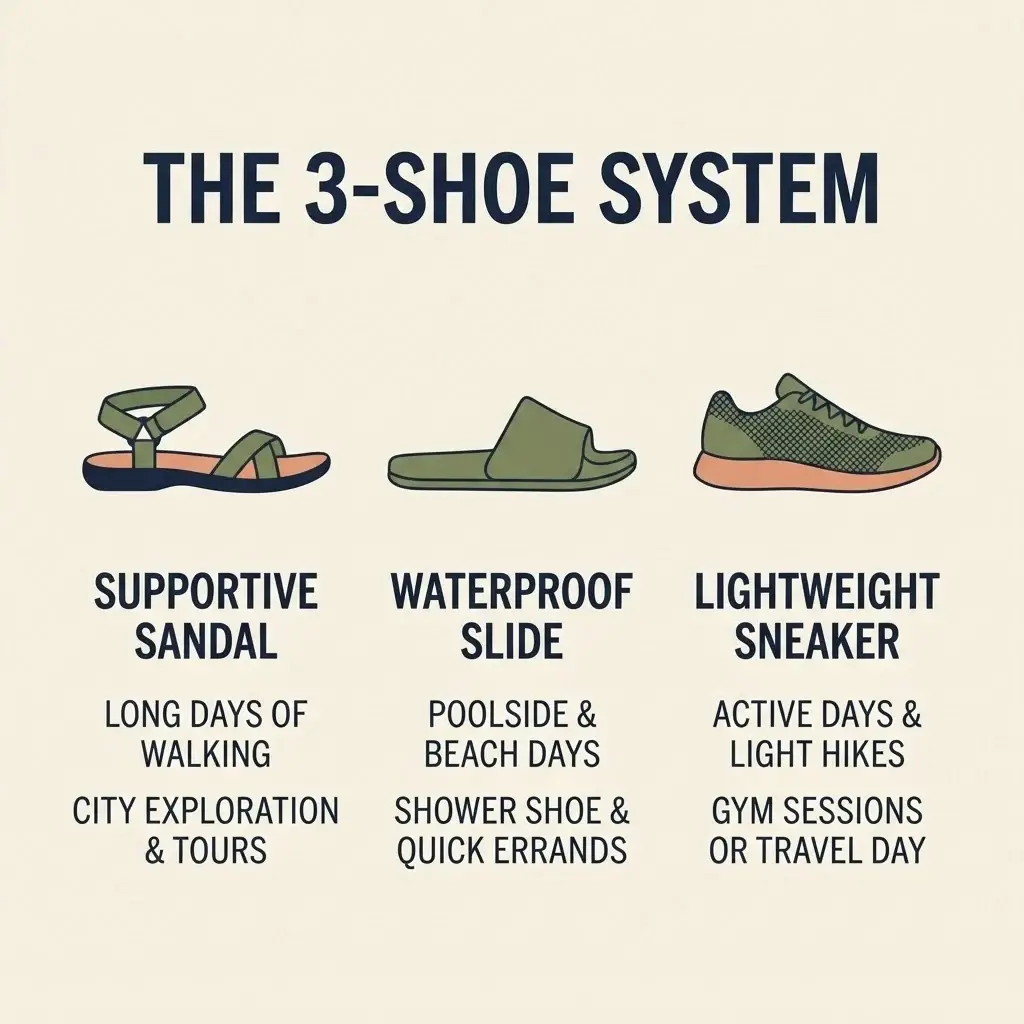
| Shoe Type | Primary Function | What to Look For |
| The Supportive Sandal | All-day walking, exploring ruins, local markets | Secured ankle straps, contoured EVA or cork footbed, durable rubber outsole (e.g., Birkenstock, Chaco, or Teva). |
| The Waterproof Slide | Beach sand, pool decks, communal showers | High-quality molded EVA. They can get soaking wet, wash clean in seconds, and won’t rot or absorb water. |
| The Lightweight Sneaker | Transit days, light hiking, evening walks | Breathable mesh upper, pack-flat construction, neutral colors. Wear with low-cut merino wool socks to prevent odor. |
When you are exploring coastal pathways, especially in remote areas or unfamiliar terrain, unexpected scrapes can happen. I always tell travelers that packing smart also means preparing for the unexpected, which is why checking standard medical recommendations on the CDC Travelers’ Health website before you depart ensures you know exactly what first-aid essentials to carry for local regional risks.
Mistake 3: Overestimating the Need for Electronics and Heavy Gear
We live in a digital age, and it is incredibly tempting to pack as if you are running a mobile production studio from your beach chair. I see so many travelers carrying massive DSLR cameras, multiple lenses, heavy laptops, tablets, e-readers, drones, and a tangled web of charging cords.
The Burden of Premium Gadgets
First, heavy electronics add immense physical weight to your daypack. Second, the beach is an absolute graveyard for delicate technology. Fine salt sand gets into charging ports, corrosive sea air damages internal circuitry, and intense tropical sunlight can quickly overheat a smartphone or laptop left in a beach bag. Finally, carrying expensive gear makes you a prime target for opportunistic theft. If you are constantly watching your bag while swimming in the ocean, you aren’t truly relaxing.
Simplifying Your Tech Setup
Commit to a digital minimalist approach. Your smartphone is more than capable of handling your photography, navigation, and digital reading needs.
- The Smartphone: Modern phones have incredible camera sensors. Use your phone for everything, but protect it with a high-quality dustproof and waterproof case.
- The Power Bank: Bring a single, lightweight 10,000mAh external battery pack. This ensures your phone stays charged while using maps or translation apps all day.
- Ditch the Laptop: Unless you are working full-time as a digital nomad, leave the laptop at your desk. Enjoy the freedom of being completely disconnected from your old 9-to-5 routine.
- The Single E-reader: If you absolutely must read books, bring one lightweight Kindle or e-reader with an e-ink screen. Unlike tablets, e-ink screens are perfectly readable under direct, blinding sunlight, and the battery lasts for weeks.
Mistake 4: Packing Full-Sized Toiletries and Excess Liquids
There is absolutely no reason to pack full-sized bottles of shampoo, conditioner, body lotion, or sunblock. Liquid is incredibly heavy—one liter of water or liquid toiletries weighs exactly one kilogram (2.2 pounds). If you pack four or five full-sized bottles, you are voluntarily adding a massive amount of dead weight to your luggage before you even add clothes.
The Reality of Global Resource Access
Unless you are traveling to a completely deserted, uninhabited island, local people wash their hair, clean their teeth, and protect their skin from the sun. When I taught English in rural Thailand and lived with a host family in Ghana, I discovered that every small village shop and local market sells high-quality toiletries. In fact, purchasing your basic personal care products locally is an excellent way to support small-scale neighborhood economies.
Transitioning to Solid Toiletries
The best way to revolutionize your packing setup is to eliminate liquids entirely. Solid toiletries cannot leak inside your bag, they do not face security restrictions at airport checkpoints, and they last significantly longer than their liquid counterparts.
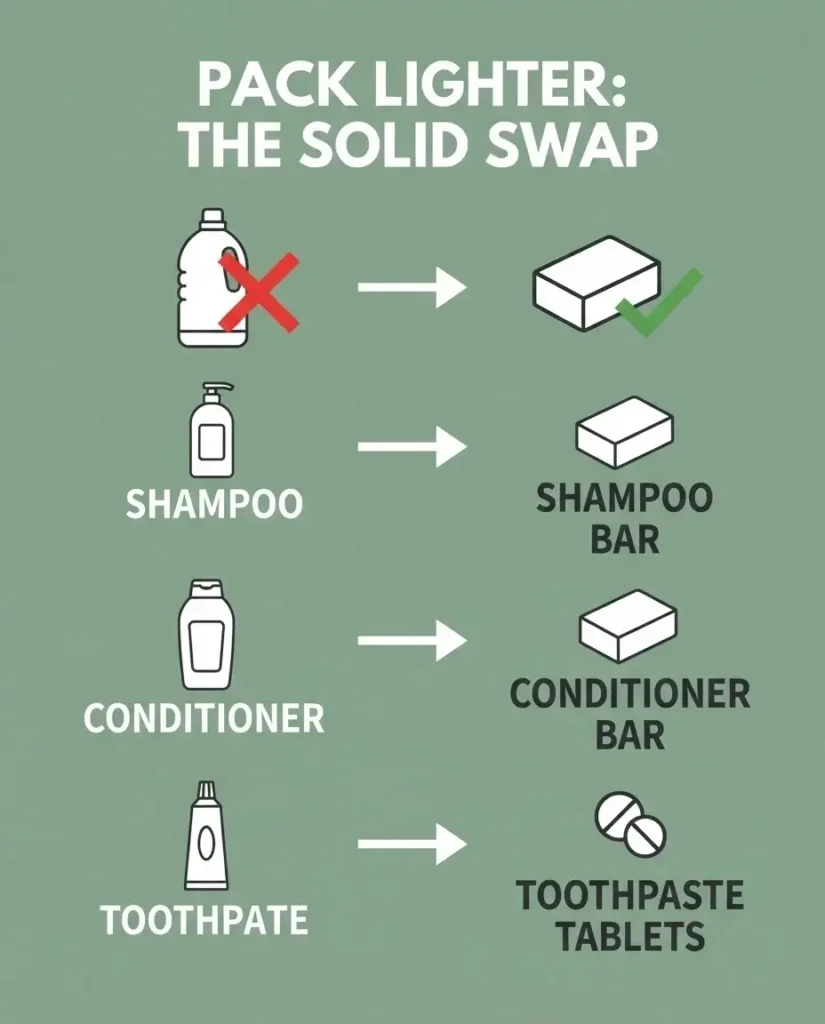
[Solid Shampoo Bar] –> Lasts up to 80 washes (replaces 3 liquid bottles)
[Solid Conditioner] –> Concentrated cocoa butter base melts into hair
[Solid Deodorant] –> Cardboard packaging, completely plastic-free
[Toothpaste Tablets] –> Bite, chew, brush with a damp bamboo toothbrush
The Reef-Safe Sunscreen Mandate
If there is one product you must select with extreme care, it is your sun protection. Traditional sunscreens contain chemical filters like oxybenzone and octinoxate. When you swim in the ocean, these chemicals wash off your skin and cause severe coral bleaching, destroying delicate marine ecosystems.
Always opt for a dedicated mineral sunscreen formulated with non-nano zinc oxide or titanium dioxide. These physical blockers stay on top of your skin rather than absorbing into your bloodstream, and they are completely safe for marine life. Look for labels that explicitly state “Reef-Safe,” especially if you are visiting fragile marine environments. For instance, if your travels take you to incredible coastal archaeological sites, checking the conservation status on the official UNESCO World Heritage site will give you a deeper appreciation for why protecting adjacent coastal ecosystems is so vital.
Mistake 5: Using Inefficient Luggage and Missing Local Context
The final, and perhaps most common, mistake is packing everything into a massive, structured hard-shell suitcase and failing to research the local transportation and cultural norms of your destination.
The Hard-Shell Suitcase Trap
Hard-shell suitcases with four spinner wheels are brilliant for smooth, carpeted airport terminals and paved hotel lobbies. However, the moment you step outside into a dynamic coastal environment, those tiny plastic wheels become completely useless. They get stuck in loose sand, break on jagged cobblestones, and cannot be easily lifted onto local transit vehicles.
Choose a Carry-On Backpack or Soft Duffel
For true freedom and mobility, use a maximum forty-liter carry-on backpack or a rugged, water-resistant soft-sided duffel bag with backpack straps. A forty-liter bag fits easily into the overhead compartments of commercial aircraft, saving you from long check-in lines and the risk of lost luggage. More importantly, keeping your bag at a carry-on size forces you to make conscious, intentional decisions about every single item you choose to pack.
Navigation and Cultural Context
Before you pack your bag, you need to understand exactly how you will move from point A to point B at your destination, as well as the local customs regarding dress.
- Island Transfers: If you are visiting islands in places like Greece, Croatia, or Thailand, you will likely need to board local ferries, speedboats, or longtail water taxis. Doing this requires wading through knee-deep water or stepping across narrow wooden planks. A backpack allows you to keep your hands completely free to balance yourself safely.
- Cultural Modesty: Many gorgeous beach destinations are located in deeply traditional or religious regions. While a bikini or loose shorts are perfectly acceptable on the sand, walking through local villages, towns, or sacred spaces requires respectful cover. Packing a lightweight sarong or long linen trousers ensures you can explore local markets without causing unintended offense.
Section-by-Section Practical Destination Breakdowns
To make this guide fully actionable, let’s explore three distinct, world-class beach regions. Each area requires a unique approach to packing, local navigation, and cultural understanding.
Destination Focus: The Islands of Southern Thailand
Southern Thailand is home to some of the most spectacular limestone cliffs, turquoise waters, and vibrant coastal cultures on earth. Whether you are exploring the bustling energy of Phuket or the slower, bohemian pace of smaller islands, navigating this tropical paradise smoothly requires specific gear choices and local knowledge.
Local Transport and Arrival Logistics
When arriving in Southern Thailand, you will most likely transition from an airport to a local minibus, followed by an island ferry or a classic wooden longtail boat. If you plan to explore the stunning cliffs and marine parks around the Krabi province, booking your regional transit through the Tourism Authority of Thailand official guides will help you find certified local boat captains and accurate ferry timetables.
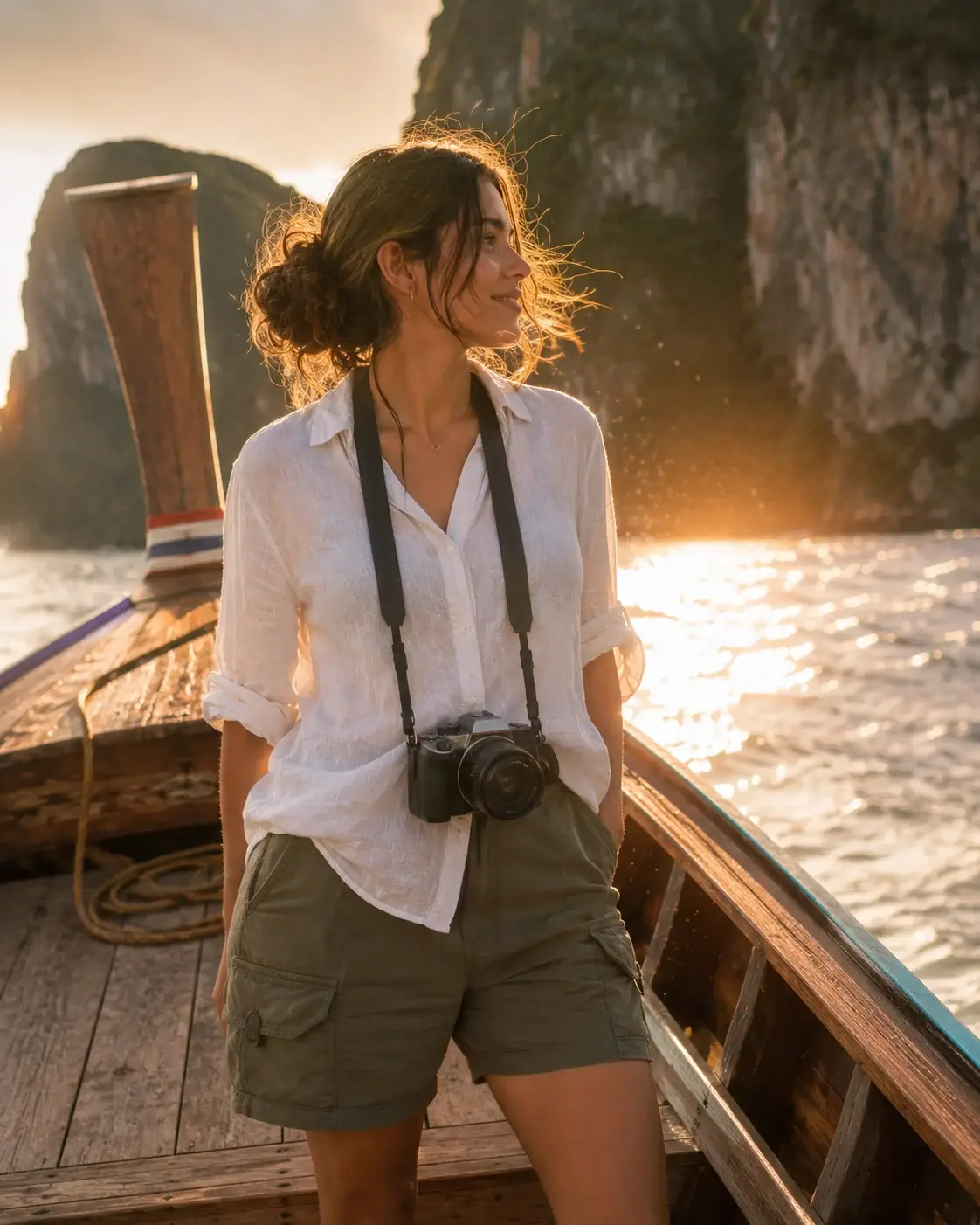
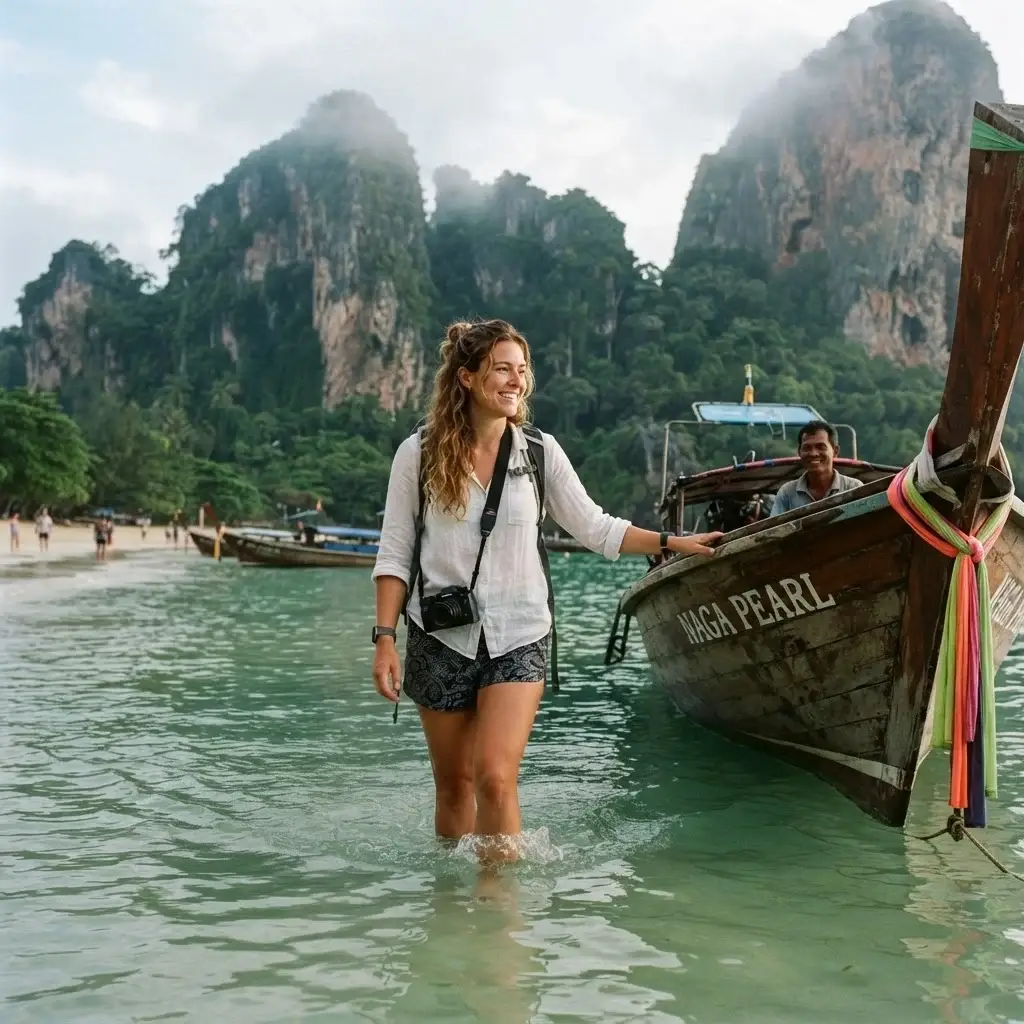
When boarding a longtail boat from a beach like Railay or Tonsai, there are no docks. You will be stepping directly into the surf, often with waves hitting your knees. This is exactly why a forty-liter backpack is non-negotiable here; holding a heavy rolling suitcase above your head while climbing a wet ladder into a moving boat is both difficult and dangerous.
[Airport Transit] –> [Local Minibus] –> [Beach Surf Walk] –> [Longtail Boat]
Culinary Highlights: What to Eat Natively
Do not stick to western resort food. Head inland to local night markets and beachside shacks run by families.
- Som Tum (Green Papaya Salad): A fiery, refreshing salad made with shredded raw papaya, lime, chili, garlic, and peanuts. It is the perfect midday meal to keep you energized without feeling heavy under the hot sun.
- Massaman Curry: A rich, relatively mild southern Thai curry featuring coconut milk, potatoes, peanuts, and aromatic spices like cinnamon and cardamom. Eat it at a beachside table with your toes in the sand.
- Pla Pao (Salt-Crusted Grilled Fish): Freshly caught white fish stuffed with lemongrass and pandan leaves, coated in a thick layer of coarse salt, and grilled slowly over charcoal. It is incredibly tender and pairs perfectly with sticky rice.
Packing Adjustments for Thailand
The humidity in Southeast Asia is intense, often hovering above eighty percent. Heavy fabrics will simply rot in your bag if they stay damp. Pack ultra-thin linen shirts, loose rayon elephant pants (perfect for visiting temples), a high-quality dry bag (10-liter capacity) to protect your phone and dry clothes during boat transfers, and a reliable bug repellent containing picaridin to protect against mosquitoes.
Destination Focus: The Dalmatian Coast of Croatia
Croatia’s Dalmatian Coast is a breathtaking stretch of historic stone villages, ancient Roman ruins, and crystal-clear Adriatic waters. It offers a completely different environment than the sandy shores of the tropics, requiring a completely different mindset when deciding what to pack for a beach vacation.
Navigating the Pebble Shores and Historic Steps
Unlike the soft sand of the tropics, Croatian beaches are almost exclusively made of smooth white pebbles or rocky stone shelves. Walking into the water can be incredibly painful on bare feet, and the rocks are home to small, sharp black sea urchins.
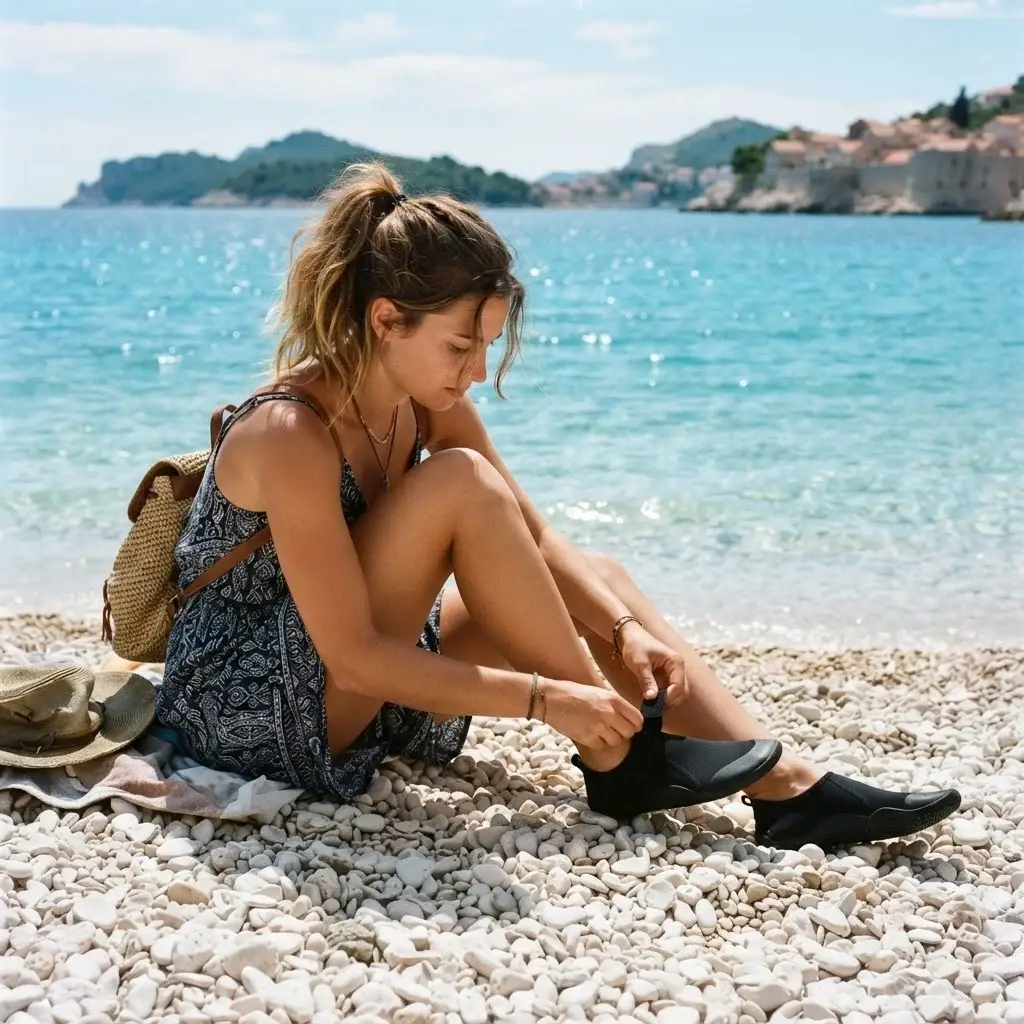
Insider Secret: Do not try to be brave. Pack a pair of lightweight, form-fitting neoprene water shoes with a durable rubber sole. They will save your feet from cuts and urchin spines, allowing you to walk confidently across the rocks.
Furthermore, historic coastal towns like Dubrovnik, Hvar, and Split are built entirely on steep hillsides filled with centuries-old stone steps. If your local guesthouse is located deep within the old town walls, you will be carrying your luggage up hundreds of narrow, uneven steps. A compact carry-on backpack allows you to climb these stairs comfortably without blocking narrow pedestrian walkways or straining your back.
Culinary Highlights: What to Eat Natively
The food along the Dalmatian Coast is a spectacular blend of Mediterranean freshness and hearty Balkan traditions.
- Crni Rižot (Black Risotto): A rich, savory seafood risotto colored with intense black cuttlefish ink. It features fresh squid and local olive oil, and it pairs beautifully with a glass of crisp, cold Pošip white wine.
- Peka: A traditional slow-cooked dish of octopus or veal mixed with potatoes, fresh herbs, and olive oil. It is cooked under a heavy, bell-shaped iron lid covered with burning embers, creating incredibly tender textures.
- Fresh Adriatic Sardines: Simple, fresh sardines grilled over open wood flames, drizzled with local extra virgin olive oil, and sprinkled with sea salt and wild rosemary gathered from the surrounding hills.
Packing Adjustments for Croatia
Because the Mediterranean climate features warm, dry days and cooler, breezy coastal evenings, your capsule wardrobe needs a few structural adjustments. Pack a lightweight cotton canvas jacket or a high-quality merino wool cardigan for evening strolls along the seaside promenades (riva). Bring a structured, stylish pair of polarized sunglasses to protect your eyes from the intense glare of the sun reflecting off the clear blue water and white stone buildings.
Destination Focus: The Coastal Villages of Oaxaca, Mexico
The Pacific coast of Oaxaca, Mexico, is a wild, rugged paradise where the Sierra Madre mountains meet deep blue ocean waters. From the surf culture of Puerto Escondido to the quiet, dusty streets of slow-travel havens like Mazunte and Zipolite, this region offers deep cultural heritage, untamed nature, and incredible biodiversity.
Navigation, Safety, and Local Transport
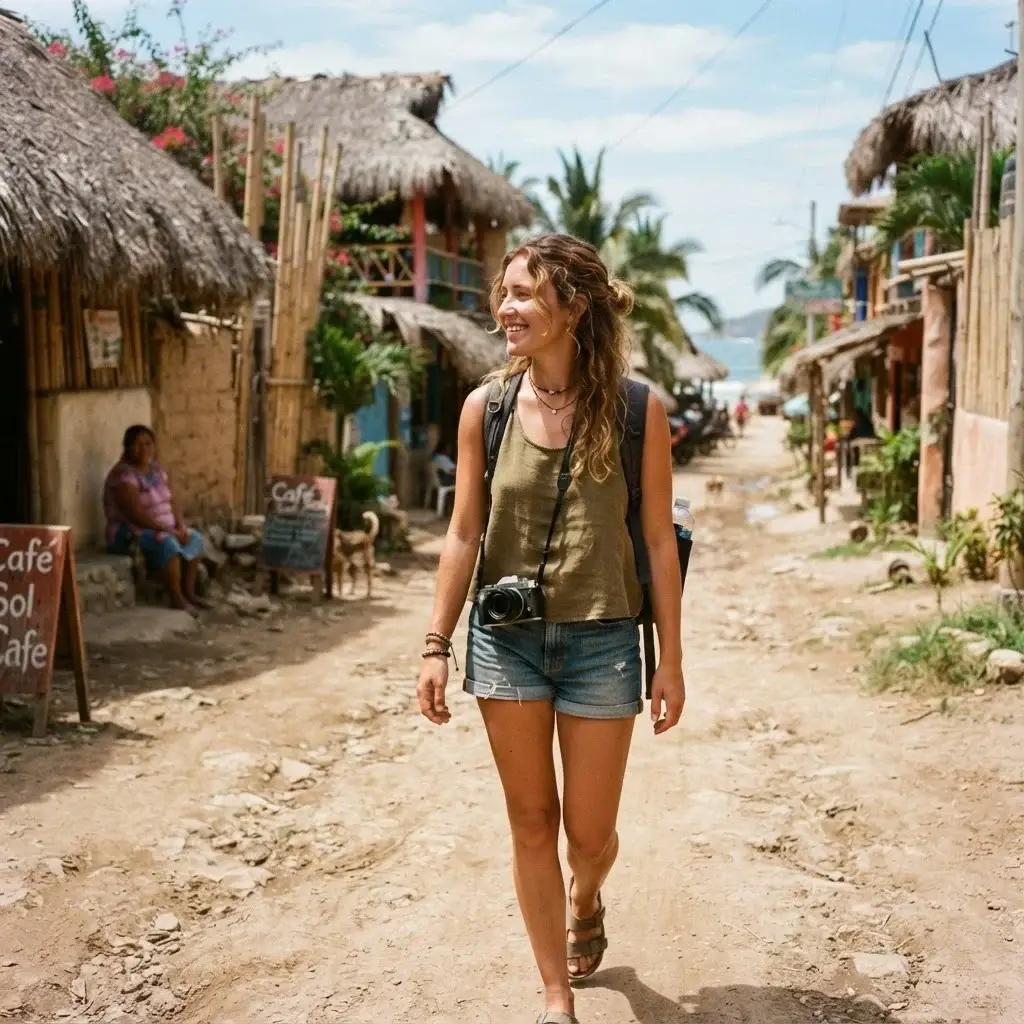
Moving between these coastal villages requires utilizing local transportation options. The most authentic and affordable way to travel is by using colectivos—shared pickup trucks fitted with canvas roofs and bench seats in the back—or local buses.
[Main Town Hub] –> [Colectivo Shared Truck] –> [Dusty Footpath] –> [Beach Cabana]
The roads leading down to the remote beaches are often unpaved dirt tracks that turn into loose mud during the rainy season. Rolling luggage is completely useless here.
To check local security ratings, regional entry requirements, and transit updates before traveling through these areas, consult the official guidelines provided on the US Department of State Travel advisory pages to ensure you have a safe, well-prepared journey.
Culinary Highlights: What to Eat Natively
Oaxaca is widely considered the culinary heart of Mexico, and its coastal region utilizes fresh marine ingredients combined with complex, traditional mountain spices.
- Tacos de Pescado a la Talla: Freshly caught fish split open, slathered in two different styles of rich chili paste (usually a red guajillo paste on one side and a green cilantro-jalapeño paste on the other), and grilled perfectly over wood coals. Serve tucked into hot, hand-pressed corn tortillas.
- Aguachile: Raw, ultra-fresh shrimp cured quickly in fresh lime juice mixed with pulverized cilantro, fresh cucumber, and fiery serrano chilies. It is served ice-cold with crunchy tostadas.
- Tlayudas del Mar: A large, thin, toasted corn tortilla spread with rich refried black beans, avocado, fresh Oaxacan string cheese (quesillo), and topped with grilled octopus or shrimp.
Packing Adjustments for Oaxaca
The Oaxacan sun is fierce, and the coastal style is casual, rustic, and unpretentious. Leave anything flashy or expensive at home. Instead, focus heavily on functional sun protection: a wide-brimmed woven straw hat with a chin strap to handle the Pacific ocean breezes, a lightweight linen long-sleeve shirt to protect your arms during midday walks, and a high-quality mineral sunscreen. Because many eco-cabanas rely on natural ventilation rather than air conditioning, packing a lightweight, compact travel fan that plugs into your phone’s charging port can keep you comfortable on humid nights.
The Master Packing Blueprint: Everything You Need (And Nothing You Don’t)
To ensure you can easily organize your bag, here is the definitive, comprehensive packing blueprint for a lightweight, independent beach vacation. If an item is not listed on this blueprint, leave it behind.
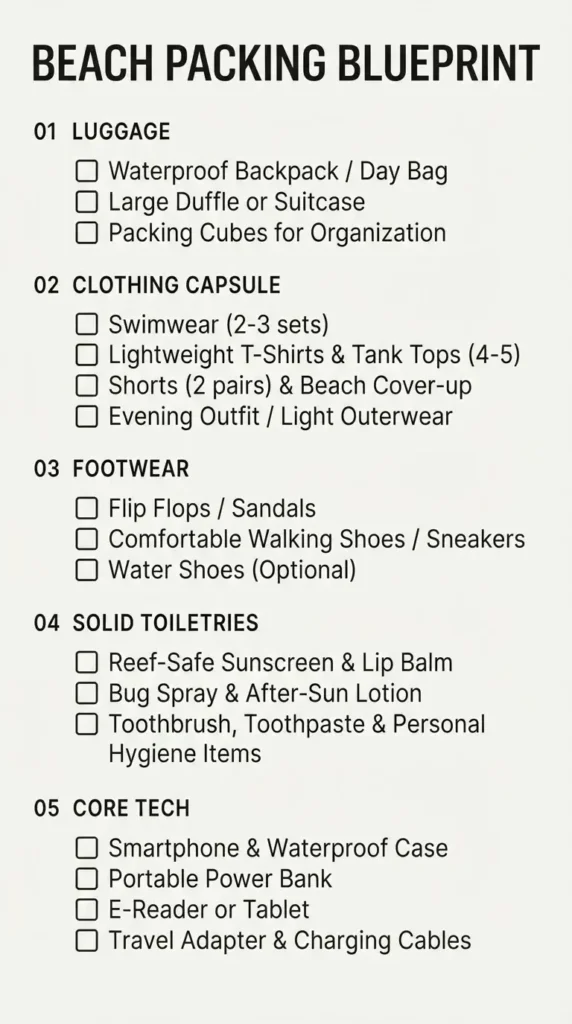
1. Luggage and Organization
- Main Bag: 35 to 40-liter carry-on approved travel backpack with a padded hip belt to distribute weight away from your shoulders.
- Daypack: A packable, ultra-lightweight 15-liter mesh or nylon daypack that folds down to the size of an apple when not in use.
- Packing Cubes: 3 lightweight fabric packing cubes (one large for clothing, one medium for swimwear and undergarments, one small for cords and electronics). Packing cubes compress your clothes and keep your bag perfectly organized.
2. The Core Clothing Capsule (7 Days)
- 1 wide-leg linen trouser (neutral color)
- 1 lightweight nylon or Tencel utility short
- 1 white long-sleeve linen button-down shirt
- 1 high-quality merino wool t-shirt
- 1 lightweight, breathable tank top
- 2 high-quality swimsuits
- 1 multifunctional oversized sarong
- 1 breathable jersey evening dress or lightweight jumpsuit
- 4 pairs of moisture-wicking synthetic or merino underwear
- 2 pairs of low-cut merino wool socks (for active walking days)
3. Footwear
- 1 pair of secured, supportive walking sandals (worn on transit days)
- 1 pair of molded EVA waterproof slides or sandals
- 1 pair of lightweight, breathable mesh sneakers
4. Solid Toiletries and Personal Care (TSA-Friendly)
- 1 solid shampoo bar in a travel tin
- 1 solid conditioner bar
- 1 solid body soap bar or travel-sized body wash
- 1 tube of mineral, reef-safe sunscreen (SPF 30 or higher)
- 1 pack of toothpaste tablets
- 1 bamboo toothbrush
- 1 small tin of solid deodorant
- 1 pocket-sized first-aid kit containing adhesive bandages, antiseptic wipes, blister pads, and basic pain relief medication.
5. Electronics and Essential Tools
- 1 smartphone with a rugged, waterproof protective case
- 1 compact 10,000mAh external power bank
- 1 universal travel plug adapter (covering US, UK, EU, and AU outlets)
- 1 single e-reader (loaded with books before departure)
- 1 high-quality insulated stainless steel water bottle (keeps your water ice-cold for hours under the hot sun)
Moving Beyond Packing Anxiety
When I first sat at my corporate desk years ago, looking at travel blogs during my lunch break, packing felt like a massive puzzle I could never solve. I worried that if I forgot one specific item, my entire trip would fail.
What I know now after years on the road is that the best things you bring to a beach vacation cannot fit inside a suitcase. They are your curiosity, your willingness to step outside your comfort zone, your respect for local cultures, and your courage to travel independently.
Packing light is not about restricting yourself; it is about liberating yourself. When you aren’t weighed down by heavy bags, excessive electronics, and useless clothing options, you have the physical freedom to say “yes” to unexpected adventures. You can easily hop onto a local boat, walk down an unmarked path to a secluded cove, or change your travel plans on a whim.
Look at your luggage as a physical representation of how you want to experience the world. Choose lightness, choose simplicity, and let go of the unnecessary weight holding you back. The ocean is waiting, the local markets are vibrant, and you are entirely capable of stepping out into the world with confidence.