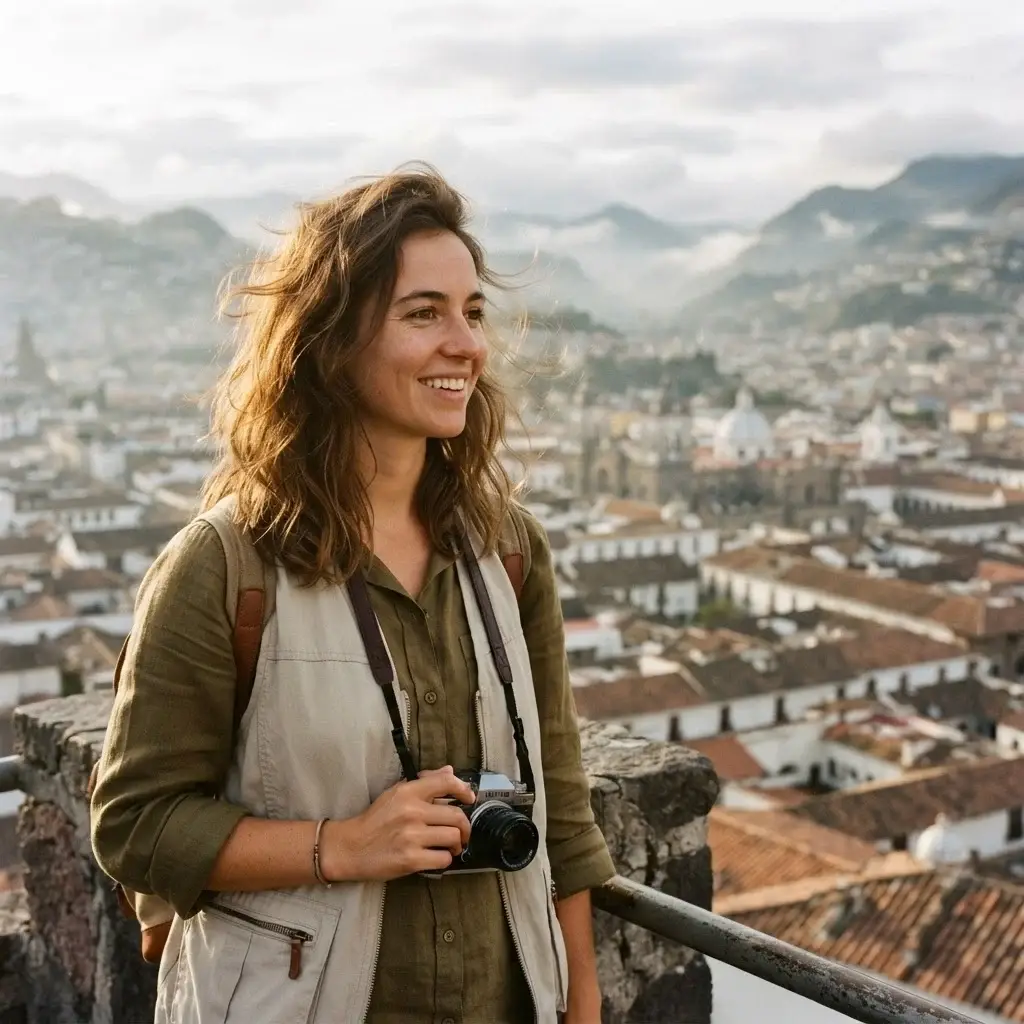
The first thing you notice when you step off the plane in Quito is the air. It’s thin. It’s crisp. And at nearly 9,400 feet above sea level, it hits you right in the chest.
When I first arrived in Quito, I was nervous. I was coming from the low-altitude bustle of New York City, where I spent years working as a sightseeing guide. I was used to being the one with the answers, pointing out landmarks and keeping groups on schedule. But here, standing alone in a city that felt older than anything I had ever seen in the States, I wasn’t the guide anymore. I was just a solo traveler with two days to make a connection with a place that felt completely alien.
People often ask me, “Emma, is 48 hours enough?”
My answer is always the same: It depends on how you spend those hours. If you try to see everything, you will see nothing. You will just be checking boxes. But if you slow down? If you breathe in the thin air and walk the cobblestones without a rigid checklist? Then 48 hours can change how you see the world.
If you are wondering exactly where to go in Quito, Ecuador in 48 hours, I have designed this itinerary to help you balance the must-sees with the moments that actually matter. We aren’t going to rush. We are going to explore.
The Reality of Altitude: A Quick Note
Before we even look at a map, we need to talk about your health. Quito is high. I mean, really high. When I first got here, I thought I was fit enough to just start hiking. I was wrong. My head pounded, and I felt like I had run a marathon just walking to get coffee. Please, before you land, take a look at the official traveler health recommendations from the CDC to understand how to prepare your body for high altitude.
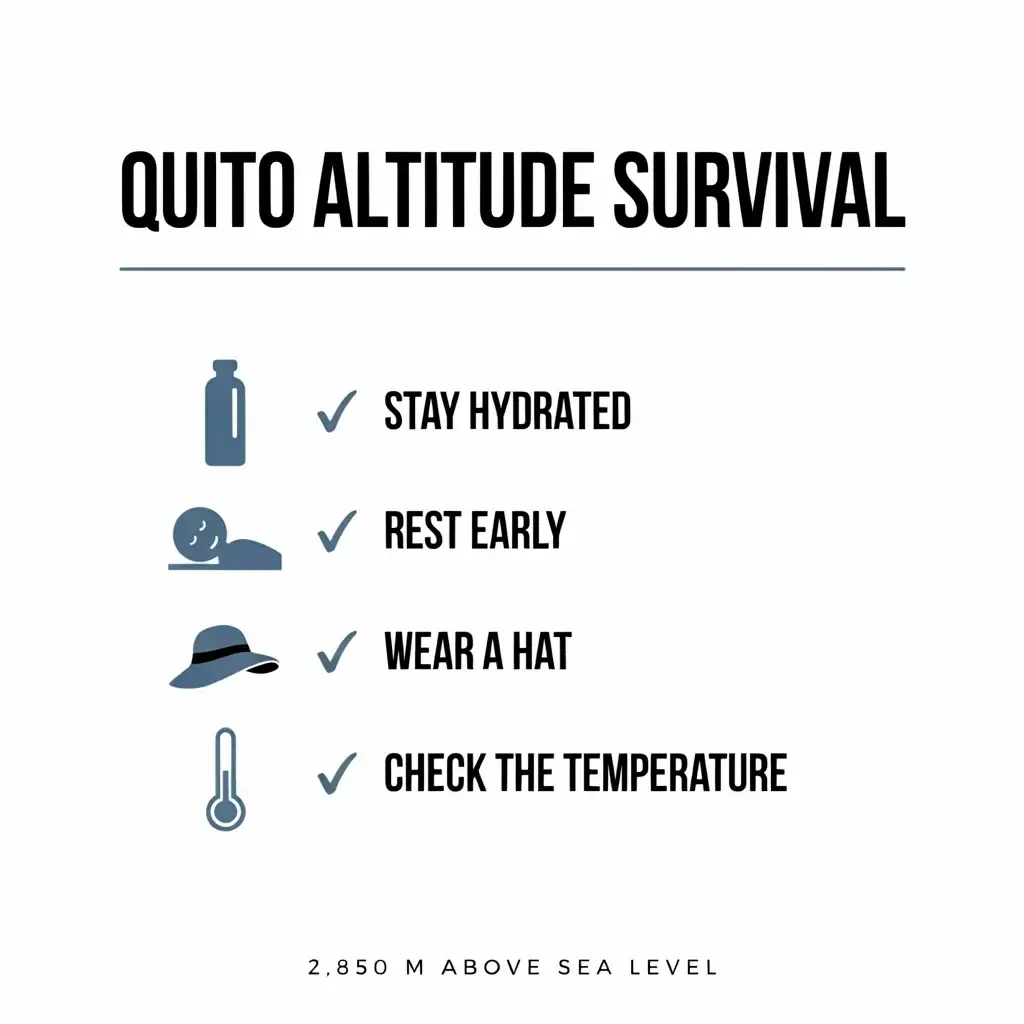
It isn’t just about packing the right clothes; it’s about knowing how to hydrate and when to slow down so you don’t spend your 48 hours stuck in a hotel room with a headache.
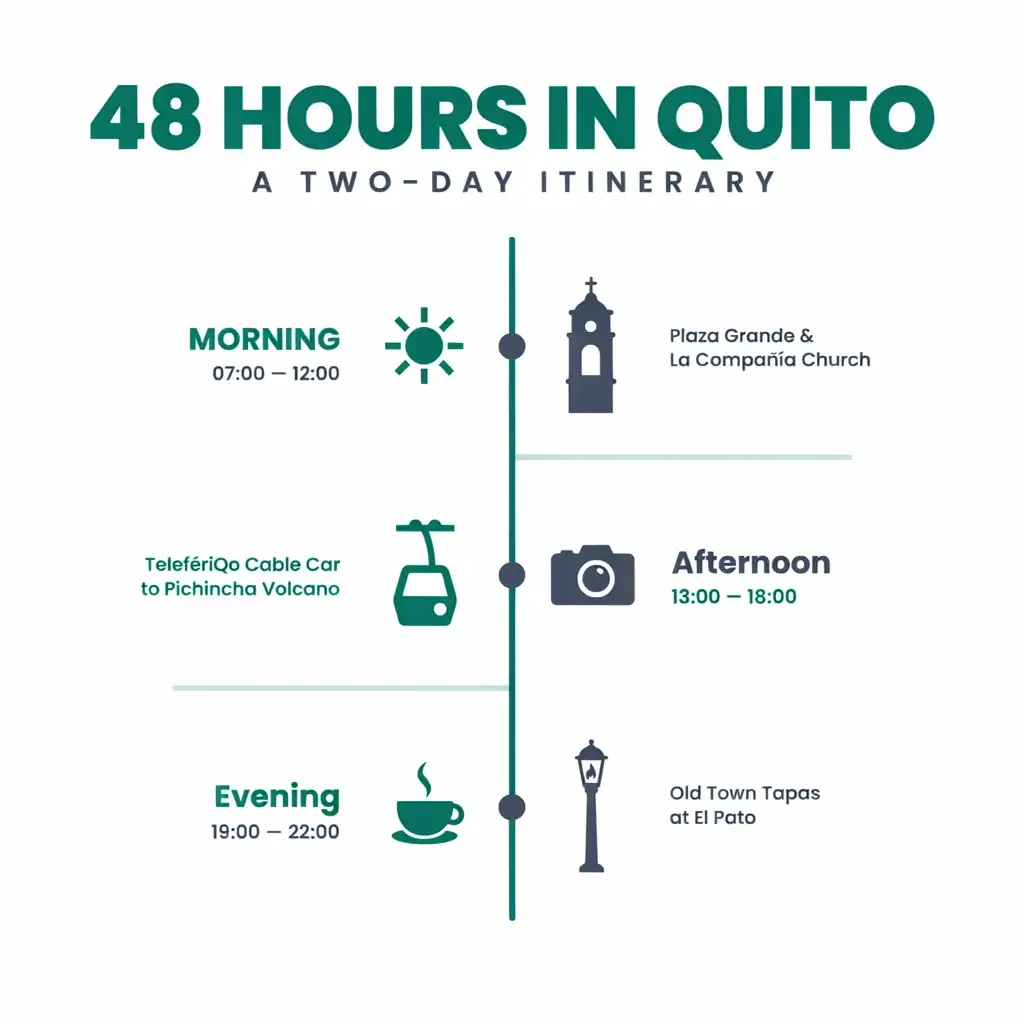
Day 1: Walking Through History
The heart of Quito is its Old Town. It is one of the best-preserved colonial centers in the Americas, and it is a place where you can feel the weight of history in every single step.
Start your morning early. The light in the Andes is different—it’s bright, sharp, and cuts through the shadows of the narrow streets. Head straight to the Plaza de la Independencia.
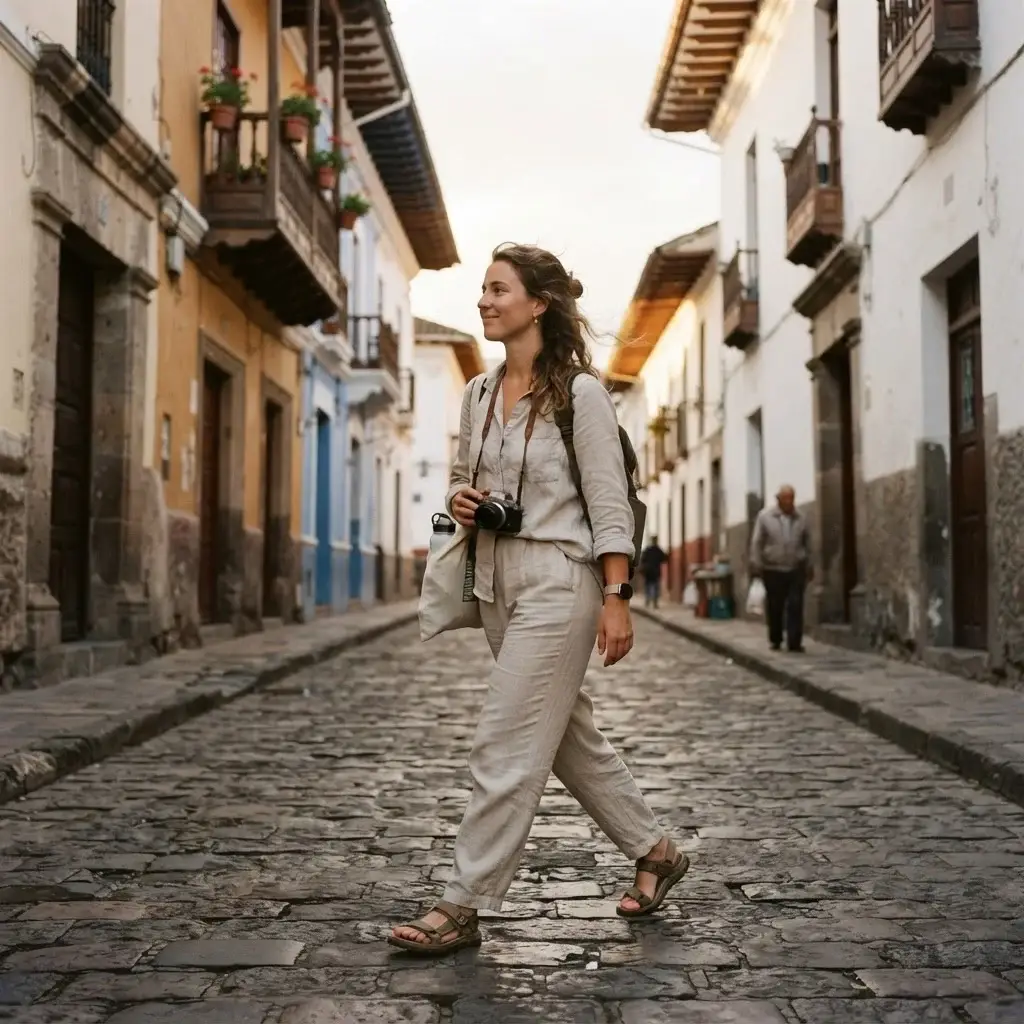
This is the city’s main square. In the morning, you will see locals rushing to work, street vendors selling fresh juice, and the quiet dignity of the government buildings.
From the plaza, you can walk to the Church of the Society of Jesus (La Compañía de Jesús). I have seen a lot of churches in my time, but this one is different. The entire interior is covered in gold leaf. It is so intense that it feels almost overwhelming. As you stand in the center, try to forget the guidebooks and just look at the craftsmanship. It took over 160 years to build. Imagine the patience required for that.
Because this entire center is recognized for its unique cultural value, I always recommend reading up on why the UNESCO World Heritage site designation covers this specific area. It isn’t just a label; it helps you appreciate the architecture, the preservation, and the reason why this city feels like a living museum. When you walk these streets, you aren’t just a tourist. You are a guest in a place that people have been calling home for centuries.
Finding Your Rhythm: The Mercado Experience
By midday, your stomach will probably start growling. Do not head to a fancy sit-down restaurant yet. If you want to know where to go in Quito, Ecuador in 48 hours to find the real soul of the city, you must go to a market.
Head to the Mercado Central. It is loud, it is messy, and it is absolutely wonderful. This is where I found my favorite lunch in Quito.
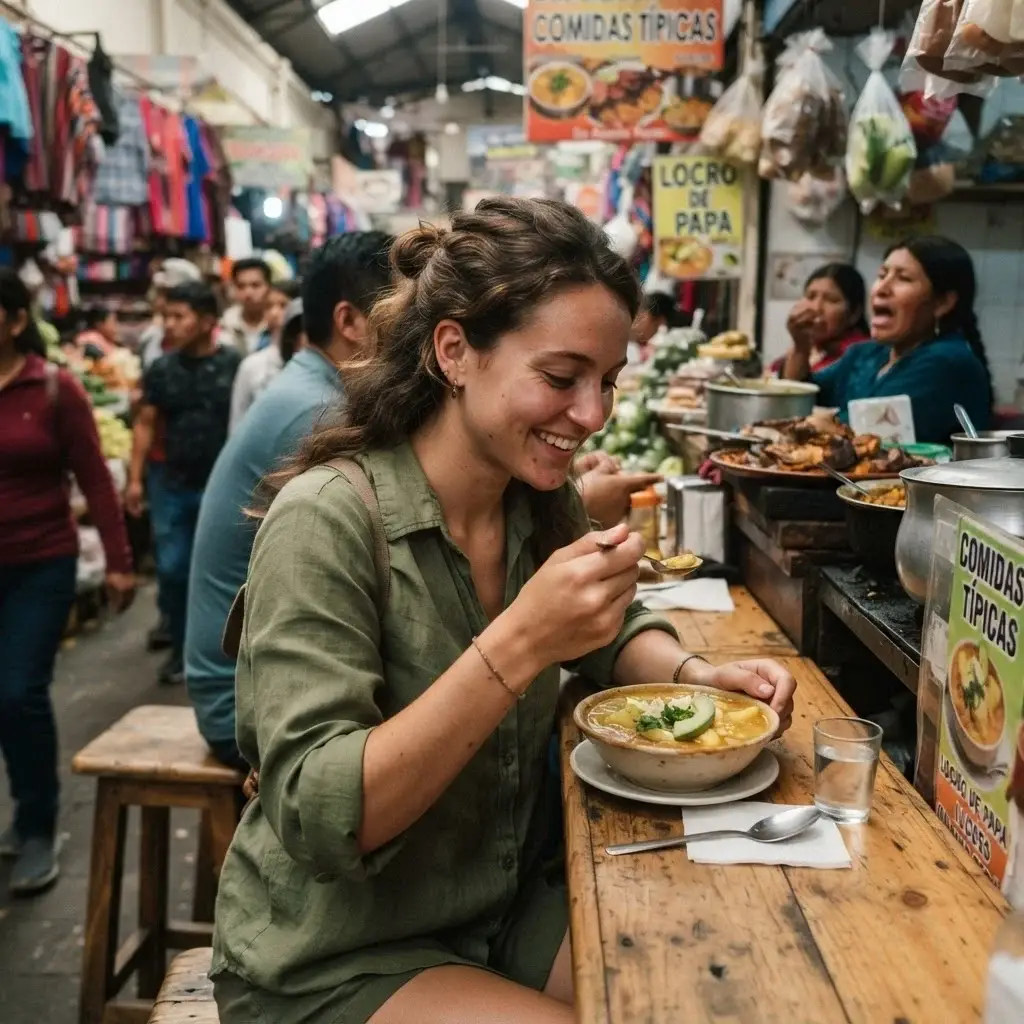
Look for the stalls selling locro de papa. It is a potato soup with cheese and avocado, and it is the perfect comfort food for the cool Andean air.
As a solo traveler, the market can be intimidating. You might wonder, “Am I supposed to be here?” Yes. Watch how the locals do it. They walk with purpose. They know what they want. They pay, they eat, and they move on. Don’t be afraid to smile and ask questions, even if your Spanish is shaky. A simple “Gracias” goes a long way.
Eating at the market also taught me a huge lesson about travel: authentic experiences aren’t always pretty. They aren’t always polished. Sometimes they are crowded and loud, but they are honest. That is what I look for. It’s what I want for you.
Afternoon Reflection: The View from El Panecillo
After your lunch, you need to climb. Quito is a valley city, and the best way to understand it is to get above it. Take a taxi to the statue of the Virgin of El Panecillo.
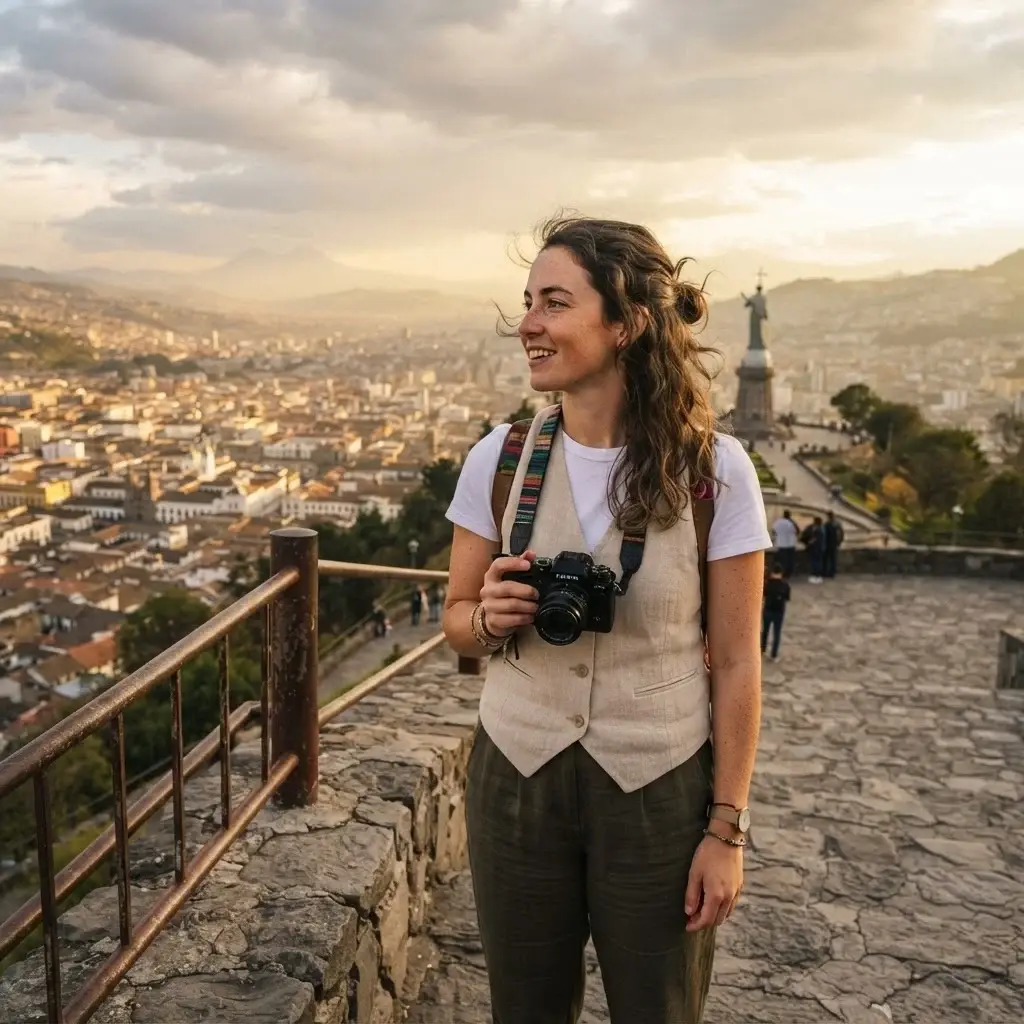
It sits on a hill overlooking the city.
The view here is spectacular. You can see the long, thin shape of the city stretching out north to south, squeezed between the mountains. It feels massive from up here. When I stood there, I thought about how small I was in the grand scheme of things. That is the beauty of travel—it gives you perspective. It reminds you that your problems, your worries, and your stress are tiny compared to the mountains.
While you are walking around, keep your belongings close. This is a popular spot for tourists, and pickpockets can be quick. I always say that being a solo traveler means being your own bodyguard. Trust your gut. If a situation feels off, walk away. For general safety standards and entry requirements, I always check the latest updates on the US Department of State Travel website before heading to a new area. It’s not about being paranoid; it’s about being prepared so you can enjoy the moment without anxiety.
Day 2: Perspective and Balance
You have survived the Old Town. You have seen the gold. You have eaten the soup. Now, day two is about getting outside of the city center to see the landscape that defines this region.
Start your morning at the TelefériQo. This is a gondola that takes you from the city up to the slopes of the Pichincha volcano.
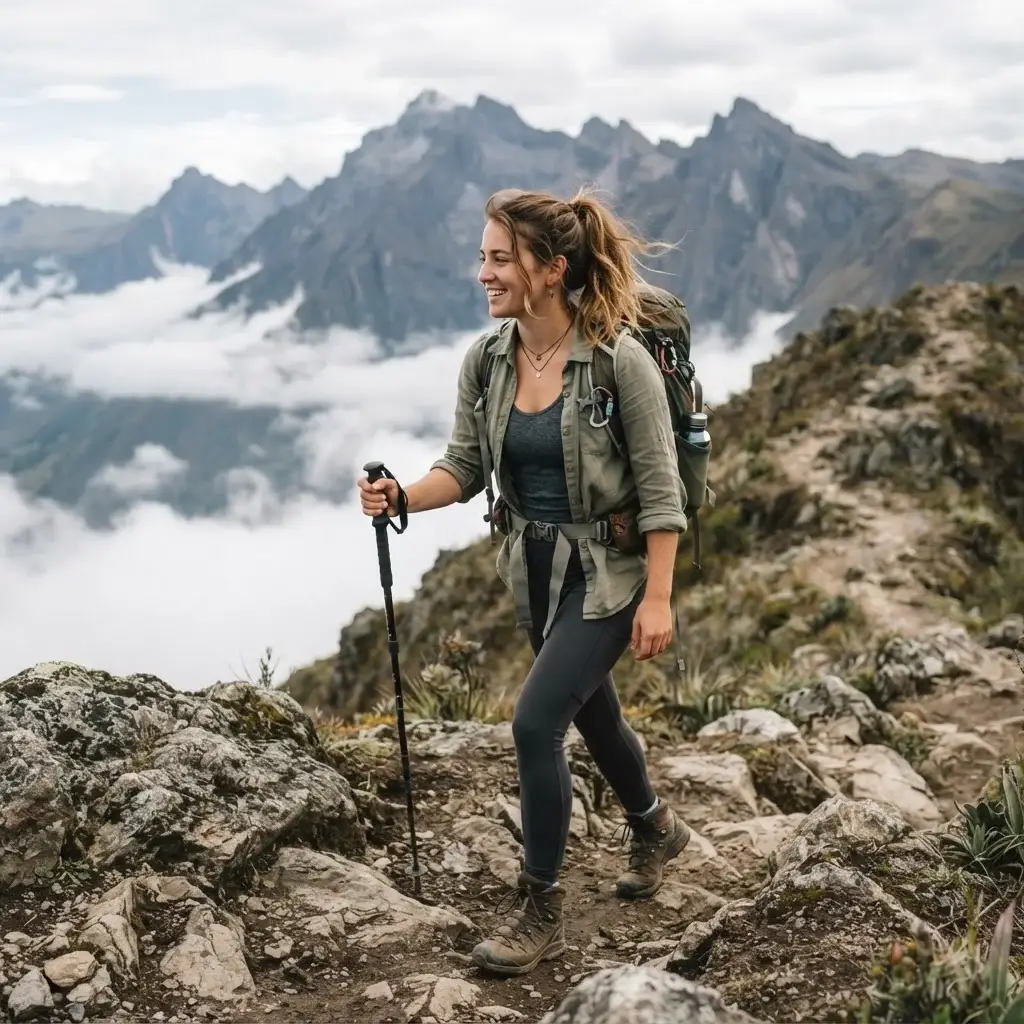
The ride is smooth, but the air at the top is very thin. You are going from 9,400 feet to over 12,000 feet in about 15 minutes.
When you get to the top, walk a little bit on the trails. The view is humbling. You will see the city far below, looking like a toy model. This is where you can do some real thinking. I often bring a notebook with me when I travel solo. I sit on a rock, look out at the horizon, and write down what I’m feeling. Not just what I did, but what I felt. Did the mountain make me feel small? Did the altitude make me feel brave?
Use this time to disconnect from your phone and connect with yourself. We spend so much of our lives looking at screens. Here, look at the clouds. Look at the jagged edges of the Andes. This is where the travel magic happens.
The Equator: Why it Matters
In the afternoon, make your way to the middle of the world. It’s called “Mitad del Mundo.” Yes, it’s a bit touristy. Yes, there are souvenir shops. But stand at the equator. There is something satisfying about standing with one foot in the Northern Hemisphere and one foot in the Southern Hemisphere.
It reminds you of how big the planet is and how much effort it took for you to get here. When I left my office job, I felt like I was standing on a line between two worlds—my old life and my new one. Standing on the literal equator felt like a physical representation of that choice.
If you have extra time, skip the main complex and look for the Intiñan Solar Museum nearby. It is smaller, more personal, and focuses more on the indigenous history and science of the equator. It feels much more authentic than the big monument area.
Navigating the City Like a Local
One of the biggest fears solo travelers have is transportation. How do I get around? Will I get lost? Is it safe to take a bus?
In Quito, the bus system is extensive. It is cheap, and it gets you everywhere. But if you aren’t used to it, it can be chaotic. I usually stick to registered taxis or ride-sharing apps when I am on a tight schedule like this. Using a trusted app helps because the route is tracked and the price is set. When you are looking at how to get from point A to point B, remember that knowing how to use local ride-sharing apps (in the context of safety and convenience) is a tool, not a crutch. It allows you to move freely without the stress of haggling or getting lost in a part of town you don’t recognize.
When I was living in Thailand, I learned that transportation is part of the experience. Don’t stress if the taxi takes a longer route. Don’t stress if the bus is crowded. Smile, look out the window, and watch the city pass you by. Every ride is a chance to see neighborhoods you didn’t plan to visit.
The Evening: Slow Down and Breathe
For your final evening, head to the La Floresta neighborhood. It’s a bit more bohemian, filled with local art, small cafes, and a more relaxed vibe than the historic center.
Find a place that smells like good coffee. Ecuador grows some incredible coffee, and you should take the time to enjoy a cup properly.
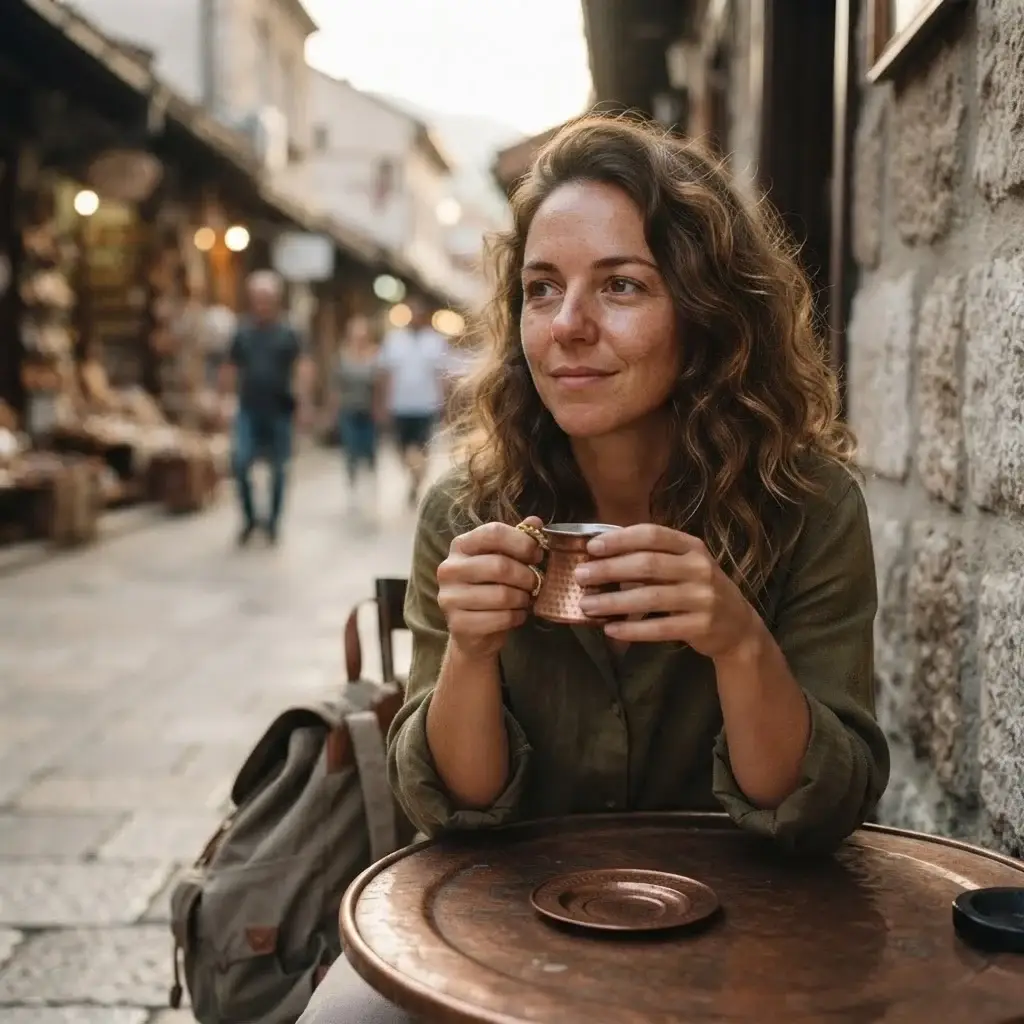
Don’t rush it. Sit there and people-watch. Notice how the locals interact. Notice the fashions, the sounds of the language, the way the night air hits the city.
This is the time to reflect on your 48 hours. What surprised you? What made you nervous? What made you proud?
Solo travel isn’t about being fearless. It’s about being afraid and doing it anyway. It’s about taking those two days in Quito and realizing that you can navigate a foreign city, you can find food, you can climb a mountain, and you can come out the other side feeling more capable than when you arrived.
Why This Matters for You
I didn’t write this guide to tell you to follow a rigid schedule. If you decide to skip the church to spend three hours in a coffee shop, do it. If you decide to skip the mountain because you need to rest, do it.
The goal of this trip, and of any trip you take, is to reclaim your time. For years, I let my vacation days dictate my life. I waited for the “perfect” time to travel, the “perfect” amount of savings, the “perfect” travel companion. I spent years in a corporate office thinking that life was something I would start after I hit my goals.
But life is happening right now. It’s happening in the air you breathe in Quito. It’s happening in the taste of that potato soup. It’s happening in the confidence you build when you successfully navigate a bus system in a language that isn’t your own.
If you are currently sitting at your desk, dreaming of a trip, I want you to know that you are capable of more than you think. You don’t need to be an expert traveler. You don’t need a huge budget. You just need to be willing to show up.
Before you book that flight, make sure you have the basics of protection covered. A lot of people skip insurance because they think nothing will happen. I’ve been there. But I’ve also learned that choosing the right travel insurance plan is about peace of mind. It means that if you get sick, if your flight is delayed, or if you lose your bag, you have someone in your corner. It allows you to focus on the adventure instead of the “what-ifs.” It makes you bolder, not because you are reckless, but because you are prepared.
A Final Thought on Your 48 Hours
You have two days. That is 2,880 minutes. That is a lifetime if you use it correctly.
Don’t spend them looking at your phone. Spend them looking at the faces of the people you pass. Spend them listening to the sounds of the street. Spend them challenging yourself to order your food in Spanish. Spend them walking until your feet are tired, just to see what’s around the next corner.
When I started traveling, I was obsessed with “doing” things. I wanted to see every landmark. I wanted to be able to say I had “done” Ecuador. But I realized that travel isn’t a checklist. It’s a conversation. It’s a conversation between you and the destination.
Quito is a beautiful, complex, high-altitude city that challenges you to be present. If you go, give it your full attention. The mountains are waiting, the coffee is brewing, and the city is ready to show you things about yourself that you didn’t know were there.
You have the itinerary. You have the context. Now, all you need is to take the first step. You don’t need to be perfect. You just need to be curious.
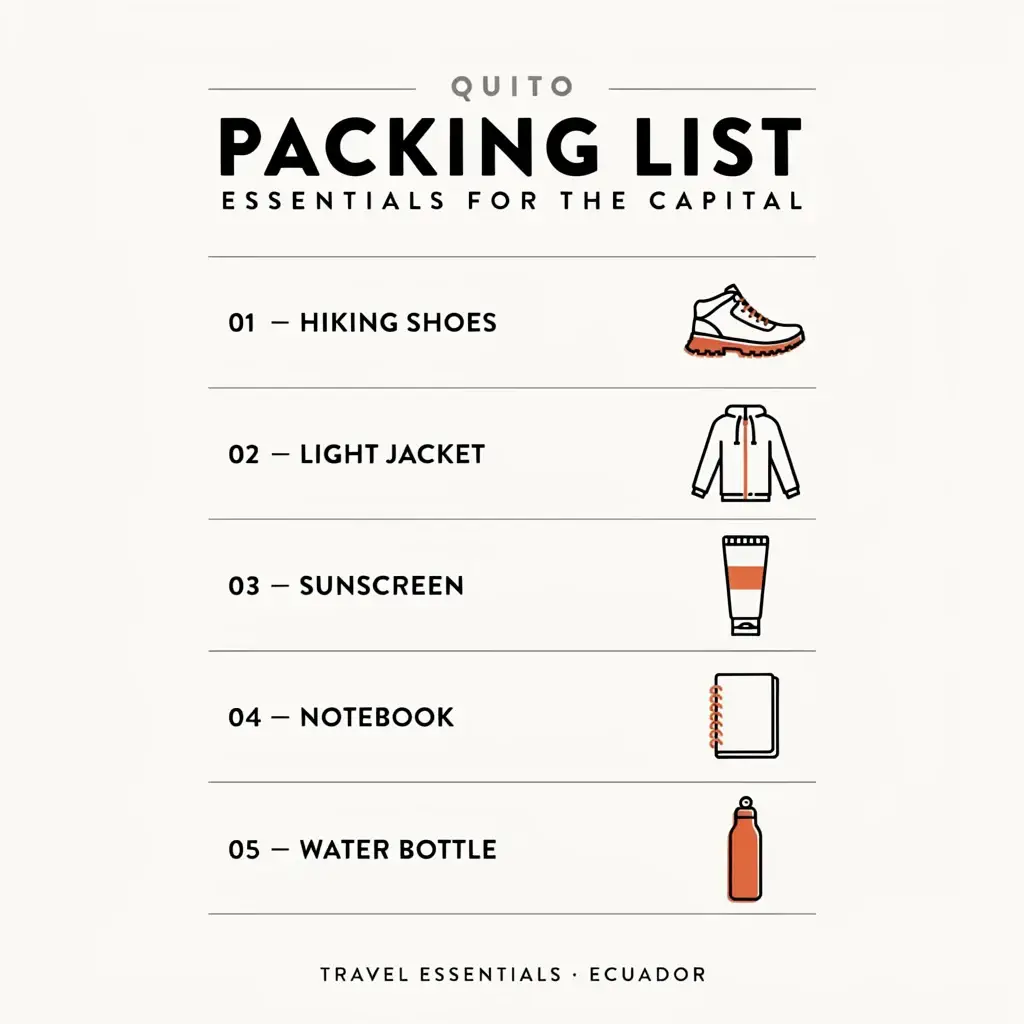
So, pack your layers, bring your walking shoes, and get ready to discover a city that will stay with you long after your 48 hours are up.
The world is vast, and your life is waiting. Go find it.