I used to hate the cold. Back when I worked as a sightseeing guide in New York City, standing on the top deck of an open-air bus in January felt like a punishment. For years, I thought winter travel meant shivering on street corners and hiding inside expensive coffee shops just to thaw my toes.
Then, I left my strict 9-to-5 office job, packed a bag, and took a leap. One of my first big solo winter trips was to the Swiss Alps. And I quickly learned something amazing: the Swiss know how to do winter right.
In Switzerland, winter is not something you suffer through. It is something you celebrate. The trains are warm, the food is heavy and comforting, and the towns are built to handle the snow. You do not need to be a skier to have an amazing time. You just need to know how the country works.
If you are dreaming of snowy mountains but feel nervous about the planning, the costs, or the cold, you are in the exact right place. I wrote this winter travel guide to Switzerland to walk you through every single step. We will cover how to pack, how to use the trains, what to eat, and where to go on your very first visit. Let’s build your confidence and get you ready for the trip of a lifetime.
Why Switzerland in Winter is Worth the Effort
When I was waitressing to save money for my early trips, I questioned if a Swiss winter trip was worth the high price tag. But the moment I stepped off the train in a tiny, car-free village surrounded by white peaks, I knew I made the right choice.
Winter in Switzerland feels like stepping inside a snow globe. The air is crisp and clean. The crowds are much smaller in the cities than they are in July. And there is a specific, quiet magic to watching the snow fall while you eat warm cheese in a wooden chalet.
Before you start booking flights, it is always a smart habit to check the current entry rules and safety ratings for Switzerland so you know exactly what paperwork or passport validity you need before boarding your flight. Once the basics are out of the way, you can focus on the fun part: dreaming up your route. If you are still deciding which cantons (states) to visit, taking time to read through a broad overview of the country’s regions can help you narrow down your map.
The best part about a winter trip here is that you do not have to ski. You can ride cable cars to mountain peaks, walk on cleared snow paths, soak in thermal baths, and take scenic train rides.
Packing for the Cold: The Secret to Staying Warm
The biggest fear most beginners have is freezing. Coming from New York, I thought I needed a massive, heavy parka. I was wrong. The secret to winter travel is layering. When you walk outside, it is freezing. But when you step onto a Swiss train, the heat is blasting. You need to be able to strip layers off quickly.
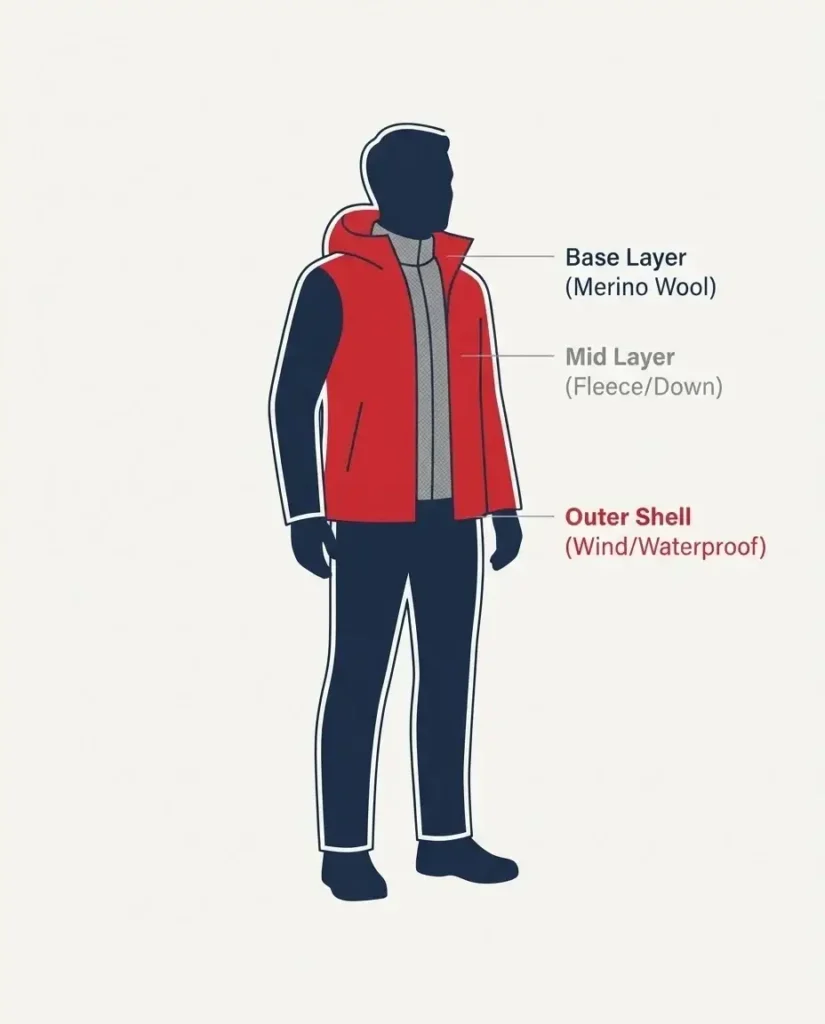
Here is exactly how to pack for a Swiss winter:
The Base Layer
Never wear cotton against your skin. Cotton holds sweat, and cold sweat makes you freeze. You need long underwear made of Merino wool. Merino wool is magic. It keeps you warm, it dries fast, and it does not smell, even if you wear it three days in a row. Buy one good pair of Merino wool leggings and two long-sleeve tops.
The Mid Layer
This is your warmth layer. I highly recommend a fleece jacket or a light down sweater. You want something that traps your body heat but can easily be shoved into a daypack when you are sitting in a warm cafe.
The Outer Shell
Leave the heavy wool pea coat at home. You need a windproof and waterproof outer shell. Snow in the valleys can sometimes turn into rain. A waterproof jacket cuts the harsh alpine wind and keeps you dry.
Footwear
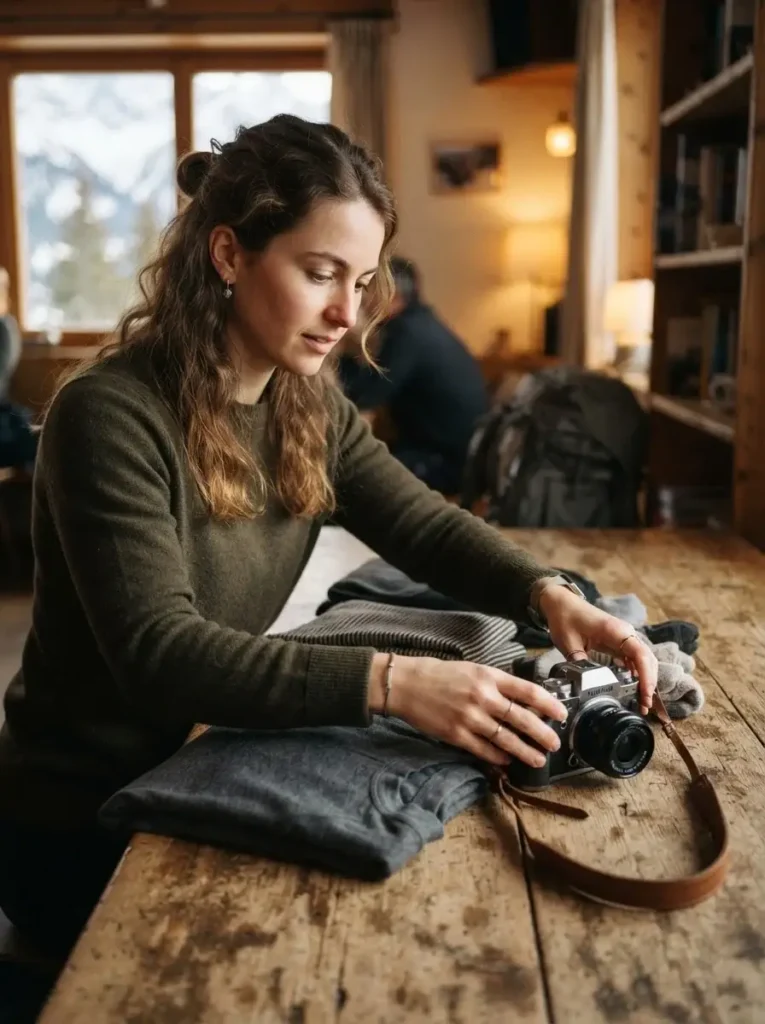
This is the most important part of your packing list. Sneakers will not work. Your feet will freeze, and you will slip on icy cobblestones. You need a pair of waterproof winter boots with a thick rubber sole for grip. Buy them a half-size larger than your normal size so you can wear thick wool socks.
Accessories
Bring two pairs of gloves: a thin liner pair for using your phone, and a thick waterproof pair for mountain tops. Bring a warm beanie that covers your ears. And do not forget sunglasses! The sun reflecting off the white snow at high altitudes is blinding.
Mastering the Swiss Travel System
You do not need to rent a car in Switzerland. In fact, renting a car in winter as a beginner is a bad idea. The mountain roads are icy, and many of the best mountain villages do not even allow cars.
Instead, you will use the Swiss Travel System. It is the best public transit network in the world. Trains run like clockwork, buses meet trains with zero waiting time, and you can get almost anywhere without driving.
The Swiss Travel Pass vs. The Half Fare Card
Train tickets in Switzerland are expensive. A round-trip ticket to a mountain peak can easily cost $200. You need a discount pass. You have two main choices:
1. The Swiss Travel Pass: This is an all-in-one ticket. You pay one flat fee for a set number of days (like 4, 8, or 15 days). It covers all trains, buses, and boats in the country. It also gives you free entry to over 500 museums and discounts on high mountain cable cars. It is expensive upfront, but it gives you total freedom. You never have to buy a ticket. You just get on the train and show the conductor your QR code.
2. The Swiss Half Fare Card: This card costs about $130 USD and lasts for a month. It gives you 50% off almost every train, bus, boat, and cable car in the country. You still have to buy individual tickets for every single trip you take, but you buy them at half price.
Which one should you choose?
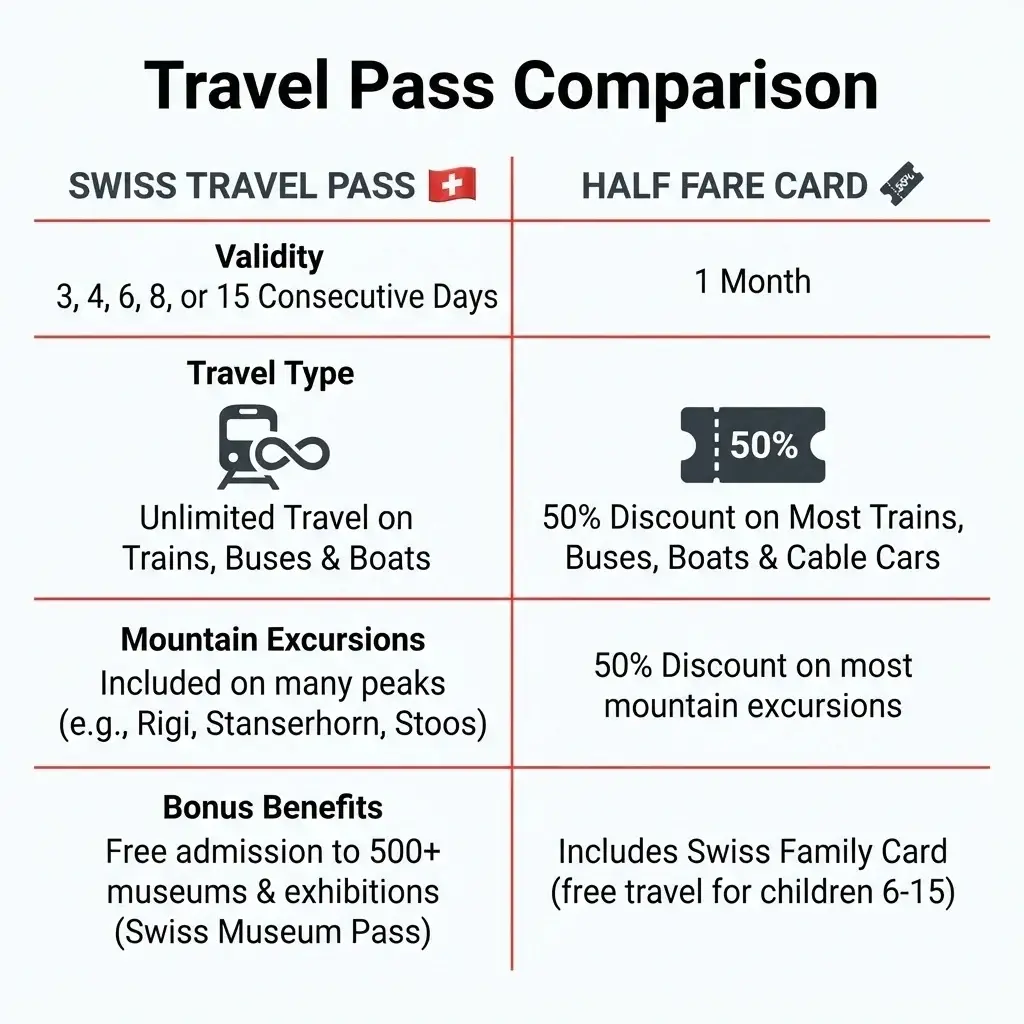
If you plan to move to a new city every day and take long, scenic train rides, get the Swiss Travel Pass. It removes all the stress of buying tickets. If you plan to stay in one region (like the Jungfrau area) and just take short trips, the Half Fare Card is usually cheaper overall.
How to Use the SBB App
Download the “SBB Mobile” app before you leave home. This is the official app for Swiss trains.
It will be your best friend. You can check timetables, track delays, and buy tickets directly on your phone. When you search for a route, it tells you exactly which platform your train leaves from.
The Best Winter Destinations for Beginners
Switzerland has endless beautiful towns, but some are better suited for first-time winter visitors than others. When I am putting together a route for someone, I always suggest starting with places that have great train connections and plenty of non-skiing activities.
Lucerne (Luzern): The Perfect Starting Point
Lucerne is only an hour from the Zurich airport by train. It is the best place to start your trip. The city sits on a massive blue lake, surrounded by snow-capped mountains.
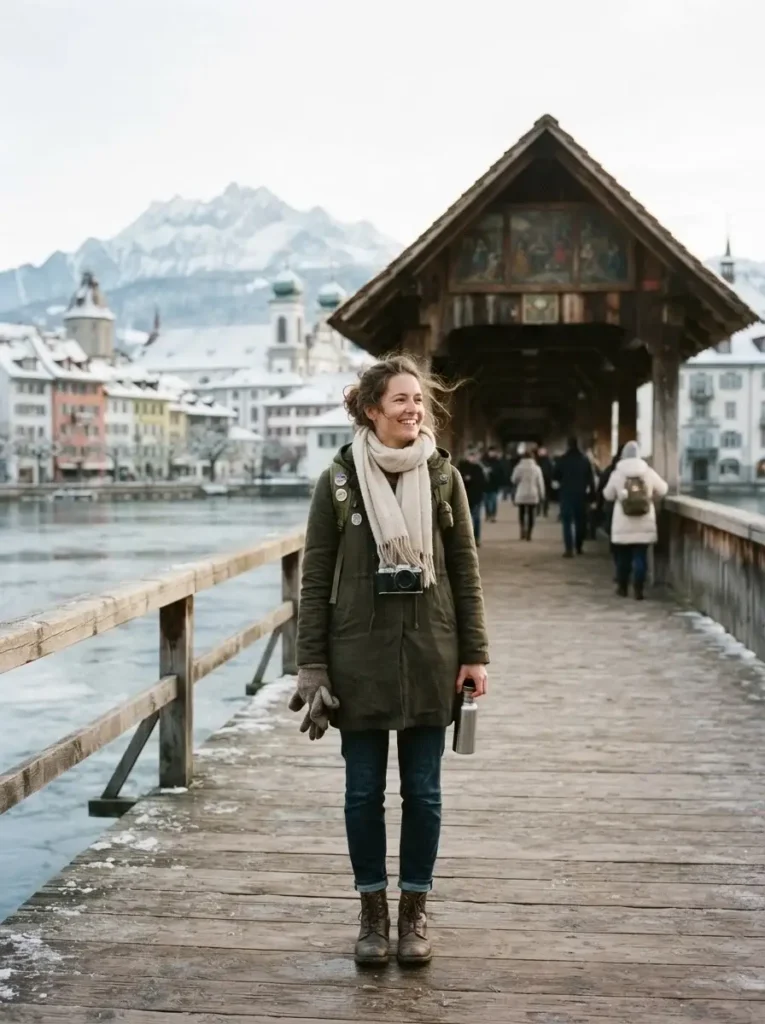
When you arrive, walk across the Chapel Bridge (Kapellbrücke). It is a wooden footbridge built in the 1300s, covered in beautiful old paintings. In winter, the city is quiet, and the air smells like roasted chestnuts, which are sold from little carts on the street.
The best winter activity here is taking a boat ride on Lake Lucerne, followed by a trip up Mount Rigi or Mount Pilatus. Mount Rigi is famous for its thermal baths (Rigi Kaltbad).
Imagine sitting in a hot outdoor pool while snow falls on your face, looking down at the clouds. It is pure magic.
Zermatt: The Home of the Matterhorn
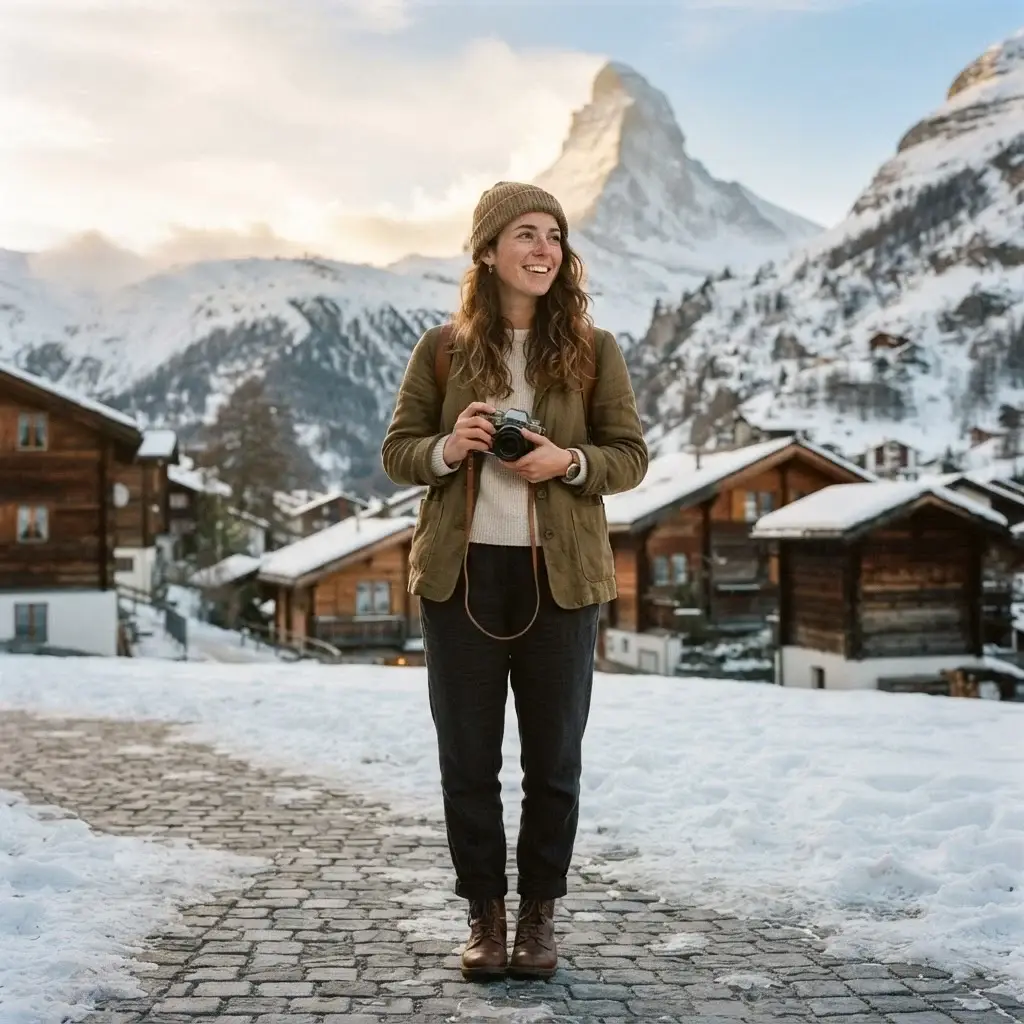
You cannot visit Switzerland without seeing the Matterhorn. Zermatt is the village that sits at the base of this famous, jagged mountain.
Zermatt is completely car-free. When you step off the train, you will only see electric taxis and horse-drawn carriages. The wooden chalets are covered in thick snow, and the main street is lined with bakeries and gear shops.
Even if you do not ski, you must take the Gornergrat Bahn. This is a bright orange cogwheel train that chugs slowly up the side of the mountain to an altitude of over 10,000 feet. The ride takes about 35 minutes, and the views of the glaciers and the Matterhorn will leave you speechless. Make sure to sit on the right side of the train going up for the best photos!
Interlaken and the Jungfrau Region
If you want to feel small in the best way possible, come to the Jungfrau region. Interlaken is the main transport hub, sitting between two lakes. From here, you take trains up into the deep mountain valleys to villages like Grindelwald, Wengen, and Mürren.
This area is famous for its massive, imposing peaks: the Eiger, the Mönch, and the Jungfrau. This entire area is incredibly special, and in fact, much of it is recognized globally; the region’s protected natural landscapes are heavily guarded against over-development, ensuring the massive glaciers and deep valleys remain wild and pristine.
The most famous trip here is taking the train to the Jungfraujoch, the highest railway station in Europe. But it is very expensive (even with a discount pass). If you are on a budget, I recommend visiting the village of Mürren instead. It is a tiny, car-free village perched on the edge of a massive cliff. You can take a cable car up here, walk along the snowy paths, and drink hot chocolate while looking across the valley at the sheer rock face of the Eiger.
Bern: The Cozy Capital
Do not skip the cities in winter! Bern is the capital of Switzerland, and its old town is stunning. The city was built in a sharp bend of the Aare River.
What makes Bern perfect for winter is its architecture. The old town is lined with over four miles of covered stone arcades (called Lauben). This means you can walk through the entire city, shopping and window-gazing, without ever getting snowed on or rained on. It is the perfect place to spend a snowy afternoon.
Swiss Winter Food: What to Eat to Stay Warm
Swiss food was built for cold weather. It is heavy, rich, and deeply comforting. Eating is a huge part of the cultural experience here. When I travel solo, I used to feel awkward eating alone, but in Switzerland, sitting by a window with a hot meal and a good book is a perfectly normal way to spend an evening.
Fondue: The Rules
You must eat cheese fondue at least once. It is a pot of melted cheese (usually Gruyère and Vacherin) mixed with white wine and garlic, kept warm over a small flame on your table.
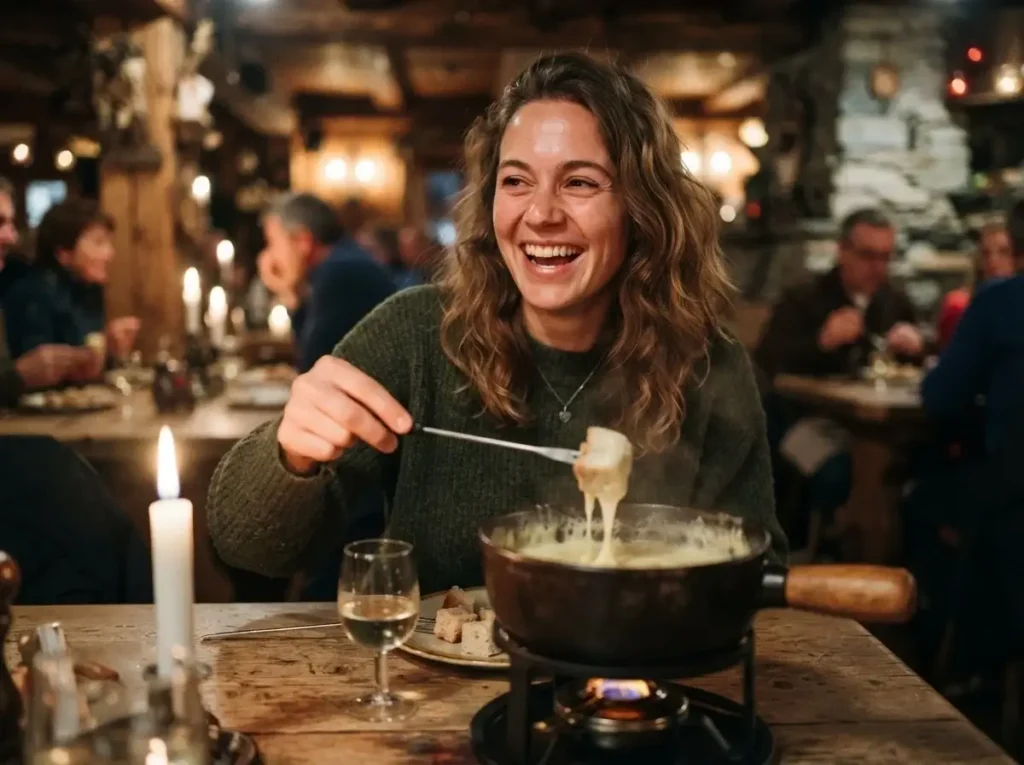
You dip chunks of crusty bread into it using long forks.
There are rules to eating fondue in Switzerland:
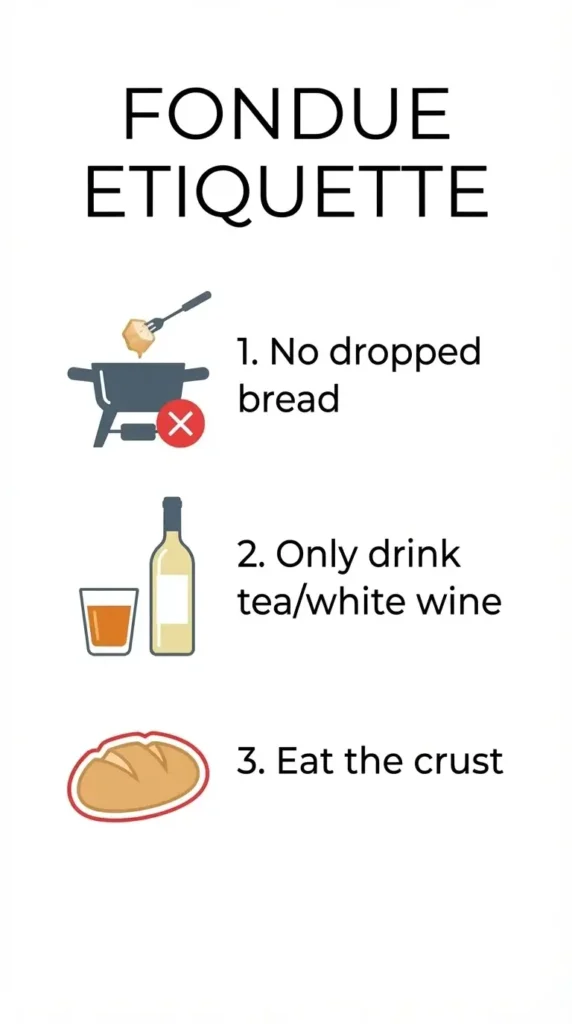
- Do not drop your bread in the pot! If you drop your bread, tradition says you have to buy the next round of drinks.
- Only drink white wine or hot black tea with fondue. The Swiss believe that drinking cold water or soda will cause the massive amount of cheese to harden in your stomach and give you a terrible stomachache.
- When you reach the bottom of the pot, do not throw away the brown, crusty layer of burnt cheese at the bottom. It is called the “Religieuse” (the nun), and it is considered the best part. Scrape it off and eat it!
Raclette
If you love cheese but don’t want fondue, try Raclette. The waiter will bring half a wheel of cheese and place it under a heat lamp. As the top layer melts and bubbles, they scrape the hot cheese directly onto a plate of boiled potatoes, tiny pickles (cornichons), and pickled onions. It is salty, warm, and incredible.
Rösti
Rösti is the ultimate Swiss comfort food. It is essentially a massive hash brown. Grated potatoes are pan-fried in butter until crispy on the outside and soft on the inside. You can order it plain, or topped with a fried egg, bacon, and melted cheese. It was originally a breakfast dish for farmers in the canton of Bern, but today you can eat it for lunch or dinner.
Grocery Store Feasts
Restaurants in Switzerland are expensive. A basic dinner with a drink will easily cost $30 to $50 USD. When I travel here, I do not eat at restaurants every night. Instead, I go to the local grocery stores: Coop or Migros.
These stores are amazing. They have huge sections of fresh, ready-to-eat food. You can buy fresh bread, local cheese, cured meats, and incredible Swiss chocolate for a fraction of the cost of a restaurant. Many Coop stores also have a self-service restaurant attached to them on the top floor, where you can get a hot, healthy meal for under $15 USD.
Staying Healthy and Safe in the Cold
Switzerland is one of the safest countries in the world. Crime is incredibly low, and you can feel very confident walking alone at night. But winter brings its own set of natural challenges that beginners need to take seriously.
When you travel up into the mountains, the air gets very thin. If you take a train from sea level up to 10,000 feet in just a few hours, you might feel dizzy, get a headache, or feel out of breath. This is mild altitude sickness. The best way to handle it is to drink lots of water, walk slowly, and avoid alcohol on your first day at high elevation. Before your trip, it is helpful to read up on basic advice for preventing cold-related issues and handling high-altitude symptoms so you know what signs to watch for in your own body.
Ice is your other enemy. Black ice on cobblestone streets is incredibly slippery. Never rush when walking, always wear your thick rubber-soled boots, and keep your hands out of your pockets when you walk so you can catch yourself if you slip.
Because winter weather can cause sudden flight cancellations, train delays, or minor slips on the ice, I never travel to the Alps without protection. It is vital to secure reliable coverage for winter travel delays and medical emergencies before you leave home, because Swiss medical care, while world-class, is extremely expensive if you have to pay out of pocket.
Embracing the Solo Winter Adventure
Taking a winter trip to Switzerland takes courage. It requires planning, saving, and a willingness to step out of your comfort zone. But I promise you, the reward is worth every second of preparation.
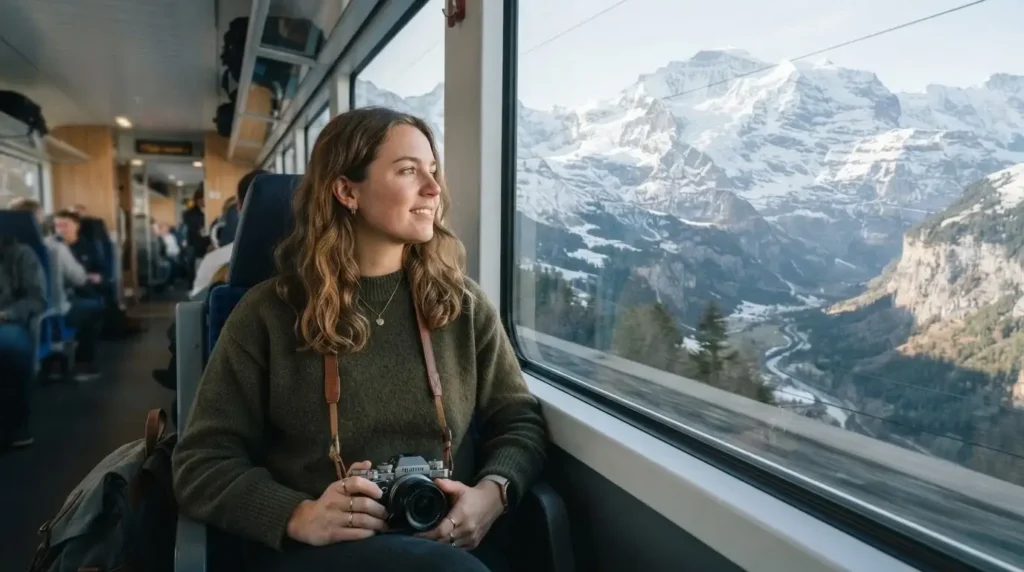
There is a unique kind of confidence that comes from navigating a foreign train system in the snow. When you successfully buy your tickets, find your platform, and watch the snowy Alps roll by through the giant train windows, you realize exactly how capable you are.
Do not wait for the perfect time. Do not wait for someone else to be ready to go with you. Pack your warm layers, download your train app, and go see the snow for yourself. The mountains are waiting, and you are entirely ready for this adventure.