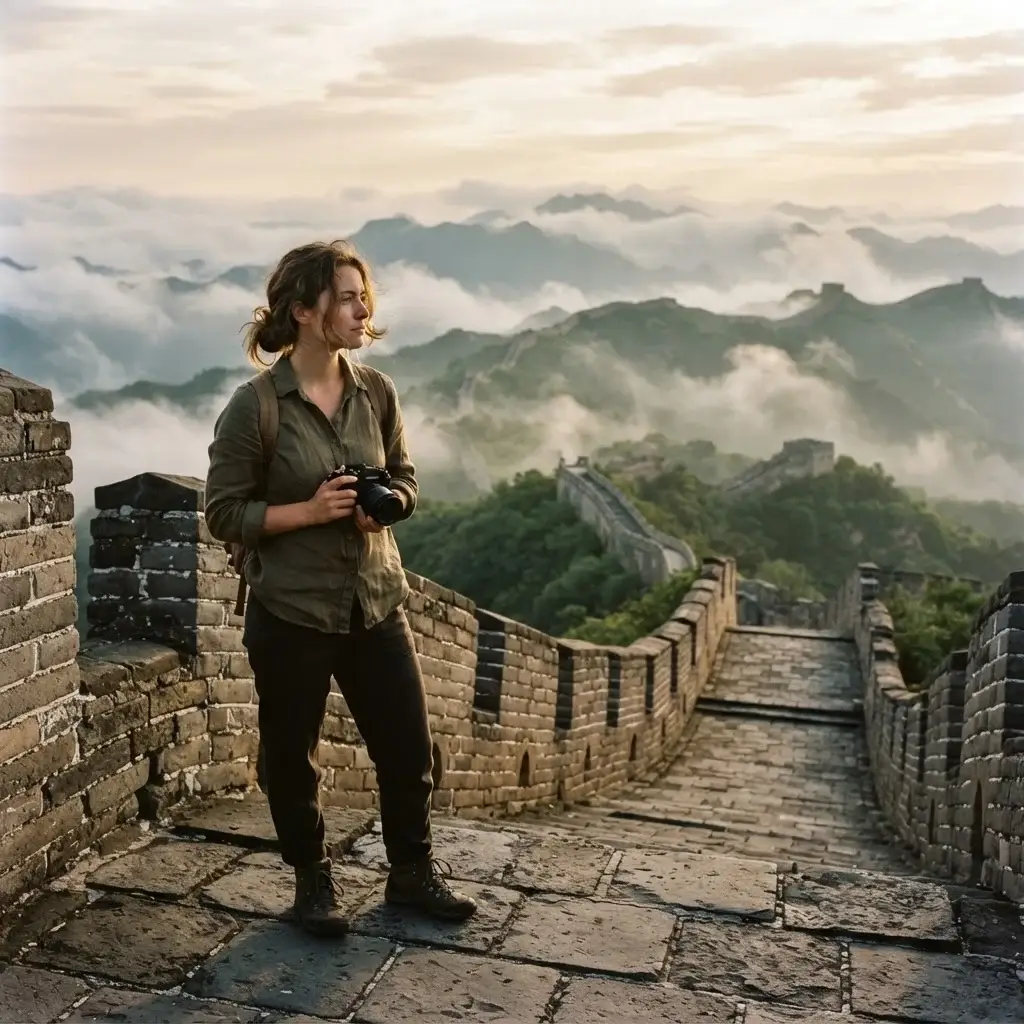
Beijing is huge. When I first stepped off the train into China’s capital, my mind instantly flashed back to my early days as a certified sightseeing guide in New York City. I thought I knew how big cities worked. But Beijing is an entirely different beast. It is a city where three-thousand-year-old stone lanes sit right next to massive glass skyscrapers that seem to touch the clouds. It can feel incredibly loud, fast, and completely overwhelming if you do not have a solid plan in your pocket.
For years, I sat behind a desk at a corporate job that drained my energy, staring at photos of the Forbidden City and wondering if I would ever have the courage to navigate those historic spaces on my own. I worried about the language gap. I worried about getting lost. But when I finally saved up enough money by picking up extra waitressing shifts, I bought a plane ticket and discovered that Beijing does not have to be scary.
You do not need an expensive tour group or a massive budget to see the real Beijing. What you need is a realistic, step-by-step plan that lets you slow down and actually experience the local culture without burning out by day three.
This comprehensive 5-day itinerary for exploring Beijing is built from my actual time on the ground. It is designed to help you tackle the major historic sights, wander through ancient neighborhoods, eat incredible local street food, and build the confidence to explore one of the world’s most fascinating capitals with total ease.
Essential Groundwork Before You Board Your Flight
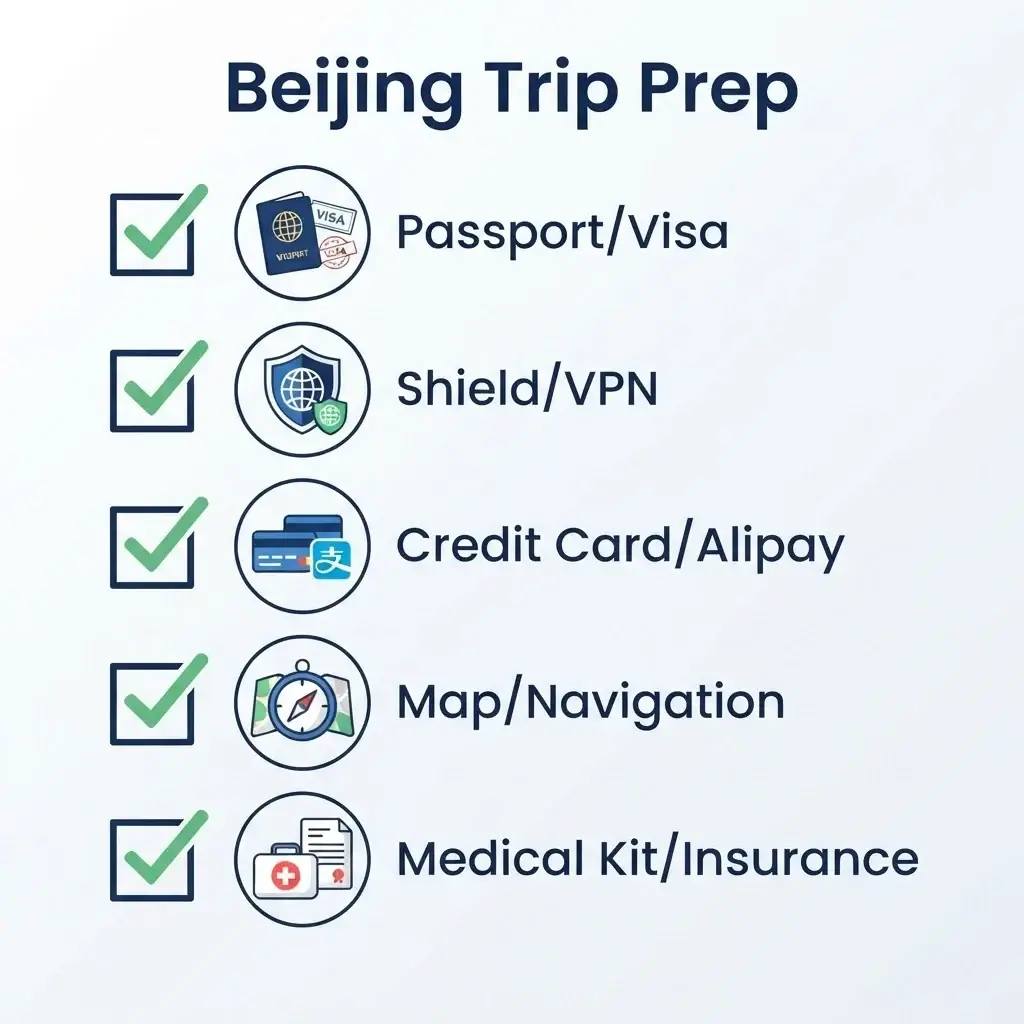
Before we talk about temples and food, we need to handle the practical logistics. Beijing is not a city where you can just wing it upon arrival. Taking a few specific actions before you leave home will save you hours of stress and keep you from getting stuck at a subway station with no way to pay.
Visas and Official Documents
First things first, you need to make sure your paperwork is completely sorted out. China has strict entry requirements, and the rules can change depending on which country’s passport you hold. I always double-check the latest requirements by looking over the official guidelines from the US Department of State Travel website well before I book any non-refundable hotel rooms. Give yourself at least a month to process your tourist visa through your nearest Chinese embassy or visa service center. Make physical copies of your passport and visa to carry in your daypack, and keep digital copies saved on your phone where you can access them offline.
Navigating the Great Firewall with Apps
In China, many apps you use every single day—like Google Maps, Instagram, and WhatsApp—will not work because of local internet restrictions. To stay connected, you must download a reliable Virtual Private Network (VPN) on both your phone and laptop before you land in the country. Once you are in Beijing, you cannot easily download a VPN app from the app store.
For navigation, download Amap (Gaode Maps) or Baidu Maps. While the interfaces are mostly in Chinese, you can type in English names of major sights, and the app will show you exactly which subway lines to take. I also highly recommend downloading Apple Maps, which works surprisingly well in China without a VPN and provides accurate, English-language transit routes.
Setting Up Digital Payments
Cash is almost entirely dead in Beijing. Everyone, from high-end restaurants to elderly street vendors selling roasted sweet potatoes, uses digital mobile payments. As a foreign traveler, you can now link your international credit card to Alipay or WeChat Pay.
Set this up at home and complete the identity verification process. When you want to buy something in Beijing, you simply open the app, scan the merchant’s QR code, or let them scan yours. Always keep a couple of hundred Chinese Yuan (RMB) in cash tucked in your wallet as a backup plan, but expect to use your phone for 99% of your transactions.
Health, Safety, and Travel Protection
Beijing is an incredibly safe city for solo travelers. Violent crime is rare, and CCTV cameras keep the streets secure at night. Your biggest health concern will likely be the air quality and the sheer amount of walking you will do.
If you travel during the winter or spring, download an air quality tracking app. If the AQI index goes above 150, do what the locals do and wear a high-quality face mask outside. For health peace of mind, check the vaccine recommendations and medical advisories on the CDC Travelers Health page to ensure you are up to date on your routine shots.
Day 1: The Historic Core and Ancient Alleyways
On your first day in the city, you will dive straight into the deep historic heart of Beijing. This area features massive open squares and tight, labyrinth-style neighborhoods where families have lived for hundreds of years.
DAY 1 ROUTINE:
Morning: Tiananmen Square and Entering the Imperial Gates
Start your day early at Tiananmen Square. This is the symbolic center of modern China, a massive concrete expanse capable of holding one million people.
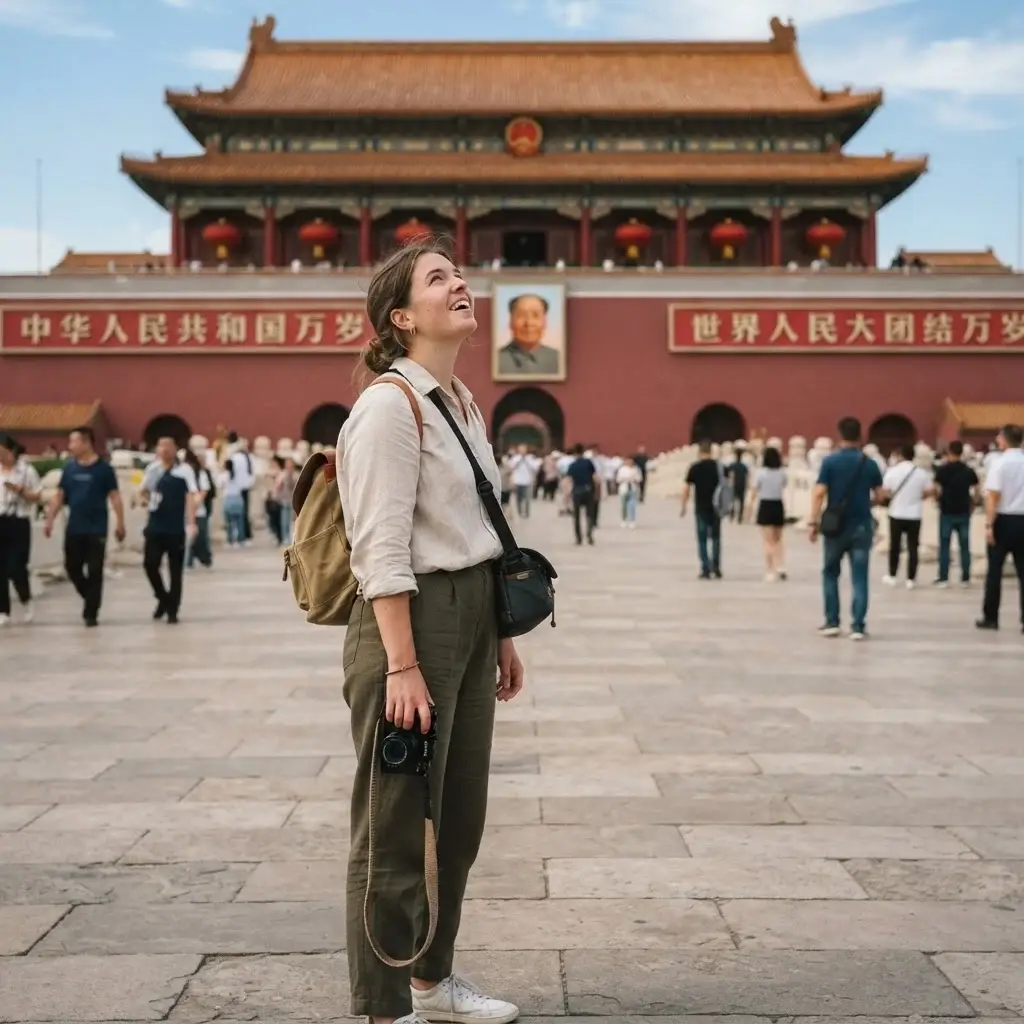
To enter the square, you must pass through a security checkpoint with airport-style baggage scanners. You must bring your physical passport with you, or the guards will turn you away.
Walk across the open square to see the Monument to the People’s Heroes and the Great Hall of the People. The atmosphere here is intense, patriotic, and crowded with domestic tourists from all over China. It is an incredible place to simply people-watch and realize exactly how far from home you are.
From the square, walk through the underground tunnel beneath Chang’an Avenue to arrive at the Tiananmen Gate, which features the famous massive portrait of Chairman Mao. Pass through this gateway to enter the outer courtyards of the imperial palace.
- Subway Stop: Tiananmen East or Tiananmen West (Line 1).
- Insider Secret: You must reserve your entry tickets online days in advance. Do not show up expecting to buy a ticket at a window; the daily spots sell out quickly.
- Navigation Tip: Walk from south to north. The natural flow of the city’s historic axis runs this way, leading you directly into the Forbidden City.
Mid-Day: The Imperial Secrets of the Forbidden City
Step across the threshold into the Forbidden City, officially known as the Palace Museum. This massive complex contains 9,999 rooms and served as the home for 24 emperors across the Ming and Qing dynasties.
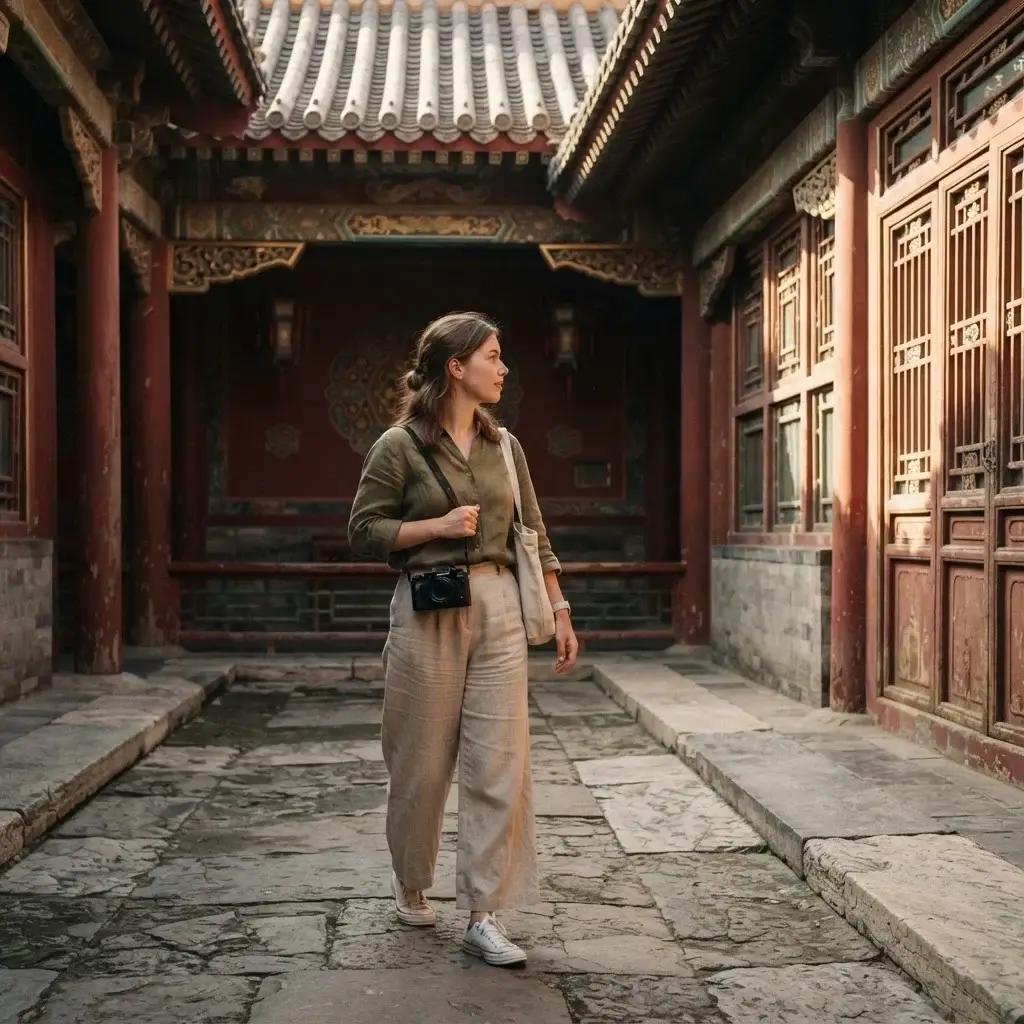
The architecture is breathtaking, characterized by deep red walls, golden-glazed roof tiles, and white marble terraces.
As you walk through the Hall of Supreme Harmony, imagine the court officials kneeling in the courtyard while the emperor sat high on his dragon throne. While the main central axis gives you a sense of the immense scale of the palace, my favorite spots are the quiet side courtyards to the east and west. This is where the emperors’ concubines lived, and these areas feature beautiful, intimate gardens, antique clocks, and intricate jade carvings away from the heavy tour groups.
Palace Museum Layout Strategy:
To fully appreciate why this complex is so important to global heritage, you can read about its preservation on the UNESCO World Heritage listing page for the Imperial Palaces of the Ming and Qing Dynasties. It takes hours to truly see the scale of this architectural marvel, so take your time and do not rush.
- Culinary Tip: There are small snack shops inside the palace compound, but they can be pricey. Pack a couple of protein bars and a refillable water bottle in your daypack to keep your energy up.
- Insider Secret: Rent the electronic audio guide at the entrance gate. It automatically triggers stories through your headphones based on your GPS location as you move between courtyards.
Late Afternoon: Panoramic Views from Jingshan Park
Exit the Forbidden City through the northern gate and cross the street directly into Jingshan Park. This park features a large, artificial hill built entirely from the earth excavated when workers dug the palace moat centuries ago.
Follow the stone steps up to the top of the central pavilion. It is a short but steep ten-minute climb that will make your legs burn, but the view from the top is worth every step. On a clear day, you can look south and view the entire layout of the Forbidden City. You can see the endless rows of golden roofs stretching out below you, giving you a true understanding of the palace’s massive scale.
- Insider Secret: Look for the old locust tree on the east side of the hill. This is the historic spot where the last Ming emperor tragically ended his own life as rebel forces breached the city walls.
- Navigation Tip: The path up the hill can be slick after rain. Use the handrails and take your time on the older stone steps.
Evening: Getting Lost in the Nanluoguxiang Hutongs
End your first day by diving into the Hutongs, which are Beijing’s ancient gray-brick alleyway neighborhoods. Take the subway or a short taxi ride over to Nanluoguxiang. While the main street of this hutong is very commercialized and packed with trendy souvenir shops, the real magic happens when you turn down the quiet side lanes running east and west.
Here, you will see the authentic daily life of local Beijingers. You will pass older men sitting on tiny plastic stools playing intense games of Chinese chess, wet laundry hanging across overhead power lines, and neighbors chatting outside communal public bathrooms. It feels worlds away from the glassy corporate skyscrapers just a few blocks over.
- What to Eat: Stop by a local window stall and order Chuan’r (spicy lamb skewers seasoned with heavy cumin and chili powder) or Jianbing (a savory egg crepe folded with crispy wonton crackers, scallions, and hoisin sauce).
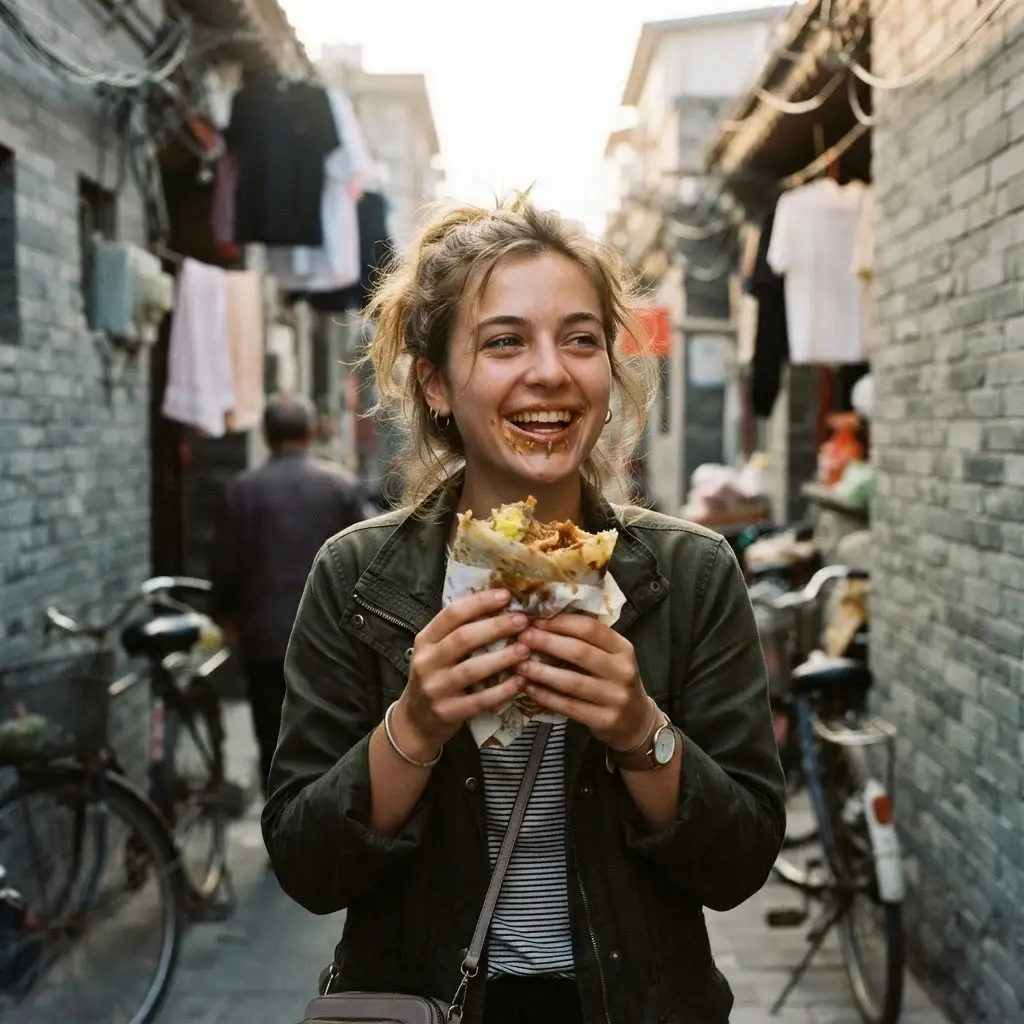
- Wash it down with a classic Plum Syrup drink (Suanmeitang) from a glass bottle.
- Navigation Tip: Hutongs can be a maze, and GPS can sometimes drop out between the narrow walls. Use prominent landmarks like the Drum Tower or major subway exits to keep your bearings.
Day 2: Standing on the Spine of the Dragon
On your second day, you will head outside the city center to cross a major adventure off your list: walking along the ancient stone battlements of the Great Wall.
DAY 2 ROUTINE:
Travel to Mutianyu —> Wall Hike & Watchtowers —> Toboggan Ride down —> Sifang Street
(Early Morning) (Mid-Day) (Early Afternoon) (Evening)
Morning: Traveling Smoothly to the Mutianyu Section
There are several sections of the Great Wall near Beijing, but for an authentic, breathtaking experience that balances accessibility with fewer crowds, go to Mutianyu. Avoid Badaling, which is often completely overwhelmed by massive tour buses and heavy crowds. Mutianyu is surrounded by thick, vibrant pine forests and features beautifully restored watchtowers that wind along the ridges of the mountains.
To get there independently without a tour group, take the early morning Mubus or Zanbus tourist shuttle. These buses depart from central locations like the Swissôtel near Dongsishitiao subway station around 7:30 AM. They drive you directly to the wall’s ticket office in about an hour and a half, saving you from navigating multiple complicated local public buses.
- Insider Secret: Book your shuttle bus ticket on Alipay a day in advance. The price usually includes your main entrance ticket to the wall scenic area.
- Navigation Tip: When you arrive at the tourist center, you must ride an official internal shuttle bus up to the actual base of the mountain where the cable cars sit.
Mid-Day: Hiking and Exploring the Watchtowers
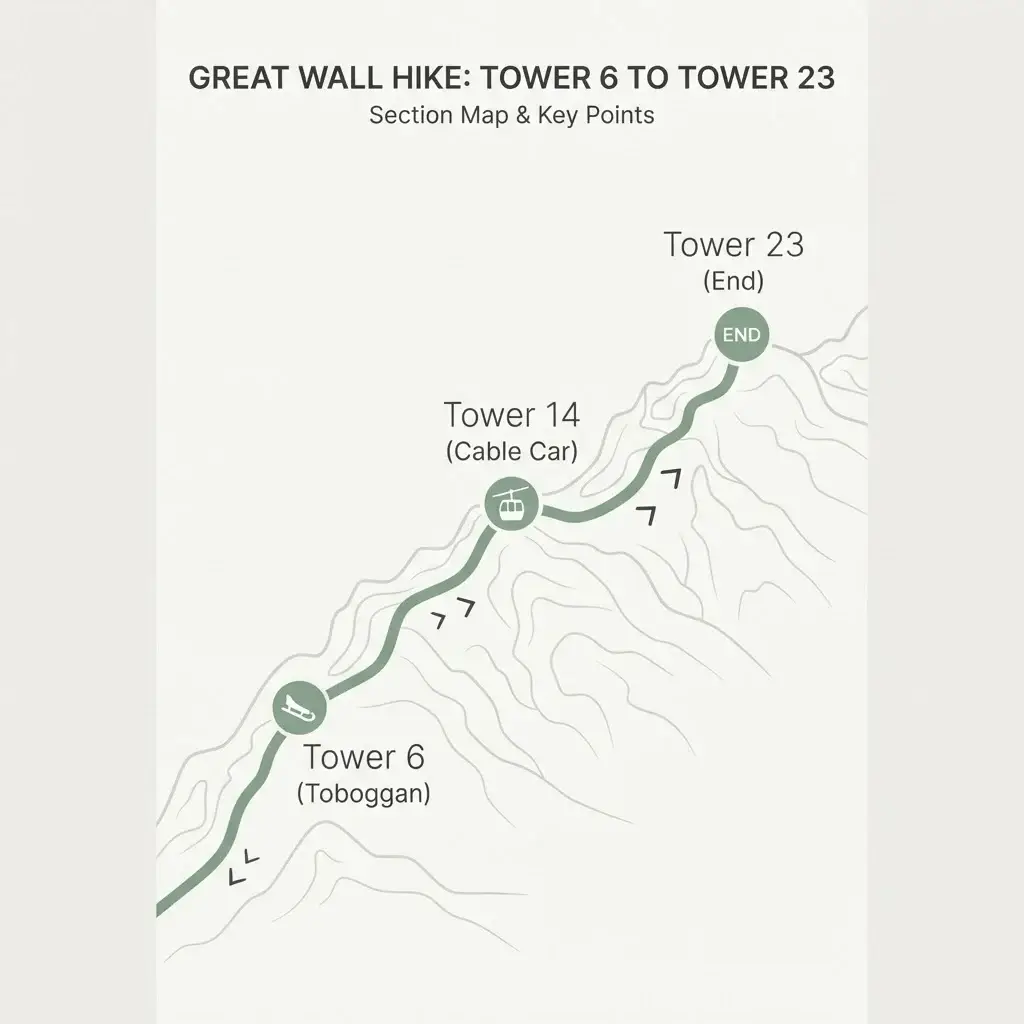
Once you reach the base of the wall, you have choices to make. You can hike up the steep mountain trail via thousands of stone steps, or you can take a smooth cable car ride up to Watchtower 14. I highly recommend taking the cable car up so you can save your leg muscles for walking on the actual wall itself.
From Watchtower 14, start walking west toward Watchtower 23. The wall climbs steadily up the mountain ridges, and the views of the stone ramparts disappearing into the blue horizon are unforgettable. As you walk through the dark, stone watchtowers where soldiers once stood guard against ancient invasions, look closely at the bricks. You can still see the historic makers’ stamps carved into the clay centuries ago.
The path between towers 14 and 20 is beautifully restored and safe, but it features steep sections with uneven steps of varying heights. When you look out over the parapets at the mountains stretching away into the distance, you will understand why this ancient barrier remains an enduring symbol of human determination.
- Insider Secret: If you push past Watchtower 20, you will reach the unrestored “wild” section of the wall. The path here is blocked by a wall of bricks and warning signs. Respect the safety boundaries and stay on the restored side to protect the historic structure.
- Navigation Tip: Keep your hands free. Use a small backpack for your camera and belongings so you can hold onto the iron handrails during the steepest climbs.
Afternoon: The Toboggan Ride Down the Mountain
After exploring the high ridges, walk back down the wall toward Watchtower 6. From here, instead of taking a slow chairlift back down to the valley floor, you can enjoy a fun ride on the Mutianyu Toboggan.
You sit in a small, single-person metal sled on a winding stainless-steel track that snakes all the way down the side of the mountain. You control your speed with a simple hand lever—push forward to go faster, pull back to brake. It is a fun, fast, and exciting way to end your mountain adventure, and it will put a massive smile on your face after hours of intense walking.
- Culinary Tip: At the base of the mountain, skip the western fast-food chains and head to the small local village restaurants. Order a dish of stir-fried wild mushrooms caught right in the local mountains and a plate of fresh scallion pancakes.
- Navigation Tip: Keep a safe distance from the sled ahead of you on the toboggan track. The track staff will wave flags to tell you when to slow down around the tightest curves.
Evening: A Hearty Beijing Duck Reward
After riding the shuttle bus back into central Beijing, your legs will be tired, and you will be hungry. Treat yourself to the city’s most famous culinary masterpiece: Peking Roasted Duck (Beijing Kaoya). Head to an authentic local restaurant chain like Siji Minfu or Dadong.
The chef will wheel a whole roasted, glistening duck right to the side of your table and carve it with incredible precision. They slice the skin away into thin, crispy melt-in-your-mouth pieces, followed by tender ribbons of meat.
- What to Eat: Eat it the traditional way: take a thin, warm flour pancake, dip a piece of duck into sweet bean sauce, add some slivered cucumbers and scallions, wrap it up like a little burrito, and enjoy the perfect balance of savory and sweet.
- Insider Secret: Expect a long wait at popular duck restaurants during peak dinner hours. Arrive by 5:00 PM to pull a waiting number from the host station before the rush begins.
Day 3: Spiritual Harmony and Imperial Gardens
On your third day, you will slow your pace to focus on Beijing’s spiritual history and beautiful historic landscaping. You will explore a sacred temple complex and a massive summer lake retreat used by royals to escape the city heat.
DAY 3 ROUTINE:
Temple of Heaven —> Local Taichi Watching —> Summer Palace Boat Ride —> Suzhou Street
(Morning) (Mid-Morning) (Afternoon) (Late Afternoon)
Morning: The Symmetry of the Temple of Heaven
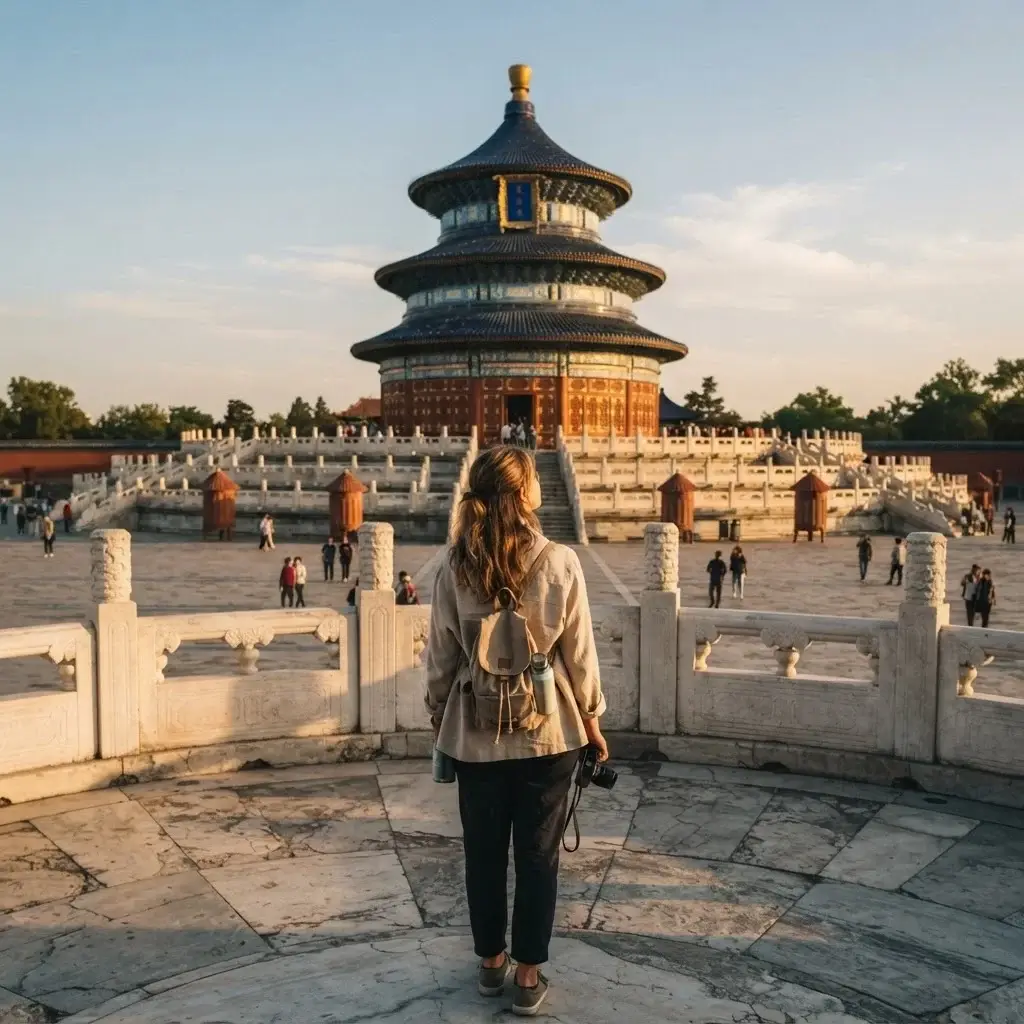
Start your morning at the Temple of Heaven, a massive park complex where Ming and Qing emperors came twice a year to pray for good harvests. The main building here is the Hall of Prayer for Good Harvests, a stunning triple-gabled circular wooden building built entirely without a single nail. The deep blue roof tiles are designed to mimic the color of the sky, and the building sits on a three-tiered white marble base that makes it look like it is floating.
Walk south along the raised stone pathway to the Imperial Vault of Heaven, which is surrounded by the famous Echo Wall. Finish your tour at the Circular Mound Altar, an open marble platform where the emperor stood at the exact geometric center of the empire to speak directly with the heavens.
- Subway Stop: Tiantandongmen (Line 5, Exit A).
- Insider Secret: Enter through the East Gate early, around 7:30 AM. This is when hundreds of local seniors gather in the long corridors to sing traditional songs, practice calligraphy on the pavement with large water brushes, and play shuttlecock. It is one of the most joyful cultural experiences you will see in the city.
Afternoon: The Lake Views of the Summer Palace
Take Subway Line 4 straight up to the northwest part of the city to spend your afternoon at the Summer Palace. This is a massive, sprawling imperial park centered around the peaceful waters of Kunming Lake and the steep slopes of Longevity Hill.
Walk along the Long Corridor, a beautifully covered wooden walkway that stretches for over 700 meters along the edge of the lake. Every single wooden beam overhead is painted with unique scenes from traditional Chinese mythology and classical literature.
Summer Palace Core Route:
East Palace Gate (Enter) —> Hall of Benevolent Longevity —> Long Corridor
—> Marble Boat —> Kunming Lake Ferry Boat —> South Lake Island (Exit)
Walk to the end of the corridor to see the famous Marble Boat, a massive pavilion made of stone and glass built by the Empress Dowager Cixi using funds originally meant for the imperial navy. Take a traditional wooden ferry boat across the lake to the South Lake Island, where you can look back across the water at the temples climbing up Longevity Hill. To get a better sense of how this fits into China’s broader travel landscape, you can browse through the regional travel maps on the Lonely Planet China guide page.
- Insider Secret: Climb up to the Tower of Buddhist Incense on Longevity Hill. The steep stairs are a workout, but the panoramic view of the lake and the distant hills is gorgeous.
- Navigation Tip: The Summer Palace is huge and requires miles of walking. If you are feeling tired, hire one of the small electric self-drive boats at the pier to cruise around the lake at your own pace.
Evening: Shopping and Dining along Suzhou Street
Before exiting the Summer Palace grounds near the North Gate, visit Suzhou Street. This is a unique canal waterway built to mimic the historic water towns of southern China. The banks are lined with traditional, old-style storefronts where actors dressed in Qing dynasty clothing once pretended to be shopkeepers so the emperor and his family could experience shopping like ordinary citizens.
Canal Waterfront Walkway:
After leaving the park, head to the nearby Zhongguancun district or Wudaokou for dinner. This area is packed with universities, making it a great place to find affordable, lively restaurants.
- What to Eat: Try a bowl of traditional Zha jiang mian (thick wheat noodles topped with a rich, savory dark soybean paste, minced pork, fresh shredded cucumbers, and crisp bean sprouts). It is a comforting, classic Beijing staple.
- Navigation Tip: The walkways along Suzhou Street’s canal do not have guardrails. Keep a close eye on your footing when navigating the narrow stone paths next to the water.
Day 4: Art Districts and Modern Architecture
On your fourth day, you will shift your focus away from ancient dynasties to look at Beijing’s cutting-edge contemporary art scene and its massive, futuristic modern architecture.
DAY 4 ROUTINE:
798 Art District —> Factory Galleries —> Olympic Park Tour —> Sanlitun Nightlife
(Morning) (Mid-Day) (Afternoon) (Evening)
Morning: Industrial Vibes at the 798 Art District
Take a taxi or bus out to the northeast corner of the city to explore the 798 Art District. This trendy neighborhood is located inside a massive complex of abandoned 1950s state-run factories that once produced military electronics. In the early 2000s, local artists began moving into the empty buildings, turning the industrial spaces into galleries, cafes, and studios.
Walk down the tree-lined streets to see how old communist slogans painted on the concrete walls now blend with modern sculptures, colorful graffiti murals, and high-end fashion boutiques. The industrial architecture features beautiful East German Bauhaus designs, with large angled windows that flood the gallery spaces with natural light.
- Insider Secret: Visit the UCCA Center for Contemporary Art. This is the anchor gallery of the district and features some of the best rotating modern art exhibitions in Asia.
- Navigation Tip: The district is a pedestrian-only zone, so have your taxi drop you off at Gate 2 or Gate 4 on Jiuxianqiao Road.
Afternoon: The Structures of Olympic Park
In the afternoon, head over to the Olympic Green to see the iconic structures built for the 2008 and 2022 Olympic Games. The standout attraction here is the National Stadium, universally known as the Bird’s Nest. The exterior is a wild web of crisscrossing steel beams that looks like a giant woven nest.
Olympic Green Promenade:
[Subway Olympic Park] —> [Bird’s Nest Stadium] <—> [Water Cube Aquatic Center]
Right across the open plaza sits the National Aquatics Center, known as the Water Cube. The building’s exterior walls are made of a unique bubble-like plastic material that glows with a brilliant blue light after dark. These buildings showcase the incredible engineering power and modern ambition of 21st-century China.
- Subway Stop: Olympic Park (Line 8).
- Insider Secret: You do not need to pay for an expensive ticket to go inside the stadiums unless there is a special event. The view from the massive public promenade outside is spectacular and completely free.
- Navigation Tip: The plaza is completely open with no shade. Bring a hat and sun protection if you are visiting during the hot summer months.
Evening: The Energy of Sanlitun
Spend your evening in Sanlitun, Beijing’s premier international shopping and nightlife district. The center of the action is Taikoo Li, an open-air shopping complex packed with flagship designer stores, trendy bookstores, and an incredible variety of international restaurants.
This is where Beijing’s young, fashionable crowd comes to hang out, making it an amazing spot for people-watching. It shows you an entirely different side of the city—one that is globalized, wealthy, and deeply connected to international trends.
- What to Eat: Skip the western chains and look for a local modern Yunnan restaurant like Middle 8th. Order their famous pineapple sticky rice, spicy lemongrass chicken, and refreshing wild mushroom hotpot.
- Navigation Tip: Sanlitun can get congested with traffic on Friday and Saturday nights. Take the subway to Tuanjiehu station (Line 10) and walk ten minutes west to avoid getting stuck in a stationary taxi.
Day 5: Ancient Monks and Local Markets
On your final day in the city, you will visit Beijing’s most vibrant Buddhist temple before diving into local markets to pick up authentic souvenirs and sample delicious street food snacks.
DAY 5 ROUTINE:
Morning: Incense Clouds at the Lama Temple
Start your morning at the Yonghe Temple, universally known as the Lama Temple. This is the most important Tibetan Buddhist temple outside of Tibet. Originally built as a palace for a prince, it was later converted into a monastery housed by saffron-robed monks.
As you walk through the successive courtyards, you will pass through thick clouds of fragrant incense smoke while local worshippers bow before golden statues. The final building, the Pavilion of Infinite Happiness, holds the temple’s crown jewel: a jaw-dropping 18-meter-tall statue of Maitreya Buddha carved from a single solid block of white sandalwood.
Lama Temple Progressively Higher Courtyards:
Entrance Gate —> Hall of Heavenly Kings —> Hall of Harmony —> Pavilion of Maitreya
- Subway Stop: Yonghegong Lama Temple (Line 2 or Line 5).
- Insider Secret: Your entrance ticket includes a small, complimentary box of eco-friendly incense discs. You can place them on the communal burners outside each main hall.
- Navigation Tip: Never step directly on the raised wooden thresholds of the temple doorways. This is considered disrespectful in Buddhist culture; always step cleanly over them.
Mid-Day: Quiet Reflection at the Confucius Temple
Just a short five-minute walk across the street from the bustling Lama Temple sits the peaceful Confucius Temple and Imperial Academy. This spot receives far fewer tourists, making it the perfect place to sit quietly under ancient cypress trees and process your entire 5-day trip.
The courtyards are lined with stone steles carved with the names of scholars who passed the rigorous imperial civil service exams centuries ago. The architecture here is minimalist, elegant, and focused on harmony and study.
Imperial Academy Layout:
- Insider Secret: Walk into the central courtyard of the Imperial Academy to view the Biyong Pavilion. This elegant building sits in the middle of a square lotus pond, featuring a circular roof that reflects traditional Chinese ideas about earth and sky.
- Culinary Tip: The nearby Wudaoying Hutong is packed with artisanal coffee shops and vegetarian cafes. Stop here for a slow lunch and enjoy an iced latte away from the main road.
Afternoon: Treasure Hunting at Panjiayuan Market
Spend your final afternoon at the Panjiayuan Antique Market. This massive open-air market features thousands of stalls selling everything from old propaganda posters and porcelain tea sets to jade bracelets, traditional calligraphy brushes, and antique furniture.
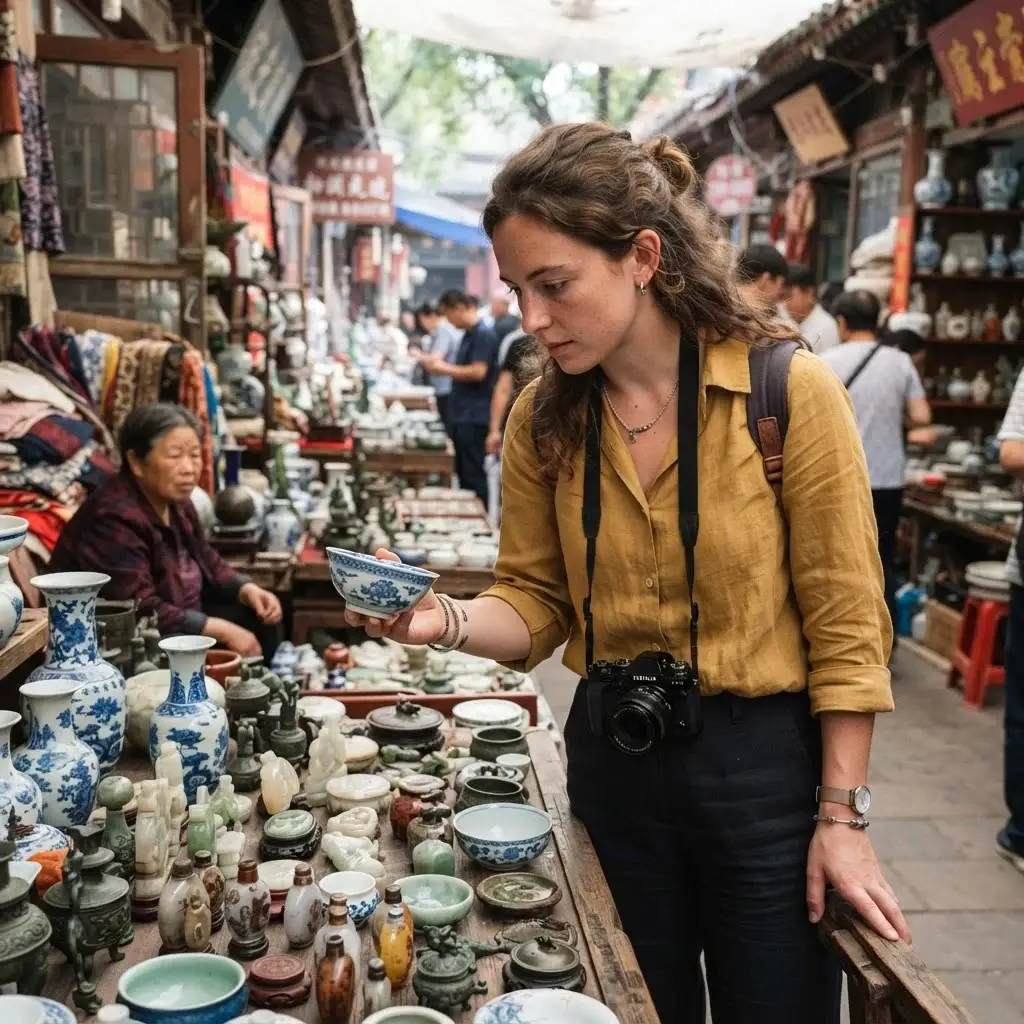
It is an absolute paradise for souvenir hunters. While many items are modern reproductions rather than genuine antiques, walking through the crowded aisles feels like exploring a massive, living museum of Chinese material culture.
- Subway Stop: Panjiayuan (Line 10).
- Insider Secret: Weekend mornings (Saturday and Sunday) are the best times to visit. This is when countryside vendors travel to the city to lay out their wares on ground blankets in the market’s rear sections.
- Navigation Tip: Keep your wallet and phone secure in a front pocket or zipped pouch, as the market aisles can get tightly packed with shoppers.
Evening: A Sizzling Hotpot Celebration
Celebrate your final night in Beijing with an interactive, festive meal: a traditional Beijing Mutton Hotpot (Shabu Shabu). Head to a respected restaurant like Jiumen Kou or the incredibly popular Haidilao.
Traditional Copper Hotpot Dining:
[ Charcoal Chimney Hotpot ] —> Thinly Sliced Mutton / Beef —> Sesame Dipping Sauce
You will have a traditional copper pot filled with boiling broth sitting right in the center of your table, heated by hot charcoal burning inside a central chimney. You order plates of thinly sliced mutton, fresh beef, leafy greens, mushrooms, and handmade noodles, dipping the ingredients into the boiling broth to cook them right at the table.
- What to Eat: Mix your own dipping sauce at the communal sauce bar. The classic Beijing style uses rich sesame paste mixed with a dash of savory leek flower sauce and fermented tofu sauce. It is warm, rich, and the perfect way to wrap up your mountain and city adventure.
- Insider Secret: If you dine at Haidilao, make sure to order the “noodle dance.” A staff member will come to your table and stretch long ribbons of wheat noodles through the air with acrobatic martial-arts movements before tossing them directly into your boiling pot.
Smart Solutions for Common Beijing Travel Snags
Even with a great itinerary, traveling through Beijing can throw some unexpected challenges your way. Here is how to handle the most common issues like a seasoned pro.
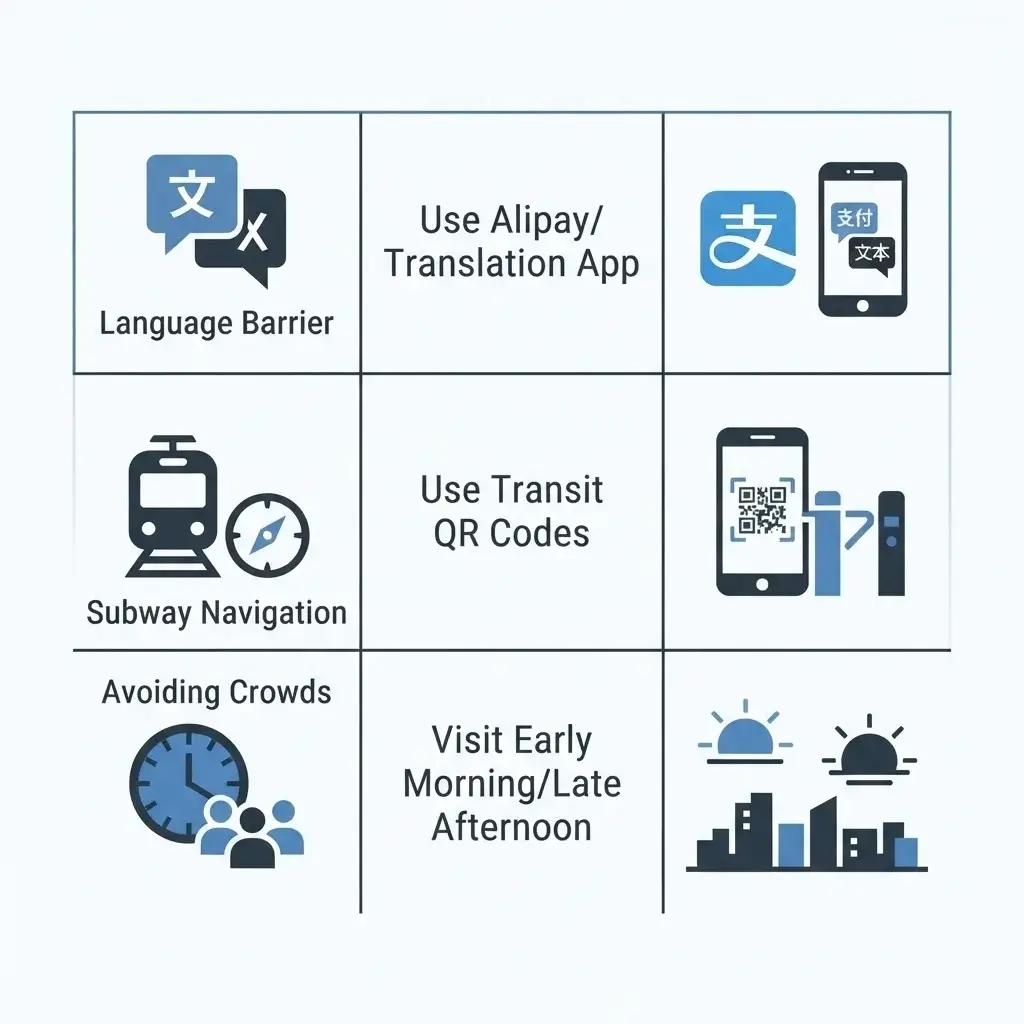
Managing the Language Gap Natively
Very few taxi drivers or small restaurant staff speak fluent English. To handle this easily, use Microsoft Translator or the translation tool built right into your Alipay app. You can type in English, and the app will translate it into written Chinese characters to show the driver or waiter.
When ordering food at smaller local restaurants that do not have English menus, look for QR codes on the table. Scan the code with Alipay to open a digital menu with clear photos of every dish. You can select your items and pay directly through the app without needing to speak a word of Chinese.
Navigating Subway Stations Safely
Beijing’s subway system is modern, incredibly clean, efficient, and fully signposted in English. To buy transit tickets, you can use your Alipay app to generate a digital metro QR code (Transport Code) on your phone screen. Simply scan your phone screen at the electronic turnstiles when you enter and exit the station.
Keep in mind that every single subway station entrance requires a quick security check. You must place your bags on an X-ray conveyor belt, and security guards may check water bottles using a liquid scanner. Give yourself an extra five minutes of travel time to clear security during morning rush hours.
Beating the Tourist Crowds Creatively
Beijing attracts millions of domestic tourists every year. To avoid spending your vacation stuck in long queues, try to structure your sightseeing schedule counter to the main tour groups.
Large domestic tour groups usually hit major sights like the Forbidden City or the Temple of Heaven between 9:30 AM and 2:00 PM. By arriving early when the gates first open at 8:00 AM, or visiting later in the afternoon around 3:30 PM, you can enjoy a much quieter experience with better light for photos.
Packing Guide for Five Days in the Capital
Packing for Beijing depends entirely on the season, but a few essential items belong in your suitcase year-round to ensure your trip runs smoothly.
Footwear Built for Mileage
You will easily walk between 15,000 and 20,000 steps every single day navigating massive imperial courtyards and climbing mountain watchtowers. Leave your fashion heels or brand-new shoes at home. Pack your most comfortable, broken-in sneakers or supportive hiking shoes with thick soles to keep your feet blister-free.
Power for Your Devices
Because you will rely heavily on your phone for navigation, translation, and mobile payments throughout the day, your battery will drain quickly. Carry a reliable, high-capacity external power bank in your daypack.
Note: Chinese airport security is incredibly strict about power bank regulations. Ensure the power capacity labels are clearly printed on the side of the battery shell; if the text is rubbed off or missing, airport security will confiscate it at departures.
Seasonal Apparel Strategies
- Spring/Autumn: Pack lightweight layers. The weather can change from chilly mornings to warm afternoons quickly, and breezy winds are common.
- Summer: The sun can be intense. Pack lightweight, breathable linen clothing, high-SPF sunscreen, and a compact umbrella for sudden summer downpours.
- Winter: Beijing gets bitterly cold, with freezing winds blowing in from Siberia. Pack a heavy down parka, thermal base layers, fleece gloves, and a warm beanie hat to stay cozy while exploring outdoor sights.
Moving Beyond Hesitation
When I was stuck working that uninspiring office job years ago, the thought of navigating a city like Beijing alone felt impossible. I almost let my fears keep me from going. But once you take that first step, download your navigation apps, and pass through the ancient crimson gates of the Forbidden City, that initial anxiety disappears, replaced by pure curiosity and adventure.
Beijing is a deeply rewarding city that rewards the brave, open-minded traveler. It will challenge your perspectives, feed you incredible food, and teach you historic lessons at every turn. Stop waiting for the perfect moment to plan your trip. Use this practical 5-day itinerary for exploring Beijing to take control of your travel plans, book your flights, and head out to experience the history of China firsthand!