
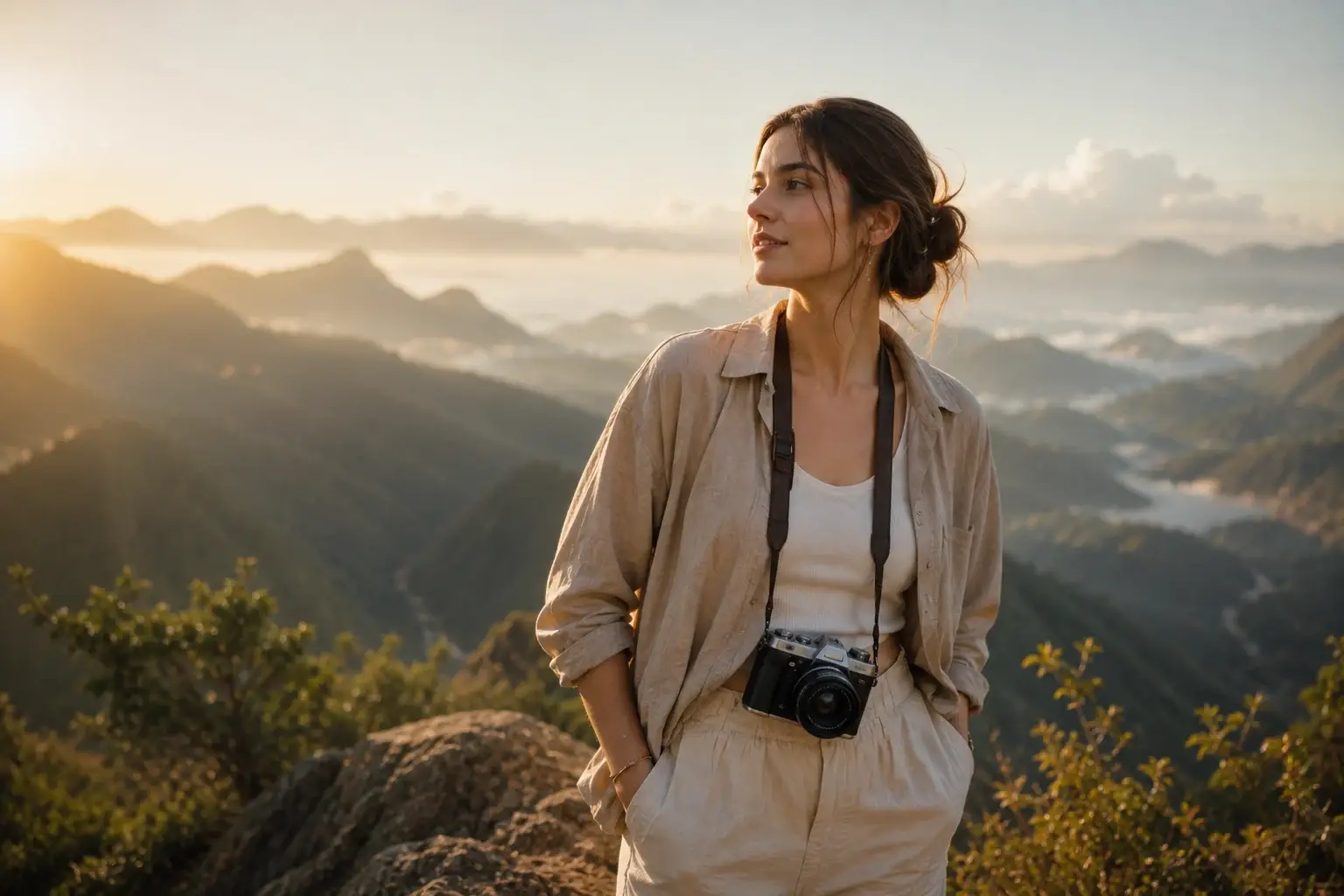
I remember sitting in my tiny, gray cubicle back in New York, staring at a map pinned to my wall. I wasn’t looking at the big, glowing dots that represented my home and my next potential vacation destination. I was looking at the vast, empty space in between. Back then, I thought those gaps were just something to “get through.” I believed the goal of travel was to arrive.
Everything changed the first time I realized that the space between the cities is where the actual life of a journey happens. When I left that office job behind and traded a steady paycheck for the unpredictable, beautiful reality of full-time travel, I learned that a road trip isn’t about the mileage. It is about the people you meet at a roadside diner, the hidden historical markers you stumble upon, and the quiet confidence you build when you navigate an unfamiliar town all by yourself.
If you are planning a route between two major cities, you might feel the same urge to just put the pedal down and get there. But I want to show you how to find the best road trip stops for major cities so that your travel feels less like a commute and more like an unfolding story.
Rethinking the “In-Between” Spaces
When we travel solo, we often prioritize speed because we want to reach the safety or the familiar excitement of a big city. I have been there. I remember the anxiety of driving through rural stretches, wondering if my car would hold up or if I would find a decent place to eat.
To turn these stops into highlights, you have to shift your mindset. Instead of seeing a small town as a delay, see it as an opportunity for cultural immersion. Many of the most memorable meals I’ve had weren’t in the Michelin-starred spots of a metropolis; they were in tiny, family-run cafes two hours outside of them.
Before you head out, I always suggest checking the U.S. Department of State travel safety advisories if you are crossing any borders or entering regions you are unfamiliar with. Even if you are staying domestic, keeping an eye on official guidance is a habit that builds peace of mind, allowing you to focus on the landscape rather than worrying about the unknown.
How to Choose a Stop That Actually Adds Value
Not every roadside stop is created equal. Some are just gas stations with overpriced snacks, and those are fine for logistics, but they aren’t “stops.” A real stop should nourish your curiosity.
When I look for the best road trip stops for major cities, I follow the “rule of three”:
- Historical Significance: Is there a local museum, a preserved main street, or a landmark that tells the story of this specific region?
- Local Flavor: Can I find a spot that serves a dish the region is known for?
- Low-Stress Navigation: Is the stop easy to get in and out of so I don’t feel overwhelmed?
Sometimes, you can find incredible insight by looking at the UNESCO World Heritage list to see if your route passes near any protected sites. These places are often better maintained and offer deeper educational value than random roadside attractions, and they are usually fantastic places for a solo traveler to wander without feeling like an outsider.
The Solo Traveler’s Safety Mindset
Safety is the number one reason many people hesitate to stop in smaller, lesser-known areas. I spent years working as a sightseeing guide in New York, and I can tell you that the vast majority of people you meet on the road are kind and helpful. However, “kind” doesn’t mean “careless.”
I always keep a paper map as a backup to my phone. I also make sure I have the World Nomads travel insurance resources handy on my phone, not just for the coverage, but because their articles on staying safe in transit have taught me so much about how to behave in new environments. Being prepared means you aren’t just reacting to things; you are owning your journey.
When I pull into a town, I look for places with high foot traffic—a central park or a local library. If you are ever feeling uneasy, trust your gut. You are under no obligation to stay anywhere that doesn’t feel right. That is the beauty of a solo trip: you are the captain of your ship, and you can turn around whenever you want.
Culinary Adventures: Eating Outside the City
One of the biggest mistakes travelers make is skipping meals in smaller towns because they think the food will be “boring.” In my experience, the opposite is true. If you are driving through the American South or across the English countryside, the best food is almost always where the locals go.
If you are traveling in a destination where ride-sharing is common, you might consider how the Grab app facilitates local transport and food discovery in various regions. Even if you aren’t using it to get around, the app’s interface is a great way to see what food is popular in a specific zip code. It’s a bit of a “digital cheat code” for finding authentic flavors.
When I stop, I look for places that don’t have menus in three languages. I look for the place with the older sign, the one that has been there for decades. I walk in, sit at the bar if there is one, and I ask the server: “What do you usually eat here?”
Practical Tips for Stress-Free Navigation
Driving solo can be exhausting. To keep your energy up, I recommend planning your stops based on your “brain power” levels.
- Early Morning: Use this time for the big, city-to-city drives when you are fresh.
- Mid-Day: Stop for your “cultural” visit when it is bright outside.
- Late Afternoon: Aim to arrive at your next major city before dark so you aren’t trying to navigate confusing urban traffic for the first time at night.
If you are planning to travel internationally, please make sure you review the CDC Travelers’ Health information to ensure you understand any regional health risks, such as local food safety tips or necessary vaccinations. It sounds like a “boring” adult thing to do, but it is actually a freedom thing. Knowing you are healthy and prepared means you can say “yes” to an impromptu street food snack without a second thought.
Finding Inspiration in the Quiet Moments
The best road trip stops for major cities aren’t just about the geography; they are about the mental space. When I was teaching in Thailand, I learned that the journey is just as important as the arrival. You can look at the official tourism guide for Thailand to see how they highlight the “secondary cities” that are often more rewarding than the busy capital.
The same applies to your road trip. If you are driving from Chicago to Detroit, look at the towns along the Great Lakes. If you are driving from New York to Washington D.C., explore the historic towns in Pennsylvania. Don’t look for the “perfect” stop. Look for the stop that looks interesting enough to warrant an hour of your time.
My best memories are the ones I didn’t plan. It was the time I stopped in a random town in France because I saw a sign for a bakery, and ended up sitting in a garden with a stranger who told me the entire history of the village. If I had just stayed on the highway to reach my destination, I would have missed the best part of the trip.
Final Encouragement for Your Journey
If you are sitting there reading this, thinking, “I want to do this, but I’m afraid,” I hear you. I felt that fear every single time I packed my bag for a new trip. But here is the secret: the fear doesn’t go away. You just get better at bringing it along for the ride.
Start small. Pick a trip that is only two or three hours long. Choose one stop in the middle. Spend an hour there. If you love it, great. If you don’t, you learned something about yourself and your preferences. You aren’t competing with anyone. You aren’t writing a book or filming a movie—you are living your life.
Stop waiting for the perfect weather, the perfect budget, or the perfect traveling companion. You are the only companion you need. Grab your keys, open your map, and go find the best road trip stops for major cities that speak to your own unique curiosity.



