
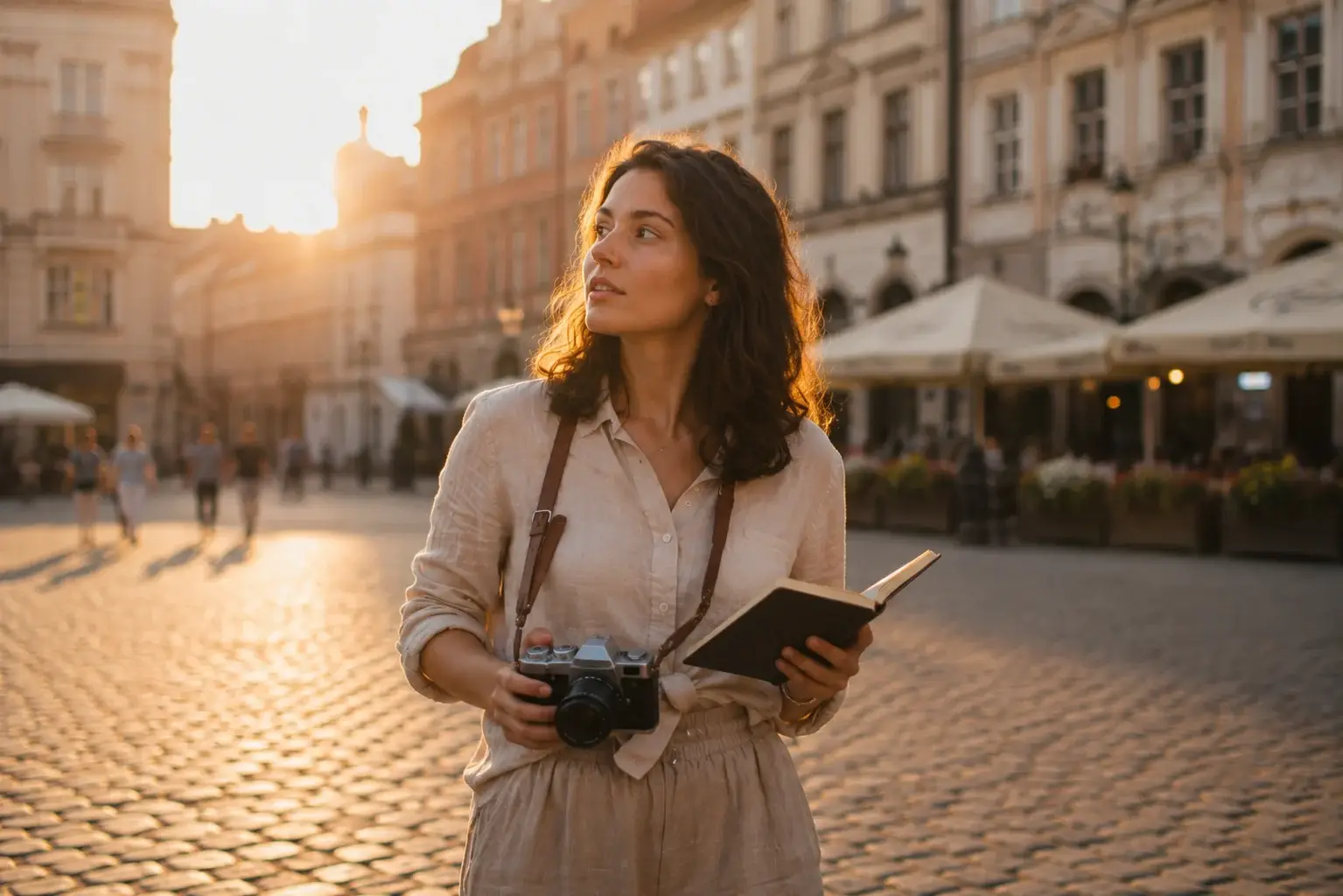
When I first started traveling, I was a total mess. I would spend hours scrolling through social media, saving thousands of pretty pictures of sunsets in Greece or cafe corners in Paris. I had a digital “vision board” that looked like a dream, but when I actually landed in those cities, I had no idea how to move from point A to point B. I didn’t know what to eat, how to stay safe, or how to see the places that weren’t just for the cameras.
Back when I was working as a sightseeing guide in New York, I saw tourists do the same thing every single day. They were stuck on the “tourist loop,” missing the real heart of the city because they didn’t have a plan beyond what they saw in a quick social media clip.
Everything changed for me when I started treating my travel research like a project. I stopped collecting random images and started curating secret city itineraries Pinterest boards. It’s not just about pinning a photo of a mural; it’s about pinning a system. If you want to move from being a dreamer to a doer, here is how I master the art of the board.
Why Your Current Pinning Habits Are Stalling Your Travels
Most people use Pinterest like a digital scrapbook. They pin a beautiful street in Tokyo or a cozy bed-and-breakfast in London. But here is the secret: a picture of a street is not an itinerary. If you want to travel solo, you need more than inspiration; you need intelligence.
When I lived in Thailand teaching English, I learned quickly that the difference between a stressful trip and a life-changing one is the depth of your research. I started creating boards that focused on logistics rather than just aesthetics. Instead of “Paris Dreams,” my board became “Paris: Transit, Transit, and Markets.”
The goal of your board should be to remove the “what now?” feeling that happens when you step off a train in a foreign city. When you have a plan that includes where to eat, how to get around, and which neighborhoods to walk through, your anxiety levels drop. You aren’t just a tourist; you are a traveler who knows her way around.
The Foundation: Building Your Research Architecture
Before you start pinning, you need a structure. I break my boards down into four specific categories. If a pin doesn’t fit into one of these, it doesn’t get saved.
First, I focus on safety and entry. Before you even think about the fun stuff, you need to know if you can actually get there and stay safe. I always keep a tab open for the latest updates on entry requirements and safety ratings to ensure I’m not planning a trip to a place with restricted access. It’s not the most exciting part of the process, but it is the part that gives you the freedom to explore without fear.
Second, I look for “local-first” content. I want to know where the locals go for breakfast. When I was backpacking through Europe, I realized that if you eat where the people who live in the city eat, you get better food at a fraction of the cost. Look for blog posts or articles that break down specific, non-touristy neighborhoods.
Third, I add “transportation hacks.” If you are in Southeast Asia, for example, knowing how to use local apps can be a total game-changer. I often check out how ride-sharing services work for travelers before I land, so I don’t get scammed by rogue taxis at the airport. This small bit of prep work builds so much confidence.
Finally, I include “emergency buffers.” I pin the addresses of local clinics and contact info for the nearest embassy. I know it sounds intense, but having this info on your board means you never have to scramble if something goes wrong. I always suggest keeping an eye on destination health advisories and food safety tips as a standard part of your pre-departure routine.
Curation Strategy: Moving Beyond the Pretty Picture
How do you find the “secret” stuff? Most people only see the first page of search results. To find the real hidden gems, you have to dig deeper. I search for terms like “local blogs [city name]” or “neighborhood guides [city name].”
When you find a pin, look at the source. Is it a generic travel agency trying to sell you a package tour, or is it a solo traveler describing their actual day? I always prioritize the latter.
If I’m planning a trip to a place with a lot of history, I often look for official UNESCO World Heritage site descriptions to understand the value of the place, not just its visual appeal. This helps me prioritize my time. If I only have three days in a city, I want to spend my energy on the places that have deep cultural significance, not just the “instagrammable” wall that has a two-hour line.
Mapping Your Itinerary: The Logical Flow
Once your board is full of great, practical content, it’s time to move it from Pinterest to reality. I take my pins and map them out chronologically.
I start with the “Must-See” cultural sites, then I look for the “Local Gems” I pinned around those areas. This saves hours of travel time. I remember when I was in China, I wasted half a day going back and forth across the city because I didn’t group my activities. Now, I use my Pinterest boards to cluster my days geographically.
If I am visiting a place like Thailand, I spend time on the official tourism authority destination guides to make sure I’m not accidentally visiting during a time when sites are closed for local holidays. Being respectful of local culture and schedules is part of being a seasoned traveler.
The Solo Traveler’s Secret Weapon: Safety and Flexibility
Solo travel is the best way to grow, but it requires being smart. My secret city itineraries Pinterest boards always include a “Safety” section. I pin advice on how to navigate at night, which neighborhoods to avoid, and how to blend in.
I don’t just rely on my gut; I use resources to stay informed. I often review travel insurance guidance and safety advice to make sure I have a plan for unexpected challenges. Knowing you have support makes you feel much more comfortable stepping out on your own.
Don’t be afraid to leave the itinerary behind, either. If you meet someone at a hostel who tells you about a hidden garden, go! The itinerary is your foundation, not your prison. It gives you the confidence to wander, knowing that you have a fallback plan if you get tired or overwhelmed.
Culinary Explorations: Eating Like a Local
One of the biggest mistakes travelers make is eating near major attractions. The food is expensive, and it’s usually watered down for tourists. My Pinterest boards are heavily focused on food. I search for “best [city] street food” or “neighborhood markets.”
When I find a pin about a local dish, I write down the name of the dish in the local language. Being able to point to a menu and say the name of the food shows respect and often gets you a smile from the cook. I always look for markets that are at least a few blocks away from the main square.
If you are looking for a general vibe check before you go, I find destination overview pages to be helpful for understanding the regional food culture. It’s about learning what is seasonal and what is traditional before you show up.
Refining Your Boards: The Ongoing Process
Your Pinterest board should never be finished. It is a living document. Even while I’m on the trip, I continue to pin things. If I find a coffee shop I love, I’ll add it to the board so I can remember it for next time or share it with a friend.
This process helps you shift from a consumer of travel content to a creator of your own journey. You aren’t just following someone else’s path; you are building your own. You are observing, recording, and learning. That is what travel is all about.
It’s easy to feel like you don’t know enough when you are just starting. But the truth is, no one knows everything. The “experts” are just people who did the research, made a few mistakes, and kept going. Use your boards to turn your fear into a checklist. When you have a checklist, fear doesn’t stand a chance.
Final Thoughts on Your Solo Journey
Leaving my office job to become a traveler was the scariest and best decision of my life. I didn’t have a massive budget, and I didn’t have a perfect plan. I had curiosity, and I had my own little system of notes and saved links that eventually became my secret city itineraries Pinterest boards.
You don’t need a lot of money to start exploring. You need time, patience, and the willingness to look beyond the surface. Stop pinning for the sake of the aesthetic and start pinning for the sake of the adventure. Your journey is waiting, and with a little bit of smart organization, you’ll be ready to take the first step with total confidence.



