
Hey there, fellow traveler. I know exactly how you feel when you look at a map of Boston. You have forty-eight hours, a small suitcase, and a massive desire to experience a city that has spent over four centuries building its character. When I first stepped away from my soul-crushing corporate cubicle back in New York to build a life on the road, I used to panic about time. I thought if I didn’t see every single museum, monument, and historic brick, my trip was a failure.
But my years working as a certified sightseeing guide taught me a secret that changed how I travel forever: a city is not a checklist.
You do not need a week to fall in love with Boston, and you definitely do not need to spend your weekend running until your feet bleed. You can experience the cobblestones, the salt air, the revolutionary spirit, and the incredible food neighborhoods at a pace that actually lets you breathe. Let’s look at exactly how to see the best of Boston in 2 days without rushing through the magic.
The Master Strategy for a Two-Day Boston Footprint
Before we look at the specific streets, we need to talk about how Boston is shaped. This is a walking city, built long before cars existed. The roads do not follow a neat grid like my old home of Manhattan. Instead, they curve, bend, and sometimes change names for no apparent reason. That is part of the charm, but it can also trick you into wasting time if you do not plan your geography.
The secret to a stress-free two days is splitting the city into two distinct geographic zones. On your first day, we are going to focus on the historic core, the famous Freedom Trail, and the beautiful, historic neighborhoods of Beacon Hill and the North End.
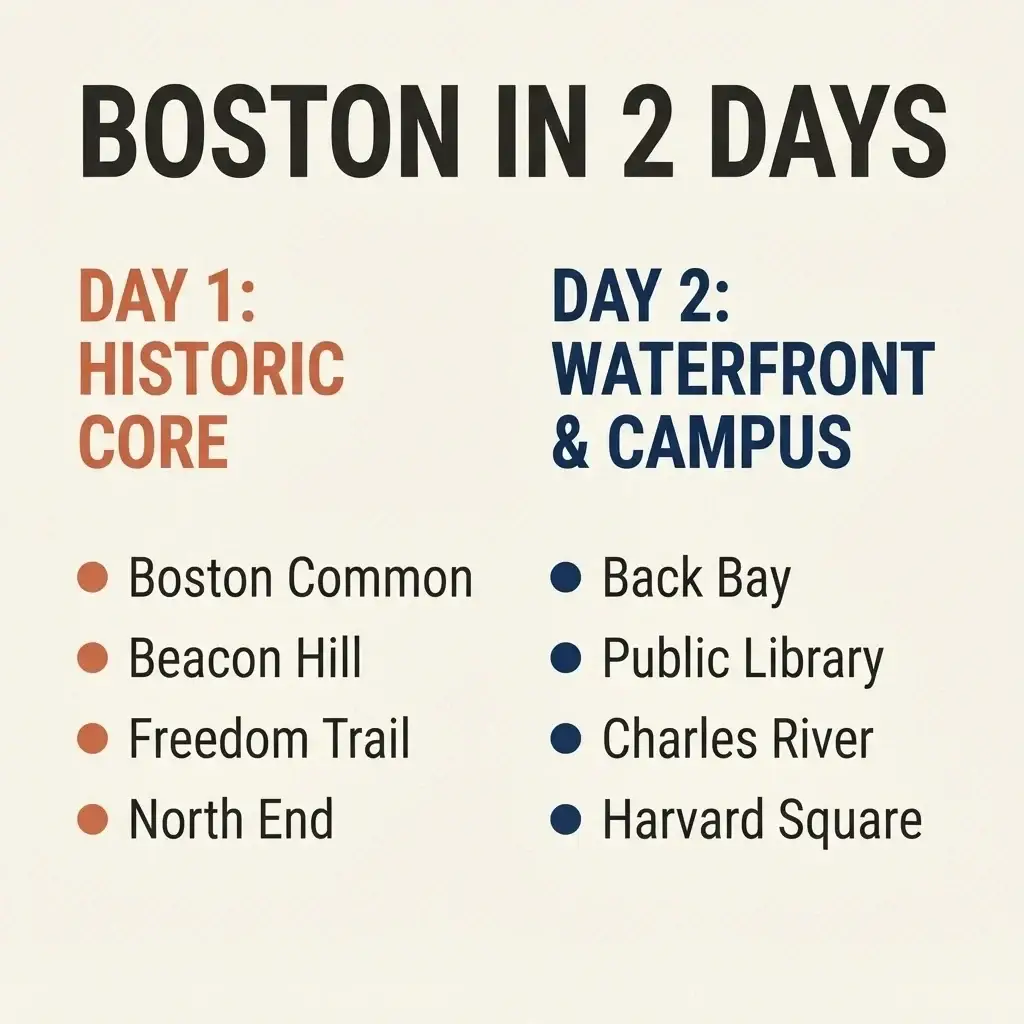
On your second day, we will move toward the water, explore the cultural side of the Back Bay, and cross the river into Cambridge.
By keeping your days localized, you will spend your time looking at beautiful buildings rather than staring at the inside of a subway car. Pack your most comfortable pair of sneakers. We are going to walk through history, but we are going to do it with a hot coffee in hand and plenty of time to sit on park benches.
Day 1: Cobblestones, Revolution, and Authentic Cannoli
[Morning: Boston Common & Beacon Hill] ➔ [Midday: The Freedom Trail Core] ➔ [Afternoon & Evening: The North End]
Morning: The Green Heart and the Most Photographed Street
We start our journey at the absolute center of Boston’s soul: the Boston Common. Established in 1634, this is the oldest public park in America. When you stand here in the morning light, you are standing on ground where British soldiers camped, where colonial cattle grazed, and where public speeches shaped the nation.
Walk over to the Frog Pond, watch the squirrels, and take a deep breath. Just across Charles Street lies the Boston Public Garden, famous for its iconic Swan Boats. It feels completely different from the Common; it is manicured, peaceful, and filled with massive weeping willows hanging over the lagoon.
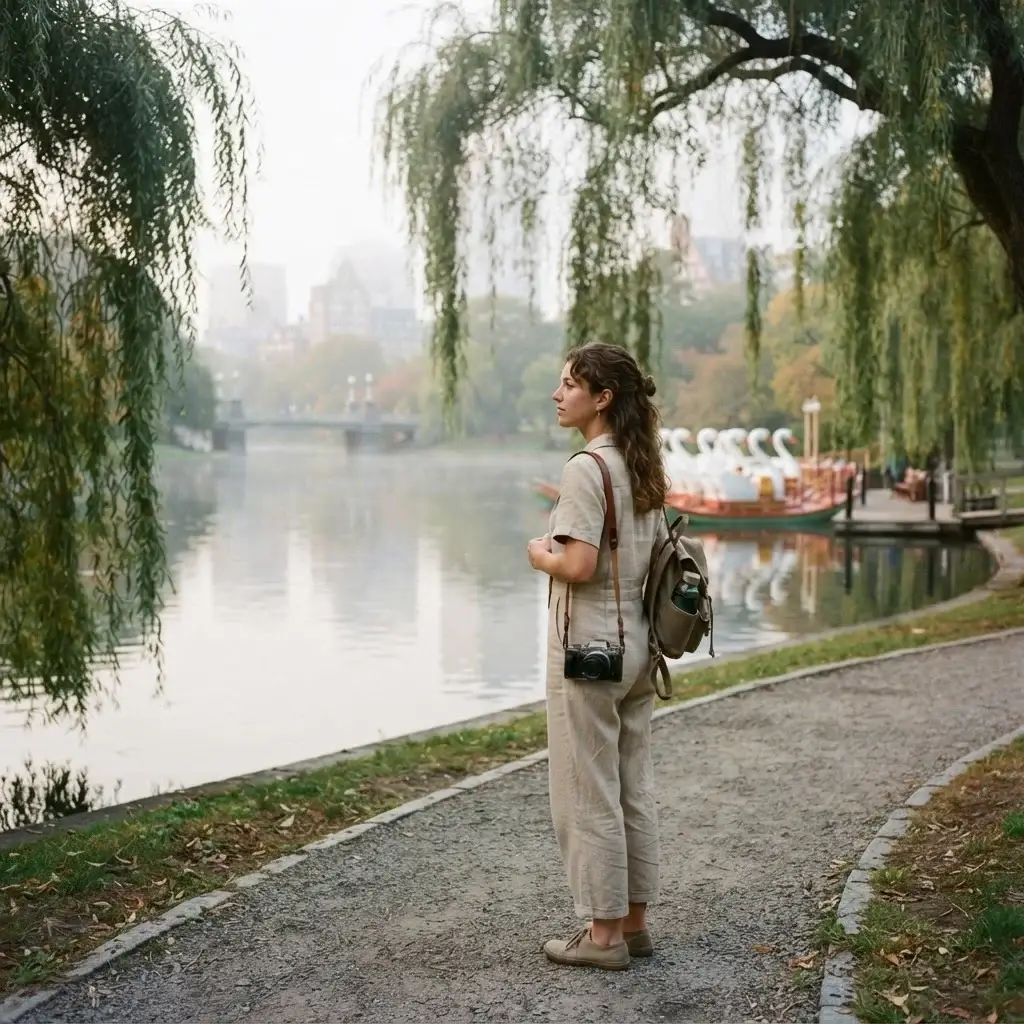
Insider Secret: Skip the long afternoon lines for the Swan Boats by walking through the Public Garden right around 9:00 AM. Even if you do not ride them, seeing them glide out across the water in the quiet morning mist is pure magic.
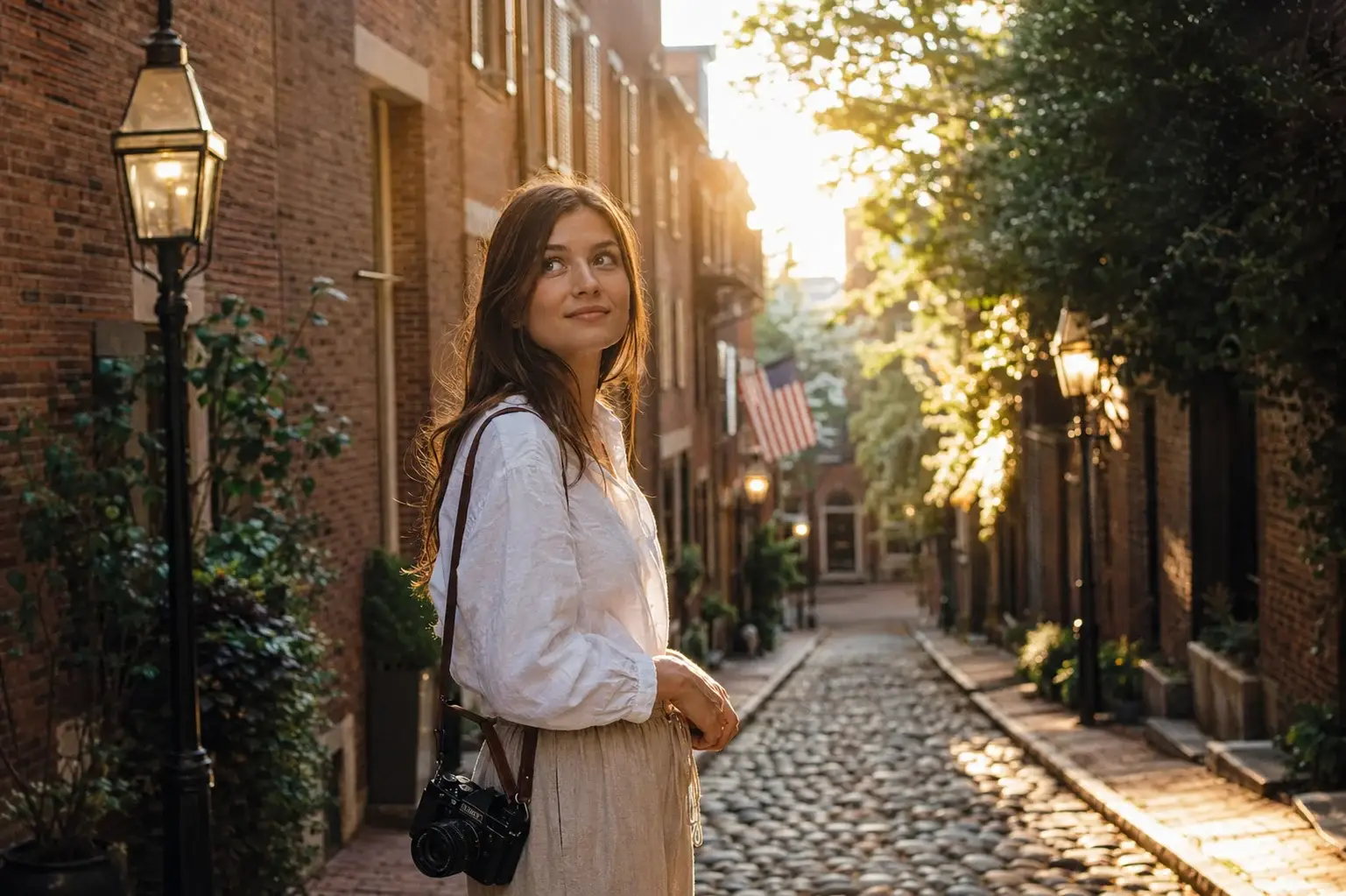
From the garden, cross Beacon Street and step straight into Beacon Hill. This neighborhood feels like a visual time machine. We are talking about gas-lit streetlamps, towering brick federal-style row houses, and black iron railings draped in ivy.
You will want to find Acorn Street. It is a tiny, narrow lane paved with true colonial cobblestones. It is incredibly beautiful, but remember that real people live in these historic homes. Walk softly, take your photos without blocking doorways, and appreciate the quiet preservation.
- What to Eat: Stop by Tatte Bakery & Cafe on Charles Street. It is a local favorite for a reason. Grab a hot house-blend coffee and a morning bun or a slice of their famous shakshuka focaccia.
- Navigation Advice: The walk from the Boston Common up into Beacon Hill is a gentle uphill climb. Take your time. The brick sidewalks can be uneven, so keep your eyes on your footing.
Midday: Following the Red Brick Road
Now that your morning coffee has set in, walk back toward the Massachusetts State House with its gleaming golden dome. This is the official starting point of the Freedom Trail, a 2.5-mile red line painted on the ground (or laid in red brick) that connects 16 historic sites. Because we want to see the best of Boston in 2 days without rushing, we are not going to try to read every single plaque. Instead, we are going to enjoy the open-air museum feel of the trail as it guides us through downtown.
Follow the bricks past the Granary Burying Ground, where you can peer through the iron gates to see the final resting places of Paul Revere, Samuel Adams, and John Hancock. It is wild to see these ancient headstones sitting right next to modern office buildings.
Continue down to the Old South Meeting House and the Old State House. Stand on the circle of cobblestones out front that marks the site of the Boston Massacre. As someone who used to give historical tours for a living, I always tell people to close their eyes for ten seconds here. Try to drown out the city traffic and imagine the shouts, the snow, and the confusion of that March night in 1770.
Insider Secret: Many people pay to go inside every single historic building on the trail. If you are on a tight timeline, pick just one or two. The outside architecture and the free outdoor plaques give you incredible context without eating up your entire afternoon.
- What to Eat: As you approach Faneuil Hall, you will see Quincy Market. It is a massive food hall filled with stalls. While it is fun to walk through, it can get incredibly crowded and loud. For a better lunch experience, walk just one block away to The Green Dragon Tavern. This historic pub dates back to the revolution, and it is the perfect spot for a bowl of thick New England clam chowder and a local Sam Adams ale.
- Navigation Advice: The Freedom Trail is incredibly easy to follow because of the physical red line. If you lose the line under your feet, look around for the nearest historic church spire or brick path—you are never more than a few steps away from it.
Afternoon: The Sights and Smells of the North End
Cross under the Rose Kennedy Greenway and enter the North End, Boston’s historic Italian neighborhood. This is my favorite corner of the city. The streets get tighter, the buildings get closer together, and the air smells like fresh garlic, roasted espresso, and sweet pastry.
Walk down Hanover Street, the main artery of the neighborhood. This area is home to the Old North Church, where the famous “one if by land, two if by sea” lanterns were hung in 1775 to warn Paul Revere of the British march. You can also visit Revere’s actual home, which is the oldest remaining residential structure in downtown Boston.
But the real joy of the North End is just slowing down and watching local life happen on the corners. You will see older residents chatting on benches, delivery drivers hauling crates of fresh tomatoes, and lines forming outside bakery doors.
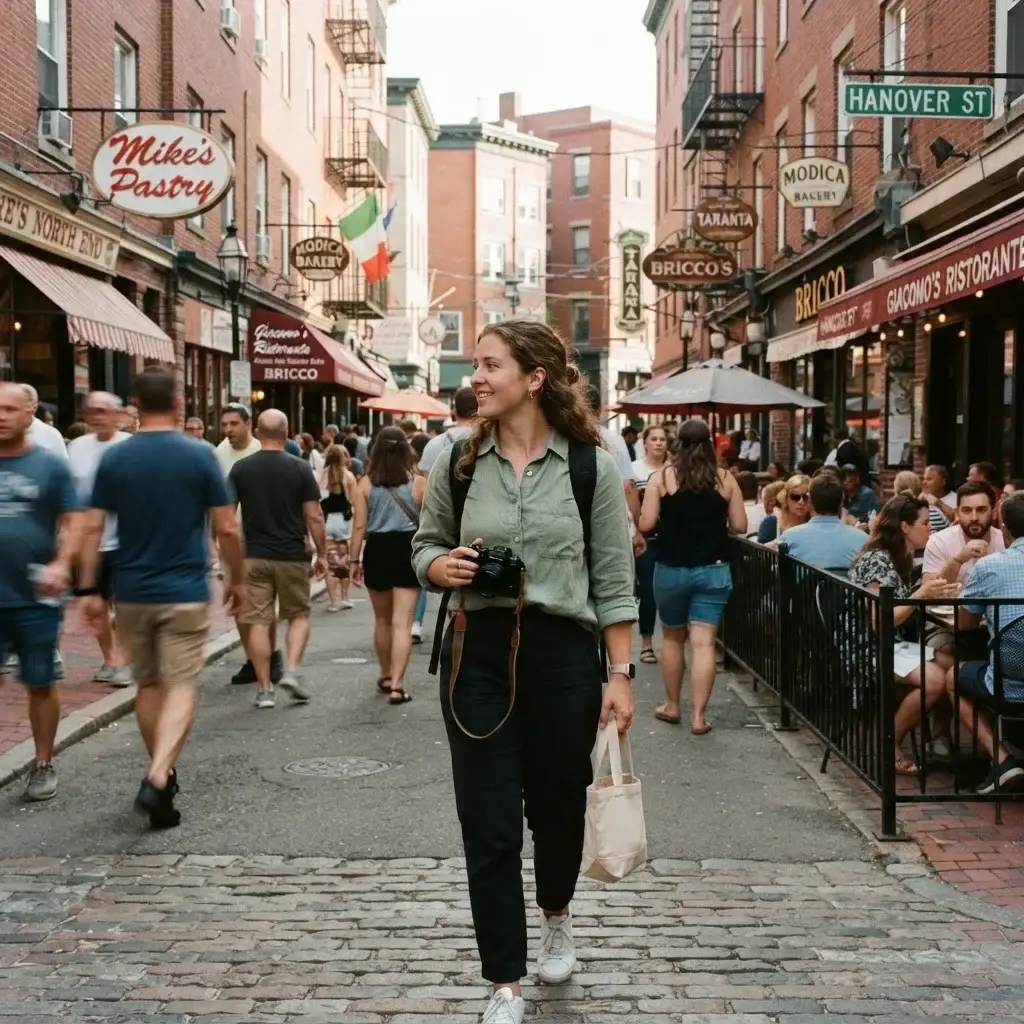
Insider Secret: There is a massive rivalry between Mike’s Pastry and Modern Pastry on Hanover Street. Mike’s gives you giant portions in a bustling room; Modern offers a more traditional, authentic counter where they fill the shell fresh when you order. Try both over your two days and decide your loyalties!
- What to Eat: For dinner, you must sit down for a real Italian meal. Skip the places with hosts shouting on the sidewalk to pull you in. Instead, seek out The Daily Catch on Hanover Street for incredible Sicilian-style seafood pasta served right in the iron skillet, or Giacomo’s for their legendary secret red sauce.
- Navigation Advice: The North End is highly compact, but the cell service can get a bit spotty between the tall, dense brick buildings. Rely on the street signs and don’t be afraid to ask a local for directions—they are fiercely proud of their neighborhood and usually happy to point you toward the best pasta.
Day 2: Classic Architecture, Iconic Waterways, and Campus Courtyards
[Morning: The Back Bay & Public Library] ➔ [Midday: The Charles River & Esplanade] ➔ [Afternoon: Cambridge & Harvard]
Morning: Victorian Splendor and Literary Sanctuaries
Wake up on day two and head straight for the Back Bay neighborhood. In the 19th century, this entire area was a swampy bay that was filled in to create a gorgeous, Parisian-inspired residential district. Walk down Commonwealth Avenue, a wide boulevard with a massive green mall running down the center, lined with some of the finest Victorian brownstones in the country.
Make your way to Copley Square, where you will find the towering Trinity Church reflecting off the glass of the nearby skyscrapers. Right across the square sits the Boston Public Library. This is not just a place to borrow books; it is an absolute palace of art and architecture.
Walk through the grand entrance, head up the marble stairs past the magnificent lion statues, and spend some time in Bates Hall, the main reading room filled with long oak tables and green banker’s lamps. Before you leave, find the central open-air courtyard.
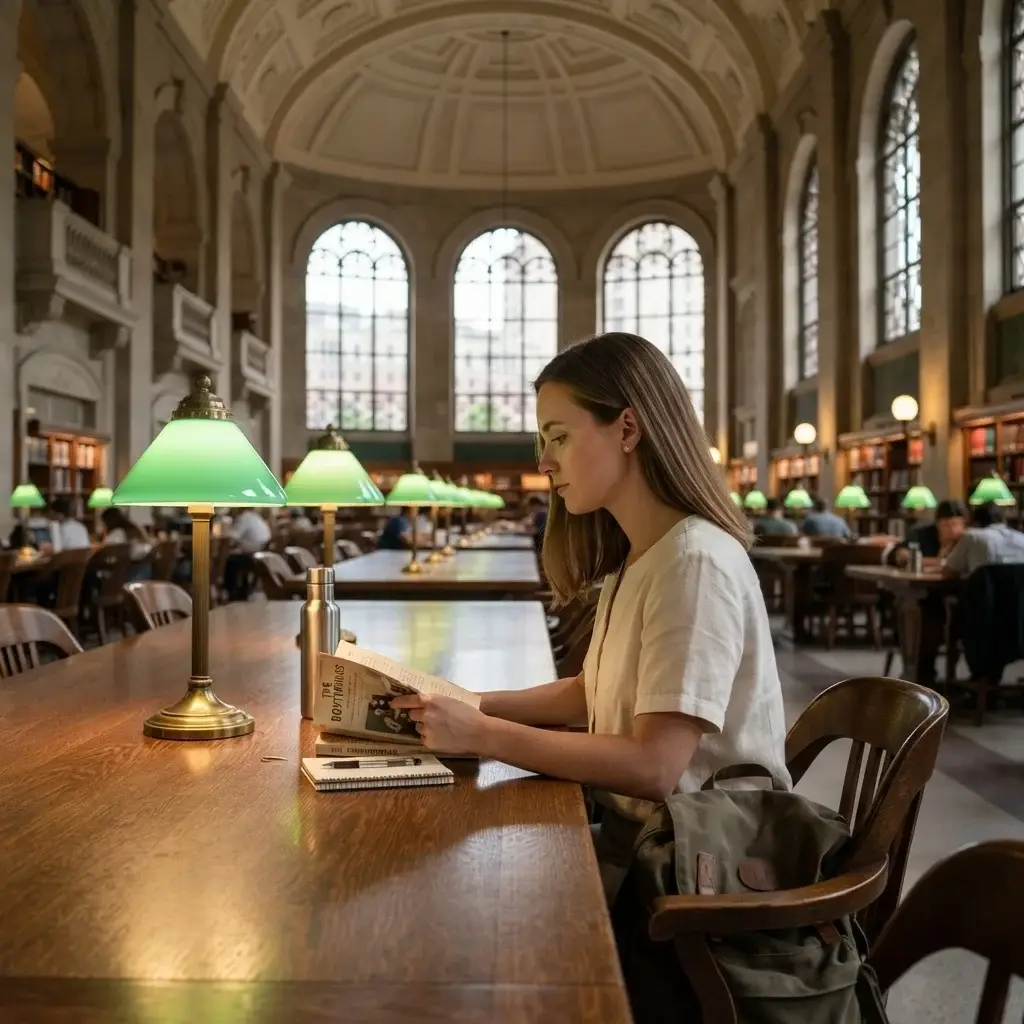
It features a beautiful fountain, classic arches, and a peaceful atmosphere that makes you feel like you have stepped directly into an Italian villa.
Insider Secret: The Courtyard Tea Room inside the library offers a beautiful afternoon tea, but you need reservations weeks in advance. Instead, grab a simple coffee or tea from the map room cafe and sit out by the fountain courtyard for free.
- What to Eat: Walk over to Newbury Street, Boston’s premier shopping avenue. For a delicious, casual breakfast, pop into Thinking Cup near the corner of Dartmouth Street. They serve fantastic specialty lattes and incredible breakfast sandwiches on freshly baked brioche.
- Navigation Advice: Back Bay is the one part of Boston that actually follows a neat grid system. The cross streets are organized alphabetically (Arlington, Berkeley, Clarendon, Dartmouth, Exeter, Fairfield, Gloucester, Hereford), which makes navigating this neighborhood completely stress-free.
Midday: Strolling Along the Charles River Esplanade
After exploring the library and the brownstones, walk north toward the water to find the Charles River Esplanade. This is a long, lush park that stretches along the Boston side of the river. It is where locals come to run, ride bikes, read books under the trees, and watch sailboats drift across the water.
When I am traveling solo, I love finding places like the Esplanade to just sit, write in my journal, and process everything I am seeing. It gives your mind a break from the sensory input of historic sites and city traffic. Walk across one of the iconic footbridges, find a wooden bench near the Hatch Shell (where the Boston Pops play their famous Fourth of July concerts), and watch the crew teams from local universities row smoothly across the sparkling river.
Insider Secret: If you want to get out on the water without paying for an expensive tourist cruise, you can rent a community kayak or stand-up paddleboard right from the Charles River Canoe & Kayak kiosk located along the shoreline.
- What to Eat: Before you head down to the riverbank, stop by Sonsie on Newbury Street to grab a gourmet pressed panini to go, or pick up some fresh fruit and cheese from a local market for a mini-picnic on the grass by the water.
- Navigation Advice: The Esplanade is separated from the main Back Bay streets by Storrow Drive, a busy highway. Do not try to cross the road directly. Use the pedestrian footbridges located at Charles Street, Arlington Street, or Dartmouth Street to cross over safely into the parkland.
Afternoon: Crossing the River to Historic Cambridge
Our final major stop takes us across the Charles River into the vibrant city of Cambridge. While it is technically its own municipality, you cannot truly see the best of Boston in 2 days without spending an afternoon exploring the historic, intellectual atmosphere here. Take the Red Line subway train (the “T”) straight to Harvard Square.
As soon as you step out of the station, the energy changes. It is a mix of historic brick architecture, bustling indie bookstores, street musicians, and students from all over the globe rushing to class.

Walk through the gates of Harvard Yard, the oldest part of the university campus.
Here you will see historic dormitories, massive libraries, and the famous statue of John Harvard. You will notice a crowd of tourists waiting to rub the statue’s left foot for good luck—local student lore says you might want to skip touching it, but it makes for a classic photo!
Insider Secret: The Harvard Museum of Natural History is an incredible stop if you have an hour to spare. It houses the famous Blaschka Glass Flowers collection—thousands of incredibly detailed, botanically accurate plant models made entirely of glass by a father and son in the 19th century.
- What to Eat: For a late afternoon treat or an early dinner, head to Mr. Bartley’s Burger Cottage right on Massachusetts Avenue. This legendary spot has been serving charbroiled burgers named after local politicians and celebrities since 1960. The walls are covered in vintage signs and college memorabilia.
- Navigation Advice: Harvard Square can be confusing because several major avenues meet at odd angles right outside the station. Use the iconic Out of Town News structure (right above the main subway exit) as your central anchor point if you lose your orientation.
Essential Navigation and Solo Safety Tips
Navigating a historic city alone can feel intimidating, but Boston is one of the most accessible and welcoming cities for independent travelers. The public transit system, managed by the MBTA, is called the “T.” It uses color-coded subway lines (Red, Blue, Green, Orange) that intersect in the city center. You can pay for fares simply by tapping your contactless credit card or smartphone at the station gates.
When it comes to safety, Boston ranks very high among major American cities. However, smart solo travel means staying aware of your surroundings no matter where you are. Keep your bag zipped, avoid looking down at your phone continuously while walking, and trust your intuition if a particular street feels too dark or quiet at night.
Solo Traveler Wisdom: If you ever feel disoriented or lost, step inside a local hotel lobby or a busy coffee shop to check your map and regroup. It is a trick I used constantly when I was backpacking solo across Europe, and it always works perfectly to keep your confidence high.
For general peace of mind and unexpected situations on the road, I always remind readers to check out World Nomads Travel Insurance to stay protected against trip delays, medical emergencies, or lost gear. Having that safety net lets you focus entirely on the beauty of your adventure.
Maximizing Value and Staying Healthy on Your Weekend
When you only have 48 hours to explore, you want to make sure your body feels energized and ready for miles of walking. It is easy to get caught up in the excitement and forget to hydrate or rest. Take regular water breaks, and pay attention to what your body is telling you. If your feet are aching, that is your cue to sit in a historic church pew or find a sunny park bench to watch the world go by for twenty minutes.
Before heading out on any domestic or international journey, it is always a smart habit to consult official resources like the CDC Travelers’ Health page for up-to-date guidance on general wellness, seasonal health advisories, and basic safety travel tips. Staying proactive about your physical health ensures that your weekend remains full of joy rather than fatigue.
Packing Advice for Forty-Eight Hours in New England
New England weather is famous for changing its mind completely in a matter of hours. You can start your morning in a crisp chill and end your afternoon in bright, humid sunshine.
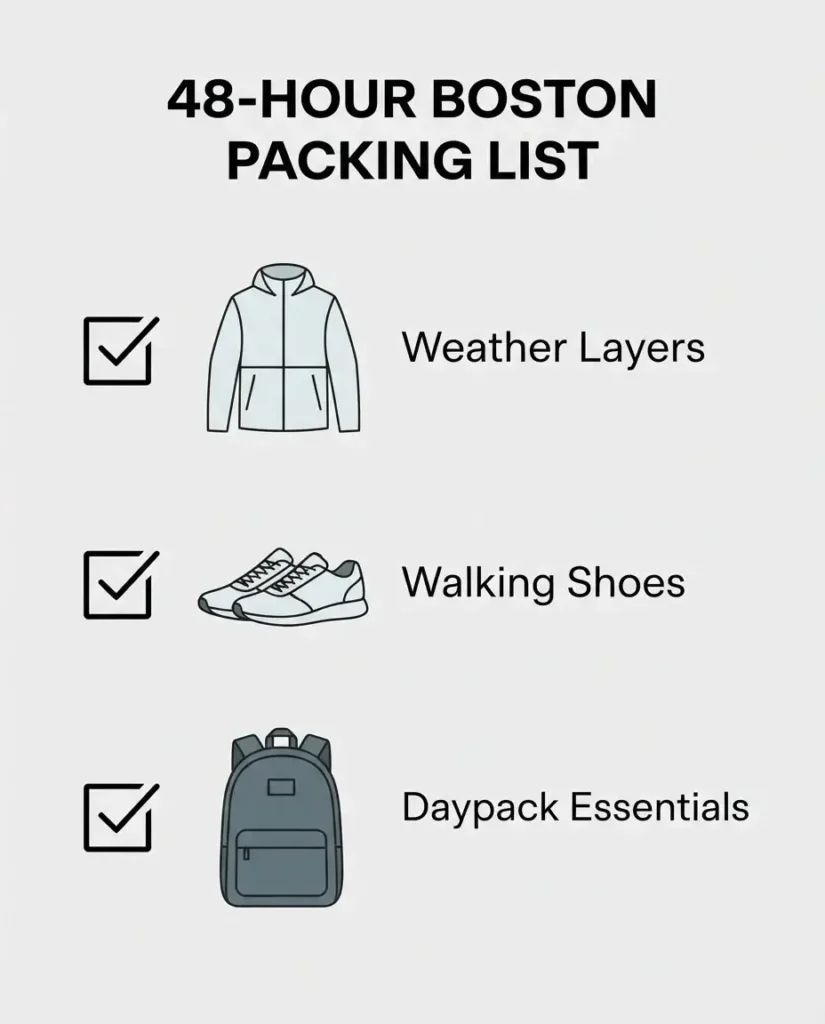
The secret to packing for a short trip to Boston is layering.
- The Essentials: Bring a light, wind-resistant jacket, a comfortable sweater or fleece that you can tie around your waist, and a compact umbrella that fits easily into your daypack.
- Footwear: Leave the heavy boots or stylish heels at home. Boston’s historic bricks, cobblestones, and gravel paths demand worn-in sneakers with excellent arch support.
- The Daypack: A lightweight, zippered backpack is your best friend. Use it to carry your water bottle, a portable phone charger, your camera, and any small keepsakes or pastries you pick up along the way through the North End.
Why Two Days in Boston is Exactly Enough
When I was stuck in that old office job years ago, I used to think I couldn’t have a real travel experience unless I took a two-week international vacation. But places like Boston proved me completely wrong. You do not need an endless amount of time to collect memories that stick with you for the rest of your life.
By taking your time, focusing on specific neighborhoods, and allowing yourself to stop for the smell of fresh pasta or the sight of sailboats on the water, you are doing more than just sightseeing. You are practicing the art of slow travel. You are proving to yourself that you don’t have to wait for the perfect, empty week to experience something beautiful.
The world rewards curiosity and action. Pack your bag, step out onto those historic Boston cobblestones, and let the city show you its incredible story—one beautiful block at a time.



