
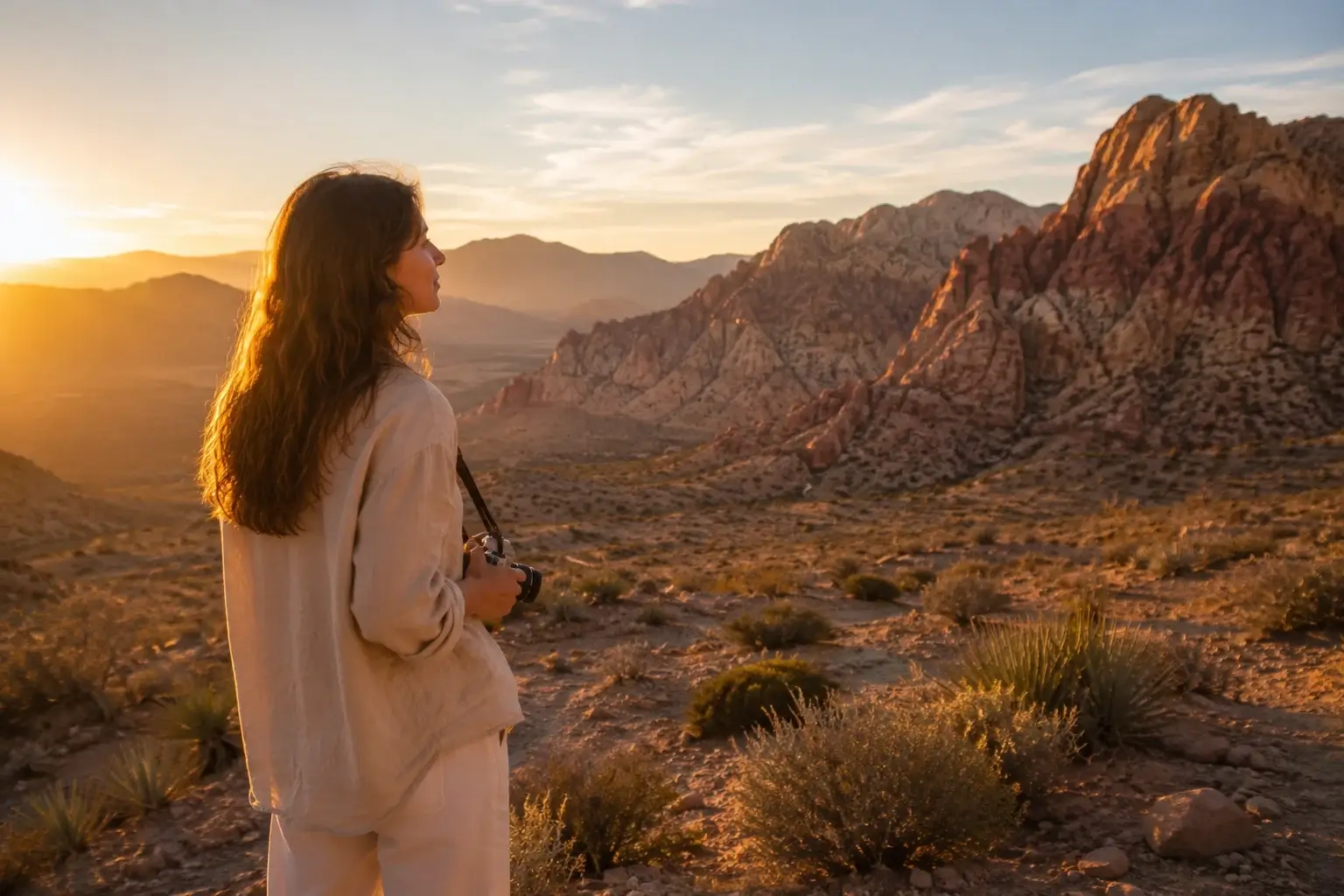
For years, I believed the lie that travel had to fit into a tiny box. I sat at a grey corporate desk in New York City, staring at a calendar, counting down the days until my few weeks of earned vacation time. When I finally quit that job to work flexible hours, guide sightseeing tours, and travel full-time, my whole world cracked wide open. I learned that destinations are rarely what they seem on a screen.
Take Las Vegas, for example. Most people picture flashing slot machines, crowded blackjack tables, and dark, smoky rooms. But if you look past the neon glare of the Strip, you will find a completely different world. There is a wild, quiet desert waiting just minutes away. There are vibrant neighborhoods filled with local artists, rich history, and incredible food that has absolutely nothing to do with corporate resorts.
If you are traveling solo, Las Vegas is one of the most empowering places to explore on your own terms. You do not need to spend a single dollar on a casino floor to have an unforgettable trip here. This massive guide will give you a detailed, highly practical weekend itinerary for Las Vegas beyond the casinos. It is built for independent travelers who want to step out of their comfort zones, connect with local culture, and see the true heart of the American Southwest.
Pre-Trip Planning: How to Prepare for the Desert
Before you pack your bags, you need to understand the unique environment of the Mojave Desert. Too many people arrive in Nevada completely unprepared for the dry climate and intense sunlight. When I taught English abroad and backpacked through rugged parts of China, I learned the hard way that nature demands respect. Planning ahead keeps you safe and gives you the confidence to explore deeply.

Choosing the Right Season
The timing of your trip changes everything. Las Vegas summers are brutally hot, with temperatures regularly climbing past 105°F. If you try to hike in July, you are putting your health at serious risk.
The absolute best months for an outdoor-focused weekend itinerary are October through April. During the winter, daytime temperatures hover around 60°F, which is perfect for walking through canyons. If you must visit in the late spring or early summer, you have to complete your outdoor activities before 9:00 AM to avoid the worst heat.
Essential Packing List for Solo Explorers
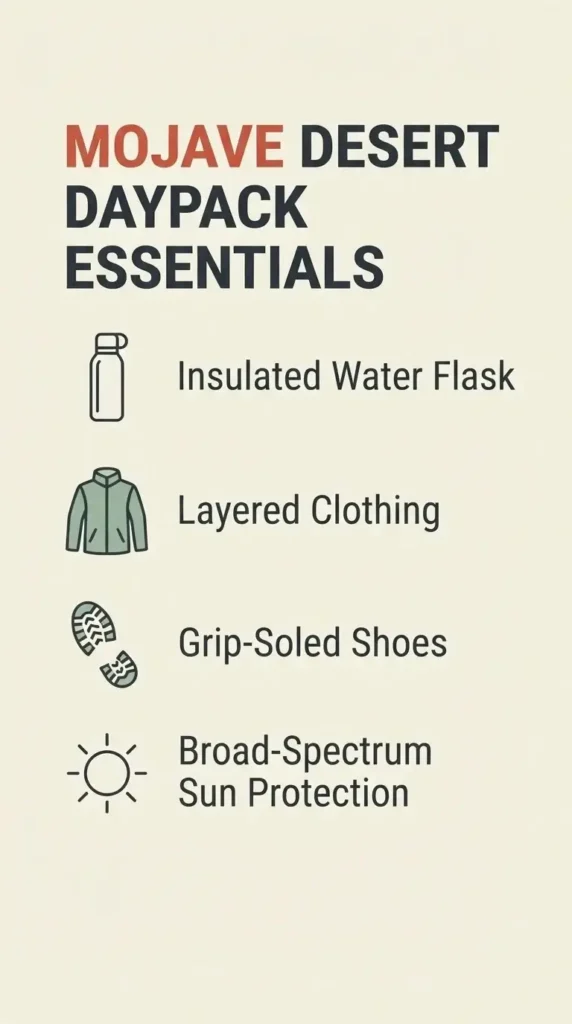
When you leave the climate-controlled casinos behind, your packing list needs to change. Here are the non-negotiable items you should bring in your daypack:
- A Sturdy Water Flask: You need to drink far more water than you think. A reusable insulated flask will keep your water cold even when the sun beats down.
- Layered Clothing: The desert drops in temperature rapidly as soon as the sun sets. Bring a lightweight fleece or a windbreaker jacket even if the day feels warm.
- Grip-Soled Shoes: You will be walking on loose sand, gravel, and slippery sandstone. Leave your thin sneakers behind and wear proper trail shoes or broken-in hiking boots.
- Sun Protection: Pack a wide-brimmed hat, polarized sunglasses, and broad-spectrum sunscreen. The desert sun reflects off the light rocks, making it easy to burn.
For general safety checklists and detailed health updates before heading out to changing desert climates, I always check the official CDC Travelers’ Health destination guidelines to ensure I have the right safety gear and wellness habits packed in my bags.
Getting Around: Car Rentals vs. Rideshares
To fully execute a weekend itinerary for Las Vegas beyond the casinos, you need reliable transportation. The Strip is highly walkable, but the natural areas and local neighborhoods are spread far apart.
I highly recommend renting an economy car directly from the Las Vegas airport. Having your own vehicle gives you total freedom to catch sunrises at trailheads without waiting for expensive rideshares. If you do not drive, you can use rideshare apps to reach the Arts District and Downtown, but getting out to the state parks will require booking a dedicated local tour company.
Day 1: Red Rocks, Local Tacos, and Vintage Neon
Your first day focuses on the stunning natural landscapes just west of the city, followed by a journey into the historic roots of Las Vegas.
[Day 1 Morning: Red Rock Canyon] ──> [Day 1 Afternoon: Arts District] ──> [Day 1 Night: Neon Museum]
Morning: Sunrise and Sandstone at Red Rock Canyon
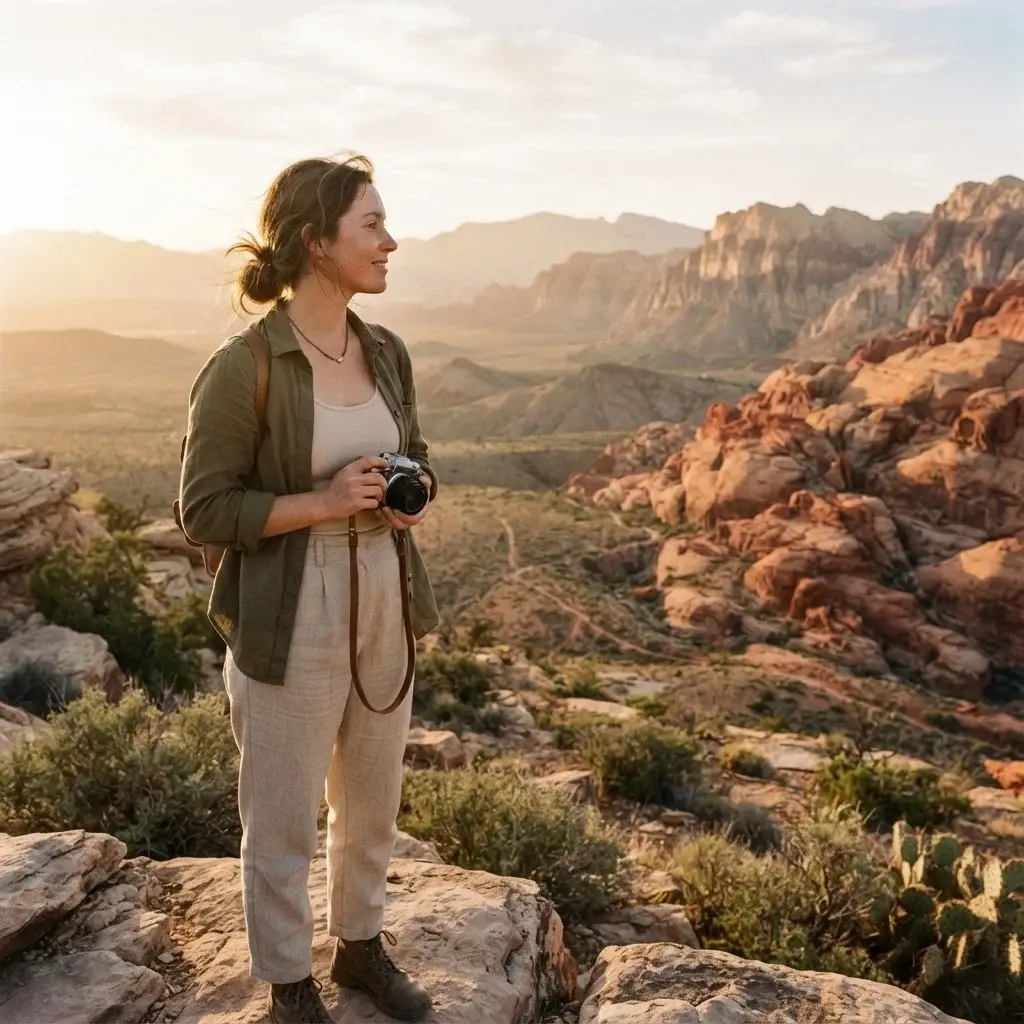
Start your morning early. Drive 20 miles west of the Strip to Red Rock Canyon National Conservation Area. The sun rising over the 3,000-foot-high Aztec Sandstone cliffs is a sight that will stay with you forever.
Driving the Scenic Loop
The park features a 13-mile, one-way scenic drive. You cannot rush this. Pull over at the Calico I and Calico II overlooks. The rock formations here look like giant waves of red and cream ice cream frozen in time. Take a moment to sit quietly on the stone. Listen to the wind moving through the desert brush. It is a massive contrast to the ringing bells of the slot machines downtown.
Hiking the Calico Tanks Trail
For a moderate challenge that yields an incredible reward, park at the Calico Tanks trailhead. This is a 2.2-mile round-trip hike that requires you to scramble over yellow and red sandstone boulders. The trail follows a natural ravine up to a hidden water pocket (a “tank”).
- Insider Secret: When you reach the very end of the trail, keep walking up the rocky ridge on your left. Suddenly, the entire Las Vegas valley opens up before you. You can see the tiny, distant towers of the Strip framed entirely by ancient red stone walls.
- Navigation Advice: The trail is marked by yellow pillars, but it is easy to lose your way on the bare rock. Look for the places where the sandstone has been worn smooth by the shoes of previous hikers. If you find yourself facing a sheer cliff wall, turn back slightly and look for the stone steps carved by nature to your right.
Booking Your Vehicle Reservation
From October to May, you must reserve a specific entry time slot online before arriving at the park. Do not skip this step, or the rangers will turn you away at the gate. Aim for a 7:30 AM entry ticket. This lets you beat the tour buses and experience the canyon in serene solitude.
Afternoon: Creative Culture in the Las Vegas Arts District
After spending your morning in nature, head back into the city to explore the 18b Arts District. Located midway between the Strip and Downtown, this neighborhood is the creative heart of local Las Vegas. It is filled with converted industrial warehouses, indie clothing shops, contemporary galleries, and walls covered in colorful street murals.

Exploring Main Street
Walk down South Main Street between Charleston Boulevard and Wyoming Avenue. This stretch is a paradise for vintage lovers and thrift shoppers. Stop into businesses like Antiquities or Retro Vegas to browse mid-century modern furniture, old casino memorabilia, and vintage clothes. It feels like walking through a living history museum of 1950s Americana.
Lunch at Taco y Todo
When your hunger hits, look for a small, unpretentious spot called Taco y Todo located right off the main drag.
- What to Eat: Order three of their house-specialty birria tacos. The beef is slow-braised for hours in dried chilies and spices until it melts apart. They serve it with a small cup of rich, savory broth (consomé) for dipping. Pair it with a cold, fresh horchata to balance the heat.
- Solo Dining Vibe: This spot has a long wooden counter facing out toward the street windows. It is perfect for a solo traveler. You can eat peacefully, check your maps, and watch the local artists and shop owners move along Main Street.
Evening: Walk Through History at the Neon Museum
As twilight approaches, head north to the Neon Museum. This non-profit outdoor gallery serves as the final resting place for the city’s most famous historic signs. It is a preservation site that tells the story of Las Vegas through the art of neon design.
Booking the Night Tour
You must book your tickets weeks in advance for an evening tour. The outdoor exhibition space, known as the Neon Boneyard, truly comes alive after dark. Some signs have been beautifully restored to their original glowing glory, while others are illuminated by strategic ground spotlights.
Exploring the Neon Boneyard
As someone who used to guide tourists through the historic streets of New York, I am fascinated by the stories behind these giant metal structures. Your guide will walk you past the iconic, glittering Stardust sign and the elegant cursive script of the Moulin Rouge—the city’s first desegregated casino resort built in 1955.
- Insider Secret: Do not miss the “Brilliant!” show in the North Gallery. The museum uses advanced projection-mapping technology to reanimate broken, unlit signs. They project perfectly aligned light patterns onto the rusted metal hulls, making them look like they are burning bright once again, all set to a soundtrack of classic lounge music.
- Navigation Advice: The ground in the boneyard is broken gravel, and there are old pieces of glass and metal nearby. Stick strictly to the paved paths and wear closed-toe shoes. Keep your camera flash turned off; the ambient neon glow makes for far better photographs anyway.
Day 2: Mid-Century Icons, Indie Coffee, and Red Canyons
Your second day takes you into the historic heart of Downtown Las Vegas, followed by a scenic afternoon road trip to Nevada’s oldest and largest state park.
Morning: Old-School Vegas Architecture and Indie Coffee
Skip the mega-resorts today. Head straight to Fremont Street, but avoid the crowded pedestrian dome area. Instead, walk down the Fremont East District and the historic plazas nearby.
The Architecture of Fremont Street
Before the Strip existed, Fremont Street was the center of the action. Walk past the El Cortez Hotel and Casino. Opened in 1941, it is one of the oldest continuously operating casino properties in the state. Look up at the classic neon running horses on its exterior facade. The architectural style here is low-slung and intimate, reflecting a time before giant corporate towers took over the skyline.
Coffee at Mothership Coffee Roasters
Locate the Downtown Container Park—an open-air shopping center built entirely out of shipping containers. Tucked inside the entrance is Mothership Coffee Roasters.
- What to Drink: Order a pour-over coffee made with ethically sourced beans roasted right here in Nevada. If you want something unique, try their lavender vanilla latte made with homemade floral syrup. Combine it with a flaky, fresh almond croissant.
- Solo Traveler Connection: Mothership is a favorite hangout for local writers, digital nomads, and college students. The seating area is bright and filled with green plants. It is an exceptionally welcoming space to open your journal and plan out the rest of your day without feeling rushed.
Afternoon: Exploring the Alien Landscapes of Valley of Fire
By 11:00 AM, get into your rental car and drive 50 miles northeast on Interstate 15. Your destination is Valley of Fire State Park. The drive takes you through wide, empty desert flats until the horizon suddenly ignites with brilliant crimson rock formations.
Driving Mouse’s Tank Road
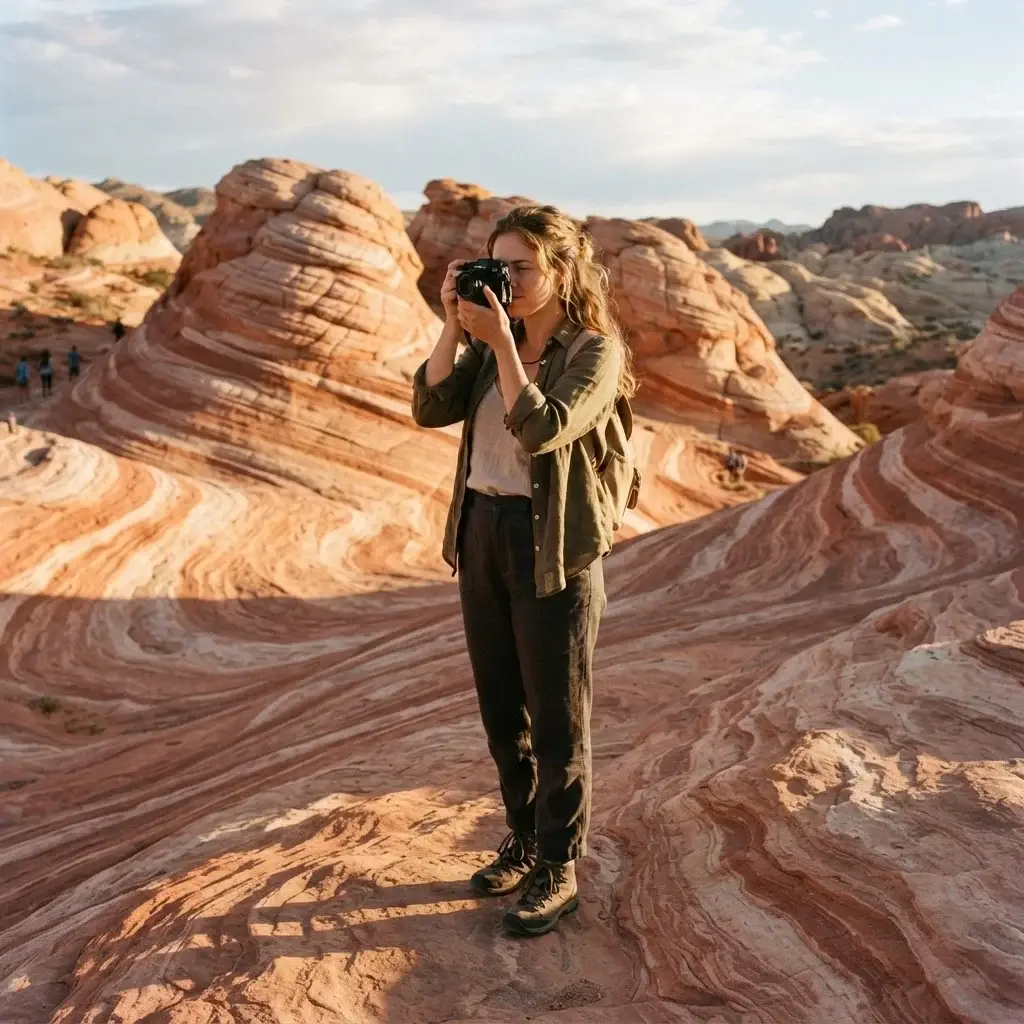
This is easily one of the most beautiful scenic drives in the American West. The road dips and twists through towering walls of bright red Aztec sandstone. Pull over at the designated photo points to look back at the grey highway slicing cleanly through the vibrant red stone valleys.
Hiking the Fire Wave and Seven Wonders Loop
The Fire Wave trail is a 1.5-mile loop that leads you over smooth, undulating sandstone terraces. The rock is striped with alternating bands of pink, orange, white, and deep red, creating a visual effect that looks like a swirling marble cake.
- Insider Secret: Do not just hike to the Wave and turn around. Continue along the connected Seven Wonders Loop. This extension takes you directly through Pastel Canyon (sometimes called Pink Canyon), where the rock walls narrow down into an intimate walkway of soft, cotton-candy pink stone.
- Navigation Advice: Cell service drops to zero the moment you enter the park gates. Download your trail maps for offline use before you leave your hotel room. The trail across the slickrock is marked by small piles of stones (cairns) and metal posts. Keep your eyes up; it is easy to wander off-trail into loose, deep desert sand if you are only looking at your feet.
Cultural Deep-Dive at Atlatl Rock
Before you leave the state park, make a quick stop at Atlatl Rock. A steep metal staircase leads you up the side of a massive boulder. At the top, protected by clear glass, you will find incredibly well-preserved petroglyphs carved thousands of years ago by the ancient Basketmaker culture and the Ancestral Puebloans. You can clearly see depictions of people, bighorn sheep, and the atlatl—a traditional spear-throwing tool used long before the invention of the bow and arrow.
Whenever I am venturing solo out into remote wilderness regions like this where the elements can turn quickly, I find it incredibly helpful to review the risk-management frameworks provided on the World Nomads Travel Insurance advice pages. They offer practical tips on wilderness safety, remote vehicle management, and emergency preparation that give me peace of mind.
Day 3: Main Street Antiques, Real History, and Mountain Escapes
Your final day highlights the dark, fascinating history of the city’s past and offers an escape up into a cool, pine-forested alpine mountain peak.
Morning: True Crimes and Organized Crime History
Head back to Downtown Las Vegas to visit the Mob Museum, formally known as the National Museum of Organized Crime and Law Enforcement. The museum is housed inside a beautifully restored 1933 neo-classical building that originally served as the US Post Office and Courthouse.
Walking the Historic Halls
This is not a boring collection of text plaques. It is an incredibly immersive, multi-floor journey into the historical battle between organized crime figures and federal law enforcement officers. You can step inside the exact second-floor courtroom where the famous Kefauver Committee hearings on organized crime took place in 1950.
- Insider Secret: The museum displays the actual brick wall from the infamous 1929 St. Valentine’s Day Massacre in Chicago. The wall was carefully disassembled, moved to Las Vegas, and reassembled here, complete with visible bullet impacts.
- Navigation Advice: Start your visit on the third floor and work your way down. The exhibits are laid out chronologically, beginning with the birth of the mob in immigrant neighborhoods in New York and ending with modern international crime networks. Give yourself at least three full hours to absorb the sheer volume of history here.
Afternoon: Alpine Escapes at Mount Charleston
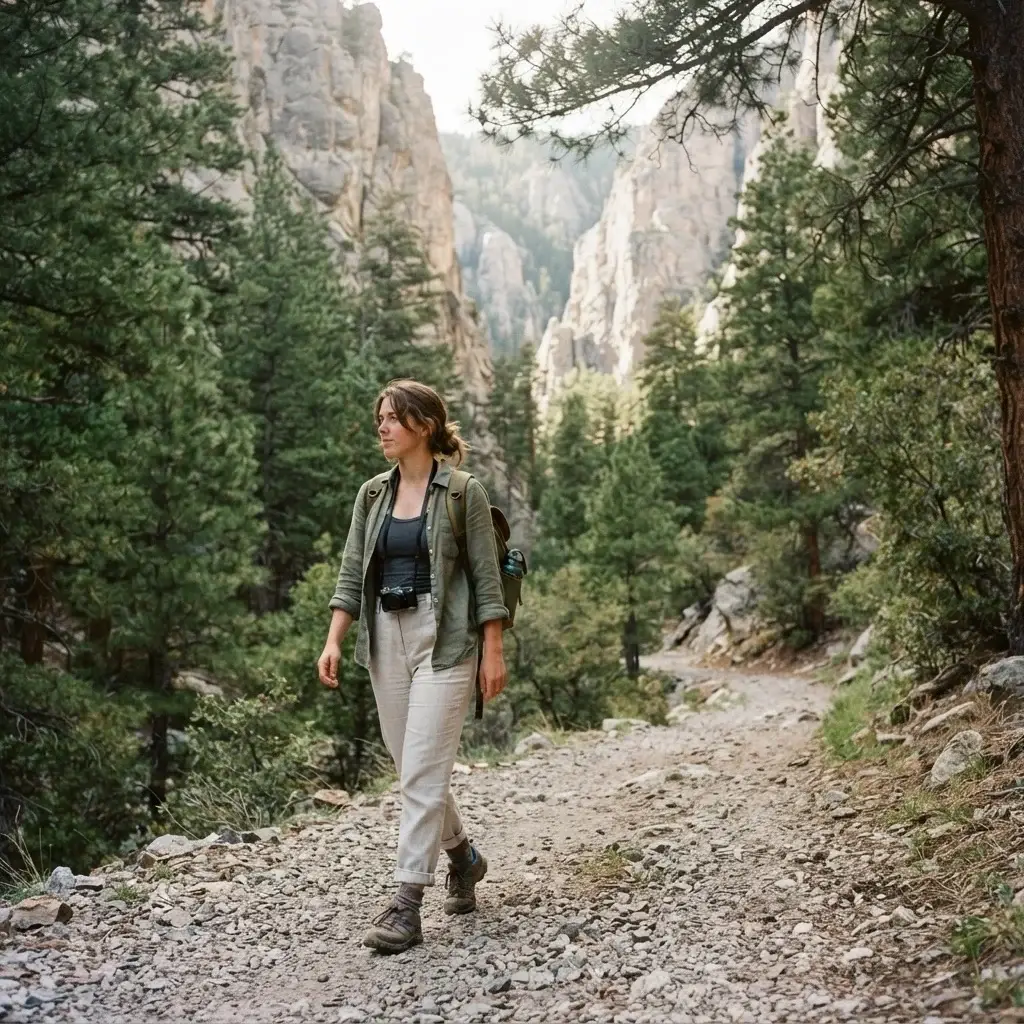
Most people associate Las Vegas with palm trees and sun-baked desert sand. But if you drive 45 minutes northwest of the Strip, you will climb up into the Spring Mountains National Recreation Area. Here, Mount Charleston rises over 11,900 feet into the sky. The temperature here is regularly 20 to 30 degrees cooler than the valley floor, offering a refreshing mountain escape.
The Drive Up Kyle Canyon Road
As you ascend Nevada State Route 157, watch the landscape shift dramatically. The Joshua trees and low cacti of the Mojave Desert slowly give way to thick stands of tall Ponderosa pines, white-barked quaking aspens, and mountain wildflowers. It feels like you have crossed state lines into Colorado or Utah.
Hiking the Fletcher Canyon Trail
For an easy to moderate solo hike, hit the Fletcher Canyon Trail. This 3.2-mile round-trip path follows a dry creek bed up into a dramatic, shaded limestone slot canyon. The canyon walls climb hundreds of feet straight up over your head, blocking out the sun and trapping the cool mountain air.
- What to Eat for Lunch: Pack a picnic lunch before leaving the city. Stop by an independent sandwich shop like Proper Sandwich Shop in the northwest part of town to pick up a fresh turkey, brie, and green apple sandwich on crusty baguette bread. Eat it on a flat stone bench inside the quiet depths of Fletcher Canyon, surrounded by the scent of fresh pine needles.
- Navigation Advice: The trail is mostly flat but features a steady, gentle uphill grade over loose gravel and river stones. Watch your step on the descent; the round gravel stones can act like tiny ball bearings under your boots. Keep an eye out for local wildlife, including the rare Mount Charleston blue butterfly and wild burros.
Solo Travel Strategies: Dining and Staying Safe
Exploring a major entertainment destination by yourself can feel slightly intimidating at first. However, with the right mindset, Las Vegas is an exceptionally easy and rewarding city to navigate independently.
Safety and Logistics for the Independent Traveler
When I left my traditional office job to travel the world solo, I quickly realized that safety is not about luck; it is about establishing good habits. Las Vegas is generally safe for tourists, but you must remain alert.
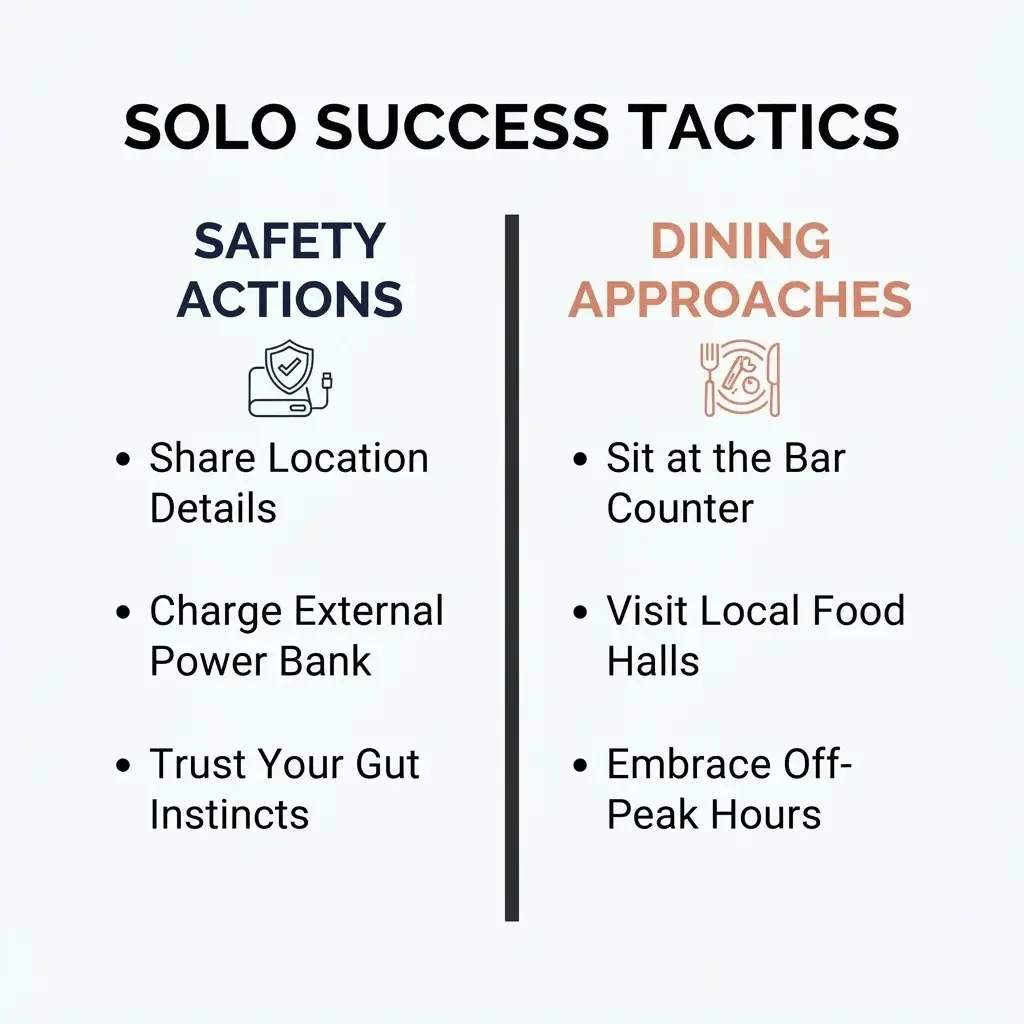
- Share Your Location: Always let a family member or friend know exactly which desert trail you are hiking each day. Text them when you enter the park and when you safely return to your car.
- Keep Your Electronics Charged: The dry desert air and constant searching for cell signals can drain your phone battery surprisingly fast. Carry a fully charged external power bank in your daypack at all times.
- Trust Your Gut: If a street or an alleyway downtown feels too dark or uncomfortable, turn right back around. Stick to well-lit public areas when walking around the Fremont East district at night.
If you are an international traveler visiting the American Southwest for the first time, you can find up-to-date entry requirements and detailed safety advisories directly on the US Department of State travel advisory page to stay informed on local regulations.
The Art of Solo Dining Beyond the Strip
One of the greatest joys of traveling alone is eating exactly what you want, when you want, without compromising with a group. Las Vegas has a thriving culinary scene that welcomes solo diners with open arms.
- Sit at the Bar: Almost all the local restaurants in the Arts District and Downtown feature large, comfortable bar counters. Sitting at the bar means you can get seated immediately without a reservation, and you can easily chat with the bartender or friendly locals sitting next to you.
- Visit Neighborhood Food Halls: Check out places like the Vegas Test Kitchen in the Arts District. It functions as a culinary incubator where local chefs test out new restaurant concepts. You can order from multiple different menus—ranging from fresh handmade pasta to street-style bao buns—and eat in a casual, communal seating environment.
- Embrace Off-Peak Hours: If you want to try a popular local spot but feel self-conscious about taking up a large table alone, go between 2:00 PM and 4:30 PM. The dining rooms are quiet, the service is incredibly attentive, and you can enjoy a peaceful meal at your own pace.
How to Find Independent Travel Inspiration
Stepping away from the flashy, pre-packaged tourist experiences can feel challenging. When I was saving money by waitressing in New York to fund my first solo backpacking trip across Europe, I used to spend hours researching off-the-beaten-path destinations. Finding authentic stories takes a little bit of extra effort, but the reward is a deeply meaningful travel experience.
To find deeper insights, long-form regional histories, and cultural context for your journey through the American Southwest, you can explore the extensive destination overviews on the Lonely Planet Nevada guide pages. They provide excellent frameworks for understanding the rich geography and community history of the region.
Remember that travel is not a competition to see the most famous landmarks or spend the most money. The true magic of exploration happens when you slow down, ask questions, and allow yourself to be surprised by a destination. By choosing a weekend itinerary for Las Vegas beyond the casinos, you are choosing to see the real, raw, and beautiful side of Nevada. You are proving to yourself that you have the curiosity and the confidence to blaze your own trail.



