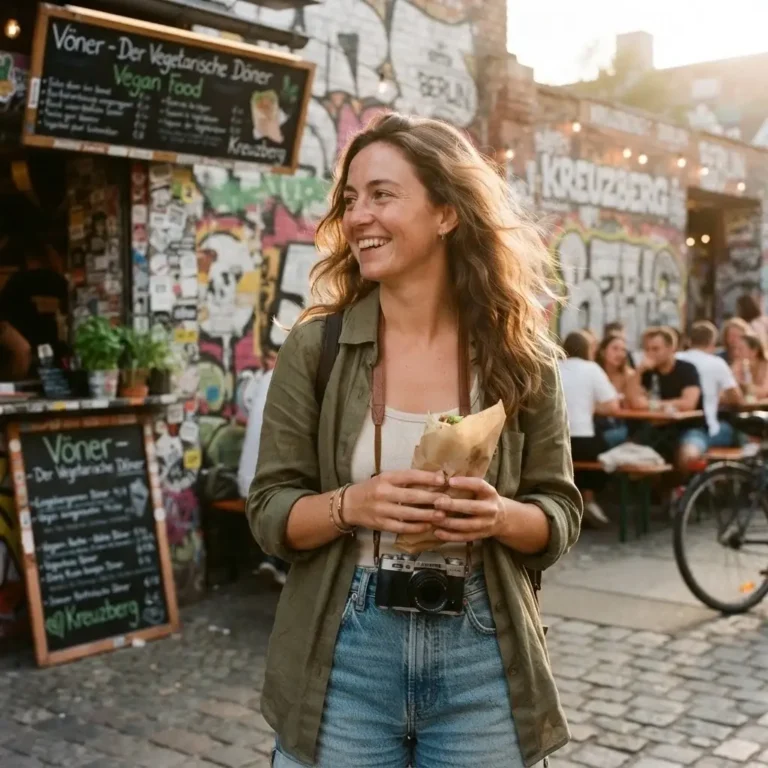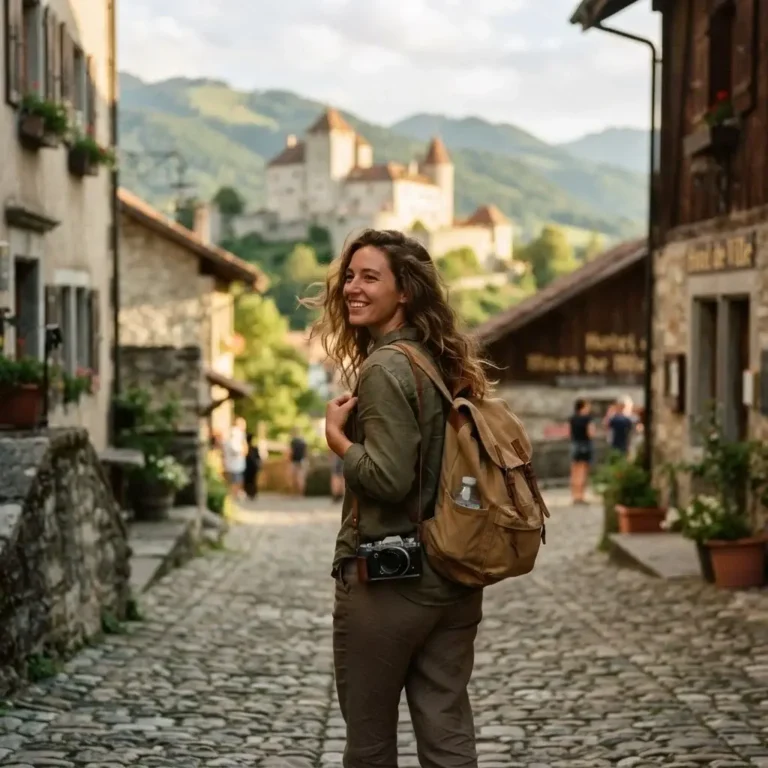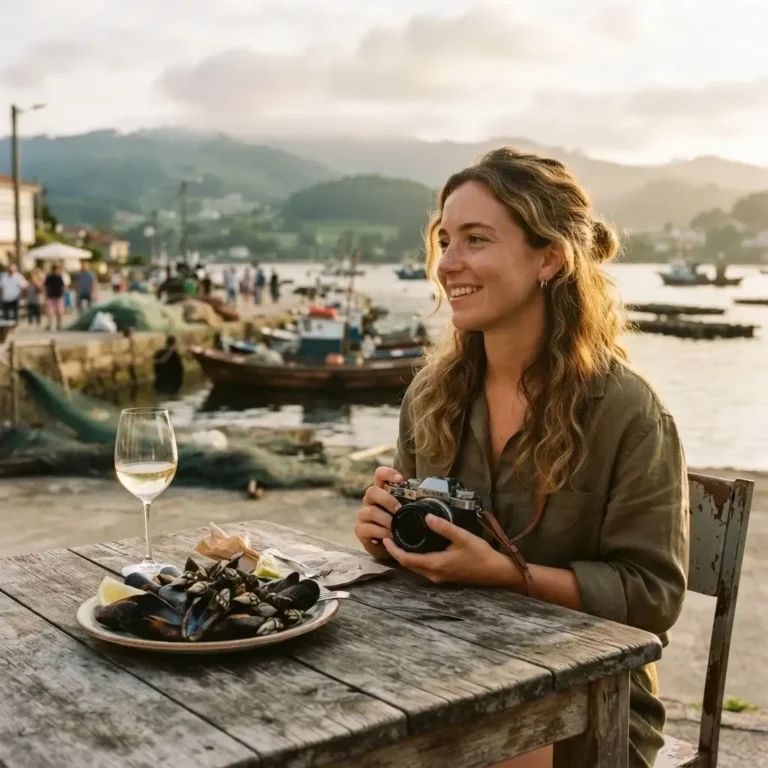
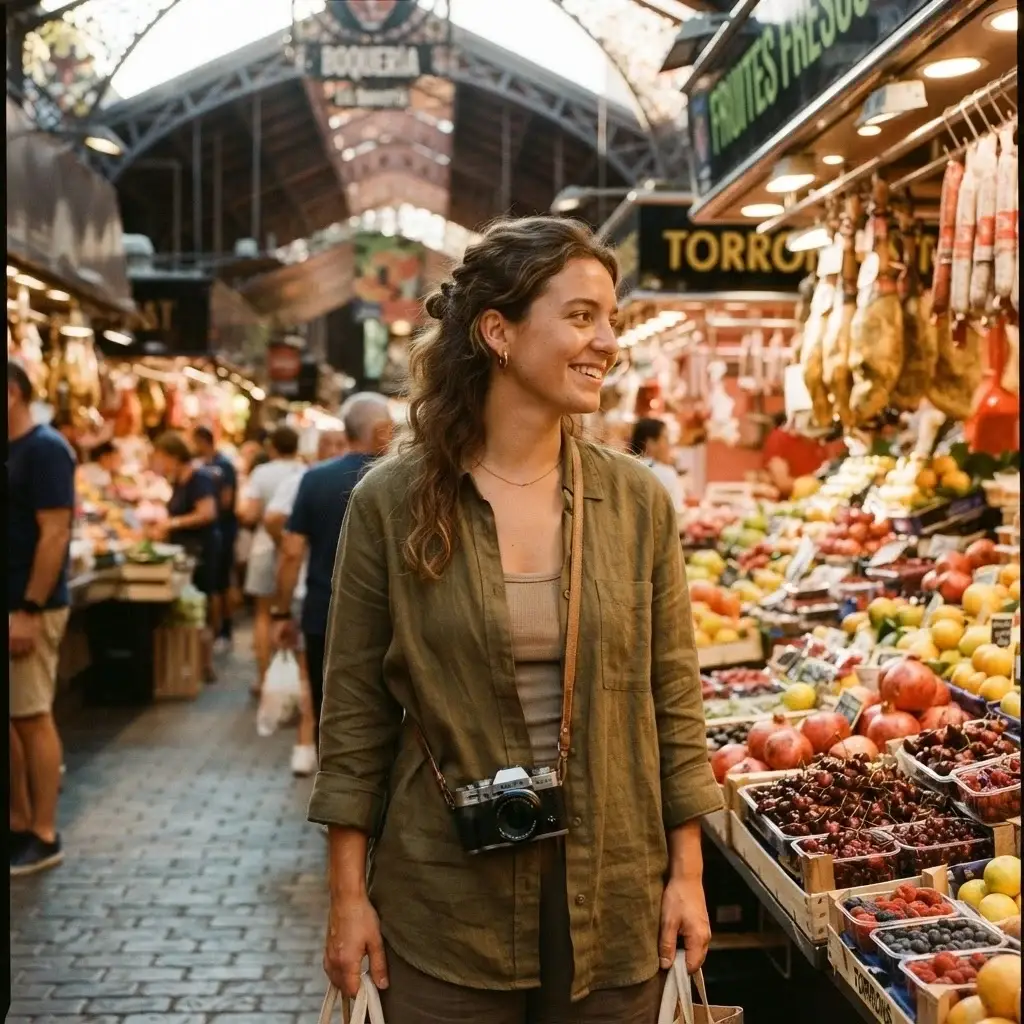
The first time I ate alone at a food market abroad, I stood frozen near the entrance for a solid five minutes, pretending to read a menu I couldn’t understand. This was during my solo backpacking trip across Europe, back when I still worked flexible jobs between trips to save up every euro. I was hungry, I was nervous, and I was convinced everyone could tell I had no idea what I was doing.
Here is what I learned that day and on every trip since. Nobody is watching you. Everyone at a food market is there to eat, and the vendors want your business. Once that clicked, markets became my favorite thing about traveling. They are where a city relaxes and shows you who it really is.
If you are dreaming about wandering Europe and eating your way through it, this guide is for you. I am going to walk you through the markets worth your time, tell you what to order and what to skip, and give you the practical stuff nobody mentions: when to go, how much to bring, and how to eat solo without feeling like the odd one out. You do not need to be brave or experienced. You just need a little bit of a plan and permission to enjoy yourself.
First, let’s clear up what “street food market” actually means
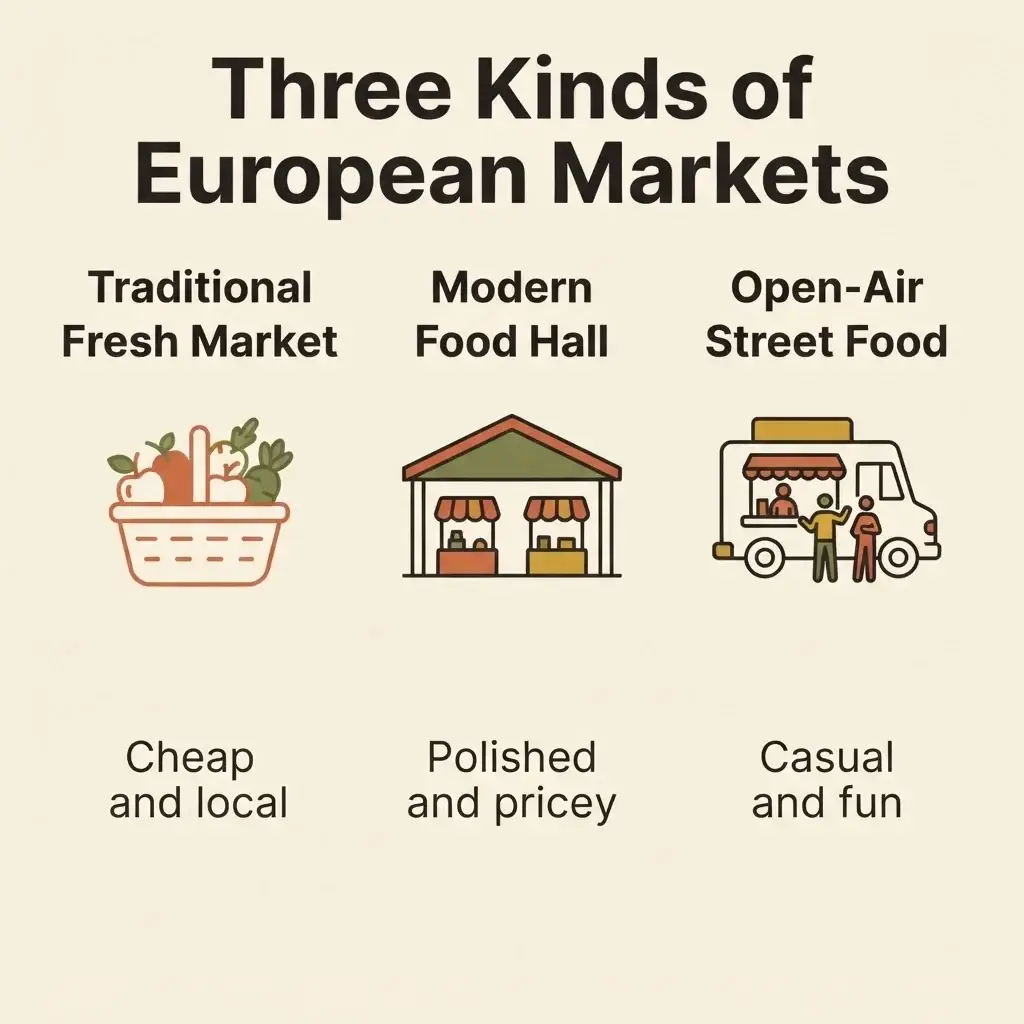
Here is something that trips up a lot of first-timers, including me years ago. In Europe, the word “market” covers three pretty different experiences, and knowing the difference saves you money and disappointment.
A traditional fresh market is where locals buy produce, fish, and meat. Think tiled halls with butchers and greengrocers. These often have a few food stalls tucked inside where you can eat cheaply and well.
A modern food hall is a curated space with lots of small vendors and shared seating. These are fun and photogenic, but they are usually pricier and more polished than raw street food.
A true street food market is open-air or warehouse-style, casual, and built around eating on the spot. Prices are friendlier and the vibe is loose.
None of these is “better.” I love all three. But when someone tells you a place is the “best street food market” and it turns out to be a gourmet food hall charging fifteen euros for a small plate, that mismatch is where the disappointment comes from. I will tell you which is which as we go.
Mercado da Ribeira, Lisbon: the easiest place to start
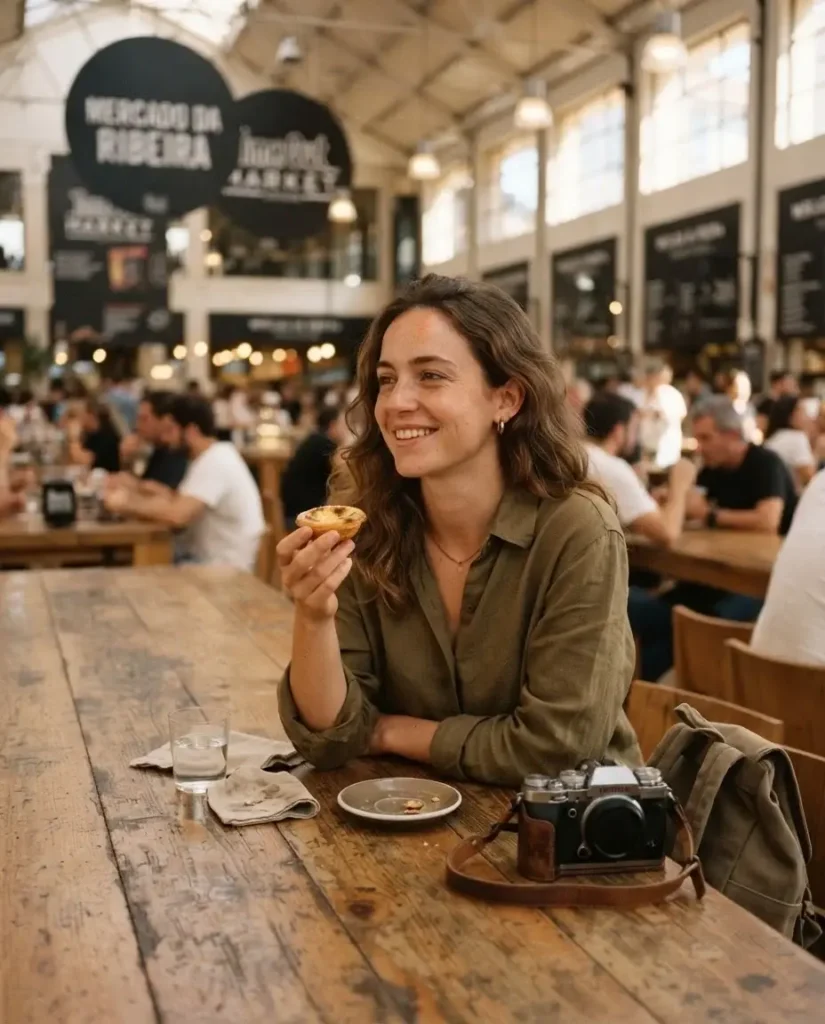
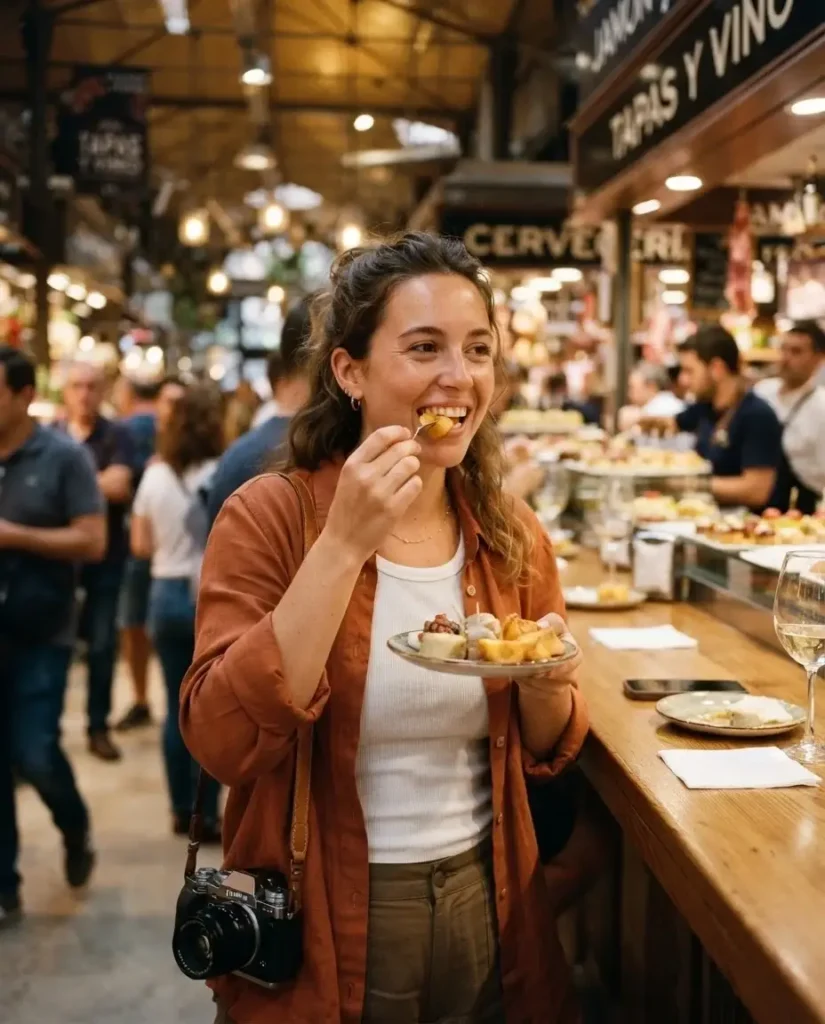
If you are new to solo dining and want a soft landing, Lisbon is where I would send you first. The Time Out Market inside the historic Mercado da Ribeira is a food hall, so it is polished rather than gritty, but that is exactly why it works for a first-timer. You grab food from any stall, carry it to a long shared table, and sit among dozens of other people doing the same thing. Eating alone here feels completely normal because half the room is doing it too.
The market runs daily from 10am to midnight, and the official Time Out Market Lisboa site keeps an updated list of which chefs and stalls are currently inside, which is genuinely useful because the lineup rotates and includes everything from casual bites to Michelin-star names. You can check the current roster and hours straight from the market’s own page before you go.
What to order: a warm pastel de nata, obviously, but also try bacalhau à brás, which is salt cod scrambled with egg and shoestring potatoes. It is comforting and very Portuguese. A prego, which is a garlicky steak sandwich, is another safe, delicious bet. Skip the international stalls here. You did not come to Lisbon for sushi.
Insider tip: it gets packed and loud around 8pm. Go around noon or in the late afternoon lull if crowds make you anxious. Grab your seat first if you can, then order, because tables fill fast.
Mercat de la Boqueria, Barcelona: gorgeous, chaotic, and best before 10am
La Boqueria just off Las Ramblas is one of the most beautiful markets in Europe, a riot of color with fruit stacked like jewelry and hanging jamón everywhere. It is also swarmed with tourists by mid-morning, which is the single biggest reason people leave underwhelmed.
The fix is simple: go early. The market is open Monday to Saturday from 8:00am to 8:30pm and closed on Sundays, and if you arrive close to opening you will see it working as a real market for locals before the crowds and the marked-up smoothie stalls take over. You can confirm the current hours on the official Boqueria market website so you do not turn up on a closed Sunday, which is a mistake I have watched plenty of travelers make.
What to order: head to one of the small tapas bars inside, like the classic counters near the back where locals eat. Grab a plate of jamón ibérico, some pan con tomate, and whatever seafood looks freshest that morning. Pintxos, small bites often skewered on bread, are perfect for solo eating because you can try several without committing to a big meal.
Insider tip: those pre-cut fruit cups near the front are convenient but overpriced and often not the freshest. Buy whole fruit from a vendor deeper inside instead. And keep your bag zipped and in front of you. Crowded tourist markets are prime pickpocket territory, and Las Ramblas is notorious for it.
Borough Market, London: where I would take a friend who thinks they don’t like markets
Borough Market sits at the foot of London Bridge and has been feeding the city in some form for around a thousand years. It is the market I recommend to anyone who is a little skeptical, because the quality is so high that it converts people on the spot.
Core trading days are Tuesday through Saturday, with the fullest experience roughly from 10am to 5pm, and some traders are closed on Sundays and Mondays, so plan around that. Before I visit anywhere new I like to scan who is actually trading, and Borough publishes a full list of its current stalls and shops so you can plan your bites in advance instead of wandering hungry and overwhelmed.
What to order: a salt beef sandwich, a proper grilled cheese toastie, fresh oysters if you are feeling fancy, and something sweet from one of the bakery stalls. Portions are generous and cards are accepted everywhere, so you do not need to hunt for cash.
Insider tip: London markets are pricey compared to southern Europe, so this is a “eat one great thing” market rather than a graze-all-day-cheap one. Go on a weekday if you can. Saturdays are shoulder-to-shoulder.
Naschmarkt, Vienna: the underrated all-rounder
Vienna does not get enough credit for street food, and the Naschmarkt is why it should. With around 130 stalls stretching down a long strip, it mixes fresh produce, spice and olive vendors, and a huge range of ready-to-eat food from Austrian classics to Middle Eastern and Asian dishes.
Most stalls run Monday to Saturday and the market is closed on Sundays, though some restaurants keep their own hours, and Vienna’s official tourism board keeps a clear rundown of the Naschmarkt’s stalls and timing that I would check before heading over, especially since Sunday closures catch people out here too.
What to order: a schnitzel sandwich, fresh falafel, and do not leave without trying something from the sweet stalls. The mix of cultures here means it is one of the easier markets for vegetarians and anyone wanting variety in one place.
Insider tip: prices creep up toward the tourist-facing sit-down restaurants at the front. Walk deeper in for the takeaway stalls where locals actually eat, and you will pay noticeably less.
Reffen, Copenhagen: the one to catch in warm weather
Reffen is a completely different animal from the historic halls above. It is a sprawling open-air street food market built on a former industrial lot on Refshaleøen, and it leans young, creative, and sustainability-minded, with dozens of stalls run by small food entrepreneurs.
The catch is that it is seasonal. It typically opens around mid-March and runs into autumn, with food stalls open roughly 11:30am to 9:30pm, so it is not a year-round stop. Because the season and hours shift, I would always check Reffen’s official opening hours page before planning a visit, since showing up in winter means finding it closed.
What to order: this is a graze-and-share kind of place, so get a few small things from different stalls. Global street food dominates here, from tacos to dumplings to plant-based creations, and it is one of the most vegetarian and vegan friendly markets on this list.
Insider tip: Copenhagen is expensive, but Reffen is one of the better-value ways to eat out in the city. Bring a card, since Denmark is nearly cashless. Go on a sunny evening when the harbor light is unreal.
Mercado de San Miguel, Madrid: beautiful but manage your expectations
I want to be honest with you about this one, because a lot of guides are not. Mercado de San Miguel, right beside Plaza Mayor, is stunning. It is a restored iron-and-glass market open daily from 10am to midnight, and until 1am on Fridays, Saturdays, and holiday eves. But it is a gourmet food hall aimed largely at tourists, and prices reflect that.
Madrid’s official tourism site describes it as a gourmet market of small tapas stalls rather than a cheap local eat, which is a helpful expectation to set. I still think it is worth seeing, especially in the evening when it buzzes. Just go in knowing you will pay a premium for atmosphere.
What to order: a few small tapas and a glass of vermouth or wine, treating it as a stylish stand-up snack rather than a full budget dinner. Croquetas, a couple of pintxos, and some jamón make a lovely light graze.
Insider tip: for cheaper, more local eating in Madrid, wander to the neighborhood bars in La Latina afterward. Use San Miguel for the experience and the photos, then eat your real meal elsewhere.
Mercato Centrale, Florence: history downstairs, feast upstairs
Florence’s Mercato Centrale in the San Lorenzo district gives you two experiences in one building. The ground floor is a traditional fresh market with butchers, cheese vendors, and produce, generally open Monday to Saturday from morning to early afternoon. The first floor is a modern food court packed with artisan stalls, open daily from about 10am to midnight.
The first-floor food hall is where solo travelers will feel most at home, with shared seating and a stall for nearly every craving, and you can browse the current vendors on Mercato Centrale’s official Florence page to plan what you want before you arrive.
What to order: this is Tuscany, so lean into it. Fresh pasta, a bistecca or beef dish, and if you are adventurous, try lampredotto, the famous Florentine tripe sandwich that locals swear by. There is excellent pizza and gelato too if tripe is a step too far.
Insider tip: eat downstairs prices, upstairs vibes. If you want the cheapest possible bite, some ground-floor vendors will make you a sandwich for a few euros in the morning.
Palermo’s markets: La Vucciria and Ballarò for the brave and curious
If the polished food halls feel a little safe and you want the real, raw, loud thing, Palermo in Sicily is where street food culture runs deepest in Europe. This is not a curated experience. It is chaotic, gritty, and absolutely thrilling.
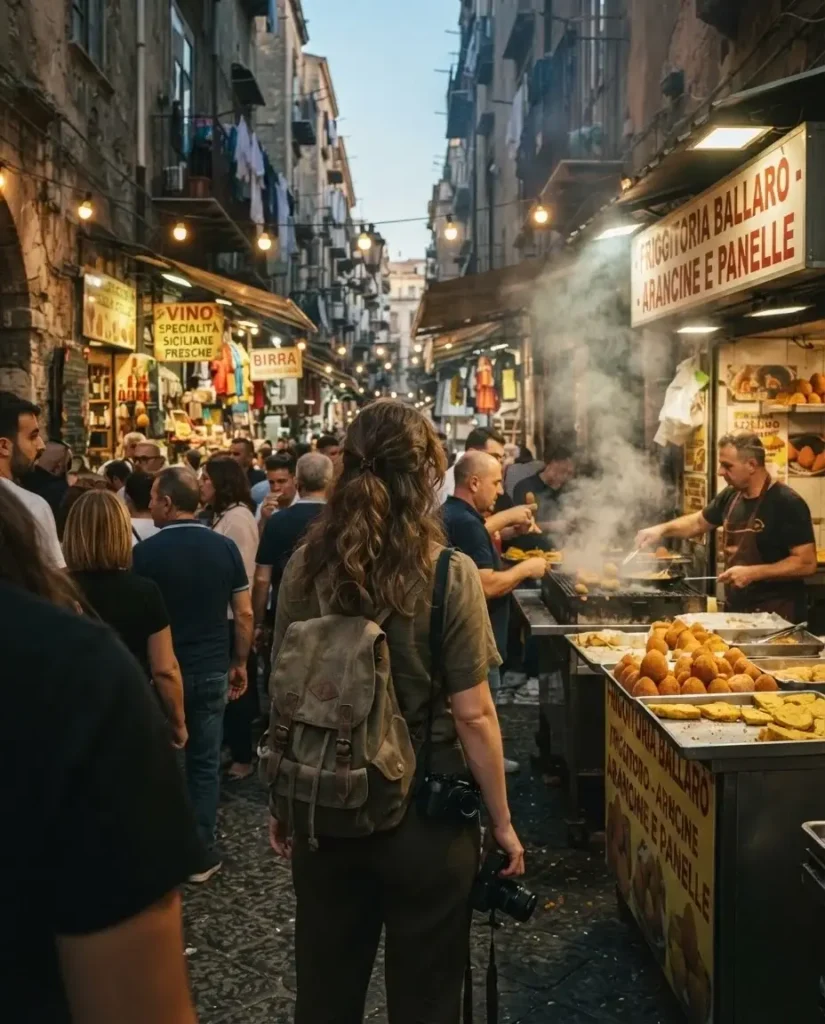
Timing is everything here, more than anywhere else on this list. Ballarò is the market to visit during the day, when it is a bustling working market full of shouting vendors and grilling meat. La Vucciria, by contrast, is quiet and a bit sad by day but transforms into a smoky, lively street party in the evening. Show up at the wrong time and you will wonder what all the fuss was about.
What to order: arancina, the fried rice ball that is a Sicilian icon; panelle, chickpea fritters in bread; and if you are feeling truly bold, pane con la milza, a spleen sandwich that is a Palermo rite of passage. Sfincione, the local focaccia-style pizza, is a gentler starting point.
Insider tip: bring cash, small bills, and your sense of adventure. This is where the experience-honesty part of me speaks plainly: I have not yet eaten my way through Palermo myself, so I am passing on what Sicilian food guides and locals consistently report rather than my own memory. But everything about it, the timing, the spleen sandwich dares, the evening energy, matches exactly the kind of authentic, slightly-outside-your-comfort-zone travel I believe changes people.
How to eat alone at a market without feeling awkward
This is the part nobody teaches you, so let me. Eating solo at a busy market is a skill, and it is one of the fastest ways to build travel confidence I know.
Start with a food hall that has shared seating, like Lisbon or Florence, because sitting among other solo eaters normalizes it instantly. Order at the counter, point if you cannot pronounce something, and smile. Pointing is not rude, it is universal. Vendors deal with confused travelers all day and genuinely do not mind.
Give yourself a small mission. Instead of “have a meal,” tell yourself “try three small things.” Grazing suits solo travel perfectly because you are not committed to a big plate, and it lets you sample more. Bring a book or just people-watch. You are not being pitied for eating alone. Half the time locals are a little envious of the freedom.
If the crowd feels overwhelming, step outside, breathe, and go back in. I have done this more times than I can count. Feeling nervous is not a sign you should not be there. It is just the feeling of doing something new, and it fades fast once you have that first bite in your hand.
Practical stuff: money, safety, and timing
A few things that will make every market visit smoother.
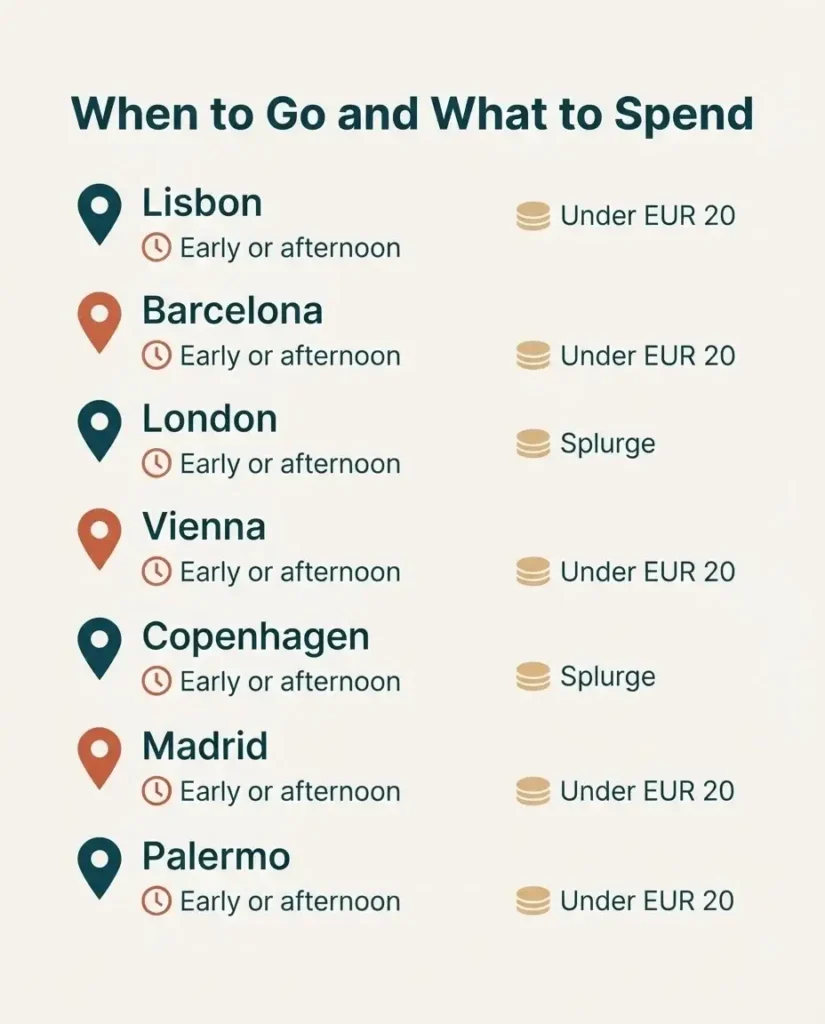
On budget, southern Europe is your friend. In Lisbon, Palermo, and Barcelona you can eat very well for well under twenty euros. London, Copenhagen, and the gourmet halls in Madrid will run higher, so treat those as one-great-thing splurges rather than all-day grazing. Carry a mix of card and a little cash, since traditional stalls sometimes prefer cash while modern halls and Scandinavia are card-first.
On safety, crowded tourist markets are the classic setting for pickpockets, especially La Boqueria and anywhere off a major tourist drag. Keep your bag zipped and in front of you, do not put your phone in a back pocket, and stay aware in the tightest crowds. The food itself is safe. Busy stalls with high turnover are exactly where you want to eat.
On timing, the rule that will serve you everywhere: go early or go in the mid-afternoon lull to skip the worst crowds, and always check closing days, because Sunday closures at markets like La Boqueria and Naschmarkt catch people out constantly. And check seasonal openings for outdoor markets like Reffen before you build a day around them.
You are more ready than you think
Here is what I most want you to take from this. The markets are not a test. You do not need to know the language, understand every dish, or look like you belong. You just need to show up hungry and willing to point at something and try it.
The best meals I have had traveling were rarely in restaurants. They were standing up at a market counter, a little unsure, ending up with something I could not name and could not stop eating. That is the whole point of travel to me. Not perfection, not a checklist, just curiosity and the courage to take the first bite. Pick one market from this list, put it on your route, and go find out who you are when you are eating alone in a new city. I promise it is someone braver than you expect.