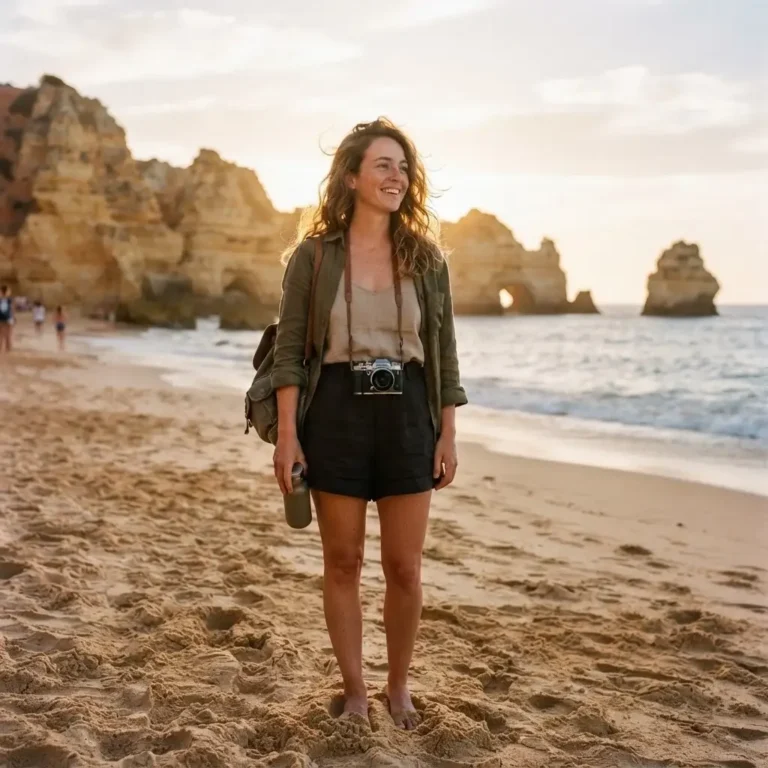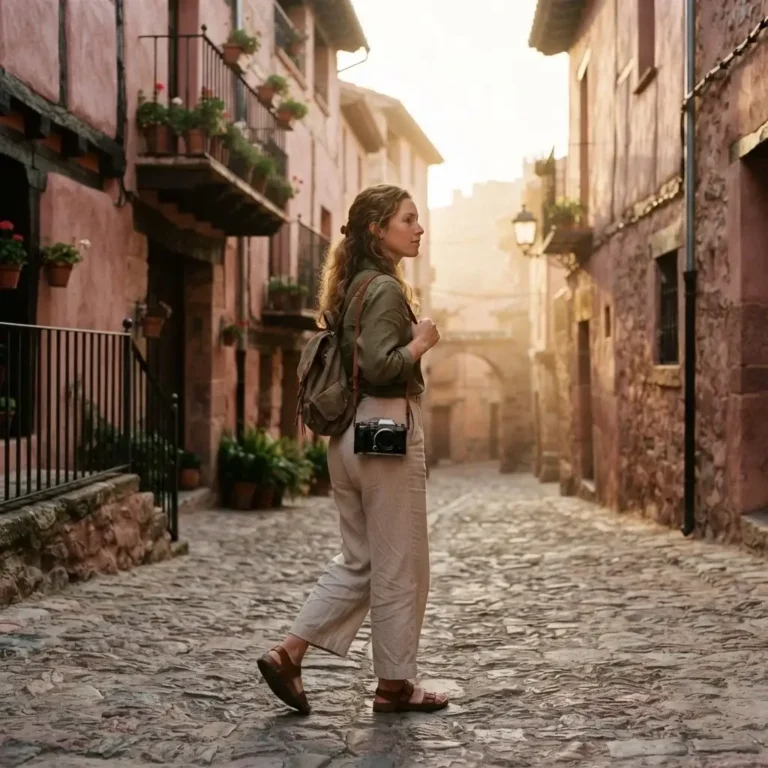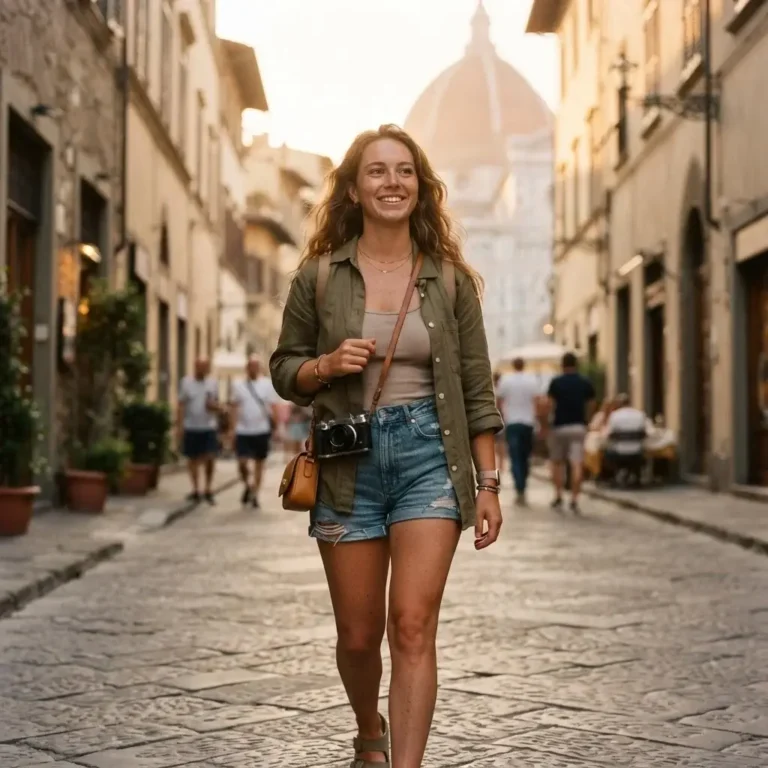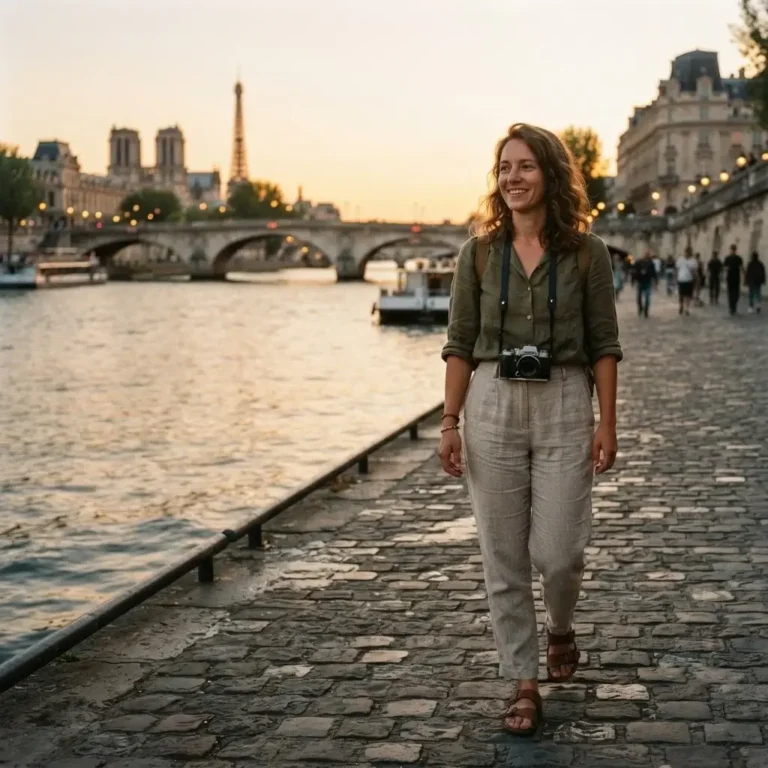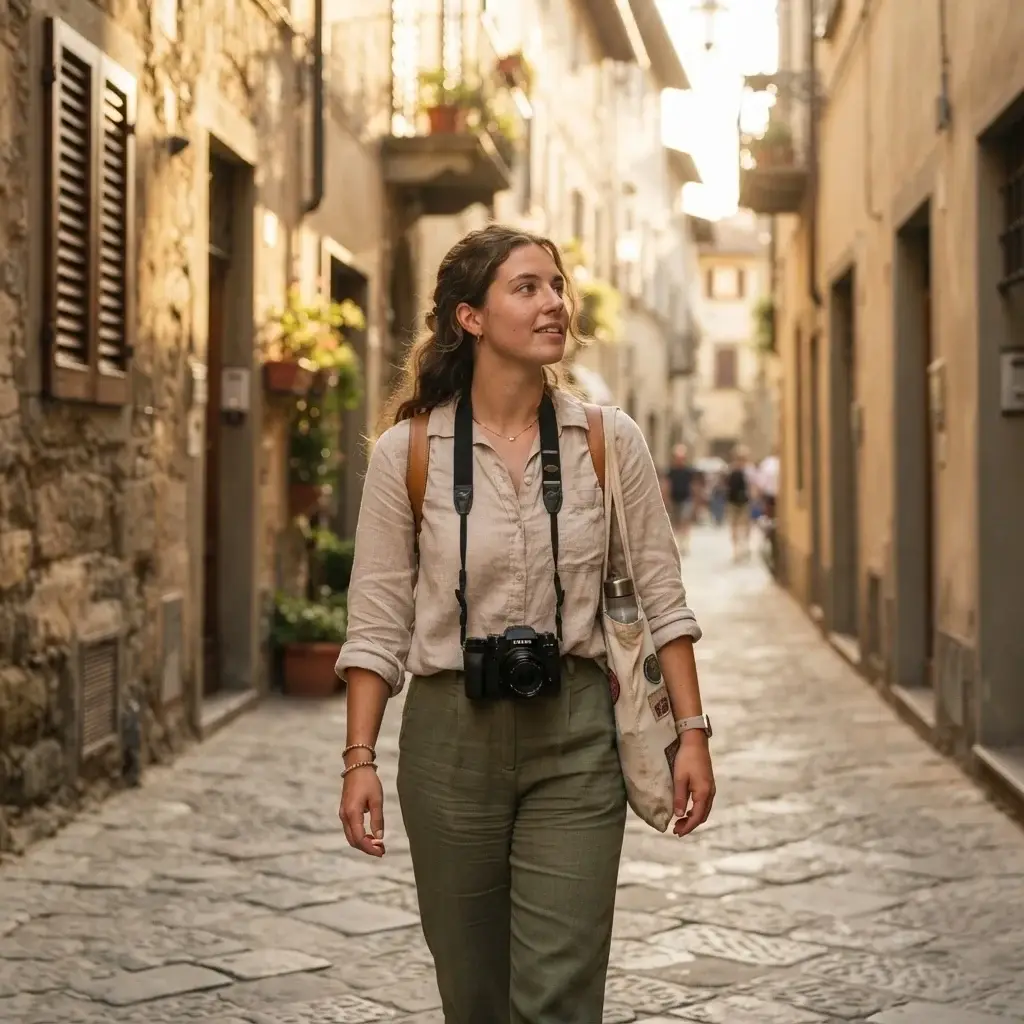
When I worked as a sightseeing guide in New York City, I watched thousands of people rush past the very things that made the city breathe. They were stuck on double-decker buses, peering through plastic windows at a distorted version of the streets. I used to think, If only they would just step off and start walking.
Back then, I was still grinding away at an office job, dreaming of the day I could walk through cities on my own terms. Since I transitioned into full-time travel, I’ve learned that the secret to knowing a city isn’t found in a museum or a famous monument. It is found in the rhythm of your own footsteps on the pavement. Walking is the only way to truly slow down and let a culture settle into your skin.
If you are feeling overwhelmed by the prospect of a solo trip, start here. You don’t need to be an expert navigator. You just need a pair of comfortable shoes and the willingness to take the first step.
Why Walking Changes Everything
Travel is often marketed as a checklist. See the tower, take the photo, buy the souvenir, move on. But when you build your own walking itineraries, you reclaim your time. You aren’t beholden to a tour guide’s schedule or a bus’s route.
When I was backpacking solo through Europe, I stopped trying to see everything. I started choosing one neighborhood a day. I’d pick a starting point—a local bakery or a quiet park—and just walk until my legs got tired. That is when I found the best coffee shops, the local street art, and the people who actually live there. Walking removes the barrier between you and the city. It turns a “destination” into a living, breathing neighborhood.
Preparing for Your Urban Trek
Before you set out, you need to feel secure. Safety starts with preparation. I never leave for a new city without checking the official safety and entry requirements for my destination to ensure I have a clear understanding of the local landscape. It isn’t about being paranoid; it’s about having the knowledge to move through a city with your head held high.
Confidence is a muscle, and it grows every time you successfully find your way from point A to point B. If you are worried about the “what ifs” of travel, I always recommend reading up on essential travel safety and insurance guidance to make sure you have a safety net, which allows you to focus more on the architecture and less on anxiety.
The “Morning Coffee” Technique for Itinerary Building
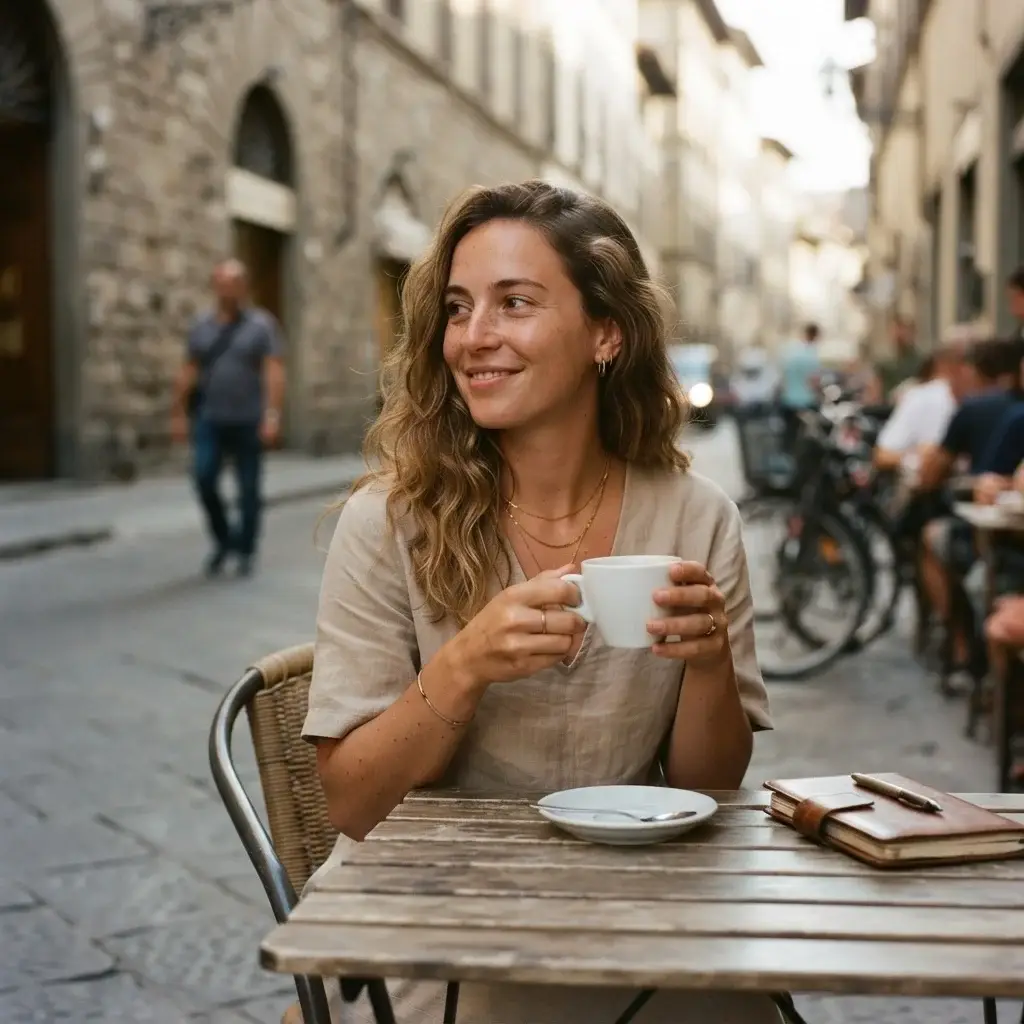
The best walking tours start before you leave your accommodation. My favorite method is the “Morning Coffee” technique. I find a local cafe—not a chain—within walking distance of a landmark I want to see. I sit there for twenty minutes, sipping my drink, and just watching the locals start their day.
Where are they going? What are they wearing? What does the street look like before the mid-day crowds arrive? This helps you gauge the tempo of the city.
In a city like Bangkok, for instance, the morning is the best time to see the spirit houses and street food vendors setting up their stalls. If you want to dive deeper into the culture, the official Tourism Authority of Thailand has incredible resources that explain the etiquette and history of these spots, which can turn a simple walk into an educational experience. By knowing the cultural context, you go from being a bystander to an informed observer.
Navigating Dense Urban Centers
Major cities can be loud and confusing. When I’m in a place like Tokyo or London, I break my day into “zones.” I don’t try to cross the city center in one go. Instead, I pick one district and master it.
I use maps to find the main roads, but I make a rule: once I arrive, I turn the map off. I look for the “side streets of interest.” These are the streets where the paint is peeling a little, where the laundry is hanging on balconies, and where the smell of home-cooked food wafts out of windows.
If I get turned around, I don’t panic. Getting lost is how I’ve found some of my favorite hidden bookstores and tiny, one-room restaurants. Just keep your phone charged for emergency directions, and remind yourself that you are in the city to explore, not to race.
Eating Your Way Through the Map
Walking makes you hungry, and that is a good thing. My walking tours are usually designed around food. I don’t mean Michelin-star dining; I mean the local hole-in-the-wall.
If you are walking through a historic center, look for the place where the line is mostly locals. If the menu is handwritten or only in the local language, you’ve hit the jackpot. In many regions, you need to be mindful of what you’re eating, especially when you’re on the move. I always keep the CDC’s latest travel health advisories in the back of my mind so I can make smart decisions about food safety, ensuring that my trip stays on track and I don’t end up spending my day in the hotel room.
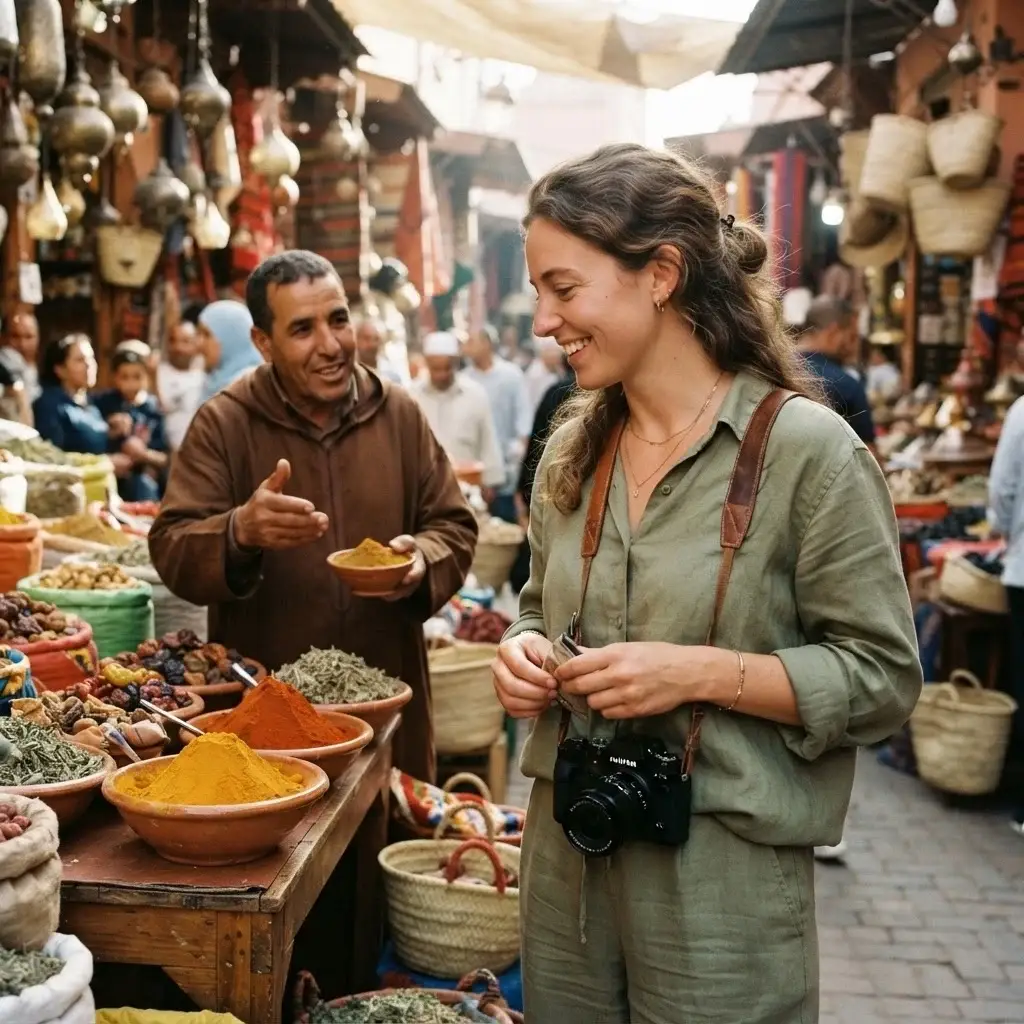
Try local specialties. In Thailand, that might be a simple bowl of boat noodles. In France, it’s a baguette fresh from the oven. Food is a universal language, and walking between different food stalls gives you a taste of the city’s true variety.
Cultural Curiosity: Beyond the Tourist Trap
We often feel like we need to see the “big” sites. But the beauty of a city often lies in the UNESCO World Heritage sites that are slightly off the beaten path. These aren’t just for checking off a list; they are markers of human history. When you walk to one of these spots, you aren’t just visiting a building—you are walking through time.
The key is to give yourself permission to skip the tourist-heavy spots if they don’t interest you. If you are standing in front of a famous museum and realize you’d rather walk through a nearby botanical garden, go to the garden. Your itinerary is yours. The city doesn’t care if you saw the main fountain; the city cares that you showed up and engaged with it.
Practical Tips for the Solo Walker
- Footwear: Do not bring new shoes. Wear the most broken-in, comfortable sneakers you own. Your feet are your primary mode of transport.
- The Bag: Keep it light. A small daypack with a water bottle, a portable charger, and a light jacket is all you need.
- The “Safety” Check-in: I text a friend or family member my general plan for the day. It’s a small step that brings massive peace of mind.
- The Afternoon Lull: Around 2:00 PM, energy often dips. Find a park, a church, or a quiet library. Read a book for thirty minutes. It’s a great way to observe the city from a seated position.
Building Your Own Itinerary: A Step-by-Step
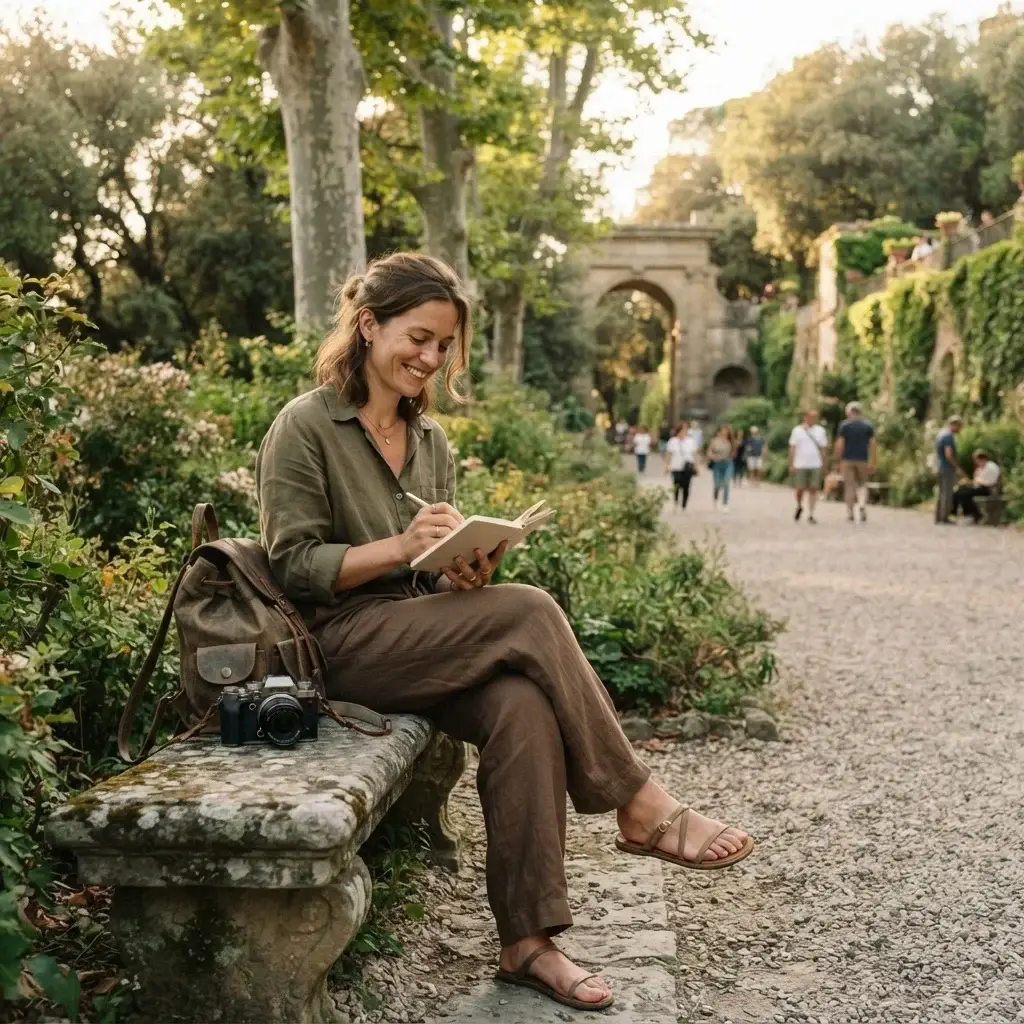
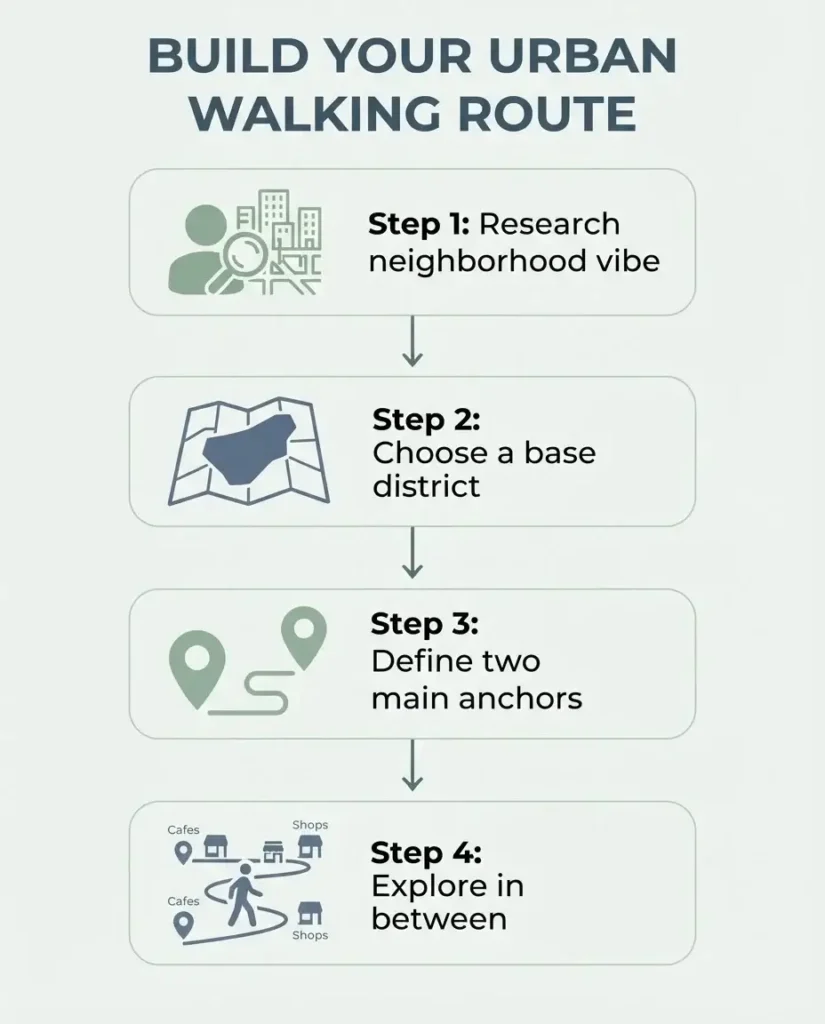
Start by selecting a city. Use a general travel overview guide to get a high-level feel for the neighborhoods. Once you pick a district, look for two “anchors”—one in the morning and one in the evening. Everything in between is just exploration.
If you get stuck, remember that modern tools can help without ruining the magic. Knowing how to use local transport apps for travelers can give you the freedom to walk as far as you like and then catch a ride back if you find yourself too far from your base. This takes the pressure off the return journey.
Overcoming the Fear of the Unknown
When I first started traveling alone, I was terrified. I was a girl from New York who had spent her life following the “right” path. I had a fear of looking lost. I had a fear of not knowing the language.
But I learned that the world is much kinder than we think. When you walk through a city with curiosity, people notice. They see you aren’t just a tourist trying to get a selfie—you’re a traveler trying to understand their home. You’ll be surprised at how many people will offer directions, a smile, or a recommendation for a local spot.
The Beauty of Slow Travel
The goal of these itineraries is to embrace slow travel. It’s not about how many miles you cover, but about how many observations you make. Did you notice the way the light hits the brickwork in the late afternoon? Did you hear the local street musicians? Did you feel the shift in the air as you moved from the business district to the residential quarters?
These are the memories that stay with you long after the trip is over. They aren’t the photos in your camera roll. They are the feelings you carry in your heart.
Creating Your Own Path
You don’t need a professional guide to show you the best of a city. You just need to be brave enough to start. Start with a city you’ve always wanted to see. Find a neighborhood that looks interesting, grab a coffee, and start walking.
Don’t worry about being perfect. Don’t worry about seeing everything. Just worry about being present. When you walk, you open yourself up to the world, and I promise you, the world will open itself up to you.