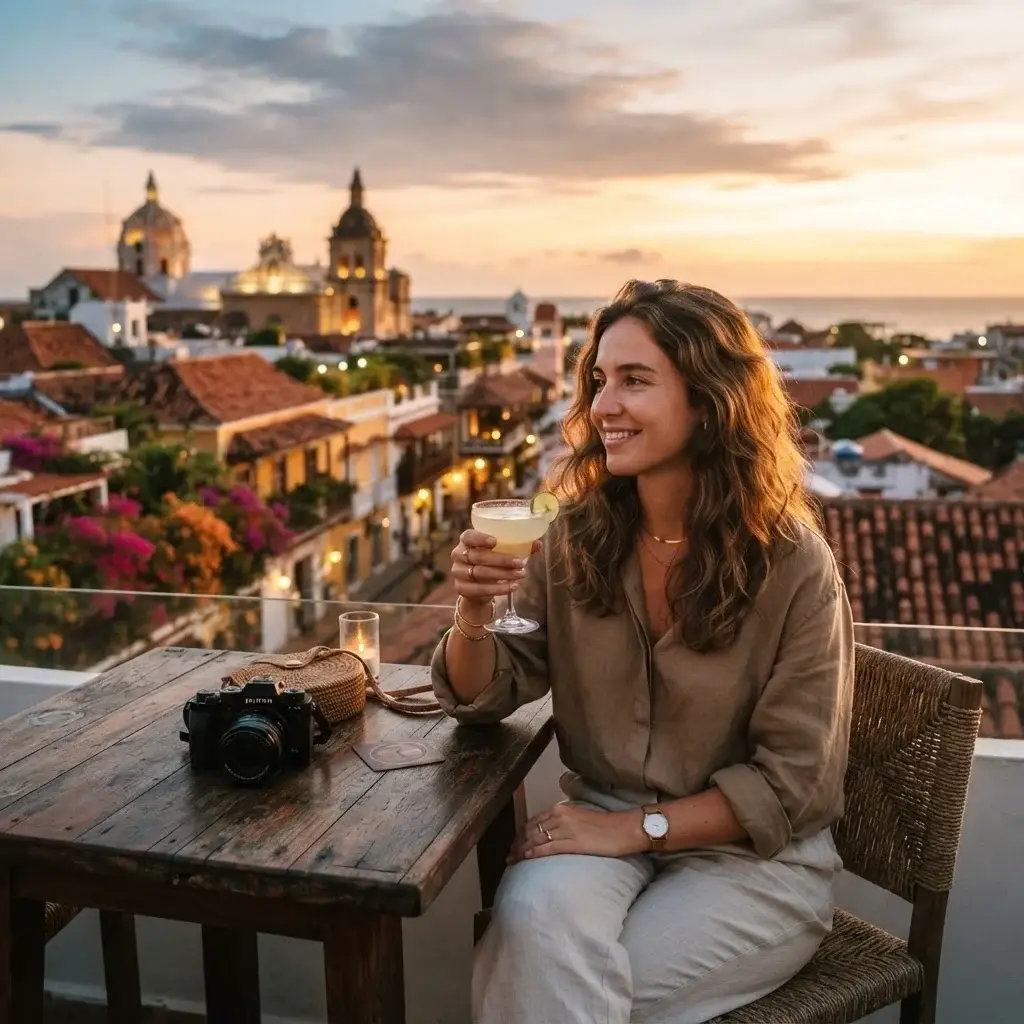
South America Rooftop Bars That Actually Deliver on Views

I want to tell you something that most rooftop bar lists will never admit: the view is not always the point.
Some of the most stunning skylines I have read about in South America belong to bars where the drinks are overpriced, the music is soulless, and the crowd is 90% hotel guests scrolling Instagram. Meanwhile, some of the most electric, most memorable rooftop experiences travellers consistently rave about happen in places where the view is secondary to the atmosphere, the cocktails, and the feeling that you have genuinely stumbled into something real.
This guide is my attempt to cut through the noise. I have put together an honest, city-by-city breakdown of rooftop bars across South and Central America that are actually worth your evening. Not because they photograph well (though some absolutely do), but because they deliver on experience. I have included what to order, how to get there as a solo traveller, when to go for the best light, and a few practical things no one else bothers to tell you.
Start here, plan well, and then go have the drink of your life above a city that will make you feel very small and very alive at the same time.
Before You Go: A Few Things Worth Knowing
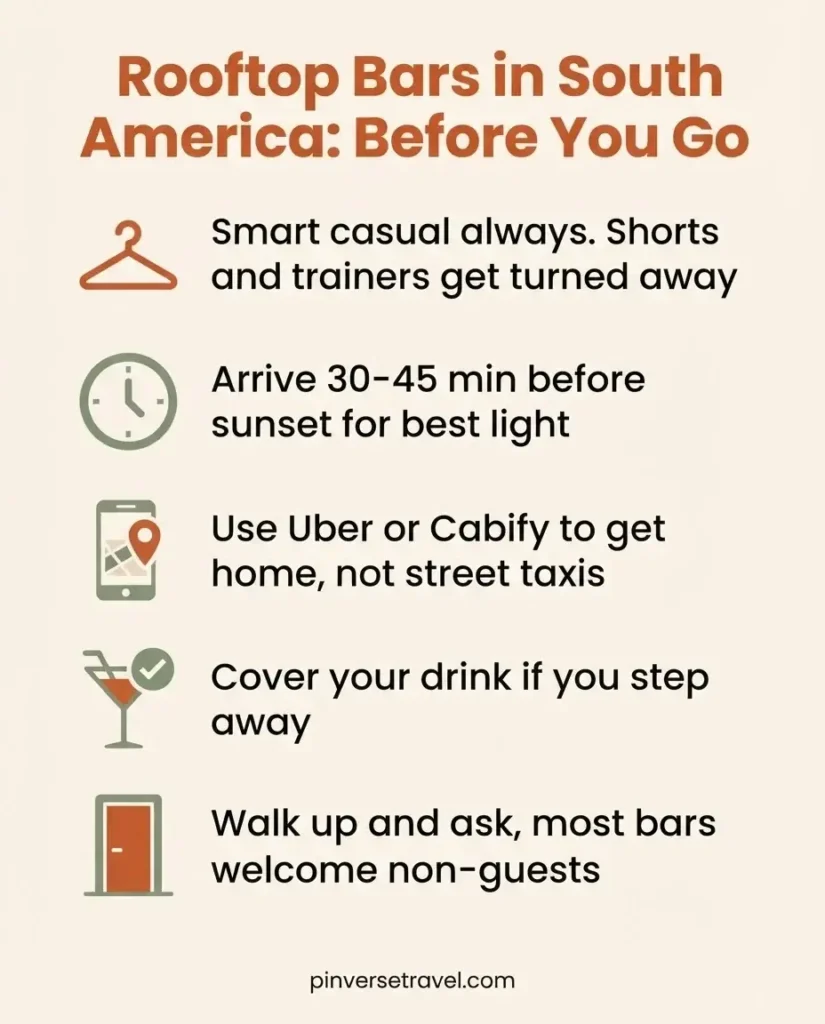
One of the most frustrating things about rooftop bar research is that most lists do not tell you whether a bar is actually open to the public or reserved for hotel guests. In South America, many of the most photographed rooftop pools are exclusive to paying hotel guests. The bars adjacent to those pools, however, are often open to walk-in visitors. When in doubt, call ahead or simply walk up and ask at reception. You will rarely be turned away from a bar.
Dress codes are real in Latin America, more so than in most cities in Europe or Southeast Asia. In Cartagena, Bogota, Lima, and Buenos Aires, smart casual is the baseline at mid-range and upscale rooftops. Trainers and shorts will get you turned away at the door at some places. A clean linen shirt or a sundress costs nothing and saves a lot of frustration.
Timing matters enormously. The golden hour before sunset, roughly 30 to 45 minutes before the sun drops, is when rooftop bars hit their visual peak. In Miraflores, Lima, that means getting up before 6pm most of the year since the coast goes dark quickly. In Cartagena during dry season (December through April), the sunsets are spectacular and long. Book or arrive early.
Finally, solo travel safety. Going to a rooftop bar alone is entirely normal and widely done across this region. Use a ride-hailing app (Uber, Cabify, inDriver, depending on the city) to get there and get back, rather than flagging a street taxi late at night. Keep your phone in your bag rather than on the table. Cover your drink if you step away. These are the same habits I built backpacking solo across Europe and they apply just as well here.
Colombia: Three Cities, Three Very Different Rooftop Scenes
Colombia deserves its own chapter because it offers three genuinely distinct rooftop experiences within one country: the colonial magic of Cartagena, the transformed industrial energy of Medellin, and the cooler, more sophisticated skyline of Bogota.
Cartagena: Where the Old City Meets the Sky
Cartagena is the kind of place that makes you feel like you have wandered into a film set. The Old Town, a UNESCO World Heritage Site recognized for its extraordinary 16th to 18th-century military architecture and colonial monuments, is ringed by fortified stone walls that have stood for centuries. Going up onto a rooftop here means looking out over Spanish colonial rooftops, bright bougainvillea cascading from balconies, church domes, and the Caribbean shimmering at the edges.
The bar to know is Alquimico. It is not a typical rooftop in the scenic-view sense: it is a multi-level converted 19th-century mansion where the rooftop terrace happens to be the loudest, most joyful floor of the building. Ranked No. 11 on The World’s 50 Best Bars, and winner of World’s Best Bar at the 2024 Spirited Awards, Alquimico is operated with genuine community purpose. Bar owner Jean Trinh runs initiatives supporting local farmers, bartender training programs, and a music foundation for young people from disadvantaged backgrounds. The drinks are built around Colombian ingredients, including house-made mango vermouth and flavored meads from their own bees. Cocktails start around COP $45,000 (roughly $10-$11 USD). Walk-ins only, no reservations, and it can hold up to 1,200 people on a big night, so arrive early if you want breathing room.
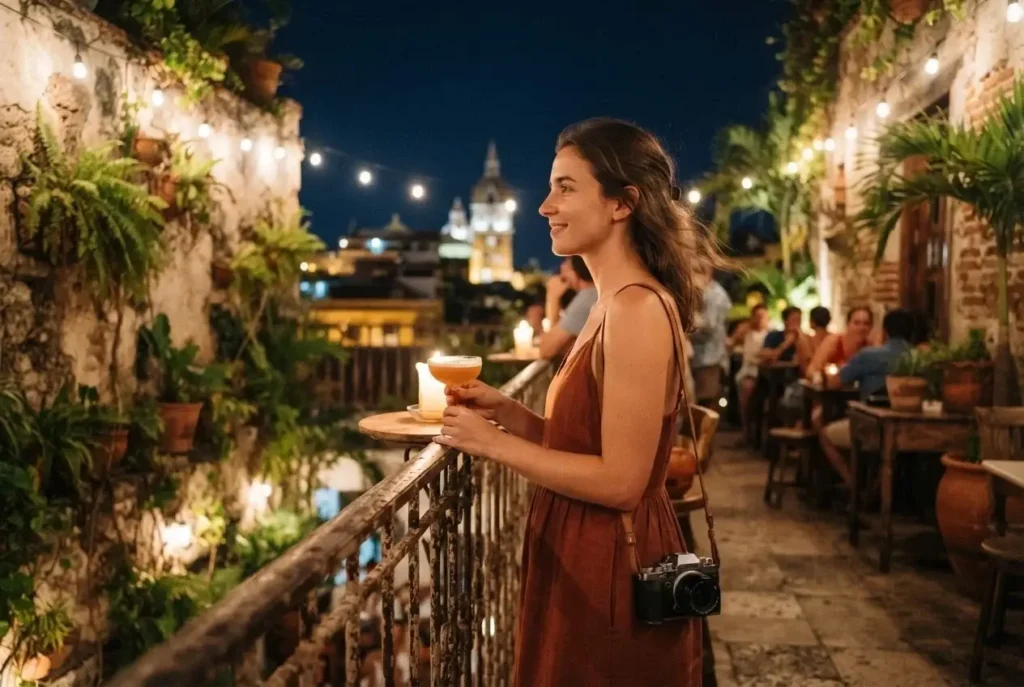
For views that are more traditionally panoramic, Mirador Culture Bar sits right in the heart of the Historic Center and delivers 360-degree sightlines over the city, including close-up views of the famous clock tower. Cocktails run COP $50,000 to $75,000 and they do live music most nights. Check their schedule before going.
If you want the highest point in the entire country, 51 Sky Bar on the 51st floor of Hotel Estelar in the Bocagrande neighborhood is technically the highest bar in Colombia. The views are undeniably dramatic and cocktails start around COP $38,000. It is a very different energy from the Old Town bars, more modern and less culturally rooted, but genuinely impressive on a clear evening.
Medellin: Elevated Energy in El Poblado
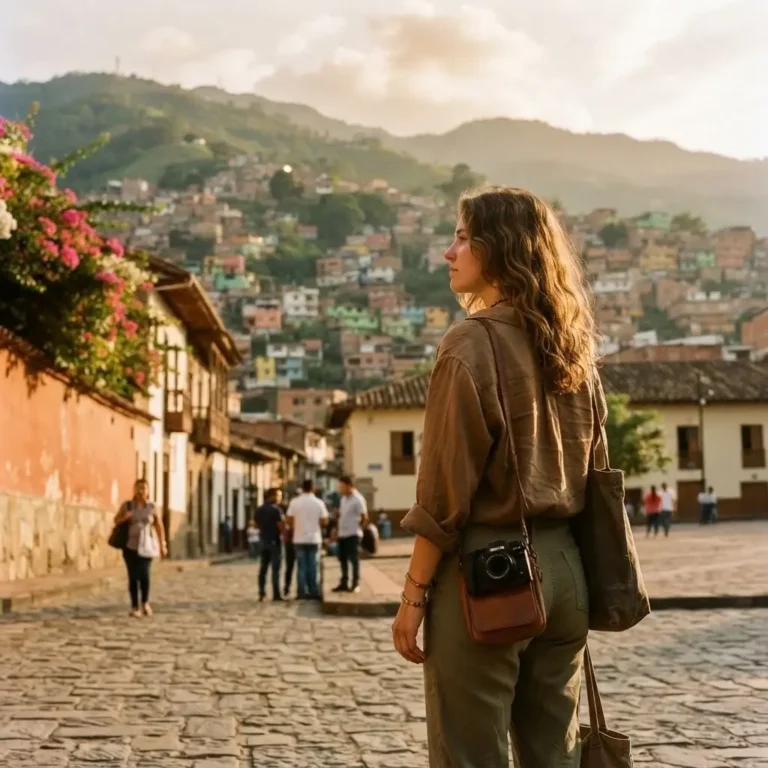
Medellin has gone through one of the most remarkable urban transformations of any city in the last two decades, and that energy is very present on its rooftop scene. The city sits in a valley surrounded by green Andean hills, which means that rooftop views here have a natural drama that flat coastal cities cannot replicate.
The neighbourhood to focus on is El Poblado. This is where most of the concentrated nightlife sits, and the rooftop bars here tend toward a younger, louder, more social atmosphere. El Purgatorio Roof, 14 floors above the city at the TRYP Medellin Estadio hotel, mixes indoor lounge space with an outdoor terrace and cabanas, running DJ nights and events regularly. For something with more character, Los Rooftops by Los Patios is a two-bar setup inside a boutique hotel that welcomes non-guests freely. One bar (Ziruma Tik Bar) specialises in exotic fruit cocktails, the other (El Bar) runs a more classic menu. Bar service starts at 4:30pm. The vibe is relaxed and genuinely welcoming, and the hammocks are a nice touch for the afternoon hours.
Signature drinks to look for in Colombia generally include the pony malta (a malt soft drink mixed with Aguila beer in a layered serve), craft lulo fruit cocktails, and regional aguardiente-based mixed drinks. Aguardiente is Colombia’s national spirit, an anise-flavoured cane liqueur, and any local bartender worth their salt will know how to work it into something interesting.
Bogota: Cooler Air, Sophisticated Skyline
Bogota sits at 2,600 metres above sea level, so bring a light layer even in the dry season because evenings get genuinely cold on an open-air terrace. The rooftop scene here skews slightly more formal and design-focused than Cartagena or Medellin. The Rooftop Guide’s Bogota coverage lists nine solid options, with Astoria Rooftop and Apache at Click Clack Hotel consistently appearing as top picks. Astoria, on Calle 85 in the Chapinero district, is praised for its 180-degree panoramic city views and is open seven days a week from midday into the late evening. Sky 15 Rooftop and Vista Corona round out the shortlist for variety of atmosphere.
The cocktail culture in Bogota is more internationally influenced than the Caribbean coast, leaning toward well-crafted spritz drinks, gin cocktails, and mezcal-based serves. Beer prices tend to be cheaper here than in Cartagena, so if you are watching your budget, a cold Club Colombia or Poker at a rooftop bar in Bogota costs significantly less than a cocktail.
Lima, Peru: Ocean Cliffs and a Culinary Scene That Earns Every Bit of Its Reputation
Lima deserves serious attention and not enough people give it the time it warrants. The food alone is worth a trip. Peruvian cuisine is internationally recognized for its biodiversity and cultural layering, and in 2023 UNESCO officially inscribed ceviche on its Intangible Cultural Heritage list, a recognition of how deeply the dish is woven into Peruvian identity. The cocktail you order on a Lima rooftop is an extension of that culinary culture. The pisco sour, made from pisco (a Peruvian grape brandy), fresh lime juice, egg white, and bitters, is one of the great cocktails of South America and Lima is where you drink it.
For rooftop experiences, Lima concentrates its best views in two neighbouring districts: Miraflores and Barranco. Both sit on the cliffs above the Pacific Ocean, which means that sunset from any elevated point looks out over the actual sea. Lima Insider’s comprehensive guide to rooftop bars covers the full range from party-atmosphere rooftops to quieter cocktail terraces, and it is worth reading before your trip.
Insumo at the AC Hotel in Miraflores is positioned right on the waterfront, on the 18th floor, with ocean views that let you watch people parasailing at eye level. It opens Monday to Saturday at 4pm and closes at 11pm, with Sunday hours running 12pm to 5pm. Getting there by 4pm is genuinely worthwhile if you want the full ocean light before dark sets in around 6pm.

For a more bohemian feel, Hotel B in Barranco runs a rooftop with brunch service from 9am to 1pm and Pacific Ocean sunset views in the evenings. Barranco is Lima’s creative, artistic quarter and the neighbourhood below the rooftop is worth exploring on foot before or after your drinks.
Buenos Aires, Argentina: The Cocktail City That Stays Up Late
Buenos Aires is a city built for the evening. Porteños (as Buenos Aires residents are known) eat dinner at 10pm, go out at midnight, and close bars at sunrise. The rooftop culture here reflects that schedule. Do not show up at 7pm expecting a lively crowd. The city hits its rooftop stride around 9pm to 10pm.
The official Buenos Aires tourism board maintains a curated guide to rooftop bars across the city, covering options from microcentro to Puerto Madero to Recoleta, which is a good planning resource since venues change seasonally.
Two consistent recommendations from local sources: Alvear Roof Bar at the Alvear Palace Hotel in Recoleta is the upscale choice, perched on the 11th floor overlooking the neighbourhood, with impeccable service and a genuinely elegant atmosphere. This is the kind of place where you dress properly and spend more than you planned. Sky Bar at Hotel Pulitzer, also central, is more accessible in price and atmosphere, with views over Plaza San Martin and a sunset-to-late-night programme that suits most budgets.
The cocktail culture in Buenos Aires leans toward Fernet con Coca (Fernet-Branca mixed with Coca-Cola, the unofficial national drink), Malbec-based wine cocktails, and a growing natural wine movement in more artsy neighbourhoods like San Telmo and Villa Crespo. On a rooftop, asking for a Fernet con Coca is an easy way to signal that you are not entirely a tourist.
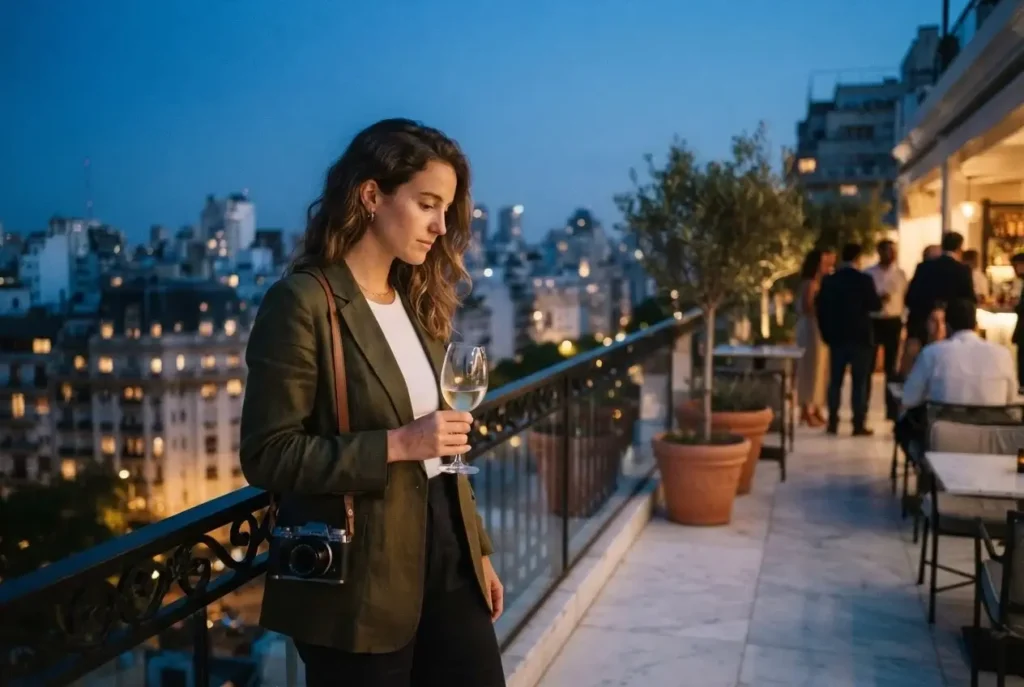
Argentina’s economy has made pricing complex in recent years, with real prices shifting significantly depending on exchange rates. As a general guide, cocktails at mid-range rooftop bars in Buenos Aires currently run in the range of $5 to $10 USD when paying in local pesos at the official rate. Always check current conditions before your trip.
Rio de Janeiro and Sao Paulo: Brazil’s Two Rooftop Personalities
Brazil is a big country with very different energy between its two dominant cities, and that difference shows up clearly on rooftops.
Rio de Janeiro is visually one of the most extraordinary cities on earth. Corcovado, Sugarloaf Mountain, Copacabana, the bay. The view from any elevated point in the right neighbourhood is genuinely overwhelming in the best way. Solo travelers consistently point to Yoo2 Rio de Janeiro, facing Botafogo Beach with front-row views of Sugarloaf and the bay, as one of the most accessible and well-priced rooftop options in the city. The rooftop pool at Yoo2 is hotel-exclusive, but the bar itself welcomes walk-ins. SKY LEME Rooftop & Lounge and Isabel Lounge are also highly rated for views and atmosphere.
Sao Paulo is a different animal: it is a megacity of 22 million people and the rooftop culture reflects that urban intensity. Skye Bar at Hotel Unique is the most famous, consistently appearing in global rooftop rankings. It has a distinctive architecture, an outdoor wooden deck, and a deep crimson rooftop pool that is reserved for hotel guests but visible from the public bar area. The clientele is upscale and the prices match. If you are going to do one genuinely premium rooftop experience in Brazil, Skye is the benchmark.
Central America: Smaller Cities, Quieter Rooftop Moments
Central America does not get enough credit in this conversation. The rooftop scenes here are smaller and more intimate, which, depending on your travel style, is exactly the point.
Panama City has a split personality that makes its rooftops uniquely interesting. The historic Casco Viejo district, crumbling colonial architecture being carefully restored, faces the glittering modern skyline of the financial district across the bay. The contrast from any rooftop in Casco Viejo is visually electric.
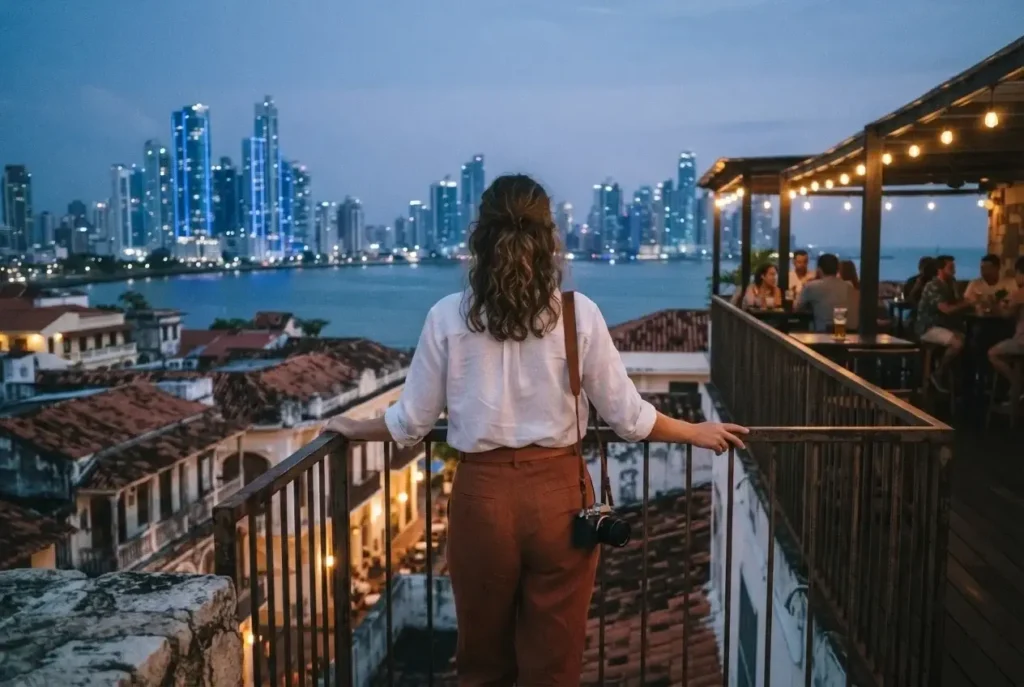
Tantalo Hotel and Sama Sky are the most consistently recommended spots in the neighbourhood, popular with both travellers and locals, with an energy that runs from early evening well into the night. The signature drink in Panama is the seco con leche, made from seco Herrerano (a Panamanian sugar cane spirit), milk, and ice, and it is more delicious than it sounds.
In Antigua, Guatemala, the rooftop experience is less about cocktails and more about one of the most extraordinary natural backdrops in all of Central America. Antigua sits in a valley surrounded by three volcanoes: Agua, Fuego (which is actively erupting in low-level form most days), and Acatenango. Cafe Sky Bar, the most beloved rooftop in the city, offers sweeping views across the rooftops to the volcanoes, a relaxed open-air atmosphere, and consistent quality from its kitchen and bar. The Cafe Sky Bar website has current menus and opening hours, and it is worth checking seasonal closures since Antigua can be busy or surprisingly quiet depending on the time of year.
What to Order: A Quick Drink Guide by Country
One of the best things about South and Central America’s rooftop bar scene is that each country has its own distinct drink culture, and ordering something local rather than a generic gin and tonic is always the right move.
In Peru, start with a pisco sour. In Colombia, try a cocktail built on local aguardiente or a lulo (a tangy Andean fruit) spritz. In Argentina, embrace the Fernet con Coca or ask what natural wines are poured by the glass. In Brazil, order a caipirinha (lime, cachaca, sugar) or ask for a craft cachaca cocktail, which is the direction younger Brazilian bartenders are pushing the spirit. In Panama, try the seco con leche. In Guatemala, a local craft beer or a horchata rum cocktail will serve you well.
Across all of these countries, asking the bartender what they are most proud of making is one of the most reliably excellent strategies in travel.

It works in every language.
The Bigger Picture
Here is what I keep coming back to when I think about rooftop bars in South and Central America: the best ones are not just nice views with average drinks. The best ones are windows into a city’s identity. You are watching Cartagena’s colonial skyline from a bar built inside its social history. You are drinking a pisco sour above the Pacific cliffs of Miraflores, the same ocean that Peruvian fishing communities have worked for thousands of years. You are watching Sugarloaf turn amber from a Botafogo rooftop as the city of Rio comes alive below you.
That is the thing travel gives you that no itinerary can fully plan: the moment when the drink in your hand and the view in front of you and the fact that you made it here at all come together into something that feels like pure, genuine aliveness.
Go find your rooftop. The view will take care of itself.