Best Nature Retreats in North America: A Beginner’s Guide

There is a specific kind of tired that no amount of sleep fixes. It’s the kind that builds slowly across months of routines, responsibilities, and the relentless noise of everyday life. I know it well. Before I left my office job years ago and built a life around travel and writing, I used to sit at my desk in New York staring out the window, craving something I couldn’t quite name. What I was craving, I eventually figured out, was nature. Not a weekend at a resort, not a city break. Real, quiet, honest-to-goodness wilderness.
North America has some of the most extraordinary natural landscapes on earth. Towering red rock canyons, foggy Atlantic coastlines, ancient rainforests, glacier-fed lakes so blue they look invented. And the best part? You don’t need a month off or a massive budget to experience them. You need a plan, a little courage, and someone to point you in the right direction.
This guide is for you if you’ve been thinking about a nature retreat but aren’t sure where to start. Maybe you’ve never done anything like this alone. Maybe the idea of permits and gear and remote trails feels like a lot. I’m going to walk you through six of the best nature retreats in North America, covering what makes each one special, what to expect as a solo traveler, what it costs, what to eat, and exactly what you need to know before you go.
Let’s start with what to expect.
What Does “Nature Retreat” Actually Mean?
Before anything else, it’s worth clearing up something the internet tends to muddle. The phrase “nature retreat” gets used in two very different ways. Sometimes it refers to an organized retreat center where you show up, hand over your phone, and follow a structured program of yoga, meditation, hiking, and meals. Other times, it simply means an immersive, restorative trip into a natural setting, your own self-directed retreat in a national park, a cabin in the woods, or a canoe on a silent lake.
Both are valid. Both can be profoundly restorative. This guide leans toward the second definition: destinations where the land itself does the work. Places you travel to solo (or in a small group), where the natural environment is the retreat. You set your own pace. You choose your trails. You decide whether dinner is a campfire or a local restaurant in a nearby town. That kind of freedom, especially when you’re new to solo travel, is both terrifying and deeply rewarding.
The places below range from beginner-friendly (well-marked trails, nearby towns, cell service) to more remote and adventurous. I’ll flag where each one sits on that spectrum so you can choose what fits your current comfort level.
Great Smoky Mountains, Tennessee and North Carolina
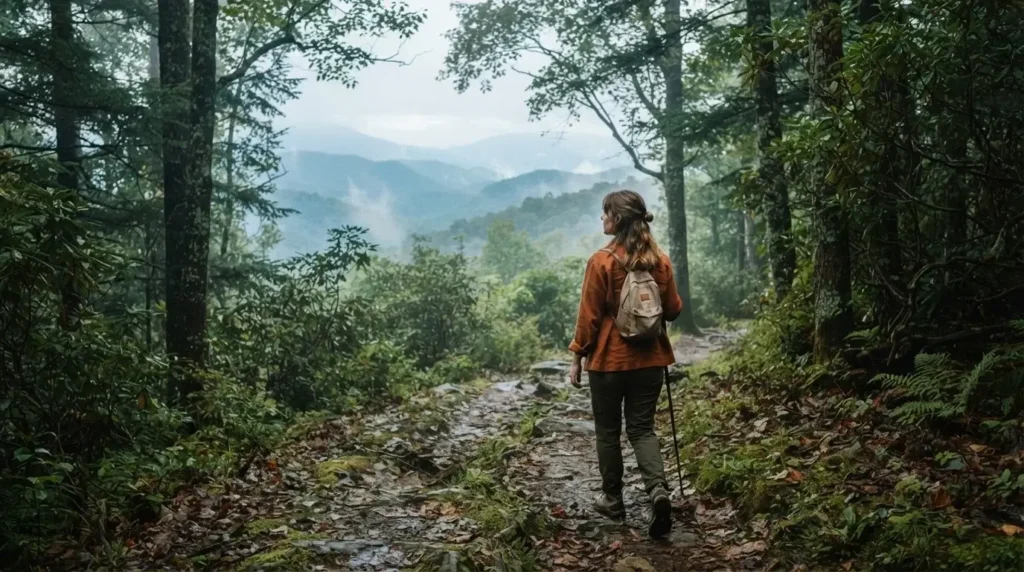
If you’re looking for the gentlest possible entry point into a North American nature retreat, the Great Smoky Mountains are hard to beat. This is America’s most visited national park, which tells you something important: it’s accessible, well-organized, and filled with people who will smile and nod when you pass them on a trail. For a first solo trip into nature, that kind of quiet social safety net matters more than you might expect.
The Smokies stretch across the border of Tennessee and North Carolina, and the landscape shifts beautifully depending on where you go and what time of year you visit. In spring, the wildflowers are legendary. In fall, the foliage turns into something that doesn’t look real. In summer, the park is lush and green with mist rolling across the ridgelines every morning, which is exactly where the “smoky” name comes from.
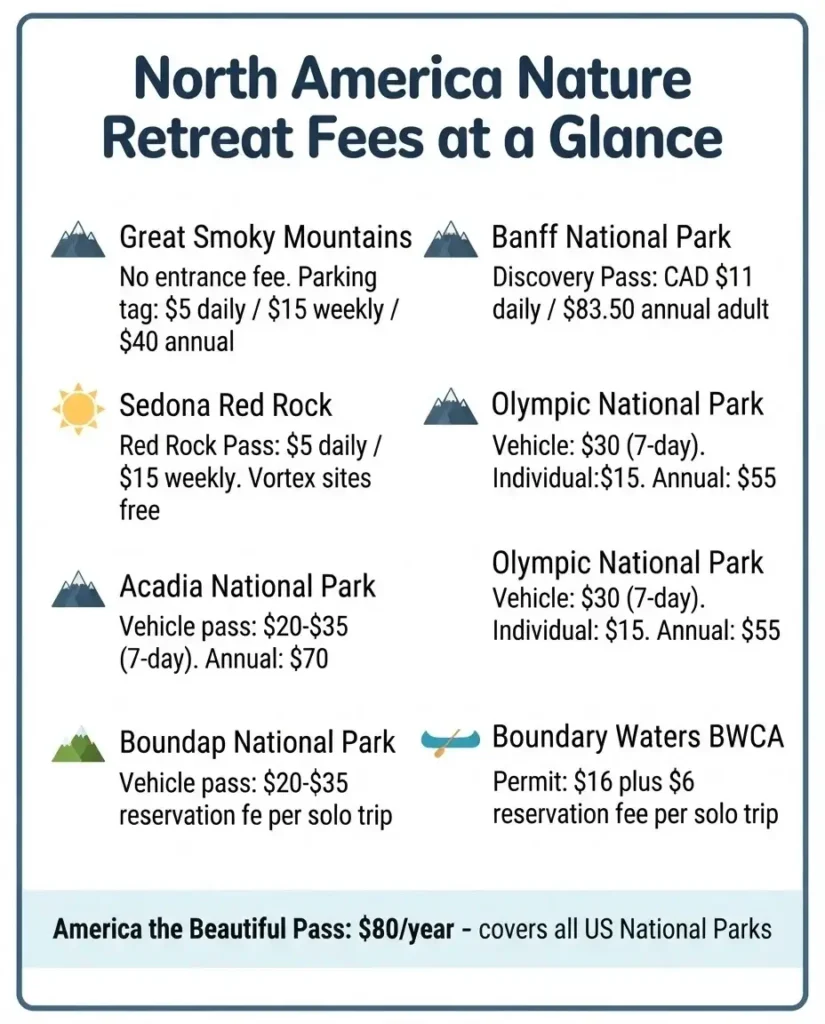
One of the best things about the Smokies for budget-conscious travelers is the entrance fee: there isn’t one. Great Smoky Mountains is one of the only major national parks in the US with no entry charge. However, if you’re driving and parking for more than 15 minutes inside the park, you’ll need a parking tag: $5 for a daily tag, $15 for weekly, or $40 for an annual tag. If you plan to visit multiple US national parks in a year, the America the Beautiful annual pass at $80 covers entrance fees across federal lands and is worth every penny. You can read about every trail option, difficulty level, and seasonal condition directly from the National Park Service’s official Smokies hiking page, which I’d recommend bookmarking before you go.
The park offers over 800 miles of trails, which sounds overwhelming until you realize you only need to pick one or two. For beginners, the Alum Cave Trail is one of the most rewarding in terms of scenery versus effort: about 4.4 miles round trip with views that feel earned but not punishing. Laurel Falls is another great option for first-timers, paved, popular, and beautiful. If you want more solitude, heading to the North Carolina side of the park tends to be less crowded than the Tennessee entrances.
For food, the town of Gatlinburg on the Tennessee side is the main tourist hub, and it delivers everything from pancake houses to barbecue spots where you can get a pulled pork plate that costs less than your parking tag. If you prefer something quieter, Bryson City on the NC side has a lovely small-town feel and a few genuinely good restaurants. It’s a place where you can sit on a porch with coffee after a long hike and feel like you’ve genuinely stepped out of ordinary life.
Solo traveler comfort level here is high. You are rarely truly alone in the Smokies, and that’s not a bad thing when you’re new to this.
Sedona, Arizona
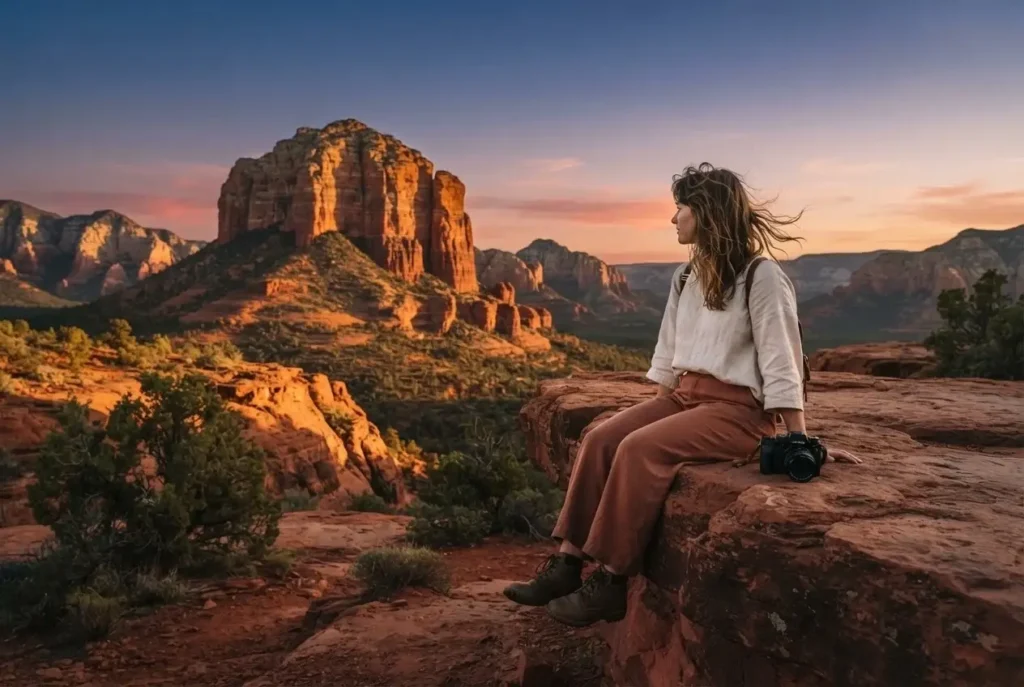
Sedona operates on a different frequency than anywhere else I’ve read about or researched in North America. Solo travelers consistently describe it as the kind of place that gets under your skin without you quite understanding why. The landscape is extraordinary: deep red rock formations rising sharply from the desert floor, the light shifting their color from orange to pink to deep violet as the day moves. But what makes Sedona unique is the layer of meaning people bring to those rocks.
Sedona is home to four famous energy vortexes: Airport Mesa, Cathedral Rock, Bell Rock, and Boynton Canyon. Whether or not you lean toward the metaphysical, understanding what vortexes mean in Sedona helps you appreciate why this place draws people seeking restoration, clarity, and something they can’t quite articulate. According to Visit Sedona’s official resource on vortexes, the vortex sites are considered centers of the earth’s energy that are conducive to healing, meditation, and self-discovery, and every single one of them happens to sit at a spot of jaw-dropping natural beauty. You don’t need to believe in anything to feel the effect of standing on Cathedral Rock at sunrise with miles of red canyon below you and total silence around you.
For solo travelers, Sedona is exceptionally safe and navigable. The trailheads are well-marked, the town of Sedona has everything you need, and there’s a strong community of solo and spiritual travelers passing through at any given time. Entry to the vortex sites is free. Most trailheads do require a Red Rock Pass ($5 per day or $15 per week for parking), so factor that into your budget.
Start with the Bell Rock Pathway for an easy introduction to the landscape, about 1.6 miles of relatively flat trail with Bell Rock rising dramatically ahead of you the whole time. Then work your way to Cathedral Rock for something more challenging and more awe-inspiring. Boynton Canyon is worth doing for its combination of vortex energy, canyon walls, and a feeling of genuine seclusion even though it’s accessible from a parking area.
Food in Sedona is genuinely good. The Secret Garden Cafe near Tlaquepaque Arts Village is a lovely solo lunch spot. For something heartier after a long hike, the Elote Cafe serves modern Mexican cooking that uses local ingredients in smart, layered ways. Reservations fill up, so plan ahead.
The one thing I’d flag for beginners: Arizona heat is real. If you’re visiting between May and September, start every hike before 8am and carry at least two liters of water per person. The desert does not negotiate on this.
Acadia National Park, Maine
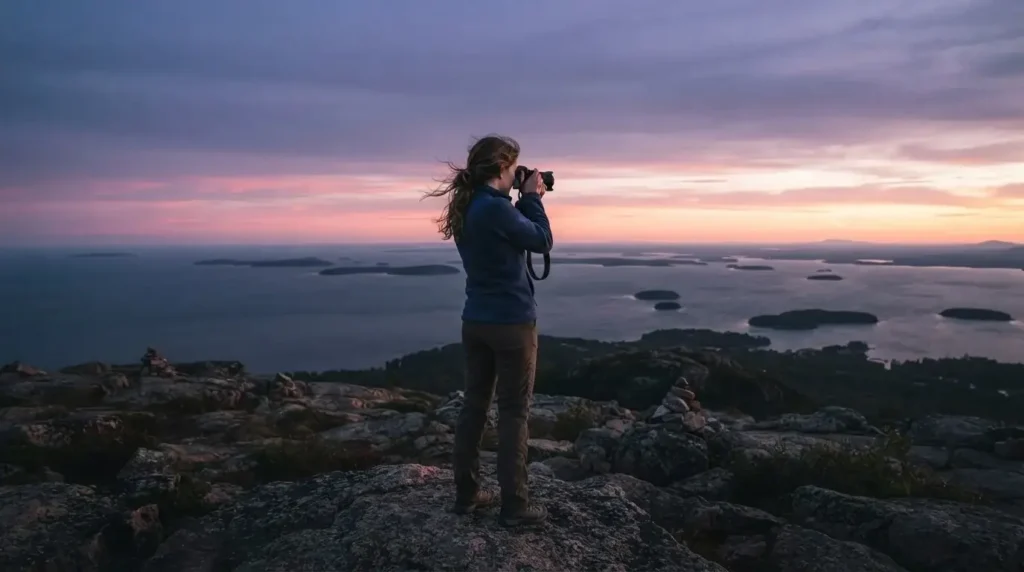
Acadia sits on Mount Desert Island off the coast of Maine, and it is one of those places that rewards you precisely for showing up in the right season with the right mindset. What makes Acadia different from most American national parks is the intimacy of it. The park is not vast in the way that Yellowstone or Grand Canyon are vast. It’s concentrated, layered, and achingly beautiful, especially in September and early October when the crowds thin and the leaves begin to turn.
For solo travelers, Acadia is close to ideal. The Island Explorer bus system runs throughout the park in the summer and early fall months, which means you genuinely don’t need a car to access most trailheads. That’s a rare gift in American national parks and a massive advantage if you’re flying in. Bike rentals are available in Bar Harbor, the charming town just outside the park, which puts another layer of the park within easy reach.
The summit of Cadillac Mountain is the park’s marquee experience. At 1,530 feet, it’s the highest point on the eastern seaboard, and from the summit on a clear morning you can watch the sun rise before it reaches any other spot in the continental US. That’s worth the alarm clock. However, if you plan to drive to the summit, you’ll need to book a vehicle reservation in advance through the NPS system: the road requires timed entry from mid-May through late October. Walking or cycling up doesn’t require a reservation.
Entrance fees at Acadia are a bit more involved than some parks. A standard vehicle pass runs $20 to $35 and is valid for seven days. For international visitors who are not US residents, there’s an additional $100 nonresident fee per person. You can review the complete current fee structure directly on the official Acadia National Park NPS page before you book, since the park has recently moved to fully cashless payments, so bring your card.
Bar Harbor is one of the more charming small towns adjacent to any American national park. You can get exceptional lobster rolls for around $20-$25, sit on a bench by the waterfront, and watch fishing boats come and go. The Cafe This Way on Mount Desert Street is a beloved local breakfast spot that solo travelers consistently recommend. Order the blueberry pancakes. Maine blueberries are something specific and they deserve your full attention.
For first-time solo travelers in Acadia, the Jordan Pond Path is a wonderful starting point: a 3.4-mile loop around a stunning glacially formed pond with a carriage road that’s easy underfoot. The Precipice Trail and Beehive Trail are short but seriously steep, with iron rungs and ladders bolted into the rock. They’re thrilling if your legs and nerves are ready, and they’re proof that Acadia rewards exactly as much courage as you bring to it.
Banff National Park, Canada
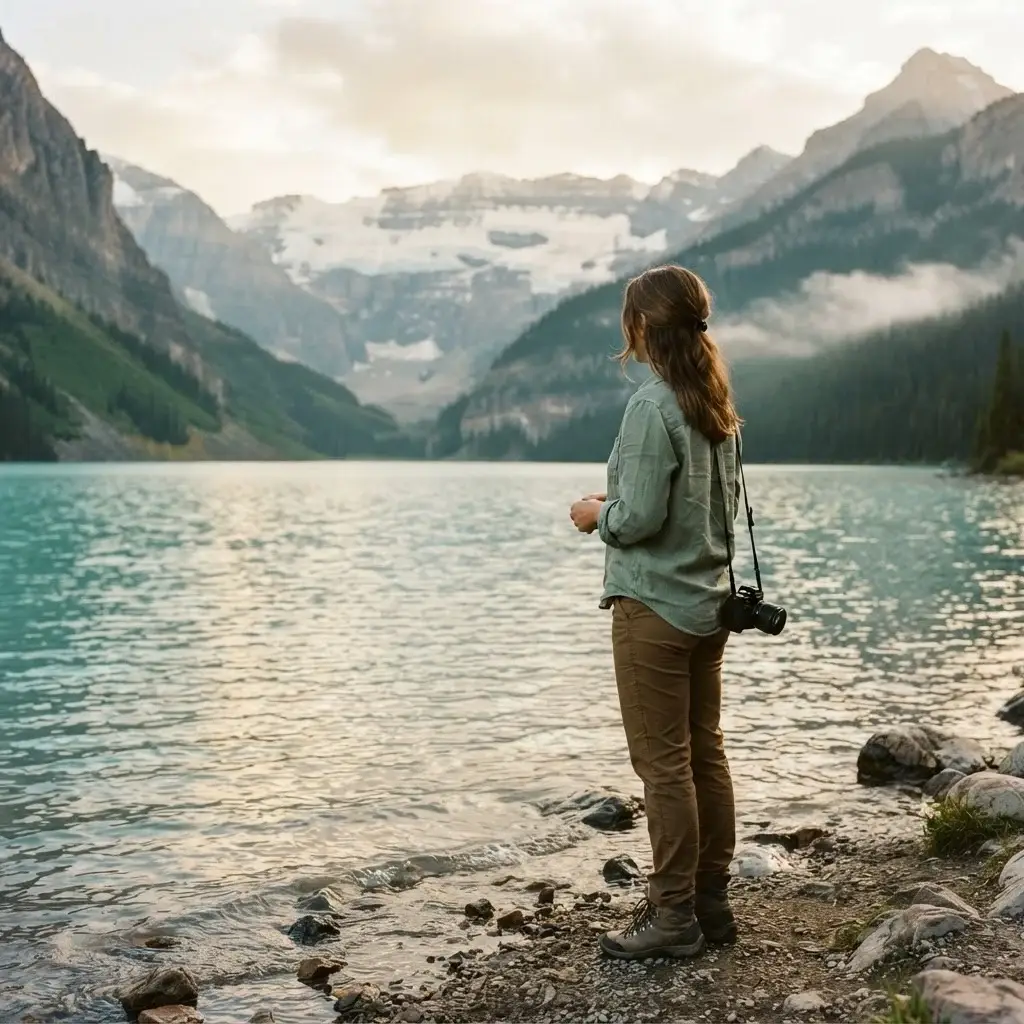
If you’re open to crossing the border, Banff is the kind of place that stops solo travelers in their tracks. Literally. You will be walking along a trail and suddenly freeze because there is a turquoise lake in front of you that your brain refuses to accept as real. Lake Louise and Moraine Lake are photographs you’ve probably seen a hundred times. Being there, standing at the lakeshore with the Rockies rising behind them, is entirely different from looking at a screen.
Banff is Canada’s oldest national park, located in the Canadian Rockies of Alberta about 90 minutes west of Calgary by car or shuttle. Getting there without a car is very doable: the Banff Airporter runs regularly from Calgary International Airport directly into the town of Banff for around CAD $70 each way, and once in town, there’s a solid network of local transit and shuttle services to the major trailheads, especially in summer.
All visitors to Banff National Park need a Parks Canada Discovery Pass. The adult daily pass runs CAD $11 per person, while the annual Discovery Pass is CAD $83.50 for an adult or CAD $167.50 for a family or group, which is genuinely good value if you’re staying for a week or planning multiple Canadian park visits. Youth 17 and under always enter free. You can check Parks Canada’s official Banff fees page for the most current rates before your trip.
The town of Banff itself is a proper mountain town with great food, gear shops, and coffee worth stopping for. The Banff Ave Brewing Co. is a wonderful post-hike spot, a local brewpub with mountain views and a menu that handles burgers, bowls, and bison with equal confidence. For something lighter, Wild Flour Bakery does excellent pastries and sandwiches, perfect for packing into your daypack.
Solo hiking in Banff does require a bit more preparation than the parks mentioned above, mainly because bear country is real. You should carry bear spray (it’s available for rent or purchase at any gear shop in town), learn how to use it, and make noise on the trail. The National Parks Conservation Association’s guide for first-time solo national park visitors is a genuinely useful resource here, particularly the advice on testing your gear before you go and always having a backup plan. For beginners in Banff, the Johnston Canyon trail is excellent: a well-marked path along a canyon with suspended metal catwalk sections and waterfalls around every bend. It’s moderately challenging and gives you that “I’m actually in the wilderness” feeling without requiring backcountry experience.
Banff also rewards slow travel. Don’t try to hit every famous spot in two days. Spend a morning at Lake Louise when the day-trippers haven’t arrived yet. Take a late afternoon walk around Vermilion Lakes. Sit with the mountains. They are not going anywhere.
Olympic National Park, Washington
Olympic might be the most diverse single national park in North America. Within its boundaries you have alpine peaks, old-growth temperate rainforests, and over 70 miles of wild Pacific coastline. It is three completely different landscapes in one park, and it rewards repeat visits in ways that almost no other place on the continent can match.
For solo travelers, Olympic’s size is both its appeal and its challenge. The park is remote and spread across the Olympic Peninsula in northwestern Washington, roughly three hours from Seattle by car or ferry. There is no road through the middle of the park, which means getting between its ecosystems requires driving around the perimeter. If you’re renting a car, this is straightforward. Without one, you’ll need to plan carefully around available shuttle connections.
The temperate rainforests of the Hoh Rain Forest area are among the most astonishing things I’ve read about in North America, and from what solo travelers consistently report, nothing quite prepares you for the density and silence of that forest. Massive Sitka spruce and bigleaf maple draped in thick green moss, ferns covering every surface, and a light that filters through the canopy in ways that feel almost ceremonial. The Hall of Mosses trail in the Hoh is about 0.8 miles, genuinely accessible to any fitness level, and routinely described as life-altering in terms of its visual impact.
Hurricane Ridge, in the alpine section of the park, is another world entirely. On a clear day from the ridge, you can see the Strait of Juan de Fuca, the San Juan Islands, and into Canada. The wildflower meadows in July and August are spectacular. The park’s Pacific coastline, particularly the stretch near Rialto Beach, gives you black sand, sea stacks rising offshore, and the feeling of standing at the edge of everything.
Standard vehicle entry to Olympic is $30 and covers a seven-day visit. On foot or bicycle, the individual entry fee is $15. The annual Olympic-specific pass is $55, and the America the Beautiful Pass covers Olympic as well. The official Olympic National Park fees page has current details including seasonal campground fees if you plan to sleep inside the park.
For food, the nearby town of Port Angeles is your main base, and it’s a genuinely pleasant small Pacific Northwest city. Downriggers Restaurant on the waterfront is a solid local option for fresh salmon, Dungeness crab, and seafood chowder that tastes exactly like where you are. The Olympic Peninsula is also craft brewery territory, and Harbinger Winery and Altair Brewing are both worth your evening if you’re staying a few nights.
Boundary Waters Canoe Area Wilderness, Minnesota
The Boundary Waters is the most remote option on this list, and it’s the one I’d suggest for people who’ve done a few of the above and are ready to step further outside their comfort zone. It’s also, for certain kinds of travelers, the one that changes them most.
The Boundary Waters Canoe Area Wilderness (BWCA) is a million-acre network of lakes, rivers, and portage routes in northern Minnesota along the Canadian border. There are no roads inside the wilderness area. You get there by canoe. You camp on the lakeshore. You cook over a fire or a small stove. You navigate by map. The silence, particularly on a weekday in early September when the summer crowds have thinned, is the kind you feel physically.
The permit system is what intimidates most people who consider the Boundary Waters. Here’s the plain version: from May 1 through September 30, any overnight visitor needs a quota permit, which controls how many groups enter each trailhead each day. These permits are booked through Recreation.gov’s official Boundary Waters permit system, and the most popular entry points and dates sell out within minutes of becoming available in January. So if you’re planning a summer trip, set a calendar reminder for the January release date and be ready at 9am central time. A permit for a group of one costs $16 plus a $6 reservation fee.
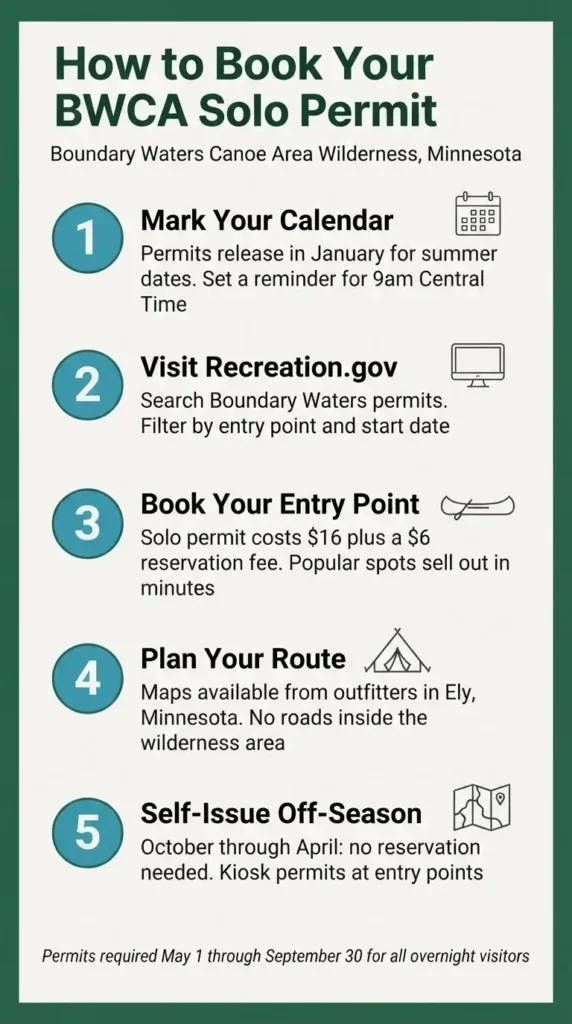
From October through April, self-issued permits are available at entry point kiosks without a reservation.
Going solo in the Boundary Waters is absolutely done, but it requires honest self-assessment. You need basic canoe skills and a reasonable comfort level with navigation. You don’t need to be an expert, but you do need to be prepared. Outfitters in the town of Ely, Minnesota (the gateway town, about 45 minutes from the main entry points) can set you up with everything: canoe, paddles, camping gear, food, maps, and safety briefings. Many solo travelers use outfitters for their first BWCA trip precisely because it removes the gear burden and adds a layer of local knowledge.
What you eat in the Boundary Waters is whatever you carried in. Most people use dehydrated meals, which are lighter than they used to be and substantially better than they once tasted. Oatmeal in the morning with a camp coffee. Trail mix on the portages. A hot dehydrated dinner watching the sun go down over a silent lake. It’s not gourmet, but it’s extraordinary.
The Boundary Waters is the place that solo travelers tell me about in hushed voices, like sharing a secret they’re almost reluctant to give away. It rewards preparation and punishes carelessness, but for those who do it right, it delivers a quality of solitude and natural immersion that is genuinely hard to find anywhere on earth.
Practical Essentials for Any North American Nature Retreat
Before you go anywhere on this list, a few universals are worth taking seriously.
The America the Beautiful Pass is the most underused piece of practical travel wisdom in the US. At $80 for a year, it covers entrance fees at all national parks and federal recreation lands across the country. If you visit even two or three national parks in twelve months, it pays for itself. You can pick one up at any national park visitor center or order through Recreation.gov.
Navigation and communication: Most of these parks have limited or zero cell service in their interiors. Download offline maps using an app like AllTrails or Gaia GPS before you leave your accommodation. And if you’re going anywhere genuinely remote (especially Olympic or the Boundary Waters), consider renting a satellite communicator. A Garmin InReach can send texts and trigger an SOS even with zero cell signal.
Tell someone your plan. I know it sounds basic. But whether you’re day hiking or going overnight, leave your itinerary with a friend or family member, including where you’re going, which trailhead you’re starting from, and when you expect to be back.
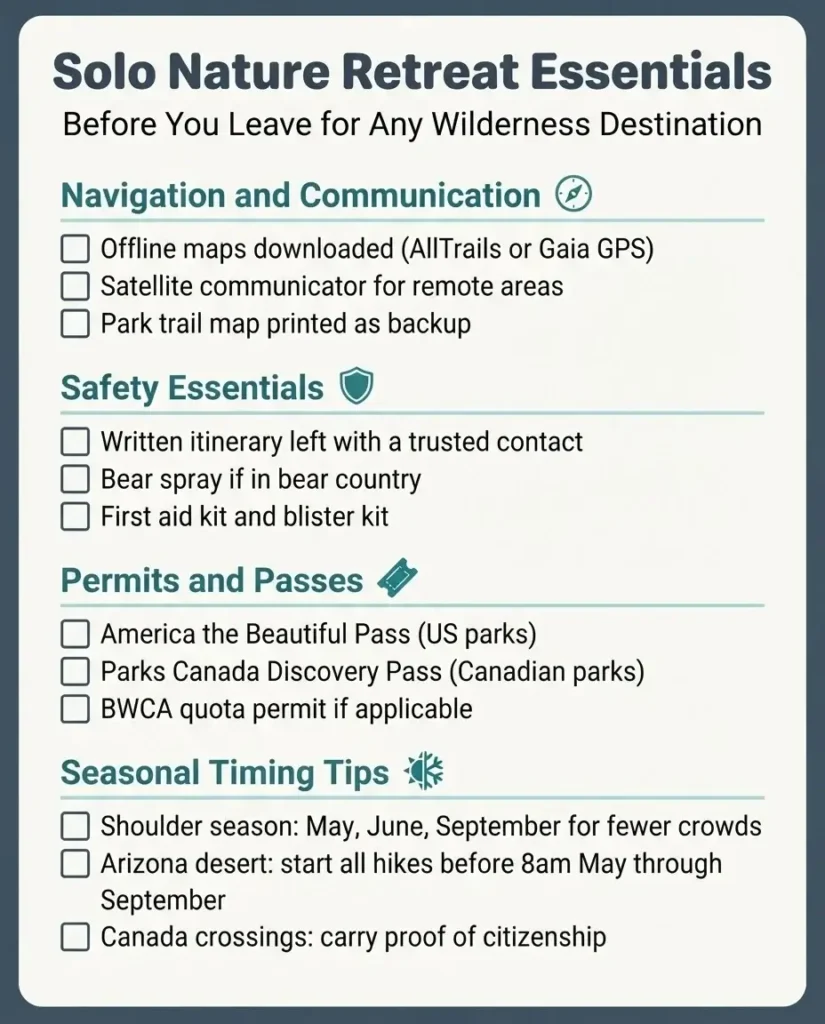
This is the single most important safety habit you can develop as a solo traveler in the outdoors, and it costs you absolutely nothing.
Go in shoulder season if you can. May, June, and September tend to offer the best combination of good weather, manageable crowds, and lower accommodation prices at almost every destination on this list. Peak summer is beautiful but busy, especially at Acadia and Banff.
Starting Is the Point
Here’s the thing I keep coming back to, and it’s something I had to learn the hard way in my own life: you will never feel completely ready. There will always be one more thing to research, one more concern to work through, one more reason to wait. I said that about leaving my office job. I said it before my first solo trip to Europe. The readiness you’re waiting for comes from going, not from planning.
The nature retreats on this list are some of the most powerful places on this continent. Each one will ask something of you, a bit of discomfort, a bit of uncertainty, maybe an early alarm and sore legs and a meal that’s less than perfect. And each one will give you something in return that you can’t get from a screen or a routine: the particular clarity that only comes from being somewhere enormous and beautiful and a little bit wild.
Pick the one that scares you the least. Start there. Then go back and do the one that scares you more.