Thermal Baths in the Americas: What No One Tells First-Timers

There is something almost primal about lowering yourself into steaming mineral water with a volcano in the background and a sky full of stars overhead. No itinerary. No alarm. Just warmth.
Hot springs were never something I planned my travels around, not at first anyway. It was only after spending time on the road, learning to slow down, and watching how differently locals relate to these places compared to tourists, that I started to understand what thermal bathing actually is. It is not a spa day. It is not a luxury upgrade. In much of the Americas, soaking in geothermal water is a centuries-old cultural practice, a community ritual, and sometimes the most affordable thing you can do in a destination.
But here’s what most lists won’t tell you: the Americas have a staggering range of hot spring experiences, from a free walk-in national park in Arkansas to a jungle resort in Costa Rica to a set of stone pools buried deep in a Chilean rainforest ravine. They are not all the same. Some require a car, some require cash only, some are so hot they’ll send you running for the cold plunge within 30 seconds, and some are so crowded on weekends they lose all magic. Planning matters.
This guide is built to help you choose the right one for your trip, understand what to expect before you arrive, and soak in more than just the water.
Why the Americas Are One of the World’s Great Hot Springs Destinations
The geological reason is straightforward. The Americas sit on some of the most active tectonic terrain on Earth. The Pacific Ring of Fire runs the entire length of the western coast, producing the volcanic activity that heats groundwater to soaking temperatures in countries like Costa Rica, Chile, Peru, Ecuador, and Colombia. In North America, the same forces created the geothermal fields of Colorado, New Mexico, and the extraordinary thermal landscape of Yellowstone.
That geology has been part of human life here for thousands of years. The Ute people were the first known visitors to what is now Glenwood Springs, Colorado, treating the waters as sacred and medicinal. Indigenous communities throughout the Andes have soaked in thermal springs for generations. The bathhouse culture of Hot Springs, Arkansas dates back to the 1830s, eventually attracting everyone from Babe Ruth to gangsters to presidents.
And the science holds up. Research published in PMC, the U.S. National Institutes of Health’s open-access archive, confirms that naturally occurring minerals in geothermal water may benefit people with chronic inflammatory conditions, and that soaking promotes measurable improvements in circulation, muscle tension, and stress response. That is not marketing language. That is why communities have returned to these places for centuries.
North America: Three Very Different Soaking Experiences
Hot Springs National Park, Arkansas: The One That Started It All
Most people have no idea that the United States has a national park built entirely around thermal springs in the middle of a small city. Hot Springs National Park in Arkansas is the country’s original wellness destination, a place that drew visitors seeking healing waters long before the concept of a spa existed in America.
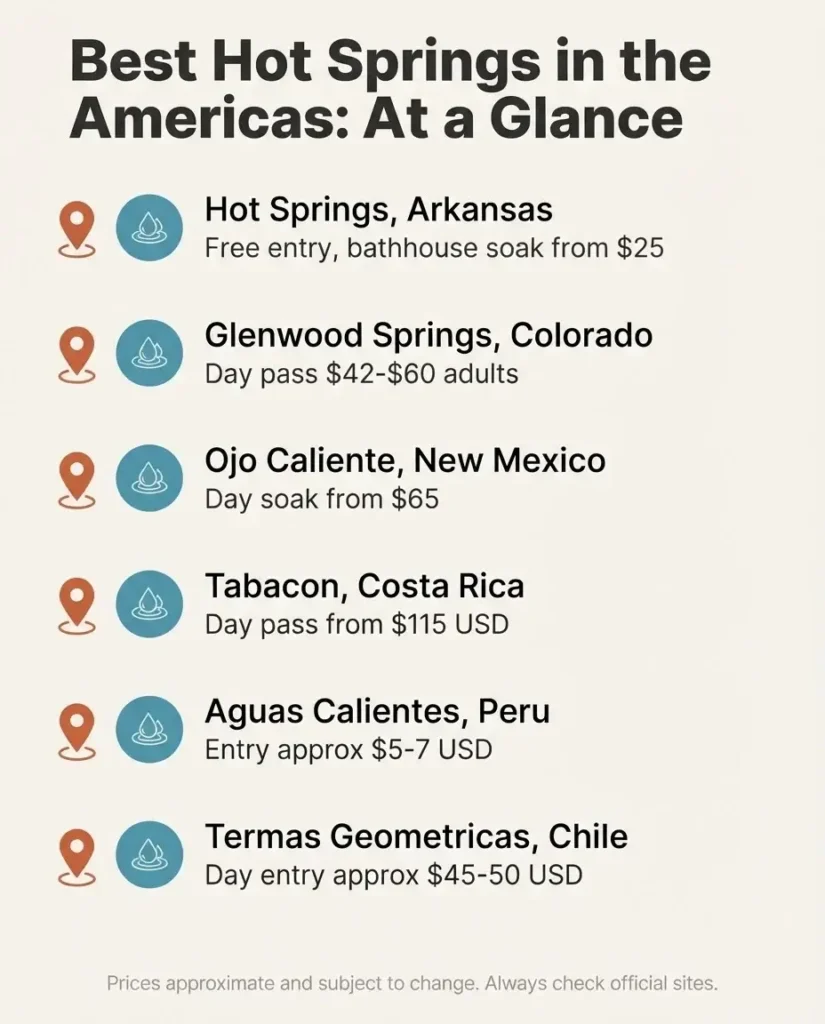
The park sits at the heart of downtown Hot Springs and has no entrance fee. You can walk Bathhouse Row freely, tour the stunning Fordyce Bathhouse as a visitor center, and drink the 143-degree thermal water from public fountains on the street. The water is naturally cooled before it reaches the fountains, so you won’t burn yourself, but yes, you can genuinely drink water that flowed from the earth at scalding temperatures just hours earlier. According to the National Park Service’s official planning page, soaking is only permitted inside two historic bathhouses: the Buckstaff and the Quapaw. The Buckstaff in particular is one of the last continuously operating traditional bathhouses in the country, where attendants walk you through a sequence of soaking, steaming, and cooling that has not changed much in 100 years.
For first-timers, Hot Springs is the gentlest possible introduction to thermal bathing culture. It’s accessible, walkable, historically rich, and far less expensive than anything you’ll find in a resort setting. The surrounding city has excellent Southern food, and the Ouachita Mountains make for good hiking before or after a soak. The town leans quirky and unpretentious, which I always appreciate.
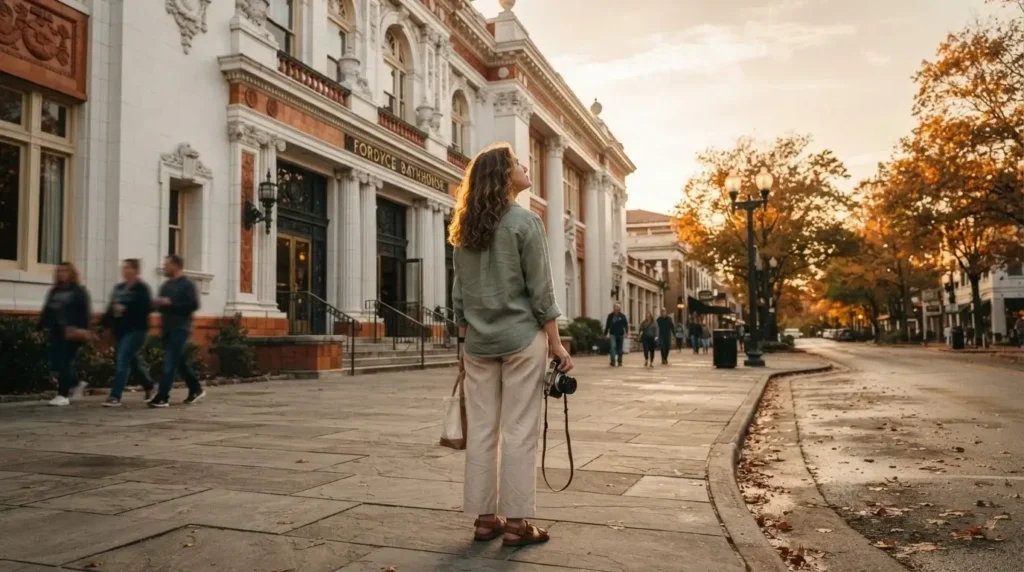
What to eat nearby: Don’t leave without trying McLard’s Bar-B-Q on Albert Pike, a family institution since 1928 that has fed everyone from Bill Clinton to the locals who’ve been going every Friday for decades.
Glenwood Hot Springs, Colorado: The World’s Largest Outdoor Hot Springs Pool
If you’ve driven through Colorado on I-70 and seen a massive turquoise pool stretched along the Colorado River with red canyon walls behind it, that’s Glenwood Hot Springs Pool, the largest outdoor thermal pool in the world.
It’s a genuinely impressive place. Two pools sit side by side: the main therapy pool (at a more comfortable 90-93°F) and the smaller hot pool (around 104°F). The Ute people called these waters Yampah, meaning “big medicine,” long before European settlers arrived and built the resort in the 1880s. Today it operates as a full resort, but you don’t need to stay overnight to use the pools.
Day admission on the official Glenwood Hot Springs Pool website runs between $42 and $60 for adults and teens depending on peak vs. off-peak timing, with children at $30-$38.
No reservations are required for the pool, and you can enter and exit freely all day with a hand stamp. That flexibility is genuinely useful if you’re road-tripping and just want to stop, soak for a few hours, and move on.
The town of Glenwood Springs itself is charming and sits at the edge of Glenwood Canyon, one of the most dramatic road passages in the country. Stay for at least half a day. If you’re a solo traveler passing through Colorado, this is a very easy add to a mountain road trip itinerary with minimal planning required.
Ojo Caliente, New Mexico: Four Minerals, Zero Sulfur, Maximum Calm
About an hour north of Santa Fe in the high desert of northern New Mexico, Ojo Caliente Mineral Springs offers something chemically unusual: four completely different types of healing mineral water, all sulfur-free, all in one place. Iron, lithia, soda, and arsenic (in non-harmful trace concentrations used historically for skin conditions) each emerge from separate sources, and each pool has a distinctly different feel.
The official Ojo Caliente resort page describes 12 communal soaking pools, private tubs, a spa, hiking trails, yoga classes, and farm-to-table dining at their on-site Artesian Restaurant. This is not a budget stop, day soaking packages start around $65 and climb depending on what you add, but for the setting alone, the quiet desert cliffs, the cottonwood bosque along the river, the ancient adobe architecture, it feels earned.
What makes Ojo Caliente special for solo travelers is the communal pool culture. You are not tucked away in a private cabana. You share space with strangers who quickly become fellow soakers, and conversation flows easily in warm mineral water. I’ve heard from solo travelers across the board that this kind of shared stillness creates unexpected connections. It is also a popular day trip from Santa Fe if you’re based there, making the logistics easy.
Note: as of mid-2025, the Arsenic Pool was temporarily closed for restoration, so check the website before you go if that particular pool is on your list.
Central America: Costa Rica’s Volcanic Playground
Tabacón Thermal Resort, La Fortuna: Where the Rainforest Meets the Volcano
La Fortuna, Costa Rica is built entirely around the presence of Arenal Volcano, and the thermal springs here are a direct product of its geothermal activity. Water heated by Arenal’s underground energy flows through multiple resorts along the road into town, and the options range from genuinely budget alternatives to the full-resort experience.
Tabacón is the one travelers consistently describe as the most beautiful. The property’s thermal pools are set within dense tropical gardens, with flowers, birds, and the sound of running water everywhere. The official Tabacón hot springs page shows that a day pass starts at around $115 USD per adult during non-peak periods and allows access from 10am to 10pm. That price point is real, and I am not going to pretend it is cheap, but what you get for it is access to a series of naturally heated pools ranging from 29°C to 42°C, waterfalls you can stand under, a swim-up bar serving tropical drinks from fresh coconuts, and a restaurant serving traditional Costa Rican plates alongside international food.
A practical note for solo travelers: advance booking is genuinely necessary here.

Tabacón reaches daily capacity, and showing up without a reservation on a weekend or during high season (December through April) will result in being turned away. Book directly through their website. If Tabacón’s price is outside your budget, the Baldi Hot Springs complex down the road is significantly more affordable at around $30-35 USD per person and still gives you multiple pools with the volcano backdrop.
What to eat: The Ave Restaurant inside Tabacón serves traditional Costa Rican gallo pinto (rice and beans), fresh ceviche, and local fish dishes. Outside the resort, in La Fortuna town, El Viejo San José is a locally loved spot for casado, the classic rice, beans, salad, and protein plate that is the backbone of daily Costa Rican eating.
South America: The Andean Hot Springs Corridor
Aguas Calientes, Peru: The Soak at the End of the Machu Picchu Road
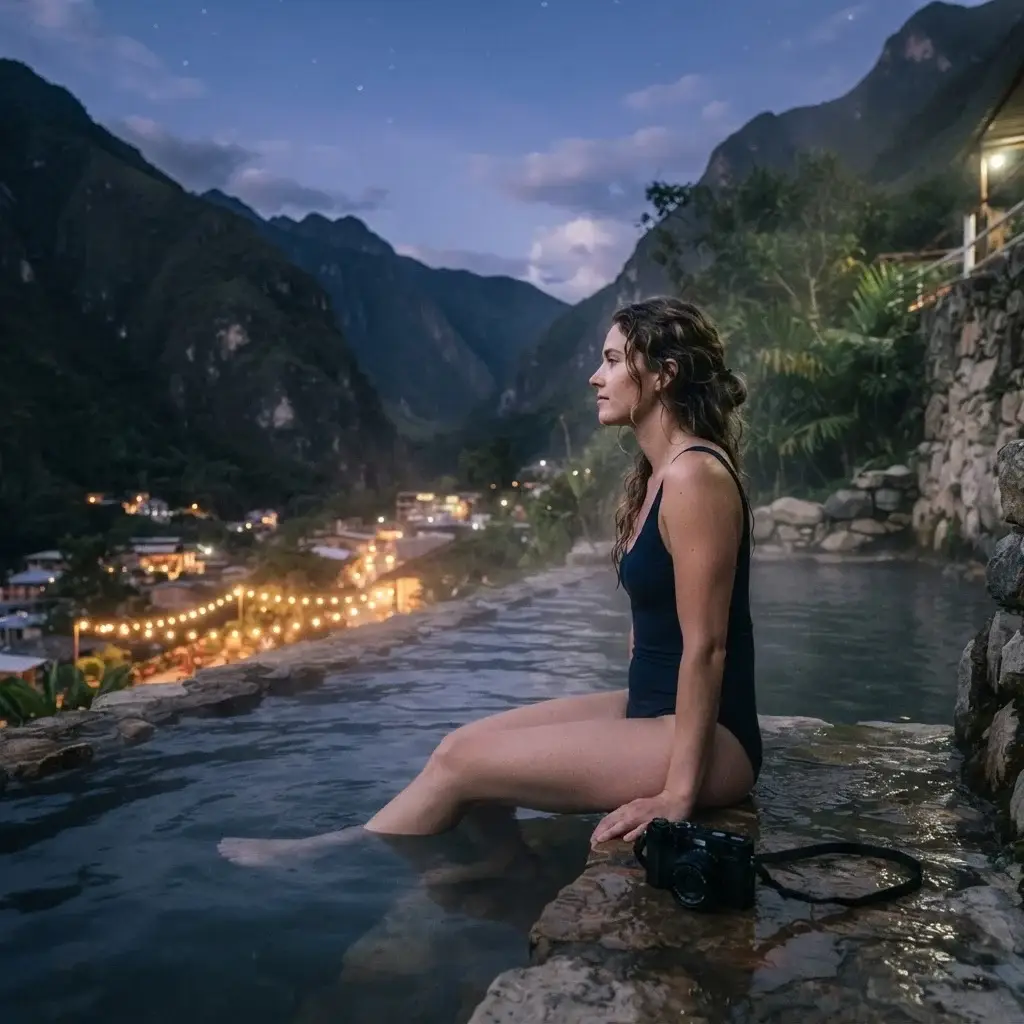
Aguas Calientes, now officially known as Machu Picchu Pueblo, sits at the bottom of the valley below the famous ruins. Nearly every visitor to Machu Picchu passes through this town, and almost none of them know that a short walk uphill leads to a series of outdoor thermal pools with a cloud-forest gorge setting that is genuinely lovely.
From everything solo travelers consistently report, and from the detailed visitor information at Yapa Explorers’ Aguas Calientes guide, entry costs approximately 20-25 soles (roughly $5-7 USD) for adults, and the baths are open from around 5am to 9:30pm daily. Multiple outdoor pools operate at temperatures between 38°C and 46°C. Going in the evening, after the day-trippers have left for Cusco, turns this into a much more intimate and peaceful experience.
The practical appeal here is real. After a full day hiking Machu Picchu, your legs will know the difference between sitting on a bus and lowering yourself into 40-degree mineral water under the mountains. The baths are a 10-minute walk from the main plaza.
Bring soles in cash, as card payment is not reliable. Bring a padlock for the locker if you have one, or keep your bag visible.
Aguas Calientes is not a place most travelers budget extra time for, which is exactly why those who do feel like they’ve found something. The town itself has good fresh trout (trucha) restaurants along the river at very reasonable prices. A plate of trucha al ajillo with boiled potatoes costs around 20-30 soles and is exactly what you want after a thermal soak.
Termas Geométricas, Pucón, Chile: Seventeen Pools in a Forest Ravine
This is the one that comes up most often when experienced travelers compare notes on the best thermal baths in the Americas. And after everything I’ve researched about it, the enthusiasm makes sense.
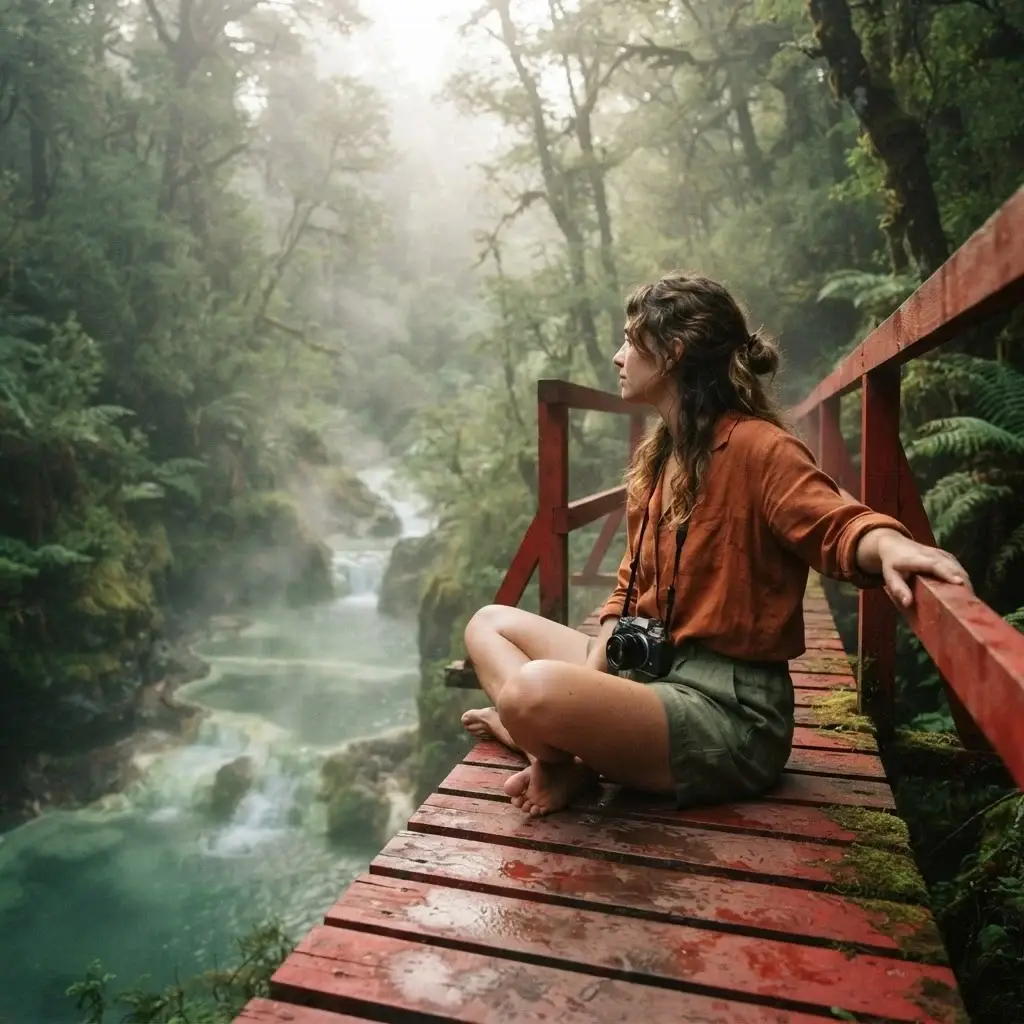
Termas Geométricas is not a resort. It is 17 individual stone soaking pools built into a native forest ravine in Villarrica National Park, connected by roughly 450 meters of red-painted wooden walkways that hang above a mountain stream. Chilean architect Germán del Sol designed the entire complex to integrate with the forest rather than sit on top of it. Each pool has a small grass-roofed changing hut beside it. At the far end of the walkway is a natural waterfall and cold plunge pool. The pools range from 35°C to 46°C.
According to the detailed entry on Hot Springs Guides, entry runs approximately $45-50 USD per person and includes a towel and locker. Tickets are sold by time slot. The complex sits about 87 kilometers from Pucón, with the final 11 kilometers on unpaved mountain road. There is no public bus. Renting a car or booking a transport tour from Pucón operators are the two options, and during wet season the road conditions can be rough, so asking locals in Pucón about current conditions before you head out is genuinely useful advice.
Go early on a weekday if at all possible.
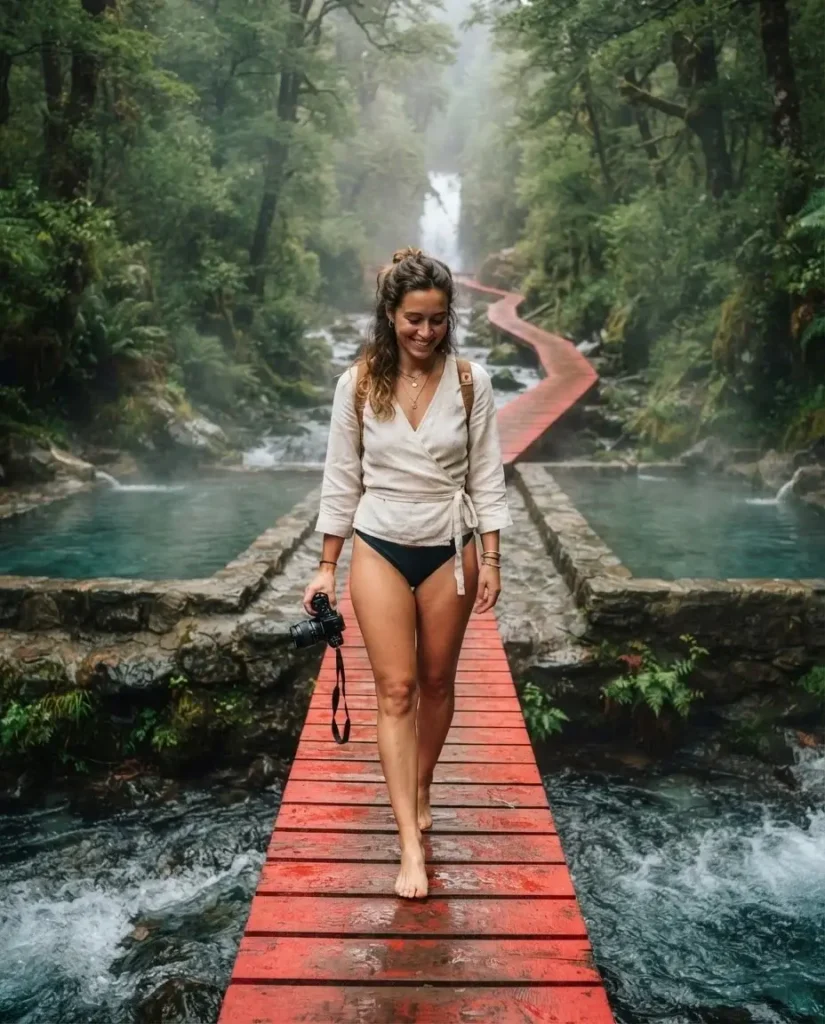
Tour buses from Pucón arrive mid-morning and the pools can fill up. An early arrival lets you move through the cooler lower pools before working your way up to the hottest ones at the far end, at your own pace, in near-silence except for birdsong and the sound of the stream below.
What to eat: The on-site cafeteria has a wood-fired oven and serves empanadas, soups, and hot drinks, adequate and warming after hours in the water. In Pucón itself, look for chorrillana (a regional fries-and-meat dish) and the local cazuela stew in any of the small restaurants along the main street. Pucón also has excellent smoked salmon from the lake region.
Termales Santa Rosa de Cabal, Colombia: Waterfalls and Thermal Pools in Coffee Country
Colombia is one of the most overlooked countries in this entire conversation. The coffee-growing region of Risaralda, about 40 minutes from the city of Pereira, is home to Termales Santa Rosa de Cabal, a thermal park built around a 95-meter waterfall surrounded by cloud forest.
The complex has four thermal pools, including a cold contrast pool, plus restaurants and walking paths through the property. Entry runs around 106,000 Colombian pesos per adult (roughly $25-27 USD at current exchange rates), and it is one of the few thermal destinations in South America where you can stand directly under a massive natural waterfall while the thermal steam rises around you. That combination is unusual and worth seeking out.
From what solo travelers consistently report, going in the early evening on a weekday is the sweet spot here. The property quiets down considerably, the waterfall lights up, and the cooler mountain air makes the contrast between the thermal pools and the night temperature genuinely dramatic. Getting there from Pereira is straightforward via local bus or taxi, and Pereira itself is a good base for exploring Colombia’s coffee-growing region, which is a UNESCO World Heritage area worth several days of slow exploration.
A Few Things That Apply Everywhere
What to Bring (Every Time)
A swimsuit, flip-flops or water shoes with grip, a microfiber towel if the facility doesn’t provide one, and cash in the local currency. Most natural and semi-natural springs across Latin America do not reliably accept cards. A small dry bag or waterproof pouch for your phone and documents is useful when changing between pools.

Bring more water than you think you need. Thermal soaking dehydrates you faster than most people expect.
The Temperature Rule
Always test a pool with your hand or foot before stepping in fully. Pools above 42°C can cause rapid overheating, especially at altitude. If you feel dizzy, light-headed, or nauseous inside a pool, get out immediately and cool down slowly. This is not a rare event. Experienced soakers follow a rhythm of 15-20 minutes in, rest, hydrate, repeat. Pregnancy and cardiovascular conditions warrant extra caution and ideally a conversation with your doctor before you book.
Etiquette Basics
Most facilities require a shower before entering. Never use soap, shampoo, or conditioner inside the pools. Keep noise low. If a pool is crowded and you’ve been there a long time, move on so others can enjoy it. Natural hot springs, especially in more remote areas, can be damaged by sunscreen and chemical products, so check the facility’s guidelines and when in doubt, skip them.
How to Choose the Right One for Your Trip
The deciding factor is usually what kind of traveler you are right now. If you want history, culture, and zero cost, Hot Springs National Park in Arkansas is a whole day of discovery. If you’re road-tripping Colorado and want something spectacular with no advance planning required, Glenwood is your stop. If you want a desert spiritual reset, Ojo Caliente near Santa Fe delivers that in a way few places can. If you’re in Costa Rica and the budget allows, Tabacón is genuinely as beautiful as people say. If you’re doing the Andes, Aguas Calientes is a no-brainer add-on to a Machu Picchu trip, and Termas Geométricas is worth rerouting for.
The truth I’ve come to after years of slow travel is that the best hot spring you’ll ever visit is the one you’re actually in. Planning gets you there. The rest handles itself.
Pack your swimsuit. Book the day pass. Go.