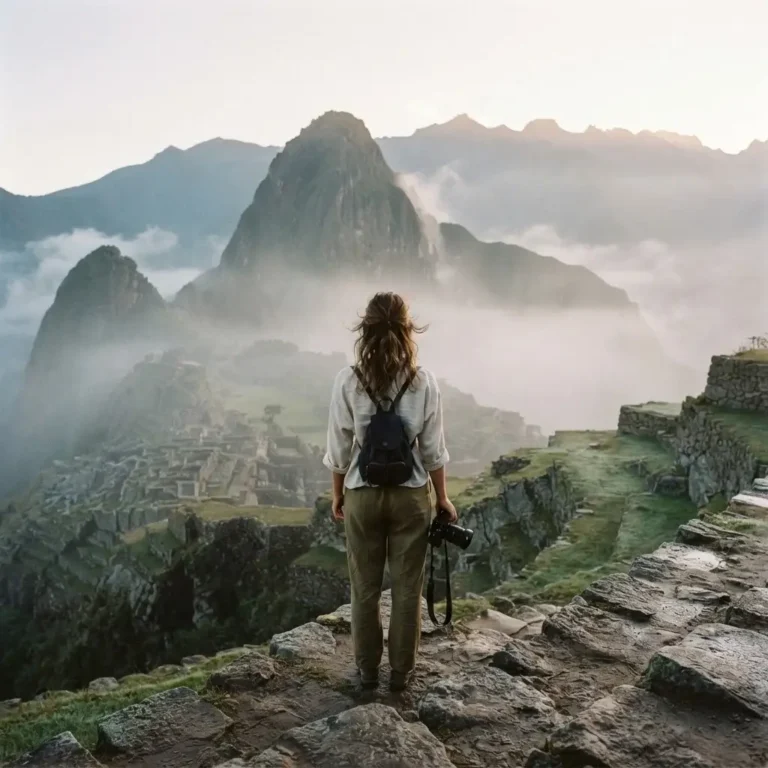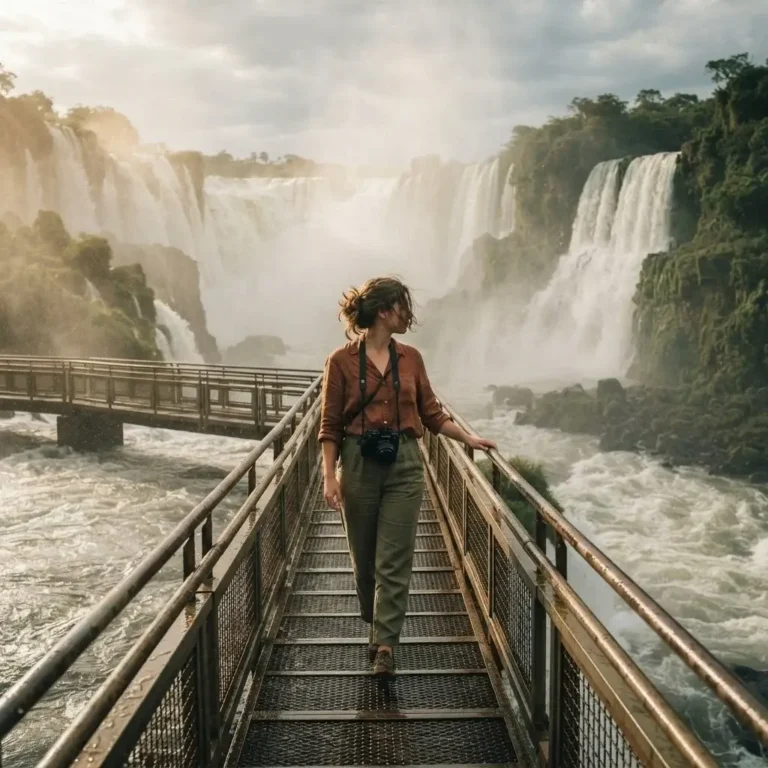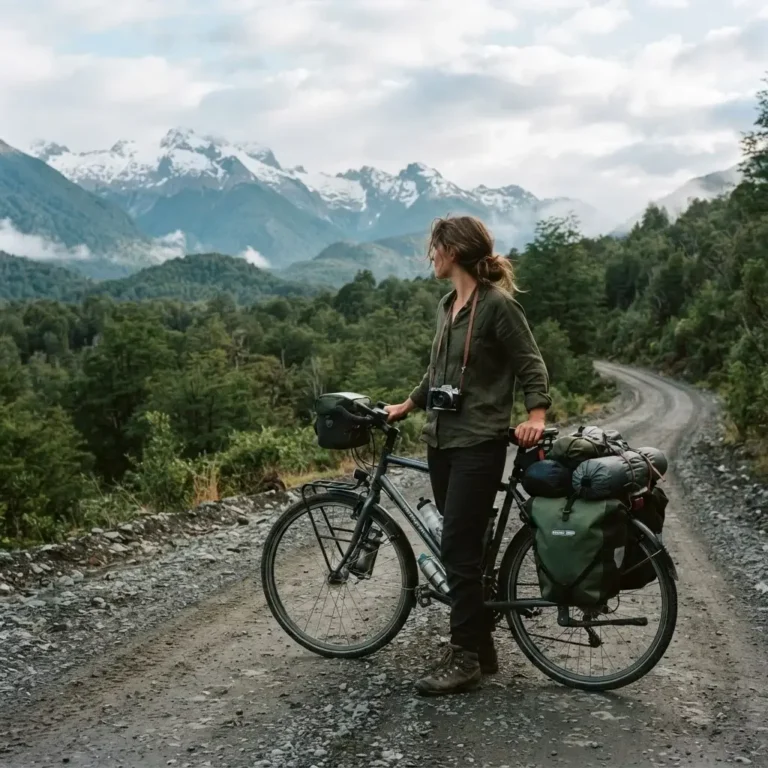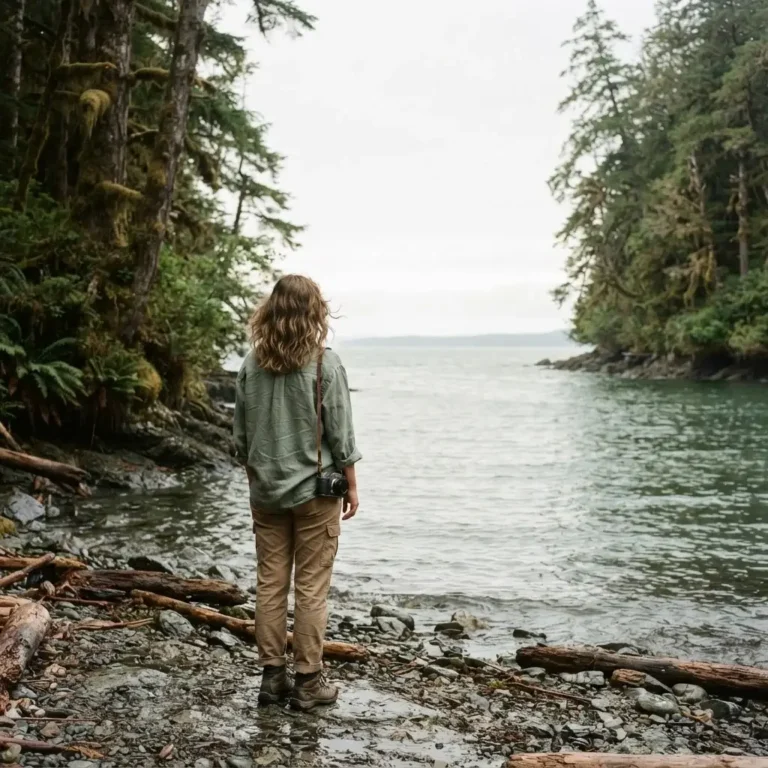
Where to Go for a Digital Detox in the Americas (And Actually Unplug)

I used to think I was good at disconnecting. I’d go on a trip, promise myself I’d stay off social media, and then spend the first morning scrolling through notifications before my coffee even cooled down. Sound familiar?
There’s a difference between “not checking work email as often” and a real, bone-deep digital detox. The kind where you wake up to birdsong instead of a buzz. Where you sit with your thoughts long enough that they actually get interesting. Where dinner is a conversation, not a backdrop for someone’s Instagram story.
According to a BBC Travel investigation from May 2025, researchers at the University of Greenwich found that travelers going device-free initially experience anxiety, but after 48 hours that anxiety shifts into genuine enjoyment, liberation, and a deep sense of calm. The first day is hard. What comes after is worth it.
If you’re somewhere in the Americas and you’re ready to actually try this, here’s where to go.
Why the First 24 Hours Are the Hardest (and Why You Should Push Through)
Before we get into destinations, let’s be honest about something. That first day without your phone is genuinely uncomfortable. Your hand reaches for it out of habit. You feel vaguely certain you’re missing something important. You might get mildly anxious with nothing to do in a queue.
This is normal. It’s not a personality flaw and it doesn’t mean you’re more addicted than other people. The Greenwich researchers found that almost everyone goes through a restless first 24 hours. What they also found is that at around the 48-hour mark, something shifts. The background noise in your head quiets down. You start noticing what’s actually around you. You sleep better. You’re funnier and more present in conversation.
The best digital detox destinations are the ones where the world around you is compelling enough to hold your attention without any help from a screen. The places below all qualify. They’re also reachable as a solo traveler without a luxury resort budget, which matters to me, and probably to you too.
Torres del Paine, Chilean Patagonia
Why It Works as a Detox Destination
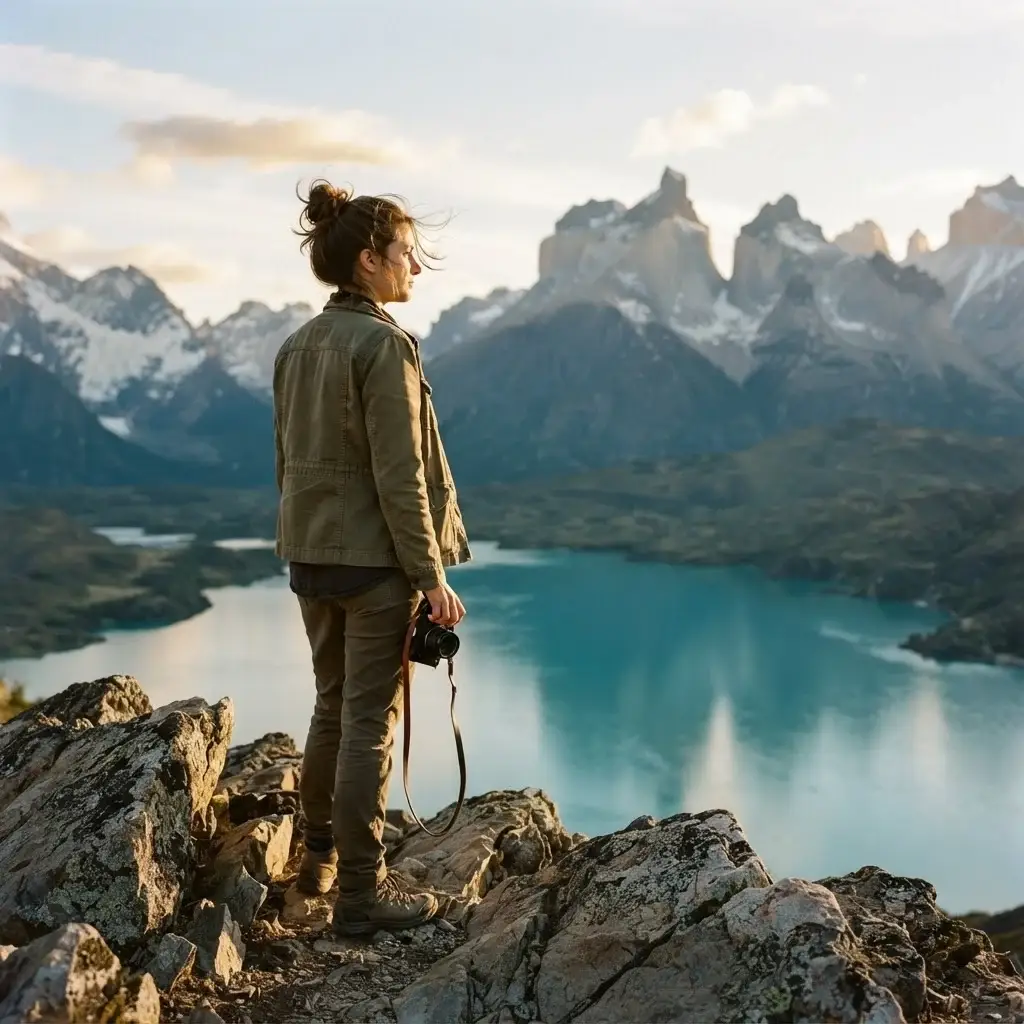
There is no phone signal inside Torres del Paine National Park. This isn’t a hotel policy or a wellness trend. It’s just geography. The park sits in a remote corner of Chilean Patagonia, about three hours north of Punta Arenas, and the wilderness there is so vast and so raw that the granite towers, glacial lakes, and condors overhead hold your full attention whether you want them to or not.
EcoCamp Patagonia, the world’s first geodesic dome hotel, made a deliberate decision years ago to refuse Wi-Fi entirely. They wrote about it beautifully on their site: the reason there’s no Wi-Fi at EcoCamp isn’t a limitation, it’s the philosophy. Staying there means days spent trekking the W Circuit or the O Circuit with a guide, evenings eating hearty Patagonian meals with fellow travelers in the community domes, and nights so dark and sky so wide that stargazing becomes its own full-evening activity.
What to Eat
Patagonian lamb, called cordero, is slow-roasted on an open fire and served at most lodges in the area. If you’re staying at a full-board camp, expect robust soups, fresh bread, and plenty of red wine. The food is filling and intentional, the kind you actually taste when you’re not half-distracted by your phone.

Practical Info
The park entrance fees for the 2025/2026 season sit at approximately $35 USD for international visitors during high season (November through March) and around $18 USD in low season. You must buy your ticket through CONAF’s online system before you arrive. To get to the park, fly into Punta Arenas, take a bus or transfer north to Puerto Natales, and then arrange a transfer or tour connection into the park from there. High season runs November to March. If you want dramatic weather and solitude in roughly equal measure, consider shoulder season in October or April.
Solo Traveler Note
From what solo travelers consistently report, Torres del Paine is one of the friendliest destinations in South America for going alone. The trails have trekker huts, refuges, and organized camp sites spread along the circuits, and you’ll naturally cross paths with other hikers from around the world. The shared meals and communal atmosphere at places like EcoCamp make the solo experience feel social in the best possible way.
Tortuguero National Park, Costa Rica
The Place You Can Only Reach by Boat
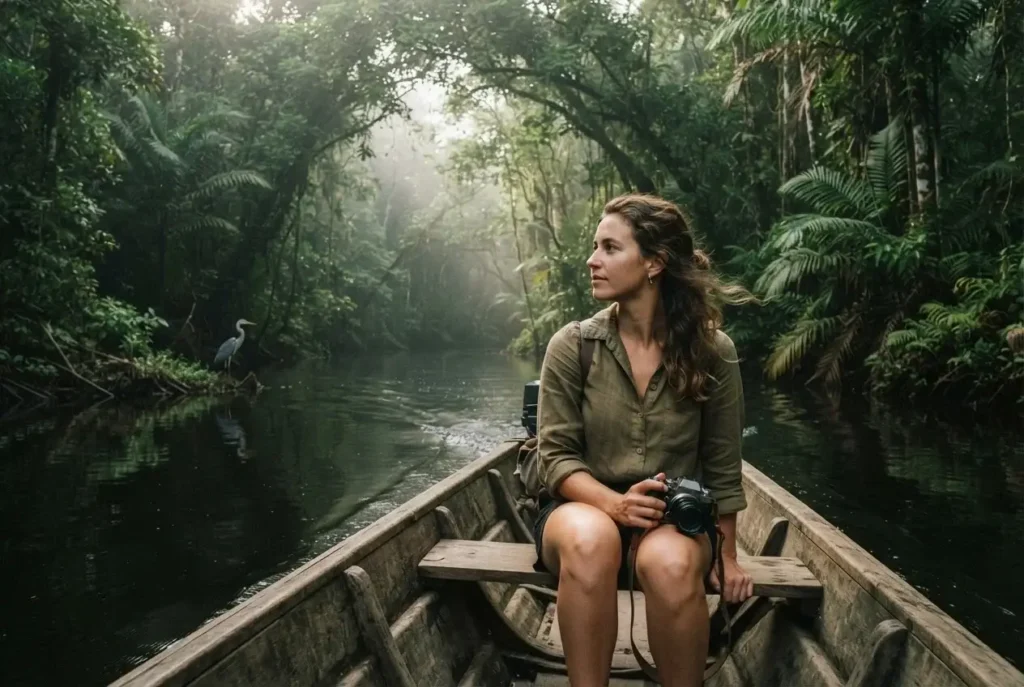
There are very few places left in the Americas where the only way in is by water. Tortuguero is one of them. Sitting on the northeastern Caribbean coast of Costa Rica, it’s accessed by a series of rivers and canals, and the journey there, traveling through dense rainforest on a small boat while herons and river otters track alongside you, is itself the first act of unplugging.
The official Costa Rica tourism page describes Tortuguero as one of the country’s main international icons, and the reason is clear: this is the largest green sea turtle nesting beach in the entire Western Hemisphere. If you visit between July and October, the main nesting season, you have a real chance of watching green turtles come ashore at night to lay eggs. It’s the kind of thing that makes you forget entirely about your notifications.
The small communities of Barra del Tortuguero and San Francisco that surround the park are quiet, bicycle-powered villages where residents still get around on traditional watercraft. Connectivity is extremely limited throughout the area, which is a feature rather than a bug.
The park itself is managed by SINAC, Costa Rica’s National System of Conservation Areas, and the park covers over 76,000 hectares, about 50,000 of which are marine territory dedicated entirely to conservation.
What to Eat
The Caribbean coast of Costa Rica has its own food culture, distinct from the Pacific side of the country. Look for rice and beans cooked in coconut milk (a staple called rice and beans, not gallo pinto), fresh snapper with plantains, and chili-spiced patacones. The cooking here has Afro-Caribbean roots and the flavor is deeper and more complex than the typical tourist fare you’d find in San Jose.
Practical Info
The park entry fee is $17 USD for non-resident adults. Crucially, tickets are no longer sold at the gate. Buy them online through SINAC before you travel. To get there independently from San Jose: take a bus from the Gran Terminal del Caribe to Cariari, then connect to La Pavona port, then take a boat taxi to Tortuguero village. The boat schedules run at 7:30 a.m., 12:30 p.m., and 4:30 p.m. from La Pavona. The journey takes a full half-day of travel, which sounds like a lot until you’re gliding through the canal and realizing the journey itself is the detox.
Solo Traveler Note
The village of Tortuguero is small and safe. Solo travelers, including women traveling alone, report it as a comfortable and genuinely welcoming community. If you visit during turtle season, book your guided night beach tour early, as numbers are strictly controlled to protect the turtles.
The Amazon Rainforest, Southeastern Peru
The Most Complete Blackout on This List
If you want the real thing, no halfway measures, the Peruvian Amazon delivers. Specifically, the area around Madre de Dios in southeastern Peru, near Puerto Maldonado, offers some of the most biodiverse jungle on the planet along with the most reliable absence of cell signal.
Inkaterra Reserva Amazonica lodge sits deep in this rainforest, accessible only by boat from Puerto Maldonado. Their own team writes clearly about what makes it a standout detox experience: 35 wooden cabanas deep in the Amazon rainforest, no signal, no Wi-Fi, lantern-lit nights, and days structured entirely around guided wildlife excursions. You wake to birdsong. You eat by candlelight. You go to bed when it’s dark because the sky tells you to.
This is not roughing it in the budget backpacker sense. But it’s also not the absurd luxury of a branded wellness retreat. It’s a place where the environment itself does all the detoxing work because there is quite literally nothing else for your brain to do but be present.
What to Eat
Amazonian cuisine is genuinely underrated. Expect fresh river fish, including paiche, one of the world’s largest freshwater fish, grilled or roasted with yuca and fried plantains. Patarashca is a traditional dish where fish is wrapped in bijao leaves and roasted over fire. Locally made aguaje fruit pulp drinks are sweet and earthy and unlike anything you’ve had before. Most lodges serve meals using ingredients sourced from the surrounding forest and farm, which means the food tastes exactly like where you are.
Practical Info
Fly from Lima to Puerto Maldonado (about 2 hours). From Puerto Maldonado airport, lodge transfers are arranged by boat along the Madre de Dios River. The journey takes roughly 45 minutes by motorboat. No separate park entry fee applies for the private reserve area. If you’re on a tighter budget, Manu National Park, deeper in the jungle, offers organized group expeditions that are more affordable than private lodges.
Solo Traveler Note
Going deep into the Amazon alone without a guide is not advisable and also not necessary. Virtually all worthwhile stays in this region are package-style with guided excursions included. The benefit for solo travelers is that you’re always with a small group for activities but have your own private space at the lodge. It’s social without being forced.
US National Parks: Grand Canyon, Glacier, and Death Valley
The Budget-Friendly Version That’s Already Waiting for You
Not everyone can or should fly to South America for a detox. Some of the most effective off-grid experiences in the Americas are inside the US national park system, which is dramatically underused as a digital detox destination by people who live within a few hours’ drive.

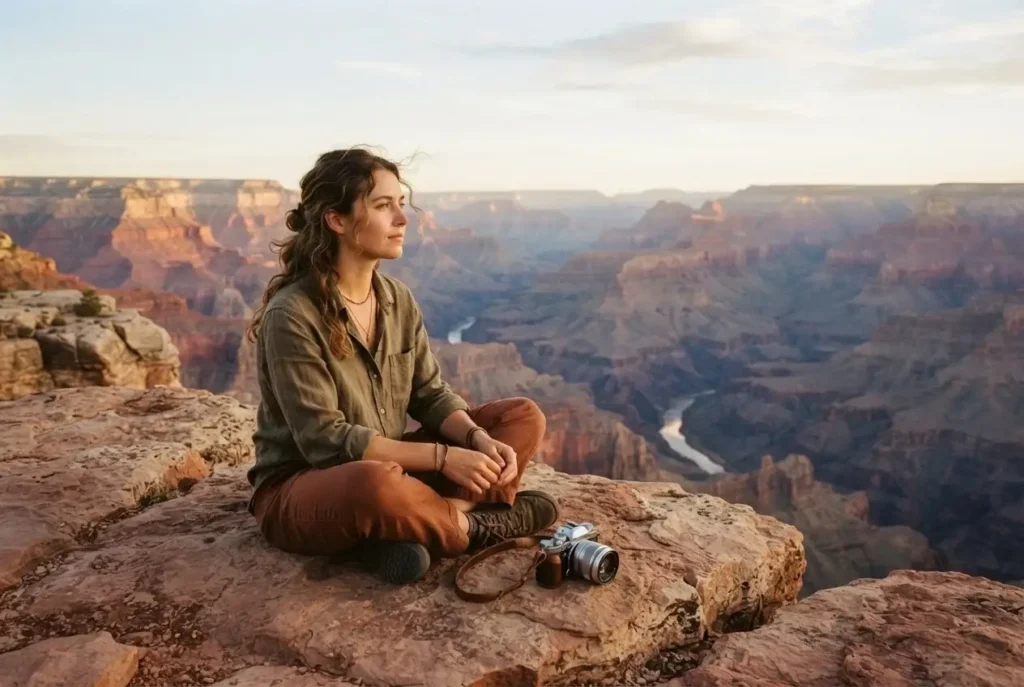
Xanterra Travel Collection, which manages lodges inside several major national parks, describes the Grand Canyon specifically as a place where “cell and internet service are slow and spotty due to the rural location and restricted bandwidth.” Glacier National Park gets similar treatment: Wi-Fi and cell connectivity are “extremely limited” across most of the park. Death Valley, one of the most otherworldly landscapes in North America, has essentially no cell service outside of the resort hotels, making it genuinely difficult to stay connected even if you wanted to.
The difference between using these parks as a proper detox and using them as a quick Instagram backdrop is entirely in your approach. Commit to leaving the phone in the car or in the tent. Choose the longer trails. Book nights in the historic park lodges rather than outside gateway towns. Get up for sunrise. The parks have done the hard work of being spectacular. You just have to show up.
What to Eat
Inside Grand Canyon, Bright Angel Restaurant at the historic El Tovar serves real southwestern cooking, think blue corn enchiladas, prickly pear lemonade, and locally sourced bison. At Glacier, Many Glacier Hotel’s Ptarmigan Dining Room serves Montana trout. These are not fast food stops. Eat slowly.
Practical Info
A US national park annual pass (the America the Beautiful pass) costs $80 and covers entry to all federal parks for a full year. If you’re visiting multiple parks on one trip, this is an obvious investment. Book park lodges well in advance, sometimes six months to a year ahead for peak season spots. Grand Canyon South Rim is open year-round; Glacier’s Going-to-the-Sun Road typically opens fully by late June and closes by October.
Solo Traveler Note
American national parks are among the safest solo travel destinations in the world. Camp at designated campgrounds, tell a ranger your plans if you’re doing long backcountry hikes, and download offline maps before you go. The NPS website for each park has detailed trail and safety information.
New Mexico, USA: Desert Wilderness and Ancient Skies
The Underrated One Nobody Talks About Enough
New Mexico doesn’t come up in most digital detox travel conversations, and that’s exactly why it deserves a spot on this list. The state’s landscapes are ancient, strange, and deeply quieting in a way that doesn’t require you to travel internationally or spend weeks planning.
New Mexico’s official tourism department actively promotes digital detox through experiences like soaking in the legendary healing mineral pools at Ojo Caliente, tubing the Rio Grande near Truth or Consequences, and exploring White Sands National Park, the largest gypsum dune field in the world. Cell service across large parts of New Mexico’s backcountry and rural areas is genuinely patchy, particularly in the northern mountains and desert regions.
The other thing New Mexico offers that nobody talks about: dark skies. This is one of the best stargazing states in the US, with designated dark sky parks and long stretches of desert where the Milky Way is visible to the naked eye on clear nights. There’s something about lying on your back under that sky, with no screen competing for your attention, that recalibrates something in you.

What to Eat
New Mexico has its own distinct food culture built around Hatch green chile, a smoky, earthy pepper that shows up in everything from breakfast burritos to cheeseburgers. The first question you’ll be asked at almost every restaurant is “red or green?” meaning which chile sauce you want. The correct answer is “Christmas,” which means both. Try posole (a hearty hominy stew), sopapillas with honey, and carne adovada (pork slow-cooked in red chile) if you see it on a menu.
Practical Info
Santa Fe serves as the best base for exploring northern New Mexico, with easy access to Ojo Caliente, the Sangre de Cristo Mountains, and the historic high desert landscape that attracted Georgia O’Keeffe. Flying into Albuquerque is your cheapest air option. Renting a car is essentially required. Accommodation ranges from simple campgrounds inside state parks to charming adobe guesthouses and historic inns in Santa Fe, often at reasonable prices compared to coastal cities.
Solo Traveler Note
Santa Fe has a vibrant, arts-driven culture that’s genuinely welcoming to solo travelers. You can spend an entire day walking between galleries, markets, and chile-scented restaurants and feel entirely comfortable on your own. Head into the backcountry for the deeper silence, but as always, tell someone your itinerary and download offline maps.
How to Actually Make the Detox Stick (Wherever You Go)
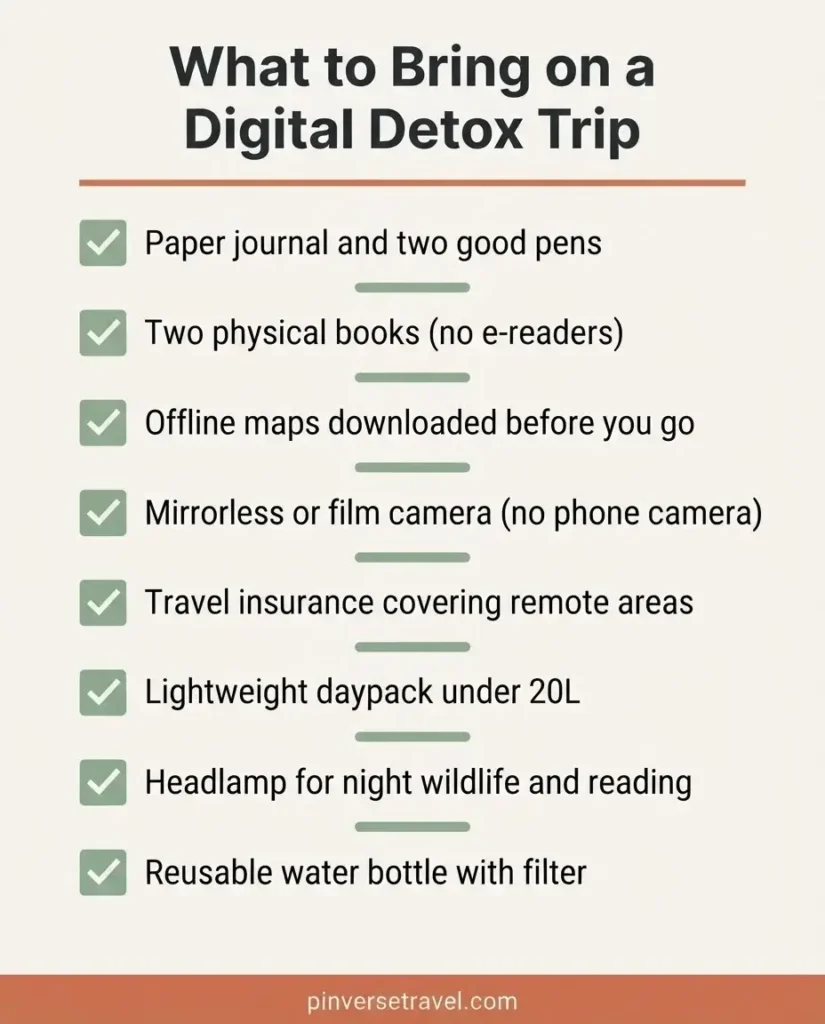
Choosing the right destination does most of the work, but a few practical choices will make the difference between a real reset and a half-hearted attempt. Leave your laptop at your accommodation. Use your phone’s camera only, and put it in airplane mode between shots. Bring a paper journal, not a notes app. Pack a physical book. If you’re someone who runs on music, download offline playlists before you go and then set the phone down. Tell the people back home that you’ll be unreachable for X days so you’re not tempted to “just check in.”
The first 48 hours are the price of admission. After that, most people report that the real world, the tactile, sensory, breathing world, gets louder and better. That’s the whole point.