Best Urban Parks in Europe I’d Send Any Nervous Traveler To

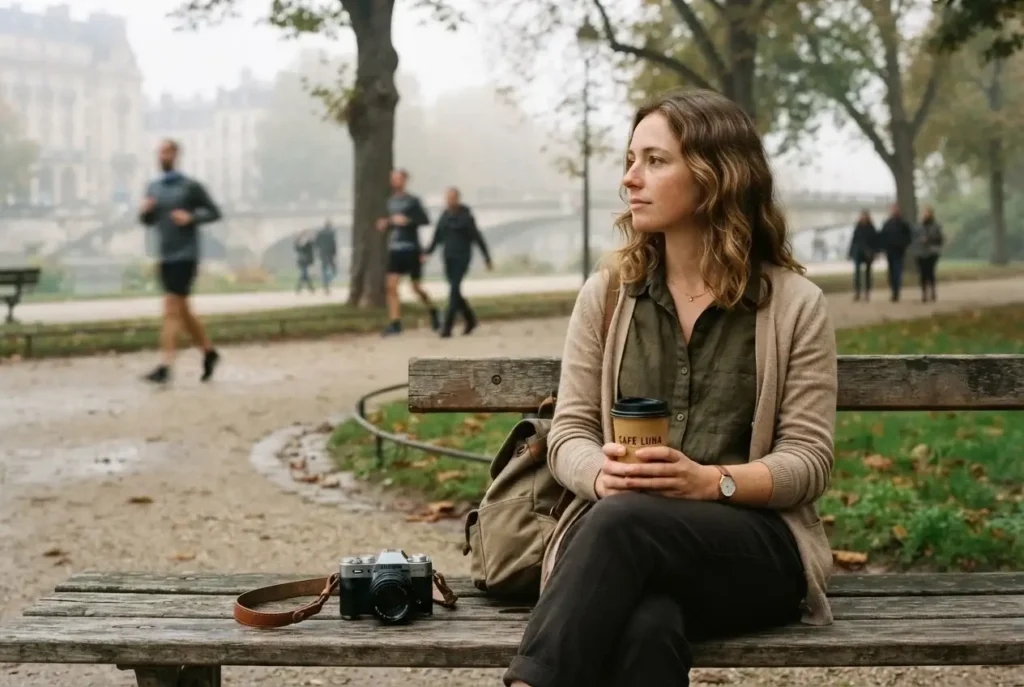
The first thing I ever did in a new European city, back when I was backpacking solo and terrified of looking lost, was find a park. Not a museum. Not a famous square with a hundred selfie sticks. A park. A bench, some grass, a coffee, and permission to just sit and watch a city be itself for an hour.
I still think it is the smartest move a nervous traveler can make. Parks ask nothing of you. You don’t need a reservation, a phrase book, or courage you don’t have yet. You can arrive jet-lagged and quiet, and the city will fold you right in next to the joggers and the office workers eating lunch and the grandparents feeding pigeons. That is where confidence actually starts. Not on a bungee cord. On a bench.
So this is my honest, practical guide to the best green spaces and urban parks in Europe: which ones are worth your limited time, what they cost, when to go, what to eat nearby, and how to use them as the gentle first step of a solo trip. I’ve kept the facts current and specific, and I’ve been clear about where I’ve actually walked myself and where I’m pulling from solid research so you can plan with real numbers.
Why parks belong at the top of your Europe plan
Here is something that surprised me when I started paying attention: European cities are genuinely built around their green space. According to the European Environment Agency’s data on how much green space city residents can reach on foot, a large share of the urban population lives within a short walk of a park. That means you are almost never far from a free, safe, beautiful place to reset.
For solo travelers, that matters more than it sounds. When I taught English in Thailand and later when I lived with a family in Ghana, the days I felt most at home were never the big-ticket ones. They were the slow, ordinary ones, sitting somewhere public and letting life happen around me. Parks give you that same feeling in an unfamiliar city, and they give it to you for free.
A few gentle ground rules before we tour them. Go in daylight for your first visit, especially if you’re solo. Keep your bag zipped and in front of you in crowded spots, the same as you would anywhere. And check closing times, because many of these parks lock their gates at dusk, and that catches people off guard.
Now let’s walk through them.
London: Hyde Park, the easy first breath
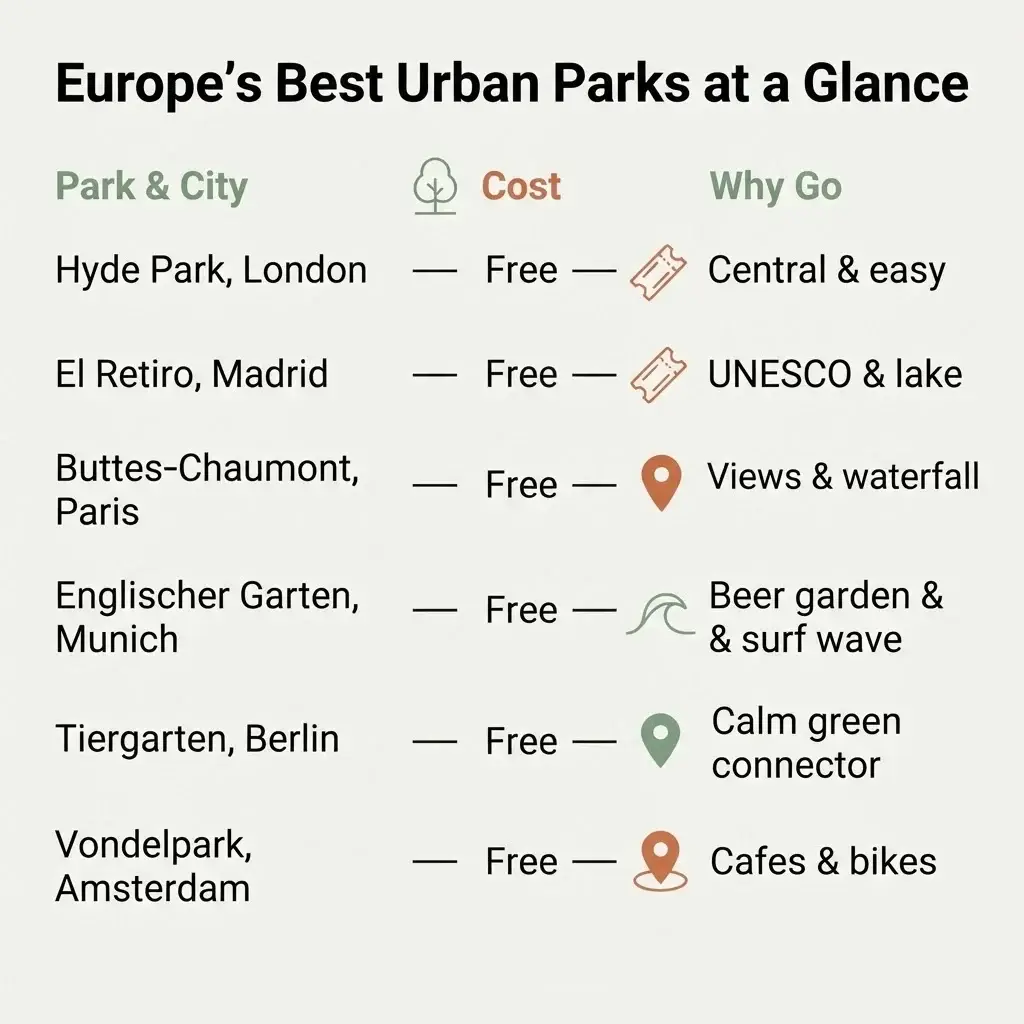
If London is your landing city, Hyde Park is where I’d send you on day one. It sits right in the center, it’s huge, and it’s the kind of place where being alone feels completely normal. You can rent a deckchair, walk the Serpentine lake, or just find grass and do nothing productive at all.
Hyde Park is looked after by The Royal Parks, whose official page lists the seasonal opening times and what’s on, which is worth a glance before you go because the park opens early and stays open late but not overnight. Entry is free. The nearest Tube stations ring the park (Hyde Park Corner, Marble Arch, Lancaster Gate, and Knightsbridge), so you can enter from whichever side your day starts on.
What to do beyond wandering: on a Sunday morning, walk to Speakers’ Corner near Marble Arch to watch Londoners argue about everything under the sun, a tradition that is weirdly comforting when you’re new in town. For food, skip the in-park kiosks and walk to nearby Marylebone or Kensington for a proper bakery breakfast, then bring it back to a bench.
That is my ideal cheap, low-pressure first morning in London.
Madrid: El Retiro, a park that earned a world heritage title
Madrid’s Parque del Retiro is the one I’d tell you not to skip, and it comes with real credentials. In 2021 it was inscribed alongside the Paseo del Prado as a UNESCO World Heritage cultural landscape, which is a rare honor for a city park and tells you how central it is to Madrid’s identity.
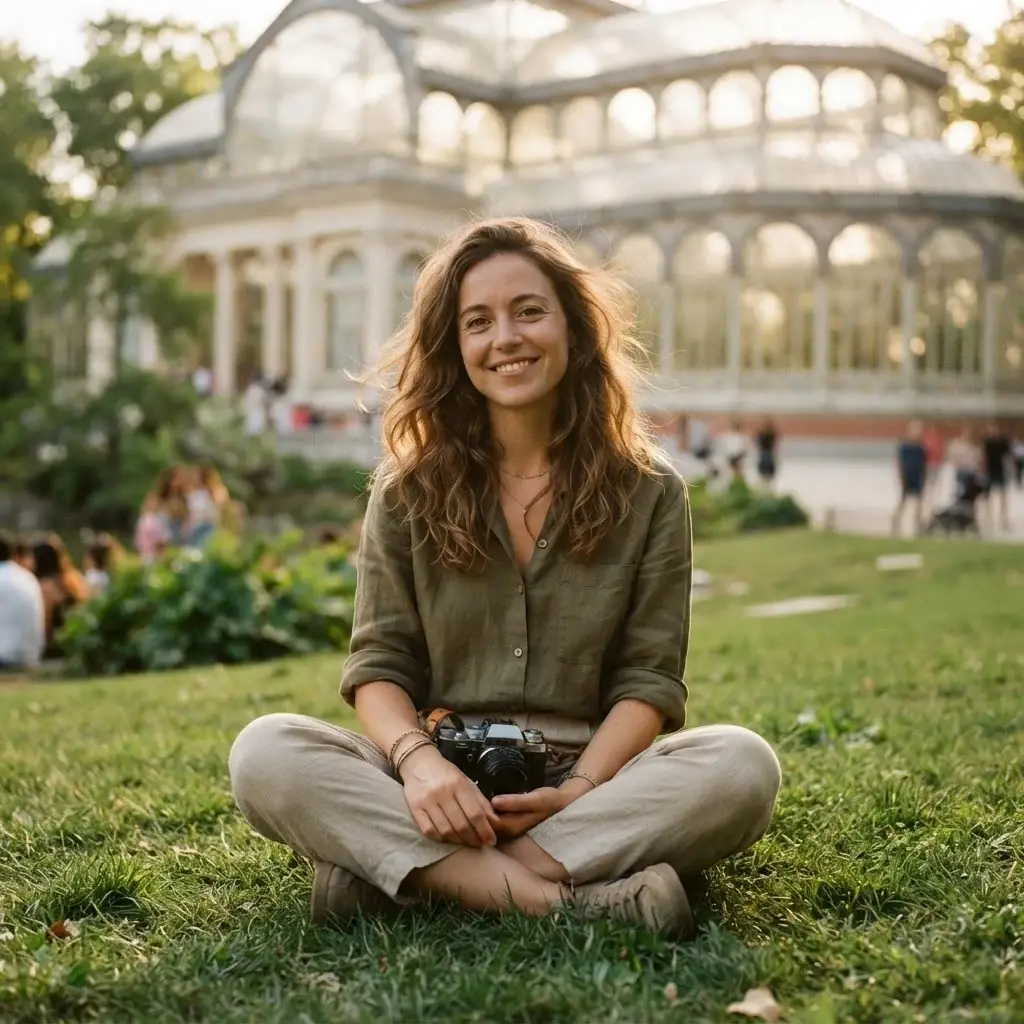
Practically speaking, Retiro is free to enter, and the official Madrid tourism page confirms it’s open roughly from 6am to midnight from April to September, and 6am to 10pm from October to March. Rent a rowboat on the central lake, find the Crystal Palace (a glass pavilion that often has a free art installation inside), and time your visit for the golden light of early evening in summer, when locals come out to walk and talk after the heat breaks.
Madrid runs on late hours and social energy, so Retiro is a great place to practice existing in that rhythm without pressure. Grab a bocadillo or a slice of tortilla de patatas from a café near the Puerta de Alcalá gate and eat it in the park. The Retiro metro stop drops you right at that entrance.
Paris: two very different parks, two very different moods
Paris deserves two picks, because its parks show off two different sides of the city.
The famous one is the Jardin du Luxembourg, and it is famous for a reason. It’s owned and run by the French Senate, and it drew millions of visitors a year, which tells you it can get busy, so mornings are calmer. The Senate publishes the practical visitor information, including the hours that shift with sunrise and sunset, which is a lovely, very French detail: the garden literally opens and closes with the light. Do the classic thing without shame. Rent a little sailboat to push around the central pond, drop into a green metal chair, and watch Parisians treat the lawn like their living room.
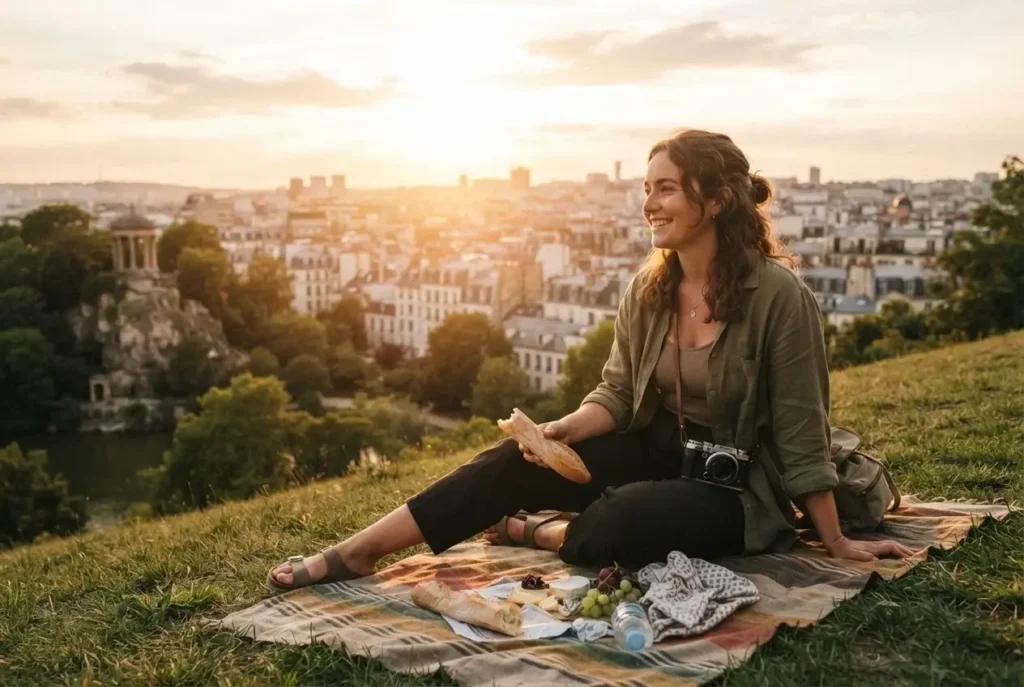
But the park I love recommending to travelers who want to feel like they found something is Parc des Buttes-Chaumont in the northeast. It’s the hilliest and one of the largest of the city’s own parks, with a cliff, a lake, a waterfall, and a little temple perched on a rock, and the City of Paris keeps the official details and access information on its listing. It’s where locals in the 19th arrondissement actually hang out, which is the whole point. Bring a baguette, some cheese, and fruit from a nearby market, and picnic on the slope with a view over the city. This is the Paris that made me fall for slow travel.
Munich: the Englischer Garten, where a river has a surf wave
The Englischer Garten in Munich is one of the largest urban parks in the world, bigger than some famous ones you’re already picturing, and it’s the best example I know of a park that doubles as a whole cultural experience.
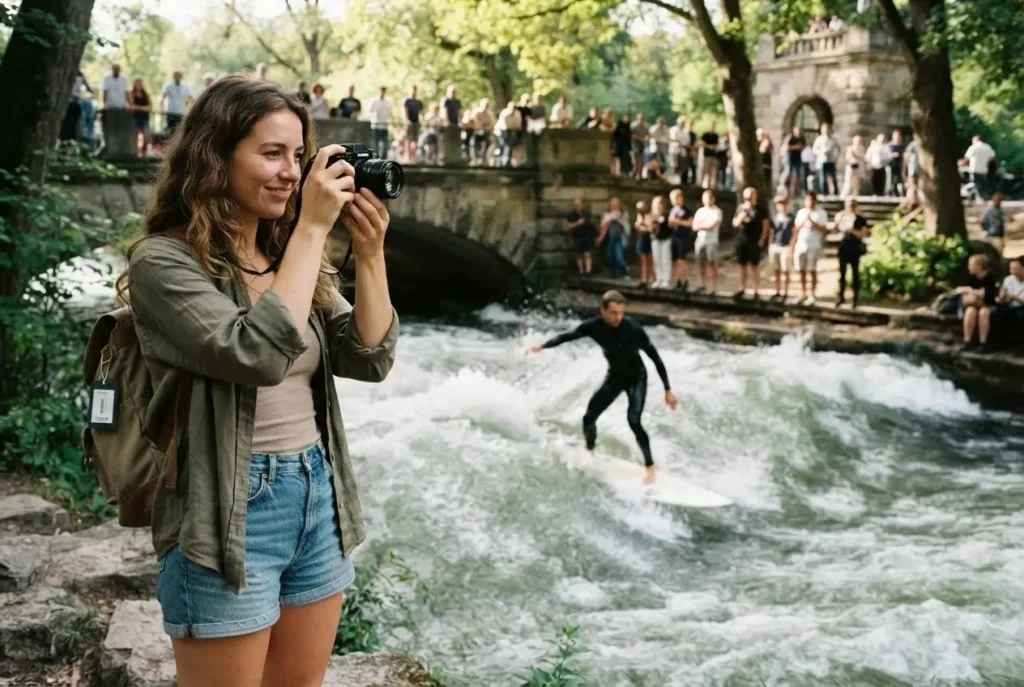
Two things you have to see. First, the beer garden at the Chinese Tower, where you buy a big pretzel and a drink, sit at a shared wooden table with total strangers, and suddenly you’re not eating alone anymore. That communal-table culture is a gift for solo travelers. Second, the Eisbach, a fast little river channel where surfers ride a standing wave right in the middle of the city. It’s genuinely thrilling to watch. Just know that it’s for experienced surfers only and access to the wave can be restricted or closed, so check the current status on Munich’s official tourism page for the Eisbachwelle before you build your day around it. The park itself is free and open, and it’s easy to reach from the city center on foot or by U-Bahn.
Berlin: Tiergarten, the city’s calm green heart
Berlin’s Tiergarten is the oldest and largest inner-city park in Berlin, a big, leafy stretch running from near the Brandenburg Gate outward, and it’s the perfect antidote to how intense central Berlin can feel. Visit Berlin’s official tourism site keeps a helpful overview of the park, its paths, memorials, and the lakeside beer garden, which is a good starting point.
I’d use Tiergarten as a connector. Walk through it between big sights, since it links the Brandenburg Gate area to the Victory Column and beyond, and you get a slow, green tour of the city instead of pounding pavement. In summer, locals grill and picnic here, so pick up something from a bakery or a Turkish market stall and join them. It’s free, it’s open, and it feels safe and social in daylight.
Rome: Villa Borghese, art and shade above the city
Rome in summer is hot and loud, and Villa Borghese is the exhale. It sits on the Pincian Hill above the Spanish Steps and Piazza del Popolo, spreads across a large landscaped area, and gives you shade, gravel paths, and one of the best free viewpoints over the rooftops of Rome from the Pincio terrace at sunset.
From what visitors consistently report, the smart move is to pair a walk in the gardens with a timed ticket to the Galleria Borghese inside the park, because the gallery is small and limits entry, so it books up. The gardens themselves are free and open, and you can rent a bike or a little pedal cart to cover more ground. Enter from the top of the Spanish Steps or from Piazza del Popolo and climb up. Bring water and go earlier or later in the day to dodge the heat.
Dublin: Phoenix Park, and yes, there are wild deer
If your route touches Ireland, Phoenix Park in Dublin is one of the largest enclosed city parks in Europe, and its headline feature is a wild herd of fallow deer, roughly 600 of them, roaming freely. Seeing them graze with the city just behind you is genuinely magical.
A word of care, because this is where excitement gets people in trouble: they are wild animals. Keep your distance, don’t feed them, and especially don’t approach during fawning season in early summer or rutting season in autumn. Beyond the deer, the park is free, huge, and easy to explore by bike, which you can rent near the main gate. It’s a lovely half-day if you want space to breathe after Dublin’s busy pub streets.
Amsterdam: Vondelpark, the city’s living room
Vondelpark is Amsterdam’s most famous and most-loved park, tucked right beside the Museum Quarter, and it functions as the whole city’s backyard. It’s free, it’s open, and it’s ringed by cafés.
For a solo traveler, Vondelpark is almost aggressively easy. Rent a bike (which you’ll want in Amsterdam anyway), loop the park, then park yourself at a café terrace and people-watch. In summer there’s a free open-air theatre with music and performances, which is a lovely way to spend an evening in company without needing to talk to anyone. Because it’s so central and so busy, it feels comfortable well into the evening, though the same daylight-first advice applies for your first visit.
How to actually string these into a trip
You don’t need to visit all of these. Pick the parks in the cities you’re already going to and treat each one as your soft landing in that city. Here’s the rhythm I’d suggest.
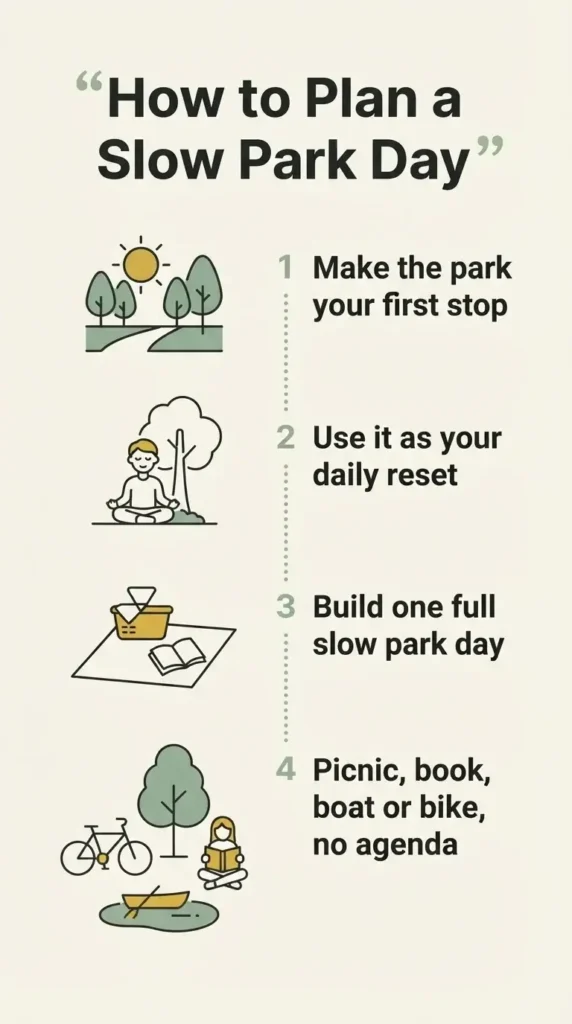
Make the park your first stop, not your last. Arrive in a new city, drop your bags, and go sit in its main park before you attempt anything ambitious. It orients you, it’s free, and it settles the nerves. Then use the park as your daily reset when the sightseeing gets heavy. And build one full slow park day into your trip on purpose. A picnic, a book, a rented boat or bike, and no agenda. Those tend to be the days people remember most, which fits everything I believe about travel: the quiet, ordinary moments do more for you than the checklist ever will.
A few honest safety and comfort notes
Being solo in a park is one of the safer things you can do while traveling, but a little common sense goes a long way. Go in daylight for your first visit to any park, and learn its closing time, because gated parks like Luxembourg lock up with the light. Sit where other people are, keep your valuables close, and trust your gut if a quiet corner feels too quiet. None of this is about fear. It’s about the kind of quiet preparation that lets you relax and actually enjoy being there.
If you’re standing at the edge of your first solo trip right now, weighed down by all the what-ifs, start here. Land somewhere green, sit down, and let a European city introduce itself to you. That single easy hour has launched more of my best travel days than any grand plan ever did, and I think it’ll do the same for you.