Where to Experience Rewilding Projects in Europe as a Solo Traveler

The first time I heard the word “rewilding,” I pictured something out of reach. Faraway reserves, expensive expeditions, the kind of thing other people do. Then I actually looked into it, and the picture flipped. Some of the wildest, most alive corners of Europe are quietly bouncing back, and you can go stand in the middle of them.
Rewilding is a simple idea with big results. Instead of managing every inch of a landscape, people step back and let nature take the lead again. Rivers meander. Forests thicken. Grazing animals reshape the land. And the big wildlife that vanished, bison, wolves, brown bears, vultures, starts to return. For a traveler, this means something rare: you can visit places that are getting wilder every year instead of tamer.
If you have been daydreaming about a trip that feels meaningful and a little brave, this is one of the best kinds to start with. Below is where to go, what each place is really like, and how to do it on your own without feeling lost.
What “Rewilding” Actually Means for a Traveler
Let me clear up the confusion first, because it matters for how you plan.
A regular national park often feels curated. Marked trails, viewpoints, maybe a visitor center with a gift shop. A rewilding landscape is looser. The goal is a living system, not a tidy attraction. That changes your experience in two ways. First, the magic is real and unscripted, you might watch a herd of wild horses shape a meadow or hear wolves at dusk. Second, nothing is guaranteed. Wildlife does not perform on schedule.
I want you to hold that expectation gently from the start. On a wildlife-focused trip, the animals owe you nothing. Some of my most memorable travel moments came from the waiting itself, the quiet, the light changing, the sense of being small in a big place. If you go hoping to feel connected rather than to tick off a sighting, you will almost never be disappointed.
Many of the best-known projects sit under the umbrella of Rewilding Europe, a network working across the continent, and I found their official rewilding landscapes hub the clearest starting point for understanding which regions are open to visitors and how tourism there supports local communities. That last part is the quiet win of these trips. Your money tends to stay local, funding guides, guesthouses, and the recovery itself.
Southern Carpathians, Romania: Bison Country
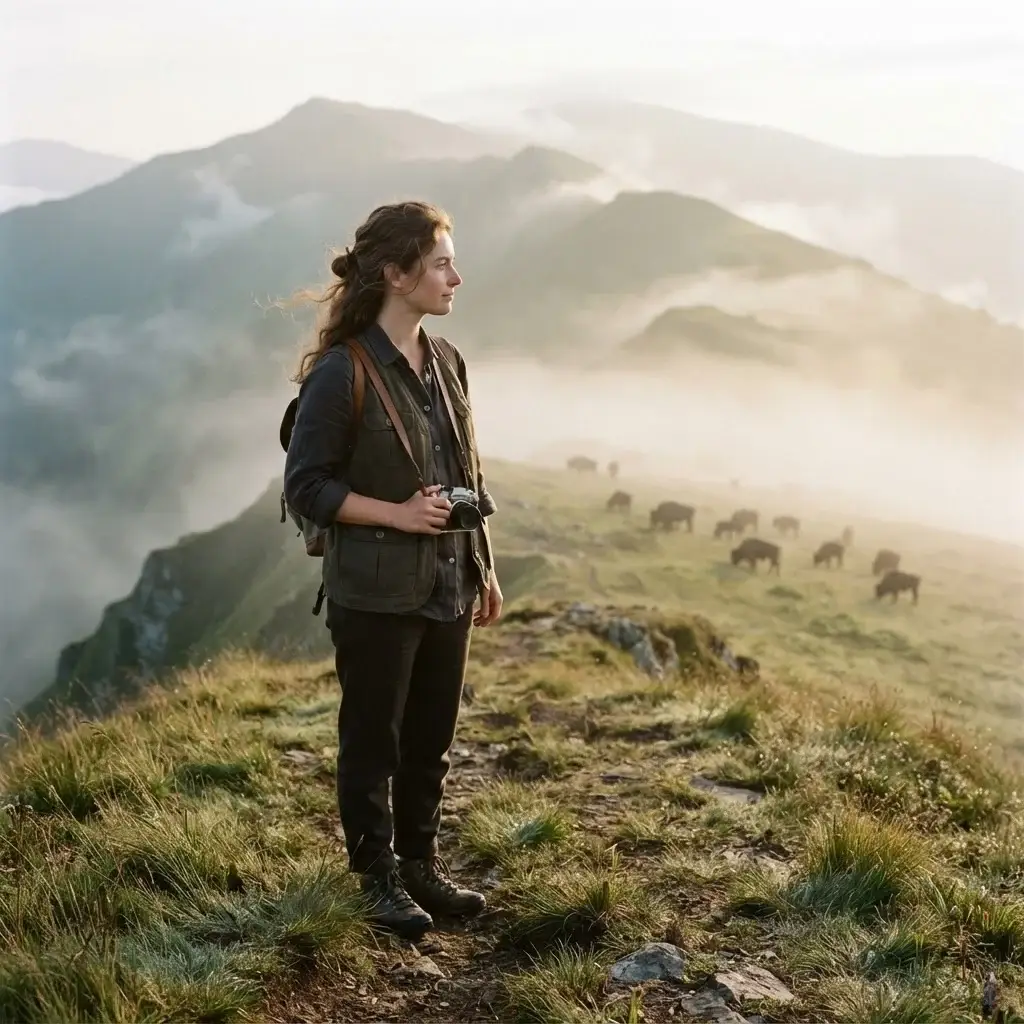
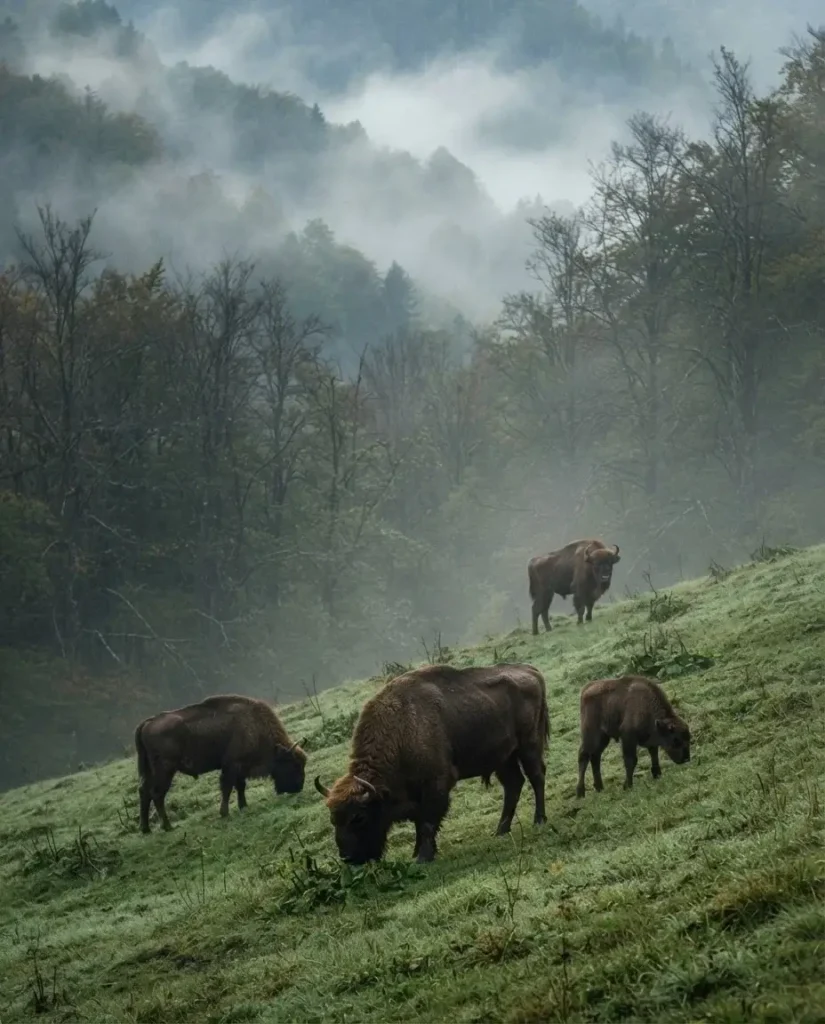
If you want the flagship rewilding experience, the Țarcu Mountains in Romania’s Southern Carpathians are it. Between 2014 and 2021, more than a hundred European bison were brought back to these hills, and today a free-roaming herd lives here again after nearly two centuries gone. Europe’s largest land mammal, back where it belongs.
This is the closest thing Europe has to a proper safari, and it comes with the same rhythm: early mornings, patient tracking with a local ranger, and no promises. You base yourself near the village of Armeniș, and the community there has built its identity around these animals. The Southern Carpathians rewilding landscape page lays out the story and points toward the local guides who lead bison-tracking outings, which is the honest, responsible way to do it. Wandering off alone hoping to bump into wild bison is neither safe nor kind to the animals.
What to eat: lean into rural Romanian home cooking here. Think hearty soups (ciorbă), polenta with sheep’s cheese and sour cream, and stews slow-cooked over wood. Many guesthouses feed you as part of your stay, and it is some of the most comforting food you will find on a cold mountain morning.
Getting there solo: fly into Timișoara, then it is a train or arranged transfer toward Caransebeș and on to Armeniș. This is remote, so book your guide and guesthouse first and let them advise on the final leg. Do not count on turning up and figuring it out.
Greater Côa Valley, Portugal: Vultures, Rivers, and Rock Art
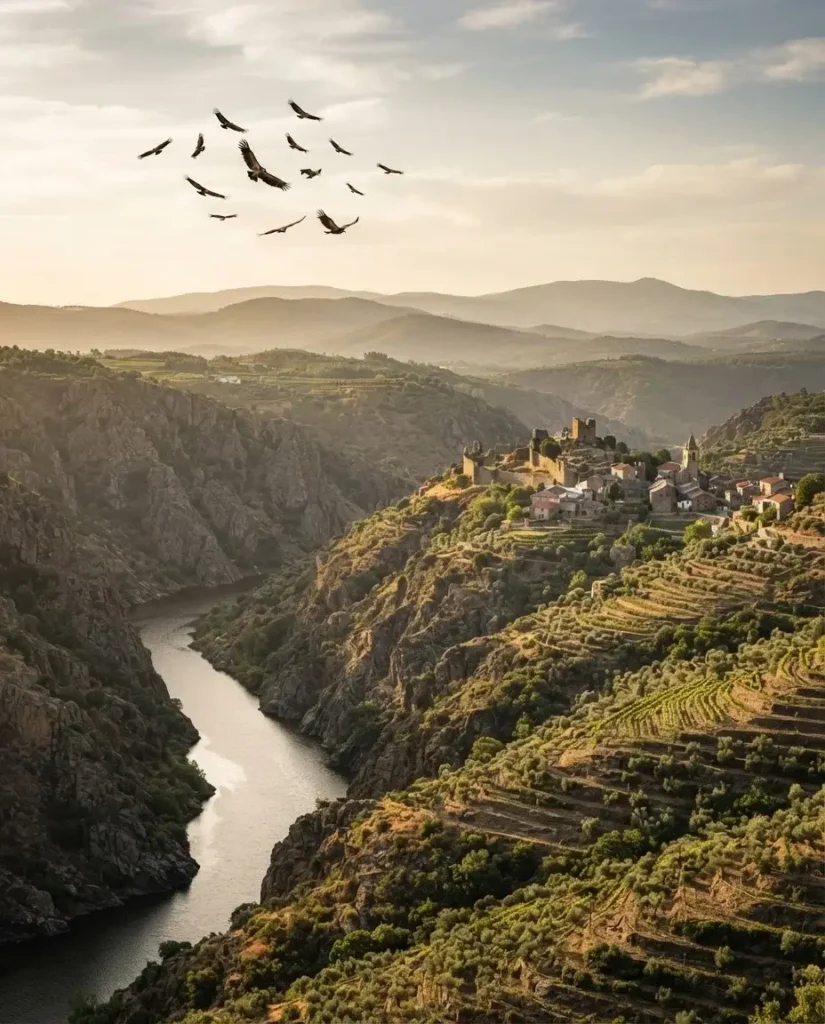
If Romania feels like a big leap, northern Portugal’s Greater Côa Valley is a gentler doorway into rewilding, and it pairs wild nature with real culture. This is a landscape of deep river gorges, ancient olive groves, medieval villages, and prehistoric rock art carved thousands of years ago. Overhead, griffon vultures ride the thermals, and the valley is slowly reconnecting habitats so wildlife can move freely again.
I have not stood in the Côa Valley myself, so I will be straight with you: from what travelers and the rewilding teams consistently describe, the draw here is the blend. You come for the wildlife but stay for the villages, the stone paths, and the sense of a place waking back up. Vulture watching is the headline, and it is far more accessible for a first-timer than tracking mammals, since the birds are large, dramatic, and reliably present around feeding areas and cliffs.
What to eat: this is Portugal’s interior, so expect roasted kid or lamb, bean-and-meat stews, sheep’s cheese, and honest local wine from the Douro’s edges. Order what the guesthouse recommends and you will eat well for very little.
Getting there solo: the nearest hub is the city of Guarda, reachable by train from Lisbon or Porto. From there you will want a local guide or a rental car, as the villages are spread out and public transport thins quickly.
Knepp Estate, England: Rewilding for Beginners
Here is my honest pick for a nervous first solo traveler, or anyone who wants the wild without the wilderness logistics. Knepp, a 3,500-acre former farm in West Sussex, is one of the best-known rewilding projects in lowland Europe, and it is set up beautifully for visitors.
Free-roaming pigs, deer, longhorn cattle, and wild ponies now shape the land, and rare species like nightingales, turtle doves, and purple emperor butterflies have surged back. What makes Knepp so beginner-friendly is that you do not have to plan a thing beyond a booking. Their official wildlife safaris run either in an open-sided Land Rover or on foot with an expert ecologist, so you get the knowledge without needing your own transport or trail skills.
A few real details worth knowing. Safaris run in all weather, and there are no refunds for rain, so pack layers and a waterproof and embrace it. The best windows are April and May for the dawn chorus and returning nightingales, and mid to late October for the deer rut. And note the strict 12+ age policy, since the safaris are built around quiet observation.
Getting there solo: this is the easy part. Trains from London reach nearby stations, and Knepp is a short onward journey. You can genuinely do this as a confident day trip or an overnight, which makes it a perfect toe in the water.
Białowieża Forest, Poland: Europe’s Last Primeval Woodland
Straddling the Poland–Belarus border, Białowieża is the closest thing Europe has to an ancient, untouched forest, and it holds the largest free-roaming population of European bison anywhere. This is where the species was famously saved from extinction. The forest’s ecological value is so significant that it is protected as a UNESCO World Heritage Site, and walking among trees that have stood for centuries is a humbling, quiet kind of thrill.
For solo travelers, this one is very doable. Bison safaris here are commonly run as short two-day, one-night trips with a licensed local guide, often including an early dawn drive when the animals are most active. The village of Białowieża itself is small and walkable, with guesthouses and restaurants clustered together, so you are not stranded.
What to eat: hearty Polish and Podlasie regional food, pierogi, hunter’s stew (bigos), potato pancakes, and warming soups. It is filling, affordable, and perfect after a cold morning outside.
Getting there solo: it takes some effort but is straightforward. From Warsaw, travel to Białystok by train, then continue by bus toward Białowieża. Arrange your guide in advance, since entry into the strictly protected core of the forest is only permitted with a licensed guide.
Scotland: Rewilding on a Grand, Slow Scale
Scotland is having a rewilding moment, and it is one of the most accessible options for English-speaking solo travelers. Two projects stand out.
In the northwest, the Affric Highlands initiative is the UK’s largest rewilding effort, a thirty-year vision to restore native woodland, peatland, and riverside habitats across a vast Highland area. It is led on the ground by Trees for Life, and their Affric Highlands project pages explain how to visit their rewilding center at Dundreggan, which is genuinely welcoming to independent visitors and a great place to learn what rewilding looks like up close.
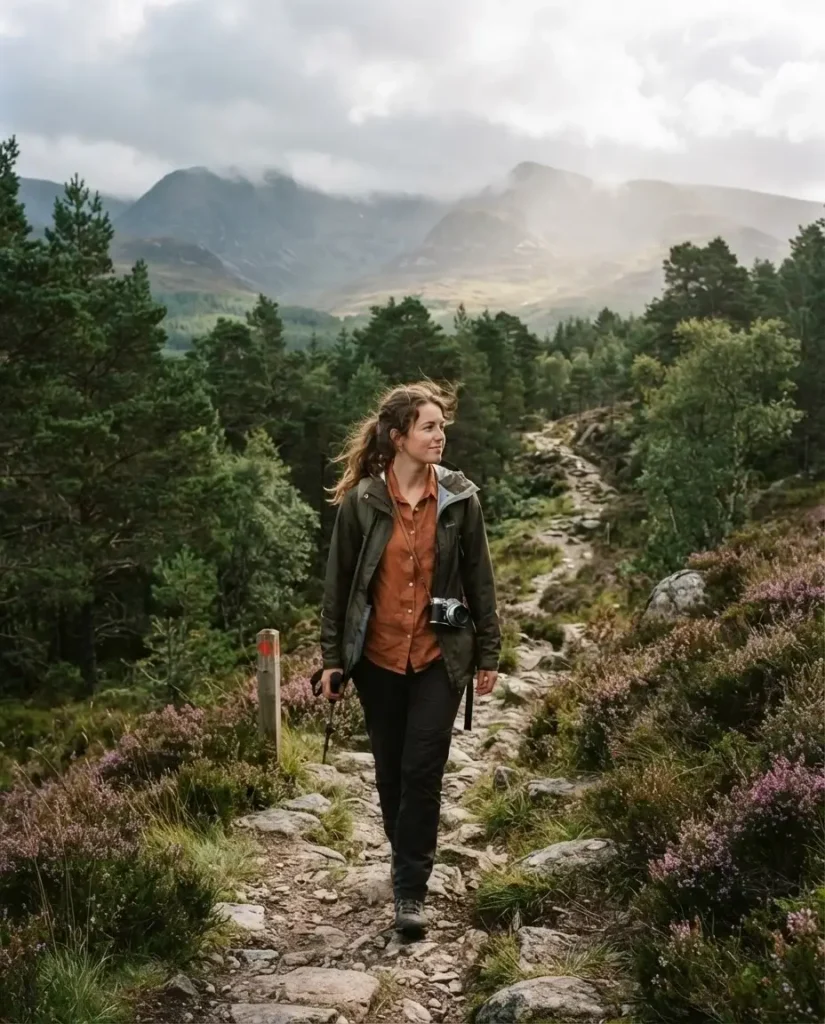
Further east, Cairngorms Connect is working to an astonishing 200-year vision across roughly 60,000 hectares, restoring forests, peat bogs, and rivers within one of the UK’s largest national parks. Their official Cairngorms Connect site is the best place to understand the area before you go. The beauty here is that you can experience the landscape simply by hiking well-marked trails in the Cairngorms, no guide required, though local wildlife guides can dramatically raise your odds of spotting red squirrels, pine martens, and golden eagles.
What to eat: Highland comfort food, Cullen skink (a smoked haddock soup), venison, fresh trout, and oatcakes with local cheese. Warm pubs are part of the experience.
Getting there solo: Scotland is a gift for solo travelers with no car. Trains run from Glasgow and Edinburgh to Aviemore for the Cairngorms, and Inverness is your gateway for the northwest Highlands, with local buses and guided day trips filling the gaps.
The Honest Ethics Question You Should Know About
I promised you real talk, so here it is. Not every rewilding project has gone smoothly, and it is worth understanding why before you form your own view.
The Oostvaardersplassen in the Netherlands became one of the most debated rewilding sites in Europe. In its early “let nature decide” phase, thousands of large grazing animals died in a harsh winter, sparking a fierce public argument about whether hands-off rewilding is humane in a small, fenced landscape without predators. The project has since shifted to a more managed approach. I am not raising this to scare you off. I am raising it because thoughtful travel means going in with open eyes. Rewilding is a young movement still figuring things out, and the best sites are the ones actively learning from mistakes like this.
How to Plan Your First Rewilding Trip Solo
Let me pull the practical threads together, because this is where daydreaming becomes a real plan.
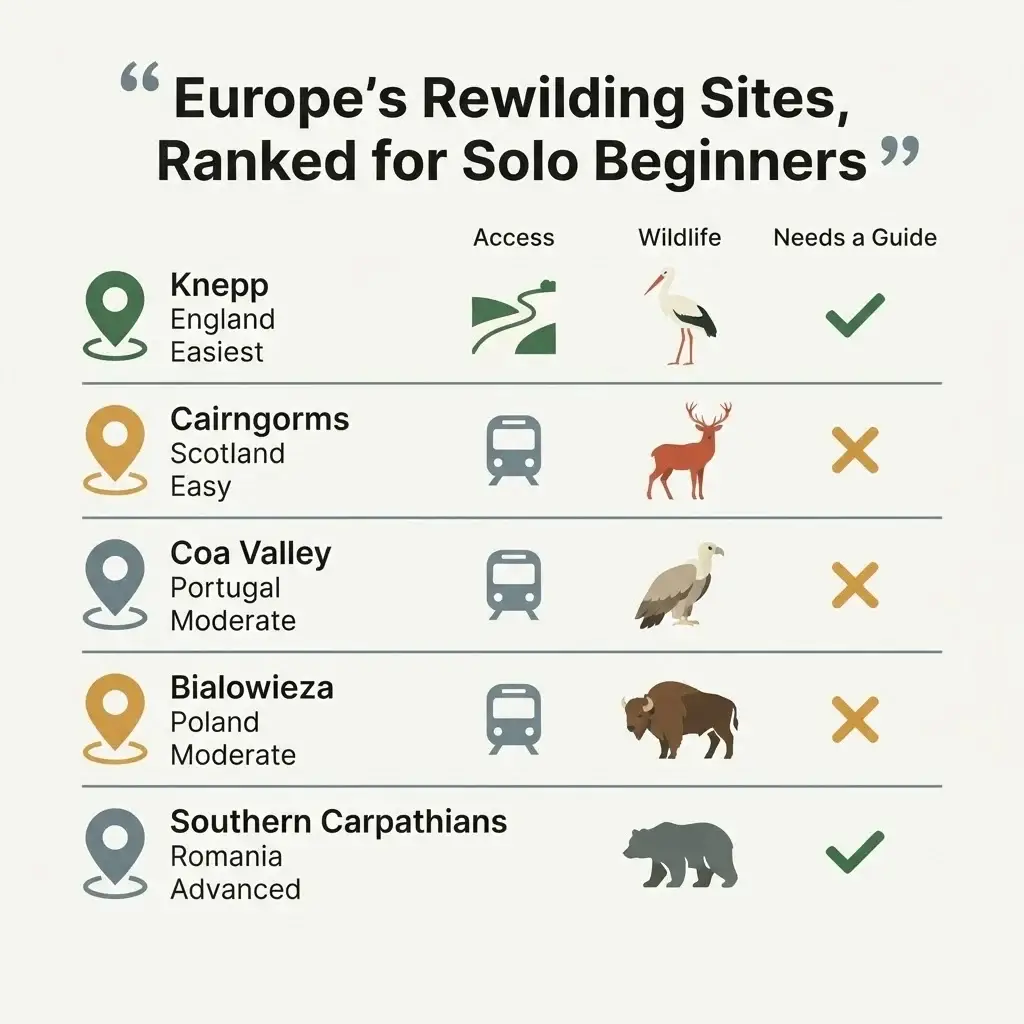
Start with the easiest match for your comfort level. If you are new to solo travel or to wild places, begin with Knepp in England or the Cairngorms in Scotland. Both are reachable by train, English-speaking, and forgiving. Save remote Romania or Białowieża for when your confidence has grown, though there is no rule saying you cannot leap straight in.
Book guides before flights for remote sites. In the Southern Carpathians and Białowieża, the guide is not a luxury, it is often required and always the responsible choice. Lock that in first, then build your travel around it.
Budget realistically. A guided rewilding trip is usually mid-range, not luxury. Expect to pay for the guided safari itself, simple guesthouse stays, and local transfers. Home-cooked meals and rural guesthouses keep daily costs low once you arrive, which is part of why these trips feel like good value: your spending genuinely supports the place.
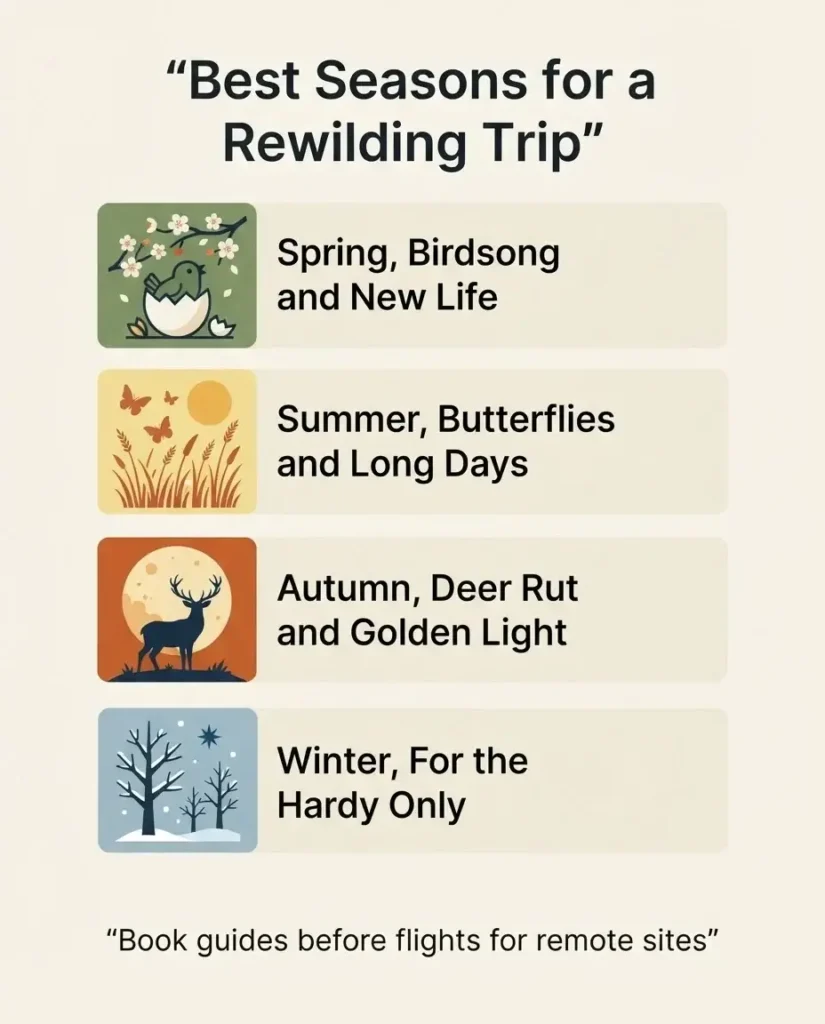
Go in the right season. Spring and autumn are usually best across the board, spring for birdsong and activity, autumn for the deer rut and dramatic light. Deep winter is for the hardy.
Manage your own expectations. Say it with me: the animals owe me nothing. Bring binoculars, warm layers, patience, and a book for the quiet hours. The waiting is the trip.
Why This Kind of Travel Changes You
When I left my office job and started building a life around travel, I chased big cities and famous sights at first. It took me a while to learn that the trips that changed me most were the slow, quiet, slightly uncomfortable ones, living with a family in Ghana, hiking in China, backpacking Europe with no fixed plan. Rewilding travel lives in that same category. It asks you to slow down, to sit still, to accept that you are not in control. That is exactly why it builds confidence.
You do not need to be an expert. You do not need a group to hide behind. You need a booking, a train ticket, warm socks, and the willingness to go stand somewhere wild and see what happens. Europe is getting wilder right now, in real time. Go be part of the story while it is being written.