Europe’s Most Scenic Ferry Routes: What I Wish I’d Known

The first time I truly understood what a ferry could be, I was crossing the Baltic on my solo backpacking trip through Europe, half asleep on a bench, watching a grey sea turn silver as the sun came up. I had booked it because it was cheaper than flying. What I got was one of the best mornings of the whole trip. Nobody rushing me. Nowhere to be for hours. Just coffee, a window, and slowly moving water.
That is the secret nobody tells you when you are dreaming about Europe. Some of the most beautiful, least stressful travel you can do here happens on a boat. Not a cruise ship with a climbing wall and a buffet you feel obligated to conquer. A regular ferry. Often the same one locals ride to work or to visit their grandmother on the next island.
So let me walk you through the routes worth your time, what they actually cost, and the practical stuff I wish someone had explained to me before I stood confused at a ticket window. If you have been daydreaming about this and letting the logistics scare you off, this one is for you.
Why Ferries Might Be the Best Decision You Make in Europe
Here is what changed my mind about ferries, and it goes right to the heart of how I think about travel.
We are trained to treat getting from A to B as wasted time. Something to endure. Flying reinforces that. You show up hours early, you get squeezed through security, you stare at a seat back. A ferry flips that completely. The journey becomes the destination. You are outside, you can move around, and the scenery unfolds slowly enough that you actually absorb it.
For solo travelers especially, ferries are a gift. They are relaxed and low-pressure. Nobody blinks at a person traveling alone on a boat. You can find a quiet corner or strike up a conversation, whichever mood you are in. And compared to trains and flights, they often force you to slow down, which is exactly the kind of travel I believe in. Not checking off a list, but genuinely being somewhere.
One honest note before we sail: “ferry” covers a wide range. Some are cheap public transport that happen to have jaw-dropping views. Others are branded sightseeing boats charging premium prices for the same water. I will flag the difference as we go, because knowing it can save you real money.
The Norwegian Fjords: The One That Ruins You for Other Scenery
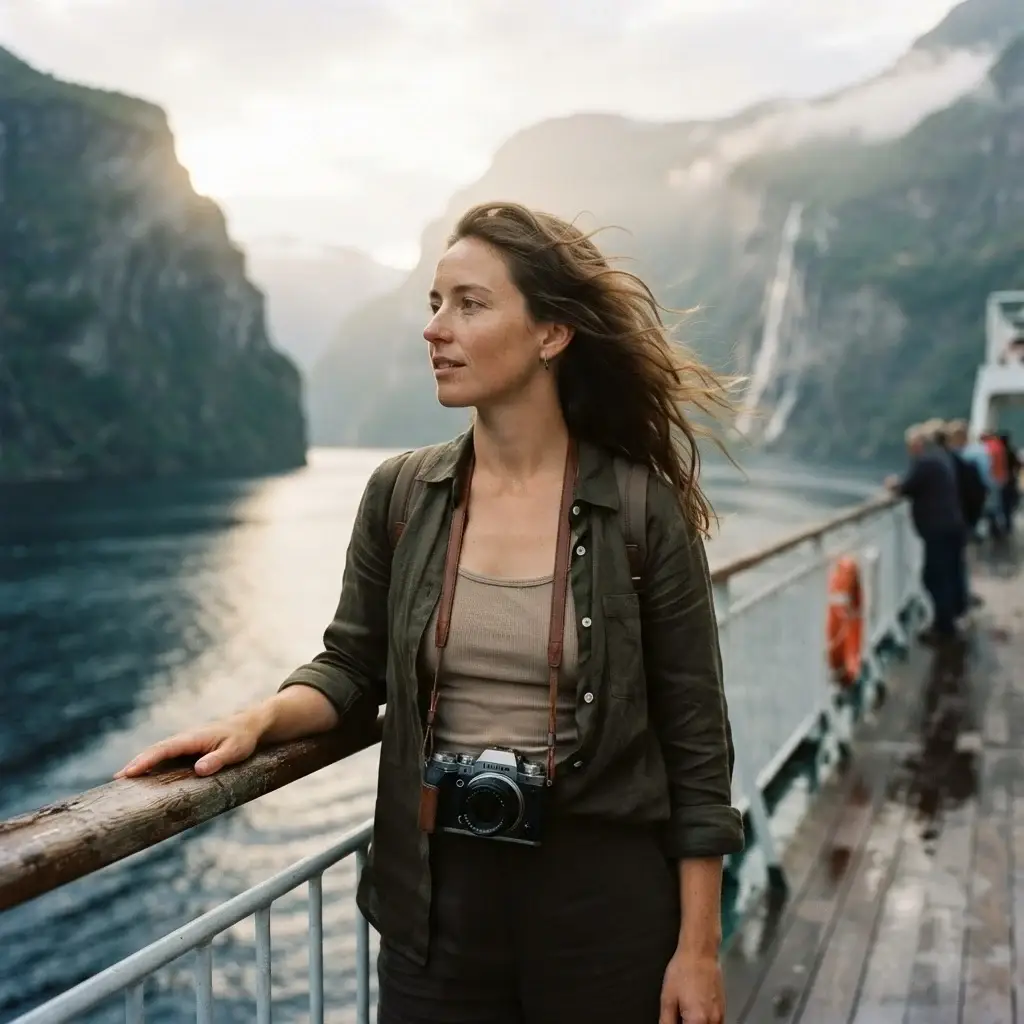
If you only take one scenic ferry in your life, make it a Norwegian fjord crossing. I have hiked through parts of the world that left me speechless, and from everything I have researched and everything fellow travelers consistently report, the fjords sit in their own category. Sheer rock walls rising straight out of the water, waterfalls tumbling down cliffs, tiny villages clinging to green ledges.
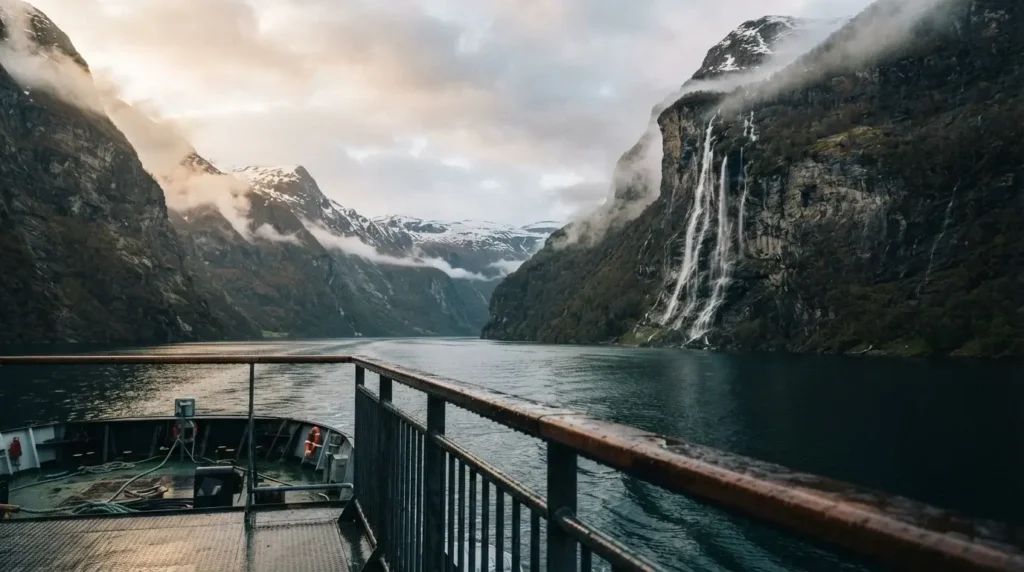
The crown jewel is the stretch through the Geirangerfjord. It and the nearby Nærøyfjord are so extraordinary that they are protected together as a UNESCO World Heritage site, and reading through the official UNESCO listing for the West Norwegian Fjords gives you a real sense of why: these are considered a type locality for fjords worldwide, with walls rising up to 1,400 meters straight from the sea.
The good news for budget travelers is that you do not need an expensive cruise to see this. There is a regular car and passenger ferry between Geiranger and Hellesylt that takes about an hour and five minutes and passes the fjord’s most famous waterfalls along the way. You can check timetables and book directly through the Fjord1 Geirangerfjord ferry page, which runs roughly from May into December. As a foot passenger this is one of the great scenic bargains in Europe.
Insider tip: sit on the right side heading from Hellesylt to Geiranger for the best waterfall views, and go up on the open deck even if it is cold. Wear layers. Fjord weather does what it wants.
What to eat: in Geiranger itself, look for a bowl of creamy fish soup and Norwegian waffles served with brown cheese and jam. It sounds strange and it is wonderful.
The Hurtigruten Coastal Express: A Ferry That Is Basically an Expedition
If you want to go bigger, Norway has something unique in the world. The Hurtigruten Coastal Express is a working ferry that has delivered mail, cargo, and locals along the Norwegian coast for over a century, and it doubles as one of the most spectacular sea journeys on earth. The classic route runs Bergen to Kirkenes and back, calling at 34 ports over a 12-day round trip, and you can see the full itinerary on the official Hurtigruten Coastal Express page.
Now, honesty time. This one is not cheap. Fares for the full round trip commonly start somewhere around €1,740 or roughly $1,972 per person, and climb from there depending on season and cabin. But here is the trick most first-timers miss: you do not have to book the whole 12 days. You can buy shorter port-to-port segments, treating it like the coastal bus it actually is. A two or three day stretch through the most dramatic scenery costs a fraction of the full voyage. If you are anything like me when I first started traveling on a tight budget, this is the move.
The real magic is the far north. In summer you can sail under the midnight sun. In winter, if you are lucky, the northern lights appear over the water. Either way, you are watching one of the planet’s great coastlines drift past your window.
Lofoten and the Free Ferry Almost Nobody Talks About
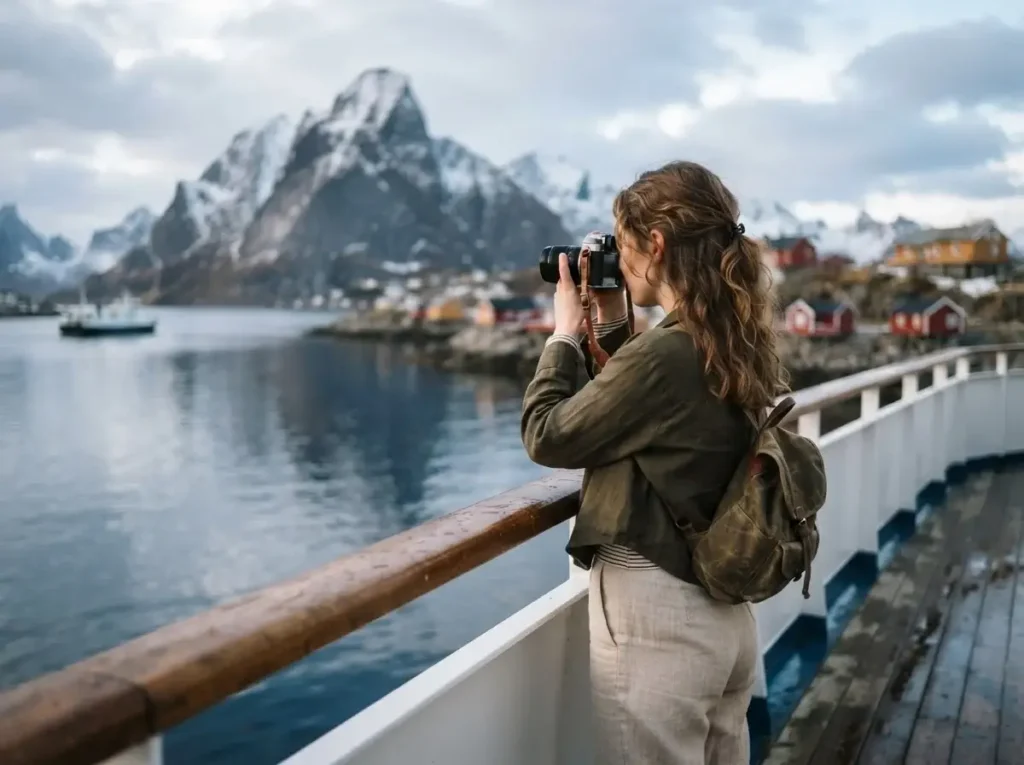
Staying in Norway a little longer, because it earns it. The Lofoten Islands are a chain of sharp peaks and red fishing cabins that look almost invented. Getting there is part of the joy. The ferry from Bodø to Moskenes is genuinely scenic, and here is the part that makes me grin: it is free for foot passengers.
There is a small catch worth knowing. In peak summer these boats fill up, so you can pay a modest fee, around 250 NOK, to guarantee a foot passenger spot in advance rather than gambling on a walk-on. For current schedules and the express boat options that connect the smaller islands, the official Visit Lofoten ferry timetables are the source I would trust over any third party reseller.
Insider tip: bring your own snacks and a thermos. Onboard food in Norway is expensive, and having your own coffee while the peaks slide by feels like a small luxury you gave yourself.
What to eat once you land: fresh cod is the local hero, and in the old fishing village of Å you can learn how the whole region was built on dried stockfish. Try it before you decide it is not for you.
Scotland’s Hebrides: Wild, Moody, and Wonderful
Let me pull us west to a route that gets less hype than it deserves. Scotland’s ferry network to the Inner and Outer Hebrides is run by Caledonian MacBrayne, known to everyone as CalMac, and it opens up a world of windswept islands, white beaches, standing stones, and some of the most dramatic light in Europe.
What I love about this network is how it lets you build your own island-hopping adventure. CalMac used to sell fixed “Hopscotch” routes, but that system has changed. Now you book multi-journey island-hopping tickets, up to seven sailings in one booking, which is even more flexible. You can plan a route yourself using the CalMac island hopping pages and string together islands like Mull, Skye, Harris, and Barra.
For a first taste, the crossing from Uig on Skye over to Tarbert on the Isle of Harris is a beauty, especially as the Harris hills come into view. This is real weather country, so pack a proper waterproof and accept that mist is part of the atmosphere, not a ruined day.
What to eat: fresh langoustines and scallops straight off the boat, and if you make it to Harris, look out for anything smoked. On the whisky-loving islands, a local dram after a cold crossing is a tradition worth honoring.
Solo note: these ferries are calm, orderly, and full of regular islanders going about their lives, which makes them feel very safe and easy to navigate on your own.
Croatia’s Dalmatian Coast: The Adriatic at Its Best
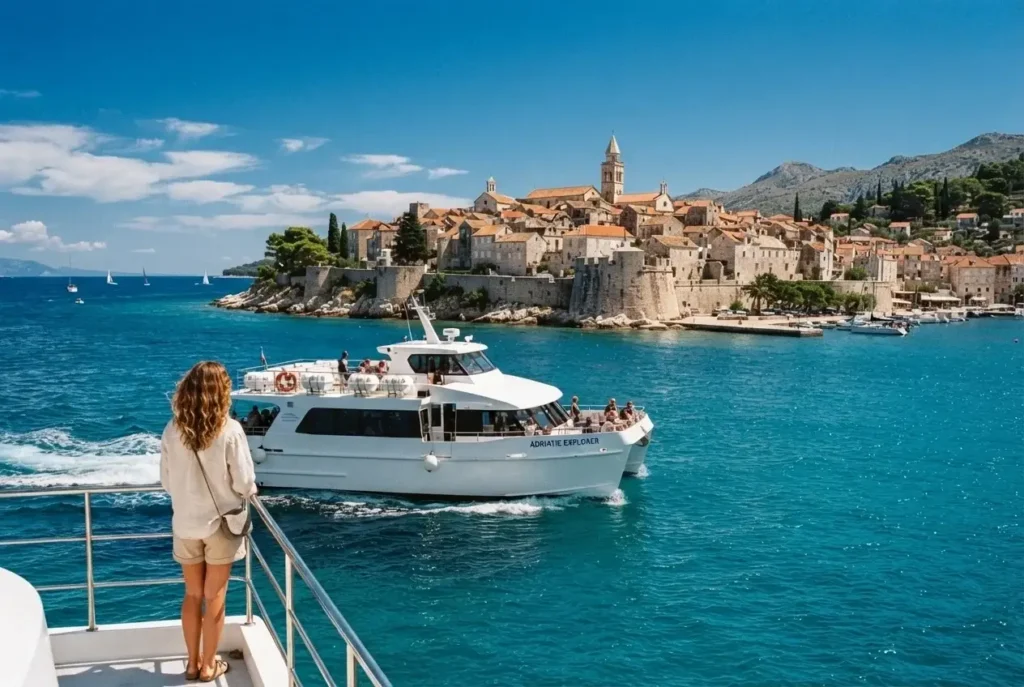
Now to the sunny stuff. Croatia’s coast is a solo traveler’s dream for ferries, with hundreds of islands scattered across impossibly blue water. Two main players run the show. Jadrolinija is the big national operator, and Krilo Kapetan Luka runs fast catamarans that connect Split to Dubrovnik while stopping at gorgeous islands in between.
That Split to Dubrovnik catamaran is the one people rave about, and for good reason. On the way it calls at islands like Hvar, Brač, and Korčula, so you can hop off, spend a night or two, and continue. You can check routes and book directly through the Krilo Kapetan Luka official site rather than paying a reseller’s markup. One current thing to know: Jadrolinija’s old full coastal line from Rijeka all the way to Dubrovnik is not running at the moment, so do not plan around it.
Insider tip: these catamarans are foot passenger only and popular routes sell out in summer, so book a few days ahead. Grab a seat on the sunny side for the island views, but claim some shade if you burn easily, because the Adriatic sun is no joke.
What to eat: on the islands, look for a slow-cooked dish called peka, meat or octopus baked under a metal bell with coals piled on top. It usually needs ordering hours in advance, which is a good excuse to plan a proper long lunch.
Greek Island Hopping: The Classic for a Reason
You cannot talk about scenic European ferries without Greece. Hopping between the Cyclades, think Mykonos, Santorini, Naxos, and Paros, is one of the most romantic and accessible boat journeys anywhere. The islands rise white and blue out of the Aegean, and the ferries range from big slow car ferries to zippy high-speed catamarans.
From what solo travelers consistently report, the slower ferries are actually the nicer experience for scenery, with open decks and time to watch the islands appear. The high-speed boats are faster but keep you inside. If your goal is the view, the slower option often wins.
A practical heads-up: Greek ferry schedules shift with the seasons and can change with weather, so build a little flexibility into your plans and do not book a tight onward flight the same day as an island crossing. Prices are generally reasonable, and for the deck-class tickets you rarely need to reserve far ahead outside peak August.
What to eat: fresh grilled octopus by the harbor, a tomato-heavy Greek salad with a slab of feta on top, and whatever fish the taverna owner points at proudly.
Stockholm Archipelago: 30,000 Islands on a Commuter Boat
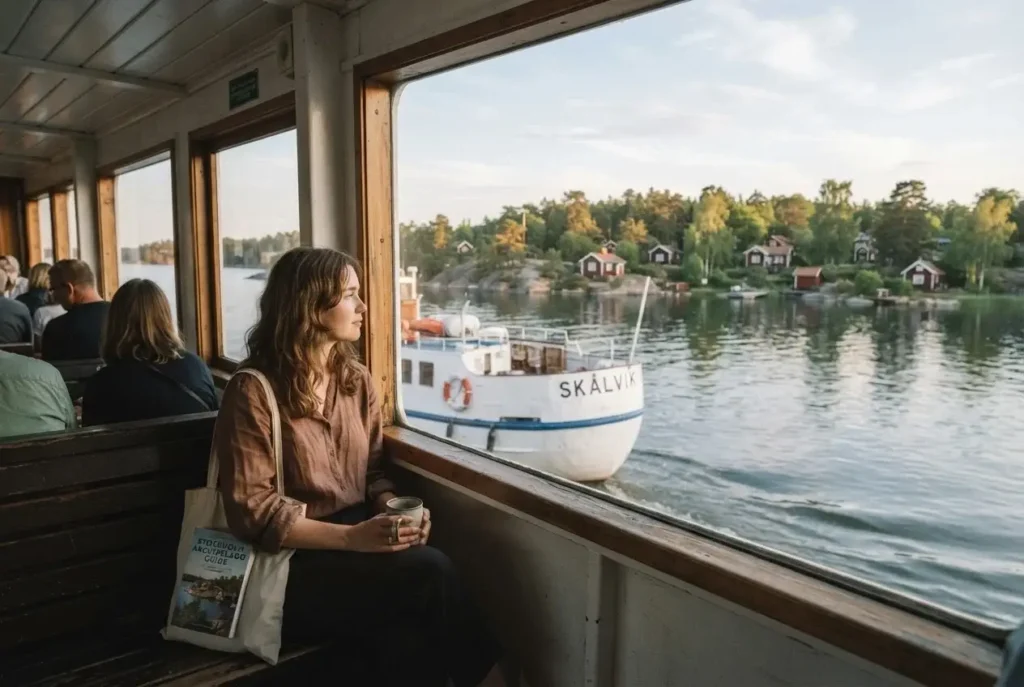
Here is a route that surprised me on my own European travels, because it feels secret even though it runs on a normal schedule. Stockholm is scattered across an archipelago of thousands of islands, and the local ferry company, Waxholmsbolaget, runs boats all through it, from Arholma in the north to Landsort in the south.
This is the definition of a scenic ride that costs regular local fares rather than tourist prices. You can plan trips out to pretty islands like Grinda and Sandhamn using the Waxholmsbolaget English site, and in the low season an SL public transport period ticket can even cover some of these journeys. It is public transport that happens to glide past forested islands and red summer cottages.
Insider tip: go for a day trip to Grinda, walk across the small island, swim if it is warm, eat, and catch a later boat back. It is the easiest, gentlest introduction to Swedish archipelago life.
What to eat: in summer, Swedish comfort food shines. Look for herring, new potatoes with dill, and fresh cinnamon buns with your coffee, a ritual the Swedes call fika and take seriously.
The Amalfi Coast: Skip the Traffic, Take the Water
Southern Italy’s Amalfi Coast has famously terrifying cliffside roads and buses that crawl for hours in summer traffic. The locals’ smart move, and yours, is the ferry. Boats connect towns like Positano, Amalfi, Salerno, and Sorrento, and seeing those pastel towns stacked up the cliffs from the water is far better than seeing them through a bus window.
Travelmar is one of the main operators, and you can check its seasonal routes on the Travelmar official site. One thing to plan around: these ferries mostly run from spring through autumn and largely pause in winter, so this is a warm-season route. In peak summer, buy your tickets in the morning or a day ahead, because afternoon boats fill up.
Insider tip: the crossing between Positano and Amalfi is short but gorgeous, so take it even if you could technically bus it. Sit toward the back for the widest coastline views as you pull away from each town.
What to eat: this is lemon country, so try a fresh lemon granita on a hot afternoon, and any pasta with local seafood. Save room for a small glass of limoncello, ideally the homemade kind.
The Practical Stuff That Actually Trips People Up
Let me answer the questions I know are sitting in the back of your mind, because these are the ones that stop dreamers from booking.
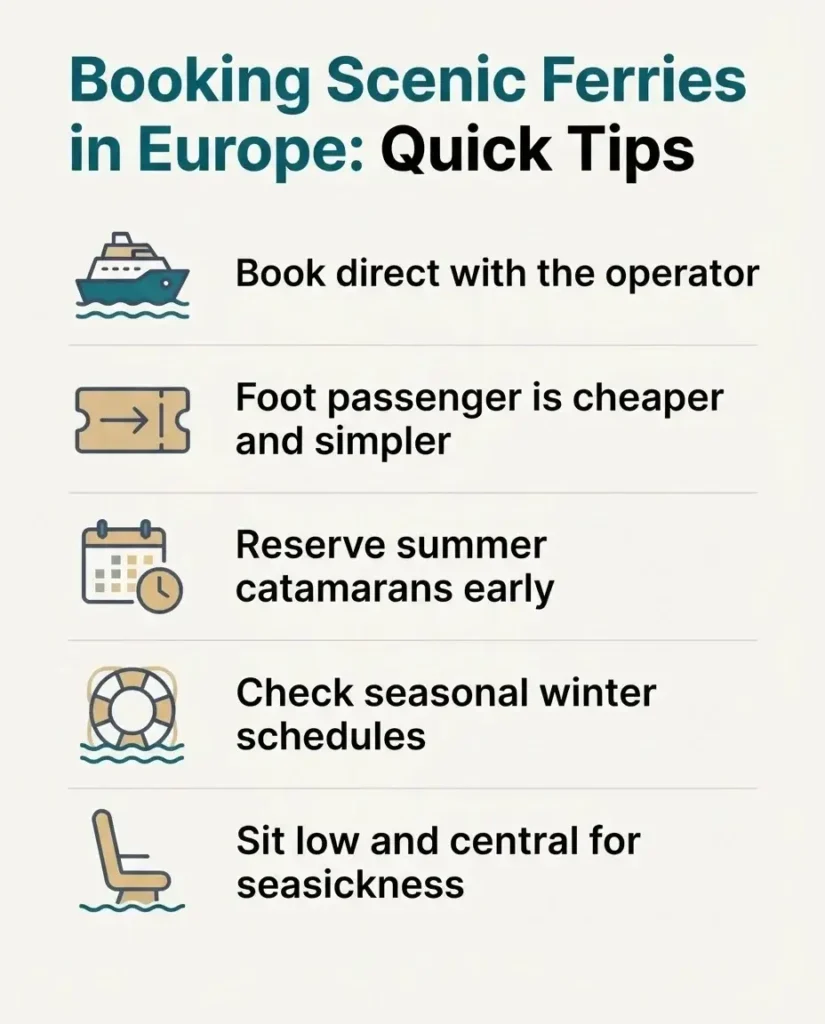
Are European ferries expensive? Mostly no, if you choose wisely. Public foot passenger ferries are often cheap, sometimes a few euros. The expensive versions are branded cruises and sightseeing boats. Learn to tell them apart and you will save a lot.
Do I need to book in advance? For short public crossings, usually no, you can often just walk on. For popular summer catamaran routes in Croatia and Greece, for overnight cabins, and for anything with a car, yes, book ahead.
Foot passenger or car? As a solo traveler, walking on is nearly always simpler and cheaper. You skip the loading queues and you are free to roam the deck.
What about seasickness? Most scenic routes here are in sheltered water, fjords, archipelagos, coastal runs, so it is rarely rough. If you are prone to it, sit low and central, look at the horizon, and consider taking something before you board rather than after you feel ill.
Is it safe to do alone? Genuinely, yes. Ferries are among the most solo-friendly ways to travel in Europe. They are public, staffed, and full of ordinary people. Eating alone onboard is completely normal, so bring a book, grab a window, and enjoy the fact that nobody needs anything from you for the next few hours.
Always book directly with the operator when you can. The official sites I have linked throughout are almost always cheaper and clearer than resellers, and if a schedule changes you are dealing with the real source.
Your Real Takeaway
If there is one thing I want you to carry away from all this, it is that you do not need a huge budget or years of experience to have one of these mornings. You do not need the perfect trip mapped out. You need to pick one route that made your chest tighten a little when you read about it, find the operator’s real website, and book the ticket.
The rest, the deck, the wind, the coastline appearing out of the haze, that part takes care of itself. And somewhere out on the water, watching a place you only ever saw in photos become real, you will understand why I keep coming back to boats. The journey stops being the boring part. It becomes the whole point.
Go book the ferry. Your future self, standing at that railing, will thank you.