Budget Castle Hotels in Europe: A First-Timer’s Honest Guide

Let me clear up the biggest myth first, because it’s the one that kept me from even looking for years. You do not need to be rich to sleep inside a real European castle. When I was still stuck at my old office desk in New York, saving up vacation days like they were made of gold, I assumed castle stays were reserved for honeymooners with unlimited budgets. That’s simply not true. Some of the most magical historic buildings on the continent have been turned into hostels, family-run inns, and government-run hotels that cost about the same as a plain motel back home.
I’ve backpacked solo across Europe on a tight budget, and I can tell you the trick is not luck. It’s knowing which systems exist. Once you understand the three or four categories of affordable castle stays, you can find them yourself, in almost any country, at prices that won’t wreck your trip. So let’s walk through it the way I wish someone had walked me through it: honestly, with real numbers, and with a clear plan for getting there and eating well once you arrive.
First, let’s define what “castle hotel” actually means
Here’s where a lot of first-timers get burned. The word “castle” gets stretched to cover everything from a 12th-century stone fortress to a large country house with a fancy name. Both can be wonderful, but they cost very different amounts, and you deserve to know which one you’re booking.
For the purposes of your budget, I group affordable castle stays into four buckets. There are castle hostels, which are the cheapest by far and often the most fun. There are national heritage-hotel networks like Spain’s paradores and Portugal’s pousadas, which are mid-range and reliably good. There are small independent castle inns, which vary wildly. And there are the famous luxury castle hotels you see on Pinterest, which are the ones I’d tell you to skip unless you’re splurging on purpose.
If your goal is to actually sleep in living history without overspending, the first two buckets are your friends. Let me take them one at a time.
Castle hostels: the cheapest way to wake up behind stone walls
This is the category almost every glossy roundup ignores, and it drives me a little crazy, because it’s the single best value in European travel. Germany runs an entire network of them. More than 30 old castles and stately homes across the country have been converted into modern youth hostels, and you can browse them through the official German Youth Hostel Association listing of castle hostels. Behind the ancient walls you get genuinely modern interiors, en-suite showers, a cafeteria, and common rooms, all at hostel prices.
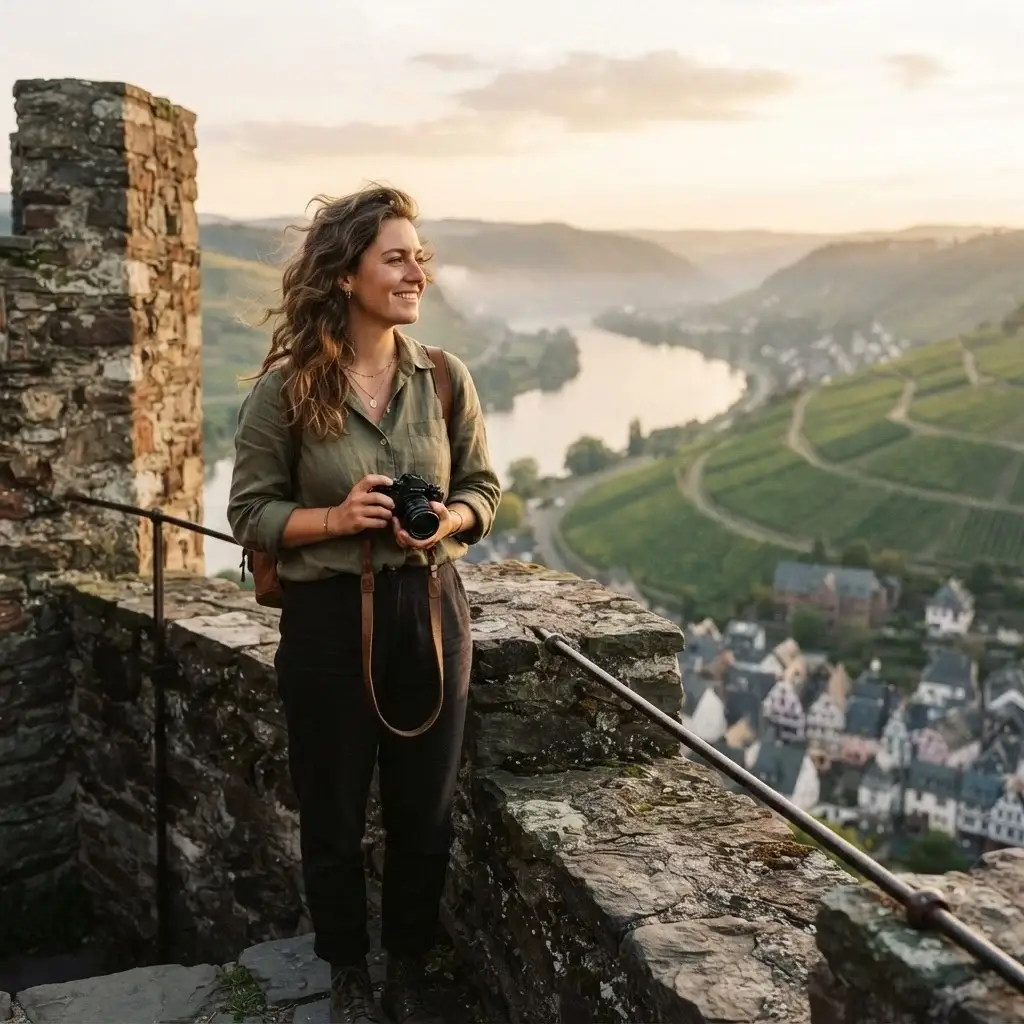
The one I’d point a first-timer toward is Burg Stahleck, high above the little wine town of Bacharach on the Rhine. The castle dates to the 12th century, and the Hostelling International page for Bacharach describes the views across the Rhine Valley, which are genuinely some of the best you’ll get anywhere in Germany. It has 178 beds in a mix of rooms with one, two, four, and more beds, so this matters for solo travelers: you don’t have to share a dorm if you don’t want to. You can book a private single or double and still pay hostel rates. The setting is even part of the UNESCO-listed Upper Middle Rhine Valley, and the regional tourism board’s history of Burg Stahleck explains how the fortress was rebuilt in 1925 after centuries as a ruin. Sleeping in something with that kind of story, for the price of a bunk, still feels a little unreal to me.

If you like your castles with a dramatic past, Colditz is another one that now operates as a hostel. It became world-famous as a high-security World War Two prison, complete with the audacious escape attempts documented in the historical record of Colditz Castle, including a homemade glider hidden in the attic. Staying somewhere like that is a lesson in how much richer travel gets when your accommodation is the attraction, not just a place to drop your bag.
A note on membership and cost. Many of these are run through Hostelling International or its national branches. You may be asked for a membership card, but you can usually join on the spot or buy guest stamps, and the cost is small. Bring it up when you book so there are no surprises at check-in.
What to eat: In Rhine castle-hostel country, lean into the local Riesling from the vineyards you can literally see from the battlements, and simple regional plates like Flammkuchen, a thin crispy tart with cream, onion, and bacon. The hostel cafeterias are cheap and hearty, which is exactly what you want after a day of walking.
Getting there: This is the part people worry about most, and here’s the good news. Bacharach sits right on the Rhine rail line, so you can arrive by regional train from Frankfurt or Koblenz without a car. That’s a theme worth remembering: the castle stays that are easiest to reach without driving are usually the ones near rivers and old trade towns, because that’s where the railways were built.
Spain’s paradores: castles run by the government, priced for normal people
If castle hostels are the backpacker’s secret, Spain’s paradores are the smart mid-range traveler’s secret. This is a network of nearly 100 state-run hotels, and a good number of them occupy genuine castles, fortresses, and monasteries. Because they’re government-run, the quality is consistent and the prices are far more reasonable than the fairytale setting would suggest.
The official Paradores site keeps a helpful guide to its top castle paradores to spend the night, and the standouts for a first-timer are Cardona, a fortified 9th-century complex in Catalonia, and Sigüenza, an imposing castle looming over a medieval village that once belonged to the town’s bishops. Both feel enormous and cinematic, and both regularly show up among the more affordable options in the network. Rates on aggregators have been reported starting around 81 dollars for paradores generally, and Paradores also offers a small discount, around 5 percent, for booking directly on their own website, so I always price both.
Here’s my honest solo-travel tip for paradores. Because they’re formal hotels, they price by room, not by person, which means a solo traveler pays close to what a couple pays. Two ways around that: travel in the shoulder seasons of spring and autumn when rates drop, and consider splitting a castle night with a friend if you meet one on the road. I’ve done exactly that on my own Europe trips, teaming up with someone from a hostel for a single splurge night, and it turns an expensive room into an affordable memory.
What to eat: Paradores are known for regional restaurants that take local cuisine seriously. In inland Castilian castles like Sigüenza, look for roast lamb and hearty stews; in Catalonia near Cardona, the mountain cooking leans toward rich sausages and beans. Even if you can’t afford full half-board every night, treat yourself to one proper dinner. It’s part of the experience.
Getting there: Sigüenza has a direct train from Madrid, which makes it one of the easiest castle stays in the country to reach car-free. Cardona is trickier and really rewards having a car or a bus connection, so plan that leg before you book.
Portugal’s pousadas: medieval walls, an hour from Lisbon
Portugal runs its own version of the parador idea, called pousadas, and several sit inside real castles. The one I’d send a first-timer to is the Pousada Castelo Óbidos, tucked inside the walls of one of Portugal’s most beautiful medieval towns. According to the official Pousada Óbidos page, the property has operated inside the castle since 1951 and marks the very beginning of Portugal turning classified heritage buildings into places you can actually stay.
Now, honesty rule in full effect here, because I want you to plan with real numbers. This pousada is lovely but it is not the cheapest option on this list. Cottage rooms next to the castle start around 194 euros a night, and rooms inside the castle itself run higher. That puts it in “special one-night splurge” territory rather than “every night of your trip.” My advice: book one night here for the storybook experience, then stay in guesthouses in the surrounding region for the rest.
The town itself is the real gift, and it costs nothing to wander. The official Visit Portugal guide to Óbidos describes it as one of the best-preserved medieval villages in the country, all whitewashed houses and cobbled lanes inside intact walls. It’s an easy day’s reach from Lisbon, so even if you don’t sleep in the pousada, you can still visit.
What to eat: You cannot leave Óbidos without trying ginjinha, the local sour-cherry liqueur, traditionally served in a little cup made of chocolate that you eat afterward. It’s the kind of small, specific, delightful thing that makes a place stick in your memory. Pair it with the region’s fresh coastal fish if you can, since the beaches near Peniche are only a short drive away.
Getting there: Óbidos is roughly an hour from Lisbon and reachable by bus, which makes it very doable without a car.

That accessibility is a big part of why I recommend it over more remote Portuguese castles for a first attempt.
How to actually keep the cost down
Now that you know the categories, here are the levers that decide whether you pay a fortune or a fair price. These are the same habits I built when I was working flexible jobs to fund my travels, counting every euro but refusing to give up the experiences that mattered.
Travel in shoulder season. Late spring and early autumn are the sweet spot. The weather is still good, the crowds thin out, and castle-hotel prices can fall noticeably from their summer peaks. This one change saves more money than any other.
Book direct when the official site offers a discount, as Paradores does, but always cross-check. Sometimes the official rate wins, sometimes it doesn’t. Take five minutes to compare rather than assuming.
Separate the fantasy from the budget. My favorite strategy is one castle splurge surrounded by cheap nights. You get the magical experience without paying castle prices for a whole trip. Nobody remembers the budget guesthouse in between. They remember the night the sun set over the Rhine from your window.
Read the fine print on meals. Some places quote room-only, others include breakfast, and half-board can be great value at remote properties where you can’t easily walk to a restaurant. Know which you’re getting before you book.
Check the transport before you fall in love. This is the mistake I see most often. Someone books a gorgeous remote castle, then discovers it’s a 40-euro taxi from the nearest station. Pick castles on rail or bus lines for your first trip, and save the far-flung ones for when you have a car.

Is it actually worth it, especially solo?
Yes, and I want to be specific about why, because “it’s magical” isn’t a real reason to spend your money.
Traveling solo, your accommodation shapes your whole day more than it does when you have a companion to explore with. When the place you’re sleeping is itself a 12th-century fortress with a wine bar in the courtyard and a valley view from the ramparts, you’re never bored and you’re never lonely in the empty way that a bland hotel room can make you feel. You wander the grounds at dusk. You strike up conversations with other travelers in the common room. You wake up and the first thing you see is history.

I won’t pretend every castle stay is flawless. Old buildings can mean uneven heating, steep stairs, and quirky plumbing. That’s part of the deal, and honestly part of the charm once you make peace with it. What you’re buying is not five-star polish. You’re buying a story you’ll tell for the rest of your life, at a price a regular traveler can actually pay. That trade has always been worth it to me, and I think it will be for you too.
The perfect moment to do this won’t arrive on its own. Pick a country, pick one of the categories above, and price out a single night. Once you see the real number, I suspect the only thing standing between you and a castle will be the booking button.