Birdwatching Beyond the Crowds: 6 Off-Grid Spots for Real Birds

There’s a specific kind of silence you only find in remote places. It’s not empty silence. It’s full of things you normally miss: wind through tall grass, water running over rock, and somewhere in the branches above, a sound you can’t quite identify but can’t stop thinking about.
I didn’t grow up as a birder. I grew up in New York, where pigeons were the birds and nobody was looking up. But something shifted when I started traveling seriously, first solo across Europe, then living with a family in Ghana, then teaching English in Thailand. I noticed that the travelers who seemed most relaxed, most present, most genuinely immersed in a place were often the ones who were quietly watching. Not rushing. Not checking off sights. Just watching.
Birdwatching gave me a reason to slow down in places I might otherwise have rushed through. And it turns out that the best spots for birds are almost always the same spots that feel farthest from the tourist trail.
This guide is not for professional ornithologists. It’s for anyone who is curious, who wants travel to feel more alive, and who is ready to step away from the crowds and into somewhere genuinely wild. Here are six destinations that will give you all of that, and a few feathers you’ll remember for the rest of your life.
Before You Go: The Tool Every Birdwatcher Needs
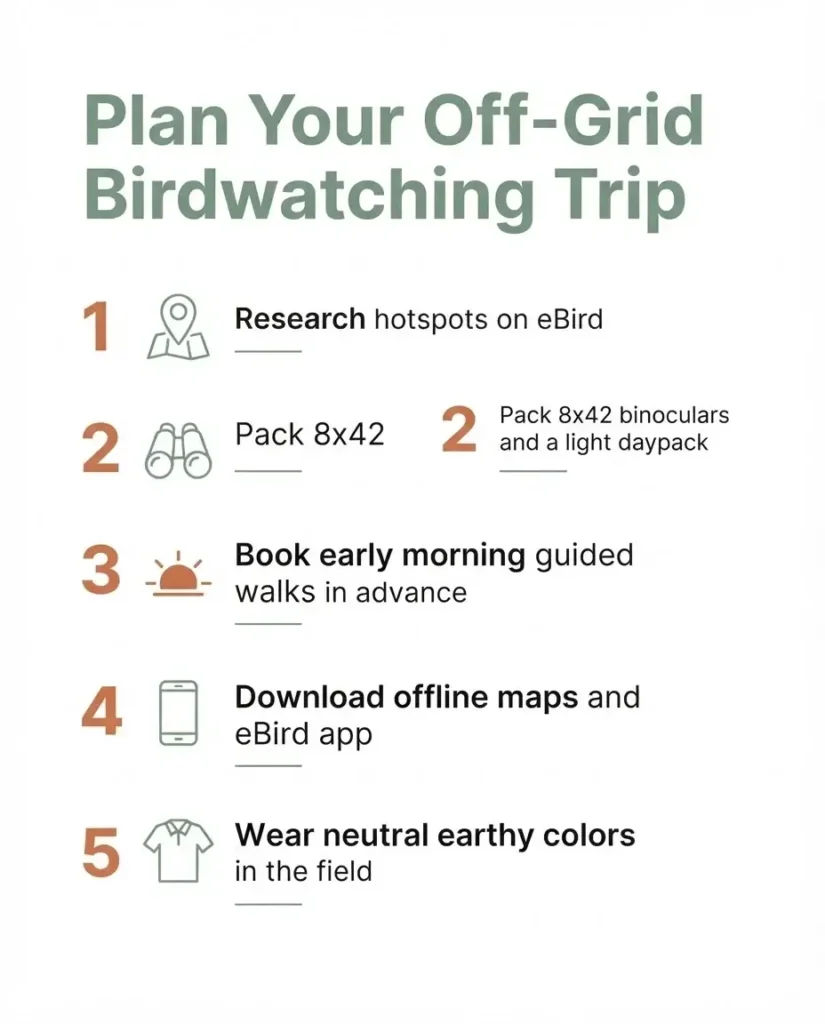
Before diving into destinations, there’s one thing that changed how practically every traveler I’ve spoken with plans a birding trip: eBird’s Explore Hotspots tool, maintained by Cornell Lab of Ornithology. It’s free, it’s global, and it lets you search any location in the world to see exactly which birds have been spotted there, when they were seen, and how recently. You can zoom into a specific nature reserve, pull up a species list, and plan your mornings around what’s actually there. Whether you’re a complete beginner or someone who has been quietly birding for years, using eBird before you book a flight is one of the most practical things you can do.
If you’ve never birdwatched before, the Audubon Society’s beginner guide is a genuinely useful starting point for understanding what gear to bring, how to find birds, and how to enjoy it without feeling like you need a degree.
Now, the destinations.
Mindo, Ecuador: The Cloud Forest That Will Rearrange Your Brain
Ecuador is one of the most biodiverse countries on earth relative to its size. And within Ecuador, Mindo is something else entirely.
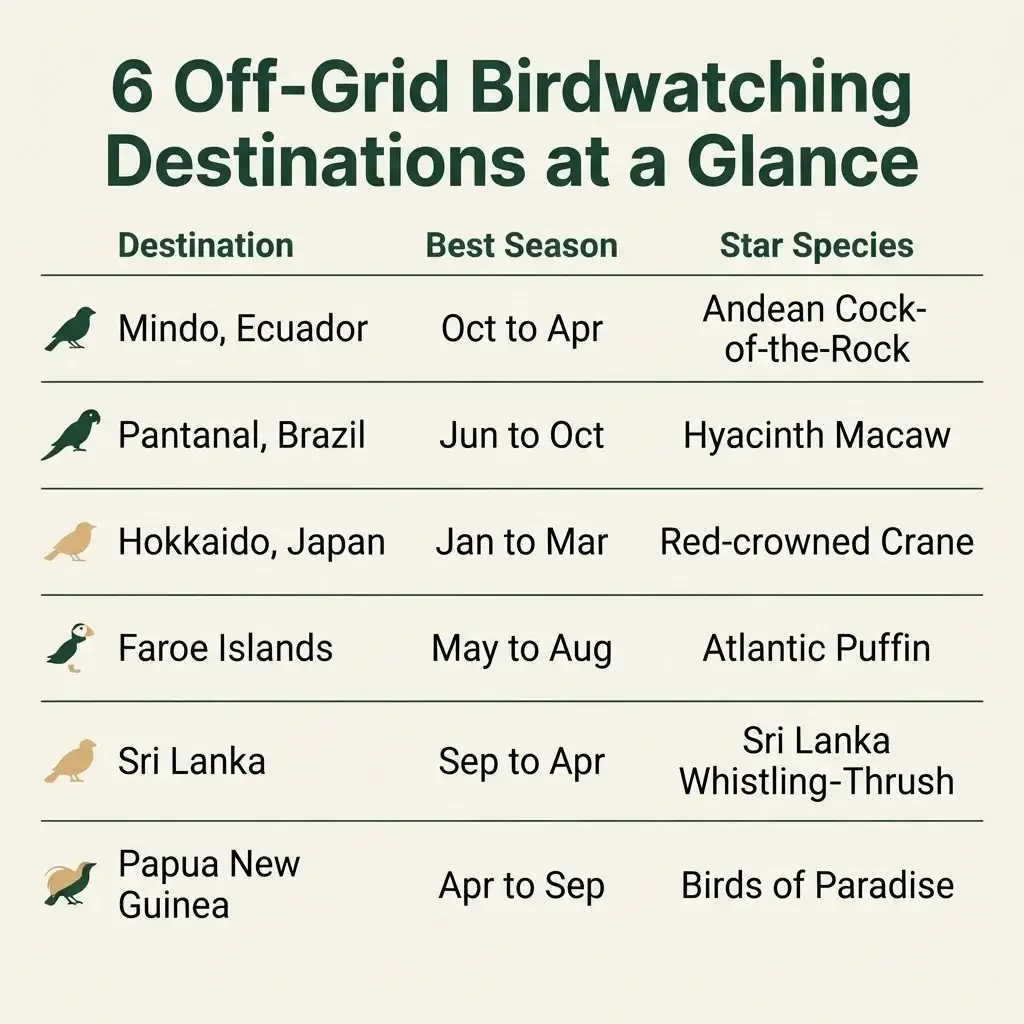
Mindo is a small town about two hours northwest of Quito, sitting in a valley of cloud forest at roughly 1,250 meters above sea level. The cloud forest ecosystem is different from a rainforest. It’s cooler, mistier, and the density of life packed into every square meter is genuinely hard to process. More than 500 bird species have been documented in the Mindo valley, and that number includes hummingbirds in over 25 species, tanagers that look like someone spilled a paint set, toucans, antpittas, motmots, and the Andean Cock-of-the-Rock, a bird so dramatically orange it looks like it shouldn’t be real.
You don’t need a guide to explore Mindo, but you will want one for at least one morning. The guides here know where the birds are before the light changes, and the difference between wandering on your own and having someone who can call birds to you by sound is significant. The Mindo Bird Watching guide species list is a solid pre-trip resource that shows you exactly what you’re looking for and when.
One place worth knowing about specifically is the Refugio Paz de las Aves, a private reserve about 30 minutes outside Mindo town, run by the Angel Paz family. The reserve is famous for antpittas that have been habituated to come to feeding stations, and for the Andean Cock-of-the-Rock lek where males display at dawn. You can book directly through refugiopazdelasaves.org, where tours start at 6 AM and include expert guides and a homemade breakfast. It is one of the most reliable places in South America to see these species up close.

For getting there: Mindo is easily reached by bus from Quito’s Ofelia terminal, with departures several times daily. The ride takes about two to two and a half hours and costs a few dollars. Most nationalities can enter Ecuador without a visa for up to 90 days. Budget travelers do very well here. Guesthouses in Mindo typically run between $20 and $60 per night, and a guided morning walk usually costs between $30 and $60 per person depending on the guide and reserve.
What to eat: Mindo has a surprisingly good food scene for such a small town. Try the fresh fruit juices at almost any local spot, ask for hornado (roasted pork with potatoes) at a family-run comedor for lunch, and pick up locally made chocolate from one of the shops in town. The Mindo region is known for fine cacao, and you can often visit a small chocolate producer during an afternoon when the birds are quieter anyway.
The Pantanal, Brazil: The Wetland Where Birds Rule Everything
Most travelers visit Brazil for Rio or the Amazon. The Pantanal sits quietly in the west of the country, in the states of Mato Grosso and Mato Grosso do Sul, and it is one of the most spectacular wildlife environments on the planet.
The Pantanal is the world’s largest tropical freshwater wetland, spanning roughly 150,000 square kilometers across Brazil, Bolivia, and Paraguay. The Brazilian portion is a UNESCO World Heritage Site, listed as the Pantanal Conservation Area, and it supports around 650 bird species, 80 species of mammals, and 300 species of fish. What makes it different from the Amazon is visibility. The Amazon is dense and vertical; birds are there but hard to spot. The Pantanal opens up during the dry season into a flat, flooded savanna where wildlife concentrates around water sources and there is nowhere for anything to hide.
From what solo travelers consistently report, and from everything in the available research, the dry season window from June through October is the ideal time to visit for birdwatching. Late July and into August is when enormous flocks of wading birds, including the magnificent Jabiru Stork (the symbol of the Pantanal), Hyacinth Macaws, Roseate Spoonbills, and Toco Toucans, gather around shrinking water bodies in concentrations you simply don’t see anywhere else. The Hyacinth Macaw is the largest parrot in the world, and the Pantanal holds the largest wild population. Seeing one in flight against a late afternoon sky is something that doesn’t leave you.
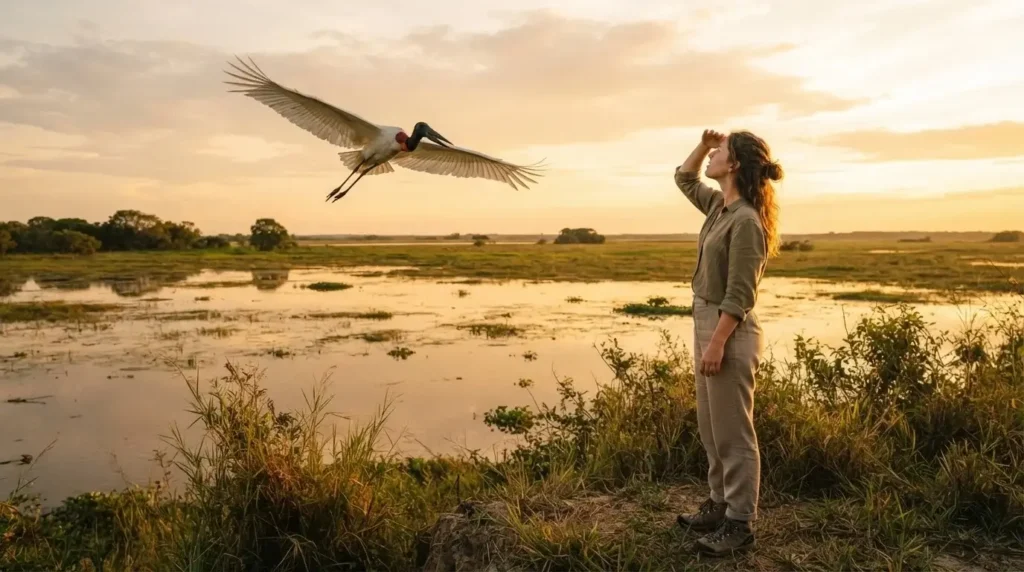
The gateway towns are Cuiabá (for the northern Pantanal) and Campo Grande (for the south). From either, most visitors head out along the Transpantaneira road or to specific fazendas (ranches) that have been converted to eco-lodges. Staying at a fazenda inside or adjacent to the wetland is the best approach for serious wildlife time. Brazil requires an e-visa for US citizens and some other nationalities, which can be processed online in advance. Budget for a fazenda stay at roughly $100 to $200 per night including meals and guided excursions, which is excellent value given how much access you get.
A practical note: bring a good pair of binoculars and wear neutral-colored clothing. Morning and late afternoon are peak activity windows. Mosquito repellent is not optional.
Hokkaido, Japan: Cranes, Owls, and a Winter That Feels Like a Different World
Most visitors to Japan see Tokyo, Kyoto, and perhaps Osaka. Hokkaido, Japan’s northernmost main island, receives far fewer international tourists and rewards those who make the journey with a completely different version of the country.
For birdwatchers, the focus is the eastern Hokkaido region, specifically around Kushiro and the Kushiro Wetland National Park. The Kushiro Wetland is Japan’s largest wetland at 28,000 hectares and is registered under the Ramsar Convention. According to the Japan National Tourism Organization’s birdwatching guide, the star of eastern Hokkaido is the Red-crowned Crane, known in Japanese as tancho, a species considered a symbol of happiness and longevity in Japanese culture. With a total wild population of approximately 3,000 individuals worldwide, and a significant portion of those living year-round in Hokkaido’s eastern wetlands, this is one of the rarest and most stunning cranes on earth.
The best window for seeing the cranes is late January through early February, when they gather at feeding stations near Tsurui village and the air is cold and clean and everything feels still. Watching cranes dance against a snow-covered landscape is the kind of thing people describe years later.
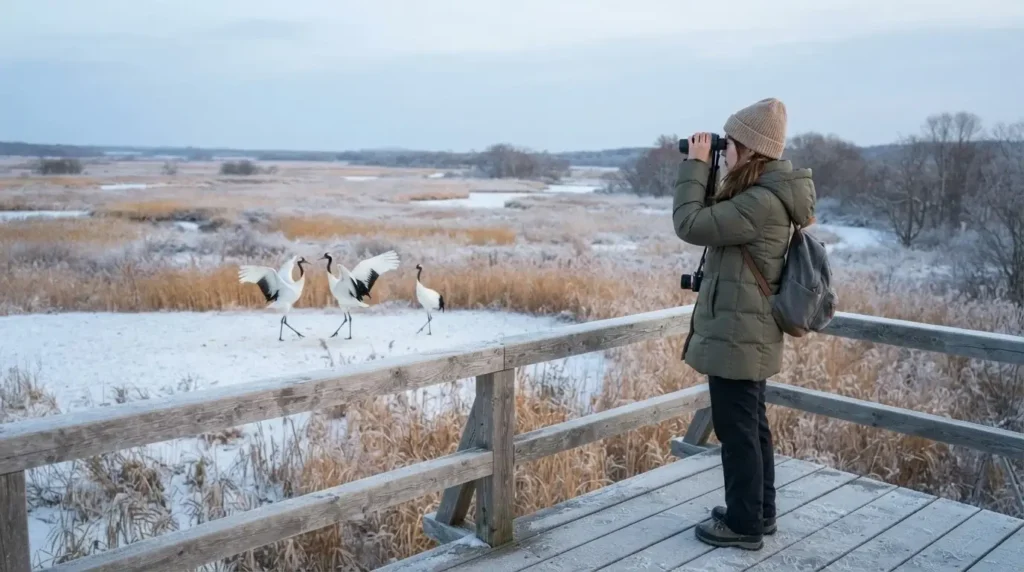
Beyond cranes, eastern Hokkaido in winter also offers Steller’s Sea Eagles and White-tailed Sea Eagles, which are among the largest eagles in the world. Blakiston’s Fish Owl, the largest owl species on earth, is present but elusive; guided owl-watching excursions run out of the Tsurui area and are worth booking in advance.
Getting to eastern Hokkaido: fly into Kushiro Airport from Tokyo (roughly 90 minutes), then rent a car or join a local tour. A car is strongly recommended because many of the best sites are spread along rural roads. Japan is visa-free for most nationalities. Accommodation in the Tsurui-Akan area ranges from basic guesthouses to traditional Japanese ryokan with meals included, typically running from $80 to $180 per night.
What to eat: Hokkaido is famous for its dairy, seafood, and ramen. In Kushiro, try the local sushi (Hokkaido salmon and sea urchin are exceptional), zangi (Hokkaido-style fried chicken), and a bowl of Hokkaido milk-based ramen to warm up after a morning in the cold.
The Faroe Islands: Seabird Cliffs at the Edge of the Atlantic
The Faroe Islands sit in the North Atlantic between Norway and Iceland, an 18-island archipelago that most travelers walk past in their awareness of the world. That is a mistake.
The Faroes are, per capita, one of the most dramatically beautiful landscapes I’ve read about from solo travelers: black basalt cliffs, green plateau tops, waterfalls falling directly into the sea, and in the summer months, an almost absurd density of seabirds nesting on every ledge. According to the Visit Faroe Islands official tourism site, the islands host approximately 550,000 breeding pairs of Atlantic Puffins, 600,000 pairs of Northern Fulmars, and 250,000 pairs of European Storm Petrels, along with Black-legged Kittiwakes, Razorbills, Common Guillemots, and Northern Gannets in impressive numbers.
The most famous island for birdwatching is Mykines, the westernmost island in the archipelago. Mykines is reached by ferry or helicopter from Sørvágur on Vágar Island, and the ferry service is notoriously weather-dependent. That is part of the point. You don’t control when you get there or when you leave, and that unpredictability strips away the sense that you’re on a curated tour of anything. You’re just in a remote place with a lot of birds and very few other people.
Puffins are present from late April through late August, which is also when the Faroes are most accessible and when daylight extends well into the evening (you can birdwatch at 10 PM in June). The Faroes are an autonomous Danish territory; most nationalities can visit without a visa for short stays.
Getting there involves flying into Vágar Airport from Copenhagen, Reykjavik, Edinburgh, or Bergen, with Atlantic Airways operating most routes.
Budget: accommodation is more expensive here than in most of the destinations on this list, with guesthouses typically running $100 to $200 per night. Dining options are limited on the more remote islands, so bring snacks and be prepared to self-cater. A visit to a local restaurant in Tórshavn, the capital, for traditional Faroese food (fermented lamb, freshly caught fish, skerpikjøt) is worth working into any trip.
Sri Lanka: 34 Species You Won’t Find Anywhere Else
Sri Lanka is a compact island, roughly the size of West Virginia, but it holds approximately 34 endemic bird species found nowhere else on earth and a total avifauna of around 470 to 500 species. That density of endemism in a small geographic area makes it one of the most efficient birdwatching destinations in Asia.
The two sites that draw the most serious birders are Horton Plains National Park in the central highlands (where the montane forest holds species like the Sri Lanka Whistling-Thrush, the Dull-blue Flycatcher, and the Sri Lanka Bush Warbler) and the Sinharaja Forest Reserve in the southwest lowlands (a UNESCO World Heritage Site and one of the last remaining patches of primary rainforest on the island). The Sinharaja is notable for its “bird wave” phenomenon, where mixed flocks of up to 20 or more endemic species move through the forest together and can be followed for extraordinary sightings in a short window.
The best time to visit for birdwatching is September through April, which aligns with the dry season in most of Sri Lanka and the winter migration period when resident endemics are joined by migratory visitors. Sri Lanka requires a visa for most nationalities, which is available as an Electronic Travel Authorization (ETA) online through the official government portal, typically costing around $35 to $50 for a single entry.
Getting around Sri Lanka is practical and affordable. Trains are the most charming way to move between regions; the train from Colombo to Kandy or Ella is scenic and inexpensive. Accommodation near birding sites ranges from basic guesthouses at under $20 per night to mid-range eco-lodges for $60 to $120.
What to eat: Sri Lankan cuisine is one of the most underrated food cultures in Asia. Start every day with a local breakfast of hoppers (bowl-shaped fermented rice crepes) with coconut sambol and egg. For lunch and dinner, try rice and curry served on a banana leaf with multiple vegetable, lentil, and fish dishes. The food near Sinharaja tends to be home-cooked at local guesthouses and is excellent.
Papua New Guinea: Birds of Paradise and the Trip That Requires More Effort
This one is for the traveler who wants to go somewhere genuinely difficult to reach and be rewarded in a way that nothing else quite matches.
Papua New Guinea holds over 700 bird species, including 34 species of Birds of Paradise, almost all of which are endemic to the island. These are not birds you can see anywhere else. They are among the most bizarre and spectacular animals on earth; the males of many species have evolved extraordinary plumage and dancing displays for the purpose of attracting mates, and watching one perform at a traditional lek site in the early morning is an experience that regularly reduces otherwise composed travelers to stunned silence.
The access challenges are real. Papua New Guinea requires a visa for most nationalities (available on arrival for many, or in advance for others). Infrastructure outside of Port Moresby and a handful of regional hubs is limited. Hiring a reputable local guide is not just recommended here, it is genuinely important both for safety and for finding birds that are not on any standard trail. Tour operators who specialize in PNG birding trips can arrange everything including transport, accommodation at mission guesthouses and eco-lodges, and local guide connections.
The Arfak Mountains in West Papua (technically the Indonesian province adjacent to PNG, though often covered as part of the same birding circuit) and the Varirata National Park near Port Moresby are the most accessible starting points. Budget significantly more time and money than you would for other destinations on this list. The reward-to-effort ratio is still exceptional for travelers who are serious about a trip unlike anything else they’ve done.
Practical Tips for Birdwatching Travel as a Solo Traveler
You do not need to be an expert before your first birdwatching trip. Most of the travelers who have the best birding experiences are not lifelong birders. They are curious people who gave themselves permission to look.
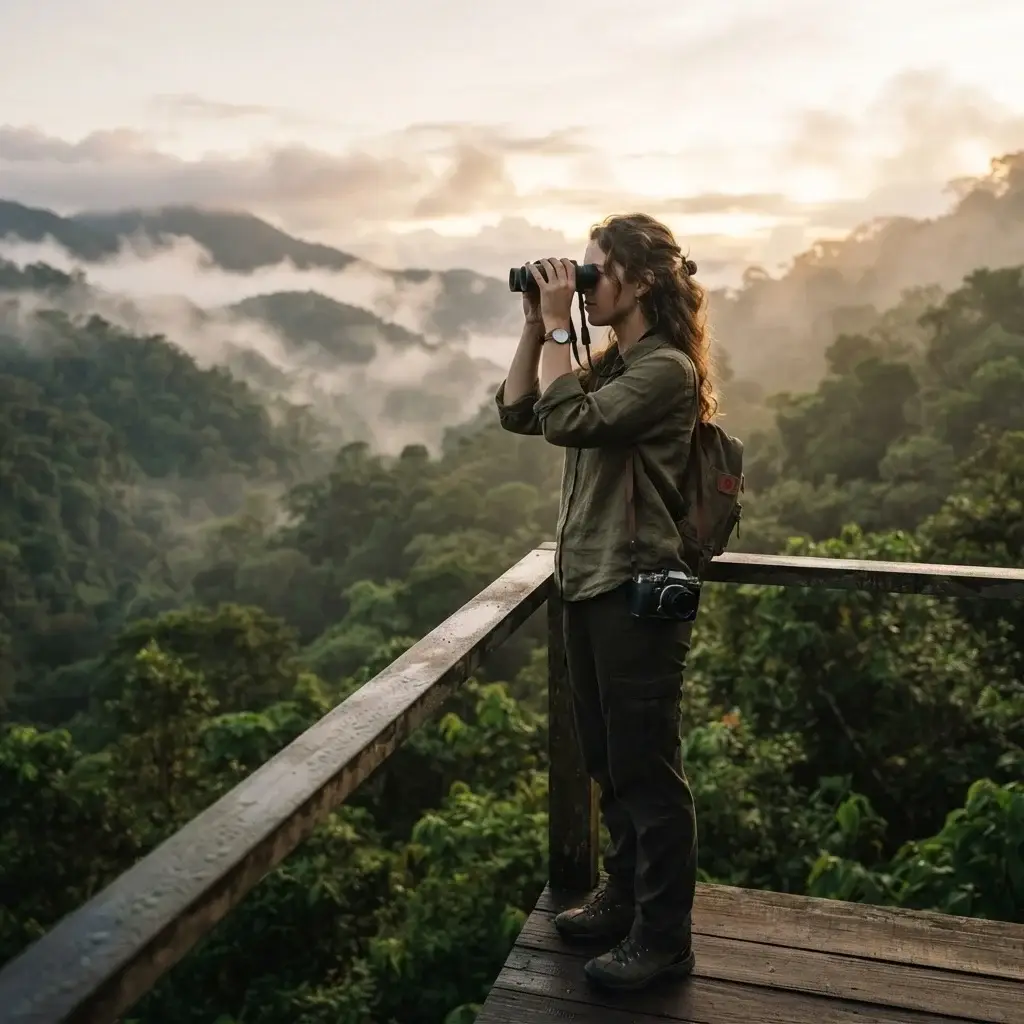
Here is what helps. First, binoculars. A mid-range pair (8×42 magnification is the standard recommendation for travel) makes an enormous difference. You don’t need to spend $500 on your first pair. Something in the $100 to $200 range from a reputable brand will serve you well for any destination on this list. Second, the eBird app (free) is worth installing before you go. It shows you what has been seen recently at any location, so you know what to look for before you’re standing in the field. Third, getting up early is non-negotiable. The first two hours after sunrise are when most birds are most active, most vocal, and easiest to spot.
For solo travelers specifically, birdwatching is one of the most naturally solo-friendly activities in travel. You move at your own pace. You set your own schedule. You don’t need anyone’s buy-in to stand quietly at the edge of a forest at dawn and wait. That’s actually one of the best versions of solo travel there is.

If your confidence is shaky about going somewhere remote alone, joining a small-group guided birding tour for your first trip is a smart way to build skills quickly while still feeling safe. Many are designed for small groups of four to eight people and are run by local naturalists who know the territory deeply. After one trip like that, most people feel entirely confident to explore independently.
Travel is not about being ready. It’s about going before you feel ready, and letting the place teach you what you actually needed to know.