Why Farm Stays Are the Solo Traveler’s Best-Kept Secret

There is a particular kind of restlessness that sets in when you realize your travel experiences all start to feel the same. Hostels are fun until they are not. Hotels are comfortable but forgettable. You can spend a week in a city and come home with photos, a few nice meals, and the nagging feeling that you never actually touched the place.
That feeling is exactly what pointed me toward a different way of thinking about where to stay when I travel. Not nicer hotels or trendier neighborhoods, but a completely different category of experience altogether. And what I keep coming back to, and hearing again and again from solo travelers who feel the same pull, is the farm stay.
Not a resort with a farm aesthetic. Not a countryside hotel with chickens out front. A real, working farm stay where you wake up to actual animals making actual noise, where breakfast is made from what grew in the garden yesterday, and where the family or host sitting across the table from you has a story that has nothing to do with tourism.
For solo travelers in particular, farm stays offer something that is surprisingly hard to find anywhere else: genuine human connection without the pressure of a group tour, a built-in daily rhythm that gives your days structure and purpose, and a depth of cultural access that no museum can replicate. If you have been sleeping on this option, let me change that.
What a Farm Stay Actually Is (And What It Is Not)
The term “farm stay” gets used loosely, so it helps to be clear about what we are talking about. At its core, a farm stay means sleeping on a working agricultural property where the farm itself is part of your experience, not just the backdrop. The farm is still operating. Animals are still being fed, crops are still being tended, and you are invited into that rhythm rather than insulated from it.
This is different from renting a cute cottage in the countryside. It is different from a glamping experience with a vegetable garden for decoration. A genuine farm stay means your host is a farmer first, and the hospitality is an extension of that life rather than a performance of it.
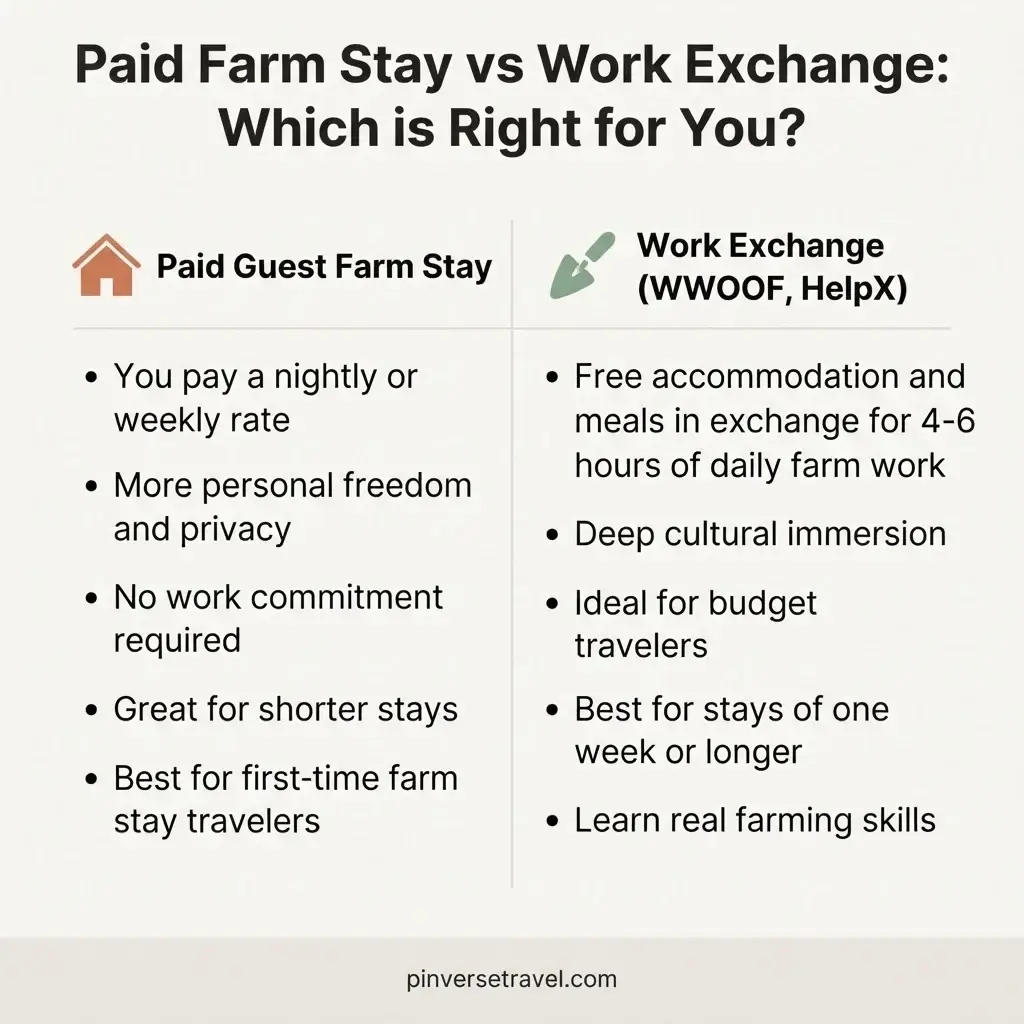
There are two main models to understand before you book anything. The first is the paid guest model, where you book as you would any accommodation and pay a nightly or weekly rate. You get a room, meals, and varying degrees of involvement in farm activities depending on how the host runs things. The second is the work-exchange model, where organizations like WWOOF, which stands for World Wide Opportunities on Organic Farms, connect travelers with organic farming hosts. Under this model, you volunteer your time helping on the farm, usually four to six hours a day, and in exchange you receive free food and accommodation. No money changes hands between the WWOOFer and the host.
Both models work brilliantly for solo travelers, but they serve different needs and suit different personalities. The paid guest model gives you more freedom, more privacy, and more flexibility with your time. The work-exchange model is ideal if you want a deeper immersion, a lower travel budget, and the particular satisfaction of actually learning a skill.
Why Solo Travelers Thrive on Farm Stays
When I backpacked solo across Europe, one of the things I kept noticing was how the places where I formed real connections were not the obvious tourist landmarks. They were the kitchen table conversations, the shared meals with strangers, the moments where geography and circumstance put me in the same room as someone whose daily life looked nothing like mine. Farm stays engineer exactly that kind of moment, except with more fresh bread and fewer strangers who are also checking Instagram at the same time.
The social dynamic of a farm stay is genuinely well-suited to solo travelers for a few reasons. First, farm hosts tend to be naturally warm and present because their hospitality is personal rather than corporate. You are a guest in their home and their livelihood, not a room number. Second, the shared activity of farm work or communal meals creates easy, natural conversation starters that remove the awkwardness of having to introduce yourself cold. You are already doing something together, which makes connection easy without it feeling forced.
Solo travelers often worry about the isolation factor, that they will arrive somewhere rural and feel more alone than they would in a city hostel. But in practice, most solo travelers who do farm stays report the opposite. The intimacy of the setting makes it easier to actually know the people around you, not just exchange pleasantries.
The Destinations Worth Knowing About
Italy and the Agriturismo Tradition
Italy has one of the most developed agritourism systems in the world, and it is a genuinely fantastic starting point for solo travelers new to this style of travel. The term agriturismo refers specifically to farm-based hospitality that is regulated under Italian law, meaning hosts must derive a significant portion of their income from actual farming activity, not just from the tourism side. That legal structure protects the authenticity of the experience in a way that matters.
What makes Italy particularly appealing for solo travelers is the built-in food culture. Agriturismi almost universally serve communal dinners and breakfasts made from their own produce, their neighbors’ produce, or both. Sitting down to a table-d’hôte dinner where everyone eats the same meal, made from what was harvested that day, is one of the more naturally social experiences in travel. You are not choosing a restaurant and eating alone. You are a temporary member of a household.
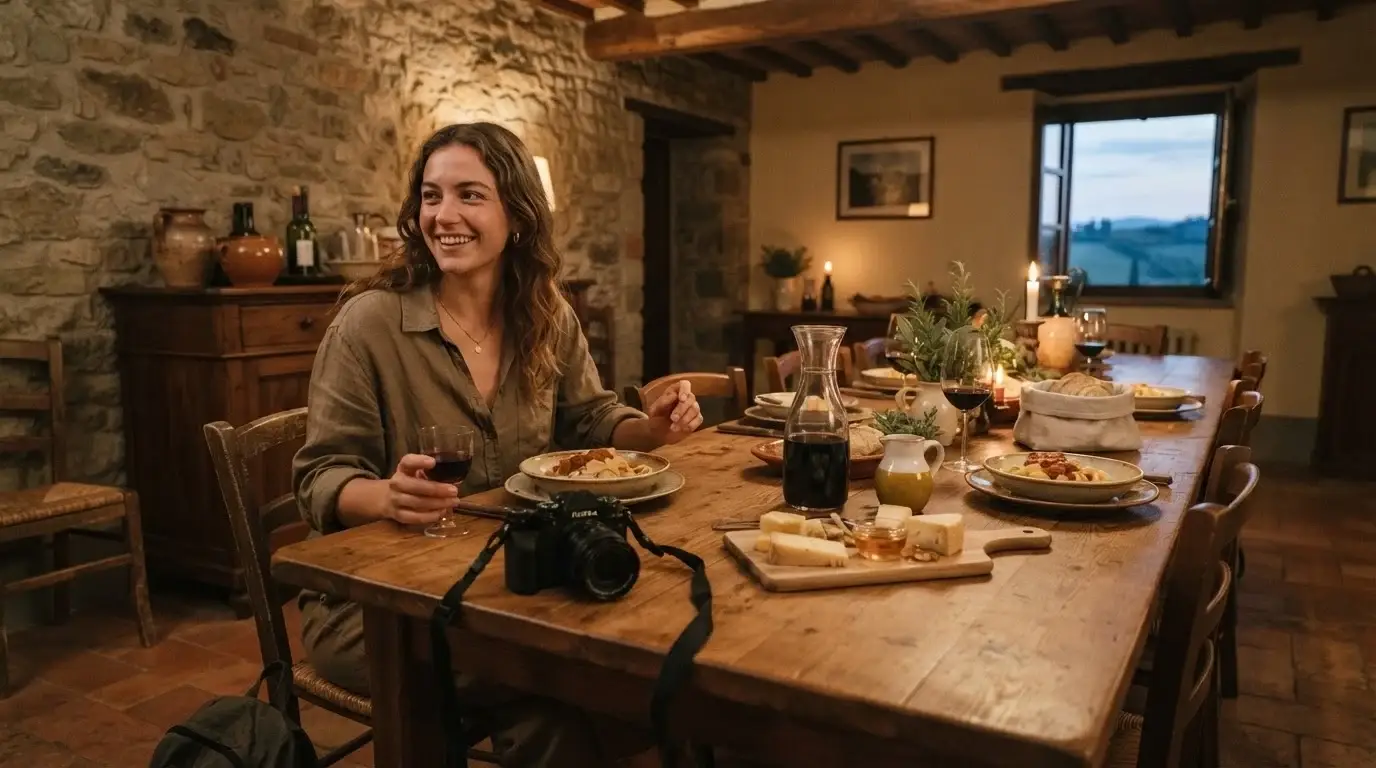
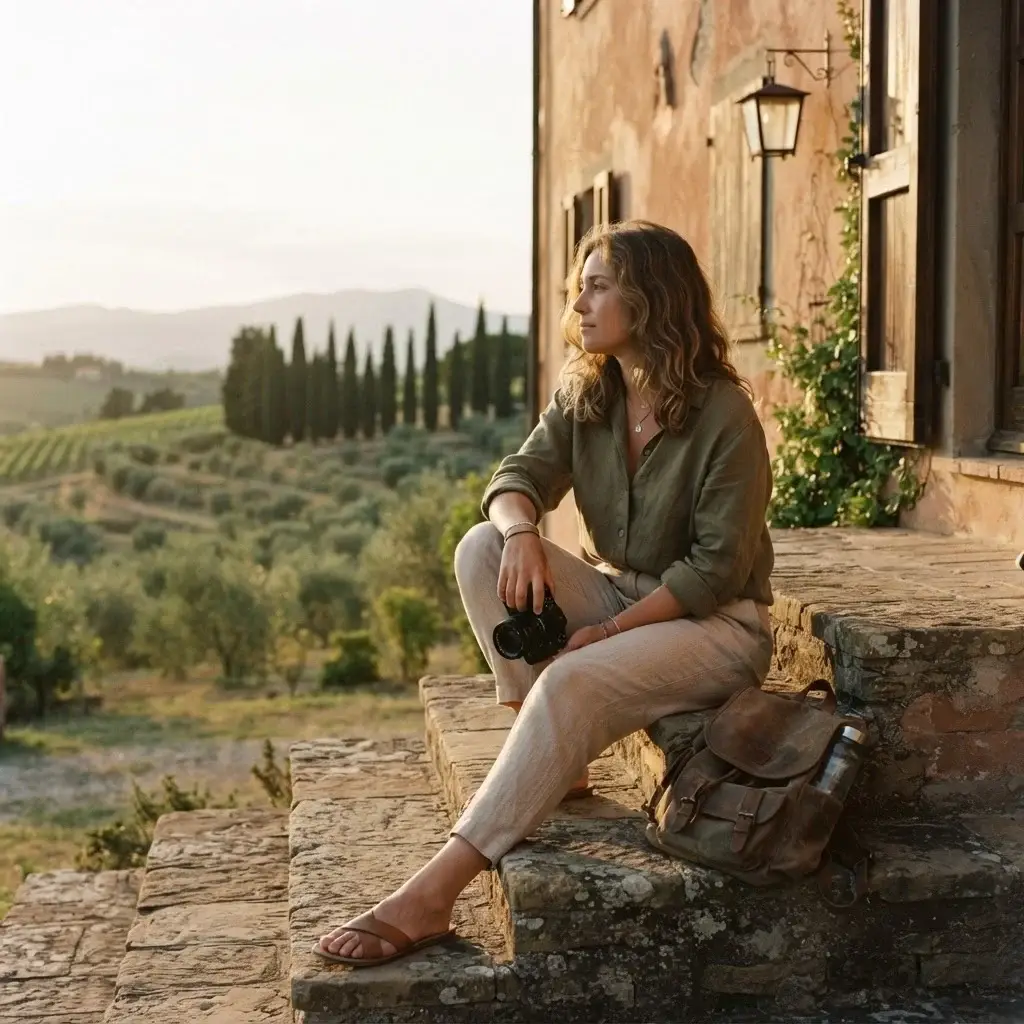
Tuscany is the most well-known region for agriturismo, with olive oil estates, vineyards, and hilltop farmhouses that have been welcoming guests for decades. But Umbria, Le Marche, Puglia, and Sicily all have strong traditions and tend to be considerably quieter and more affordable. If you want to browse options specifically curated for solo travelers, Agriturismo.net has a dedicated solo travel holidays section that filters for accommodations suited to independent guests, including properties with WiFi for anyone who needs to work remotely.
New Zealand and the Kiwi Farmstay
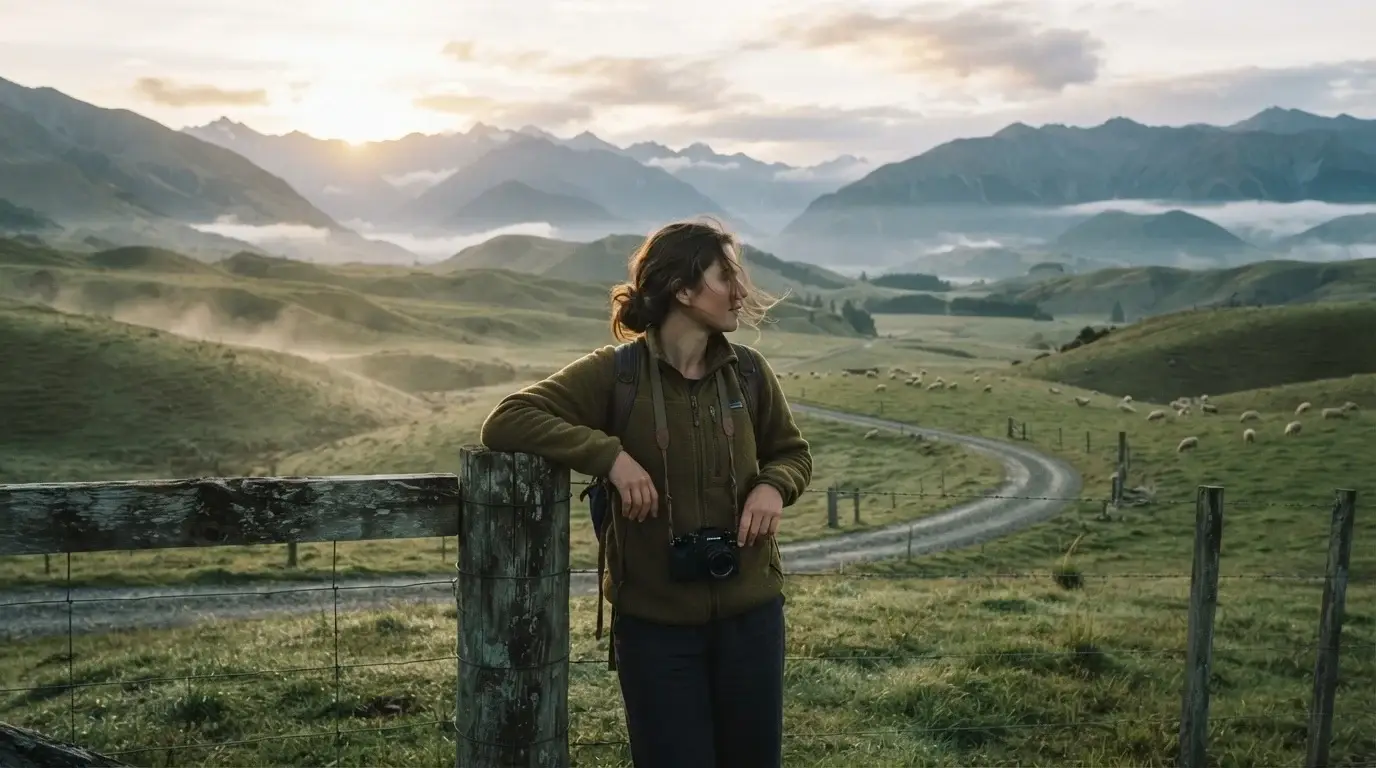
New Zealand has its own long-standing tradition of farm hospitality, and it operates in a way that is particularly welcoming to solo travelers. Farmstays here are often structured similarly to a bed and breakfast, where you stay in the host family’s home, wake to a proper farmstead breakfast, and have the option to join in with farm activities for the day.
What makes New Zealand stand out for solo farm stays is the combination of scenery, genuine host warmth, and the sheer variety of farm types available. From sheep stations on the South Island to dairy farms on the North Island to mixed farming operations in between, the landscape changes dramatically from property to property. Tourism New Zealand officially lists farmstays as a distinct accommodation category and describes the experience as waking to a hearty breakfast before heading out to help feed calves, mend fences, or round up sheep.
If you are a solo traveler who finds value in having structure to your days rather than wandering without a plan, the rhythm of a New Zealand farmstay is almost perfect. Your mornings have purpose. Your afternoons are yours. And your evenings tend to involve the kind of home-cooked meal and honest conversation that you genuinely cannot buy at a restaurant.
Costa Rica and the Finca Experience
Costa Rica has built one of the most impressive ecotourism and agritourism infrastructures in the world, and the agricultural diversity here means no two farm stay experiences are the same. Coffee fincas in the central highlands, cacao farms in the Caribbean lowlands, pineapple plantations, and sustainable mixed farms all exist within a country roughly the size of West Virginia.
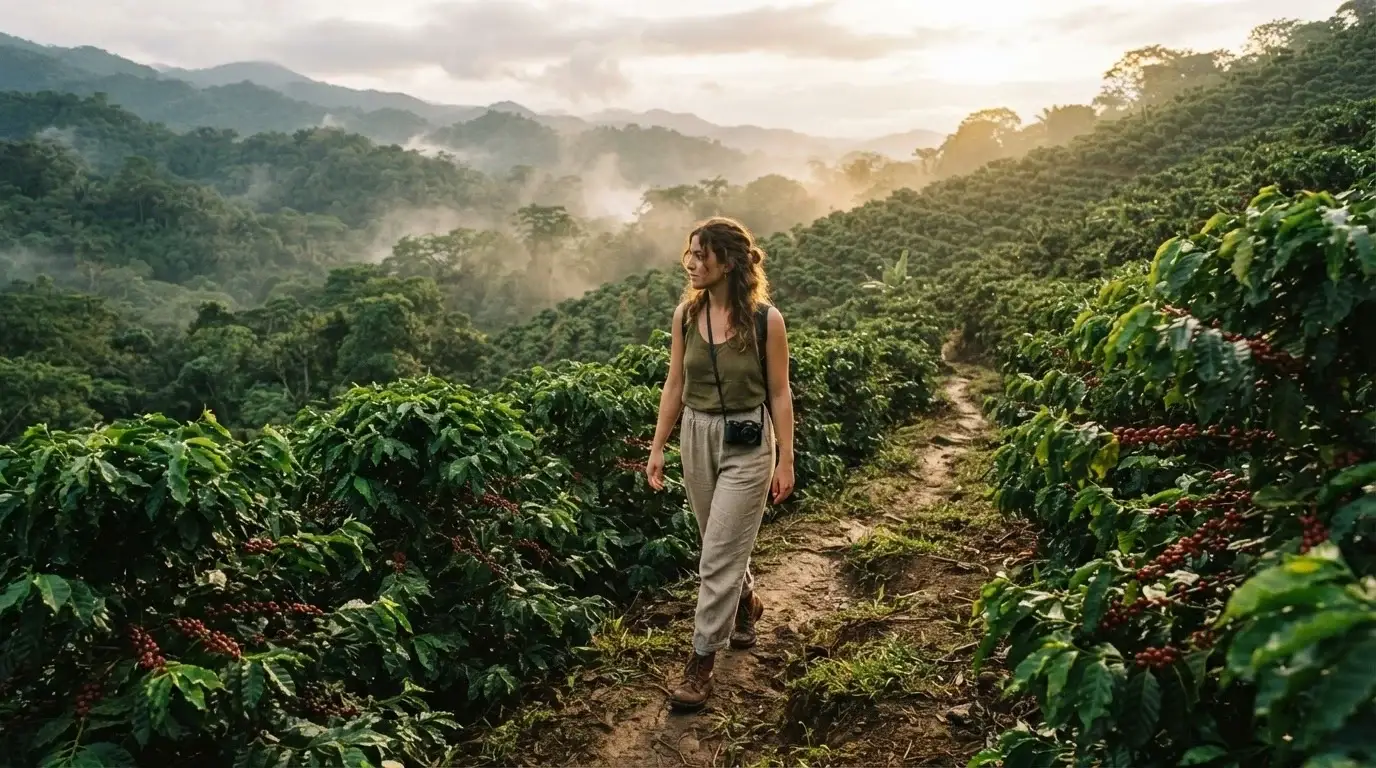
The Arabica coffee culture in Costa Rica is particularly worth understanding before you visit. Coffee was brought to the country in 1779, and by the mid-1800s it had become the dominant economic force shaping infrastructure, architecture, and national identity. Staying on a coffee farm and tracing that history from plant to cup is not just a pleasant activity. It is a condensed version of the country’s entire modern story. The region around Turrialba in the central highlands is especially rich for this, with working finca stays available that include guided farm walks, tastings, and meals. For a deeper look at the range of agritourism experiences across the country, this guide to Costa Rica’s rural agriculture and agrotourism gives a solid overview of what to expect from coffee, cacao, and palm heart farms.
Farm Stays in the United States
The American farm stay scene has grown significantly in recent years, and it is genuinely underused by solo travelers who tend to default to city breaks or national park camping. Working farms, ranches, orchards, vineyards, and berry farms across every region of the country now welcome overnight guests, and the experience varies enormously from a lavender farm in Oregon to a cattle ranch in Montana to a flower farm in Vermont.
Farmstay US is the most useful dedicated directory for finding these properties, with listings across the country that include genuine working farm operations with guest lodging, farm dinners, u-pick experiences, and hands-on activities. It is a good place to start if you want a farm stay closer to home before committing to an international trip, or if you want to combine a road trip with a few nights on a real working property.
Understanding Work-Exchange Options
For solo travelers on a tight budget who want the deepest possible immersion, the work-exchange model deserves a serious look. WWOOF is the most established name in the space, operating through national organizations in dozens of countries since 1971. The model is simple: you work a few hours a day on an organic farm, and the host feeds you and gives you a place to sleep. No money changes hands. What you gain is not just free accommodation but a crash course in how food actually gets made, a window into rural daily life, and often a genuine friendship with the host family.
HelpX operates on a similar model but with a broader scope, covering not just organic farms but also hobby farms, lifestyle blocks, homestays, ranches, and even sailing boats. It is a good option if you want more variety in the type of property or if you are looking at a region where WWOOF does not have a strong national presence.
A few practical notes on choosing between the two: WWOOF is exclusively organic farms, which tends to mean the hosts are particularly values-driven and community-minded. HelpX casts a wider net, which means more options but also more variation in quality and experience. Both platforms have review and reference systems that allow you to read about previous guests’ experiences before committing, which is important when you are booking as a solo traveler.
What a Real Day Looks Like
One of the things that stops people from booking a farm stay is not knowing what they are signing up for in terms of daily life. The uncertainty is understandable. The honest answer is that it varies by property, but there are some patterns worth knowing.
On a paid guest farm stay, mornings almost always involve a proper breakfast, often featuring produce from the farm itself. Whether it is eggs from the chickens outside your window, jam made from the fruit orchard, or bread from a neighbor’s mill, the food is almost always a highlight. After breakfast, the day is largely yours unless the hosts offer specific activities. Some farms organize afternoon harvests, cheese-making workshops, guided walks, or cooking demonstrations. Others simply leave you to explore at your own pace.
On a work-exchange farm, the structure is more defined. You typically work in the morning when it is cooler, with afternoons off. The work itself is usually approachable for beginners: planting, weeding, harvesting, feeding animals, building basic structures. Hosts who take on solo travelers through WWOOF or HelpX are accustomed to teaching as they go.
Evenings at farm stays tend to be my favorite part of what solo travelers describe. Communal dinners, quiet nights without city noise, early bedtimes that lead to genuinely restful sleep, and the particular satisfaction of a day spent doing physical, purposeful work in a beautiful place.
Safety and Choosing the Right Farm
Safety is a real and reasonable thing to think about as a solo traveler, particularly a solo woman traveler, when you are considering staying at a private property in a rural area with someone you have never met. It deserves an honest conversation rather than dismissal.
The most important thing you can do before booking any farm stay, whether through a platform or independently, is read reviews from previous guests and specifically look for reviews from other solo travelers. Platforms like WWOOF, HelpX, and Farmstay US all have review systems. Trust them. Look for consistent language about how welcomed guests felt, how present and engaged the hosts were, and whether the described experience matched what was advertised.
WWOOF Portugal’s national organization published a useful post specifically aimed at solo women travelers that reinforces what experienced travelers consistently say: prioritize farms that have previous references from other solo or women travelers, opt for family-operated or women-run farms if you prefer, and choose an initial stay length that gives you an exit if you need one. Starting with a shorter stay, a week rather than a month, lets you assess the environment before committing to a longer arrangement.

It also helps to have a clear check-in system with someone at home. Tell a friend where you are staying, share the address, and agree on a regular check-in schedule. This is standard solo travel practice and applies whether you are in a city hostel or on a farm in rural Tuscany.
What to Pack That the Packing Lists Do Not Tell You
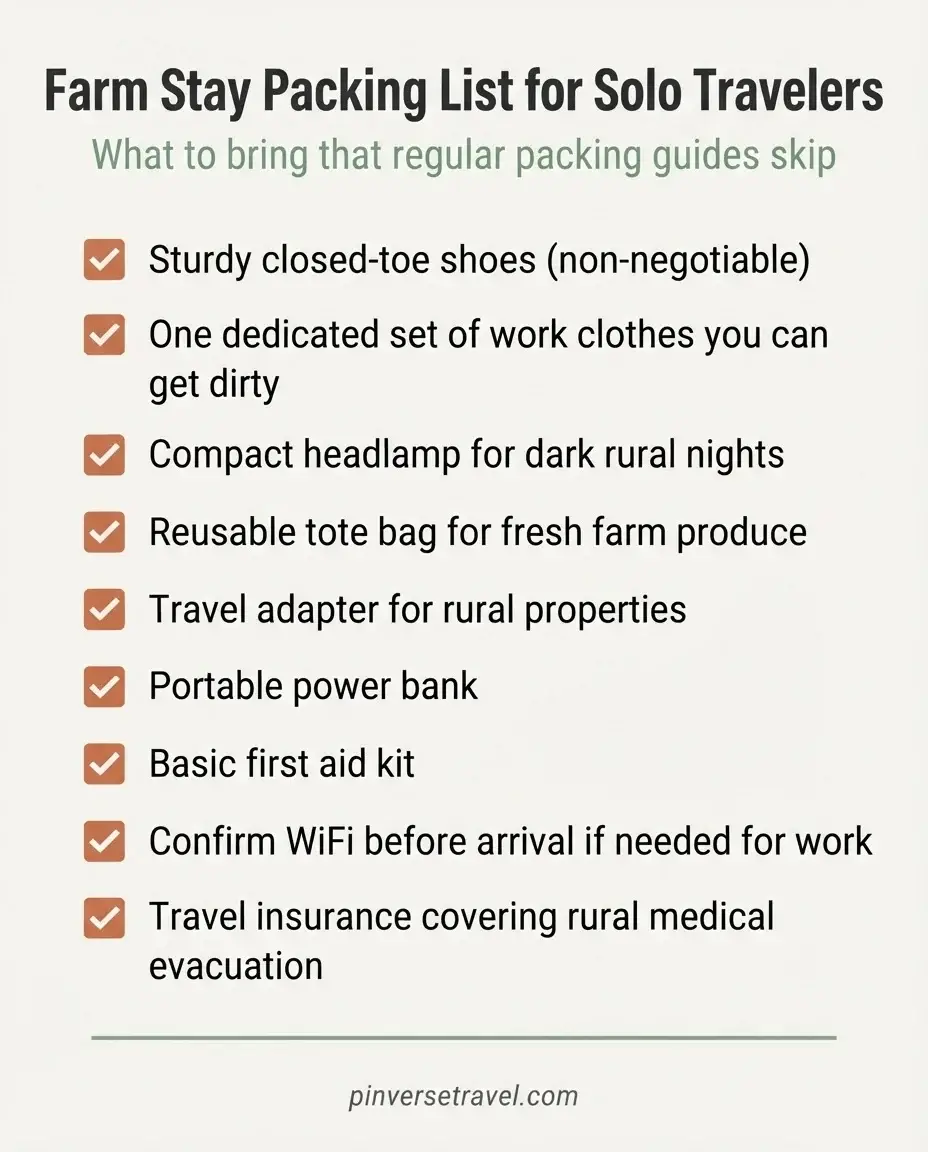
If you are used to packing for cities or beach trips, farm stays require a small mental shift. Sturdy closed-toe shoes are essential, non-negotiable if you are doing any farm work at all. Pack one set of clothes you do not mind getting genuinely dirty. A headlamp is more useful than it sounds because rural properties do not have streetlights and walking to an outdoor bathroom at midnight in complete darkness is an adventure nobody needs. A small reusable bag is handy for bringing back produce, fresh eggs, or local honey that hosts often give to guests.
On the practical side, confirm WiFi availability before you arrive if that matters to you. Rural properties vary enormously in connectivity. Many Italian agriturismi now specifically cater to remote workers and advertise reliable WiFi as a feature. New Zealand farmstays tend to have reasonable coverage. More remote work-exchange operations may have limited or no signal, which is either a problem or a feature depending on what you are looking for.
The Thing Farm Stays Do That Nothing Else Does
There is a particular kind of cultural understanding that comes not from visiting a country’s museums or eating at its restaurants, but from spending three days in the rhythm of how its people actually live and work. Teaching English in Thailand, living with a family in Ghana, and working odd jobs while building a life around travel all reinforced for me the same truth: the closer you get to the daily life of a place, the more you understand it, and the more permanently it changes you.
Farm stays do this in a gentle, accessible way that does not require a major lifestyle change or an extended commitment. A long weekend on a working olive oil farm in Umbria will teach you more about Italian rural culture than a week of sightseeing in Florence. Three days on a sheep station in New Zealand will leave you with a story that has nothing to do with bungee jumping or Hobbiton. A week on a coffee finca in Costa Rica will make you understand what fair trade actually means in human terms.
Solo travelers are uniquely positioned to get the most out of this kind of experience, because they are not managing the preferences of a travel partner or splitting their attention across a group. They are present, adaptable, and available for exactly the kind of spontaneous real conversation that defines what a farm stay at its best can be.
If you have been on the fence about trying one, stop waiting for the perfect moment to coincide with the perfect destination. Pick a place, find a farm that feels right, and book it. You will figure out the rest when you get there.