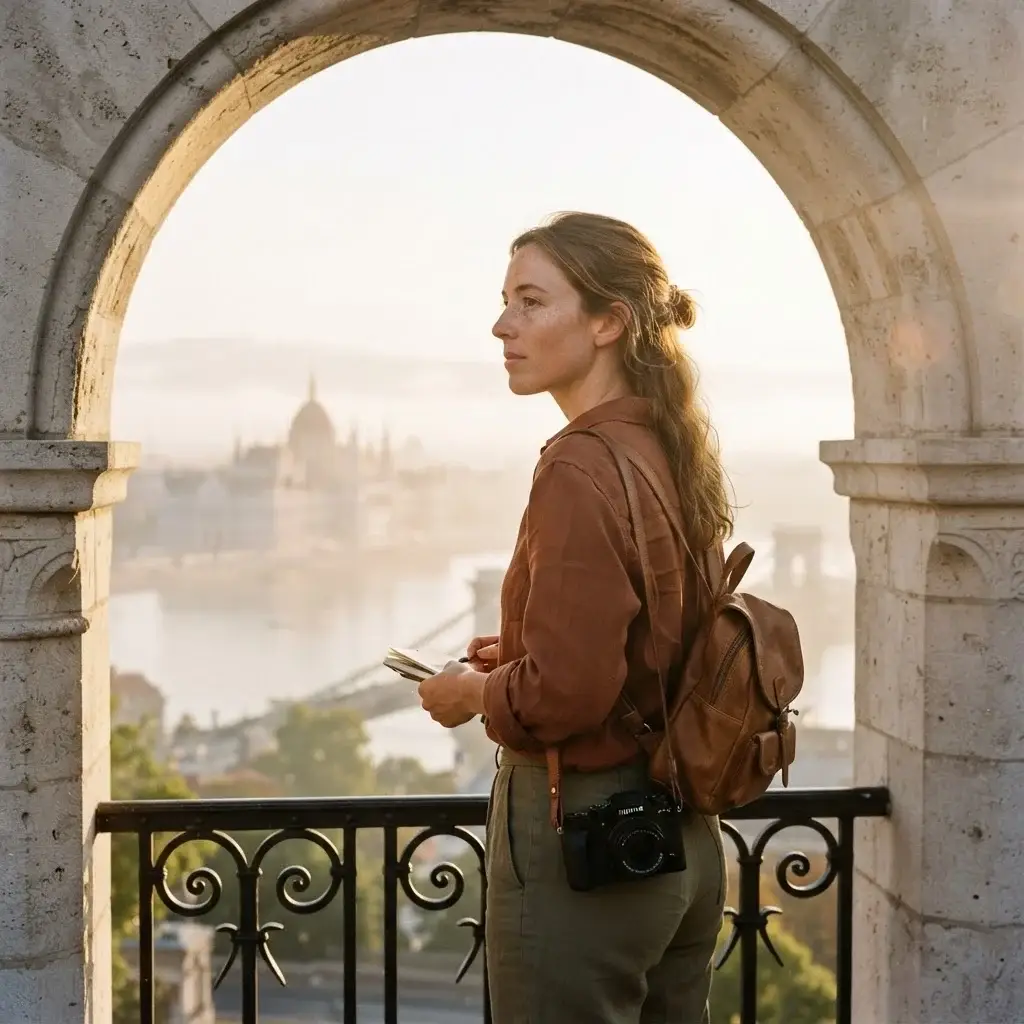
Budapest is a city that steals your heart when you least expect it. I still remember the first time I saw the Hungarian Parliament building lit up at night, reflecting gold across the dark waters of the Danube River. It took my breath away. Years ago, when I left my rigid New York office job to pursue full-time travel, I was terrified of making logistical blunders. I used to think every single hour of a trip had to be perfectly mapped out, or the whole experience would be ruined.
That fear almost kept me from boarding the plane. But over years of solo backpacking and working as a certified sightseeing guide, I learned a vital truth: the best travel experiences do not happen because a trip is flawless. They happen because you are prepared enough to handle the hiccups, and open-minded enough to step away from the tourist traps.
Budapest is beautifully split down the middle by the Danube. On one side, you have Buda, which is hilly, historic, and quiet. On the other side sits Pest, the flat, vibrant heart of the city where daily life pulses through markets and cafes. Trying to tackle both sides without a clear strategy is the easiest way to exhaust yourself. If you only have 72 hours, you cannot afford to waste half a day waiting in the wrong ticket lines or getting ripped off by unauthorized taxis.
This deep-dive guide is designed to give you the ultimate balanced path through the city while highlighting the exact pitfalls that trip up most first-time visitors. Let us dive into how you can explore Budapest with absolute confidence.
Day 1: The Historic Heights of Buda
Many travelers make the mistake of trying to jump back and forth across the Danube multiple times a day. This drains your energy and wastes precious daylight. For your first day, we are dedicating our time entirely to the western side of the river: historic Buda. This area is home to the city’s oldest royal landmarks, sweeping panoramic views, and cobblestone streets that feel frozen in time.
Morning: Conquering Castle Hill the Smart Way
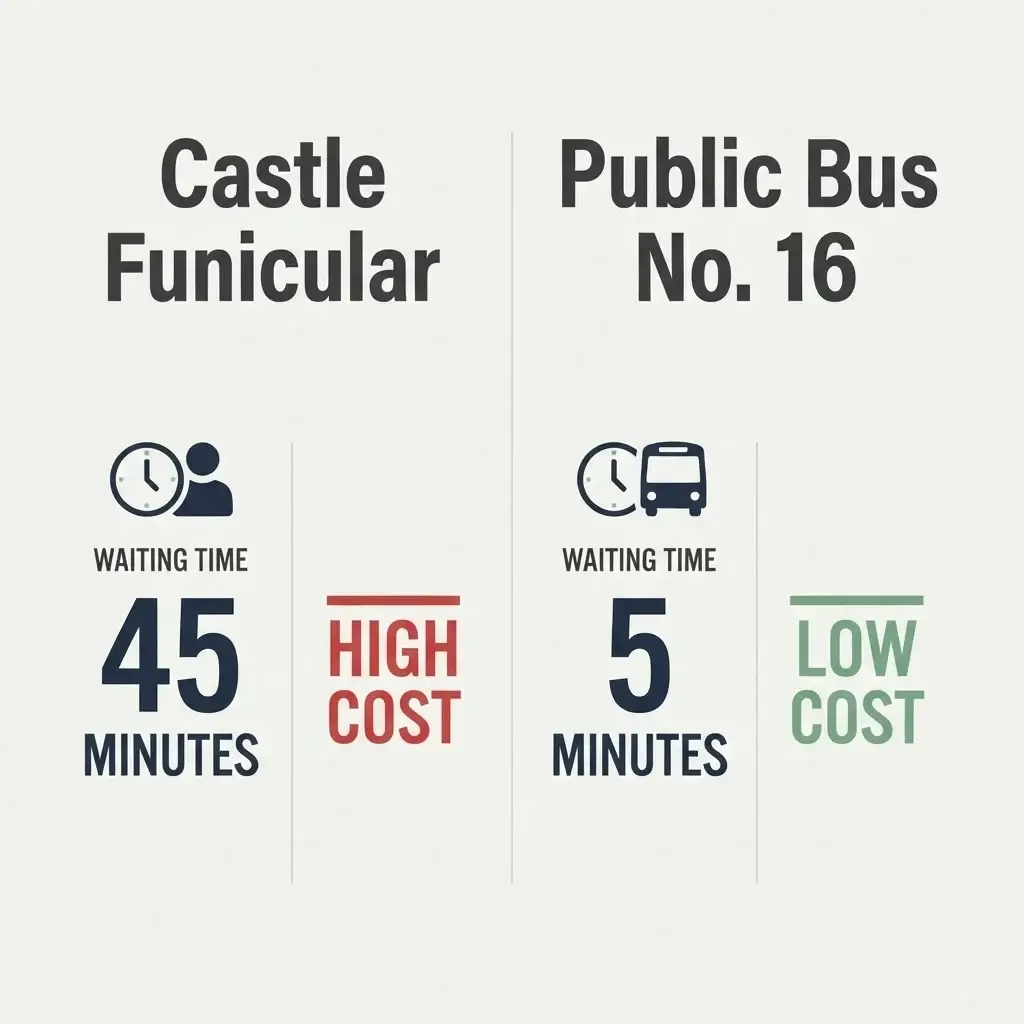
The most common mistake people make on Day 1 is taking the historical funicular railway up to Castle Hill during peak morning hours. While the little wooden cars look charming, you will often find yourself waiting in a slow-moving line for over 45 minutes just for a ride that lasts less than two minutes. Even worse, the ticket is overpriced and not included in the standard city transit passes.
Instead, save your money and your time by walking up the beautiful, shaded steps through the Castle Garden Bazaar (Várkert Bazár), or catch the public No. 16 Bus from Széll Kálmán Square. This bus drops you right at the top of the hill, allowing you to bypass the crowds completely.
Once you are on top of Castle Hill, your first stop should be the fairy-tale towers of the Fisherman’s Bastion (Halászbástya). Built in the late 19th century, these white stone towers look like something out of a Disney movie.
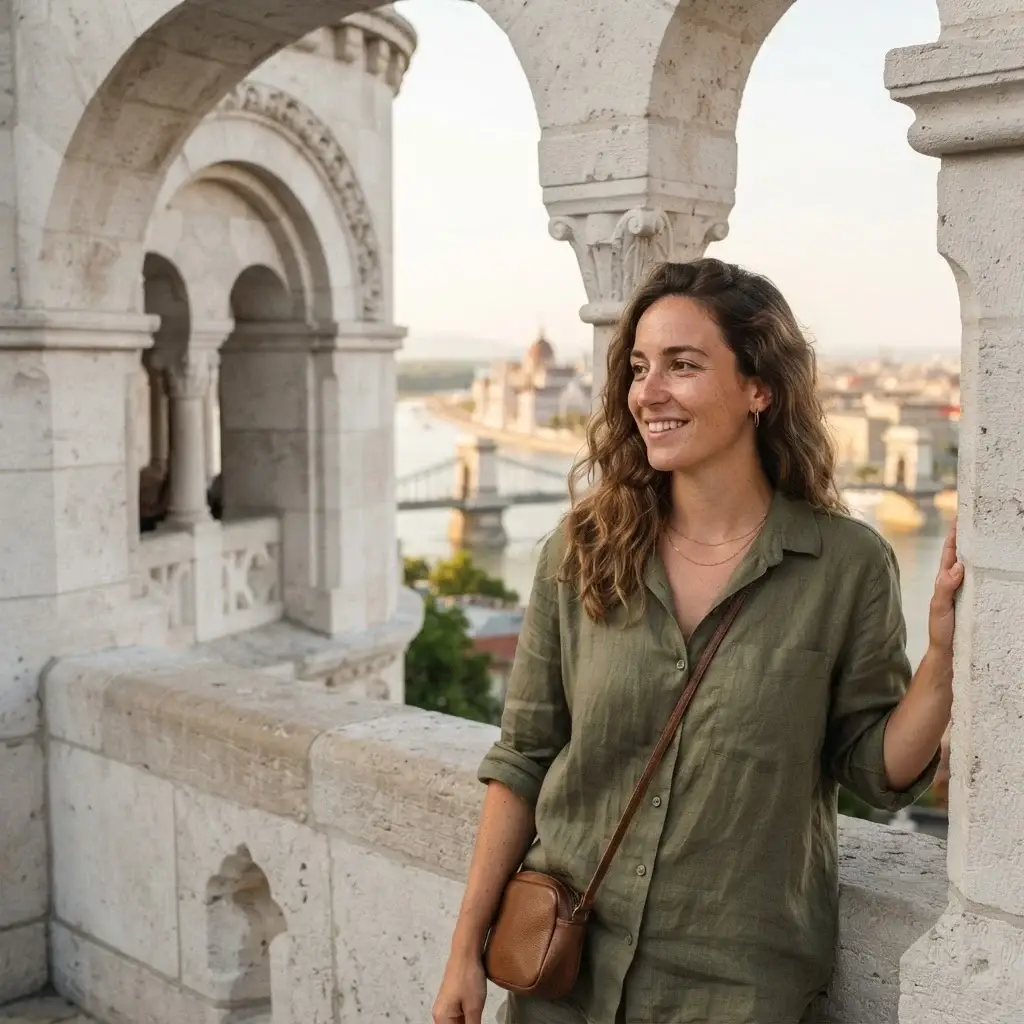
They were designed to celebrate the thousandth anniversary of the Hungarian state.
- Insider Secret: Do not pay the entry fee to access the upper towers during midday. The lower terraces are completely free all day long and offer the exact same view of the Parliament building across the river. If you want to go to the top platforms for free, arrive before 9:00 AM or after 7:00 PM when the ticket booths are closed but the gates remain open.
- What to look for: Look through the stone archways. They act as perfect, natural picture frames for the Danube River and the city below.
Right behind the bastion sits Matthias Church (Mátyás-templom). This is not just another old church; its roof is covered in thousands of bright, multi-colored Zsolnay ceramic tiles that form beautiful geometric patterns. Step inside to see the unique interior wall paintings, which use warm oranges, browns, and golds instead of the typical white or gray stone found in most European cathedrals.
Before you leave the Castle District, skip the overpriced restaurants lining the main square and head over to Ruszwurm Confectionery. Operating since 1827, this tiny, old-world pastry shop survived revolutions and world wars. Order a slice of the famous Ruszwurm Krémes—a delicate, local cream cake with a thick layer of vanilla custard sandwiched between crisp, flaky pastry sheets. Pair it with a simple black coffee and enjoy the historical atmosphere.
Afternoon: Royal History and Hidden Underground Labyrinths
After your pastry break, take a short ten-minute walk south along the ridge of the hill toward the massive Buda Castle (Budavári Palota). The grand palace complex now houses the Hungarian National Gallery and the Budapest History Museum. While the inside exhibits are great for history buffs, the real magic lies in walking through the open-air courtyards. You can see the grand fountain of King Matthias and stand on the castle walls to look down over the iconic Chain Bridge.
When planning an international trip to historic capitals like this, I always tell travelers to double-check their paperwork well in advance. If you are preparing your journey from the United States, you can review the latest official entry requirements and passport validity rules by checking the US Department of State Travel information for Hungary, which will ensure you do not encounter any surprise hurdles at the border.
Once you have explored the castle grounds, it is time to escape the afternoon sun by going underground. Beneath the cobblestone streets of Castle Hill lies a massive, natural network of caves and tunnels carved out by thermal waters millions of years ago. During World War II, these tunnels were used as an air-raid shelter and a secret hospital. Today, you can visit the Hospital in the Rock Nuclear Bunker Museum (Sziklakórház).
- Navigation Advice: You can only enter the hospital via a guided tour, which leaves every hour. The entrance is tucked away on the western side of the hill, down the slope from the castle walls. Keep an eye out for the small stone doorway marked with a red cross.
- Safety Tip: The temperature inside the cave system stays at a chilly 15°C (59°F) all year round. Bring a light jacket or a sweater in your daypack, even if you are visiting Budapest in the middle of a hot summer.
Evening: Sunset at Citadel and Your First Ruin Bar
As the sun begins to drop, catch the Tram No. 19 or 41 along the Buda riverbank down to the foot of Gellért Hill. If you have the physical energy, hike up the winding forest paths to the Citadel and the massive Liberty Statue, which holds a palm leaf high above her head to celebrate the city’s liberation. The climb takes about twenty minutes of steady uphill walking.
- The Mistake to Avoid: Do not attempt this hike in flip-flops or thin-soled shoes. The gravel paths can be slippery, and there are very few streetlights along the trails once the sun goes down. Bring a small flashlight or make sure your phone battery is charged so you can use your phone light on the descent.
The rewards of this climb are unmatched. From the peak of Gellért Hill, you can watch the entire city transform as night falls. One by one, the bridges over the Danube turn on their golden lights, creating a sparkling ribbon through the center of Budapest.
After hiking back down the hill, cross the Liberty Bridge over to the Pest side for dinner. For your very first evening meal, you must try a bowl of authentic Hungarian Goulash (Gulyás). A common misunderstanding is that goulash is a thick stew; in Hungary, true goulash is a rich, smoky soup loaded with tender beef cubes, potatoes, carrots, and a massive amount of sweet Hungarian paprika. Head to Szimpla Háztáji or a small local tavern (étkezde) away from the main tourist streets to try the real deal.
End your night by stepping into the famous Jewish Quarter to experience Budapest’s unique Ruin Bars. After World War II, many buildings in this neighborhood were left abandoned and decaying. In the early 2000s, local entrepreneurs began renting these crumbling spaces, filling them with mismatched vintage furniture, old movie projectors, and weird art installations to create community bars.
The original and most famous ruin bar is Szimpla Kert. Walking through its doors feels like entering a surrealist museum. You can drink a local craft beer while sitting inside an old converted Trabant car or an old-fashioned bathtub cut in half. It does get incredibly crowded after 9:00 PM, so go around 7:30 PM if you want to explore the different rooms and take photos without pushing through walls of people.
Day 2: The Heart and Soul of Pest
Today, we are shifting our focus to the flat, energetic eastern side of the city: Pest. This area is packed with grand architectural achievements, rich culinary traditions, and deep layers of cultural history. We will be doing a lot of walking along grand boulevards modeled after Paris, so make sure you wear your most comfortable walking shoes.
Morning: Architecture, Local Markets, and Hidden Pastries
Start your morning at the Great Market Hall (Nagyvásárcsarnok), a massive, neo-Gothic indoor market built in 1897. The roof is covered in beautiful green and yellow tiles, and the inside feels like an old Victorian train station.
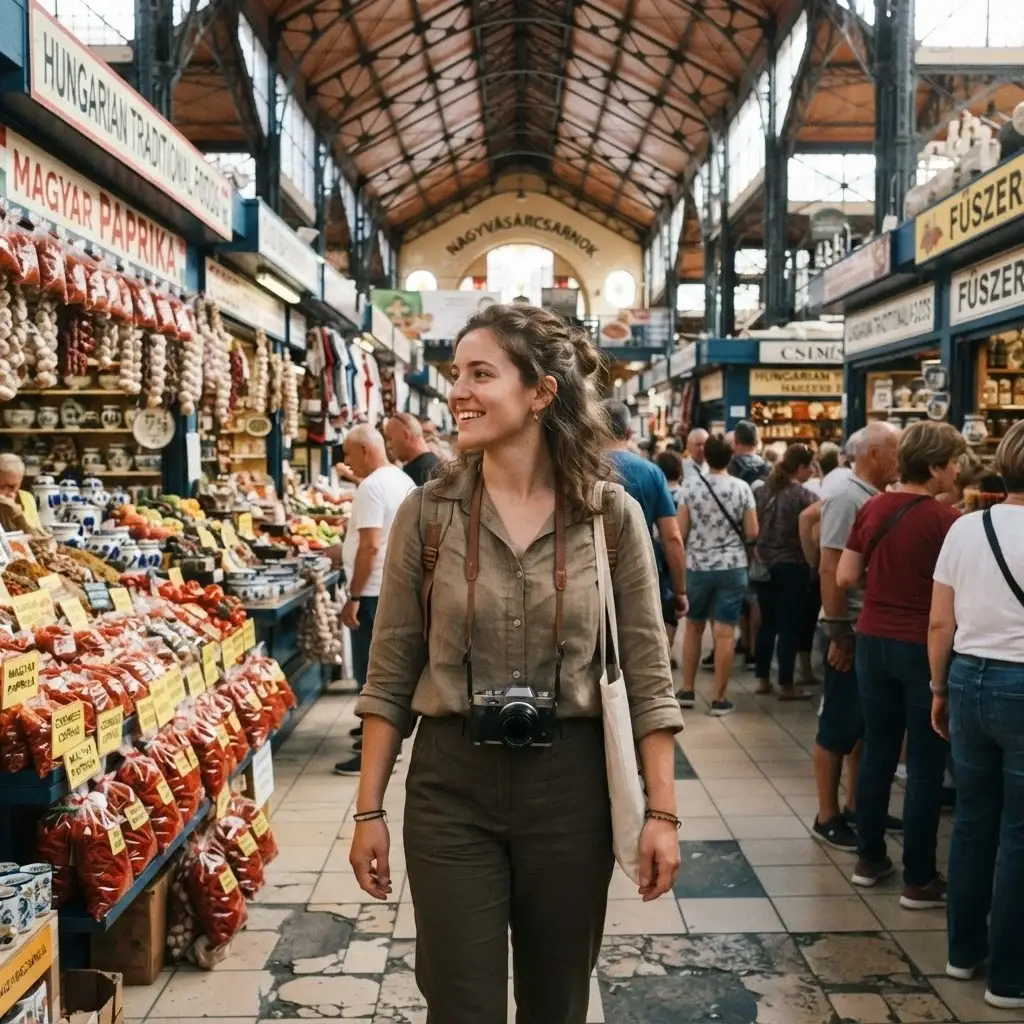
The ground floor is a sensory explosion of local life. You will see long rows of butcher stalls hanging columns of traditional Hungarian sausages and spice vendors selling bags of bright red sweet and spicy paprika.
- The Big Mistake: Do not buy souvenirs or eat your lunch on the ground floor. Instead, head upstairs to the second-floor mezzanine. Here you will find local food stalls serving traditional snacks.
- What to Eat: Order a fresh, hot Lángos (pronounced lahn-gosh). This is the ultimate Hungarian comfort food: a disc of yeast dough that is deep-fried until golden and crispy on the outside but soft and airy on the inside. The traditional way to eat it is topped with a thick layer of garlic water, sour cream (tejföl), and a mountain of shredded cheese. It is heavy, greasy, and absolutely delicious.
After filling up on lángos, take a scenic walk north along the banks of the Danube River or catch the famous Tram No. 2. This specific tram line is consistently ranked as one of the most beautiful public transit routes in the world because it runs directly along the riverbank, giving you front-row views of the Buda Castle and the Chain Bridge across the water.
Get off the tram at the majestic Hungarian Parliament Building (Országház). This is the largest building in Hungary and a masterpiece of Neo-Gothic architecture. It sits proudly on the edge of the water with 365 Gothic spires and a massive red central dome.
- Booking Secret: If you want to tour the grand interior to see the Hungarian Holy Crown, you must book your tickets online weeks in advance through the official Jegymester website. Do not buy tickets from third-party ticket scalpers standing outside the building; they will overcharge you significantly.
- Navigation Advice: The visitor center and ticket entrance are actually located underground on the northern side of the building. Look for the glass-and-concrete ramp descending into the plaza.
Just a short walk south from the Parliament building along the river promenade, you will find one of the most moving memorials in Europe: the Shoes on the Danube Bank. Created by sculptor Gyula Pauer, this monument consists of 60 pairs of iron shoes rusted by the river water, fixed directly into the stone quay. It honors the thousands of people, mostly Hungarian Jews, who were ordered to take off their shoes before being shot into the freezing river by fascist militia forces during the winter of 1944. It is a quiet, powerful place that demands a moment of silent reflection.
Afternoon: St. Stephen’s Basilica and the Jewish Quarter
From the river, head inland toward St. Stephen’s Basilica (Szent István Bazáros). This massive church can hold up to 8,500 people and is dedicated to Hungary’s first king.
- Insider Tip: While the interior of the church is beautiful, the real draw is the panoramic lookout tower around the base of the central dome. You can pay a small fee to take an elevator or climb 364 steps to the top. The view gives you a perfect 365-degree layout of the entire Pest side of the city, helping you understand how the grand streets connect.
- The Relic Room: Hidden in the dark chapel behind the main altar sits the Szent Jobb—the mummified right hand of King Stephen himself, kept inside a gold glass casket. If you want to see it illuminate, you have to drop a small coin into the slot on the side of the display box.
Next, walk into the historic Erzsébetváros neighborhood, also known as the Old Jewish Quarter. This area holds a complex, heavy history. During World War II, it was turned into a closed ghetto where tens of thousands of people suffered under Nazi occupation. Today, it is a bustling, creative neighborhood where historical preservation meets modern life.
The centerpiece of the quarter is the Dohány Street Synagogue (Dohány utcai Zsinagóga). Built in the 1850s, this is the largest synagogue in Europe and the second largest in the entire world. Its stunning design uses Moorish revival architecture, featuring beautiful red and yellow brickwork, two onion-shaped towers, and intricate ceramic details that look more like a North African palace than a traditional European temple.
- Entry Requirements: Your entry ticket includes a mandatory security screening and a guided historical tour. Because this is an active place of worship, conservative dress is strictly required. Men must cover their heads (kippahs are provided at the door), and both men and women must have their shoulders and knees fully covered. If you arrive in a tank top or short shorts, you will be forced to buy a paper cover-up at the gate.
- What to look for in the rear courtyard: Walk out to the backyard to see the Raoul Wallenberg Memorial Park. Here stands the Tree of Life, a moving metal sculpture of a weeping willow tree designed by Imre Varga. Every single metallic leaf on the willow branches is engraved with the name of a Hungarian Jew who perished during the Holocaust.
Evening: The Art of the Jewish-Hungarian Kitchen
After a heavy afternoon of history, sit down for an early dinner within the Jewish Quarter to experience the unique culinary fusion of Jewish-Hungarian cuisine. This cooking style blends traditional kosher rules with rich Central European comfort ingredients.
Find a table at Mágnes Békás or the highly rated Kőleves Vendéglő. Order a plate of Sólet—a slow-cooked, rich stew made from kidney beans, barley, onions, and paprika, traditionally topped with a tender slice of smoked duck breast or a hard-boiled egg. Follow it up with Flódni, an incredible five-layer Jewish pastry that stacks sweet poppy seed filling, crushed walnuts, spiced apples, and plum jam between layers of rich pastry dough. It is sweet, tart, and dense all at once.
End your evening by checking out the Gozsdu Udvar (Gozsdu Courtyard). This is a long, interconnected series of seven open-air inner courtyards that cut through the middle of residential apartment blocks. At night, it transforms into a lively pedestrian arcade packed with small cocktail lounges, live jazz bars, and open-air food spots. It is the perfect place to sit outside, people-watch, and enjoy the energetic night air of Pest.
Day 3: Parks, Baths, and Grand Avenues
On your final day in Budapest, we are exploring the grand, elegant side of the city. We will walk down Budapest’s grandest historical avenue, relax in the world-famous thermal waters, and learn how to navigate the local bathing culture without breaking any local etiquette rules.
Morning: Walking Heroes’ Square and City Park
Start your morning early by hopping on the Metro Line M1 (The Yellow Line). This is not just a convenient train ride; it is a moving historical artifact. Opened in 1896, the M1 is the oldest underground subway system in continental Europe and has been designated a UNESCO World Heritage site due to its historical engineering.
To explore more about why this area is protected, you can view the official cultural criteria on the UNESCO World Heritage listing for Budapest, which highlights the architectural importance of the banks of the Danube, the Buda Castle Quarter, and Andrássy Avenue. The tiny stations look like they belong in the 19th century, featuring beautiful dark wood ticket booths, white tiled walls with brown trim, and cast-iron pillars.
Take the M1 all the way to the Hősök tere (Heroes’ Square) stop. When you step out of the station, you will find yourself in Budapest’s largest and most impressive public square.
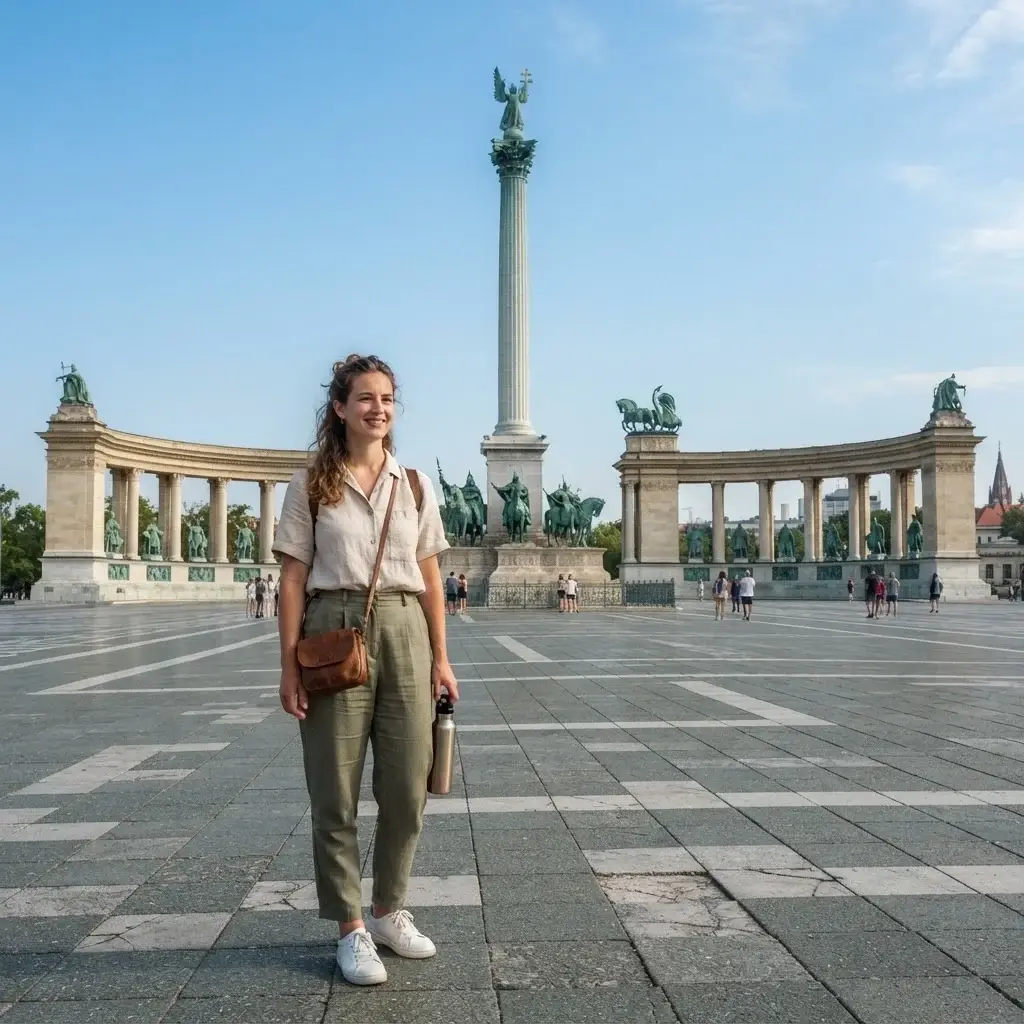
Built to celebrate Hungary’s millennium, the center of the plaza features the towering Millennium Monument.
At the base of the central column sit fierce bronze statues of the Seven Chieftains of the Magyars, who originally led the Hungarian people into the Carpathian Basin in the year 895. Flanking the column are two massive curved stone colonnades containing statues of Hungary’s greatest kings, statesmen, and military heroes.
- Photography Tip: Because the square is completely flat and wide open, it catches the early morning sunlight perfectly. Arrive before 8:30 AM to capture the long shadows stretching across the stone plaza before the tour buses arrive.
Directly behind Heroes’ Square, walk across the concrete bridge into City Park (Városliget). In the winter, the lake under the bridge transforms into one of the largest outdoor ice-skating rinks in Europe. In the summer, it is a peaceful boating lake filled with ducks.
As you walk through the park paths, you will stumble upon the eclectic Vajdahunyad Castle (Vajdahunyad vára). This castle was originally built out of wood and cardboard as a temporary exhibition for the 1896 celebration. The locals loved it so much that the city rebuilt it out of solid stone. The building is a deliberate mix of different architectural styles found throughout Hungary’s history, blending Romanesque gates, Gothic towers, Renaissance loggias, and Baroque courtyards into a single complex.
Afternoon: Széchenyi Thermal Baths Etiquette Guide
Now it is time for the highlight of Day 3: soaking in Budapest’s historic thermal spring water. The city sits on a massive crust of tectonic fault lines, causing over 120 million liters of mineral-rich hot water to bubble up to the surface every single day. The largest and most iconic bathhouse is the Széchenyi Thermal Bath (Széchenyi gyógyfürdő), located right in the middle of City Park. This grand, bright-yellow Neo-Baroque palace features 15 indoor thermal pools and three massive outdoor pools.
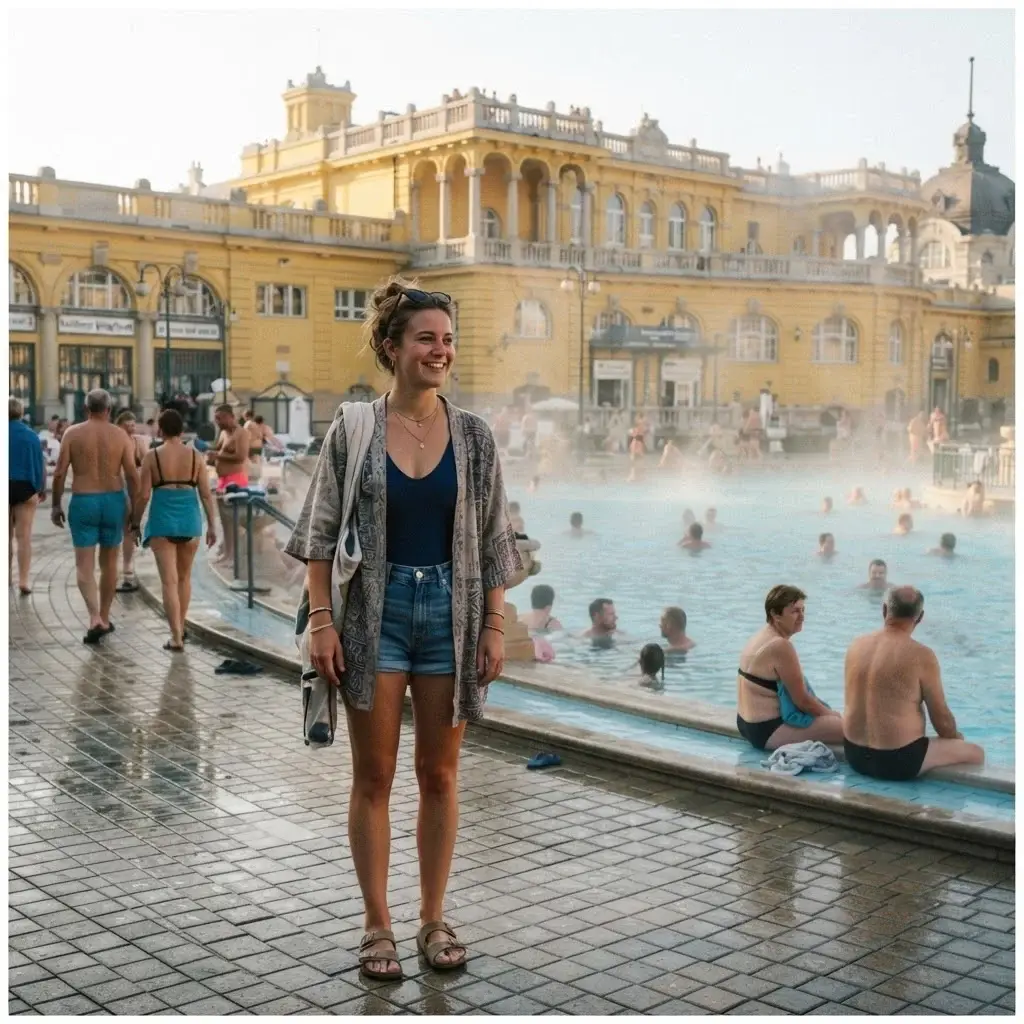
Going to a thermal bath can feel incredibly intimidating for a solo traveler or a first-time visitor. To make sure you step through the doors with absolute confidence, here is a step-by-step breakdown of how the process works and how to avoid the most common bathing mistakes.
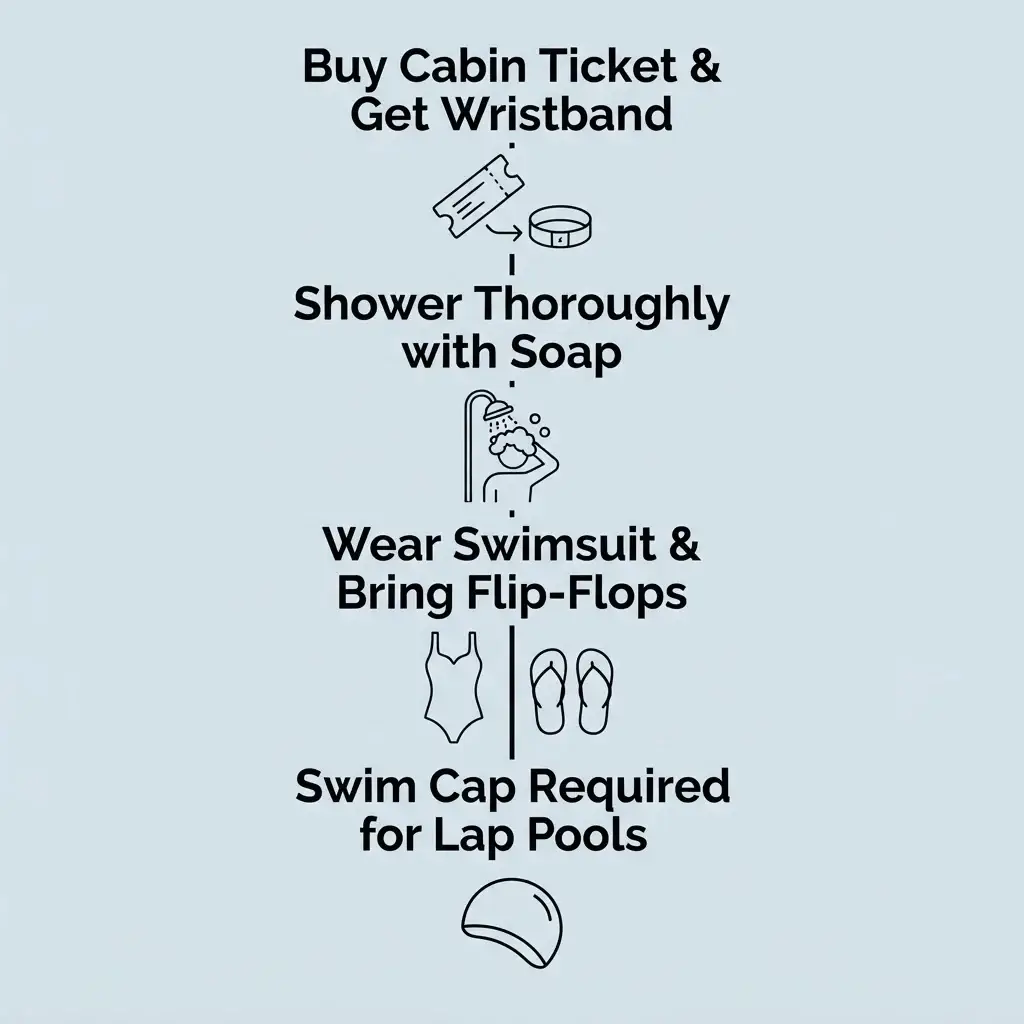
1. Buying Your Ticket and Understanding the Wristband
When you enter the main lobby, you will buy a day pass that includes either a locker (szekrény) or a private cabin (kabin). I highly recommend spending the extra two dollars for a private cabin. It is a small, changing room with a door that locks, giving you a private space to change out of your clothes and leave your daypack securely behind.
The cashier will hand you a plastic electronic wristband. This wristband acts as your digital key. To find your cabin, walk through the turnstiles and scan your wristband at the wall screens; it will display your assigned cabin number. Hold your wristband against the door lock button to open and close your cabin.
2. The Strict Hygiene Rules
Before you even think about touching the pool water, you must walk to the communal shower areas and rinse your body thoroughly with soap. This is a strict rule that keeps the natural mineral pools clean without using massive amounts of harsh chemical chlorine.
3. What to Wear and What to Bring
You must wear a clean swimsuit at all times in all areas of Széchenyi.
- The Golden Rule: If you want to swim laps in the large outdoor fitness pool, you are strictly required to wear a swim cap. If you do not have one, the pool lifeguards will blow their whistles loudly at you and order you out of the water. You do not need a swim cap for the thermal soaking pools or the indoor areas.
- Essential Footwear: You must bring plastic flip-flops or water sandals. The wet tile floors around the indoor pools can be incredibly slippery, and wearing sandals prevents the spread of foot bacteria between the outdoor terraces and the indoor changing rooms.
- The Towel Trap: Do not rent a towel at the baths if you can avoid it. The rental lines are notoriously slow, require a large cash deposit, and often run out of clean towels by 2:00 PM. Pack a compact, quick-dry microfiber towel in your travel bag instead.
4. Navigating the Pools
Start by exploring the outdoor pools. The large pool on the right side features a fun, built-in whirlpool circle that spins swimmers around in a fast current. The outdoor pool on the left side is the deep soaking thermal pool, where you can watch local Hungarian men floating in the steam while playing intense games of chess on floating plastic boards.
After checking out the outdoor terrace, head inside the yellow corridors to find the smaller indoor thermal rooms. Each indoor room features pools filled with different water temperatures, ranging from a cold 18°C (64°F) plunge pool up to a hot 40°C (104°F) medicinal soak. Drop into a warm pool for fifteen minutes, step into a eucalyptus steam room, and then brave the cold plunge pool for a quick, invigorating shock to your circulatory system.
When participating in wellness experiences or long days of physical walking like this abroad, keeping an eye on your baseline physical health is incredibly important for any independent traveler. For essential guidance on navigating regional food safety, staying hydrated in hot thermal steam environments, and understanding general vacation health advisories, it is a smart idea to consult the CDC Travelers’ Health destination guidelines, which will keep your body feeling strong throughout your journey.
Evening: The Elegance of Andrássy Avenue and a Secret Rooftop
After a relaxing afternoon at the baths, walk out of City Park and begin a leisurely stroll down Andrássy Avenue (Andrássy út). This grand, tree-lined boulevard was constructed in the late 19th century to connect the city center with the park. As you walk past the grand neo-Renaissance mansions and luxury embassies, you will pass the majestic Hungarian State Opera House (Magyar Állami Operaház).
For your final dinner in the city, skip the tourist-heavy restaurants on Váci Street and head to Két Szerecsen Bisztró, located just off Andrássy Avenue. This beautiful eatery combines the cozy atmosphere of an old Parisian bistro with traditional Hungarian flavors.
Order a plate of Chicken Paprikash (Paprikás Csirke). This classic dish features tender chicken pieces simmered in a smooth, velvety sauce made from sweet paprika, onions, and heavy sour cream, served over a mountain of tiny, homemade Hungarian flour dumplings called Nokedli.
End your final night in Budapest by grabbing a drink at the 360 Bar, a hidden rooftop oasis located on top of an old department store building on Andrássy Avenue. You have to enter through a plain glass door and take a small elevator to the roof.
Up top, you can enjoy a glass of local Hungarian white wine—such as a crisp, dry Furmint from the Tokaj region—while looking out over the illuminated dome of St. Stephen’s Basilica and the distant hills of Buda. It is the perfect, peaceful vantage point to look back on your 72 hours in this incredible capital and realize that by traveling independently, you successfully navigated one of Europe’s greatest cities without letting fear or logistics get in your way.
3-Day Budapest Itinerary Summary Table
| Day | Focus Area | Key Highlights | Food to Try | Common Pitfall to Avoid |
| Day 1 | Historic Buda | Fisherman’s Bastion, Matthias Church, Buda Castle, Hospital in the Rock, Gellért Hill sunset. | Ruszwurm Krémes (cream cake), authentic beef Gulyás soup. | Waiting in the long morning line for the overpriced Castle Hill funicular. |
| Day 2 | Vibrant Pest | Great Market Hall, Parliament Building, Shoes on the Danube, St. Stephen’s Basilica, Synagogue. | Fresh garlic and cheese Lángos, hearty Jewish-Hungarian Sólet stew. | Buying expensive souvenirs or main meals on the market’s ground floor. |
| Day 3 | Culture & Wellness | M1 Historical Subway, Heroes’ Square, City Park, Széchenyi Thermal Baths, Andrássy Avenue. | Creamy Chicken Paprikash with Nokedli dumplings, local Tokaj wine. | Forgetting your flip-flops or swimming cap at the thermal baths. |
Essential Budapest Practical Survival Tips
Local Currency and Scams
Hungary is a member of the European Union, but it does not use the Euro. The local currency is the Hungarian Forint (HUF). While almost every restaurant, market stall, and museum accepts standard contactless credit or debit cards, you should still keep a small amount of cash on you for tipping or small public restrooms.
- The ATM Trap: Never use the bright yellow-and-blue “Euronet” ATMs scattered all over the tourist districts. These private machines are designed to exploit tourists by charging massive hidden transaction fees and utilizing predatory, inflated exchange rates. If you need to withdraw cash, always use a real automated teller machine physically attached to a major national brick-and-mortar bank, such as OTP Bank, Erste Bank, or K&H. When the machine asks whether you want to be billed in your home currency or the local Forint, always select local Forint to let your home bank handle the conversion rate safely.
Navigating Public Transit Safely
Budapest has an incredibly efficient, clean, and safe public transportation network composed of subways, street-running trams, and public buses. The easiest way to manage your transit is by downloading the official BudapestGO app on your phone.
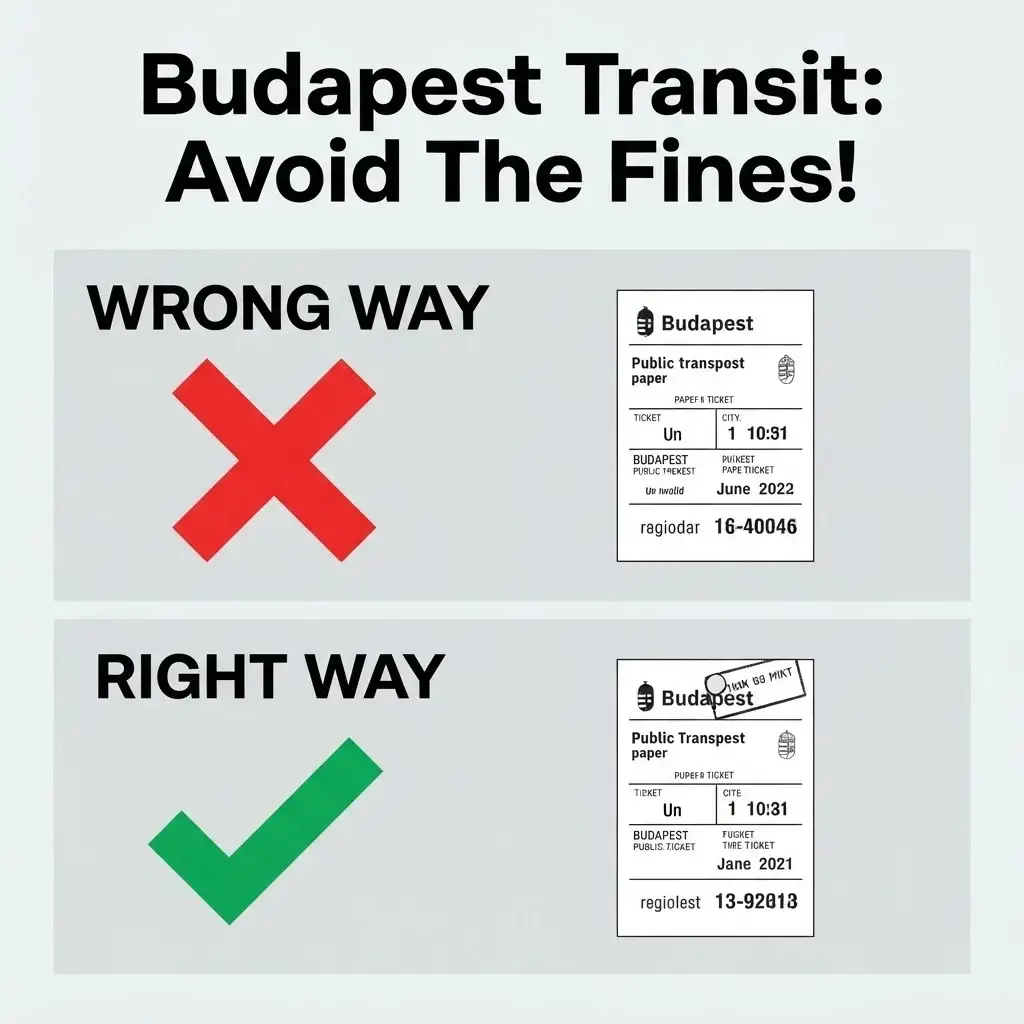
You can purchase single tickets, 24-hour travel cards, or 72-hour travel cards directly within the app using digital payment.
- The Ticket Validation Trap: If you choose to buy physical paper tickets from the purple automated machines at the transit stops, you must manually validate your ticket before boarding the train or immediately upon stepping inside a bus or tram. To do this, slide your paper ticket into the small orange or yellow mechanical boxes at the station entrances or on the poles inside the vehicles. The box will punch a hole or stamp a digital timecode onto the paper.
- Transit Officers: Plainclothes ticket inspectors wearing red-and-blue armbands patrol the transit lines constantly. If you are caught riding with an unvalidated physical ticket or an un-activated digital app ticket, they will fine you on the spot without exception. Saying “I am a tourist and I didn’t know” will not work.
Staying Safe and Staying Confident
Budapest is consistently ranked as one of the safest cities for solo female travelers and independent adventurers in Europe. Violent crime is incredibly rare, and the streets are well-lit and populated deep into the evening hours. However, like any major global capital, petty pickpocketing does occur in dense crowds.
- Taxi Scams: Never wave down a random, un-marked taxi cab driving down the street, and never accept a ride from drivers lingering in the airport arrivals lobby or outside major train stations. These rogue drivers often use rigged meters that speed up the price display. Instead, download the Bolt ride-sharing app on your smartphone. It operates exactly like Uber, allowing you to see your driver’s profile, track the vehicle via GPS, and view a fixed, guaranteed price estimate before you ever open the car door.
By keeping these practical safety tips in mind, utilizing the transit app properly, and structuring your days to tackle one side of the Danube at a time, you can experience the absolute best of Budapest without the typical stress. Step out of your comfort zone, trust your instincts, and enjoy the journey!