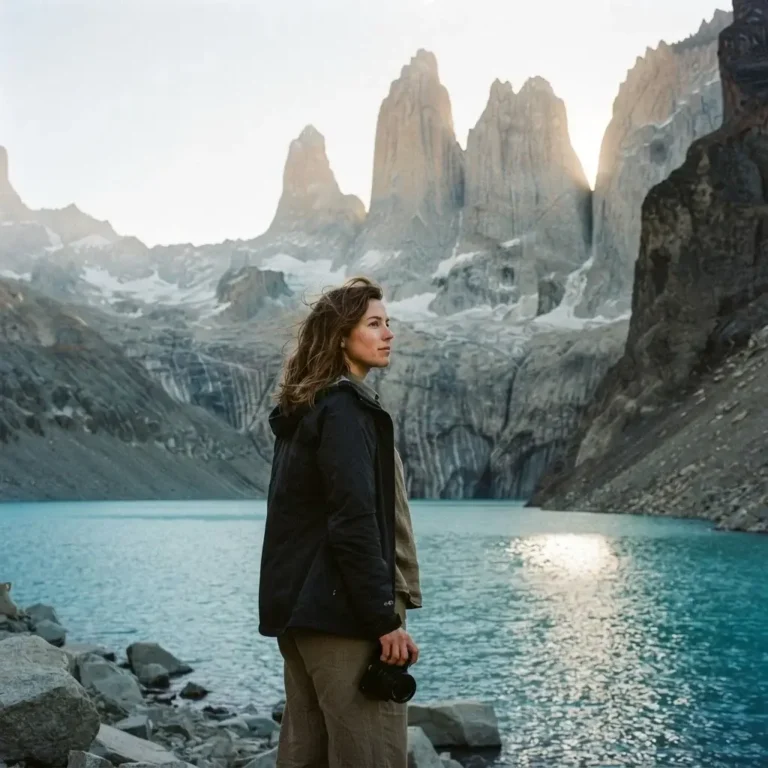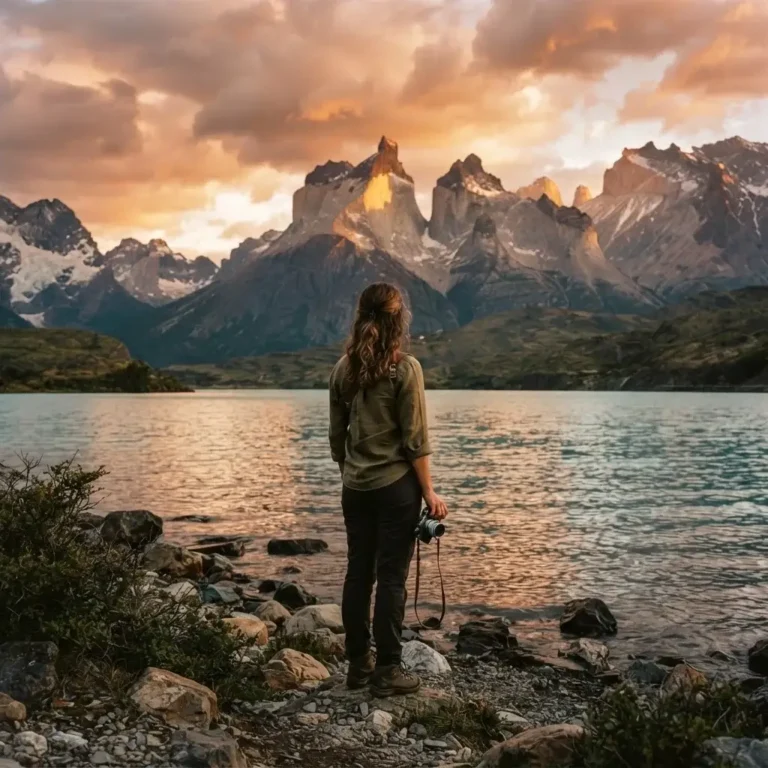
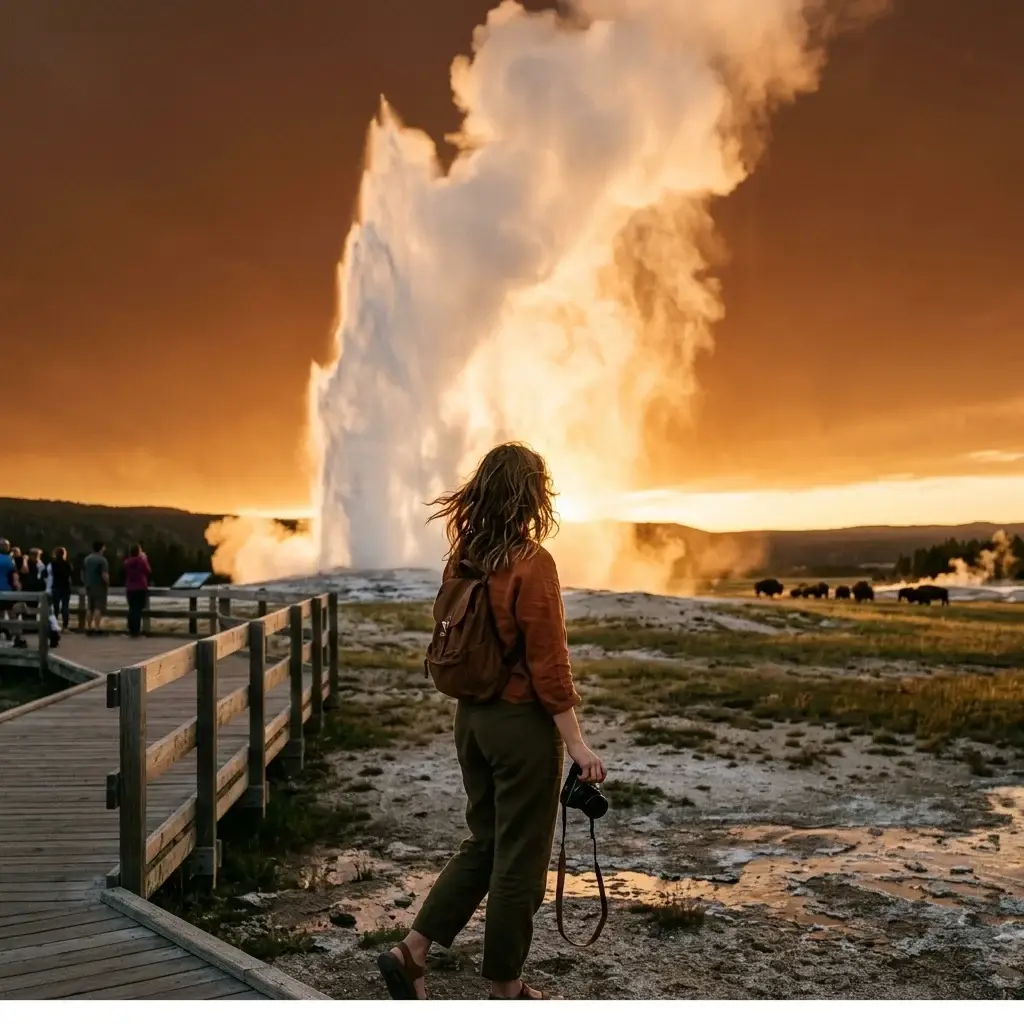
I grew up in New York City. My version of nature was Central Park, a patch of green surrounded on all sides by taxi horns and skyscrapers. So the first time I saw a national park in any real sense, through photographs, research, and the stories of solo travelers I connected with on the road, it genuinely stopped me. Not in a postcardsy, “wow what a pretty picture” kind of way. More like that quiet, deep feeling of realizing the world is much bigger and wilder than your daily routine suggests.
If you are reading this, you probably already feel some version of that pull. Maybe you have been looking at photos of Yellowstone’s hot springs or Yosemite’s granite walls and wondering how to turn that screen-scrolling daydream into an actual trip. That is exactly what this guide is for.
The United States has 63 designated national parks. They range from sub-tropical swamps in Florida to glaciated peaks in Montana to volcanic deserts in Utah. Choosing where to start can feel genuinely paralyzing when every “top 10” list seems to say something different. So rather than hand you another generic ranking, I want to walk you through the parks that consistently reward visitors most deeply, explain what makes each one worth your time, cover the practical logistics that most guides skip, and help you figure out which one fits where you are right now in your travel life.
Before You Plan Anything, Know This About Passes and Fees
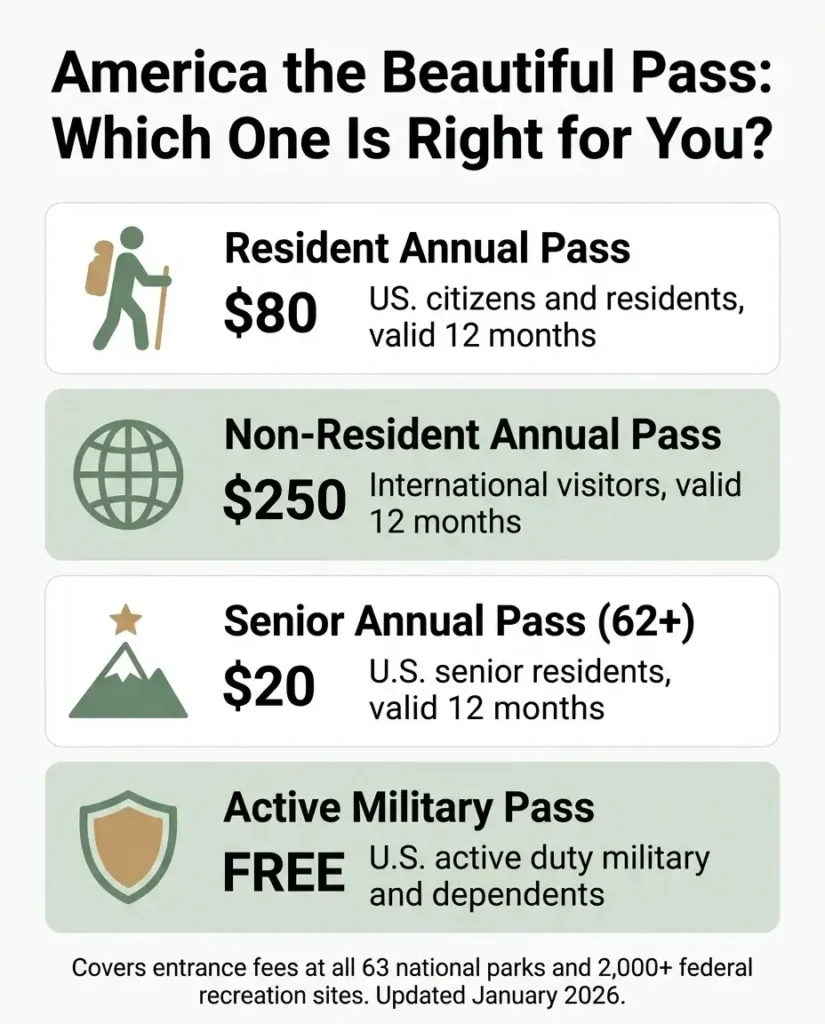
Before we get into the parks themselves, there is one practical detail that will save you real money and that almost every beginner misses: the America the Beautiful Pass. The National Park Service updated its pricing structure at the start of 2026. The Resident Annual Pass now costs $80 for U.S. citizens and residents, and $250 for non-residents. A single park visit at a major park typically costs $35 per vehicle, so if you are planning to visit even three parks in a year, the $80 pass pays for itself immediately. Seniors aged 62 and older can get the annual version for just $20, and active military members receive the pass for free. You can pick it up at any park entrance or get a digital version instantly through Recreation.gov. The NPS passes page at nps.gov/planyourvisit/passes.htm has the full breakdown of all pass types so you can find the one that fits your situation before you go.
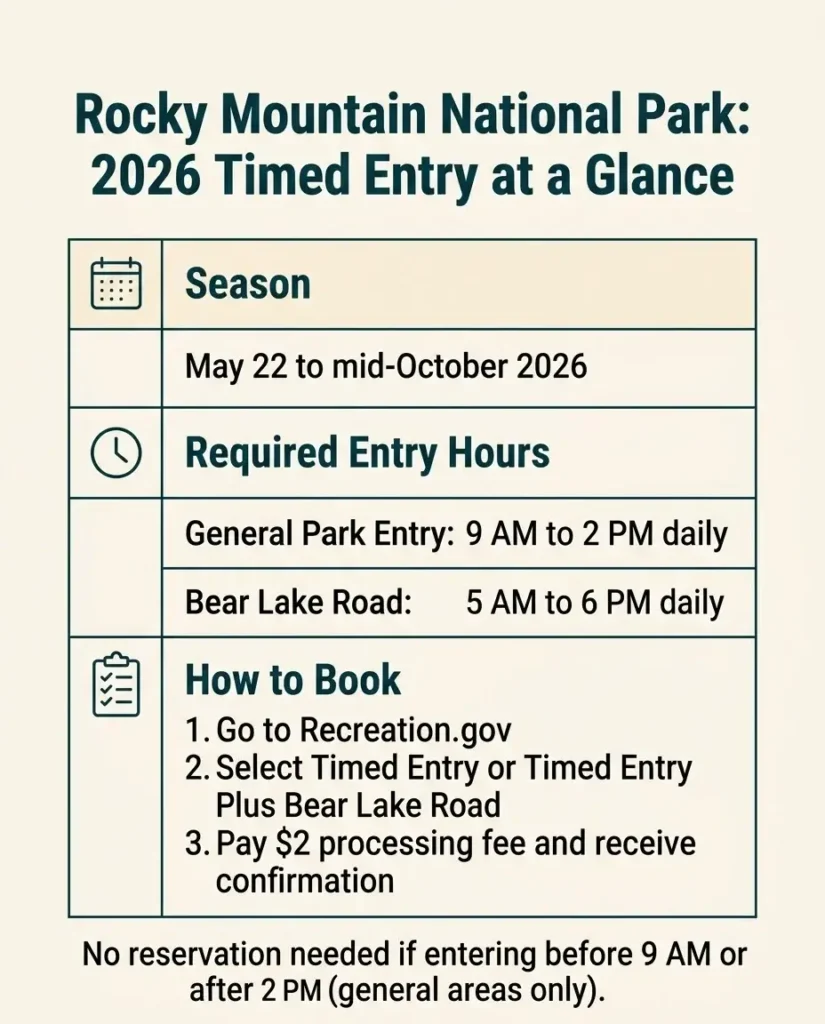
One more thing on logistics: timed entry reservations. Several of the most popular parks manage crowds by requiring advance reservations during peak hours. This changed significantly for 2026, with parks like Arches, Glacier, and Yosemite dropping timed entry requirements. Rocky Mountain National Park, however, still requires timed entry reservations from May 22 through mid-October, during the 9 a.m. to 2 p.m. window each day. The reservation costs only a $2 processing fee and is booked through Recreation.gov. I will note this specifically when we get to Rocky Mountain below.
Now, let’s talk about the parks.
Yellowstone: The One That Started It All
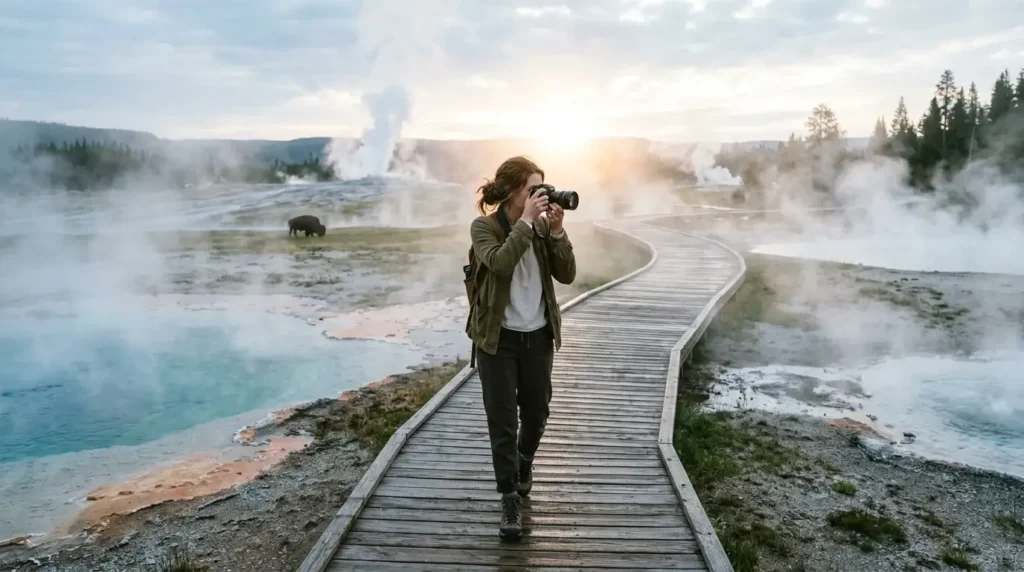
Yellowstone became the world’s first national park on March 1, 1872, and it still feels like something from another planet. The park sits on top of one of Earth’s most active volcanic hotspots, which means the ground here does things you simply cannot see anywhere else. Geysers shoot boiling water into the air on predictable schedules, mud pots bubble and hiss at the surface, and the landscape shifts from pine forests to alien-looking thermal basins within a single mile of walking.
The undeniable centerpiece is Old Faithful, which erupts roughly every 90 minutes and draws enormous crowds. My honest advice: get there early, watch the eruption, then walk away from the visitor center and find the Upper Geyser Basin trail that runs alongside the other geysers in the area. Most visitors stick to the boardwalk at Old Faithful and then leave. The ones who keep walking discover the entire basin, which is just as stunning and far less crowded.
For solo travelers, Yellowstone is wonderfully manageable. The Grand Loop Road connects most of the major features in a figure-eight, so you can drive between thermal areas, canyons, and wildlife spots without needing a guide or a group. The Lamar Valley, in the park’s northeast corner, is one of the best wildlife-watching spots in all of North America. Bison herds cross the road regularly, wolves are sometimes visible at dawn, and bears are spotted often enough that carrying bear spray is a non-negotiable before any trail.
What to eat: Inside the park, the Old Faithful Inn Dining Room is a solid choice for breakfast or dinner if you want the experience of eating in one of America’s most iconic lodge buildings, a massive log structure built in 1904. For something more laid-back, the Lake Yellowstone Hotel has a dining room with views across Yellowstone Lake. If you are staying in Gardiner, Montana, just outside the north entrance, grab breakfast at the Tumbleweed Bookstore and Cafe, a small, warm spot that feeds you well before a full day in the park.
Find full current information on trails, thermal areas, and wildlife advisories at the Yellowstone National Park official page.
Yosemite: Stunning, Busy, and Worth Every Bit of the Planning
Yosemite Valley is one of those places that photographs genuinely cannot prepare you for. The granite walls of El Capitan and Half Dome rise nearly a mile above the valley floor. Waterfalls drop hundreds of feet through the air. In spring, when snowmelt is at its peak, nearly every cliff face in the valley is streaming with water.
That beauty comes with crowds. Yosemite is one of the most visited national parks in the country, but for 2026, the park dropped its timed entry permit requirement, meaning you no longer need to book a reservation window to enter. What you do need is to plan your parking carefully, arrive before 9 a.m. if possible, and use the free valley shuttle system rather than driving to individual trailheads.
For first-timers, Valley Loop Trail is the accessible, flat introduction to the valley’s scenery. Mirror Lake trail is another easy option with stunning reflections of Half Dome in the water. If you want a more challenging hike, the Mist Trail to Vernal Fall and Nevada Fall is one of the most rewarding day hikes in the American West, though it is steep and slippery near the top so waterproof layers are essential.
What to eat: The Yosemite Valley Lodge’s Base Camp Eatery works well for quick and filling meals during a busy day. The Village Store in Yosemite Village is good for stocking up on picnic supplies if you want to eat on the trail or at a valley meadow instead. Curry Village (also called Half Dome Village) has a pizza deck that becomes a social gathering spot in the evenings and is worth stopping at just for the atmosphere, sitting outside with a slice while Half Dome turns pink in the fading light.
Check trail conditions, camping availability, and shuttle schedules through the Yosemite National Park official site.
Grand Canyon: Go to the Rim, Then Go Below It
The Grand Canyon is one of those places you have to see to believe. And I mean that literally: photographs, no matter how good, cannot convey the scale. From the South Rim, you are looking at a gorge 277 miles long, up to 18 miles wide, and over a mile deep. The Colorado River, which carved all of this over roughly five to six million years, looks like a thin blue thread far below.
Most visitors stand at the rim, take photos, and leave. That is not wrong, but it is only the introduction to what the Grand Canyon offers. The Bright Angel Trail descends from the South Rim and within a mile of walking, you are already inside a world that feels completely removed from the viewpoints above. Solo hikers should know that day hiking below the rim in summer is genuinely dangerous due to extreme heat. The NPS recommends hiking down in the early morning, resting in shade during midday, and returning before the sun is at full intensity. Carry more water than you think you need: at least a liter per hour in warm conditions.
For solo visitors, the park’s free shuttle system along the rim makes it easy to move between viewpoints without driving. Desert View Drive on the east side of the park is less visited than the main Village area and offers stunning views along a 25-mile stretch of the rim.
What to eat: El Tovar Dining Room, inside the historic El Tovar Hotel right on the rim, is the park’s most atmospheric restaurant. Reservations are worth making in advance. The Bright Angel Restaurant is a solid, no-fuss option for a hot meal before or after a rim hike. If you are driving in from Flagstaff (about 80 miles south), that city has a genuinely good food scene. Pizzicletta is a small, wood-fired pizza place in Flagstaff that solo travelers consistently love for the quality and the vibe.
The Grand Canyon National Park official page has current rim conditions, trail closures, and the seasonal shuttle schedule.
Glacier: The Park That Earns Every Mile
Glacier National Park in Montana is, in the opinion of many serious park visitors, the most purely beautiful park in the country. It sits on the U.S.-Canada border and shares an international peace park designation with Waterton Lakes National Park in Alberta. The landscape here is dense with features: more than 700 miles of trails, dozens of alpine lakes colored impossibly turquoise by glacial flour, and the Going-to-the-Sun Road, a 50-mile mountain highway that crosses the Continental Divide at Logan Pass and stands among the most scenic drives in the world.
The park’s glaciers are melting. There were over 150 glaciers in the park in 1850. Today, roughly 25 named glaciers remain, and projections suggest most will disappear within decades. Visiting Glacier now is not just a personal experience but a way of witnessing something rare and increasingly fragile.
For 2026, Glacier has dropped its timed entry permit requirement. Crowds are still real, particularly at Logan Pass, where parking fills by 7 a.m. on summer mornings. The recommendation from experienced Glacier visitors is to take the free park shuttle to Logan Pass rather than attempting to drive and park there in peak season.
For solo hikers at all levels, Glacier rewards effort proportionally. The Highline Trail, starting from Logan Pass, is one of the great solo hikes in America: 11.8 miles along a ridge with views in every direction, no technical climbing required, and a shuttle at the far end that brings you back.
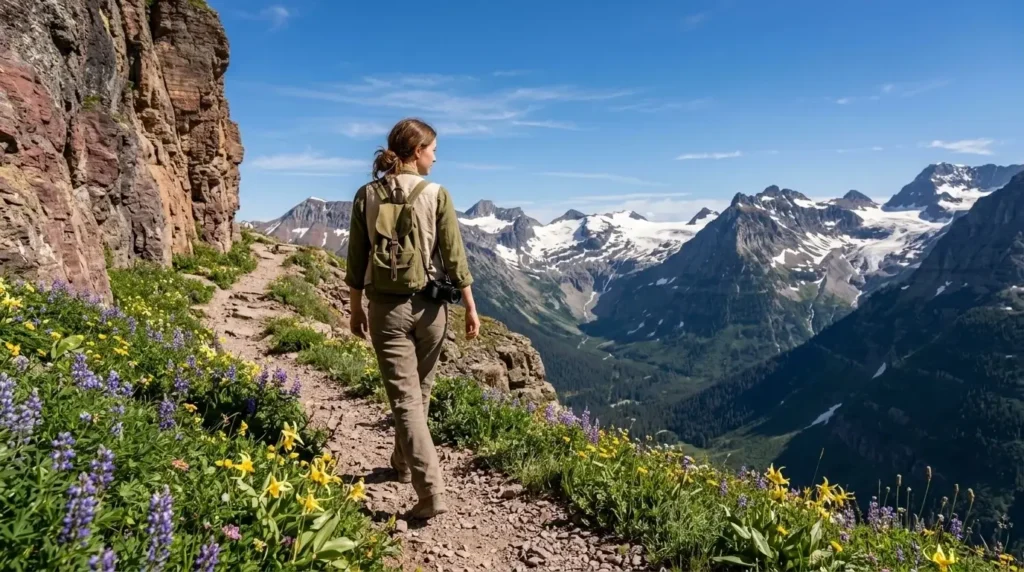
Hidden Lake Overlook, also from Logan Pass, is shorter and still spectacular.
What to eat: East Glacier Park, on the eastern side of the park, has a small cluster of good options. Serrano’s Mexican Restaurant has been a post-hike institution for years. The Great Northern Dining Room inside the iconic Many Glacier Hotel is worth a meal if you are staying or passing through that area of the park.
The Glacier National Park official page has current shuttle schedules, trail conditions, and vehicle reservation information for Going-to-the-Sun Road if those policies change.
Zion: Red Walls, River Walks, and a Hike That Needs a Permit
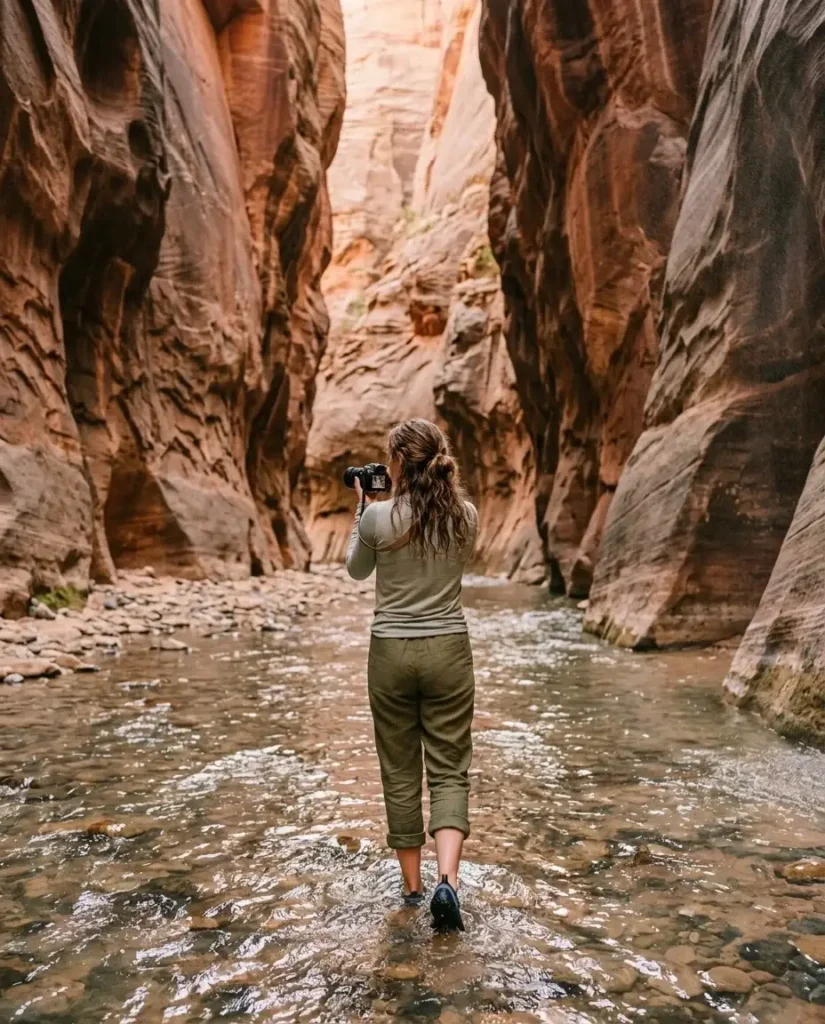
Zion National Park in southern Utah is the kind of place that hits you immediately. The park’s main canyon is narrow and deep, with walls of red and white sandstone rising 2,000 feet on both sides. The Virgin River runs right through the canyon floor, and you will be walking in it if you do the park’s most famous hike.
That hike is The Narrows: a route through the Virgin River gorge where the canyon walls close to just 20 feet apart overhead. You wade upstream through shallow water (though it can run deep in the spring), with nothing but cliff faces and sky above you. It is genuinely unlike anything else. No permit is required for the bottom-up day route. Bring water shoes or rent them in the town of Springdale, just outside the park entrance.
Angels Landing is Zion’s other iconic hike: a 5.4-mile trail with a final half-mile scramble along a narrow ridge with chains bolted into the rock for grip. It is thrilling, it is exposed, and it now requires a permit for anyone hiking to the summit. You do not need a permit to hike to Scout Lookout, the point just before the chains section, which still gives you a remarkable view. Permits for Angels Landing are distributed through a lottery system on Recreation.gov. The seasonal lottery opens months in advance, and the day-before lottery releases a small number of additional permits the evening before each hiking day.
Zion does not currently require timed entry reservations for park entry in 2026. The park does use a free shuttle system that is the primary way to access trailheads in the main canyon. Private vehicles cannot drive the Zion Canyon Scenic Drive during peak season, so the shuttle is how most people get around once inside.
What to eat: Springdale has a genuinely good food scene for a small Utah town.
Bit and Spur Restaurant and Saloon is a longstanding local favorite with good Southwest-influenced food and a relaxed atmosphere perfect for solo dining. Cafe Soleil is a popular breakfast stop before an early morning hike. Stock up on snacks at Sol Foods Supermarket on the Zion Park Boulevard if you are packing your own meals.
Rocky Mountain: Colorado’s Accessible Alpine Wonder
Rocky Mountain National Park sits about 60 miles northwest of Denver, and that proximity to a major city makes it one of the most visited parks in the country. What sets it apart is that it puts genuinely high-altitude alpine terrain within reach of people who have never done serious mountain hiking before. Trail Ridge Road, the highest continuous paved road in the United States, climbs to over 12,000 feet and puts you in the tundra zone without any hiking at all.
The park implemented timed entry reservations again for 2026, running from May 22 through mid-October. Reservations are required between 9 a.m. and 2 p.m. daily. If you enter before 9 a.m. or after 2 p.m., no reservation is needed. Bear Lake Road, the corridor leading to some of the park’s most popular trails, requires the Timed Entry+ Bear Lake Road reservation, which has stricter hours (5 a.m. to 6 p.m. daily). Reservations cost only a $2 processing fee and are booked through Rocky Mountain’s timed entry reservation page.
For solo first-timers, Emerald Lake Trail is a clear starting point. The 3.6-mile round-trip hike passes three lakes at altitude and gives you a real taste of what alpine hiking feels like without being overwhelming. More experienced hikers can tackle Longs Peak, Colorado’s northernmost fourteener (14,259 feet), but that is a serious day and requires solid fitness, an early start (2 a.m. or 3 a.m. from the trailhead is common), and careful weather monitoring.
What to eat: Estes Park, the gateway town on the eastern side of the park, has a wide range of options. Ed’s Cantina and Grill is a reliable, affordable choice for Mexican food after a long day on trails. Notchtop Bakery and Cafe is a local favorite for breakfast. If you are coming from Denver, the drive up US-36 through Boulder gives you a good opportunity to stock up on supplies from Whole Foods or Trader Joe’s before heading into the mountains.
Acadia: The East Coast Park That Surprised Everyone
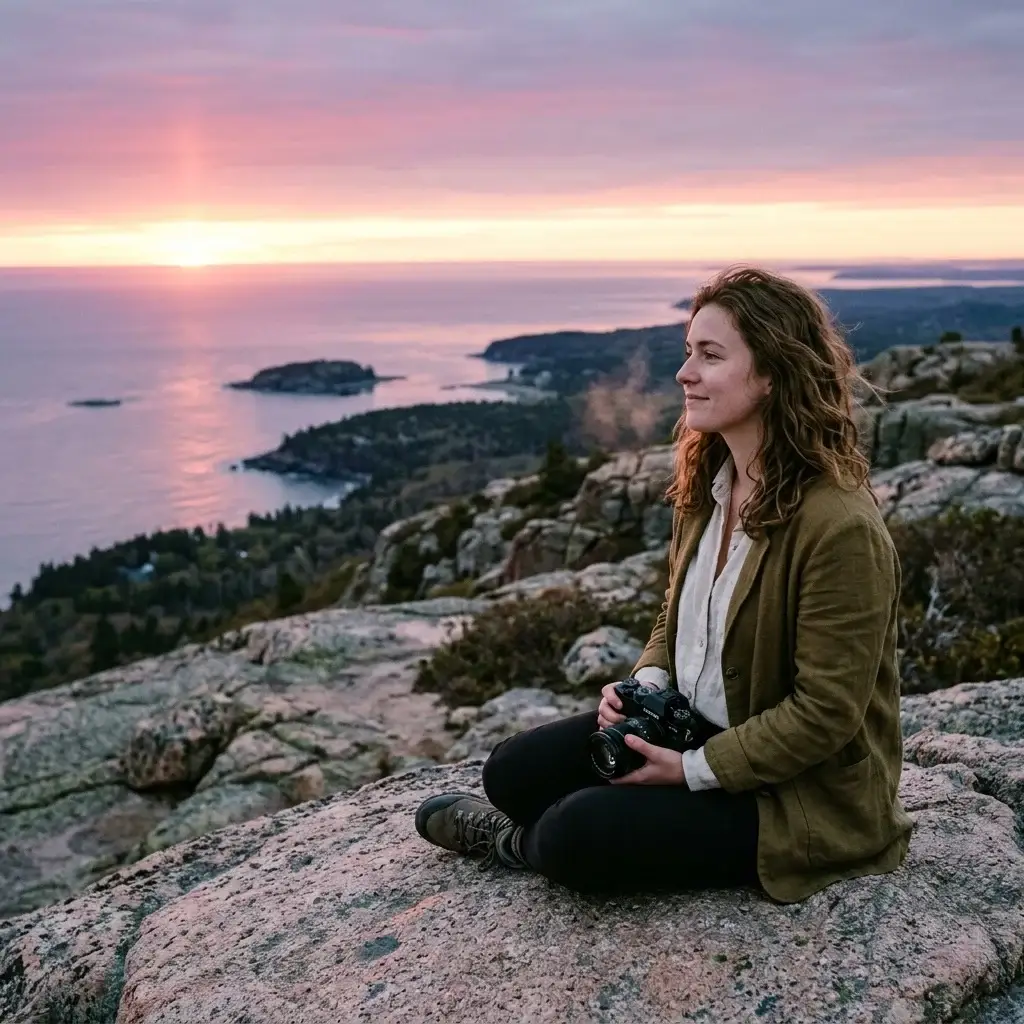
For readers on the East Coast or anyone building a trip that does not involve a cross-country flight, Acadia National Park in Maine is one of America’s genuine treasures. It sits on Mount Desert Island off the Maine coast, and the combination of rocky shoreline, forested trails, and granite summits above the ocean is unlike anything else in the national park system.
Cadillac Mountain, at 1,530 feet, is the highest point on the U.S. East Coast north of Rio de Janeiro. For a period between early October and early March, it is also the first place in the United States to receive the sunrise. The summit road is open to vehicles seasonally, and reservations are required during peak hours. If you hike up via the Cadillac North Ridge Trail instead, you can time your arrival for sunrise without needing to battle the parking reservation system.
Jordan Pond is another Acadia staple: a 3.3-mile loop around a glassy lake with views up to the rounded granite domes called The Bubbles. The Jordan Pond House at the trailhead has been serving afternoon tea and popovers since the 1890s, and while it is decidedly not budget dining, it is one of those genuinely charming traditions that makes a park visit feel complete rather than just athletic.
What to eat: Bar Harbor, the main town on Mount Desert Island, has a strong food scene anchored around seafood. Thurston’s Lobster Pound in Bernard (southwest corner of the island) is consistently recommended for fresh, no-frills lobster at genuinely good prices. Cafe This Way on Bar Harbor’s cottage street is a warm, relaxed breakfast spot that solo diners tend to love for its atmosphere and staff.
More on trails, permits, and carriage road cycling at Acadia National Park’s official site.
Great Smoky Mountains: The Most Visited Park in the Country, and Free to Enter
Great Smoky Mountains National Park is the most visited national park in the United States by a wide margin, pulling in over 12 million visitors some years. It straddles the border of Tennessee and North Carolina and is the most biologically diverse national park in the country, home to over 19,000 documented species of plants, animals, and fungi.
One of its most remarkable features is the price: Great Smoky Mountains is free to enter. Unlike virtually every other major national park, the park was given to the federal government with a deed that prohibits charging an entrance fee. A parking pass (called Park It Forward) is required if you plan to stop for more than 15 minutes, which costs a small daily fee, but there is no entrance gate charge.
The park’s Clingmans Dome, at 6,643 feet, is the highest point in the Smokies and accessible via a half-mile, steep paved path from a parking area. In fall, the foliage here is spectacular, and from the observation tower at the top, on clear days, you can see in every direction across wave after wave of blue-hazed ridge lines. The “smoke” in Smoky Mountains is actually a natural mist produced by the trees releasing organic compounds into the air.
For solo travelers, the park’s Alum Cave Trail is one of the best hikes in the system: 4.4 miles round-trip to Alum Cave Bluffs, with arched rock overhangs and mountain stream crossings. It is manageable for most fitness levels and visually varied enough to hold your attention the entire way.
What to eat: Gatlinburg, just outside the Tennessee entrance, is a bustling tourist town. For something with actual local character, Crockett’s Breakfast Camp is a beloved morning tradition with a large menu and a comfortable, cabin-like space. On the North Carolina side near Cherokee, Granny’s Kitchen serves traditional Southern Appalachian cooking that is worth the detour.
How to Combine Parks into One Trip
One of the questions I hear often from people planning their first national park adventure is whether they should try to see multiple parks on one trip. The answer depends on your timeline and how you travel.
If slow travel resonates with you (and if you read this blog regularly, it probably does), I would strongly encourage picking one or two parks and actually settling into them rather than rushing through five in ten days. Two weeks at Yellowstone and Grand Teton together, for example, gives you enough time to hike meaningful trails, watch wildlife properly, and have a few slow mornings with coffee at your campsite before anyone else is moving.
That said, some parks are geographically ideal to combine. Zion and Bryce Canyon are about 80 miles apart and work beautifully as a two-park Utah road trip. Rocky Mountain and Rocky Mountain adjacent parks in Colorado can fill a week easily. The Southern Appalachian parks, including Great Smoky Mountains, Shenandoah in Virginia, and New River Gorge in West Virginia, are close enough for a road trip through the eastern side of the country.
For planning multi-park routes, checking trail conditions, and making camping or timed-entry reservations, Recreation.gov is the central booking hub for virtually everything in the federal system. Bookmark it.
What Solo Travelers Should Know Before They Go
From everything I have researched and heard from solo park visitors over the years, a few consistent themes come up.
Tell someone your plan. Before any solo hike, share your trailhead, intended route, and expected return time with a friend or family member. Most national parks have limited or no cell service in backcountry areas. The NPS recommends downloading offline maps through apps like Avenza Maps before entering any area without signal. AllTrails also allows offline map downloads on its paid plan and is widely used by solo hikers for trail navigation and condition updates.
Start earlier than you think you need to. This applies to both parking and hiking. Arriving at a trailhead at 6 a.m. means a different experience entirely from arriving at 10 a.m.: fewer people, cooler temperatures, better wildlife sightings, and a genuine sense of wilderness that the midday crowds can dilute.
Know your limits and be honest about them. I know from my own hiking experience in China, where trail conditions can shift dramatically and confidence grows through action rather than armchair preparation, that the most important thing you can do before a challenging hike is honest self-assessment. Start with moderate trails. Build up. The parks will be there for your second and third trips.
Pack bear spray in parks where bears are active. Yellowstone, Glacier, Grand Teton, and the Smokies all have active bear populations. Bear spray is significantly more effective than a firearm for bear encounters and is available at outdoor gear stores near most park entrances.
One Last Thing
I used to think that national parks were for people who had grown up camping, who knew the difference between a topo map and a trail marker, who already belonged to some outdoorsy world I had not been invited into. That is not true. These parks were set aside specifically for everyone, including the person reading this who has never pitched a tent, who lives in a city apartment, who is nervous about going alone.
The perfect time to start is never going to arrive on its own. Pick one park from this list. Look up one trail. Check the NPS passes page and figure out whether the $80 America the Beautiful Pass makes sense for your trip. Book your first campsite or lodge room. The rest follows from there.
The parks are waiting.