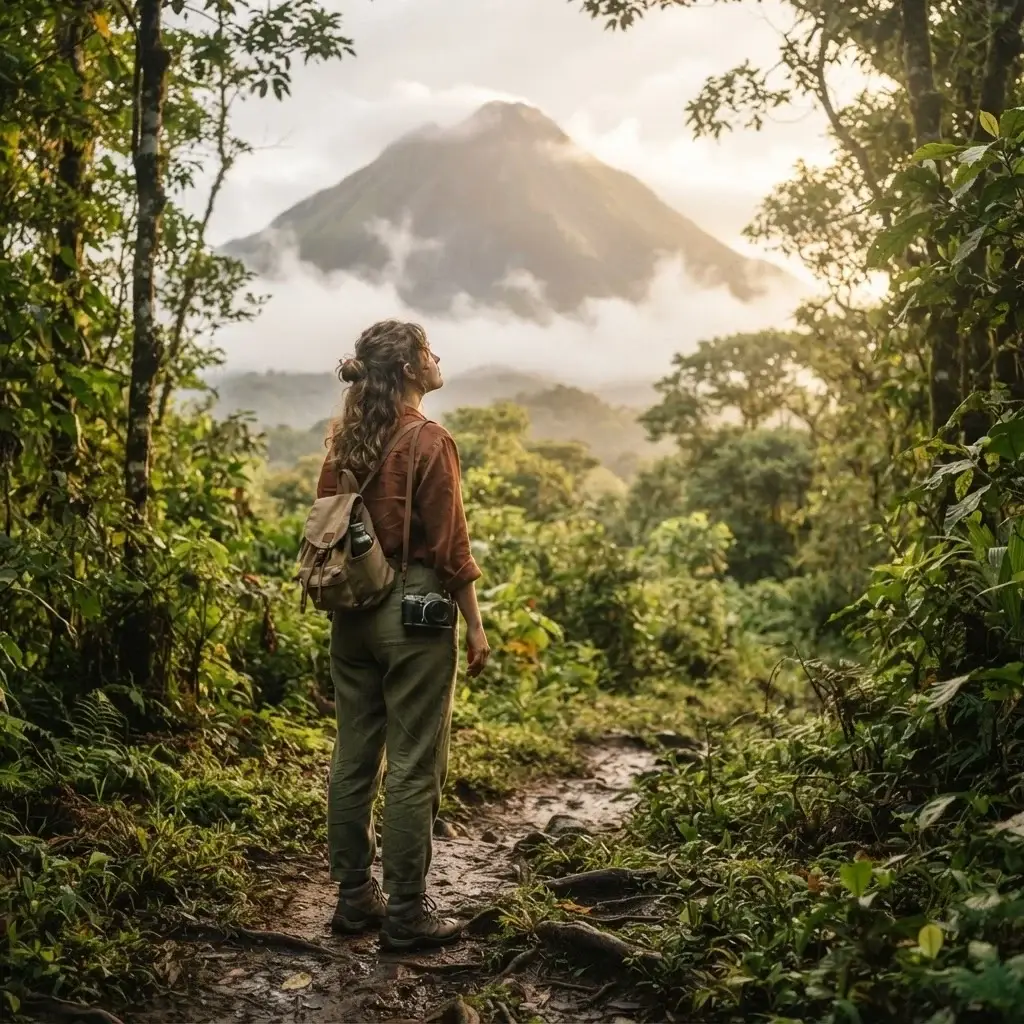
There is a particular kind of restlessness that comes just before you commit to a trip. You have the destination in mind, you have looked it up more times than you would admit, and you are cycling between excitement and that familiar nagging voice asking, “But is it actually doable alone?”
If Costa Rica is your answer to that restlessness, I want to tell you something up front: yes. It is vefull, up-to-date details including which nationalities require a yellow fever vaccination certificate.
ry doable solo. In fact, solo travelers report that Costa Rica is one of those places that almost rewards you for showing up without a group. The hostel culture is genuinely social, the main travel circuit between regions is well-worn, and Ticos (Costa Ricans) are consistently described by solo travelers as warm and incredibly helpful to people navigating the country for the first time.
That said, “doable” and “stress-free” are two different things if you walk in underprepared. This guide covers what I have pulled together from deep research, from conversations with solo travelers, and from the real practical details that most guides gloss over. My goal is to get you from “thinking about it” to “actually booking it,” with your eyes open.
Before You Book: Entry Requirements and Practical Admin
Let’s start with the boring but important stuff so we can get it out of the way quickly.
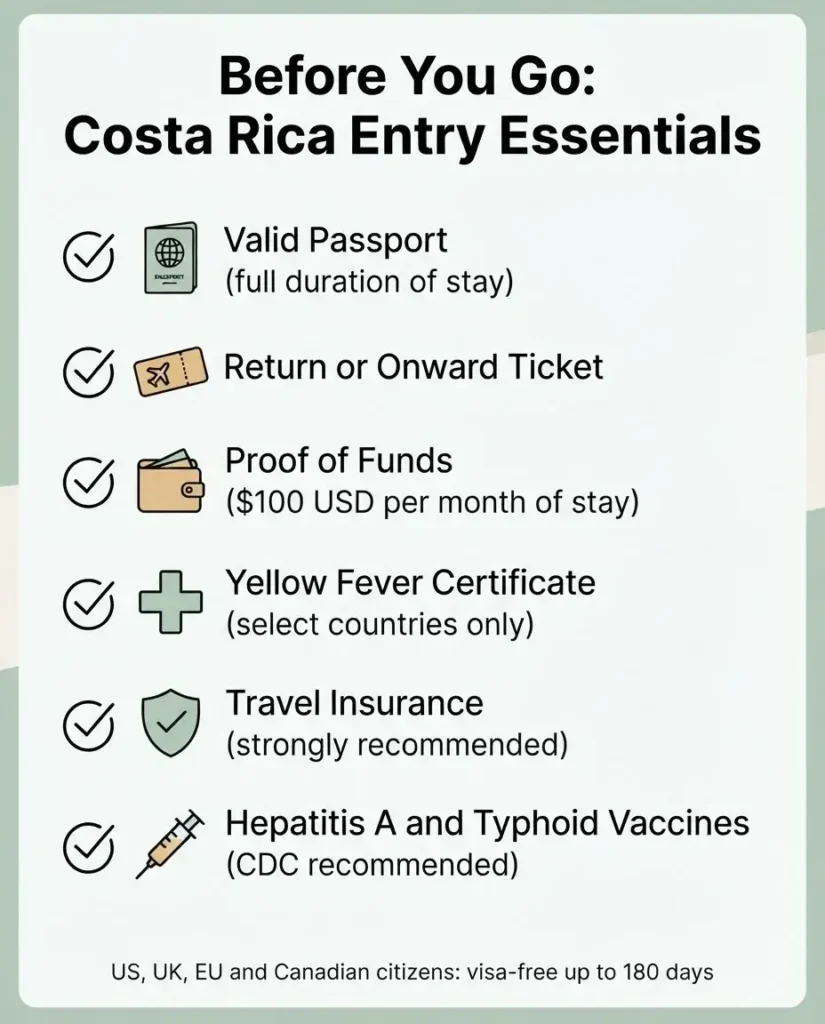
US citizens, UK and EU nationals, Canadians, and most other Group 1 nationalities do not need a visa to enter Costa Rica for stays up to 180 days. What you do need is a valid passport (valid for the full duration of your stay), a return or onward ticket, and proof that you can support yourself financially, which immigration defines as at least $100 USD per month or partial month of your stay. In practice, most travelers show a return flight booking and have never been asked for anything else. The official entry requirements page from Visit Costa Rica has the full, up-to-date details including which nationalities require a yellow fever vaccination certificate (primarily travelers arriving from parts of South America and sub-Saharan Africa).
One practical note: Costa Rica does not currently require travel insurance for entry, but having it is genuinely worth it here. Healthcare is reasonable by Central American standards, but activities like zip-lining, hiking, and surfing carry real risk, and emergency evacuation from a remote national park is not cheap.
Before you travel, check the CDC Travelers’ Health page for Costa Rica for the most current vaccination recommendations. Hepatitis A and Typhoid are the most commonly recommended additions to standard routine vaccines for most travelers. Neither is required for entry, but both are smart if you plan to eat at local spots (and you absolutely should).
When to Go: Dry Season vs. Green Season
Costa Rica’s dry season runs roughly from December through April. This is when the skies are clearest, the crowds are largest, and the prices are highest. January and February hit the sweet spot of excellent weather without the Christmas/New Year surge or spring break rush.
The green (rainy) season runs May through November. Most of the rain falls in the afternoons, mornings are usually dry and clear, and the entire country becomes noticeably lush, vibrant, and cheaper. Crowds at national parks thin out significantly. Solo travelers on a genuine budget often prefer this window precisely because accommodation and tour prices drop, and the social atmosphere in hostels stays lively with other like-minded budget travelers.
The one honest caveat: some roads and rural areas become genuinely difficult during heavy rains, particularly on the Nicoya Peninsula and in more remote zones. If you are planning to cover a lot of ground by public bus, the dry season is easier to plan around.
What Things Actually Cost (The Honest Version)
Costa Rica surprises many first-time visitors because it costs significantly more than other Central American destinations. It is not Southeast Asia pricing. Budget travelers who are smart about their choices can realistically manage on roughly $50-$70 per day, covering a hostel dorm or basic guesthouse, public buses, meals at sodas, and one or two activities per day. Mid-range travelers spending on private rooms, shared shuttles, and more activities should expect $100-$160 per day.
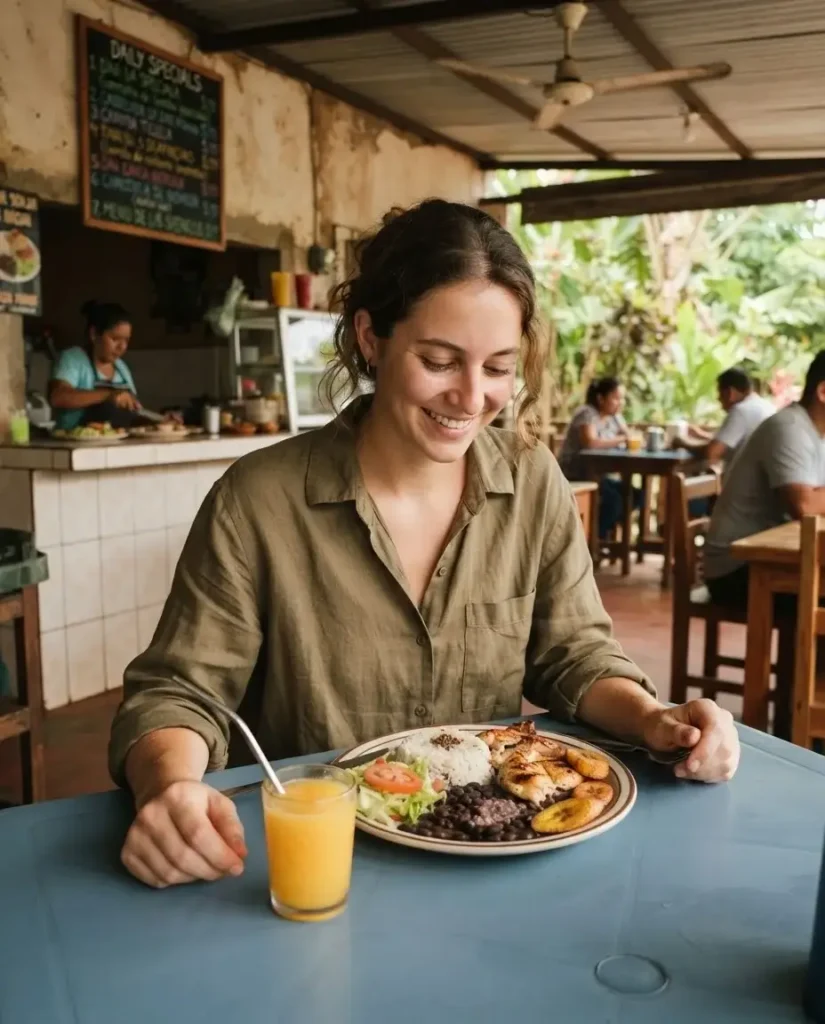
The single biggest money-saving tool in Costa Rica is the soda. Sodas are small, family-run local restaurants that serve traditional Costa Rican food at prices that are sometimes a third of what you pay at tourist-facing restaurants. A casado, the classic Costa Rican lunch plate of rice, beans, protein, salad, and fried plantains, will typically run you $4-$8 at a soda. The same dish with a better view and a bilingual menu might cost $15-$20 elsewhere.
National park entry fees add up on a longer trip. Most parks charge foreign adults $15-$18 per entry. Manuel Antonio, one of the most popular, is around $16. Budget for these as fixed costs rather than extras.
Getting Around: The Transport Reality
This is the section most guides rush through, and it is genuinely one of the trickiest parts of planning a solo trip to Costa Rica.
The country has no functioning passenger rail system between regions. Your three main options are public buses, shared shuttles, and rental cars.
Public buses are cheap (usually $2-$18 between major destinations), run on a solid network connecting all the main tourist zones, and are completely fine for solo travelers. The tradeoff is time. Buses in Costa Rica do not run to tight schedules, layovers and transfers in San Jose add hours to journeys, and you will often share the route with locals carrying bags, produce, and all manner of cargo. That is not a complaint, it is a genuinely interesting travel experience. But if you are trying to get from Monteverde to Manuel Antonio in a day, a bus journey that looks manageable on paper can easily turn into a six-to-eight hour odyssey.
Shared shuttles through companies like Interbus and Monkey Ride run door-to-door between the main tourist hubs, carry a small group of passengers, and typically cost $40-$70 per route. They are significantly more comfortable and predictable than buses, and the convenience is worth it on certain legs of a trip, particularly the notoriously rough Monteverde road. The MytanFeet guide to getting around Costa Rica is genuinely the most comprehensive breakdown of every option I have found, including timings and realistic cost comparisons.
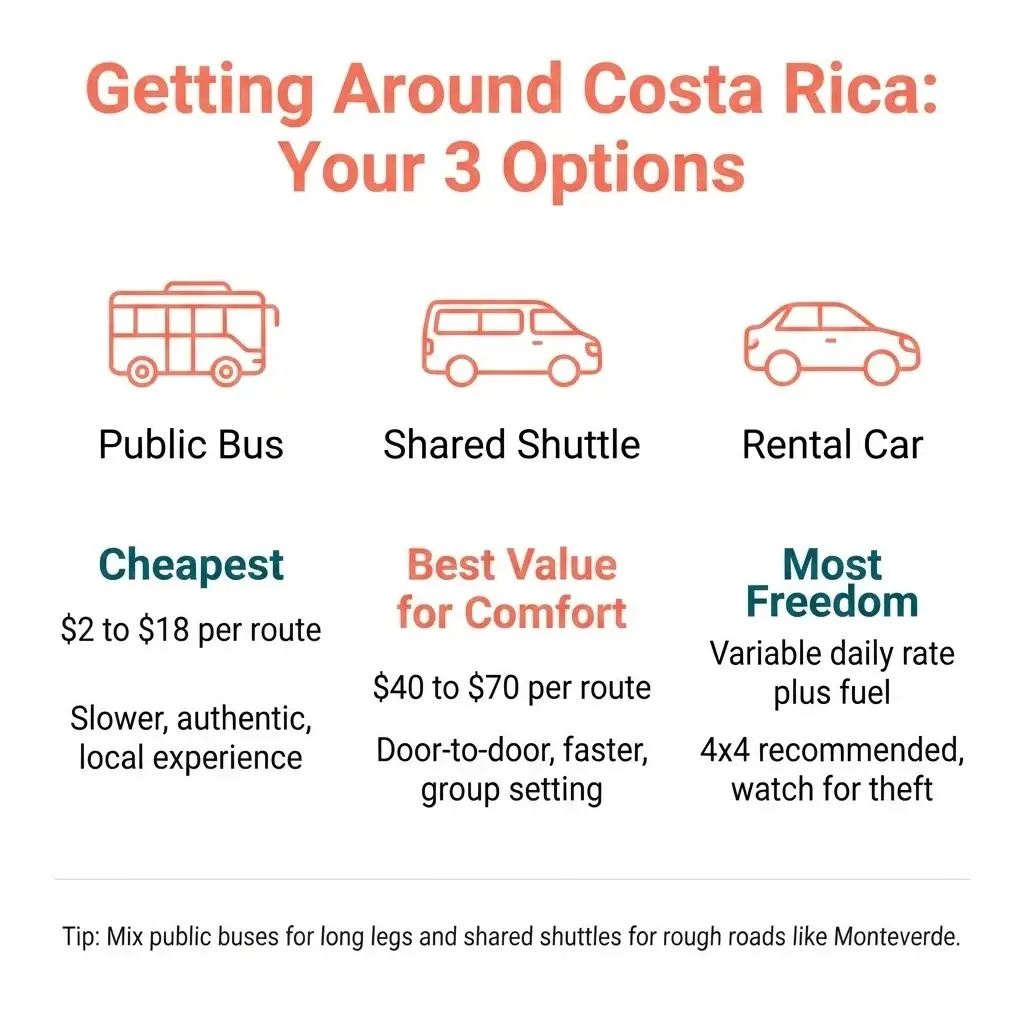
Rental cars give you the most freedom and make remote beaches and smaller national parks much more accessible, but they come with real caveats for solo travelers: roads outside major towns are frequently unpaved and potholed, 4×4 is strongly recommended, and petty theft from parked rental cars is a documented problem in popular tourist areas. If you rent, never leave anything visible in the car.
Safety: What You Need to Know Without Spiraling
Honest assessment: Costa Rica is not a dangerous country for travelers, but it is not without risk, and pretending otherwise does not help anyone.
The U.S. State Department currently has Costa Rica at a Level 2 Travel Advisory (“Exercise Increased Caution”), primarily due to property crime, petty theft, and robbery, particularly in San Jose and in crowded tourist areas. This is a standard advisory level that applies to dozens of countries that most travelers visit without incident every year. It is not a “do not go” signal.
The practical steps that eliminate the vast majority of risk are the same ones experienced solo travelers use everywhere: keep your phone out of sight in cities, use Uber rather than unlicensed taxis in San Jose (Uber is widely available and considered safer), don’t walk alone after dark in unfamiliar urban areas, and use a small crossbody bag rather than a daypack for valuables in crowded spaces.
Outside of San Jose, the main tourist destinations, including La Fortuna, Monteverde, Manuel Antonio, and the beach towns of Guanacaste, are consistently described as safe and relaxed by solo travelers. The crime most commonly reported in those areas is opportunistic theft from rental cars or unattended bags on beaches.
A note for solo female travelers specifically: verbal harassment, called “piropo” culture, does exist in Costa Rica as it does throughout much of Central America. It is more common in urban areas and on certain beaches. Most experienced solo female travelers describe Costa Rica as manageable and note that the community in hostel towns is genuinely supportive. Trust your gut, move with confidence, and do not feel obligated to engage with anyone who makes you uncomfortable.
The Five Regions Every Solo Traveler Should Know
Costa Rica is small (roughly the size of West Virginia) but geographically diverse in a way that consistently surprises first-time visitors. Here is an honest breakdown of the main regions and what they offer the solo traveler.
San Jose: Worth a Day, Not More
San Jose is where most international flights arrive, and most travelers pass through it without spending much time there. That is not unfair. The city has some genuinely good cultural museums, the Central Market is worth a morning wander for local food and people-watching, and the Barrio Escalante neighborhood has a strong cafe and food scene. But for a solo traveler whose priority is nature, wildlife, or coastal vibes, one night in San Jose is usually enough. Book a hostel in the Barrio Escalante or Los Yoses neighborhoods rather than near the central bus terminal, which is the area most associated with petty crime.
La Fortuna and Arenal: The Classic First Stop
La Fortuna, at the base of Arenal Volcano, is the most popular first stop for solo travelers, and for good reason. It is easy to reach from San Jose (3-4 hours by shared shuttle), the hostel scene is social, and the activity options are genuinely excellent for every budget level.
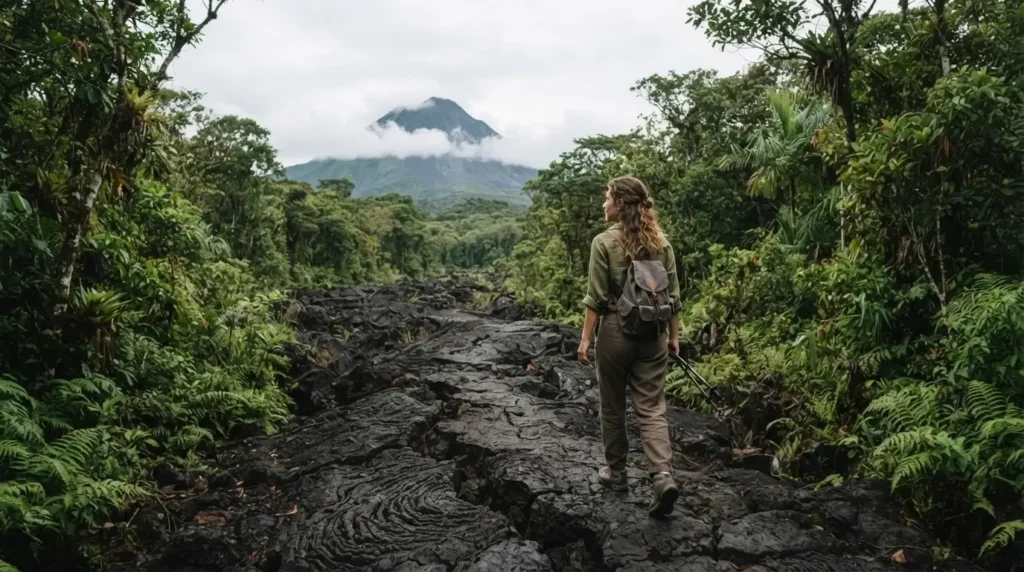
The Arenal Volcano National Park is open daily from 8am to 4pm and charges $15 for adult non-residents. You can check trails, wildlife, and visitor information through the official SINAC national park page. The lava flow trails offer an otherworldly landscape of hardened rock pushing up through thick forest, and the views of the volcano on a clear morning are the kind of thing you remember for years.
Hot springs are La Fortuna’s other major draw. The big commercial resorts like Tabacon and Baldi charge $50-$80 entry. Budget travelers have a genuinely good free alternative: El Choyin, a natural hot spring along the Rio Chollin river, where geothermal water meets cooler river flow. It is not manicured or Instagram-polished, but it is real and it is free.
The Arenal hanging bridges, a series of suspension bridges through the rainforest canopy, are excellent for wildlife spotting, particularly for birds and sloths, and a good half-day activity that solo travelers consistently rate highly.
Monteverde: Cloud Forest and Community
If there is one place in Costa Rica where solo travelers consistently say they felt the least alone, it is Monteverde. The town is small, slow-paced, and full of other independent travelers. The coffee is outstanding (this is genuine coffee country), the food scene around the main village is warm and unpretentious, and the cloud forest itself is one of the most biologically remarkable environments on Earth.
The Monteverde Cloud Forest Preserve is a must. It protects over 10,000 acres and is home to more than 400 bird species, including the famously elusive resplendent quetzal. Adult admission is approximately $29. The preserve opens daily at 7am and closes at 4pm. Book online in advance and arrive at least 15 minutes before your scheduled time slot. This is genuinely important: the preserve runs on timed shuttle departures to the forest entry, and if you miss your slot, you may not get in. The night walk, offered after dark, is a completely different and extraordinary experience, with guides who can spot tree frogs, tarantulas, and kinkajous that are completely invisible to the untrained eye in daylight.
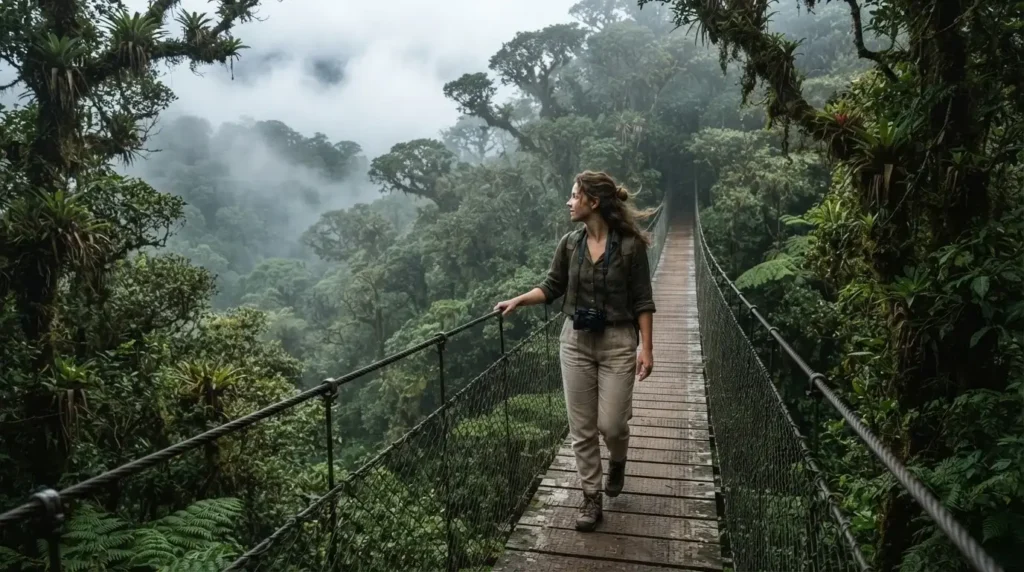
Getting to Monteverde is part of the experience, and not in a glamorous way. The main road is unpaved and very rough. Solo travelers coming from La Fortuna by bus or shared shuttle should expect the journey to take 3-4 hours regardless of the route, with the lake ferry crossing option being the most scenic and slightly more comfortable choice.
Manuel Antonio: Beaches, Wildlife, and Manageable Crowds
Manuel Antonio is where the rainforest meets the Pacific, and it is one of those places that genuinely earns its reputation. The national park packs a remarkable amount of biodiversity into a small area: white sand beaches, jungle trails, and some of the best accessible wildlife viewing in the country, including capuchin monkeys, two- and three-toed sloths, scarlet macaws, and white-nosed coatis.
Park entry is approximately $16 for adult foreign visitors, and the park closes on Mondays during the low season. Advance booking through the national parks reservation system is strongly recommended, especially for weekends and during dry season, when the park’s daily visitor cap fills up. Check the Visit Costa Rica national parks fee and hours page for the current schedule.
Hiring a local guide for your park visit is a genuine upgrade. They carry spotting scopes and find animals you will walk straight past alone. For solo travelers, joining a small group tour is often the most practical option and a natural way to meet other people.
The town of Quepos, just 7km from the park entrance, has budget accommodation, good sodas, and a lively atmosphere without the full inflated pricing of the hotel zone directly in front of the park.
Guanacaste and the Northwest Coast: Surf, Sun, and Slower Living
Guanacaste is drier, sunnier, and more beach-forward than the rest of Costa Rica. Tamarindo is the main backpacker hub, a surf town with a strong solo traveler community, good hostel options, and a busy bar scene if that is your thing. Nosara draws a more yoga-and-wellness crowd and is popular with solo travelers who want a quieter, more intentional pace.
Santa Teresa, on the Nicoya Peninsula, is harder to reach but worth the effort for the right traveler. Solo travelers describe it as genuinely welcoming, with a tight-knit international community of surfers, yogis, and long-term travelers. Surfing lessons are widely available, affordable, and an excellent way to meet people quickly.
Pura Vida: More Than Just a Phrase
“Pura vida” literally translates to “pure life.” But in Costa Rica, it functions as a greeting, a farewell, an expression of gratitude, a response to “how are you?”, and a general philosophy that things are fine, life is good, and there is no need to rush.
As a solo traveler, understanding this in practice matters. Ticos operate on a relaxed timeline. The bus may run 20 minutes late. Your food may take longer than you expect. A local you ask for directions may walk you halfway to your destination rather than just point. Let all of that work for you rather than against you. The rhythm of slow travel, really sitting in a place and absorbing it rather than sprinting through it, is something I believe in deeply. It is part of why I started traveling in the first place, back when I finally walked away from the office job that gave me two weeks a year and expected me to feel grateful for it.
Costa Rica rewards that slower pace more than almost any destination I know of through research and the consistent reports of solo travelers who keep returning to it.
What to Eat: A Quick Field Guide to Costa Rican Food
- Gallo pinto is the national breakfast dish: rice and black beans sauteed together with onion, pepper, and Salsa Lizano (a mild, tangy sauce that is as Costa Rican as it gets). Eat it with scrambled eggs and fresh fruit and you will understand immediately why people who live here never seem to be in a hurry.
- Casado is the classic lunch plate, a combination of rice, black beans, a protein (chicken, fish, beef, or plantain for vegetarians), a small salad, and fried sweet plantains. Order one at a soda and you are eating what locals eat for $4-$7.
- Chifrijo is a beloved snack of rice, beans, chicharron (fried pork), pico de gallo, and tortilla chips, usually served in a bowl at a local bar or soda.
- Ceviche along the Pacific coast is made with fresh white fish marinated in lime juice, cilantro, and red onion. It is cheap, everywhere, and excellent.
- Fresh fruit is extraordinary throughout Costa Rica. Guanabana, mango, papaya, and maracuya (passion fruit) in season are worth seeking out at any market.
Eat at sodas as often as you can, not just to save money but because the food is genuinely better and more authentic. Tourist restaurant menus look appealing and cost three times as much. Sodas have the food that Ticos actually eat every day.
Staying Connected
Getting a local SIM or eSIM on arrival is straightforward. The main local carriers are Kolbi, Movistar, and Claro, and a physical SIM with a data plan is available at the San Jose airport and in most towns for a reasonable price. If you prefer to set things up before departure, several eSIM providers offer Costa Rica-specific data plans. Having data access is genuinely useful for using Uber in San Jose, navigating back roads in real time, and booking park tickets through the SINAC online system.
The Honest Case for Choosing Costa Rica as a Solo Trip
Solo travel is rarely as terrifying in practice as it seems in theory. I learned that while backpacking solo through Europe, and every traveler I have spoken to who did their first solo trip confirms the same thing: the fear shrinks the moment you arrive and realize the world is full of other people navigating it alone.
Costa Rica is particularly well-suited for people who are early in their solo travel journey, not because it is “easy” or sanitized, but because it has the infrastructure, the community, and the natural beauty to reward the effort almost immediately. You will share buses with strangers who become dinner companions. You will take a guided tour alone and end up hiking with a couple from Germany and a guy from Melbourne who also showed up solo. That is how solo travel actually works, and Costa Rica offers that dynamic reliably.
The resplendent quetzal, the volcano at sunrise, the weight of humid cloud forest air on your skin, a casado at a plastic table with no menu in English, the sound of howler monkeys waking up the jungle at 5am: these are the experiences that stay with you. And you do not need anyone else to have them with you to make them real.
Start planning. The perfect time is not coming. This is it.