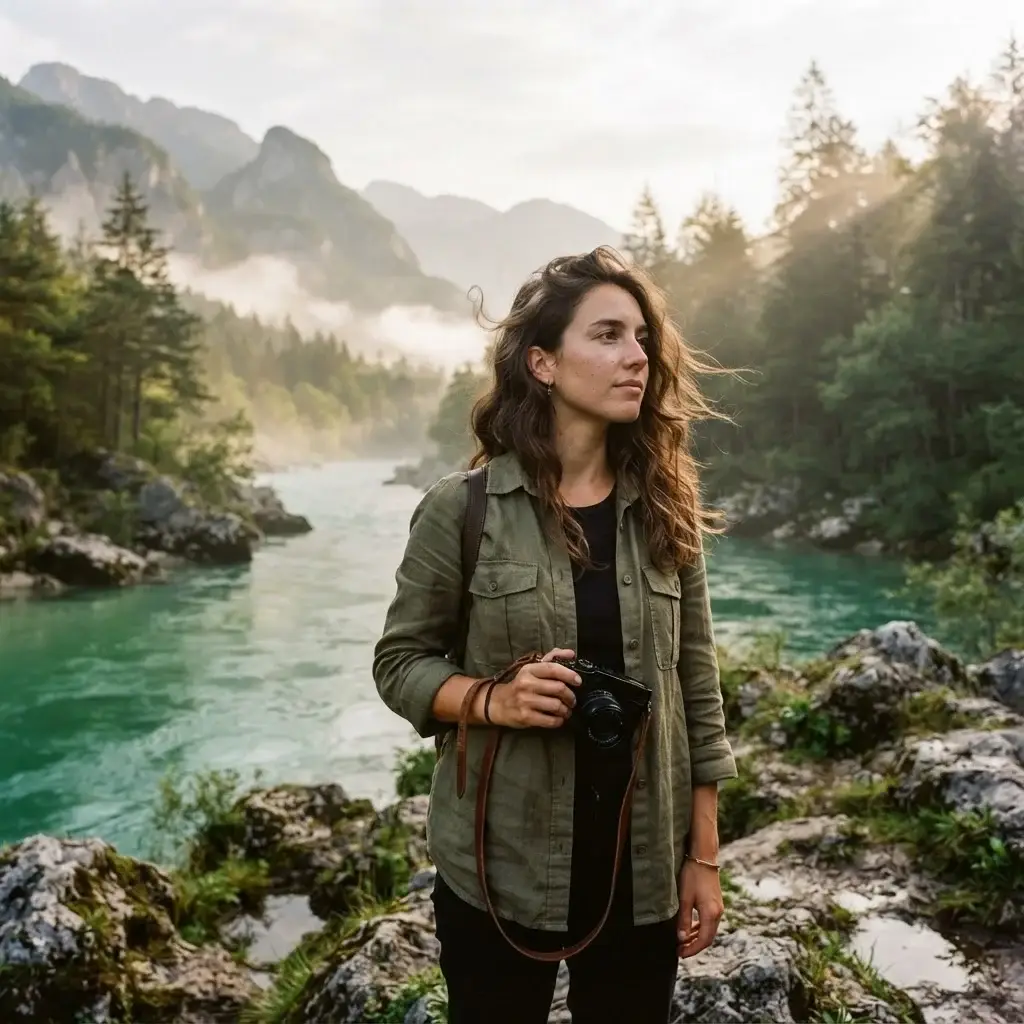
I remember sitting in my tiny, gray cubicle in New York City. The fluorescent lights buzzed, and the clock seemed to tick backward. I was a sightseeing guide on the weekends, telling tourists about the history of the city, but my heart wasn’t in the paperwork I did on Mondays. I wanted the wind, the silence, and the feeling of figuring things out on my own. I wanted to know if I could rely on myself in the middle of nowhere.
That hunger led me to leave the desk, pack a bag, and start wandering. Over the years, I’ve found that cities are great for energy, but national parks? They are the classrooms where I learned the most about who I am.
When you travel solo, especially in a national park, the silence can be loud. At first, it’s scary. You wonder if you’re doing it right. You worry about getting lost. But then, something shifts. You realize the mountain doesn’t care about your job title or your bank account. It just exists. And you learn that you can exist right alongside it, safe and capable.
If you are looking for the best national parks to visit in Europe for growth, you aren’t just looking for pretty photos. You are looking for a challenge. You are looking for a place that will force you to breathe deeply and trust your own two feet.
Here is where I go when I need to remember what I am made of.
Triglav National Park: Slovenia’s Emerald Haven
Slovenia feels like the best-kept secret in Europe. It is the only country in the world with the word “love” in its name, and you can feel it the moment you step off the train. Triglav National Park is the crown jewel here. It is home to the Julian Alps, and it is a paradise for the solo traveler who wants nature without the overwhelming chaos of massive, crowded tourist hubs.
The first time I hiked here, I was nervous about the logistics. I’m a planner, but even I get intimidated by mountain maps. The good news is that the park is incredibly well-maintained. The trails are marked with red circles and white centers. You don’t need a high-tech GPS to find your way; you just need to keep your eyes open.
The water in the Soča River is a color I still can’t describe—a milky, bright emerald. When you sit by that river alone, with a sandwich packed from a local bakery, you start to understand why the UNESCO World Heritage list includes such vital natural landscapes for their preservation and beauty.

It’s not just a view; it’s a protected space that reminds us we are visitors on this planet.
How to navigate: Fly into Ljubljana, the capital. It is small, walkable, and charming. From there, take a bus or a local train to Bled or Bohinj. These towns serve as the gateways to the park.
What to eat: You must try Potica, a traditional nut roll pastry. It’s the perfect energy boost for a long hike. In the mountain huts, order Jota, a hearty stew made with sauerkraut and beans. It warms you from the inside out after a cool day in the mountains.
Growth tip: Stay in one of the mountain huts, or planinska koča, for at least one night. Sharing a communal meal with local hikers—even if you don’t speak the same language—is the fastest way to stop feeling like a “tourist” and start feeling like a part of the world.
Vatnajökull National Park: The Icelandic Reflection
Iceland is where I go when I need to feel small. Vatnajökull is massive. It covers a huge chunk of the island, and the landscape changes every ten minutes. One moment you are walking on black volcanic sand, and the next you are looking at a glacier that has been frozen for centuries.
Solo travel in Iceland is safe, but it requires respect. The weather here is not a suggestion; it is a command. You must check the US Department of State travel information for Iceland before you head out, specifically looking at their guidance for emergency situations and the unique safety challenges of the Icelandic wilderness. The wind here is real, and the isolation is profound.
I remember standing in front of the Jökulsárlón glacier lagoon. The icebergs were floating out to sea, cracking and shifting.

There were other people around, but the scale of the place made me feel entirely alone with my thoughts. It was the moment I stopped worrying about whether I was “qualified” to be an adventurer. I just was one.
How to navigate: You need to rent a car if you want to explore the edges of the park, or you can join small group bus tours that depart from Reykjavik. If you drive, check the road conditions religiously every single morning.
What to eat: If you are staying near the coast, find a local spot serving Plokkfiskur, a traditional fish stew. It’s comforting, simple, and exactly what you need after a day of being battered by the North Atlantic wind.
Growth tip: Practice the “art of the turn-around.” There is a temptation to push forward just to say you finished the trail. In a place as unpredictable as Iceland, learning to turn back because the weather is turning isn’t failure. It is wisdom. It is the most important lesson in solo travel: you are in charge of your own safety.
Plitvice Lakes: The Art of Timing
Plitvice Lakes in Croatia is famous, and for good reason. It is a system of sixteen terraced lakes joined by waterfalls. It is breathtaking. But because it is famous, it can be crowded. If you go at midday, you will be bumping shoulders with tour groups, and that isn’t conducive to the kind of “growth” travel we are aiming for here.
The trick to Plitvice is to be the person who gets there when the gates open. I stayed in a small guesthouse in the village of Mukinje, just a short walk from the entrance. I woke up at dawn, walked in with the first group of people, and had the wooden boardwalks almost to myself for two hours.
That quiet time, watching the mist rise off the turquoise water, taught me a lesson about travel planning: you don’t need more money to have a better experience; you just need to shift your schedule.

How to navigate: Take the bus from Zagreb or Zadar. It is reliable and affordable. Once you are there, the park is very pedestrian-friendly, with shuttle buses and boats included in your entry ticket.
What to eat: Croatia has incredible cheese and cured meats. Stop at a local market before you head to the park. A slice of Paški sir (sheep’s milk cheese from Pag island) and some fresh bread is a meal fit for a queen, and you can eat it on a park bench overlooking the falls.
Growth tip: When you feel the frustration of the crowds creeping in later in the day, practice mindfulness. Stop, find a spot off the main path, and just watch the water. The noise of the crowd fades, and you learn to curate your own peace, even in a busy environment.
Sarek National Park: True Wilderness Solitude
If you want the ultimate test of your confidence, go to Sarek in Northern Sweden. This is not a “tourist” park. There are no marked trails, no bridges, and no cabins. You are looking at raw, untouched Arctic wilderness. This is for the traveler who has already built some experience and wants to see what they are capable of when they have to rely entirely on themselves.
I’ll be honest: I wouldn’t recommend this for your very first solo trip. But for the traveler who is feeling a bit stuck in their comfort zone, this is the remedy. When you are out here, you have to be prepared. Before tackling remote areas like this, it is essential to consult World Nomads for their expert safety and travel insurance guidance to understand what kind of coverage you need when you are well off the beaten path.
Walking through the Rapadalen Valley felt like stepping into a fantasy novel. I saw moose and reindeer, and I didn’t see another person for three days.

It was the most empowering, terrifying, and beautiful experience of my life. I learned that I can carry everything I need on my back, and that I can keep myself warm and fed.
How to navigate: This is the hard part. You take the train to Gällivare or Kvikkjokk and then you have to hike in or hire a helicopter drop-off. It is an investment in time and effort.
What to eat: You are packing in everything you eat. This is where you learn about lightweight, high-calorie meals. Dried meats, nuts, energy bars, and dehydrated soups are your best friends. Pack more than you think you need.
Growth tip: Embrace the “bad” days. It will rain. You will get tired. You might get scared. When you come out the other side of those moments, you realize that you didn’t break. You kept going. That is the moment your confidence grows from a spark into a flame.
Saxon Switzerland: The Accessible Adventure
Sometimes, you don’t want a rugged, multi-day expedition. You want a place where you can hike for a few hours, take incredible photos, and then sit down for a beer and a schnitzel in a historic town. Saxon Switzerland National Park, located in Germany near the border with the Czech Republic, is perfect for this.
The rock formations here, known as the Elbe Sandstone Mountains, look like something from a movie set. The Bastei Bridge is the most famous spot, but if you explore the surrounding trails, you’ll find quiet forests and hidden stairs carved into the rocks. It’s a wonderful place to build confidence because it feels like a grand adventure, but you are never truly “lost.” You can always find a train station nearby.
Before you go, spend some time browsing Lonely Planet’s regional overview for Saxony to get a sense of the smaller towns. The area is dense with history, and knowing a little bit about the local culture makes the walking much more interesting.
How to navigate: Take the S-Bahn train from Dresden. It’s cheap, frequent, and drops you right at the edge of the hiking trails. It’s the easiest logistical day trip you could ask for.
What to eat: You are in Germany, so it has to be a hearty meal. Look for Knödel (dumplings) and local trout. If you are there in the autumn, keep an eye out for fresh plum cake (Zwetschgendatschi). It is a staple of the region and pairs perfectly with a long day of walking.
Growth tip: Practice “cultural curiosity” here. The local hikers are often retirees who have been walking these paths for forty years. If you sit on a bench and say “Guten Tag” (Good day), you might be surprised by the stories you hear. Talking to locals is the antidote to the loneliness of solo travel.
Managing Your Health and Safety
I often get asked, “Emma, aren’t you afraid of getting sick or hurt?” The answer is yes, I get nervous. But I manage that fear with preparation, not by staying home.
When you are traveling solo, you are your own primary caretaker. This means you need to be proactive about your health. Before I go to any destination, I always check the CDC Travelers’ Health website to see if there are specific food safety tips or health advisories for the region. It sounds clinical, but knowing if you need to be careful with tap water or if there’s a local bug you need to watch out for helps you feel more in control.
Also, trust your gut. If a trail looks too slippery, or if the weather is turning gray and the wind is picking up, turn around. There is no shame in saying “not today.” The mountain will be there tomorrow, or next year. Your safety is more important than a badge of honor for completing a hike.
The Mental Gear You Need
When we talk about travel, we usually talk about boots, backpacks, and rain jackets. But the most important gear is mental. Here is how I prepare my mind for a solo adventure:

1. The “First Hour” Rule: When you arrive in a new place, your brain will try to panic. “Why am I here? I should have stayed home.” This is normal. Give yourself the first hour to just settle in. Don’t worry about the “big” adventure yet. Find your accommodation, buy a bottle of water, and sit in a park. Once you’ve done those three things, the panic fades.
2. Learn the Language of “Yes”: You don’t need to be fluent in every language. But learning to say “Please,” “Thank you,” “Excuse me,” and “Where is…?” in the local tongue will change your entire experience. It shows people that you are making an effort, and that opens doors—literally and figuratively.
3. Embrace the Mistakes: You will get on the wrong train. You will hike for an hour in the wrong direction. You will order a meal you don’t understand. Laugh at it. When you treat these things as part of the story rather than a catastrophe, you stop being afraid of them.
4. Document the Change, Not Just the Scenery: Don’t just take photos of the mountains. Keep a journal. Write down how you felt when you were standing at the top of the trail. Write down the moment you realized you were okay being by yourself. Looking back at these notes later is how you track your personal growth.
Finding Your Confidence
I remember my first solo trip to Thailand years ago. I was terrified. I sat in my hostel room for the first few hours, paralyzed by the thought that I had made a huge mistake. I had left the safety of my New York office for… what? Being alone in a room in a country where I didn’t know the rules?
But then I forced myself to leave the room. I walked to a street food stall, ordered something I couldn’t pronounce, and sat down. And I survived. In fact, I enjoyed it. That little win—eating a meal alone—was the seed that grew into my life as a full-time traveler.
You don’t need to start by hiking Sarek. Start by taking a train to a park in your own country. Walk a loop. Get a coffee. Sit on a bench. The “best” national park isn’t the one with the most famous photos; it’s the one that gives you the space to realize that you are stronger than you think.
The world is waiting for you. It’s not about checking a box on a list. It’s about the feeling of the wind on your face, the quiet hum of the forest, and the realization that you are capable of navigating whatever path you choose.

So, lace up those boots, buy that ticket, and step out. You’ve got this.