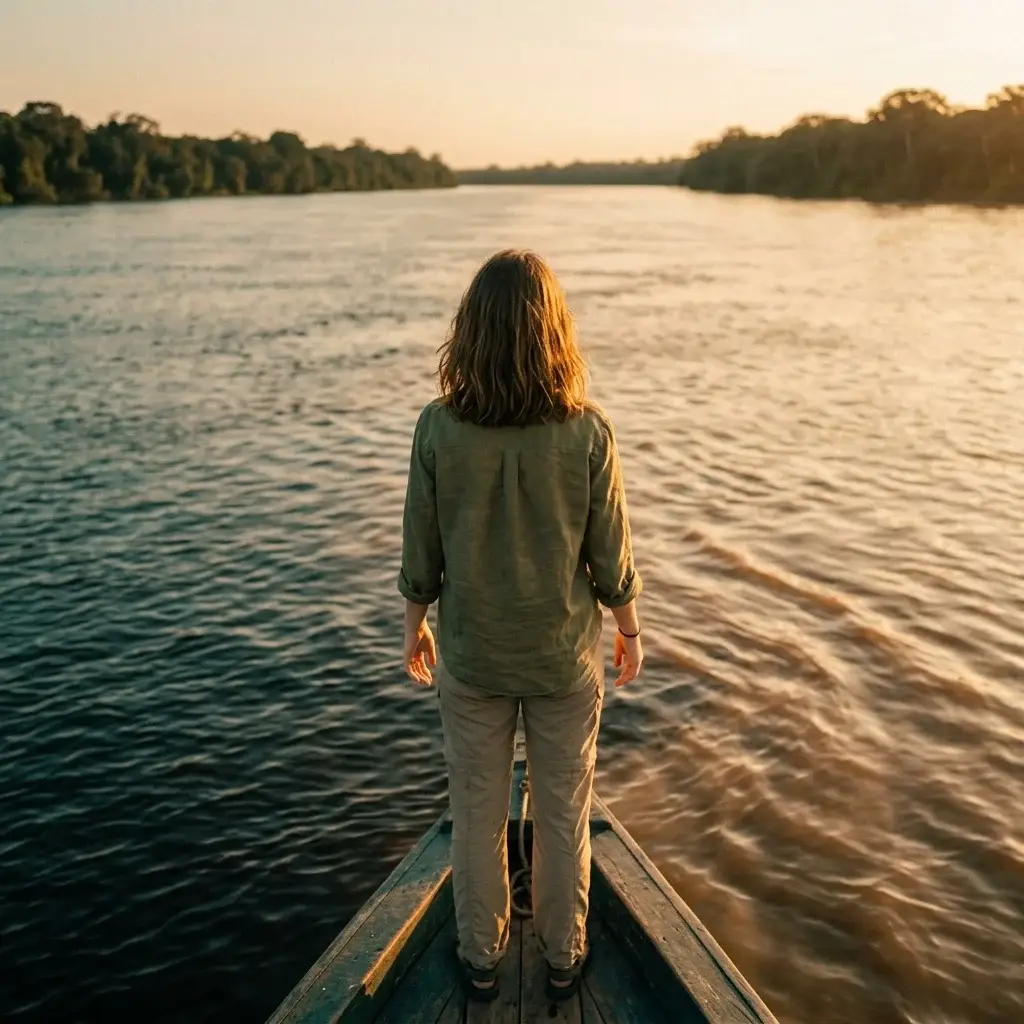
I still remember the first time someone casually said to me, “You should go to the Amazon.” I laughed it off. The Amazon felt like the kind of place that belonged to documentary filmmakers, scientists, or the rare explorer who had trained for it. Not someone like me, a girl from New York who had learned to love solo travel one uncomfortable trip at a time.
But here is the thing I have learned after years of chasing the world: the destinations that feel most out of reach are usually the ones most worth going to. And the Amazon Rainforest in Brazil is one of the most extraordinary, alive, and genuinely humbling places on this planet. It is also, with the right preparation and the right mindset, completely accessible to a first-time visitor.
This guide is for you if you have been staring at photos of the jungle for months, googling things late at night, and wondering whether you could actually do it. You can. Let me show you how.
Why the Amazon Deserves More Than a Passing Thought
The Amazon Rainforest covers roughly 5.5 million square kilometers across nine countries, and about 60 percent of that is in Brazil. Numbers that large stop meaning anything after a while, so let me try to frame it differently. The Amazon produces about 20 percent of the world’s oxygen. It is home to more species of birds, plants, fish, and insects than almost anywhere else on Earth. There are fish in its rivers that are larger than some humans, river dolphins that glow pink at dawn, trees that flood for months and still survive, and plants that Indigenous communities have used medicinally for thousands of years.
The Central Amazon Conservation Complex, a UNESCO World Heritage Site that spans more than six million hectares, is the largest protected area in the entire Amazon Basin. According to the UNESCO World Heritage listing for the Central Amazon Conservation Complex, the site protects rare and endangered species including the giant arapaima (the largest freshwater fish in South America), giant otters, the Amazonian manatee, the black caiman, and two species of freshwater river dolphins. Reading those words in a travel guide is one thing. Standing at the edge of a dark river channel at dusk and hearing something large move beneath the surface is something else entirely.
This is a place that will shift something in you.
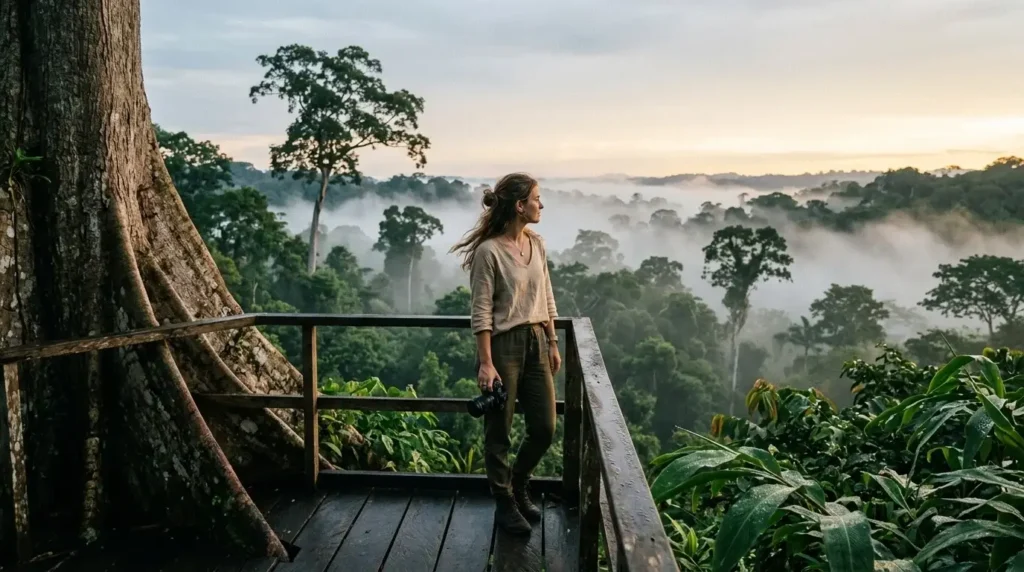
I believe that deeply, the way I believed it after living with a family in Ghana and realizing how much the world holds that no classroom can teach you. The Amazon is that kind of place.
The First Decision: Where Do You Actually Go?
One of the reasons people freeze when planning an Amazon trip is that “the Amazon” is enormous and vague. You need to pick an entry point, and the three main options for first-time visitors are Manaus, Belem, and Novo Airao.
Manaus is the most popular starting point, and for a first-time traveler, it makes the most practical sense. It is a city of more than two million people in the heart of the Amazonas state, with an international airport, established tour operators, jungle lodges accessible within a few hours by boat, and a solid infrastructure for tourism. The National Institute of Amazonian Research, known as INPA, is headquartered here, and you can actually visit their open-air grounds in the city to see Amazon wildlife including manatees and giant otters before you even head into the jungle. The INPA official site lists it as open to the public and it is a genuinely underrated stop, especially for first-timers who want some context before they go deeper.
Manaus is also the gateway to one of Brazil’s most remarkable natural phenomena: the Meeting of the Waters. Just outside the city, the dark, tea-colored Rio Negro meets the sandy-brown Solimoes River, and for several kilometers the two rivers run side by side without mixing, because of their different temperatures, speeds, and densities. Solo travelers consistently report that seeing it for the first time stops you cold, even if you’ve seen it in a hundred photos.
Novo Airao, about two hours west of Manaus by road or boat, sits on the edge of the Rio Negro and serves as the gateway to Anavilhanas National Park. The official Brazilian tourism authority describes Anavilhanas as an extraordinary place to stay, with ecolodges built on the banks of the Rio Negro offering immersive experiences like canoe trips through igarapes (narrow jungle waterways), night walks, and encounters with pink dolphins. According to Visit Brasil’s guide to Anavilhanas, the park contains roughly 400 islands and 60 lakes, and it is recognized as a UNESCO Natural Heritage Site. If your goal is deep jungle immersion without a massive city as your base, Novo Airao and an ecolodge near Anavilhanas is worth serious consideration.
Belem, at the mouth of the Amazon River near the Atlantic coast, offers a different kind of Amazon experience. It is culturally rich, with incredible food markets and a lifestyle deeply shaped by the river. But for first-time jungle seekers, it is less of an immediate wildlife hub than Manaus. Consider it for a follow-up trip.
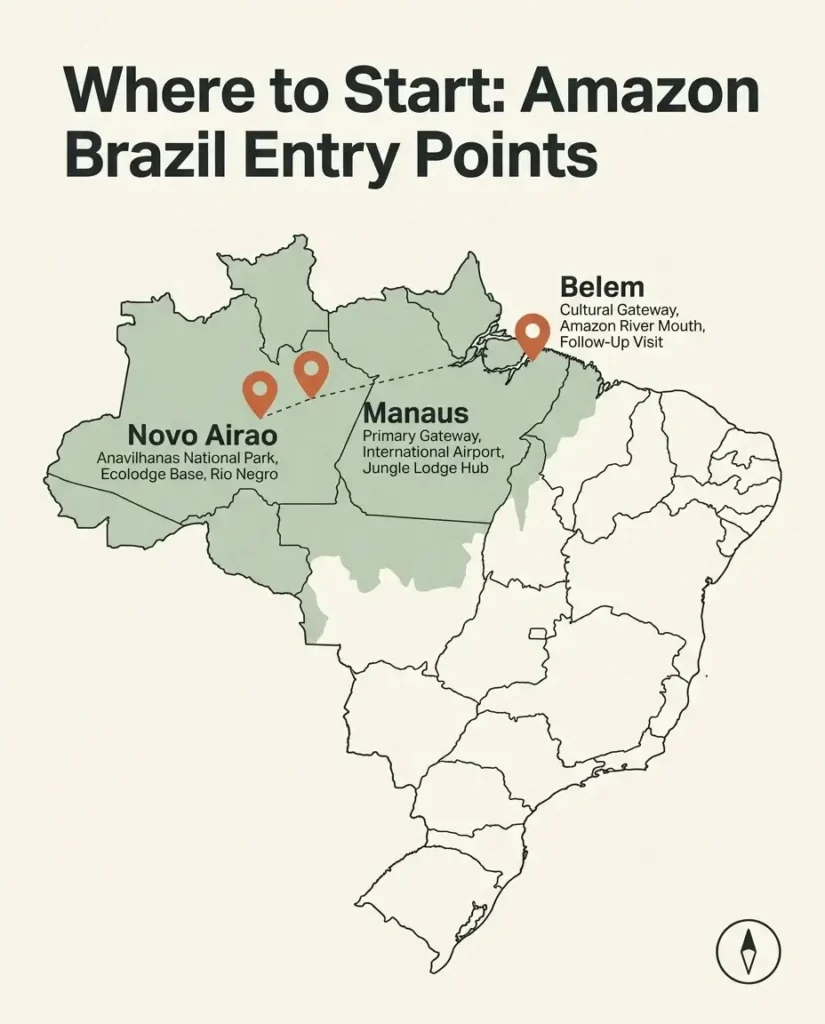
My recommendation for a first visit: fly into Manaus, spend a day or two in the city to get your bearings, then head out on a guided lodge tour for three to five nights.
How Long Do You Actually Need?
Solo travelers sometimes assume a weekend will do. It won’t. Getting to your jungle lodge alone takes time, whether that’s a two-hour boat ride, a combination of road and river travel, or a small prop plane to a more remote reserve. You want to give yourself at least three full days in the jungle, and five is better.
Here’s what solo travelers consistently find: the first day is adjustment. The heat, the sounds, the darkness at night, the sheer density of life around you. The second day you start to find your rhythm. By day three, you begin to understand the forest rather than just reacting to it. That is when the real magic happens. You won’t regret staying longer. You will regret cutting it short.
Most tour packages from Manaus run three, four, or five days and include river transfers, accommodation at a jungle lodge, three meals a day, and guided activities. Solo bookings through vetted operators are completely normal and widely available.
Choosing the Right Season
This is a topic that trips up a lot of first-timers because people assume the dry season is always better. The truth is more interesting than that.
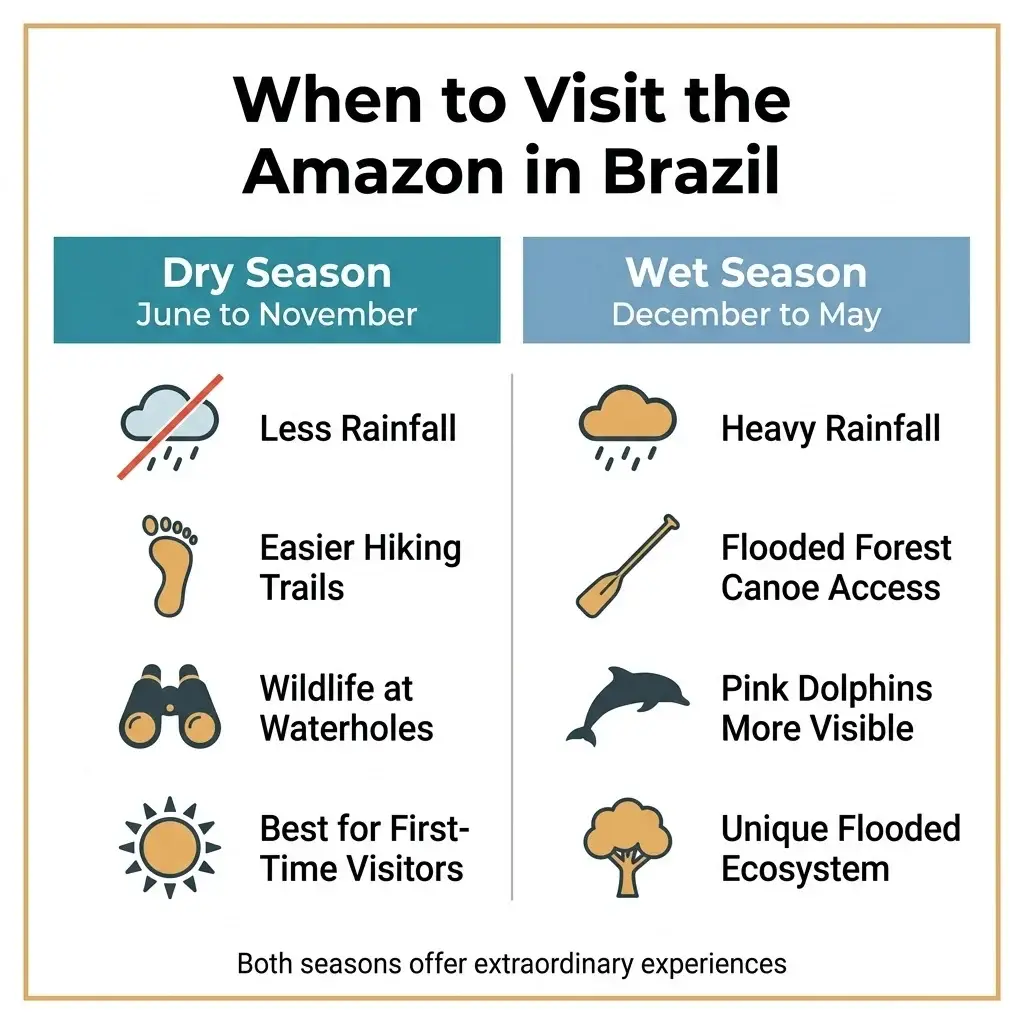
The dry season runs roughly from June to November, with August being the driest month overall. During this period, river levels drop, exposed beaches appear on sandbars, trails are more accessible by foot, and wildlife concentrates around remaining water sources. For hiking and land-based jungle activities, this is the easier season.
The wet season, roughly December to May, brings heavy rain and dramatically rising river levels. At peak flood, the Amazon basin can rise up to 10 to 12 meters, inundating the forest and turning the jungle into an inland sea. This sounds intimidating, but flooded forest is extraordinary. Canoes glide between the tops of submerged trees. Pink river dolphins often become more visible as the higher waters push them closer to the canopy. The forest becomes accessible in entirely different ways.
Neither season is wrong. Both are genuinely worth experiencing. For a first visit, the dry season from July through October offers slightly more predictable conditions and easier logistics, so that is a practical starting point.
The Wildlife You Actually Have a Chance of Seeing
Let’s be honest with each other here. The Amazon is not a safari park with animals posing along a road. Wildlife spotting requires patience, quiet, good light (dawn and dusk are your windows), a knowledgeable local guide, and a generous amount of luck.
That said, here is what solo travelers commonly encounter on multi-day guided trips in the Manaus area and Anavilhanas region.
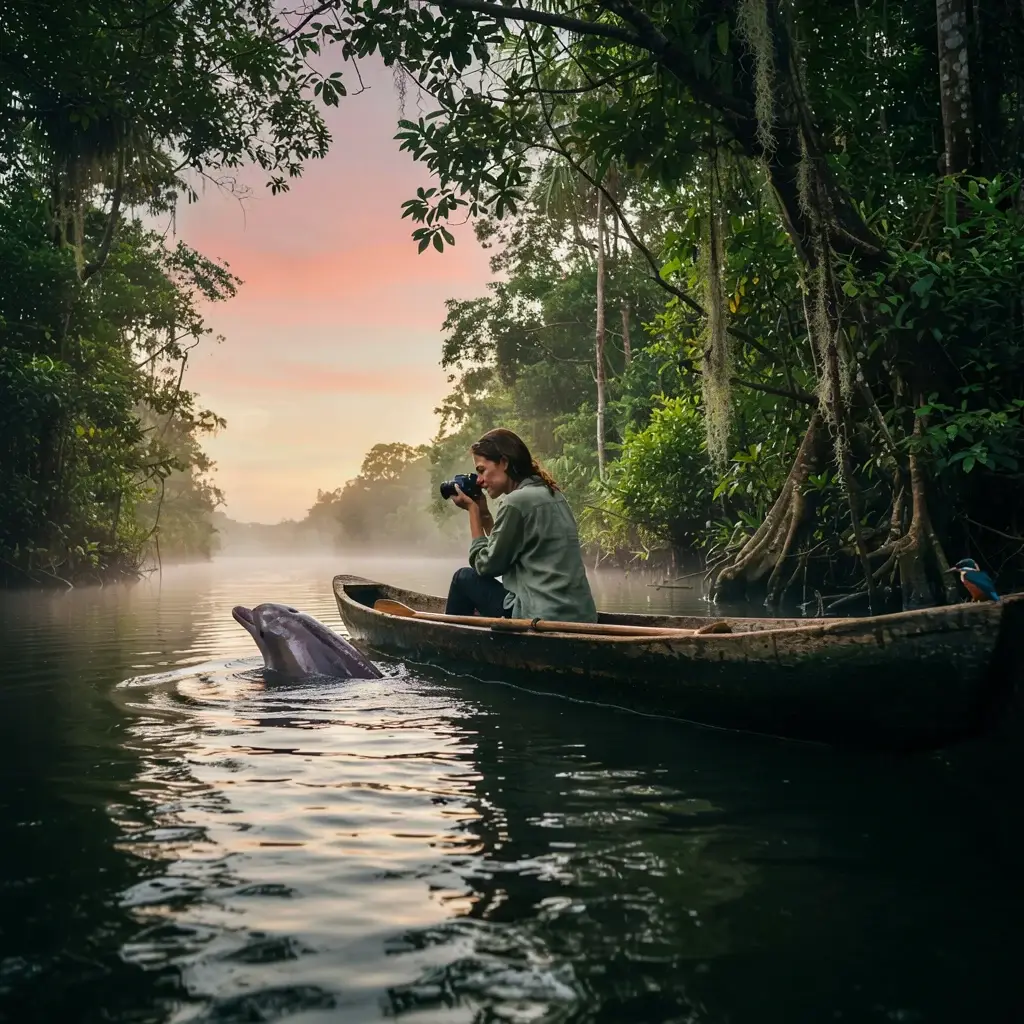
Pink river dolphins (boto) are one of the Amazon’s most iconic creatures. The Amazon river dolphin is the largest freshwater dolphin in the world, and according to WWF’s species profile on Amazon river dolphins, they live only in freshwater and are increasingly vulnerable due to dams and pollution. Spotting them in the wild, surfacing alongside your canoe at sunrise, is the kind of moment you carry home with you.
Caimans are almost a given on any night boat tour. Your guide will shine a torch across the river’s surface and those red eyes will appear, low in the water, watchful. Anacondas, macaws, toucans, electric eels, piranhas, and a dizzying number of primates are all real possibilities. You will hear far more than you will see, and that’s part of the experience. The Amazon sounds like no other place on Earth.
Guided Tours and Jungle Lodges: What to Know Before You Book
Please do not attempt to go deep into the Amazon without a reputable local guide. This is not fear-based advice. It is practical and responsible. The jungle is disorienting in ways that are difficult to explain until you are standing inside it. Everything looks the same. Sounds carry and distort. Trails vanish. A skilled local guide is also your key to actually seeing and understanding what surrounds you.
Here’s what to look for when vetting an operator from Manaus: check that they are registered with EMBRATUR (Brazil’s national tourism board) or have verifiable reviews on independent platforms. Ask specifically whether their guides are local and whether they work with community-based tourism initiatives. Community-embedded lodges and operators tend to provide more authentic experiences and contribute more directly to local livelihoods.
Standard lodge packages from Manaus typically run in the range of $100 to $300 USD per person per day depending on the level of comfort and remoteness, with the price usually including accommodation, meals, and guided activities. More remote or specialized experiences, like visits to the Mamirauá Sustainable Development Reserve, cost more and require advance planning.
Booking a few weeks in advance is generally fine for the dry season. For peak months like July and August, book further ahead.
Visas, Vaccinations, and Health: The Stuff You Cannot Skip
This section matters, and I want you to read it carefully.
Visa: As of April 10, 2025, U.S., Canadian, and Australian citizens are required to obtain an e-visa before traveling to Brazil. This is a significant change from previous years when these nationalities entered visa-free. According to the official notice from the U.S. Embassy in Brazil, the e-visa is available through the Brazilian government-authorized portal at brazil.vfsevisa.com. Apply well before your travel date, as processing times can vary. Most other European nationals currently still enjoy visa-free entry, but always check your country’s current status directly before booking.
Yellow Fever: This is the big one for Amazon travel, and it is non-negotiable. The CDC Travelers’ Health page for Brazil recommends the yellow fever vaccine for travelers aged 9 months and older visiting the state of Amazonas, which includes Manaus and the surrounding jungle areas. The vaccine typically requires 10 days to become fully effective, so plan ahead. Some countries also require proof of yellow fever vaccination if you arrive from Brazil, so carry your vaccination certificate.
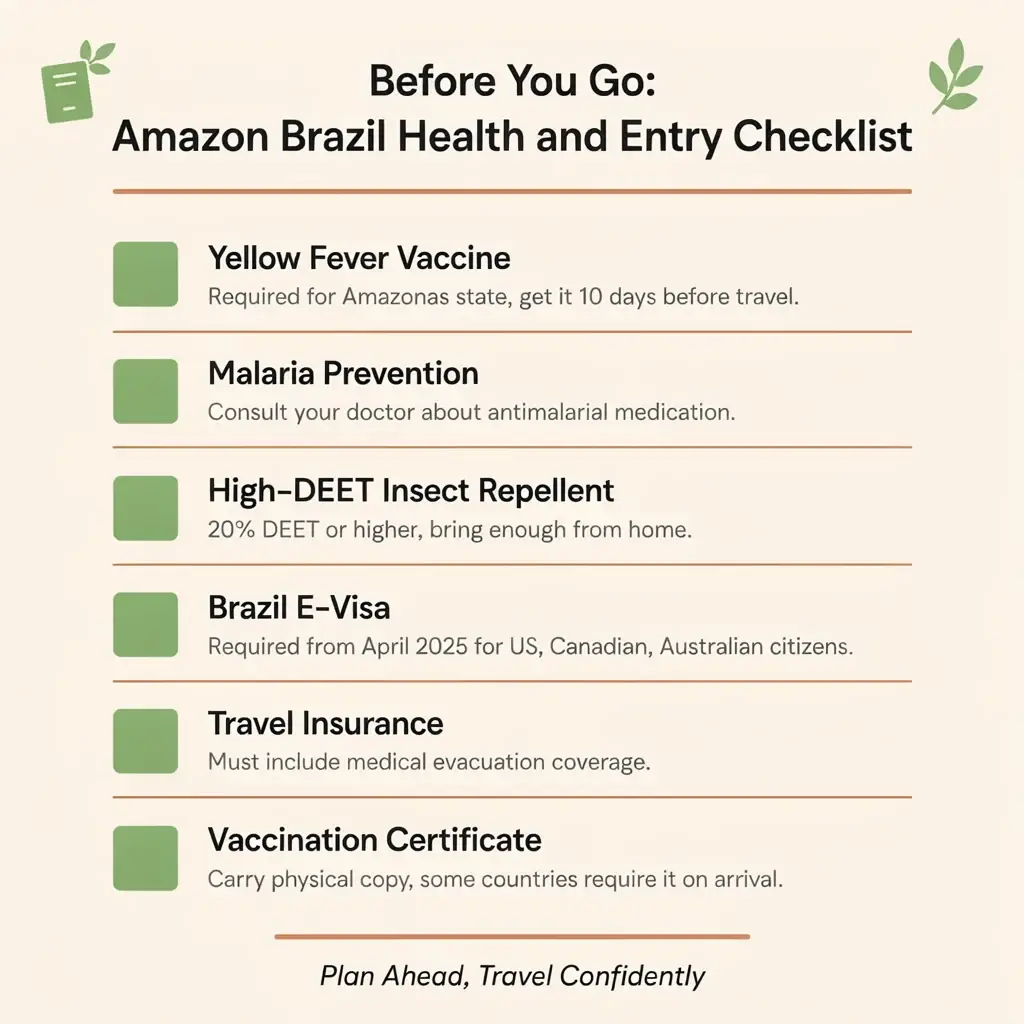
Malaria: The CDC also notes malaria risk in parts of Brazil’s Amazon region. Consult your doctor or a travel health clinic at least four to six weeks before departure about appropriate antimalarial medication.
Insects: This is going to be a constant reality of your trip, and there is no graceful way around it. High-DEET insect repellent (look for 20% DEET or higher) is essential. Bring it from home in adequate supply. Permethrin-treated clothing adds another layer of protection. Long sleeves and long pants at dawn, dusk, and during night activities are not optional recommendations. They are genuinely important.
Medical evacuation insurance: Buy it. Hospitals outside of Manaus city are limited. If something serious happens deep in the jungle, getting to proper medical care takes time. This is a jungle trip where good travel insurance with evacuation coverage is not a luxury.
What to Eat in the Amazon Region
One of the things that surprises first-time visitors most is how incredible the food is in the Amazon region. This is a cuisine built from the river and the forest, and it is unlike anything you will eat anywhere else in Brazil.
Tambaqui is the fish you need to order. It is a large freshwater fish from the Amazon River, often grilled over open fire, and the “ribs” cut is a local specialty in Manaus that solo travelers consistently rave about. It is rich, flavorful, and nothing like the fish you’ve had at home.
Tacacá is a shrimp soup from the northern Amazon states, served in gourd bowls as street food, made with tucupi broth (a fermented manioc derivative), dried shrimp, jambu leaves, and a small chili. The jambu numbs your tongue slightly, which sounds alarming but is actually a fascinating sensory experience that locals have been enjoying for generations.
Açai in the Amazon is nothing like the smoothie bowls you’ve had back home. Here it is thick, dark, unsweetened, and often eaten with manioc flour and fish. Tucuma is a small yellow-orange palm fruit with a rich, buttery flavor, often eaten in a sandwich with local cheese in Manaus. If you are in Manaus, the Adolpho Lisboa municipal market (also called Mercado Municipal) is one of the best places to eat your way through local flavors in a vibrant, authentic setting.
Packing Realities for the Amazon
Here’s the honest packing truth: you do not need expensive adventure gear, but you do need to think carefully about function over comfort. The Amazon is hot, humid, wet, and alive with insects at every hour of the day.
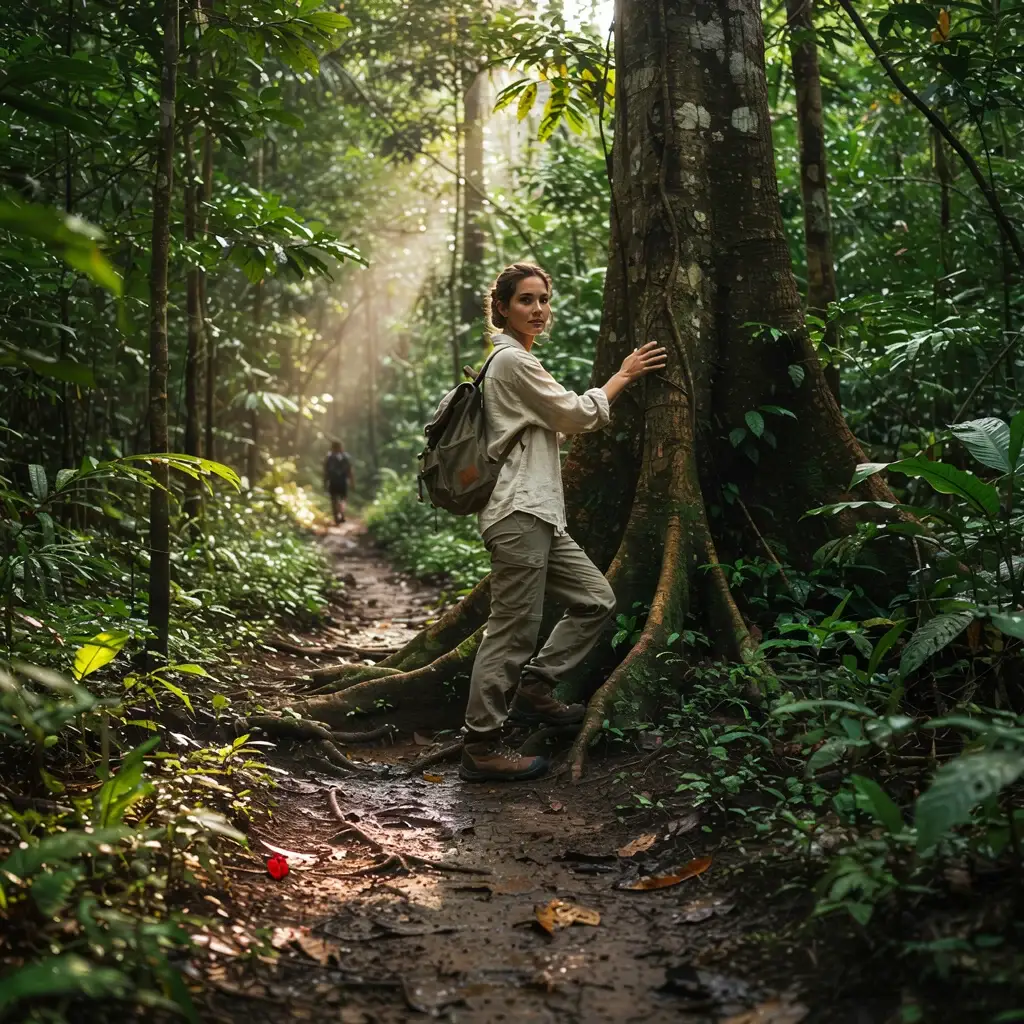
Pack light, breathable long-sleeve shirts and pants in neutral colors. Synthetic fabrics dry faster than cotton, which matters when everything gets damp from sweat and rain within hours. A lightweight, packable rain jacket is worth every gram of weight. Good waterproof sandals or quick-dry shoes with grip are more important than heavy hiking boots for most standard lodge-based jungle trips.
Carry your medications, insect repellent, sunscreen, and a personal first aid kit in your daypack. A headlamp is essential for night walks. Power banks are useful, as charging opportunities at remote lodges can be limited. A dry bag or several large zip-lock bags protect electronics and documents from boat spray and tropical rain.
Leave the valuables at home. The Amazon does not care about your watch.
What Surprised Solo Travelers Most
From everything solo travelers consistently report from their Amazon experiences, a few things come up again and again.
The silence surprises people. Not an absence of sound, but an absence of human-made noise. No traffic, no construction, no notifications. The soundscape of the jungle, the frogs, the birds, the water, the insects, is immersive in a way that feels almost physically different from normal life.
The dark surprises people. When there is no moon and no lodge lights nearby, the Amazon at night is the kind of dark that swallows you whole. And the stars above it are extraordinary.
The scale surprises people. You understand intellectually that the Amazon is vast. But standing on a riverbank at dawn with forest stretching in every direction to the horizon, you feel it in your body. And that feeling, that smallness inside something incomprehensibly alive, is exactly why you came.
A Note on Responsible Travel in the Amazon
The Amazon is one of the most ecologically critical places on Earth, and it is under genuine pressure. Choose operators that work with and support local and Indigenous communities. Avoid any tour that offers contact with wildlife in ways that cause stress to the animals, like holding wild caimans or getting in the water specifically to force contact with dolphins. Follow your guide’s instructions about waste, noise, and where to walk. Spend money at local markets and community-run businesses rather than importing everything from outside.
Responsible tourism in the Amazon is not complicated. It mostly comes down to traveling with humility, following local guidance, and leaving each place better for your presence than worse.
You Are More Ready Than You Think
I spent years walking tourists through the streets of New York, watching people experience a city for the first time. The look on their faces when they rounded a corner and the skyline appeared, that mix of disbelief and joy, never got old. I have felt versions of that look on my own face in Ghana, in Thailand, in China, in Europe. And I know, from everything that people who have made this trip describe, that the Amazon delivers that feeling in a way few destinations can match.
You do not need to be fearless. You need to be curious, to do your preparation honestly, and to be willing to say yes to the version of your life where you actually go. The jungle is waiting. And it has been waiting a long time.