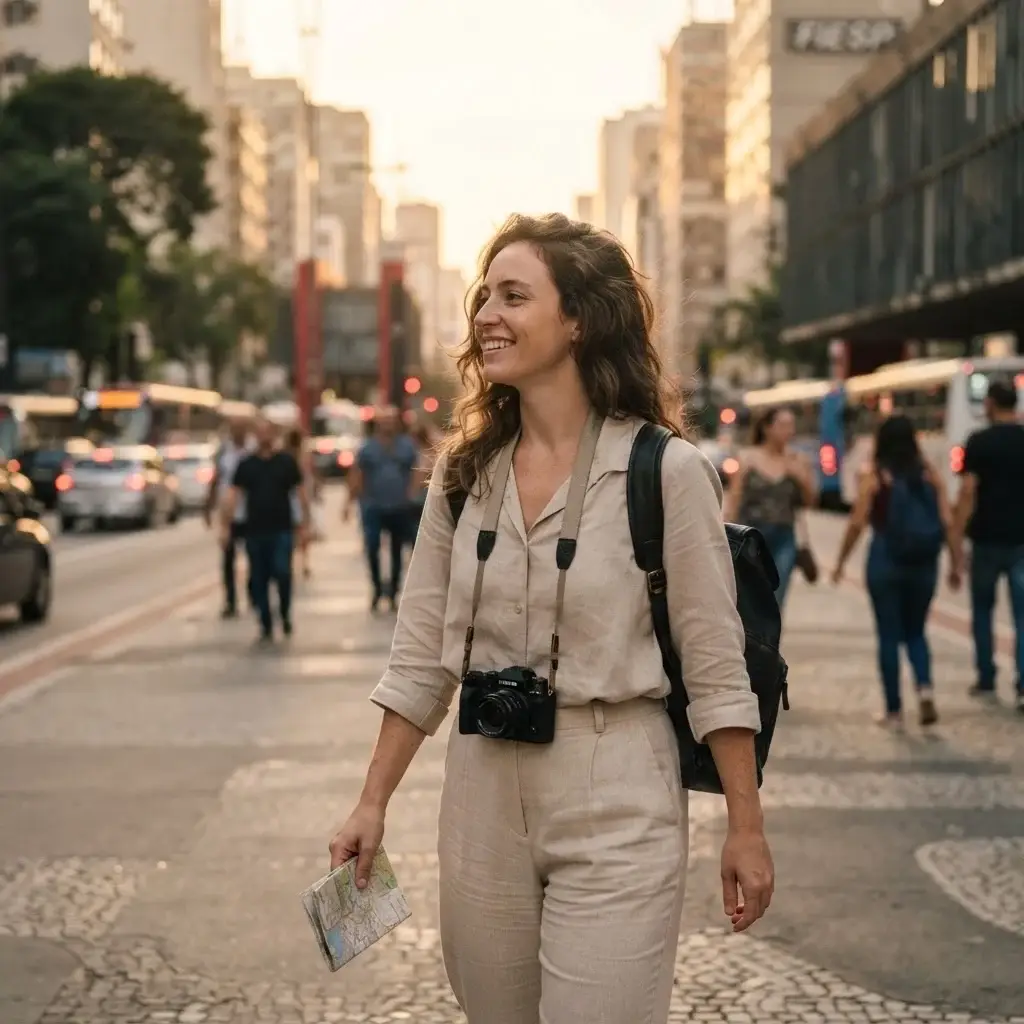
When I first left my corporate office job, I had this vision of travel being a slow, endless drift through quiet mountains. But life rarely happens that way. Sometimes, you only have 48 hours in a place that is bigger than most countries.
That is São Paulo.
Coming from New York, I thought I knew what a “big city” felt like. I spent years working as a sightseeing guide in Manhattan, leading groups through gridlocked streets and noise. I thought I was ready for anything. Then, I stepped off the plane in São Paulo, and the sheer scale of the concrete landscape made me stop dead in my tracks. It is massive. It is intense. And if you try to “see it all” in two days, you will end up exhausted, cranky, and missing the point entirely.
I learned the hard way that you cannot conquer a place like this. You have to let it happen to you. You have to pick a lane, breathe, and actually look at the things you choose to visit.
If you are feeling that nervous pit in your stomach about planning a trip to a place this big, I hear you. It is okay to be intimidated. But you don’t need a massive budget or a month of time to get to know this city. You just need a plan that respects the pace of the city and your own limits. Let’s break down how to explore São Paulo in a weekend without losing your mind.
Preparing for the City: Safety and Logistics
Before you even think about your itinerary, we need to talk about the practical stuff. I spent years learning that travel is only as fun as your preparation allows it to be. If you are stressed about logistics, you aren’t actually present in the moment.
First, your safety and entry requirements matter. Before you board your flight, it is always smart to check the latest travel advisories and entry requirements for Brazil so you know exactly what paperwork you need to have ready. Don’t skim this part. Being prepared makes you look confident, and confidence is your best tool as a solo traveler.
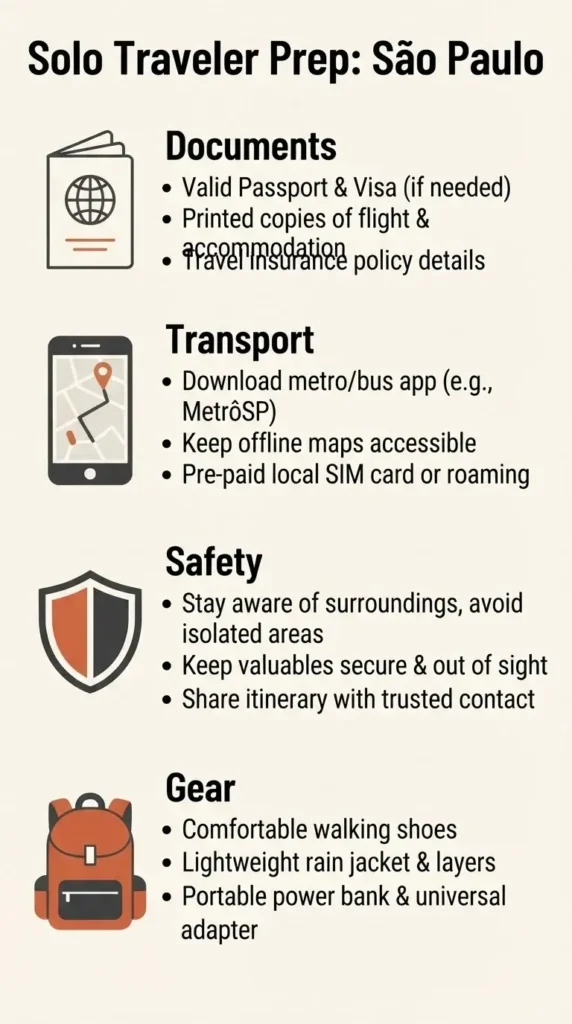
Once you land, the biggest challenge is simply moving through the city. São Paulo traffic is legendary—and not in a good way. It can be gridlocked at midnight. My biggest piece of advice is to use the subway system for long distances and ride-sharing for the “last mile” to your accommodation. When you need a reliable way to get from place to place, knowing how to use ride-sharing apps (even if they are local equivalents like Uber, which is widely used there) can save you hours of frustration. Just keep your phone tucked away while you wait for your ride; don’t flash it around on a busy street corner.
Regarding your health, it is easy to get caught up in the excitement and forget the basics. I always check the official health recommendations for travelers before I go to a new country. It helps me know if there are specific vaccines I need or if I should pack a basic first-aid kit. It is not about being paranoid; it is about being equipped so that if a stomach bug hits, you know exactly what to do.
The Philosophy of the Weekend Trip
Why do we travel? Most of us are looking for a break from the grind. But if you pack your weekend with twelve museums, six viewpoints, and a dozen restaurants, you are just recreating the pressure of your 9-to-5 life.
My philosophy is simple: Pick one neighborhood, or one theme, and stick to it. In São Paulo, I like to split the weekend into “The Pulse” (The center/city life) and “The Soul” (The parks and culture).
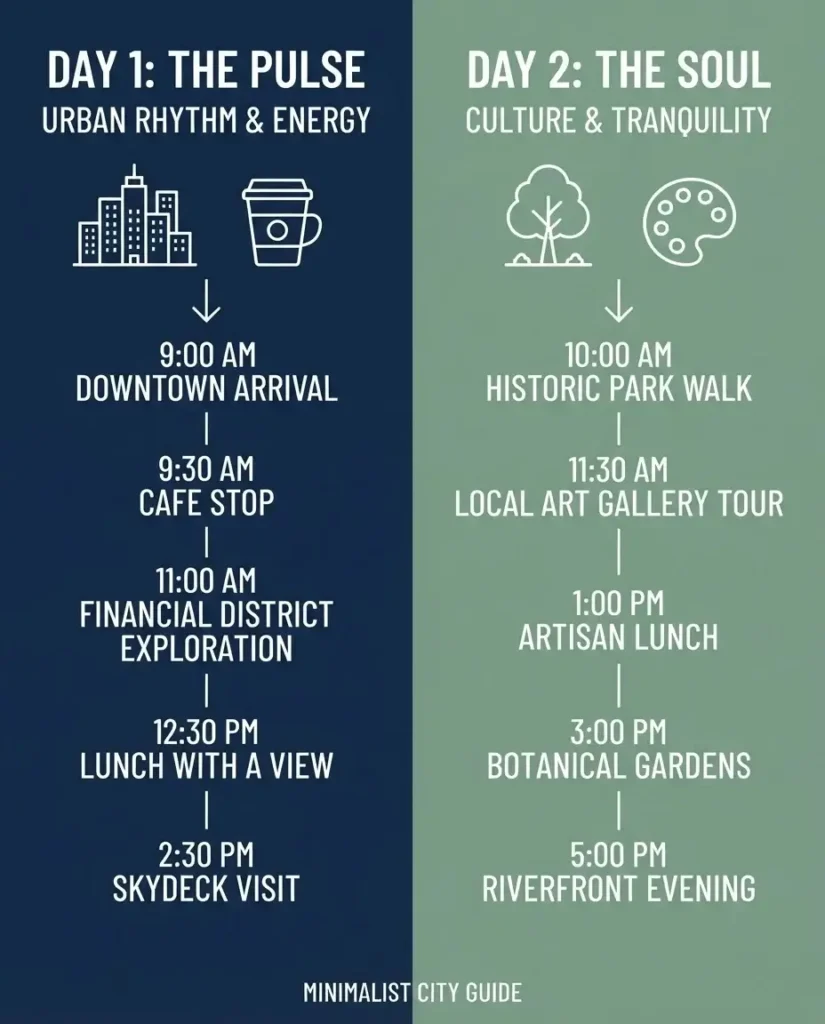
This isn’t about checking boxes. It is about sitting at a table long enough to actually taste the coffee. It is about walking a street long enough to notice the street art changes from one block to the next. If you find a park bench you like, stay there. You are not a machine. You are a human being on an adventure.
Day 1: The Pulse of the City
If you want to understand the rhythm of São Paulo, you have to start where the energy is highest.
Avenida Paulista
This is the spine of the city. On a Sunday, it is closed to cars, which is a magical experience. Thousands of people fill the street. There are musicians playing everything from samba to heavy metal. There are people dancing, families walking dogs, and street vendors selling handmade jewelry.
Start your morning here. Grab a pão de queijo (a warm, cheesy bread ball) from a street stall.
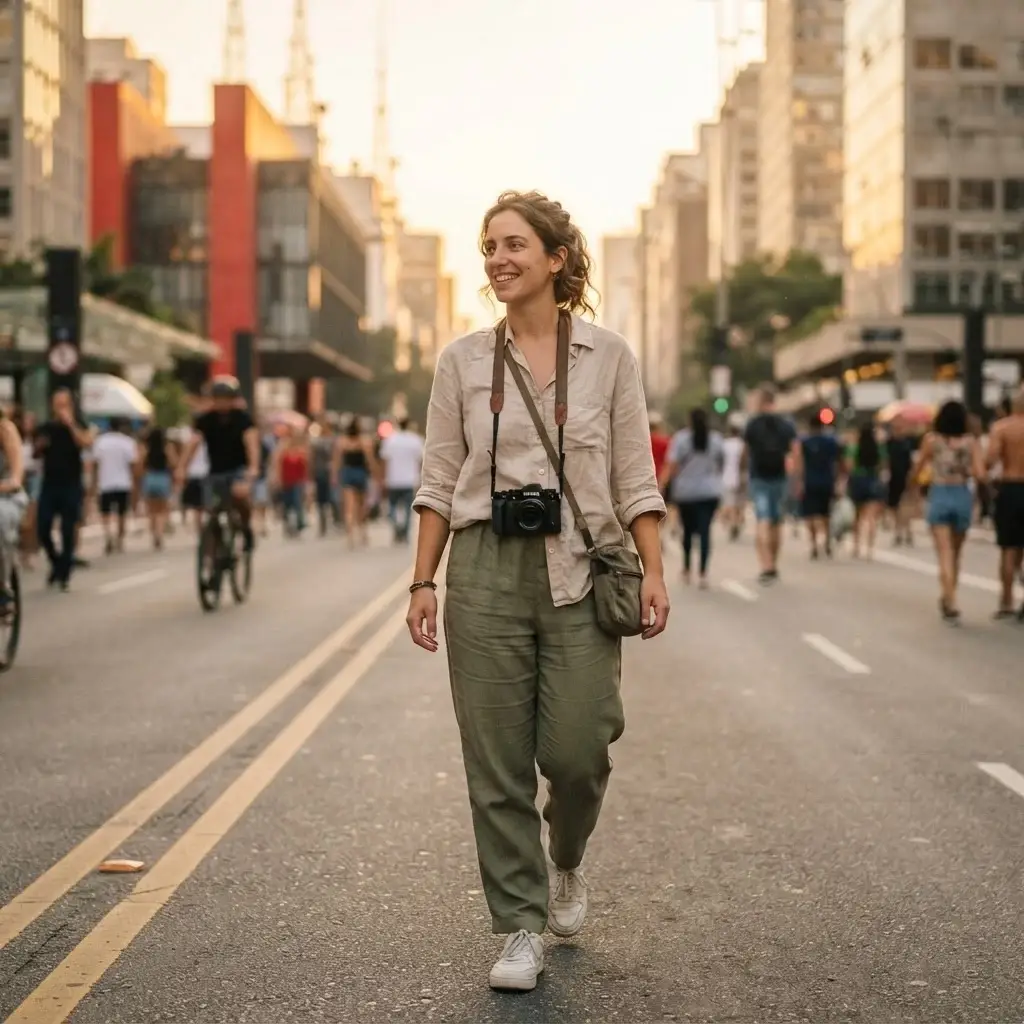
Do not look for a fancy cafe. Find the stall with the longest line of locals. That is where the quality is.
Walk the length of the avenue. It feels like a mix of Wall Street and a cultural festival. You will see grand, old houses tucked between towering skyscrapers. It is a visual lesson in how Brazil is constantly changing.
MASP (Museu de Arte de São Paulo)
You cannot miss the MASP building. It is held up by two massive red concrete pillars. It looks like it is floating. Even if you aren’t a “museum person,” you should go.
I don’t go to museums to memorize dates. I go to see what the people there cared about. The art here spans centuries, but pay attention to the Brazilian artists. They tell a story of a country that is wrestling with its history, its colonization, and its modern identity. It is a heavy, beautiful thing to witness.
Spend about two hours here. If you start to feel “museum fatigue,” leave. Go get a fresh coconut water on the street. Your brain needs a break to process what you saw.
Liberdade: The Japanese Quarter
By the late afternoon, your feet will be tired, and your hunger will be real. Take the subway to Liberdade. This is the largest Japanese community outside of Japan.
The aesthetic shift is jarring. One minute you are in a concrete jungle, and the next you are surrounded by red lanterns and torii gates.
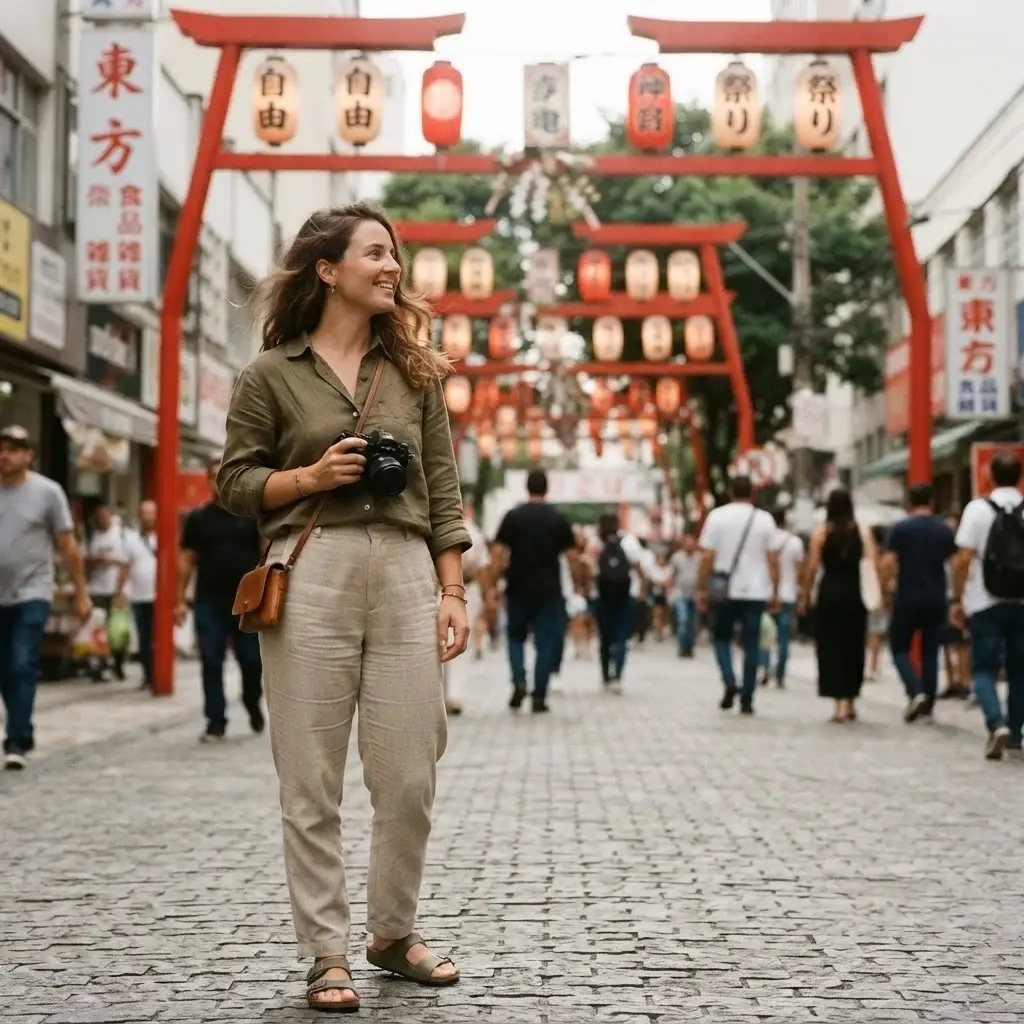
For dinner, do not go to the first place that looks like a tourist trap. Walk the side streets. Look for the places that have plastic menus or handwritten signs. I once sat in a tiny ramen shop where the owner spoke zero English, and I spoke zero Japanese or Portuguese at the time. We pointed at a picture of a bowl of soup. It was the best meal I had that entire year. That is the magic of solo travel—you are forced to connect in small, quiet ways.
Day 2: The Soul and the Greenery
After the intensity of the city center, your second day should be about breathing room.
Ibirapuera Park
This is the “Central Park” of São Paulo, but it feels different. It is more sprawling. It is where you see the city exhale.
Go early in the morning, around 8:00 AM. The air is cooler, and the locals are out running, cycling, and practicing yoga. Bring a book. Sit by the lake. This is a great time to practice some mindfulness.
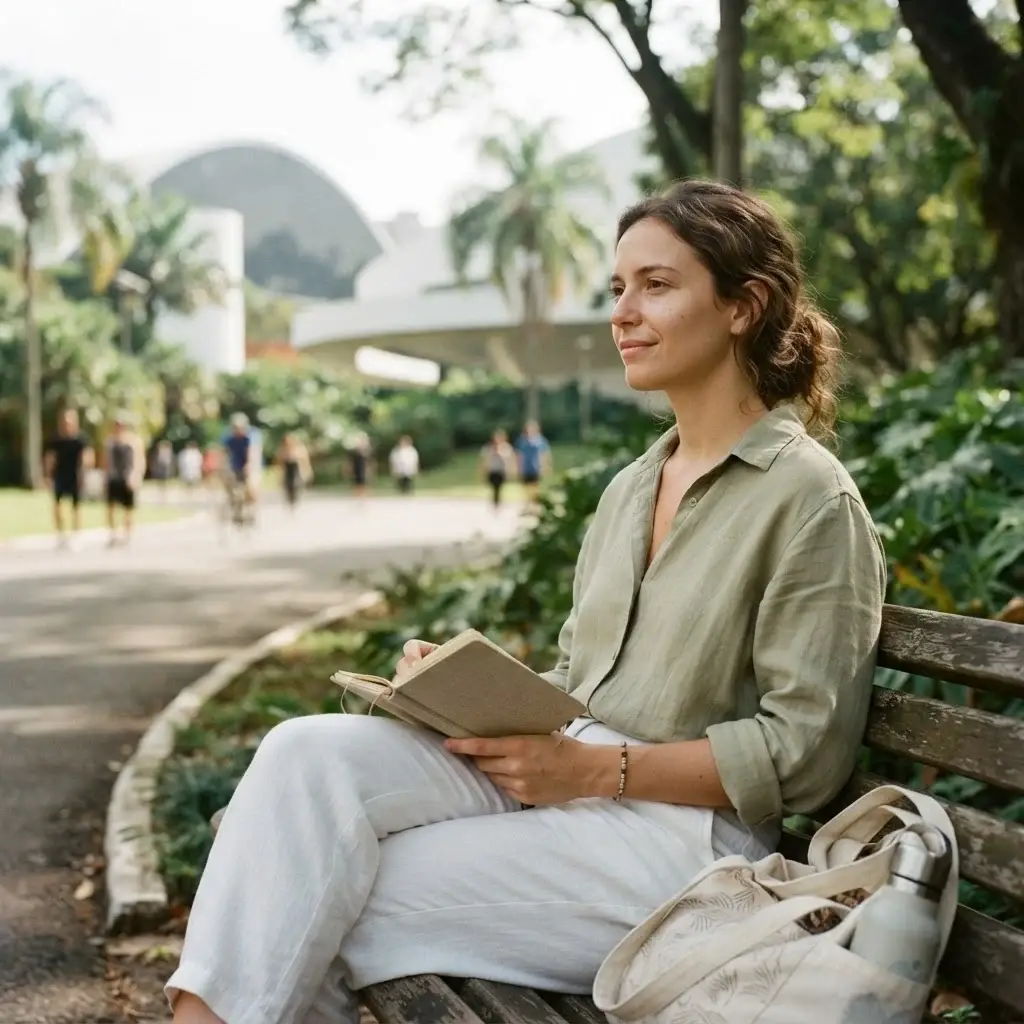
When I was teaching English in Thailand, I used to struggle with the silence of my own thoughts. I would fill every minute with podcasts or music. Learning to just sit in a park, in a foreign city, watching people live their lives—that was the moment I realized I had finally learned how to travel.
You don’t need a tour guide here. Just walk. Look at the architecture of the Oscar Niemeyer buildings scattered around the park. The curves and lines are famous for a reason.
Vila Madalena and Street Art
After lunch, head to Vila Madalena. This is the artistic heart of the city. The streets here are hilly and lined with boutique shops and cafes.
The main draw is the Beco do Batman (Batman’s Alley). It is an open-air art gallery.
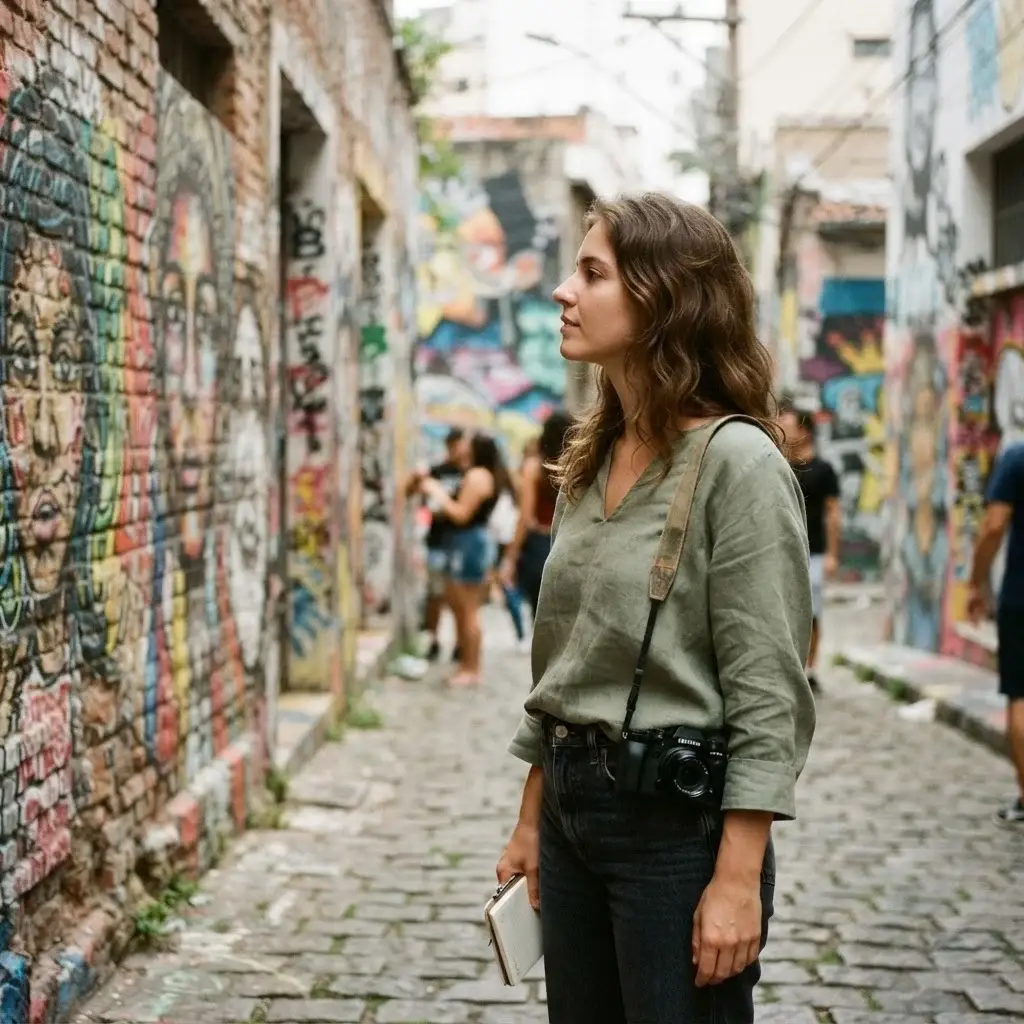
The walls are covered in ever-changing street art. It is vibrant, political, and loud.
Pro-tip: Don’t just walk through it. Stand there. Watch the locals taking photos. Listen to the conversations. Sometimes, street artists are there working on new pieces. If you see one, smile and nod. You don’t need to speak the language to show appreciation for their work.
If you are looking for a souvenir, this is the place to buy something from a local artist rather than a factory-made keychain. It supports the people who live here and gives you a story to tell when you get home.
Mercado Municipal (The Mercadão)
End your weekend at the central market. Yes, it is a bit touristy, but for a reason. It is beautiful. The stained-glass windows are stunning.
But go for the food. Specifically, go for the mortadella sandwich. It is legendary. They pile it so high with meat that you almost don’t know how to eat it. It is messy. You will probably get mustard on your shirt. That is part of the fun.
Take your time walking through the fruit stalls. They might offer you samples of exotic fruits you have never heard of. It is okay to try them. It is okay to say no, too. Just be polite.
Practical Tips for the Solo Traveler
Traveling solo isn’t just about safety; it is about mindset.
When I was waitressing to save money for my first big trip, I used to watch customers who were traveling. Some looked frantic, checking their watches, complaining about the food, acting like they were at work. Others looked calm. They took their time. They smiled at the waitstaff.
Be the second person.
Overcoming the “Fear of Missing Out”
We live in a world where we think we have to see everything to prove we were there. If you don’t go to the cathedral, did you really visit? If you don’t see the famous square, was it a waste?
No. A weekend is short. If you only visit the park and the museum, and you spend the rest of the time eating fruit and watching people, you have had a successful trip. You learned what the air felt like. You learned what the coffee tasted like. That is more valuable than a photograph of a landmark you didn’t even enjoy.
Safety and Confidence
I always get asked, “Emma, is it safe?”
The answer is: be smart, not scared. I carry my bag across my body, not on one shoulder. I keep my passport in my hotel safe and carry a photocopy. I don’t walk around with my headphones on, blasting music so I can’t hear my surroundings. I stay aware.
If you ever feel uncomfortable, trust that gut feeling. You don’t owe anyone your time or your conversation. If a situation feels “off,” walk into a shop, go to a crowded area, or just call a car to take you to your hotel. There is no shame in leaving a place that doesn’t feel right.
Packing Light for a Weekend
Since it is just a weekend, pack light. Do not check a bag. The less you have to carry, the more freedom you have.
Wear comfortable shoes. This is non-negotiable. You are going to be walking on uneven pavement and climbing hills in Vila Madalena. Leave the heels or the stiff dress shoes at home. You want to be able to jump on a bus or walk three miles without thinking about your feet.
Bring a small notebook. Write down one thing each day that surprised you. Was it a specific flavor? A way a stranger smiled at you? A sound on the street? These little moments are the ones you will remember in five years, not the landmarks.
The Reality of Solo Travel
I want to be honest with you. Solo travel is not always a glossy Instagram post. There will be a moment—maybe it will be on Saturday night when you are sitting alone at a cafe, or maybe when you get lost on the subway—where you will feel lonely.
That feeling is not a sign that you made a mistake. It is not a sign that you should go home.
It is a sign that you are pushing your boundaries. You are out of your bubble. You are experiencing the world on your own terms. Lean into that discomfort. It is the exact feeling of growth.
When I left my office job, I was terrified. I was giving up a steady paycheck for a life of uncertainty. But that uncertainty taught me that I am capable. I can navigate a subway system in a language I don’t speak. I can find my way home. So can you.
Wrapping Up Your Weekend
By the end of your Sunday in São Paulo, you won’t be an expert on the city. You won’t have seen everything. But you will have tasted the food, felt the energy, and stood in the presence of a truly magnificent, chaotic, beautiful place.
And that is enough.
Don’t go home wishing you had done more. Go home grateful for the tiny slice of São Paulo that you actually got to know. Keep that curiosity alive. The world is waiting for you to step out, and you don’t need a “perfect” moment to start. You just need to show up.