
I used to stand on the upper deck of a bright red tour bus, shouting into a microphone over the roar of Manhattan traffic. As a certified New York sightseeing guide, I watched thousands of visitors rush through my hometown every single week. They looked exhausted. They carried giant paper maps, ran from the Empire State Building to Times Square, yelled at their kids, and checked items off a massive list like they were working a second job. They were on vacation, but they were deeply stressed out.
Before that, I worked a traditional 9-to-5 office job in a gray cubicle. I saved my limited vacation days like gold pieces. When I finally got a week off, I used to do the exact same thing. I would fly to a new city and try to see every single museum, church, park, and monument in forty-eight hours. I thought that was how you traveled. I thought if I did not see everything, I wasted my money.
But I always came home needing a vacation from my vacation. My feet were covered in blisters, my bank account was empty, and I could barely remember the faces of the people I met.
Eventually, I left that corporate grind behind. I spent months waitressing to save every penny, taught English in Thailand, and backpacked solo across different continents. Those raw, beautiful experiences taught me a massive lesson: travel is not a race. The secret to enjoying a massive, busy city is not running faster. It is slowing down.
If you are currently sitting at home, daydreaming about your next adventure but feeling completely overwhelmed by the planning process, this guide is for you. You do not have to come home exhausted. I am going to show you exactly how to plan a stress-free city trip by changing the way you look at a map and a calendar.
The Mental Shift: Why the Checklist is Your Enemy
Most people start planning a trip by opening a search engine and typing in “top ten things to see.” Suddenly, you have a list of ten massive attractions scattered all over a huge metro area. You start trying to fit them into a tight grid. You schedule museum visits at 9:00 AM, lunch at 12:30 PM, a walking tour at 2:00 PM, and a boat cruise at 5:00 PM.
This is the fastest way to ruin a trip. When you plan this way, you are not exploring. You are managing logistics. If the subway runs five minutes late, your entire afternoon is ruined. If you find a beautiful outdoor cafe and want to sit and watch the world go by, you cannot, because your phone alarm is telling you to run to the next monument.
To learn how to plan a stress-free city trip, you must drop the checklist. Accept right now that you will not see everything. In fact, seeing fewer things deeply will give you much better memories than catching a two-second glimpse of twenty different buildings. When I stopped trying to see everything, I finally started experiencing the true spirit of the places I visited.
Choose One Neighborhood as Your Base Camp
When you visit a massive city, do not look at the whole map at once. That is an easy way to feel stressed. Instead, pick one specific neighborhood to be your home base. Spend your time getting to know that single area inside and out.
Let us look at a real example. If you are heading to Bangkok, Thailand, the city can feel completely wild and fast. Many tourists try to stay right in the middle of the massive modern shopping districts like Sukhumvit, where the concrete towers go on forever. But if you want a calmer experience, you can choose a base camp in the older parts of the city, like the historic Rattanakosin area near the river.
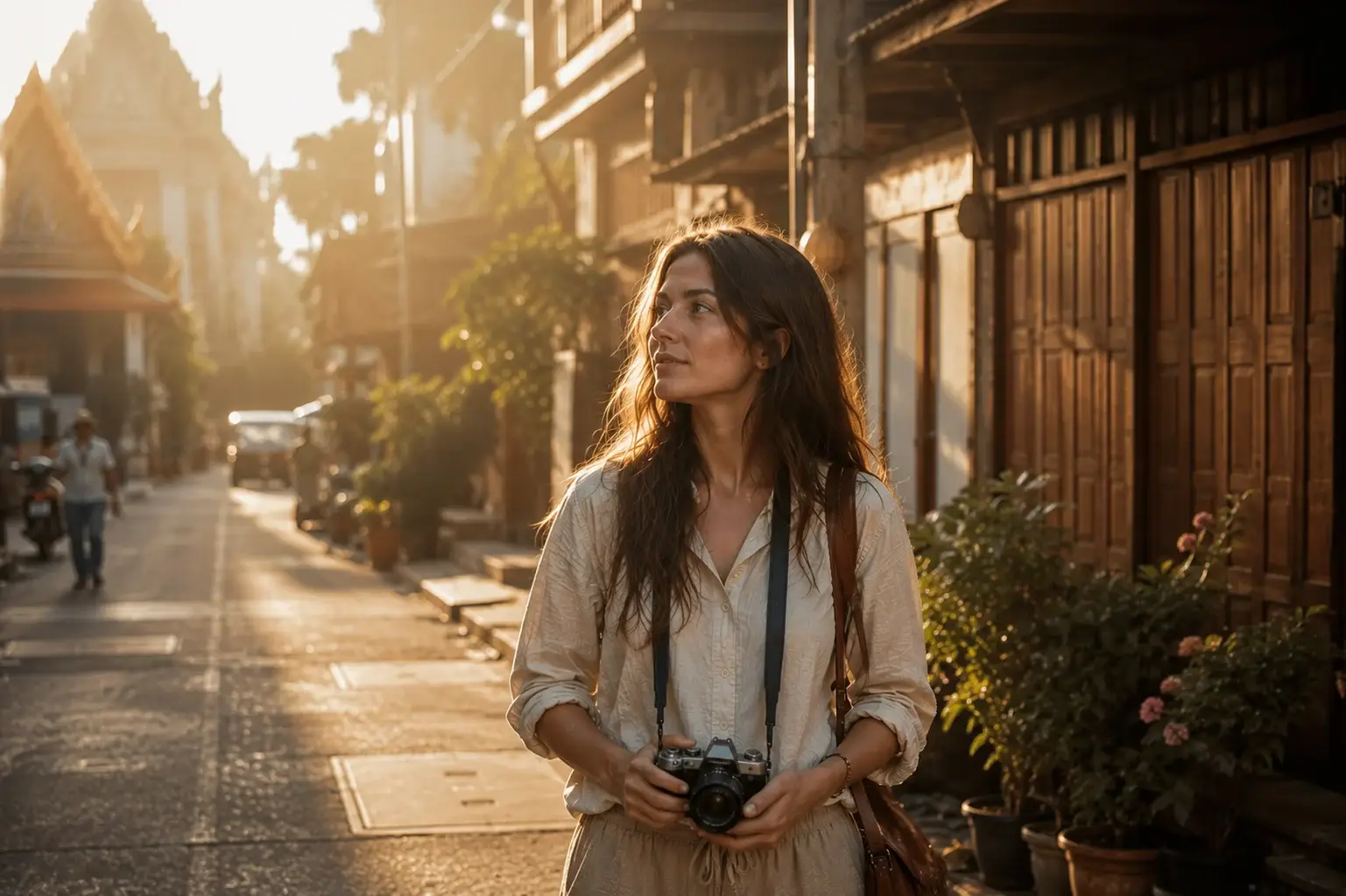
Staying in an older, slower neighborhood changes your entire day. You can wake up early and walk down quiet side streets, called sois. You can see the morning light hit the old buildings without thousands of people blocking your view.
Finding the Right Base Camp
When you choose a neighborhood, look for these three things:
- A local fresh food market within walking distance.
- A small, family-owned coffee shop or breakfast stall.
- Easy access to one reliable form of public transit.
The Power of Becoming a Regular
When you stay in one area and slow your pace, an amazing thing happens. You become a regular customer at the local spots. By day three, the person selling fruit on the corner recognizes your face. The person making your morning coffee knows exactly how you like it. This creates a deep feeling of safety and comfort, which is incredibly important if you are building your solo travel confidence. You stop feeling like an outsider looking through a window. You start feeling like you belong.
Master Local Transit Without the Panic
Nothing makes a traveler panic quite like standing in a crowded transit station, staring at a giant colorful map with words you cannot read, while hundreds of locals push past you. I used to see this every day when I worked in New York. Tourists would freeze at the subway turnstiles because they did not know how to buy a card.
Navigating a new city does not have to be scary. The trick is to study the transit system before you leave your house. Do not wait until you are standing on a hot platform with a heavy backpack.
Before you fly out, look up the official transit website for your destination. Download the transit app onto your phone. Many modern cities allow you to pay for buses and trains simply by tapping your regular credit card or phone at the gate. Knowing this simple detail ahead of time saves you from waiting in long ticket lines.
Navigating Safely and Comfortly
If you are visiting a city in Southeast Asia, using standard street taxis can sometimes feel stressful because of language barriers or broken meters. To make your life much easier, download the official ride-sharing apps used by locals. For instance, you can check out how the Grab official app works to see how simple it is to book a ride with a fixed price directly on your screen. This completely removes the need to argue about taxi prices, which keeps your stress levels low.
When you do take the subway or bus, try to avoid the peak rush hours. In most major international cities, trains are packed tight between 8:00 AM and 9:30 AM, and again between 5:00 PM and 6:30 PM. If you travel during the middle of the day, you will easily find a seat, the stations will be quiet, and you can look out the window to see how the city connects together.
The “One Big Thing” Daily Rule
If you take only one piece of advice from this entire article, let it be this one: schedule only one big thing per day.
That is it. One major activity. This could be a visit to a famous art museum, a guided walking tour, or a trip to a historic palace. Put this one activity right in the middle of the morning when your energy levels are high.
Once that one activity is finished, your planned schedule for the day is officially completely over. The rest of the afternoon is a blank canvas. You are completely free.
How to Spend an Open Afternoon
What do you do with all that free time? You let the city guide you.
- Follow your nose: If you smell fresh bread cooking down an alley, walk down that alley.
- Sit on a park bench: Sit down for a full hour without looking at your phone. Watch how the locals talk, what they wear, and how they interact with each other.
- Get lost on purpose: Walk down streets that do not have any souvenir shops. Look at the local houses, the grocery stores, and the everyday life happening around you.
When I taught English abroad, my favorite days were always my days off when I had absolutely zero plans. I would walk out of my room, turn left instead of right, and just see where the road took me. I discovered secret noodle stalls, tiny hidden temples, and beautiful quiet parks that were never mentioned in any mainstream travel guide. Those are the moments that stick with you for life.
Eating Like a Local: Food as a Slow Experience
When you are rushing through a city trip, food becomes nothing more than fuel. You grab a cold sandwich from a chain store or sit at a tourist-trap restaurant right next to a famous monument where the prices are double and the food is boring.
When you slow your pace, eating becomes the main event. It becomes a wonderful way to learn about the local culture.
Instead of looking for restaurants with English menus and glossy pictures of food outside, look for the places that are packed with local residents. If you see a long line of office workers waiting outside a tiny, plain-looking diner at lunchtime, get in that line. They know where the good food is.
Exploring Street Food Comfortably
If you are traveling through Thailand or other vibrant parts of Asia, street food is where the real magic happens. Do not be afraid of it. Look for stalls where the cook is preparing the food right in front of your eyes over a hot flame.
Try classic dishes like hot boat noodles, fresh papaya salad, or authentic pad thai. If you want to learn more about the local food traditions, timing, and amazing seasonal food celebrations, you can browse the official resources on the Tourism Authority of Thailand site to get great ideas for your daily food walks.
Eating this way forces you to slow down. You sit on a small plastic stool on the sidewalk. You hear the sounds of the street. You smell the lemongrass and chili peppers in the air. You might not speak the same language as the person sitting next to you, but when you both smile over a delicious bowl of food, you are connecting with the culture in a real, beautiful way.
Navigating Health and Safety Calmly
Fear is the main reason people hesitate to plan a city trip. They worry about getting sick, getting lost, or encountering unsafe situations. These fears are normal, but you can easily beat them by being prepared.
Staying safe does not mean you have to be scared. It just means you need to make smart, quiet choices. When you are in a crowded area, keep your bags closed and hold them in front of your body. Do not carry all your money and your passport in one pocket. Keep a backup copy of your important documents online.
Staying Healthy on the Road
Your health is the most important part of a stress-free trip. If you feel sick or exhausted, you cannot enjoy the city. Before you fly to a new country, it is a very smart idea to read the official health advisories and vaccine recommendations provided by the CDC Travelers’ Health page so you know exactly how to protect your body while exploring new regions.
Knowing the local health rules helps you pack the right medicines and travel with an open, relaxed mind. If you do get a small cold or an upset stomach while traveling, do not panic. Sit down, drink plenty of clean bottled water, rest in your room for a few hours, and let your body adjust to the new environment. Skipping half a day of sightseeing to sleep is not a waste of time. It is exactly what your body needs to stay strong for the rest of the journey.
Dealing with Entry Rules and Documentation
Another major source of travel anxiety happens before you even board the airplane. People worry about visas, passport rules, and border control. The rules can change quickly, and reading random travel forums online can often give you incorrect or old information that makes you worry for no reason.
Always get your legal entry information straight from the top sources. If you are an American citizen planning an international trip, you should check the official country entry requirements and current travel warnings on the US Department of State Travel website before you book your flights.
Checking these official details early ensures your passport has enough empty pages and is valid for at least six months past your travel dates. Once you know your paperwork is completely correct, that heavy weight of worry will instantly lift off your shoulders, leaving you completely free to focus on the fun parts of planning.
Finding Quiet Spaces in Concrete Jungles
Even if you follow all these rules, big cities can still feel very loud and intense sometimes. The constant sound of car horns, bright lights, and moving crowds can tire out your brain.
To keep your city trip stress-free, you must build quiet zones into your day. Every major city has them, you just have to look a little harder to find them.
Where to Find Peace in the City
- Botanical Gardens and Central Parks: These spaces are built specifically to give people a break from the concrete. Spend an hour walking among old trees and green grass.
- Libraries and Bookstores: Local public libraries are completely free, beautifully quiet, and filled with local history.
- Historic Courtyards: Many old cities have hidden courtyards behind the main street walls. Walk through open stone archways to find quiet places where the street noise completely disappears.
If you love history and want to find beautiful, protected areas that celebrate human culture and nature, you can search the official UNESCO World Heritage directory to locate famous, preserved historic sites in the city you are visiting. Spending a quiet afternoon walking through a beautifully preserved historic district or ancient temple compound is a wonderful way to ground your mind and escape the modern traffic chaos.
Preparing for the Unexpected
When I first left my office job to travel full-time, I thought a perfect trip meant a trip where nothing went wrong. I quickly learned that an unexpected turn of events is actually where the real adventure begins.
You might miss a train. It might rain heavily on the day you wanted to walk across a famous bridge. A museum you wanted to visit might be closed for repairs.
When these things happen, take a deep breath and smile. It is not a disaster. It is just a plot twist in your travel story.
If a sudden rainstorm starts, do not run back to your hotel room feeling sad. Duck under the awning of a local cafe. Order a hot drink and a pastry. Watch how the city changes when it rains. Look at the reflections of the lights in the puddles on the ground. Some of my favorite travel memories happened because my original plans completely failed, forcing me to try something new.
Protecting Your Trip and Your Peace of Mind
To help you feel completely safe when plans change or emergencies happen, it is always a wise choice to invest in good travel protection. You can explore the independent guides and safety resources on the World Nomads Travel Insurance site to learn how standard emergency coverage works for independent travelers. Having a good backup plan means you can walk through any city knowing that you are fully supported if a real problem happens.
Developing Solo Travel Confidence One Step at a Time
If you are planning your very first solo city trip, it is completely normal to feel a little bit scared. You might wonder if you are brave enough or smart enough to handle a massive city all by yourself.
I want to tell you something important: confidence is not something you are born with. It is something you build, piece by piece, through taking action.
You do not have to be perfectly brave on day one. Start with tiny, easy steps. On your first morning, just focus on walking from your hotel room to the coffee shop on the corner. That is your only goal. Once you do that successfully, you will feel a little bit stronger.
Next, try taking the train just two stops down the line to a quiet park. By breaking the massive city down into tiny, manageable pieces, you realize that you are fully capable of handling whatever comes your way.
If you ever feel lonely or overwhelmed while exploring on your own, remember that you can always look up great destination overviews and community travel advice on the Lonely Planet main site to get fresh inspiration and reliable orientation tips for the city you are navigating. Knowing you have a wealth of world-class knowledge right in your pocket helps you step out of your comfort zone with a warm, steady heart.
Your Invitation to Slow Down
Planning a stress-free city trip is not about buying expensive VIP tickets or staying in isolated luxury resorts. It is about giving yourself the priceless gift of time.
It is about choosing to see one beautiful neighborhood deeply instead of ten tourist traps quickly. It is about stopping to taste your food, talking to the locals, and allowing yourself to get lost in the beautiful, winding streets.
So, take a deep breath. Close those stressful ten-page itineraries. Pick one incredible city, find a cozy local neighborhood to be your home base, and promise yourself that you will slow down. The world is waiting for you, and it rewards the curious, the patient, and the brave.



