Where to Travel in the Americas if You Care About the Planet

I remember standing on a street corner in Manhattan, pointing tourists toward glass-and-steel skyscrapers, and feeling this quiet itch in the back of my mind. Not about leaving New York, but about what travel could actually be for. What should it give back? Who does it serve? Those questions followed me through the years I spent backpacking Europe and living with a family in Ghana, and they still shape how I think about every trip I plan or recommend today.
So when readers ask me about sustainable tourism in the Americas, I feel that question deeply. It is not just about picking a destination with a rainforest photo. It is about figuring out which places are actually doing the work, which experiences are genuinely good for local communities and ecosystems, and how a solo traveler or first-timer can tell the real thing from a glossy brochure. The Americas are extraordinary for this. From Central American cloud forests to Andean ruins to Caribbean reefs, this region is home to some of the most serious and innovative sustainable tourism programs on the planet. Here is an honest, practical look at where to go, what to actually do there, and how to make sure your trip counts.
What “Sustainable Tourism” Actually Means (and Why It Matters)
Before diving into specific countries, it is worth being clear about what we are actually talking about, because “sustainable” and “eco-friendly” get plastered onto everything from luxury treehouses to fast-fashion packing guides. Real sustainable tourism, at its core, does three things. It protects the natural environment. It supports local economies and communities. And it preserves cultural heritage rather than commodifying it.
The good news is that for the Americas, the Sustainable Destinations Alliance for the Americas has been working with destinations across the region to create structured frameworks for measuring and improving sustainability standards. Countries like Costa Rica have even created internationally recognized certification systems you can check before you book. The bad news is that greenwashing is real, and it is widespread. My rule of thumb: if a lodge or tour operator cannot point you to a third-party certification or a specific government-recognized rating, treat the “eco” label with healthy skepticism.
Costa Rica: The Country That Wrote the Rulebook
If sustainable tourism had a home base in the Americas, most experts and travelers would point to Costa Rica. And for good reason. About 30% of the country’s territory is protected natural land, including national parks and wildlife preserves. The country runs on nearly 99.5% renewable energy, sourced from hydroelectric, geothermal, wind, and solar power. That is not a marketing claim, it is a genuinely remarkable national achievement.
What makes Costa Rica stand out for the practical traveler is not just what the country has done, but how easy it is to participate in it properly. The Costa Rica Tourism Board developed the Certificate for Sustainable Tourism (CST), a rigorous national program that rates lodges and tour operators on environmental practices, cultural respect, and community benefit. It uses a BASIC and ELITE classification that you can check before you book anything. You can explore the full sustainability framework on the official Visit Costa Rica site, which also includes tips for responsible behavior in protected areas and a searchable directory of CST-certified providers.
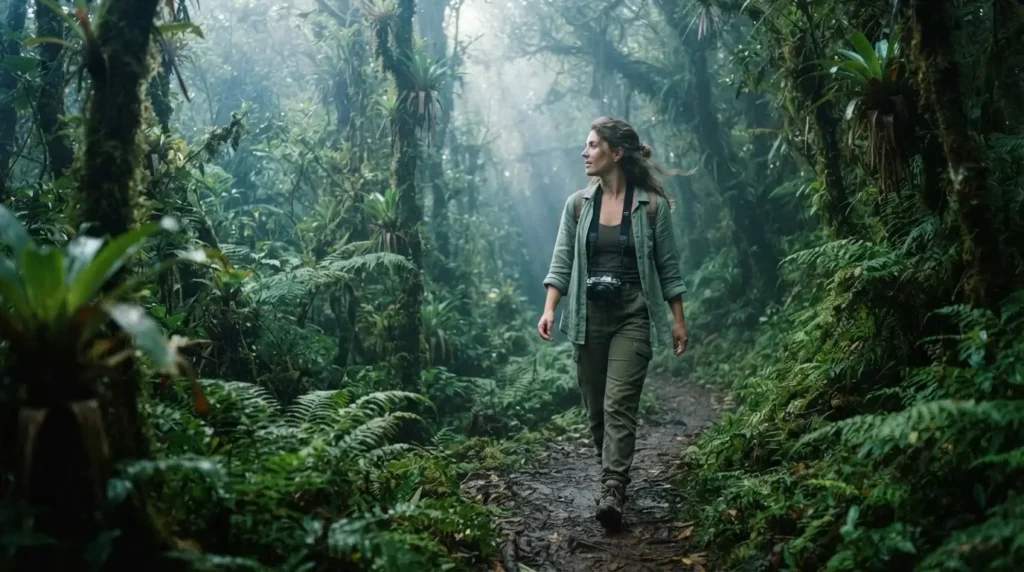
For solo travelers, Costa Rica is genuinely approachable. Getting around by public bus is affordable and covers most major destinations. Arenal Volcano, Monteverde Cloud Forest, Manuel Antonio National Park, and the Osa Peninsula are the big four for nature experiences, and each has a solid network of certified guides and community-run accommodations. Monteverde in particular is excellent for solo first-timers because it is compact, walkable, and built around independent and locally owned businesses. A coffee tour with a small family farm is one of the most culturally rich half-days you can spend in the country. Expect to pay around $20 to $35 USD for a guided farm experience, which goes directly into local hands.
On food: do not eat at the tourist-strip restaurants near the main park entrances. Seek out a local soda, which is the Costa Rican equivalent of a neighborhood diner. Gallo pinto (rice and black beans fried together), fresh fruit, and a casado (a plate with rice, beans, salad, and a protein) are what the locals eat.
They are inexpensive, delicious, and your money stays in the community.
Ecuador and the Galapagos: Sustainable Tourism Built Into the Law
Ecuador is a fascinating sustainable tourism story because its most famous destination, the Galapagos Islands, literally has conservation baked into the law. The Galapagos National Park and Marine Reserve is one of the most carefully managed tourist destinations in the world, and it shows.
All visitors to protected areas within the islands must be accompanied by a GNPD-authorized naturalist guide. You must stay on marked trails. You must maintain at least six feet of distance from wildlife at all times, even if an iguana or sea lion decides to waddle right toward you. Flash photography is banned when photographing wildlife. Campfires are strictly prohibited. Motorized aquatic sports are not allowed in the Marine Reserve. These are not suggestions: they are rules enforced by park officials, and they exist because this ecosystem is genuinely irreplaceable. You can read the full set of Galapagos National Park rules on the Galapagos Conservancy’s official page before your trip so you know exactly what to expect.
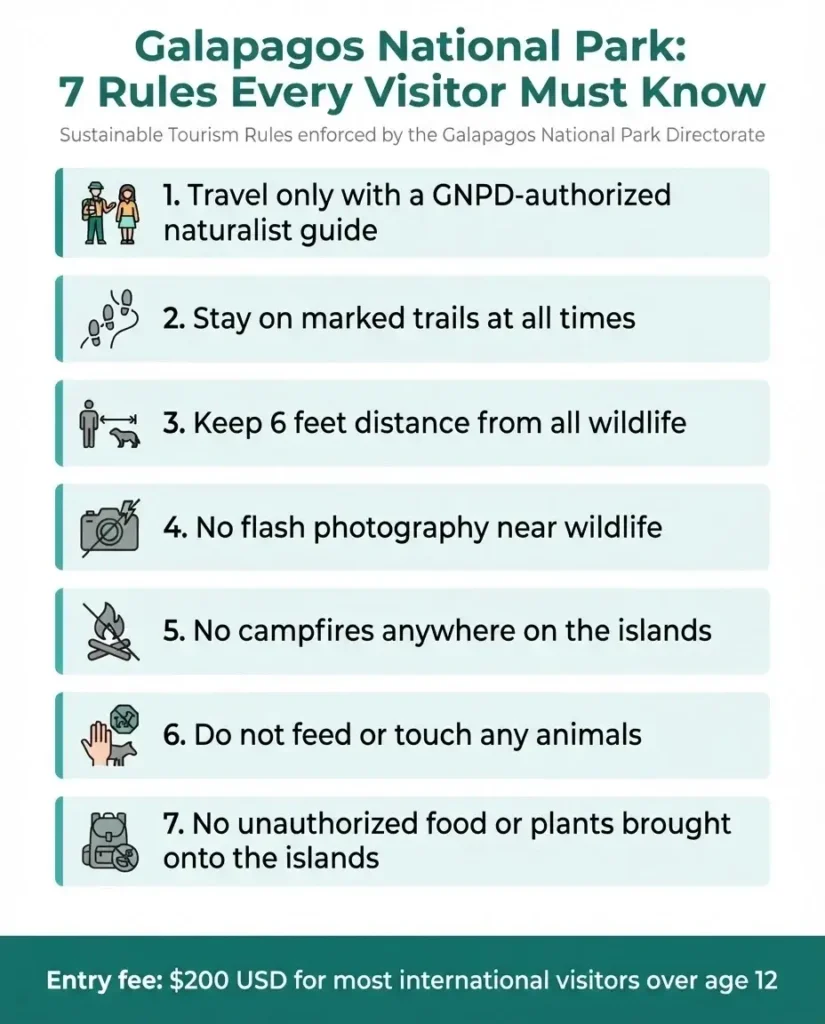
The national park entry fee for most international visitors over 12 years old is $200 USD. That is a meaningful amount, and it is intentional. It funds conservation, limits mass tourism, and keeps the visitor numbers manageable. When you pay that fee, you are directly contributing to the preservation of an ecosystem that contains species found nowhere else on Earth.
For mainland Ecuador, the Amazon basin is where sustainable community-based tourism is quietly thriving. Indigenous-led lodge experiences along rivers like the Napo are increasingly available, where local Kichwa communities operate their own tourism programs and guide visitors through forest ecosystems they have managed for generations. These are not polished resort experiences, they are raw, quiet, and genuinely illuminating in a way that no postcard version of the Galapagos can replicate.
From what solo travelers consistently report, Quito is an excellent base for a few days before heading to the islands or the Amazon. The UNESCO-listed historic center is walkable, the food markets are incredible, and the city sits at 9,350 feet above sea level, so give yourself a day to acclimatize before doing anything strenuous.
Peru: Where Ancient Heritage Meets Modern Conservation
Peru carries a weight that few other destinations in the Americas match. Machu Picchu alone is one of the most visited archaeological sites in the world, and for years the overcrowding was becoming a serious threat to the site itself. The Peruvian government’s response has been to implement one of the stricter visitor management systems in South America.
As of 2025, Machu Picchu caps daily visitors at 5,600 during peak season (May through September) and 4,500 during the off-peak months. Entry is divided into timed circuits, and re-entry on the same ticket is not permitted. Tour groups are limited to a maximum of 10 people per guide. This is all done deliberately, to give the site time to breathe and to preserve it for future visitors. What it means practically is that you need to book well in advance, especially if you are traveling between June and August. Official tickets are purchased exclusively through the Peruvian Ministry of Culture’s online portal at machupicchu.gob.pe, and I would strongly recommend booking as early as possible since availability disappears fast.
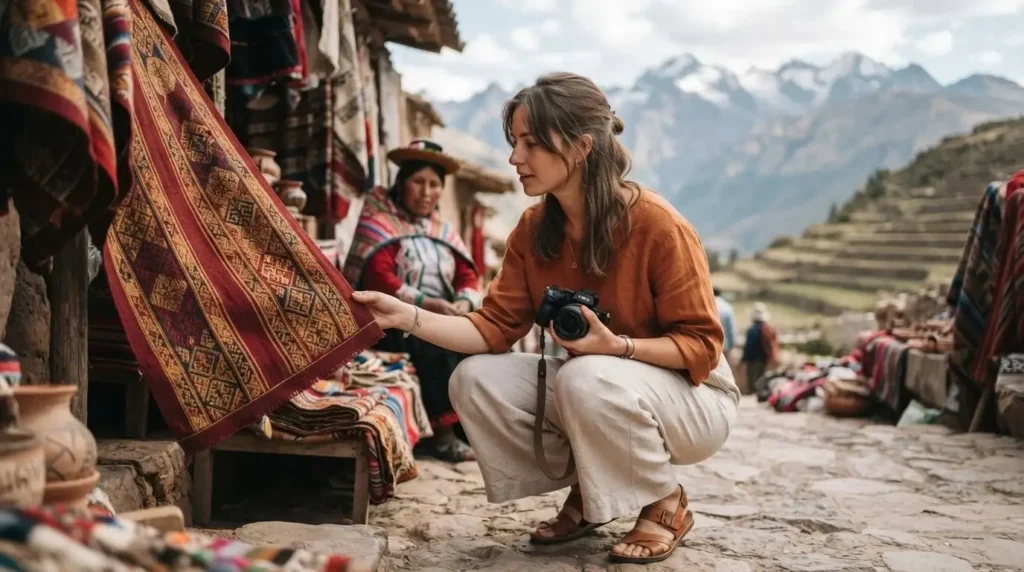
Beyond Machu Picchu, Peru’s sustainable tourism story is broader and deeper than most people realize. The Sacred Valley, the stretch of towns and villages between Cusco and Aguas Calientes, is full of community-run weaving cooperatives, traditional farming projects, and locally operated homestays that are more interesting than any hotel and significantly more affordable. Chinchero is one worth highlighting, a small highland market town where artisan weavers demonstrate traditional dyeing and textile techniques passed down for centuries. Spending money here means spending it on the people who actually live in the landscape you came to see.
For food in Peru, you are in luck. Peruvian cuisine is extraordinary and deeply tied to the land. In Cusco, try a local restaurant rather than the tourist-facing spots on Plaza de Armas. Caldo de gallina (chicken broth soup), chicharrón, and the enormous variety of Andean potato dishes are what people here actually eat, and they are exceptional.
Colombia: The Most Biodiverse Place on Earth, and It Is Opening Up
Here is a fact that tends to surprise people: Colombia is considered the most biodiverse country on Earth per square meter. It has coastline on both the Pacific and the Caribbean. It has the Amazon, the Andes, the coffee region, and more species of birds than any other country in the world. And it has 55 natural reserves, 23 of which are open to ecotourism with trained park rangers who keep impact low. You can explore the breadth of Colombia’s nature-based tourism through the official Colombia.co government portal, which outlines certified nature reserves and experiences across the country.
The sustainable tourism story in Colombia is still being written, and that is part of what makes it exciting to follow. For years, security concerns kept international visitors away from much of the country’s interior. Now, community-based tourism programs are flourishing in places like Minca in the Sierra Nevada, where small guesthouses run by local families are drawing birders, hikers, and slow travelers who want something more meaningful than the Cartagena beach scene. Minca sits at about 2,200 feet above sea level, surrounded by cloud forest and coffee farms, and the birding there is world-class.
The coffee region, known as the Eje Cafetero or Coffee Triangle, is another highlight. Towns like Salento and Jardin are surrounded by traditional coffee farms where you can tour the entire process from crop to cup, stay in a local finca, and put money directly into farming families’ hands. This is sustainable tourism in its most human form: your presence funds a way of life that sustainable farming protects.
From what solo travelers consistently report, Colombia’s cities are well-set-up for independent travel. Medellin in particular has transformed its image and is now considered one of the most innovative cities in Latin America, with a metro system, cable cars that connect hillside communities, and a strong hostel and co-working infrastructure for solo travelers.
Belize: Small Country, Enormous Commitment
Belize punches far above its weight in the sustainable tourism conversation. It is tiny, with a population of around 450,000 people, but it manages one of the most ecologically significant marine systems in the Western Hemisphere. The Belize Barrier Reef Reserve System, the largest reef complex in the Northern Hemisphere, was inscribed as a UNESCO World Heritage Site in 1996 and covers seven protected areas along the coast.
What is remarkable about Belize is how much of the country’s tourism infrastructure is community and locally owned. The Toledo District in the south is home to some of the most developed indigenous-community tourism programs in the region, where Maya Q’eqchi’ and Mopan communities run their own guesthouses and cultural experiences. These programs are worth going out of your way for. They are not polished, they are authentic, and the direct economic impact to communities that have historically been marginalized by mainstream tourism is real and meaningful.
Caye Caulker, a small island north of Belize City, is the backpacker-friendly alternative to the more developed Ambergris Caye. The vibe is slow, the roads are unpaved, and the reef is right there. You can snorkel or dive with certified local operators for around $50 to $80 USD. The island’s famous unofficial motto is “Go Slow,” which feels exactly right for a sustainable travel philosophy.
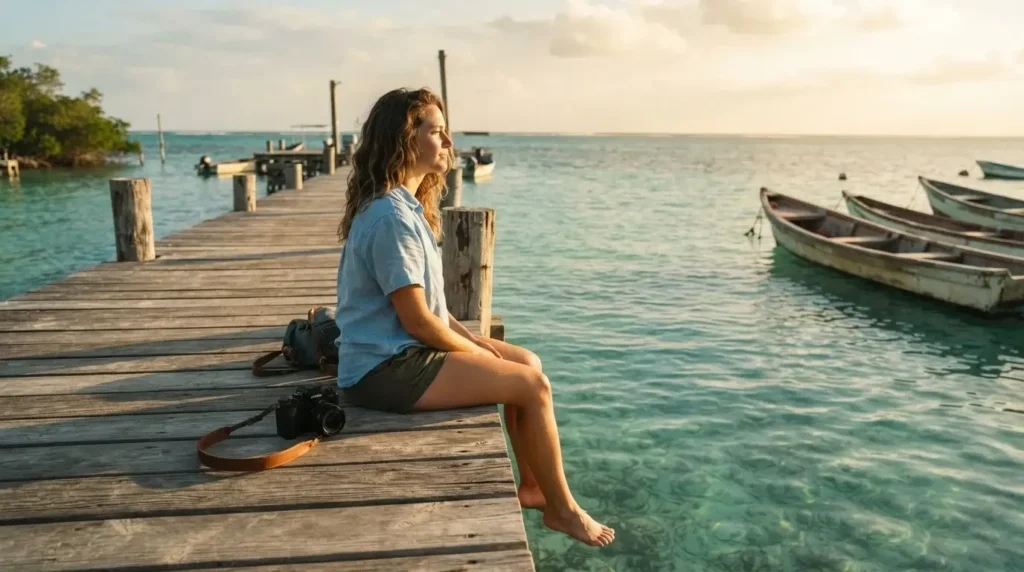
Belize is also English-speaking, which makes it an exceptionally welcoming first solo trip destination for North American and British travelers who are building their confidence before tackling language barriers elsewhere.
Panama: The Country That Connects Two Oceans and Two Worlds
Panama tends to get reduced to its canal in most travel conversations, which is a shame, because the country is genuinely extraordinary for sustainable tourism. It sits at the junction of North and South America, which means its biodiversity is staggering. More than 40% of Panama’s land area is protected forest or indigenous territory. It is home to over 10,000 plant species and nearly 1,000 bird species, making it a serious destination for nature-based travel.
The Embera and Guna Yala indigenous communities have developed their own community tourism programs that allow visitors to enter their territories on their terms. The Guna Yala archipelago (also known as San Blas) in particular is an experience unlike anything else in Central America. The Guna people govern their own autonomous region, and staying in a community-run guesthouse on one of the 365 islands is about as far from resort tourism as it gets. Food is simple, the stars are extraordinary, and the cultural exchange is the kind that changes how you see the world.
Panama City itself is a useful gateway and more interesting than most transit hubs. The Casco Viejo historic district is a UNESCO-listed colonial neighborhood where community-led restoration projects have been working to balance tourism with affordability for long-term residents, a sustainability challenge in the social rather than the environmental sense, and worth understanding before you visit.
How to Spot Greenwashing Before You Book
This is the part that most articles skip, and it is where travelers get burned. Here is what actually matters when you are trying to verify a sustainable operator.
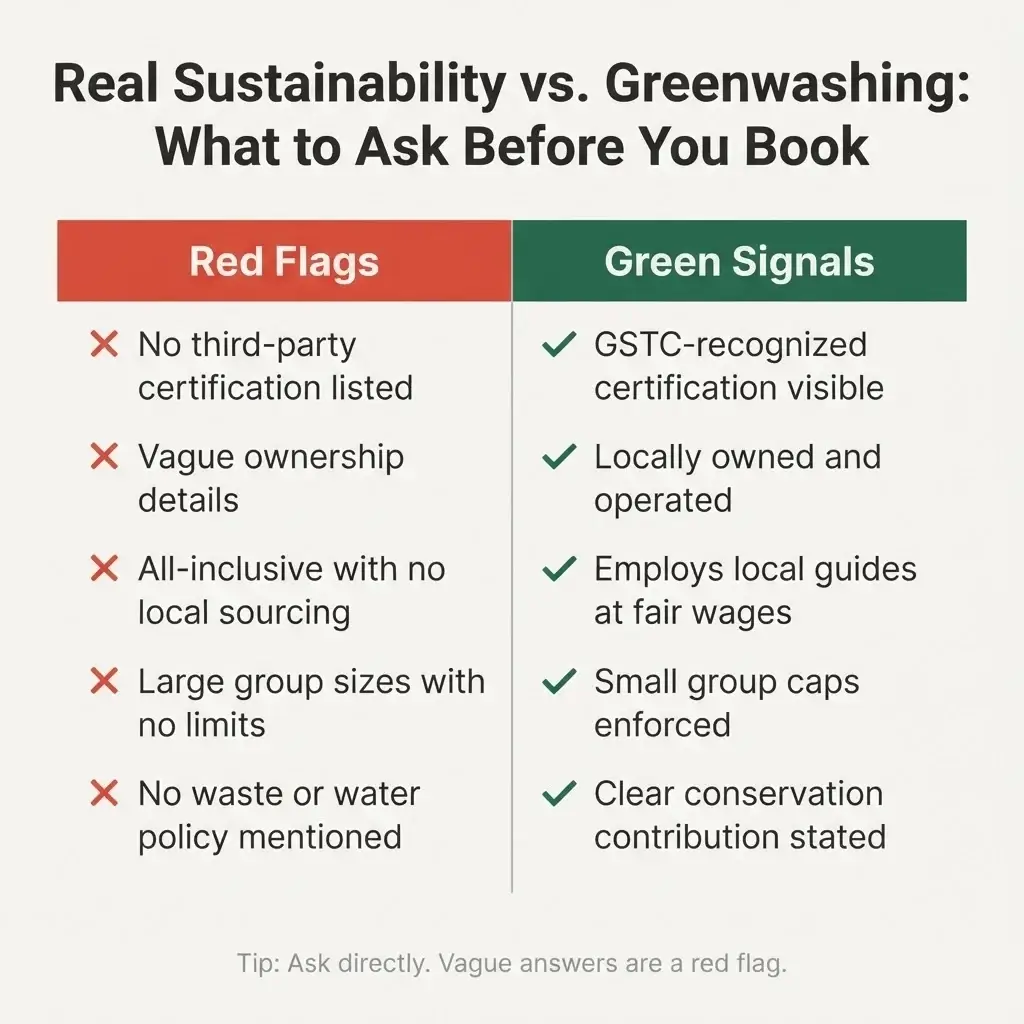
Look for third-party certification. The Global Sustainable Tourism Council recognizes national certification programs from multiple countries, including Costa Rica’s CST. You can check on the GSTC’s official website whether a country’s program meets international standards. An operator that has gone through a rigorous national certification process is a very different thing from one that has designed a green logo for its website.
Ask where the money goes. A genuinely sustainable experience employs local people at fair wages, sources food locally, uses locally owned transport, and keeps revenue in the community. Ask directly: who owns this lodge? Where is the produce from? Who guides the tours? The answers tell you more than any certification.
Ask about visitor impact. Does the operator limit group sizes? Do they have a waste management plan? Do they contribute to conservation funds? Vague answers are a red flag.
And finally, ask yourself what kind of traveler you want to be on this trip. Sustainable travel is not just about what the operator does. It is about slowing down enough to actually connect with a place, eating local food, staying in locally owned accommodation, and spending your money in ways that matter to the people who live there. That is a decision you make, not one that gets handed to you with a booking confirmation.
Where to Start if This is Your First Sustainable Trip
If you are new to this kind of travel and not sure where to begin, I would tell you what I tell anyone who asks: start with Costa Rica. It has the most established infrastructure for sustainable tourism, it is safe and navigable for solo travelers, the public transport system is functional, and the CST certification makes it relatively easy to book with confidence. It is a country that rewards slow travel, that gives you back more the longer you stay.
From there, if you want to build your confidence with something more remote and raw, Belize is excellent for a first independent foray into Central America. Colombia is extraordinary if you are willing to get slightly off the tourist path. And when you are ready for something that will genuinely rearrange the furniture in your mind, go to the Galapagos or the Peruvian highlands. Those are not just trips. They are perspective shifts.
The Americas are doing some of the most serious, community-driven, government-supported sustainable tourism work anywhere in the world right now.
You do not have to choose between a great trip and a responsible one. In these places, the two are the same thing.