
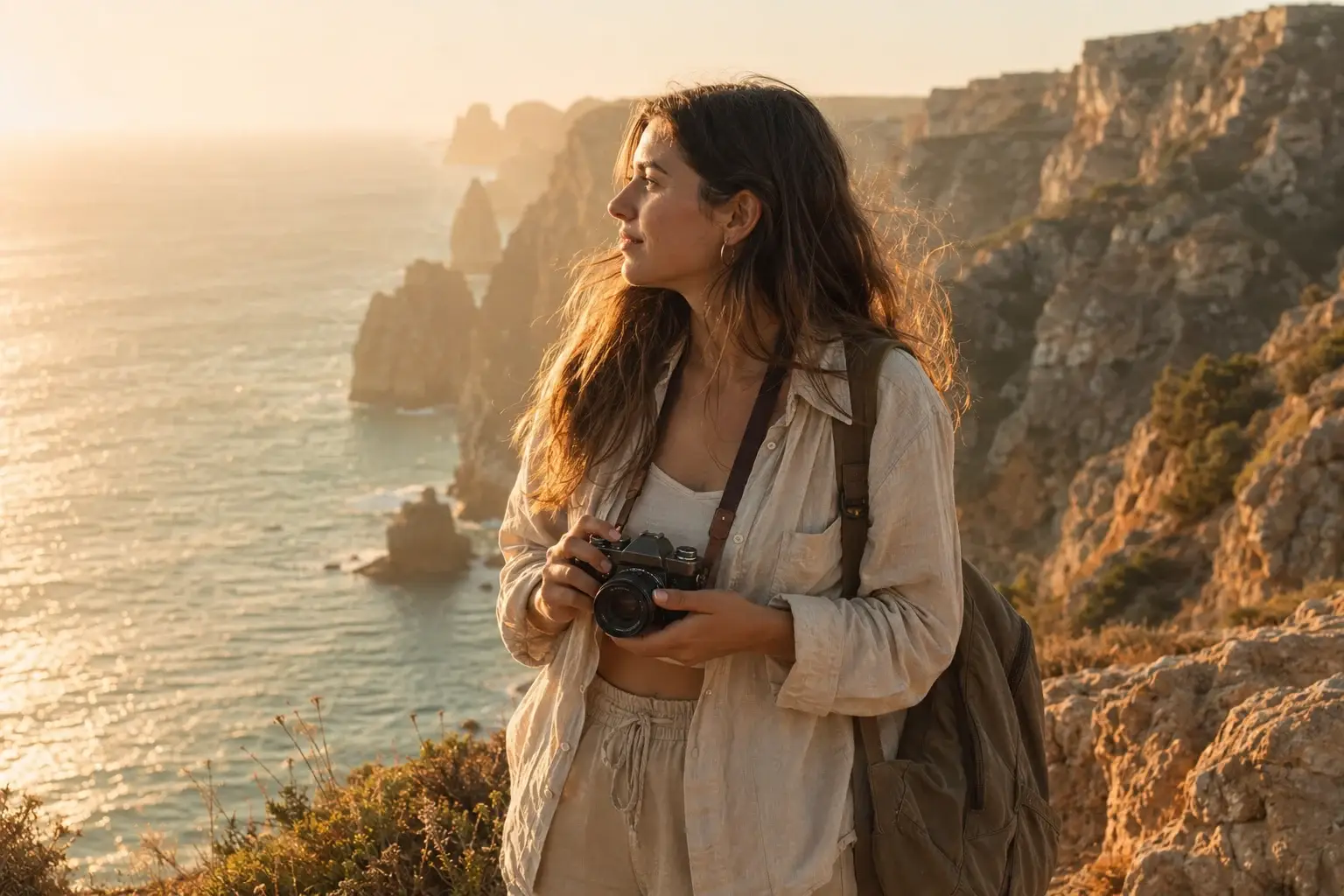
I remember the first time I landed in Europe. I had a massive, bursting-at-the-seams itinerary and a heart full of nervous energy. I spent my first three days running from subway to train station, ticking off monuments like they were groceries on a list. By the time I reached my third city, I was exhausted, cranky, and—worst of all—I hadn’t actually felt the places I’d been. I was seeing Europe through a camera lens, terrified of missing out, but completely missing the point.
That’s when I realized that the “best” trip isn’t the one that covers the most ground; it’s the one that lets you actually breathe the air of a new culture.
If you have seven days, you have a beautiful, golden window of time. It’s long enough to sink into a rhythm, but short enough that you don’t have room to waste energy on over-planning or backtracking. Let’s talk about how to build the best one-week itineraries in Europe that actually leave you feeling inspired, not drained.
Why Less Really Is More in Europe
The biggest trap most travelers fall into is “geographic FOMO.” We see a map of Europe and think, “I can do London, Paris, Rome, and Berlin in seven days!” On paper, maybe. In reality, you’ll spend your whole week in airport security lines, bus terminals, and hotel lobbies.
To find the best one-week itineraries in Europe, you have to embrace the art of the “anchor city.” Pick one or two base points and explore the surrounding region. Not only does this save you from the logistical nightmare of constantly packing and unpacking, but it also gives you the chance to become a “temporary local” instead of a frantic tourist.
When you stay in one spot for three or four nights, you find a favorite coffee shop. You learn the rhythm of the neighborhood. You start to notice the way the light hits the buildings at 5 PM. Before you start dreaming of your route, I highly suggest checking the U.S. Department of State Travel website for any specific entry or safety considerations for your chosen region. It’s a simple, grounding step that helps you move into the “planning” phase with actual knowledge rather than just anxiety.
The “Coastal & Cultural” Itinerary: Lisbon & The Algarve
If you crave the smell of salt air, ancient tiles, and the taste of a perfect pastel de nata, start here. Portugal is incredibly friendly for solo travelers. The rail network is reliable, and the pace of life in the southern towns is inherently slow.
- Days 1–3: Lisbon. Stay in the Alfama district. Don’t just hit the main squares; get lost in the winding alleys. Spend your mornings at a local bakery and your afternoons visiting the UNESCO World Heritage sites in the nearby town of Sintra, which is just a short train ride away.
- Days 4–7: The Algarve (Faro/Lagos). Take the train south. This is where you’ll trade city architecture for dramatic seaside cliffs. Use your time here to kayak, walk the coastal trails, or just sit on a beach with a book.
Insider Tip: When moving between cities, try to take the train during the day. It’s a much more authentic way to see the landscape shift, and it’s far less stressful than budget airline hopping.
The “Mountain & Muse” Itinerary: The Czech & Austrian Connection
There is a specific kind of magic in Central Europe that feels like walking through a fairy tale. Pairing Prague with a quieter, smaller town creates a perfect balance between high culture and quiet reflection.
- Days 1–4: Prague. It’s iconic for a reason. But to avoid the crowds, wake up at sunrise to walk the Charles Bridge. Spend your time in the smaller, independent galleries rather than just the big museums.
- Days 5–7: Cesky Krumlov or Salzburg. Head to a smaller town to slow down. These places offer a sense of scale that big cities can’t match. You’ll have more time to talk to locals, visit markets, and find a rhythm.
If you’re wondering about staying healthy and safe while moving between these regions, the CDC Travelers’ Health portal provides excellent, factual guidance on local health advisories that can help you feel prepared and empowered before you leave home.
The “Hidden Rhythm” of Solo Travel
When I was working as a sightseeing guide back in New York, I saw thousands of people rushing by. I learned that the people who were happiest weren’t the ones on the tightest schedules. They were the ones who sat on a bench and watched the world go by.
Traveling solo gives you this luxury. You don’t have to compromise on what to eat or when to wake up. My advice? Build “white space” into your itinerary. Don’t schedule something for every single hour. Leave your afternoons open. If you meet someone interesting at a cafe, you can say yes to an invitation without feeling guilty about skipping a pre-planned museum tour.
If you’re concerned about the “what-ifs” of solo life, it’s worth looking into World Nomads Travel Insurance to understand how you can protect your journey. It’s not about fear; it’s about having a safety net so you can be brave.
Culinary Exploration as a Strategy
One of the best ways to map out your seven days is to map out your meals. If you want to experience the best one-week itineraries in Europe, focus on the food.
In Italy, for instance, don’t try to do the “Big Three” (Rome, Florence, Venice) in a week. It’s too much. Instead, pick one region. If you choose Sicily, your itinerary is built: it’s about the street food in Catania, the markets in Palermo, and the quiet beauty of the coastal villages. You aren’t “seeing” Italy; you are eating your way through it, which is the most culturally immersive way to travel.
Pro-tip: If you feel lonely, go to a market. Markets are the lungs of European cities. Everyone is there, talking, buying, and living. You don’t have to talk to anyone, but being in that environment cures the solo travel “heaviness” instantly.
The Art of Navigating Without a Plan
A massive part of your one-week trip will be figuring out how to get from point A to point B. I used to be terrified of train stations. I’d arrive three hours early because I was scared of missing a connection.
Now, I look up the routes on official websites, download offline maps, and give myself a buffer. You don’t need to be a professional navigator. You just need to be observant. If you ever find yourself needing local transit in cities where apps like the Grab app are available (or their regional equivalents), it can be a lifesaver, but never underestimate the power of a local bus or just walking. Some of the most beautiful views in Europe aren’t on the itinerary—they are the ones you find when you take the wrong turn on purpose.
Common Mistakes to Avoid
- Over-booking: If you have to check out of your hotel every single day, you will be too tired to enjoy the destination. Try to stay in one place for at least three nights.
- Chasing “Instagram” spots: The most famous view is usually the most crowded. Find the viewpoint next to it. It’s often just as beautiful and twice as peaceful.
- Ignoring your energy levels: If you’re an introvert, you don’t need to do a pub crawl. If you’re an extrovert, don’t spend all week in a library. Plan your trip for you, not for the person you think you should be.
- Forgetting to rest: Build in a “laundry day.” It sounds boring, but spending an afternoon in a local laundromat while you catch up on your journal is one of the most underrated, humanizing experiences you can have abroad.
Building Your Personal Itinerary
As you sit down to plan, ask yourself: What do I want to come home with? Is it a set of photos? A new perspective? A feeling of confidence?
If you want confidence, pick a route that requires you to use public transit. If you want a new perspective, pick a region with a language you don’t speak and try to learn ten words before you land. The best one-week itineraries in Europe are the ones that challenge you just enough to make you feel capable, but not so much that you feel overwhelmed.
You don’t need a perfect plan. You need a starting point. Once you are on the ground, the trip will take on a life of its own. That is the beauty of it. The mistakes, the missed trains, the moments where you have to ask for help—those are the memories that actually stick.
You have the curiosity. You have the courage to even look into this. Now, trust yourself to take the first step. The rest of the week will unfold exactly as it should.



