
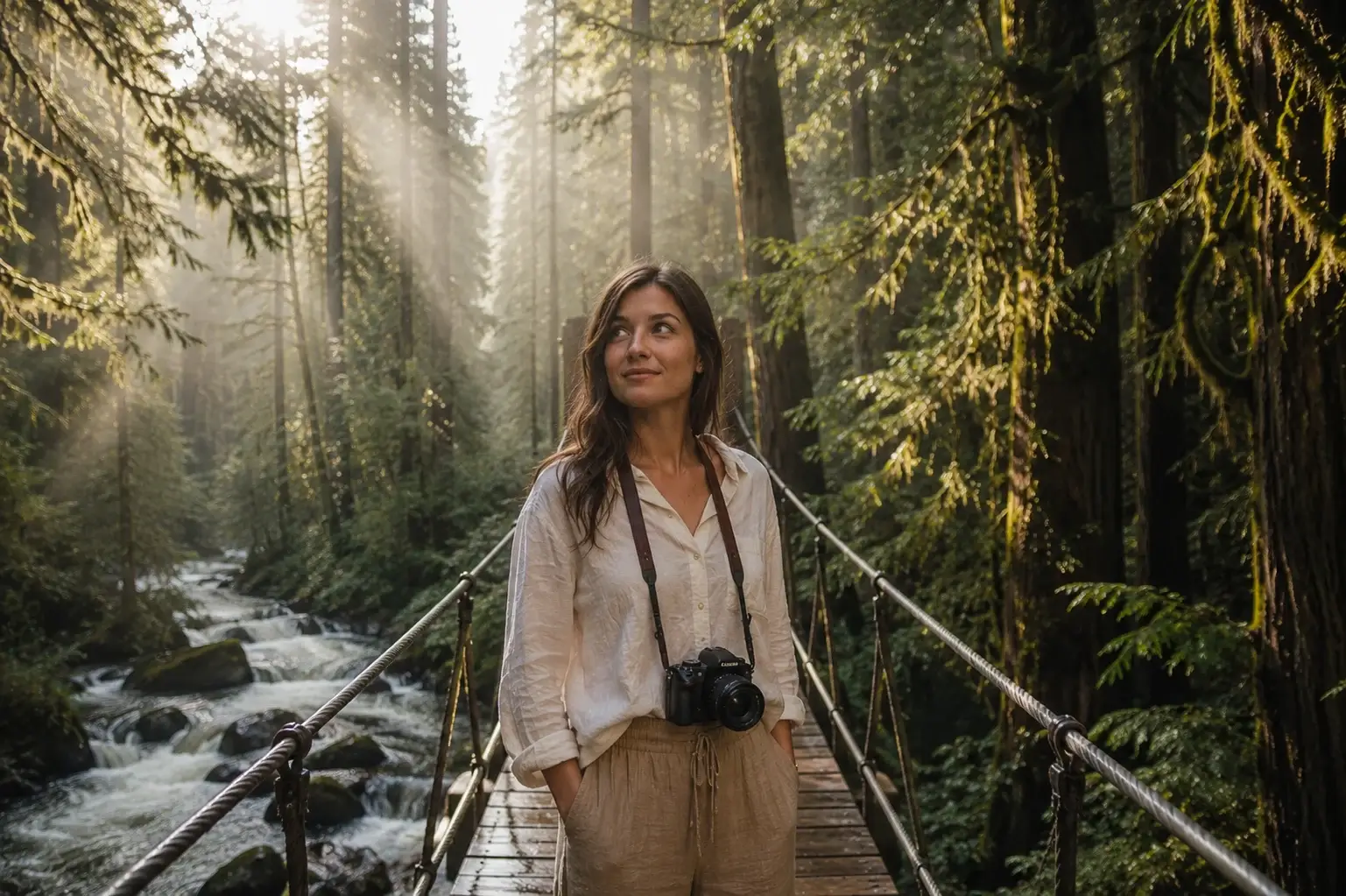
I still remember the crushing weight of sitting at my old office desk in New York, staring at a grey cubicle wall, and clicking through photos of the Pacific Northwest. I was desperate for deep green forests, massive snow-capped mountains, and the salty air of the ocean. When I finally saved up enough money from my weekend waitressing shifts to book a ticket to British Columbia, I made a classic beginner mistake. I tried to pack way too much into my first trip. I spent more time staring at public transit maps and sitting in traffic bridges than actually breathing in the cedar-scented air.
Vancouver is an incredible city where glass skyscrapers sit right next to ancient rainforests. But because the nature here is so massive, it is incredibly easy to mistime your days, get stuck in gridlock, or accidentally spend a fortune on tourist traps.
I don’t want you to make those same errors. After years of solo travel and working as a professional sightseeing guide, I have learned exactly how to build a balanced, deeply immersive trip. This is the absolute best itinerary for Vancouver in 5 days, written to help you step out of your comfort zone, avoid the stressful rookie mistakes, and experience the true soul of this coastal wonderland.
Day 1: Stanley Park, False Creek, and the Art of Slow Coastal Exploring
The Rookie Mistake to Avoid: Trying to Walk the Entire Seawall
When most travelers look at a map of Vancouver, they see Stanley Park right next to downtown. They think, “I love walking, I will just stroll around the whole edge!”
Here is the reality: the Stanley Park Seawall is part of the world’s longest uninterrupted waterfront path. Walking the park’s loop alone takes at least three to four hours of non-stop moving. By the time you finish, your feet will be blistering, you will be too exhausted to enjoy the actual forest trails, and you will miss the rest of your day.
Morning: Biking the Rainforest Coast Line
Instead of walking, do what the locals do. Start your morning by renting a dynamic seven-speed city bike from one of the small rental shops along Denman Street, right near the park entrance.
Ride the seawall path in a counter-clockwise direction. This is a strict local rule to keep traffic flowing safely.
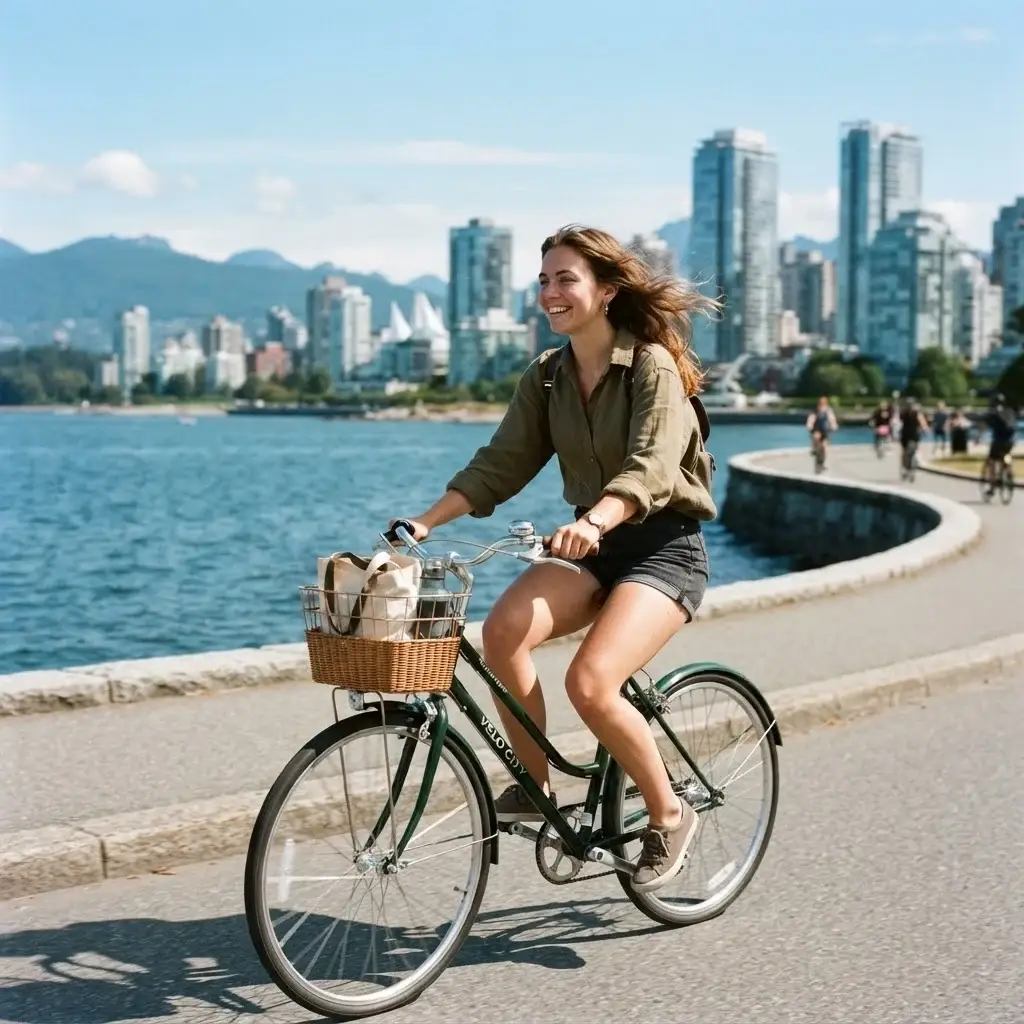
As you pedal, you will have the sparkling waters of the Burrard Inlet on your right and giant, towering Douglas fir trees on your left. Stop at the Brockton Point totem poles to learn about the rich history of the Coast Salish First Nations people who have lived on these lands since time immemorial.
Keep your eyes open for wildlife. If you look down at the shoreline rocks, you can often spot great blue herons hunting for small fish. Out in the water, harbor seals regularly pop their glossy heads above the waves to watch the passing cyclists.
- Navigation Tip: Stay completely inside the dedicated bike lane on the seawall. Pedestrians have their own separate path right next to the water. Blending into the walking lane will earn you some very unhappy shouts from local commuters.
- Culinary Stop: Once you work up an appetite, pedal over to the casual food concession stands near Second Beach. Grab a warm, crispy batch of locally caught fish and chips. Sit on one of the giant driftwood logs scattered along the sand to eat while watching the massive cargo ships wait out in the bay.
Afternoon: The Aqua Bus Adventure to Granville Island
After returning your bicycle on Denman Street, take a leisurely 20-minute walk down to the shores of English Bay. From here, you will spot the most charming public transit system in Canada: the False Creek Ferries and Aquabuses. These are tiny, colorful, box-shaped boats that zip across the water like little water taxis.
Skip the expensive private harbor cruises. Buying a simple, cheap ticket on these small water buses gives you the exact same stunning views of the city skyline from the water for a fraction of the cost. Board a boat heading directly to Granville Island.
Granville Island used to be an old industrial manufacturing area. Today, the historic corrugated tin warehouses have been completely transformed into a massive, thriving artisan paradise. Walk inside the famous Granville Island Public Market and let your senses take over. The air smells like fresh baked sourdough, roasted coffee beans, and sweet maple syrup.
- Insider Secret: Do not buy the first standard souvenir you see. Walk past the main stalls and look for the hidden artisan alleys. You can watch local glassblowers melt glowing neon glass or see master woodcarvers shape native cedar into beautiful works of art.
- What to Eat: Head straight to the Lee’s Donuts stall inside the market. They have been making hot, fresh, handmade donuts since 1979. Get the classic honey-dip donut while it is still warm enough to melt in your hand. Take your treat outside to the wooden boardwalks to listen to local street musicians. Just keep an eye on the seagulls—they are notoriously bold and love to steal food right out of tourists’ fingers!
Day 2: Deep Cultural Roots in Gastown and Chinatown
The Rookie Mistake to Avoid: Eating at the First Restaurant on Water Street
Gastown is Vancouver’s oldest neighborhood. It features beautiful cobblestone streets, vintage brick buildings, and historic black lamp posts. Because it looks so incredibly charming, it is a massive magnet for hungry tourists. The main strip, Water Street, is packed with restaurants that charge high prices for very average, microwaved pub food. If you eat here blindly, you are paying a heavy premium just for the view outside the window.
Morning: Steam Whistles and True History
Start your morning at the famous Gastown Steam Clock. Every 15 minutes, this heavy brass clock shoots clouds of white steam into the air and plays a musical tune using antique whistle pipes. It is fun to watch once, but do not linger too long in the heavy crowds.
Instead, use your morning to dive deep into the city’s complex history. Walk along the side streets to admire the architecture of the historic buildings. These structures were built during the late 1800s when Vancouver was a wild, rough outpost for rugged gold miners, timber loggers, and train workers.
Whenever I travel solo to a new city, I prioritize understanding the real human stories of the place. It makes the streets come alive. For safety and cultural background before any big international trip, I always check the official US Department of State Travel website for up-to-date regional notices and travel advisories, which keeps me grounded and prepared.
- Navigation Tip: Gastown is very walkable, but it borders a neighborhood known as the Downtown Eastside. This area struggles heavily with poverty and addiction. If you walk a few blocks too far south or east down Hastings Street, the environment changes very quickly. Stay on the main paths like Water Street and Cordova Street to keep your bearings easy.
Afternoon: Tranquility and Tea in Chinatown
From Gastown, take a short ten-minute walk southeast into Vancouver’s historic Chinatown. This is one of the largest and oldest Chinatowns in North America, built by Chinese immigrants who came to build the transcontinental railroad under incredibly harsh conditions.
Walk straight to the Dr. Sun Yat-Sen Classical Chinese Garden. This is an absolute sanctuary in the middle of the bustling, noisy city. It was the very first authentic, full-scale urban Chinese garden built outside of China. Master craftsmen came all the way from Suzhou to build it using traditional 14th-century methods.
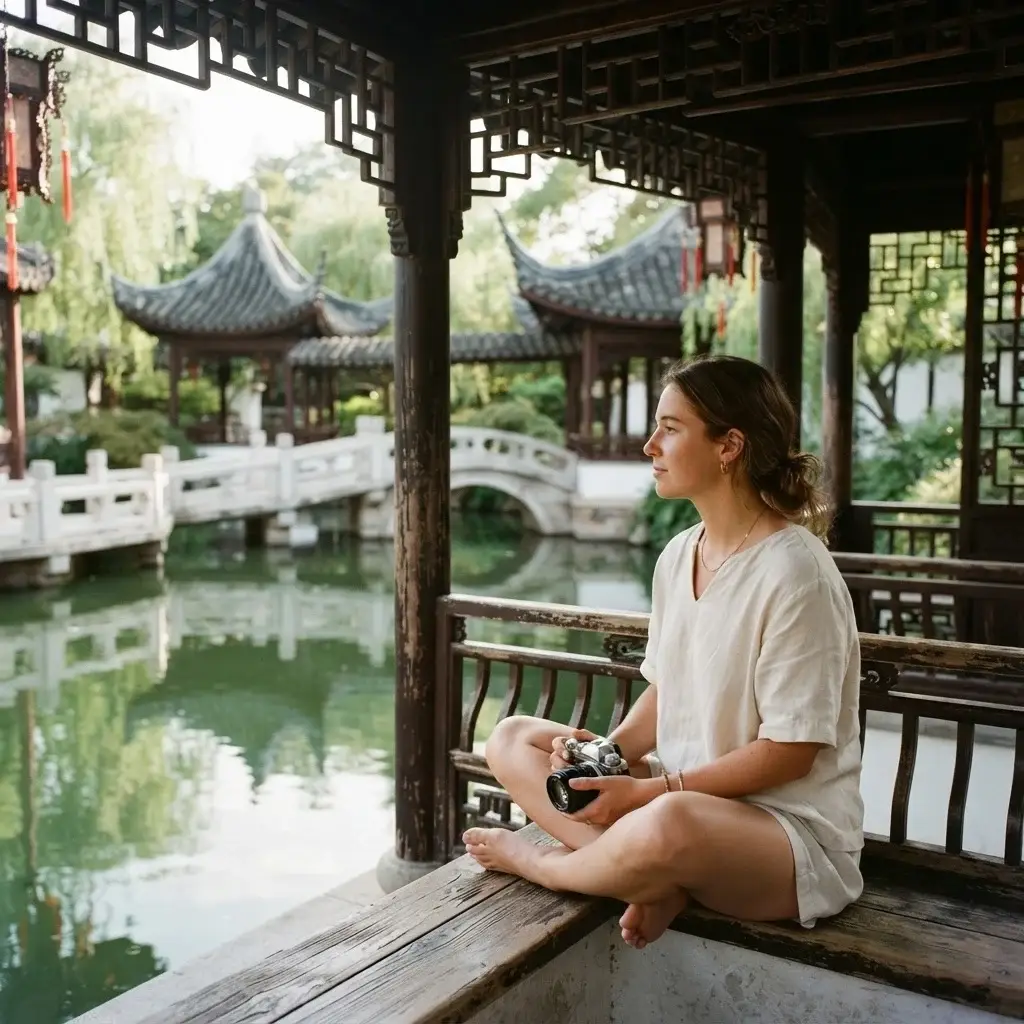
That means the entire place was assembled completely without using a single nail or screw!
Walk slowly along the winding white stone pathways. Look at the dark green jade water in the central pond, the intricate rock structures, and the ancient miniature trees. The design is built on the concept of Yin and Yang—creating a perfect, harmonious balance between light and dark, rough and smooth.
- Insider Secret: Do not just snap a picture and leave. Pay the tiny extra fee to participate in a traditional Chinese tea ceremony inside the garden’s tea house. A knowledgeable guide will show you how to properly rinse, pour, and appreciate high-quality oolong tea leaves. It is a slow, meditative experience that will make you completely forget you are in the center of a major metropolis.
- What to Eat: After your tea, walk over to New造型 (New Kent Bakery) or any of the traditional bakeries on Keefer Street. Order a hot, baked BBQ pork bun. The outside is a sweet, fluffy, golden bread, and the inside is filled with rich, savory, slow-cooked pork. It is incredibly filling and costs less than a few dollars.
Day 3: High-Altitude Rainforests and the North Shore Wilderness
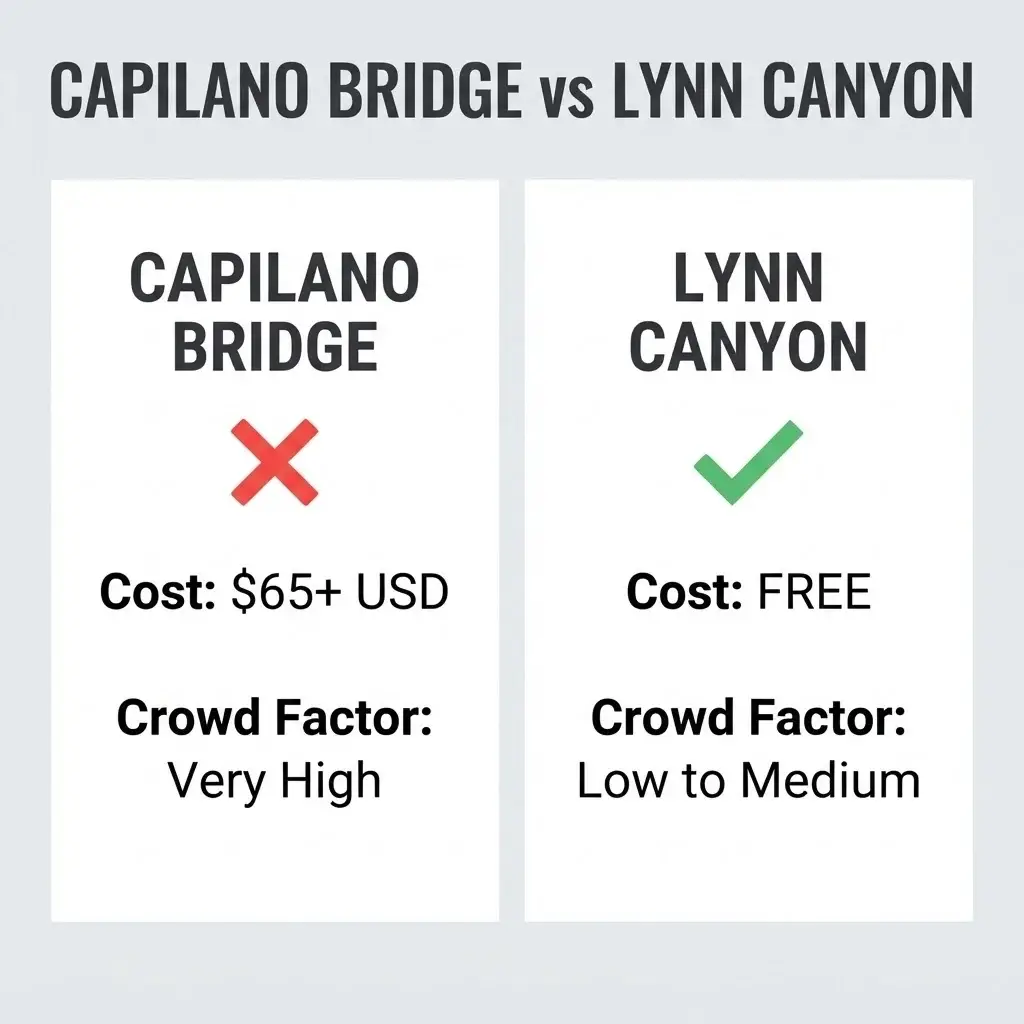
The Rookie Mistake to Avoid: Paying Full Price for the Capilano Suspension Bridge
If you search for Vancouver travel tips online, the Capilano Suspension Bridge is always at the top of the list. But here is what the glossy tourism brochures will not tell you: it costs a massive amount of money just to enter, and it is regularly so packed with tour buses that you will be shuffling across the swaying bridge bumper-to-bumper with hundreds of other people holding selfie sticks. It feels more like a crowded amusement park than a wild, serene forest adventure.
Morning: The Secret Canopy of Lynn Canyon
Skip the heavy crowds and expensive tickets. Instead, head to Lynn Canyon Park on the North Shore. It is completely free to enter, and it offers an incredibly authentic, wild wilderness experience.
Lynn Canyon has its own beautiful, narrow suspension bridge that hangs 50 meters above a roaring, crystal-clear mountain river. When you step onto the wooden slats, the bridge sways gently under your boots, and you are surrounded by massive, ancient cedar trees blanketed in deep green moss.
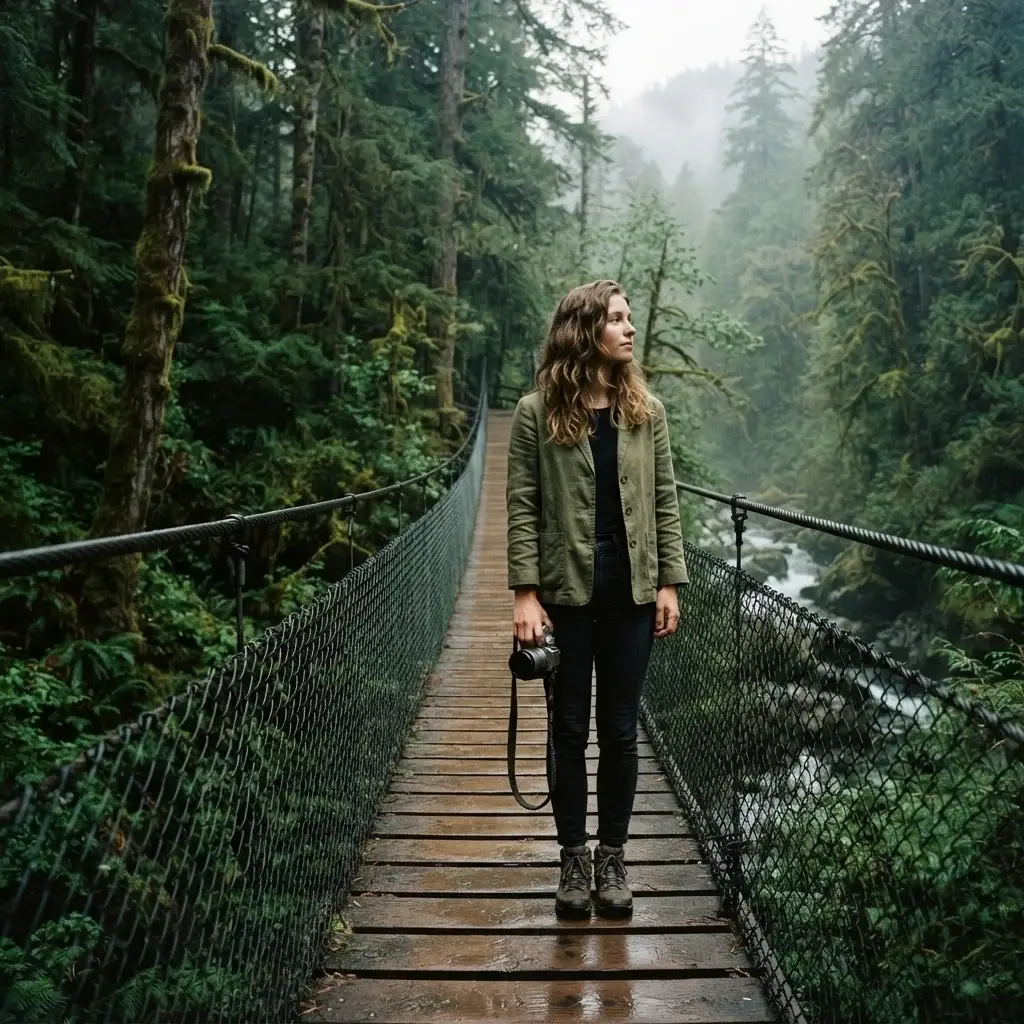
It feels like stepping straight into a fantasy movie.
Once you cross the bridge, take the wooden boardwalk trails heading up toward the 30-Foot Pool. The water here is a bright, mesmerizing emerald green. It is fed directly by melting mountain snow, so it is icy cold even in the middle of the summer.
- Navigation Tip: To get here without a rental car, take the public SeaBus ferry from Waterfront Station across the harbor to Lonsdale Quay. From the quay, hop directly onto the local #228 public bus. It drops you off right near the park gate. It is incredibly easy, affordable, and lets you travel like a true local.
- Culinary Stop: After your hike, take the bus back down to the Lonsdale Quay Market. Head to the international food court and look for a local spot serving wild BC sockeye salmon burgers grill-to-order. Pair it with a cold glass of craft ginger beer.
Afternoon: The Roof of the City at Grouse Mountain
Once you have explored the canyon floor, it is time to head high up into the clouds. Take a short transit ride over to Grouse Mountain, known locally as the Peak of Vancouver.
If you are feeling incredibly brave and physically fit, you can attempt the Grouse Grind. This is a famously steep, rugged 2.9-kilometer trail that goes straight up the face of the mountain. Locals call it “Mother Nature’s Stairmaster.” It features 2,830 wooden stairs built out of dirt and rock.
When I was younger and teaching English abroad, I used to think I could tackle any physical challenge without preparing. But the Grouse Grind is no joke. It takes about two hours of pure, calf-burning vertical climbing to reach the top. If you prefer to protect your knees, do what I do now: buy a ticket for the Skyride gondola. It is a massive aerial tramway that glides smoothly up above the treetops, offering panoramic views of the entire ocean basin and the distant Gulf Islands.
- Insider Secret: At the top of the mountain, walk over to the protected wildlife refuge area. You can see two orphaned grizzly bears, named Grinder and Coola, playing in their large natural pond or lounging in the grass. Watching a massive grizzly bear scratch its back against a cedar tree from a safe observation platform is something you will never forget.
Day 4: Coastal Hikes, West Coast Art, and Sunset Magic
The Rookie Mistake to Avoid: Planning Your Beach Day by the Clock
In most cities, you can plan your daily activities with a rigid schedule. In Vancouver, you must plan your beach and coastal days completely around the weather and the sun. The Pacific Northwest weather can be notoriously moody. If you see a bright, clear, sunny morning, drop everything and head straight to the coast. Do not save the beaches for later in the week just because your calendar says so, or you might end up sitting on the sand in a thick, grey blanket of coastal fog.
Morning: High Cliffs and First Nations Culture
Start your fourth day by heading west toward the sprawling campus of the University of British Columbia (UBC). Nestled on the high cliffs overlooking the ocean is the world-renowned Museum of Anthropology.
This building is an architectural masterpiece designed by Arthur Erickson. It features massive, soaring concrete and glass walls that mimic traditional First Nations cedar posts. Walk inside the Great Hall and you will be completely humbled by the scale of the massive, historic totem poles, ceremonial masks, and intricate bentwood boxes carved by Haida, Musqueam, and Kwakwaka’wakw artists.
The art here is not just historical; it represents a living, breathing culture that has fought for centuries to preserve its deep connection to the land and water. The stories carved into the cedar wood will give you a completely new perspective on the landscapes you have been exploring all week.
- Navigation Tip: Take the #4 or #14 trolley bus from downtown directly to the UBC loop. From the bus loop, it is a flat, beautiful ten-minute walk through manicured campus gardens to reach the museum entrance.
- What to Eat: Stop by the museum’s small, sun-drenched cafe and try a bowl of traditional West Coast seafood chowder packed with local clams, wild salmon, and smoky bacon. Eat it out on the back terrace next to the outdoor Haida mud houses.
Afternoon: The Forest-to-Ocean Trail at Pacific Spirit Park
Directly surrounding the university campus is Pacific Spirit Regional Park. This park contains over 750 hectares of preserved, second-growth forest trails. It is an amazing place to experience the slow, quiet magic of the woods without leaving the city limits.
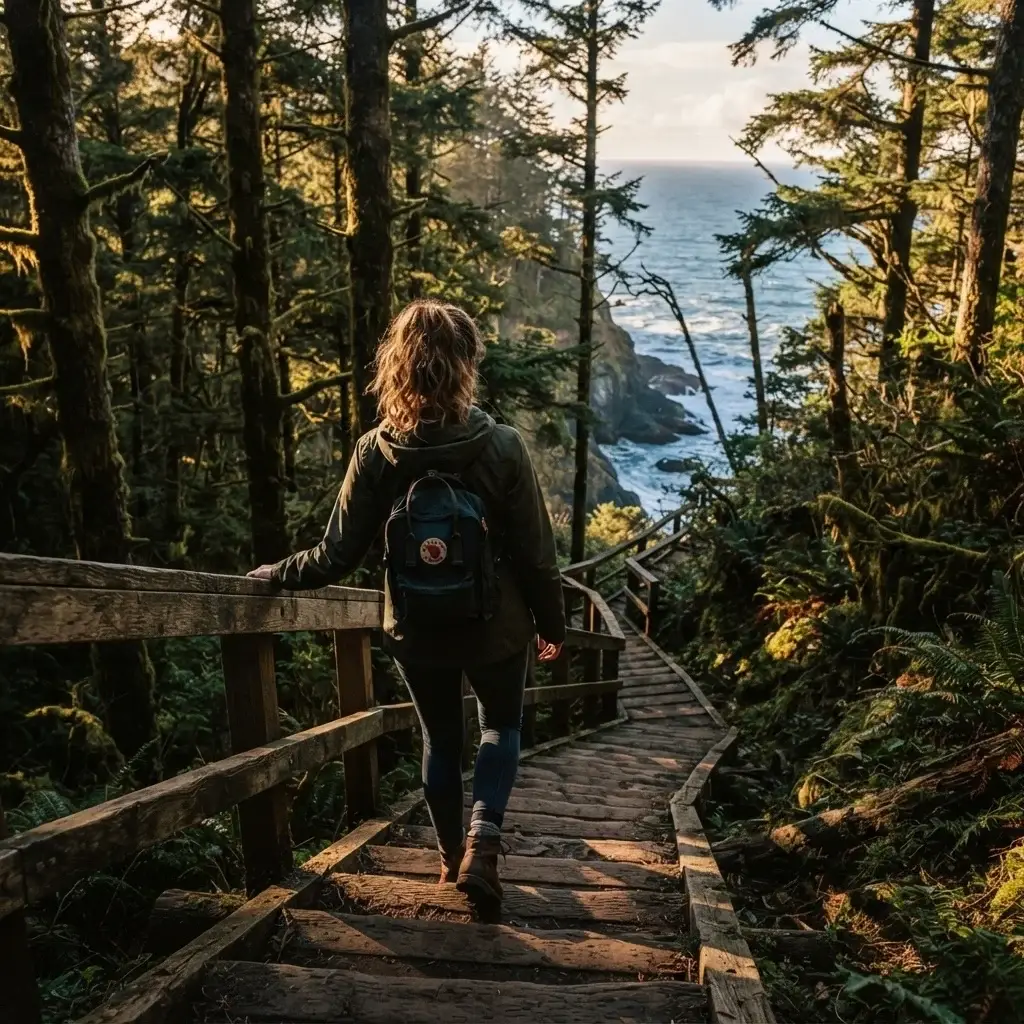
Choose the trail that leads down to Wreck Beach. To reach the shoreline, you will have to walk down a long, steep wooden staircase with over 400 steps cutting straight through the cliffside forest. As you descend, the deep quiet of the woods slowly gives way to the rhythmic sound of crashing ocean waves.
- Insider Secret: Wreck Beach is Vancouver’s most famous clothing-optional beach. Don’t be shocked or uncomfortable when you hit the sand! It is a beautiful, judgment-free space where people of all shapes and sizes come to enjoy nature in complete freedom. The vibe here is incredibly bohemian, artistic, and welcoming. You will see people playing acoustic guitars, building elaborate driftwood castles, and selling homemade crafts along the logs.
- Sunset Spot: If you prefer a more conventional beach setting for sunset, take a quick bus ride over to Kitsilano Beach (known as “Kits” by locals). Grab a spot on the wide grass lawn or the sandy shore. As the sun dips below the horizon, the glass skyscrapers of downtown across the water light up in brilliant shades of pink, orange, and burning gold.
Day 5: Marine Science, Hidden Alleyways, and Local Food Cult Favourites
The Rookie Mistake to Avoid: Leaving the Waterfront for Dinner
On your final evening in the city, many travelers wander deep into the commercial shopping grid of Robson Street to find a restaurant. While Robson Street has great clothing stores, the dining options are mostly large, noisy corporate chains that you can find in almost any major city. Instead, keep your final night special by staying close to the historical waterfront neighborhood edges where the local independent food scene thrives.
Morning: Exploring Beneath the Waves
Spend your final morning diving into the marine world at the Vancouver Aquarium, tucked deep inside the eastern woods of Stanley Park. This is a non-profit organization dedicated to ocean conservation, marine mammal rescue, and scientific research.
Instead of just looking at the fish tanks, head straight to the Pacific Canada Pavilion. Here, a massive two-story glass window reveals the incredible, mysterious underwater world of the local coast. You can watch giant plumose anemones that look like white fluffy flowers swaying in the current, enormous sturgeon fish that look like prehistoric monsters, and a giant Pacific octopus gracefully unfurling its arms across the glass.
- Insider Secret: Look for the dedicated sea otter rescue pool. Most of these otters were found abandoned or injured as tiny pups along the rocky coast of British Columbia. The aquarium staff nursed them back to health, and because they cannot survive alone in the wild now, they live here as playful ambassadors. Watching them float on their backs while holding paws or grooming their thick fur is pure joy.
Afternoon: The Sweet Alchemy of Mount Pleasant
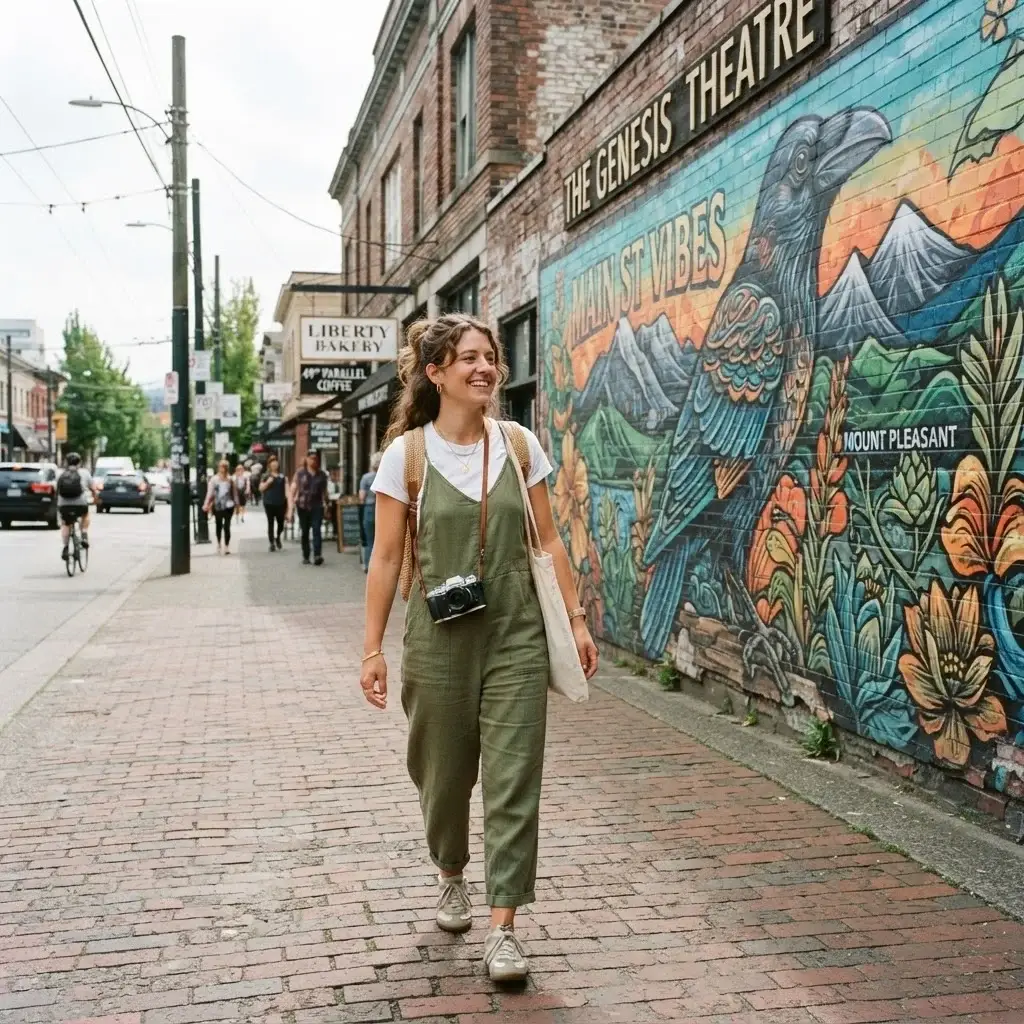
For your final afternoon, leave the downtown core behind and head south into Mount Pleasant, specifically around the intersection of Main Street and Broadway. This neighborhood is the creative heart of the city’s modern art, vintage fashion, and independent coffee culture.
Walk along Main Street to find independent bookshops, curated clothing boutiques, and walls covered in massive, vibrant outdoor murals painted by local artists during the annual Vancouver Mural Festival. It is a fantastic neighborhood to walk slowly, people-watch, and find truly unique, locally made items to take home.
To wrap up your trip safely and learn about standard wellness recommendations for global travelers before heading home, it is always wise to review the resource guidelines on the CDC Travelers’ Health portal, which provides useful advice for outdoor recreation and regional safety.
- Culinary Stop: Vancouver has a massive, passionate craft beer scene. Mount Pleasant has so many independent microbreweries that locals call the area “Brewery Creek.” Walk into a tasting room like 33 Acres Brewing Company. Order a sampler flight of four small glasses to taste everything from their crisp, refreshing craft lagers to rich, complex stouts infused with local organic espresso beans.
- Final Dinner: End your 5-day journey with a massive bowl of authentic Japanese ramen. Vancouver has one of the best Asian culinary scenes in the world outside of Asia. Head to a spot like Danbo or Santouka. Order a bowl of rich, creamy tonkotsu pork broth ramen with thin, chewy noodles, a soft-boiled marinated egg, and tender slices of slow-braised pork belly. It is warm, comforting, and the perfect culinary tribute to a city that sits at the crossroads of the Pacific Rim.
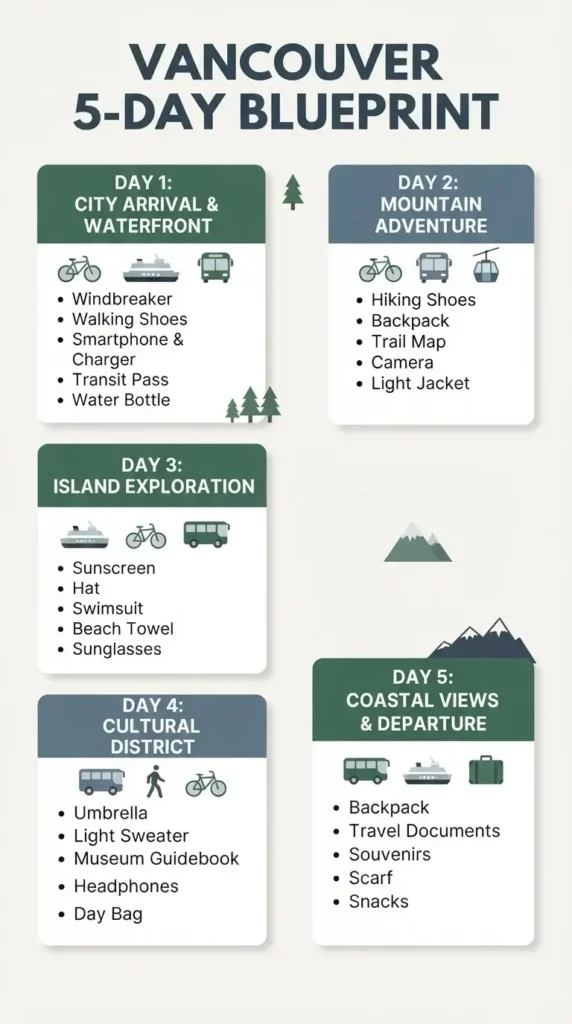
The Essential 5-Day Vancouver Survival Blueprint
To make sure your 5-day trip runs smoothly without a hitch, use this quick-reference table to prepare your daily transit and packing decisions.
| Day | Primary Destination | Best Transit Mode | What to Pack in Your Daypack |
| Day 1 | Stanley Park & Granville Island | City Bicycle & Aquabus | Sunglasses, light windbreaker, camera |
| Day 2 | Gastown & Chinatown | Walking (Comfortable boots) | Small umbrella, notebook, camera |
| Day 3 | Lynn Canyon & Grouse Mountain | SeaBus Ferry & Local Bus | Sturdy hiking shoes, water bottle, extra layers |
| Day 4 | UBC Museum & Wreck Beach | Express Trolley Bus | Beach towel, sunscreen, warm sweater for sunset |
| Day 5 | Aquarium & Mount Pleasant | SkyTrain & Walking | Eco-friendly shopping bag, light jacket |
Your Turn to Take the Leap
When I left my corporate desk job years ago, I was terrified of making mistakes on the road. I thought a successful trip meant everything had to go perfectly according to a strict plan. But over time, I realized that the real magic of travel happens when things slow down—when you step off the crowded tourist track, take the public bus, strike up a conversation with a local artisan, or sit quietly on a driftwood log watching the ocean tide roll in.
Vancouver can seem intimidating because of its massive size and rugged landscapes, but it is one of the most welcoming, inspiring places in the world for an independent traveler. Don’t wait around for the “perfect moment” or a massive group of friends to coordinate schedules. Pack your favorite sturdy walking shoes, get your daypack ready, and go experience the wild, fresh beauty of the Pacific Coast on your own terms. The world always rewards curiosity and courage.



