
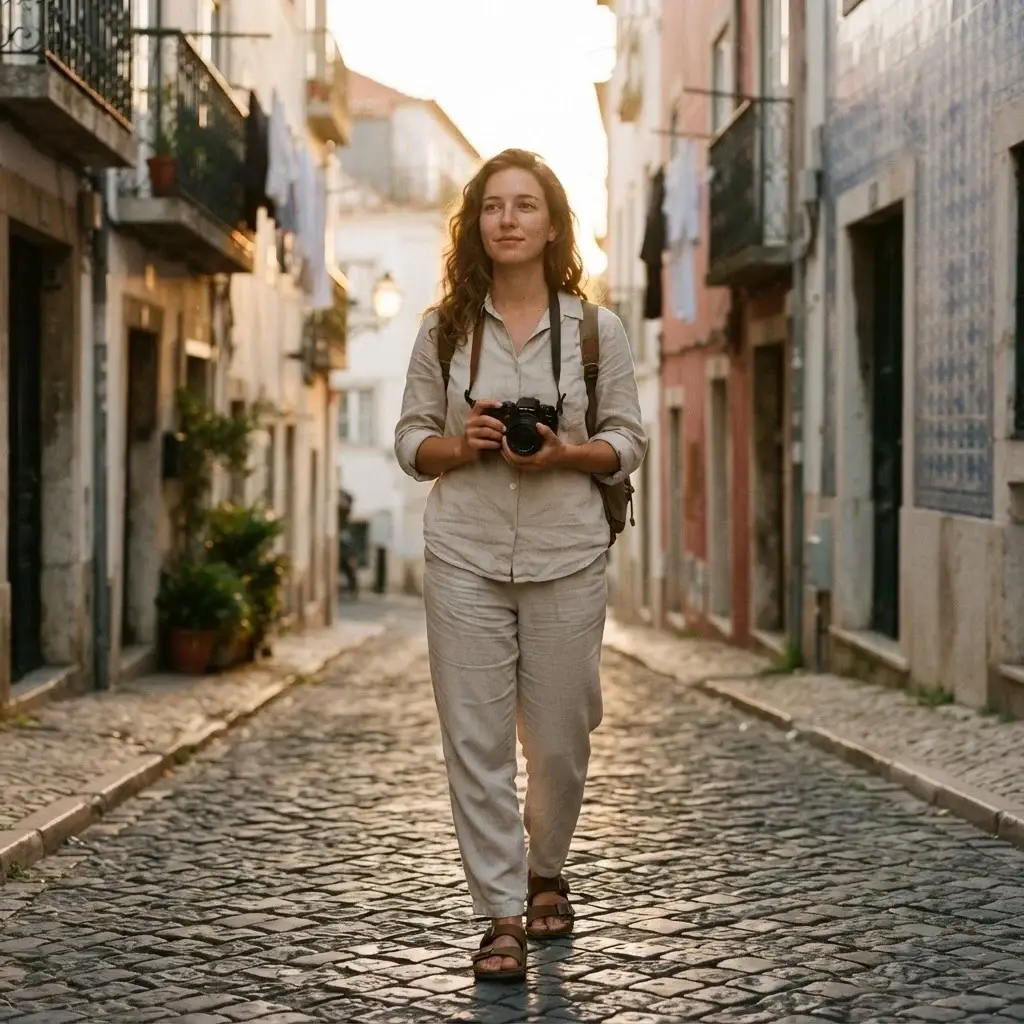
I still remember the exact moment I decided to quit my corporate office job in New York. I was staring at a spreadsheets grid under buzzing fluorescent lights, tracking marketing metrics that felt completely empty to me. My mind kept drifting back to my college days studying communication and rhetoric, and the times I spent backpacking solo across Europe or living with a host family in Ghana. I realized that a two-week annual vacation policy was never going to be enough for the life I wanted to live. I did not want to just cross countries off a list; I wanted to slow down, listen to local stories, and understand how people actually live in different corners of the world.
So, I left that cubicle behind. To fund my new path, I worked long shifts as a certified sightseeing guide in New York City, sharing historical tidbits with tourists while saving every spare dollar. That guiding experience taught me a massive lesson: the true magic of a city is never found in the crowded souvenir shops or the overpriced tour buses. It is found in the quiet side streets, the multi-generational family kitchens, and the local music that gives a place its heartbeat.
When I first touched down in Portugal, I wanted to see if it was possible to capture that deeper spirit on a tight timeline. Lisbon is a city that tempts you to rush, but it rewards you immensely when you slow down. This comprehensive, deep-dive 48-hour itinerary for Lisbon is built for the traveler who wants to skip the glossy surface and connect with the real, authentic soul of the Portuguese capital. Whether you are a first-time solo traveler nervous about taking your very first step, or an experienced explorer looking for a practical, street-level roadmap, this guide will help you navigate Lisbon with total confidence.
Day 1: Ancient Roots, Pastel Glazes, and the Fado Heartbeat
The first half of our journey focuses on the historic core of Lisbon. The city is built on seven steep hills overlooking the wide Tejo River. To understand its soul, you have to walk the ground where its history began, climb its vertical staircases, and taste the culinary staples that have sustained local families for centuries.
Morning: Getting Lost in the Labyrinth of Alfama
Start your first morning early, around 8:00 AM, before the midday heat and the tour groups arrive. Alfama is the oldest neighborhood in Lisbon. It is a maze of narrow alleyways, hidden courtyard squares, and steep stone steps that managed to survive the devastating earthquake of 1755. Walking here feels like stepping back in time. You will see wet laundry hanging from iron balconies, smell grilled sardines cooking on tiny outdoor braziers, and hear older neighbors chatting across the narrow gaps between their homes.
Your first specific stop should be the Sé de Lisboa (Lisbon Cathedral). Built in 1147, this fortress-like church features massive stone towers that look more like a medieval castle than a traditional cathedral.
- Navigation Tip: Walk up the hill from the Baixa district along Rua de Augusto Rosa.

- Watch your footing on the sidewalks, as the cobblestones can be slick.
- Insider Secret: Do not pay to just walk into the main entrance if you are on a budget. The grand front facade is completely free to view from the street, and the real beauty lies in observing how the morning light hits the ancient stone exterior while the yellow Tram 28 rattles directly past the heavy wooden doors.
From the cathedral, continue climbing upward toward the Miradouro de Santa Luzia. A miradouro is a public viewpoint, and Lisbon has dozens of them. Santa Luzia is uniquely beautiful because it features a long, white-pillared terrace covered in bright pink bougainvillea flowers and classic blue-and-white ceramic tiles called azulejos.

From this vantage point, you can look down over the sea of terracotta rooftops stretching all the way to the blue waters of the river.
Culinary Stop: Your First Pastéis de Nata
By 9:30 AM, your legs will feel the burn of the steep hills. It is time for your first traditional breakfast. Skip the major commercial pastry chains and find Pastelaria Santo António, located right on the climb up toward the castle.
Order a pastel de nata (a rich, creamy egg custard tart inside a flaky, laminated pastry crust) and a café simples (a strong, dark shot of espresso, often called a bica by locals). Sit at a small table, sprinkle a bit of powdered cinnamon and icing sugar over the warm, blistered top of your tart, and watch the neighborhood wake up. A proper tart should crackle loudly when you bite into it, and the custard should be warm and velvety, never gelatinous or cold.
Midday: The Ramparts of São Jorge and the Streets of Mouraria
With your energy restored, make the final push up to the Castelo de São Jorge (St. George’s Castle). This ancient Moorish citadel sits on the highest hill in the city center. While the interior of the castle is largely an open archaeological site, the main draw is the sweeping walk along the heavy stone ramparts.
- Navigation & Ticketing: To avoid waiting in a hour-long line under the hot sun, purchase your entry ticket online on your phone while walking up the hill.
- Insider Secret: Once inside the castle grounds, look for the native peacocks that live in the shaded olive and pine trees. Walk past the main central courtyard to the old stone walls on the northern side; you will find a much quieter view of the non-touristy residential valleys of Lisbon where fewer crowds gather.
After descending from the castle, do not head back down the way you came. Instead, follow the downhill signs toward Mouraria. This is the historic Moorish quarter and the multi-ethnic heart of modern Lisbon. It is far less manicured than Alfama, which makes it incredibly authentic.
As someone who loves cultural immersion, I find Mouraria fascinating. You will walk down alleyways decorated with black-and-white photographic portraits of the neighborhood’s elderly residents, pinned directly to the stone walls by local artist Camilla Watson. This project honors the human stories of the community, reminding visitors that these historic streets are living, breathing neighborhoods, not amusement parks.
MOURARIA EXPLORATION TIP:
Look closely at the stone walls along Beco das Farinhas.
The permanent photographic prints celebrate the faces and
stories of the neighborhood’s long-term residents.
Afternoon: The Literary Hub of Chiado and the Energy of Bairro Alto
Cross the wide, flat central squares of Rossio and Baixa to reach the elegant district of Chiado. If Baixa is the commercial flatland, Chiado is the historic gathering place for Lisbon’s artists, poets, and intellectuals.
Walk up the steep Rua Garrett until you reach Livraria Bertrand. Founded in 1732, this is officially recognized by the Guinness World Records as the oldest operating bookstore in the entire world. The interior is a beautiful, long corridor of stone arches lined with thousands of books. Walk all the way to the very back room, where you can find a small selection of English-language books focusing on Portuguese history and literature. If you buy a book, the cashier will stamp the inside cover with an official seal certifying that it was purchased at the world’s oldest bookstore—a wonderful, inexpensive souvenir.
Right outside the bookstore sits the historic Café A Brasileira. A bronze statue of Fernando Pessoa, Portugal’s most famous modernist poet, sits at an outdoor table. While the outdoor tables carry a steep tourist price premium for drinks, it is entirely acceptable to walk inside, stand at the ornate wooden bar, and order a quick espresso like a local for a fraction of the cost. The interior features gorgeous 1920s Art Deco woodwork, mirrors, and paintings that make you feel like you have traveled back a century.
Evening Navigation Note
As the afternoon fades into twilight, walk further up the hill into Bairro Alto. During the daytime, this neighborhood looks quiet and almost sleepy, with graffiti-covered metal shutters closed tightly over bar doors. But as darkness falls, these narrow streets transform completely.
For solo travelers, Bairro Alto can feel intimidating due to the noise and crowds, but it is highly safe if you stick to well-lit paths. To prepare for an active night of walking, it is always a smart habit to consult official safety guidelines before heading out. I highly recommend reading the comprehensive country assessments provided by the US Department of State Travel advisory for Portugal to check current safety ratings, local laws, and travel alerts for American citizens abroad.
Night: The Raw Emotion of Tasca Fado
You cannot claim to have experienced the true soul of Lisbon without listening to Fado. Fado is Portugal’s traditional musical style, characterized by a solo singer accompanied by a classical guitar and a twelve-string Portuguese guitar (guitarra portuguesa). The music is defined by the word saudade, a complex Portuguese term that describes a deep, melancholic feeling of longing, nostalgia, and bittersweet loss.
Skip the large, expensive Fado dinner-theaters in tourist guides that charge high entry fees for mediocre food. Instead, head back to the edge of Alfama or Mouraria for an authentic experience at a tiny, family-run restaurant called a tasca.
My absolute favorite spot for this is Tasca do Chico in Bairro Alto, or A Baiuca in Alfama for Fado Vadio (amateur Fado). In these tiny rooms, the lights are dimmed completely at 9:00 PM. The waiters stop serving food, the crowd goes dead silent, and local neighborhood residents take turns standing in the corner to sing their hearts out. The emotion is so raw and powerful that you do not need to understand a single word of Portuguese to feel the singer’s pain or joy.
- Culinary Tip: Order a plate of Chouriço Assun (traditional pork sausage cooked right at your wooden table over a flaming clay dish of alcohol), a bowl of green olives, and a small carafe of house red wine (vinho da casa).
- Cultural Etiquette: Never talk, whisper, or clink your glassware while the Fado musicians are playing. It is considered deeply disrespectful to the artists and the local culture. If you need to order a drink or pay your bill, wait patiently for the short breaks between songs.
Day 2: Maritime Glory, Golden Age Architecture, and Riverside Sunsets
Our second day takes us away from the narrow medieval hills of the center and leads us westward along the river toward Belém, the historic launching point for Portugal’s golden Age of Discovery.
Morning: The Monumental Splendor of Belém
Belém is wide, open, and green, offering a stark visual contrast to the tight, vertical alleys of Alfama. This is the waterfront district where famous explorers like Vasco da Gama set sail into the unknown Atlantic Ocean.
To get here from the city center, take the Tram 15E from the Praça do Comércio station.
- Navigation Tip: The older vintage trams are beautiful but can get intensely packed with pickpockets. Take the modern, longer articulated tram on this line instead; it has more space, better air conditioning, and allows you to tap your contactless bank card or Viva Viagem transit card directly at the onboard machines.
Your first stop in Belém must be the breathtaking Mosteiro dos Jerónimos (Jerónimos Monastery). This massive complex is a stunning example of Manueline architecture, a uniquely Portuguese style that combines Gothic design with intricate maritime motifs like sculpted sea waves, carved ropes, and coral branches.
MANUELINE ARCHITECTURE TO SPOT:
– Carved stone ropes wrapping around columns
– Sculpted sea anchor emblems
– Intricate limestone lattice windows facing the cloister
The construction of this monastery was funded by the immense wealth generated from Portugal’s historic spice trade routes. As a destination of global cultural significance, it is fully protected as an official World Heritage site. You can explore the history of this architectural masterpiece by visiting the dedicated UNESCO World Heritage listing for the Monastery of the Hieronymites and Tower of Belém, which details how these coastal structures came to symbolize Europe’s historic ocean voyages.

- Insider Secret: The line to enter the interior stone cloisters can take hours. However, the entrance to the main church body (where the stone tomb of Vasco da Gama rests) is via a separate line that moves much faster and is entirely free to enter. Look for the entrance on the right side of the main facade.
After visiting the monastery, take a short stroll through the green public gardens toward the riverbank to view the Padrão dos Descobrimentos (Monument to the Discoveries). This huge limestone monument is shaped like the prow of a traditional caravel ship, featuring statues of historic navigators, cartographers, and kings staring out toward the water.
From there, walk twenty minutes westward along the wide, flat pedestrian path next to the river to reach the iconic Torre de Belém (Belém Tower). This small stone fortress looks like a chess piece rising directly out of the tidal waters of the Tejo River. It originally served as a defensive fort and a ceremonial gateway for returning sailors.
Culinary Heritage: Pastéis de Belém
Before leaving the district, you must visit the blue-and-white tiled storefront of Pastéis de Belém. This bakery has been operating since 1837, using a secret recipe created by the Catholic monks from the monastery next door.
- Insider Secret: The takeaway line wrapping around the outdoor sidewalk looks incredibly discouraging. Ignore it completely and walk directly inside the front doors. The interior of the building is massive, containing multiple maze-like seating rooms that can hold hundreds of guests. Walk all the way to the back, find a free table, and sit down for table service. You will be served warm, fresh tarts straight from the industrial ovens within minutes, away from the chaotic sidewalk crowds.
Midday: Creative Rebirth at LX Factory
On your tram ride back toward the city center, press the stop button to get off at Alcântara-Mar. Nestled directly beneath the massive red steel pillars of the 25 de Abril Bridge (which looks almost identical to San Francisco’s Golden Gate Bridge) lies the LX Factory.
This complex was once a massive, abandoned industrial textile factory yard from the 19th century. Today, it has been completely transformed into a thriving creative village filled with local art studios, independent fashion boutiques, indie coffee shops, and massive outdoor street art murals.
For a solo traveler looking for creative inspiration, this is a wonderful place to spend an afternoon wandering around. Walk into Ler Devagar (which translates to “Read Slowly”), one of the most visually stunning bookstores you will ever see. The shop is housed in an old printing press building, with giant, antique mechanical printing machines still sitting right in the center of the room.

A life-sized sculpture of a woman riding a bicycle hangs suspended from the high ceiling, surrounded by floor-to-ceiling walls of books accessible via industrial metal catwalks.
Lunch Stop: Creative Local Eats
For lunch inside LX Factory, skip the burger joints and seek out a small spot serving a modern twist on Portuguese classics. Look for A Praca, a rustic restaurant with exposed brick walls located inside the main courtyard.
Order a refreshing plate of Salada de Polvo (tender, marinated local octopus tossed with finely diced bell peppers, red onions, fresh cilantro, and high-quality olive oil) or try Bacalhau à Brás (a comforting Portuguese staple made from shredded salted cod fish, finely chopped onions, and thin, matchstick-sized fried potatoes, all bound together with creamy scrambled eggs and garnished with black olives). It is a perfect example of how Portuguese home cooking utilizes simple ingredients to create incredible depth of flavor.
Afternoon: The Bustle of Cais do Sodré and the Pink Street Myth
Take the tram or a local train two stops further east to Cais do Sodré. A decade ago, this waterfront hub was a gritty, neglected port district for sailors. Today, it is a bustling center of local nightlife and food culture.
Walk into the massive Time Out Market Lisboa housed inside the historic Mercado da Ribeira building. One half of the market still functions as a traditional morning wet market where local elderly residents buy fresh fish and vegetables. The other half is a massive, high-ceilinged food hall lined with curated stalls run by some of Lisbon’s top chefs and restaurants.
- How to Navigate: It can be chaotic and crowded during peak lunch hours. Treat it as a visual tasting tour instead of a formal sit-down meal. Walk along the outer perimeter stalls, grab a small plate of Croquetes de Bacalhau (codfish croquettes) or a gourmet beef sandwich called a prego, and find a standing spot at the high communal wooden tables in the center of the hall to soak in the loud energy.
Just a five-minute walk from the market is the famous Rua Nova do Carvalho, known globally as Pink Street. The street pavement was painted bright pink as part of an urban renewal project to transform the old red-light district into a nightlife hub.
- Emma’s Reality Check: While it looks striking and bright in professional travel photos online, the reality during the daytime can be disappointing. The pink paint is often scuffed by delivery trucks, and it can smell like stale beer from the night before. Don’t linger too long just for a photo; instead, turn your attention northward to explore the hilly paths leading up toward the beautiful neighborhood of Principe Real for a much more authentic slice of modern city life.
THE REALITY OF PINK STREET:
Expect scuffs, delivery trucks, and heavy crowds.
For a cleaner, more relaxing urban walk, head
north up the hill toward the Principe Real gardens.
Night: A Riverside Farewell at Ribeira das Naus
Conclude your final evening in Lisbon by walking along the Ribeira das Naus, a wide waterfront pedestrian promenade connecting Cais do Sodré back to the grand archway of the Praça do Comércio.
During the late afternoon and sunset hours, local musicians set up acoustic guitars along the stone steps that slope directly down into the river waters. Vendors push small wooden carts selling chilled glasses of Portuguese white wine or Vinho Verde (a young, slightly sparkling “green” wine from the north of the country).
Sit down on the low stone steps, feel the cool river breeze face you, and watch the sun sink slowly beneath the horizon behind the distant red bridge. As the sky turns shades of deep orange and purple, reflect on the incredible layers of history, grit, and soulful music you encountered over the last 48 hours. This is the exact moment where the travel anxiety melts away, replaced by the deep confidence that comes from stepping outside your comfort zone and navigating a historic city entirely on your own two feet.
Practical Survival Guide for Your Lisbon Adventure
To make sure your trip runs as smoothly as possible, I have gathered the essential ground-level logistical tips that I wish someone had handed to me before my first arrival.
Navigating the Airport and Public Transit
When you land at Lisbon Humberto Delgado Airport (LIS), do not walk into the long, expensive lines for airport taxis outside the terminal doors. The airport is connected directly to the city center via its own dedicated station on the metro line.
- Buy a Viva Viagem Card: Step into the airport metro station entrance and locate the green automated ticket machines. Purchase a paper Viva Viagem card for 0.50 Euros.
- Use “Zapping”: Load the card with 10 or 15 Euros using the “Zapping” option. This option allows you to use a single card across all transit networks—metro, historic trams, public buses, and even the local trains to Sintra or Cascais—at a discounted rate per ride. It saves you from having to buy individual tickets every single time you board.
- The Route: Take the Red Metro Line from the airport to the Alameda station, then switch seamlessly to the Green Metro Line heading south to reach historic stops like Rossio or Baixa-Chiado. The entire trip takes under 35 minutes and costs less than two Euros.
Health, Safety, and Food Prep
Lisbon is an incredibly safe destination for solo travelers, but keeping basic international health and safety standards in mind is always a smart planning strategy. For instance, when packing your daypack with essential medications, it is wise to check current global travel health recommendations. You can find detailed, country-specific medical advice and food safety standards on the CDC Travelers’ Health guide for Portugal to ensure you remain healthy and active throughout your itinerary.
Packing Essentials: The Footwear Warning
I cannot stress this enough: leave your high heels, slick leather dress shoes, and thin-soled sandals at home.
Lisbon’s streets are paved with Calçada Portuguesa—traditional, hand-set white limestone and black basalt cobblestones arranged in decorative mosaic patterns. While beautiful, these stones have been worn down by millions of footsteps over centuries, making them polished, slippery, and uneven.
When you combine these smooth stones with the city’s incredibly steep 30-degree hill inclines, walking can feel like navigating an ice rink if you have the wrong footwear. Pack broken-in sneakers with rubber soles and strong arch support.

Your ankles and knees will thank you after your first afternoon of exploring.
Language and Local Etiquette
While English is widely spoken in almost all hotels, cafes, and major tourist hubs across Lisbon, making an effort to speak the local language is the fastest way to earn a warm smile from a local tasca owner.
- Obrigado / Obrigada: This is the word for “Thank you.” If you identify as male, say Obrigado. If you identify as female, say Obrigada.
- Por Favor: This means “Please.”
- Bom Dia: “Good morning” (used until lunchtime).
- Boa Tarde: “Good afternoon” (used from lunch until dark).
Avoid trying to speak Spanish to locals unless you are completely stuck. While the two languages look similar on paper, Portuguese people are fiercely proud of their independent culture, identity, and language history. Starting a conversation with a polite, soft Spanish phrase can sometimes be viewed as culturally insensitive. If you do not know the Portuguese word, it is always much better to ask politely in simple English.
Final Thoughts
When I look back at my time working that rigid 9-to-5 desk job, I remember feeling a constant pressure to rush through everything. I was always rushing to catch the subway, rushing to finish projects, and rushing to pack my life into tiny weekend windows. When we travel, we often bring that exact same frantic energy with us, turning an adventure into a stressful corporate checklist of sights to see.
But Lisbon is a city that teaches you the art of letting go. It teaches you that a morning spent sitting on an old stone step, listening to a street musician play the guitar while eating a warm custard tart, can be infinitely more valuable than standing in a two-hour museum line just to cross it off an itinerary.
My Final Travel Challenge to You:
Sometime during your 48 hours in Lisbon, put your phone and
your map completely inside your bag for just one hour.
Turn down an unknown stone alleyway in Alfama, follow the
sound of distant music, and let yourself get beautifully lost.
As you wrap up this 48-hour itinerary for Lisbon, remember that the mistakes, the wrong turns, and the moments where you get a little bit lost are usually the exact moments where the real magic happens. The world rewards curiosity and courage. Stop waiting for the absolute perfect moment to travel. Pack your favorite walking shoes, book that train or flight, and go discover the real, authentic soul of Lisbon for yourself.



