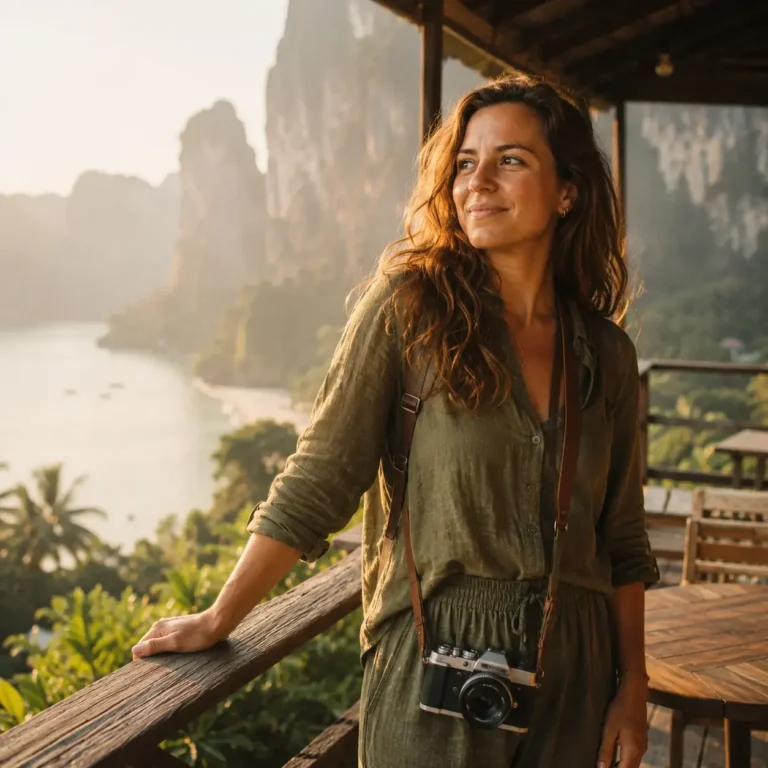
How These Packing Tips for Stress-Free Travel Build Confidence

I still remember the heavy, suffocating feeling of standing in the middle of my tiny New York apartment years ago, staring at a massive, overstuffed suitcase. I was preparing for one of my first big solo trips across Europe. I had packed for every single worst-case scenario. I had four pairs of heavy jeans, three bulky jackets, a mountain of shoes, and enough “just-in-case” toiletries to supply a small village. I could barely zip the bag shut, let alone lift it.
When I landed in London, that suitcase became my prison. Dragging that sixty-pound monster down the narrow stairs of the underground tube station while crowds of rushing commuters swerved around me was humiliating. My back ached, my palms were sweaty, and I felt completely vulnerable. I wasn’t an independent adventurer; I was a target. Every stairwell felt like a mountain, and every cobblestone street in Paris felt like an enemy. I was completely consumed by the physical weight of my things.
That trip was the turning point. Later, when I left my rigid 9-to-5 corporate office job to pursue full-time travel, I spent months working as a certified sightseeing guide in New York City and waitressing late shifts to save up cash. Walking miles every day with tourists taught me a universal truth: the heavier your bag, the higher your anxiety.
When I finally set off to teach English in Thailand and live with a host family in Ghana, I radically changed my approach. I learned that packing light is not just a logistical trick to save money on baggage fees. It is a profound psychological tool. When you master your luggage, you master your environment.
Below, I am sharing the exact strategies I use to lighten my load. These are the practical steps that will help you shed your fears, build real self-reliance, and step onto the plane with absolute confidence.
The Hidden Link Between Your Luggage and Your Mindset
When we pack too much stuff, we are usually trying to buy our way out of fear. We think that if we carry enough clothes, medicines, and gadgets, we can protect ourselves from the unknown. But on the road, the exact opposite happens. Excess baggage drags you down, drains your energy, and makes you look like a confused outsider.
Why Heavy Bags Fuel Travel Anxiety
Think about the moments of highest stress during a trip. It is usually when you are navigating a crowded train platform, looking for a local bus, or walking down a dimly lit street trying to find your guesthouse. If you are struggling with a massive rolling suitcase and a heavy backpack, your attention is split. You are looking at your bags instead of your surroundings.
A heavy bag makes you physically slow. If you need to jump onto a moving ferry in southern Thailand or climb the steep steps of an ancient hill tribe village, you cannot do it easily with a giant suitcase. This physical limitation creates a feeling of helplessness. You start to worry about transitions. You worry about how you will get from point A to point B, rather than enjoying the space between them.
The Psychology of Minimalist Freedom
When you reduce your belongings to a single, carry-on-sized backpack, something magical happens to your brain. You realize that you do not need a massive safety net to survive. You begin to trust your own ability to problem-solve. If it rains, you don’t need a heavy, specialized raincoat; you buy a cheap poncho from a local market. If your shirt gets dirty, you wash it in the bathroom sink with a bar of soap.
This shift builds immense self-confidence. You realize that your safety and happiness do not come from the items inside your bag. They come from your own resilience, your resourcefulness, and your open mind. You stop being a passive consumer dragging a piece of home behind you, and you become an active explorer moving through the world with grace.
How to Select the Perfect Travel Pack
Your bag is your home on the road. Choosing the wrong container can ruin even the most carefully planned packing list. Over my years of slow travel, I have tested every type of luggage, and I always return to a premium, front-loading travel backpack between 35 and 45 liters.
Why Suitcases Fail the Solo Adventurer
Rolling suitcases are great for smooth airport terminals and luxury hotel lobbies. But the moment you step off the beaten path, they become a liability. Imagine trying to drag small plastic wheels through the deep sand of a beach in Railay, or over the uneven, historic stones of a European old town. The wheels rattle, the handle jams, and you end up carrying the suitcase by its side handle anyway.
More importantly, a suitcase keeps one of your hands permanently occupied. As a solo traveler, you need your hands free. You need one hand to hold your phone for navigation and the other hand to grab a rail, pay for a train ticket, or eat a stick of street food. A backpack keeps your center of gravity stable and leaves your hands free to react to your environment.
Key Features to Look For
When shopping for a travel backpack, do not just buy a standard hiking pack. Hiking packs are typically top-loading, which means they are shaped like a long tube. If you need a clean pair of socks from the bottom of the bag, you have to pull out every single item above it.
Instead, look for a panel-loading or front-loading pack. These bags unzip all the way around the perimeter, opening up flat just like a suitcase. This allows you to organize your gear beautifully and access any item instantly without creating a chaotic mess in your hostel room.
Ensure the pack has a robust, padded hip belt. This belt is critical because it transfers 80 percent of the bag’s weight from your delicate shoulders down to your strong hips and legs. Also, check the dimensions carefully. The total length should stay under 22 inches so you can easily bypass the check-in counters and walk straight through security.
The Core Packing Rules for Stress-Free Travel
To achieve a lightweight bag, you must follow a few strict design rules. Packing is an art of editing. It is about choosing what to leave behind, not finding clever ways to squeeze more things inside.
The 5-4-3-2-1 Rule
This is a simple, classic framework that keeps your clothing selection honest. It prevents you from packing for hypothetical scenarios that will never happen. For a multi-week trip to a warm or temperate climate, your clothing capsule should consist of:
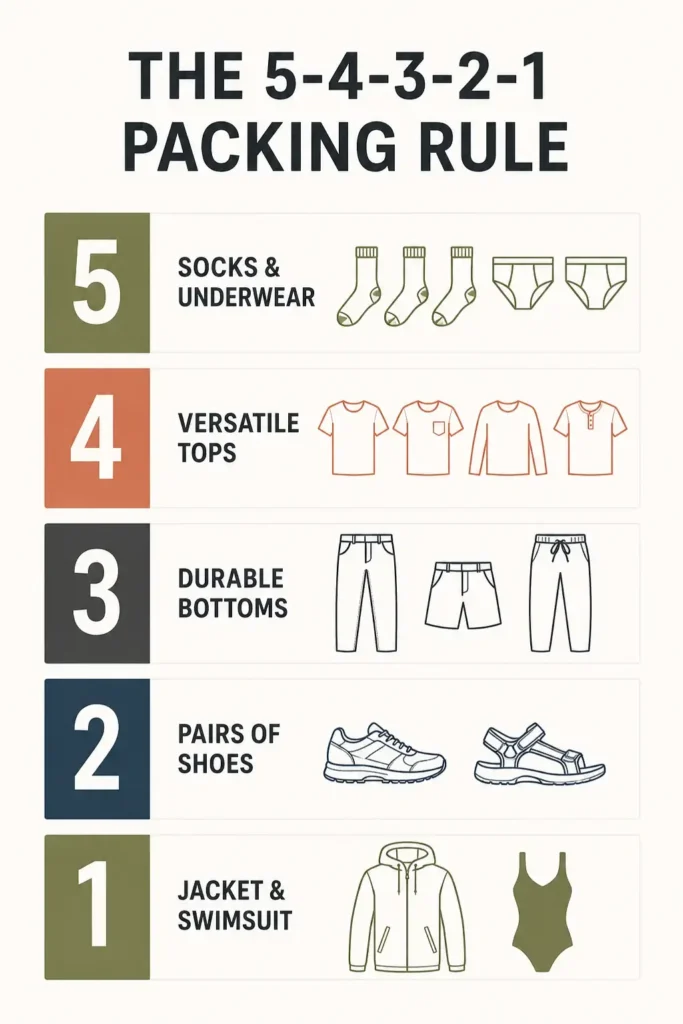
- 5 Pairs of Socks and Underwear: Choose lightweight, moisture-wicking fabrics that dry in a few hours.
- 4 Tops: A mix of short-sleeve t-shirts and one long-sleeve layer for sun protection or cooler evenings.
- 3 Bottoms: One pair of durable long pants, one pair of comfortable shorts, and one casual skirt or lightweight travel pant.
- 2 Pairs of Shoes: One pair of sturdy, broken-in walking sneakers and one pair of high-quality, supportive sandals.
- 1 Jacket and 1 Swimsuit: A versatile, packable windbreaker or fleece layer that rolls up small.
The Color Palette Strategy
Every single item of clothing you put into your bag must match every other item. If you pack a shirt that only goes with one specific pair of pants, leave it at home. Stick to a neutral base color like navy, black, or grey, and add two or three complementary accent colors.
This allows you to mix and match endlessly. By combining different tops and bottoms, those few basic items can create over a dozen unique outfits. No one on the road cares if you wear the same shirt twice a week. They are too busy looking at the scenery, and you should be too.
Fabric Selection Matters
Avoid heavy, 100 percent cotton fabrics whenever possible. Cotton holds onto sweat, takes days to air-dry, and becomes heavy when damp. Instead, look for merino wool or high-quality synthetic blends.
Merino wool is a miracle fabric for travelers. It regulates your body temperature, stays cool in the heat, keeps you warm in the cold, and naturally resists odors. You can wear a merino wool shirt multiple times without it smelling bad, which means you can pack far fewer shirts overall.
Organizing Your Bag with Precision
An organized bag creates an organized mind. When you know exactly where every single item lives inside your pack, you eliminate the frantic panic of digging through your gear at a busy border crossing.
The Magic of Packing Cubes
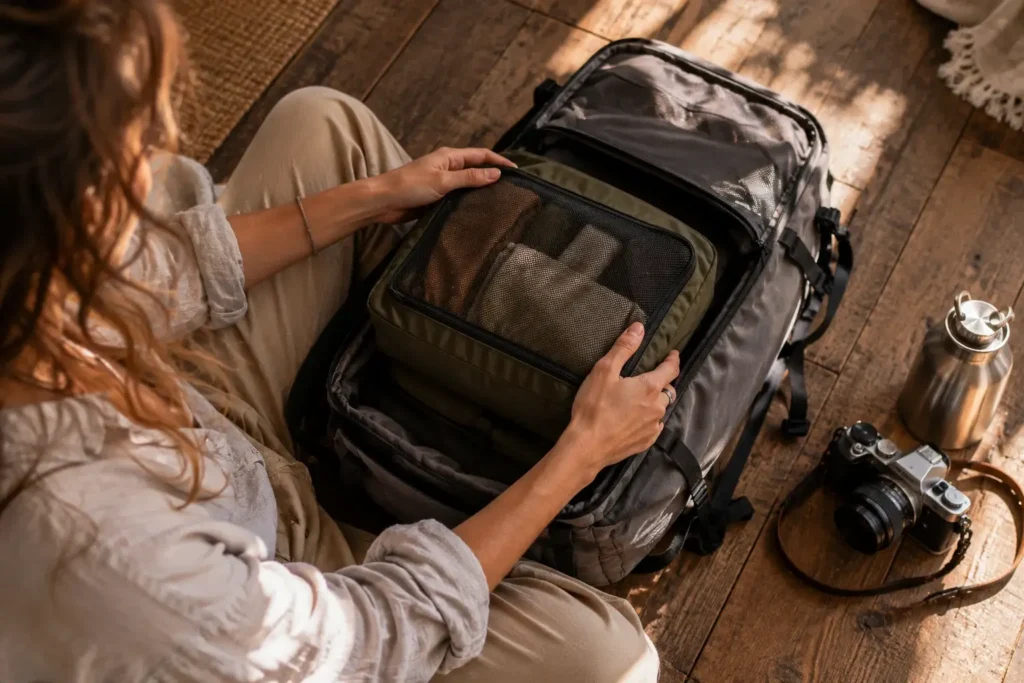
If you are not using packing cubes, you are missing out on the greatest travel organization tool ever invented. These small, ultra-lightweight fabric zippered containers act like drawers for your backpack.
I use three distinct cubes: one large cube for my rolled bottoms and dresses, one medium cube for tops, and a small mesh cube for underwear and socks. When you arrive at your accommodation, you don’t need to unpack your entire bag. You simply lift out the three cubes and place them on your bed or shelf. Your clothes stay clean, tightly rolled, and perfectly contained.
How to Compress and Layer
Never fold your clothes when packing a backpack; always roll them. Rolling squeezes out trapped air, minimizes wrinkles, and allows you to pack items tightly against each other like logs.
When loading your pack, place your heaviest items—like your extra shoes or a small travel towel—at the very bottom or along the spine of the pack. This keeps the heavy center of gravity close to your body so the bag doesn’t pull you backward.
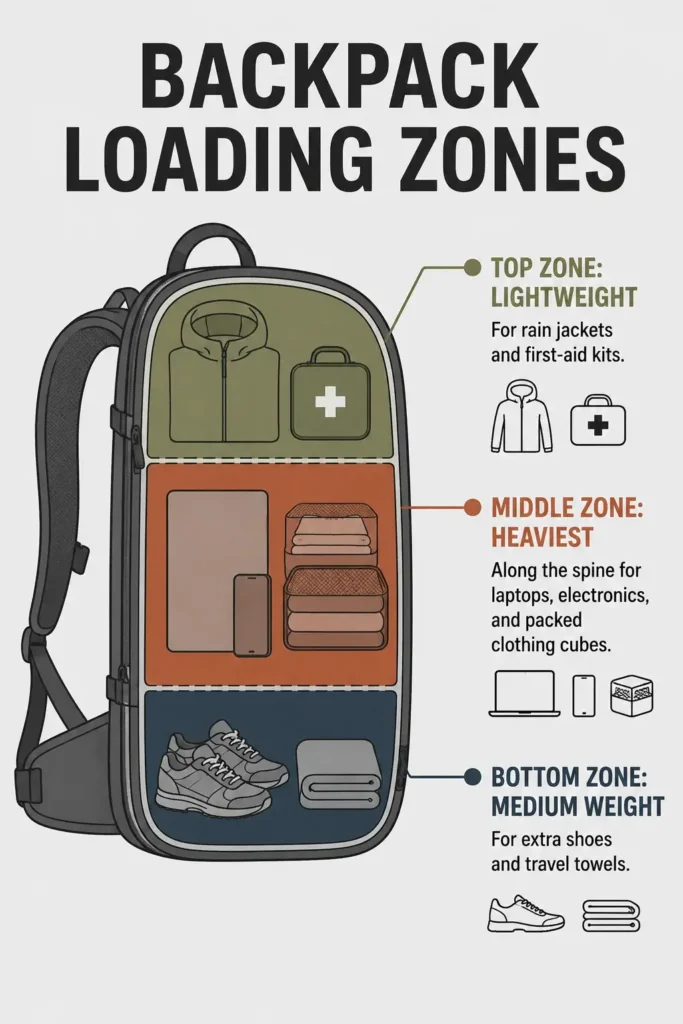
Put your packing cubes in the middle, and save the very top zone of the backpack for items you might need at a moment’s notice, such as a rain jacket, your toiletry kit, or a headlamp.
Managing Electronics and Document Security
In our digital world, it is easy to get weighed down by chargers, cords, and heavy devices. Protecting your digital life and your legal documents is critical for keeping your stress levels low.
The Tech Capsule Concept
As someone who runs an online travel business, I have to carry some gear, but I keep it strictly curated. Put all your charging cords, wall adapters, external batteries, and memory cards into a single, dedicated, padded tech pouch.
Invest in a multi-port GaN (Gallium Nitride) wall charger. These modern chargers are incredibly small but pack enough power to charge your laptop, phone, and camera all at the same time from a single wall outlet. This eliminates the need to carry three separate heavy power bricks.
Always carry a high-quality external battery bank (at least 10,000 mAh). When you are taking a long, twelve-hour bus ride through rural areas, keeping your phone charged is a safety requirement. It ensures you can always access your maps, translate local languages, or call for assistance if needed.
Safeguarding Your Legal Documents
Losing your passport in a foreign country is a quick way to ruin a trip. To prevent this, I use a simple system of absolute redundancy. I keep my physical passport, printed vaccination records, and backup credit cards in a slim, RFID-blocking security pouch that stays hidden underneath my clothes when I am moving between destinations.
Before I leave home, I take clear photos of all my important documents. I upload these images to an encrypted cloud storage folder that I can access from any device anywhere in the world. I also email a copy to a trusted family member. For official guidance on what entry documents, visas, and safety protocols you need for your destination, it is always smart to verify requirements directly through the US Department of State Travel website before you book your flights. Having these digital backups gives you immense peace of mind, knowing that even if your bag disappears, you can still prove who you are and navigate the situation safely.
Toiletry Minimalism and On-the-Road Health
The toiletry bag is often the heaviest item in a beginner’s pack. We tend to bring full-sized bottles of shampoo, massive tubes of toothpaste, and unnecessary cosmetic products because we fear we won’t find them abroad.
Embracing Solid Toiletries
The easiest way to cut down on weight and breeze through airport security without worrying about liquid limits is to switch to solid toiletries. Today, you can find high-quality solid shampoo bars, conditioner bars, solid body wash, and even dehydrated toothpaste tablets.
These solid products last significantly longer than liquids, they cannot leak or spill inside your bag, and they take up a fraction of the space. Put them in small, breathable sisal soap bags so they can dry out between destinations.
Building a Practical First-Aid Kit
You do not need to carry a full medical supply store with you. Every major city and most small towns around the globe have local pharmacies where you can buy basic supplies. Your travel first-aid kit should be small enough to fit in the palm of your hand. Focus on packing small quantities of emergency essentials:
When packing health supplies, it is essential to tailor your medical kit to the specific regions you plan to visit. For up-to-date health notices, required vaccinations, and local disease advisories, I always check the comprehensive guidelines provided by the CDC Travelers’ Health site to ensure I am protected against local regional risks.
Case Study: Packing for the Diverse Landscapes of Thailand
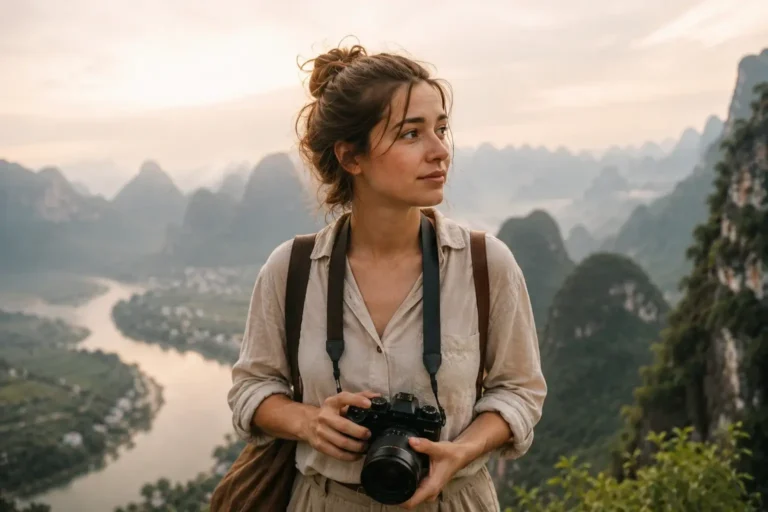
Let us look at how these packing tips for stress-free travel work in a real-world scenario. Thailand is one of the most popular destinations for first-time solo travelers, and it features a mix of bustling cities, sacred temples, dense jungles, and tropical beaches.
Navigating Bangkok’s Urban Heat
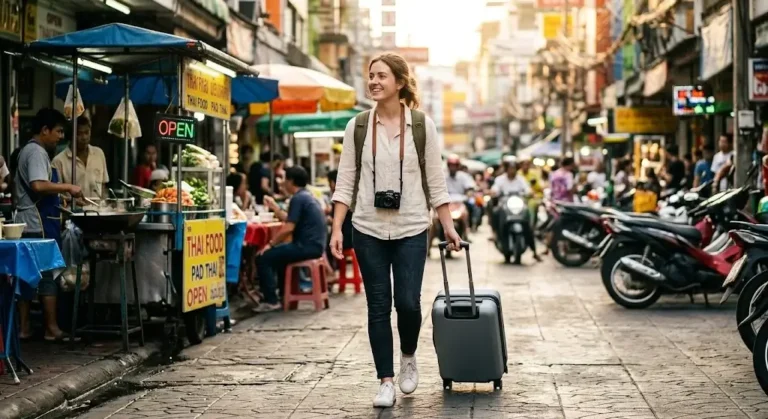
When you land in Bangkok, the intense humidity hits you immediately. If you are exploring the massive chatuchak weekend market or walking through the historic district, you want to be wearing ultra-lightweight, loose clothing.

For navigating the city efficiently, avoid the expensive and slow taxis stuck in gridlock traffic. Instead, download the Grab app on your phone. You can easily see how the ride-hailing system functions by checking out the official overview on the Grab platform to understand fare structures and safety features before you arrive. Using a motorbike taxi via Grab allows you to zip through traffic safely with your small backpack securely on your shoulders.
Respecting Sacred Cultural Spaces
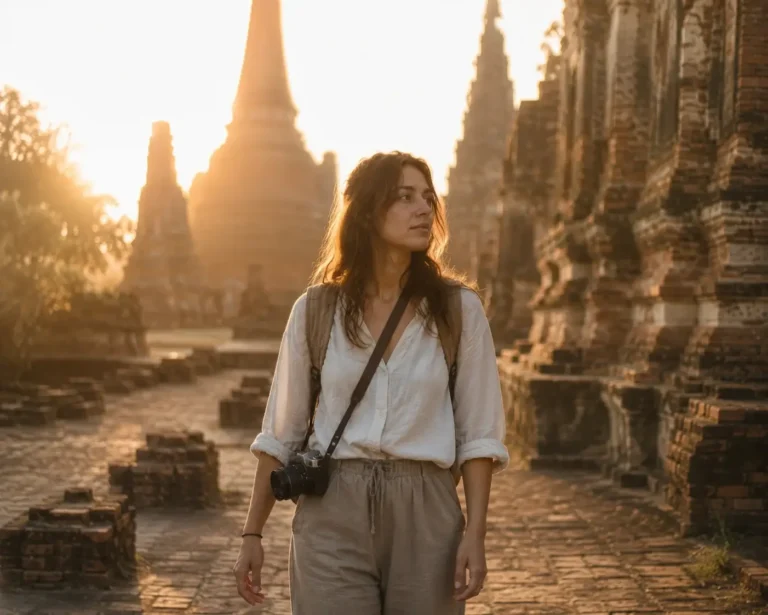
When visiting incredible cultural monuments, such as the ancient temples within the UNESCO World Heritage site of Ayutthaya, you must dress respectfully. This means your shoulders and knees must be fully covered.
Instead of packing heavy long pants just for temples, pack a lightweight, breathable cotton sarong or a large scarf. When you approach a sacred space, you can quickly wrap the sarong around your waist over your shorts or drape it over your shoulders. It takes up zero space in your bag and keeps you cool while honoring local customs. For detailed cultural guidelines and regional festival schedules, you can look over the resources on the Tourism Authority of Thailand official site to plan your temple visits perfectly.
Tasting Local Street Food Safely
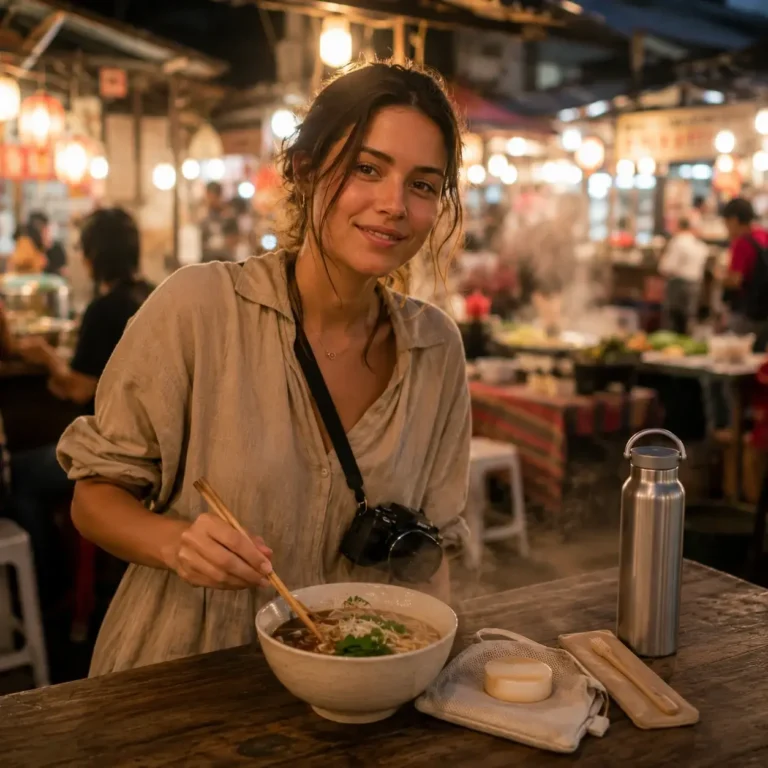
One of the greatest joys of traveling through Thailand is the culinary scene. From spicy Som Tum (papaya salad) to rich Pad Thai cooked over an open flame in a night market, the food is incredible.
To enjoy the street food safely without getting sick, follow the crowds. Look for stalls that have a long line of local residents waiting for food. This guarantees that the ingredients are fresh and moving quickly, rather than sitting out in the heat. Carry a small container of hand sanitizer and your own reusable bamboo utensils in your backpack’s side pocket.
Solo Travel Safety and Protecting Your Gear
Safety is the number one concern for anyone planning their first independent journey. Having a minimalist pack is actually one of your best defense mechanisms against petty theft and scams.
Staying Aware and Moving Light
When you carry a massive, heavy bag, you send a clear signal to scammers and pickpockets that you are overwhelmed, tired, and distracted. They know you cannot easily chase after someone or move away quickly.
When you have a single, compact backpack, you look purposeful. You can walk with your head up, look people in the eye, and navigate confidently.

If a hostel looks unsafe or an interaction feels wrong, you can pack up your entire life in less than two minutes and walk out the door to find a better place to stay. That mobility is your greatest security asset.
Using Local Locks and Transit Security
When staying in shared hostel dorms, always use the provided lockers. Carry a high-quality, mid-sized combination padlock in your bag. Do not use TSA locks for hostel lockers; they are too small and can easily be snipped with basic wire cutters.
When taking overnight buses or trains, never store your valuable electronics, passport, or cash in the large storage compartments underneath the bus. Keep your small tech pouch and documents in a tiny daypack that stays physically between your feet or wrapped around your arm while you sleep. To understand broader safety patterns and read deep-dives on regional travel trends, you can explore the articles on the Lonely Planet destination guides to get a clear sense of what to expect on the ground.
Preparing for the Unexpected with Insurance
No matter how perfectly you pack, and no matter how careful you are, travel is full of surprises. Flights get delayed, bags can occasionally be misplaced by airlines, or you might take a slip while hiking a beautiful mountain trail.
True travel confidence does not come from pretending that nothing will ever go wrong. It comes from knowing that you have a solid backup plan if something does.
The Financial Safety Net
During my time waitressing to save every single dollar for my travels, I learned the value of financial security. I never leave home without a reliable travel insurance policy. It acts as a safety net for your health and your gear.
If your lightweight backpack is stolen from a train station, or if you need to visit a clinic in a foreign country due to a sudden illness, having the right coverage saves you from catastrophic out-of-pocket expenses. To review specific coverage options, understand policy exclusions, and learn how to protect your baggage, you can research plan details directly on the World Nomads Travel Insurance site to find a plan that fits your specific style of adventure. Knowing you are protected allows you to explore with an open heart and zero lingering fear.
Final Steps: The Pre-Trip Test Pack
Before you zip your bag and head to the airport, I want you to perform one final, crucial exercise. I call it the “Reality Walk.”
Pack your backpack completely with every single item on your final list. Fasten the hip belt, adjust the shoulder straps, and step outside your home. Walk down your street for exactly one mile. Find a set of stairs and walk up and down them three times.
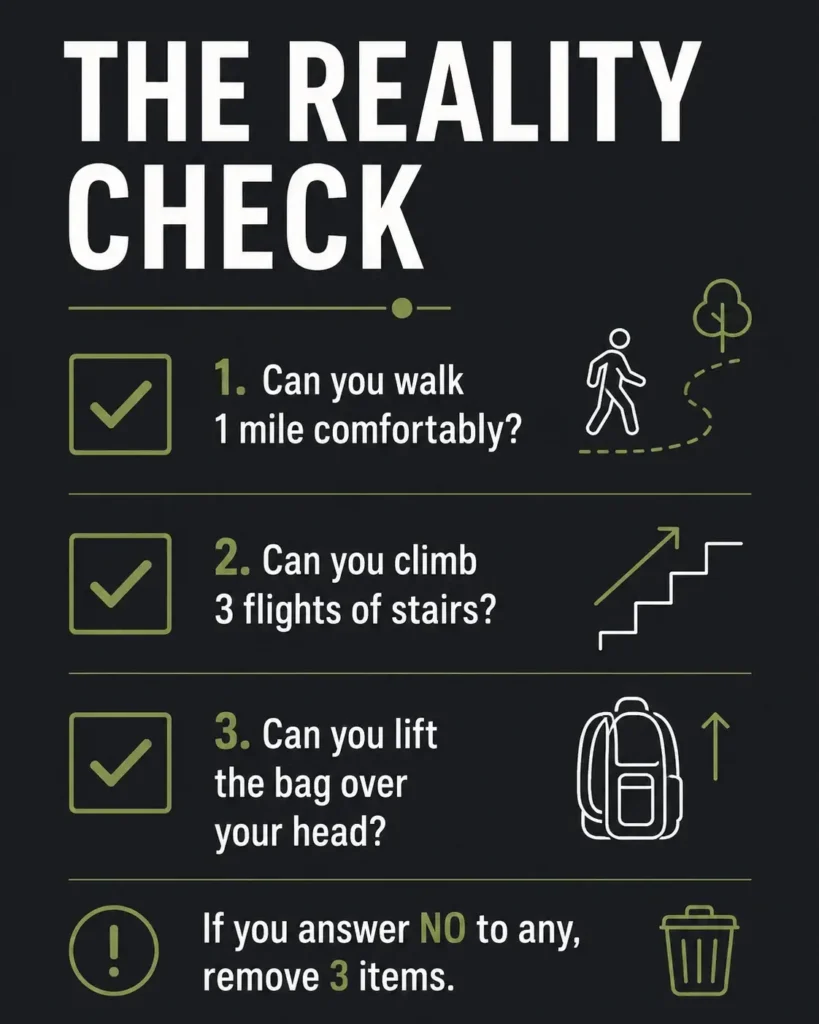
If your shoulders burn, if your back aches, or if you feel exhausted, your bag is still too heavy. Come back inside, open your pack, and remove three items of clothing.
Remember, you are not packing to survive a permanent apocalypse. You are packing for an incredible, vibrant adventure through a world where human beings live, work, and wash clothes every single day. By thinning down your gear, you remove the physical and mental barriers between yourself and the cultures you are visiting. You will stand taller, smile more, move faster, and discover a deep, unbreakable confidence that stays with you long after the journey ends.