The first time someone told me I should try white-water rafting, I laughed and changed the subject. It sounded like something for people far braver and fitter than me. I was the girl who spent years staring at a spreadsheet, counting my vacation days, convinced that the big adventures belonged to other people. So I understand exactly where you are if you are reading this with a mix of excitement and a knot in your stomach. You want to do it. You are also a little scared. Good. That mix is where the best travel memories are born.
Here is the honest truth I have learned from years of saying yes to things that scared me. Rafting is far more accessible than it looks in the dramatic videos. Most of the famous rivers in Europe have gentle beginner sections right next to their wild ones. You do not need to be an athlete. You often do not even need to be a strong swimmer. What you need is a good operator, the right river for your comfort level, and a willingness to get wet and laugh at yourself. Let me walk you through where to go and how to plan it so the fear shrinks and the excitement wins.
First, Let’s Talk About How Rivers Are Graded
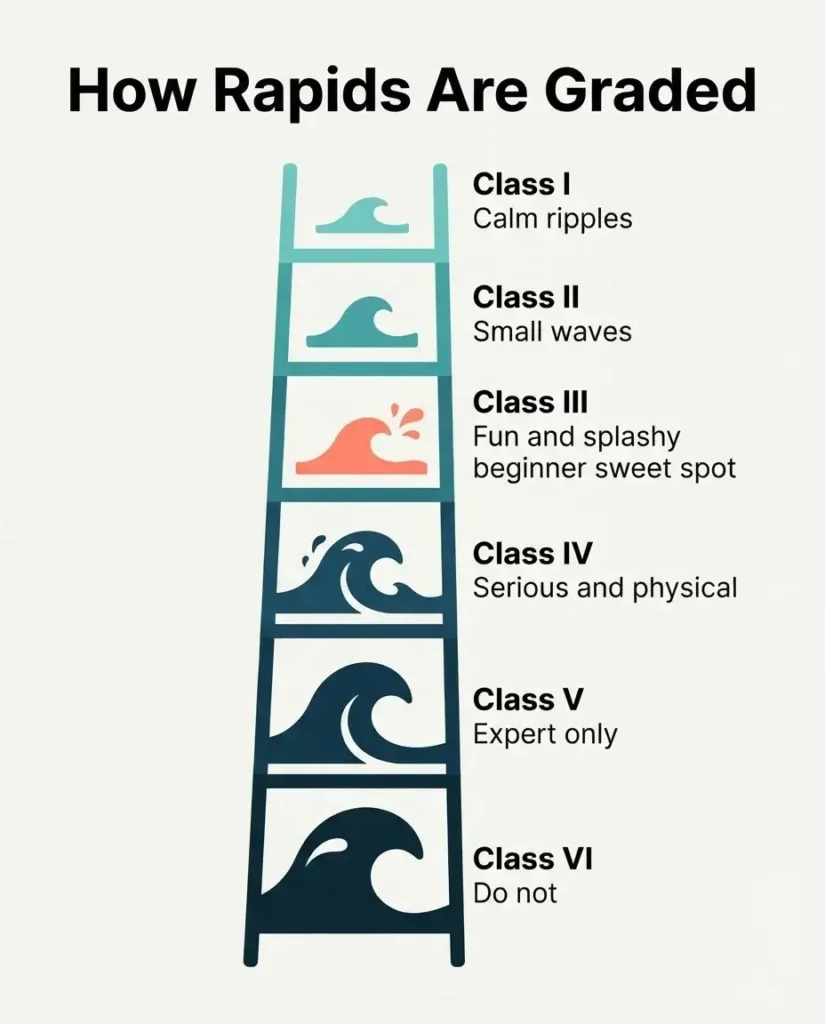
Before you pick a river, you need to understand one simple thing, because it removes about half the anxiety on its own. Rapids are rated on a scale from Class I to Class VI. Class I is barely more than moving water with tiny ripples. Class III is bouncy, splashy, genuinely fun, and totally doable for a fit beginner with a guide. Class IV and V are where it gets serious and physical. Class VI basically means do not, unless you are a professional with a death wish. If you want the full breakdown, the plain-language version on the international scale of river difficulty is worth two minutes of your time before you book anything.
Why does this matter so much for a nervous first-timer. Because the same river often offers different sections at different grades. When an operator says “Class II to III, suitable for beginners,” believe them. That is your sweet spot. It is exciting enough to feel like an adventure and safe enough that you will spend more time grinning than gripping.
The other thing that matters is who is steering the boat. This is not a place to chase the cheapest deal on a random site. Look for operators whose guides are certified through the International Rafting Federation, which is the recognized world governing body for the sport. A good guide reads the water, positions the raft, and calmly tells you when to paddle and when to duck. On a beginner river, they are the reason you are safe.
I would happily pay a little more for a licensed, experienced crew than save twenty euros to gamble on my safety.
The Soča River, Slovenia: My Pick for a First Timer
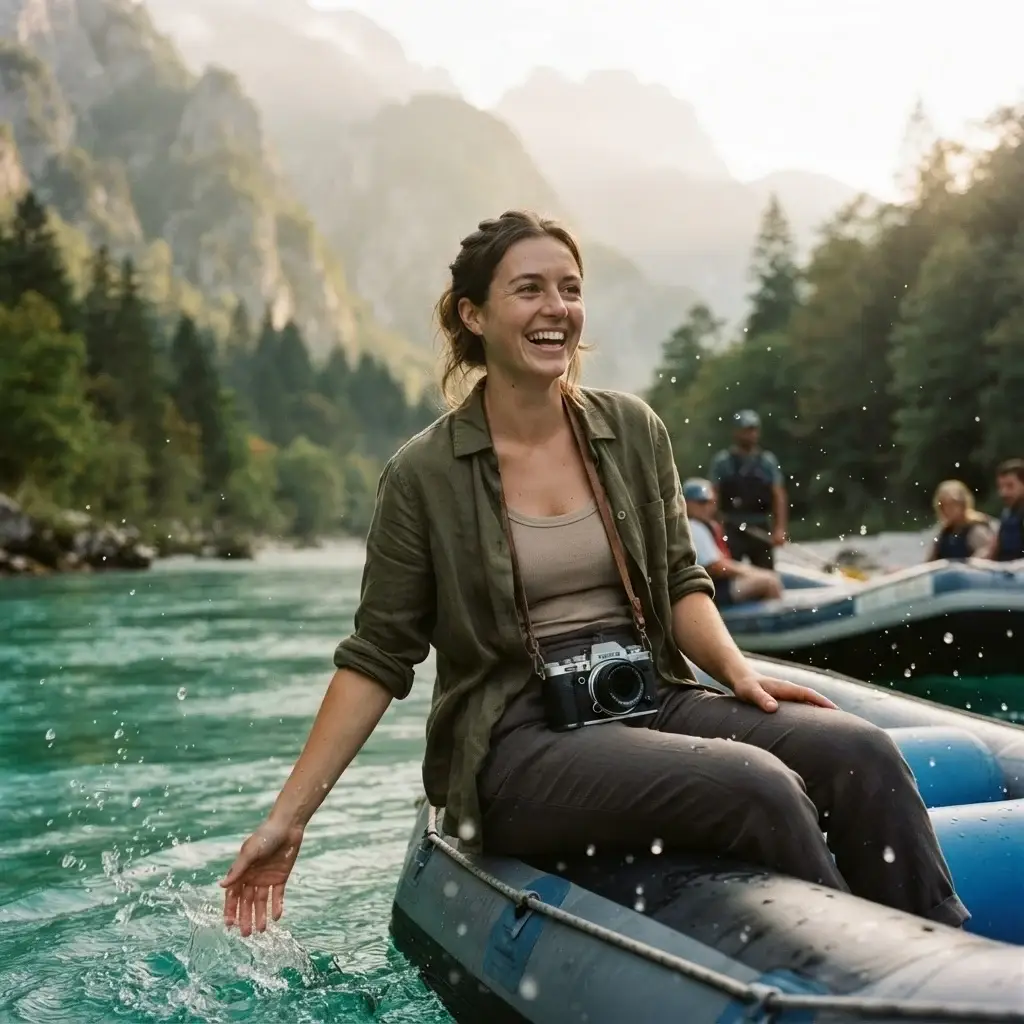
If a friend messaged me tomorrow saying “I am terrified but I want to try rafting somewhere beautiful,” I would point them straight to the Soča in Slovenia. I have backpacked through parts of Europe on my own, and Slovenia is one of those places that feels like a secret people are only just discovering. The Soča itself is almost unreal to look at. The water is a glowing emerald turquoise, so clear and bright it looks digitally enhanced in photos, except it truly looks like that in person.
The classic rafting section runs from the town of Bovec and sits mostly at Class II to III, which is why it is such a good beginner choice. When the snow melts in spring the water rises and rapids can push toward III+, so if you want it calmer, aim for later in the season. Trips generally run from April into October. Prices for the popular Bovec rafting trip start around 55 euros, and you will usually pay a small extra river permit fee on top, which goes toward protecting the area. From what solo travelers consistently report, joining a scheduled group trip here is easy and social, so going alone is genuinely no problem.
The whole valley sits inside Triglav National Park, Slovenia’s only national park, which means the scenery around the river is protected and pristine. Getting to Bovec without a car takes a little planning, since it is tucked in the Julian Alps, but it is doable by bus, and the official Soča Valley tourism site lays out the transport and accommodation options clearly. Once you are there, do yourself a favor and try the local river trout and a plate of frika, a hearty potato and cheese dish from the region. After a morning in cold alpine water, warm mountain food tastes like a reward you earned.
The Tara River, Montenegro: Europe’s Deepest Canyon
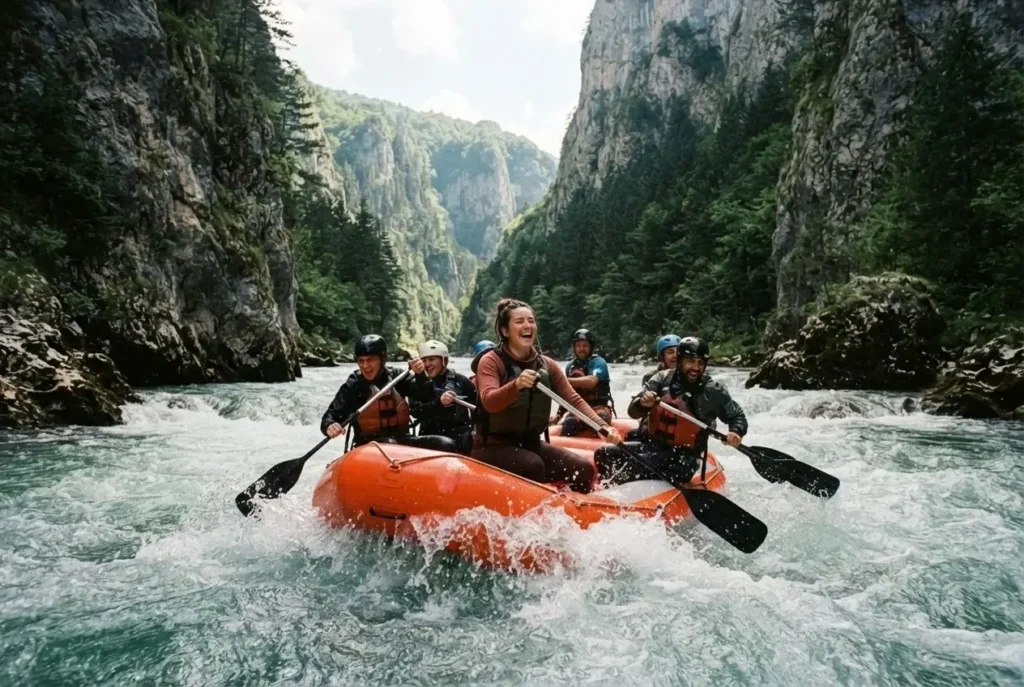
Now let’s talk about the river that lives on so many rafting wish lists. The Tara in Montenegro carves the deepest river canyon in all of Europe, with walls that plunge more than a kilometer down. It runs through Durmitor National Park, which is a UNESCO World Heritage Site, and floating between those towering cliffs is the kind of scenery that makes you forget to be scared.
Here is the honest planning detail most roundups skip. The Tara’s difficulty changes dramatically with the season. In April and May, when the snowmelt is at full power, the water is high and fast and rapids can reach Class IV, which is thrilling but not ideal for a first-timer. By the middle of summer into September, the levels drop and the standard day trips become much gentler, with long calm stretches broken up by bursts of fun rapids. If this is your first raft, go in July or later. The main one-day route near Šćepan Polje covers roughly 18 kilometers and takes a few hours on the water. Day trips commonly start around 55 to 60 euros, and many operators offer pickup from coastal towns like Budva and Kotor, which solves the transport puzzle if you are basing yourself on the coast.
Food-wise, this is rural mountain Montenegro, so expect grilled meats, fresh bread, and local cheese, often served at the rafting camps themselves as part of the package. It is simple, filling, and exactly what you want after hours of paddling.
The Noce River, Italy: Alpine Thrills in Val di Sole
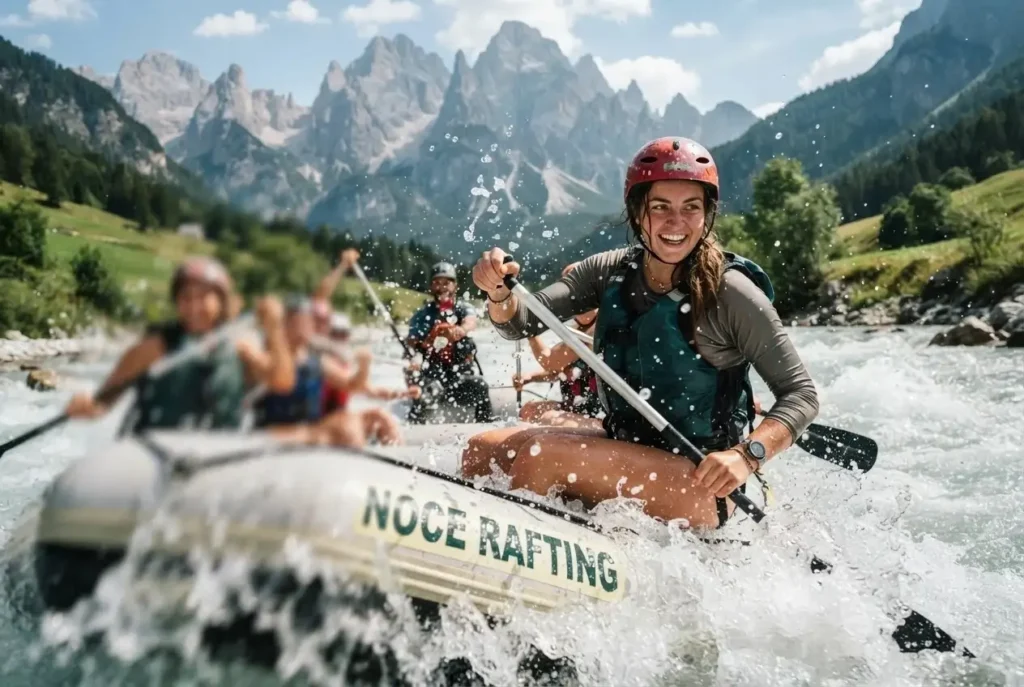
For travelers who want a step up in adrenaline while staying in a stunning, well-organized setting, the Noce River in Italy’s Val di Sole is a standout. National Geographic once ranked it among the best rafting rivers in the world, and it has the whitewater to back that up. The navigable section stretches about 28 kilometers, and difficulty here ranges from Class 3 to Class 5, so this is where you graduate from “gentle introduction” to “real, punchy rapids.”
The good news for planners is how organized this valley is. There are five official rafting centres, and the regional Trentino tourism board lists them all with contact details, which makes booking a licensed operator refreshingly straightforward. The season runs roughly from May into September. If you are a nervous beginner, ask specifically for the lower-grade family sections. If you want the bigger water, the same valley delivers that too, which is what makes it such a flexible destination.
Val di Sole is in the heart of the Dolomites region, so after your run, you are surrounded by proper Italian mountain food. Think polenta, canederli dumplings, local speck, and cheeses that taste of the alpine pastures. Pair a good day on the water with a slow Italian dinner and you will understand why I believe travel should feed both your courage and your appetite.
The Sjoa River, Norway: For the Bucket of Adrenaline
If your fear has quietly turned into curiosity and you find yourself wanting the wilder end of the spectrum, Norway’s Sjoa River is where serious European rafters go. It sits in the Heidal valley and is often called one of the best whitewater rivers on the continent. This is not the place for a timid first splash. It is the place you work up to.
The season is shorter here because of the northern climate, running roughly from early May into October, with the official Heidal Rafting operator opening as soon as the snowmelt allows. Grade 3 action trips are commonly priced from around 60 US dollars, with bigger, longer expeditions costing more. What I love about the idea of Sjoa is that operators here run trips for a real range of levels, so even if you are building your confidence, there are approachable sections before you commit to the roaring stuff. The water is properly cold, so a good wetsuit is not optional, it is the whole reason you stay comfortable.
Norway is not a budget country, so plan for higher costs on food and lodging around your trip. But the payoff is genuine wilderness, dramatic scenery, and the quiet pride of rafting somewhere that even experienced paddlers respect.
The Cetina River, Croatia: The Gentle, Sunny Option
Not everyone wants their heart in their throat, and that is completely valid. If you want the fun of being on the water, the beauty of a canyon, and warm Mediterranean sunshine without the fear factor, the Cetina River near Omiš in Croatia is my pick. It is mostly Class I to II, which means it is genuinely relaxing, family-friendly, and perfect if you are easing yourself in or bringing along someone who is nervous.
A typical trip runs about three hours and costs somewhere around 38 to 55 euros. Omiš sits right where the river meets the Adriatic Sea, just south of Split, which makes it one of the easiest rafting spots to reach on this whole list. You can base yourself on the Dalmatian coast, do a gentle morning on the river, and be back on a beach by afternoon. That combination is hard to beat for a first trip. Afterward, eat like a local with fresh grilled fish, black risotto, and a glass of Dalmatian wine near the harbor.
What to Wear, Bring, and Expect
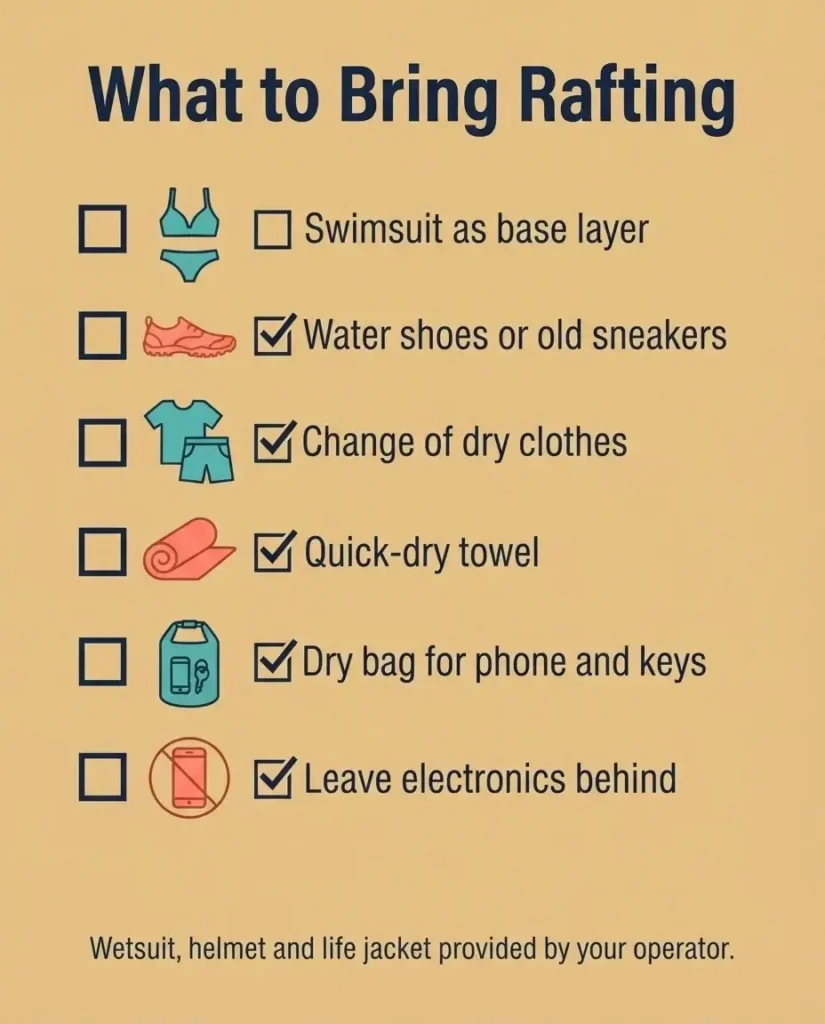
Let me answer the practical questions that quietly fuel most of the anxiety. Do you need to know how to swim. On most beginner and moderate rivers, no, because you wear a life jacket the entire time and stay with the boat, though policies vary by operator, so always ask when you book. What do you wear. A swimsuit as a base layer, and the operator provides the wetsuit, helmet, and life jacket. Bring water shoes or old sneakers that can get soaked, a change of dry clothes for after, and a towel. Leave your phone in the car or a dry bag, because the river does not care about your electronics.
Expect the water to be cold, especially on alpine and snowmelt-fed rivers, which is exactly why the wetsuit matters. Expect to be told a safety briefing that covers what to do if you fall out, and actually listen to it, because it turns fear into a plan. And expect to be nervous for the first five minutes and then completely hooked by the first rapid. That transformation happens to almost everyone.
Picking Your Season
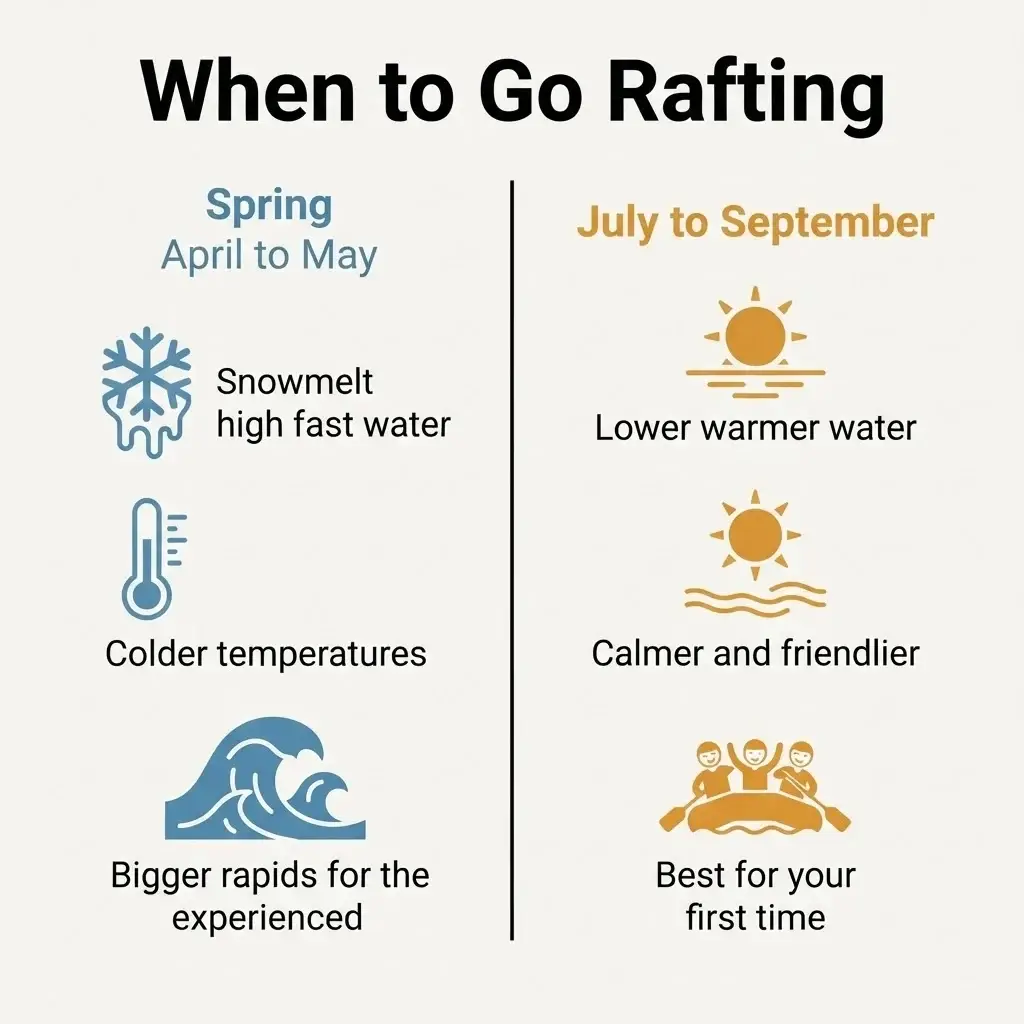
Timing changes everything with rafting. Spring, roughly April and May, brings snowmelt, higher water, faster rapids, and colder temperatures. That is the wild, big-water season, thrilling for the experienced and intense for beginners. Late summer into early autumn, from July through September, brings lower, warmer, calmer water on most rivers, which is the friendliest window for your first time. If your goal is confidence rather than an extreme rush, aim for that later window. If you are chasing the biggest waves and you have a solid crew, go early.
Going Solo, and Why It Works
Since so many of my readers travel alone, I want to speak to that directly. Rafting is one of the best activities for solo travelers, and here is why. You book onto a scheduled group departure, you are placed in a raft with other people, and within an hour you have paddled, screamed, and laughed with total strangers. It is instant, low-pressure connection. You do not need a travel partner to do this. You just need to show up. Some of the most bonded I have ever felt with strangers happened doing things that scared us together, and a raft full of nervous first-timers all trusting the same guide is exactly that kind of moment.
If there is one thing I want you to take from all of this, it is that the version of you who is scared to book is the same version who will be beaming, soaked, and proud at the end of the day. The gap between those two people is just one decision. Pick your river, find a licensed operator, choose a friendly season, and go. The water is waiting, and so is a braver version of you.