I still remember standing at the base of my first real outdoor route, staring up at rock instead of a colored plastic hold, and feeling my hands go clammy in a way no indoor gym session had ever made them do. That moment sticks with me because it’s such a universal one. Almost every climber I’ve ever talked to, whether they picked up the sport in a city gym or grew up scrambling around cliffs as a kid, has a version of that same nervous, thrilling first step outside.
Europe happens to be one of the best places on earth to take that step, or to take your climbing further if you’ve already made the leap. It has an almost absurd density of world class rock packed into a relatively small, well connected continent, which means you can go from limestone sport routes in Spain to granite alpine faces in France without changing much more than your train ticket. What I want to do in this guide is skip the generic “top ten crags” list you’ve probably already seen and instead walk you through these destinations the way I’d explain them to a friend who’s genuinely nervous about planning this trip alone: what each place actually feels like, who it’s realistically suited for, and what the logistics look like once you land.
Start Here If You’re New to Outdoor Climbing
Before I get into specific destinations, I want to address the question I think is actually underneath most of these searches, which is whether someone with mostly indoor gym experience is ready to climb outside in Europe at all. The honest answer is that the jump is smaller than it feels, but it does require a bit of preparation. Reading rock instead of color coded holds takes a session or two to get used to, and outdoor sport climbing means learning to place trust in bolts and anchors you didn’t personally inspect the way a gym route setter would have. If you’ve never climbed outside before, I’d strongly recommend booking at least one day with a local certified guide when you arrive, not because the crags are dangerous, but because a good guide will teach you local etiquette, proper clipping technique on real rock, and how to read a topo guidebook, all in a way that will make every future trip easier.
This is also worth knowing: the indoor climbing scene across Europe has grown enormously in the last few years, with dozens of new gyms opening in countries like Germany alone in 2025. That boom matters for you because it means more climbers than ever are making this exact transition from gym to crag, and most climbing towns now have at least a few shops or guide services set up specifically to help visiting climbers bridge that gap.
Fontainebleau, France: The Gentlest Possible Introduction
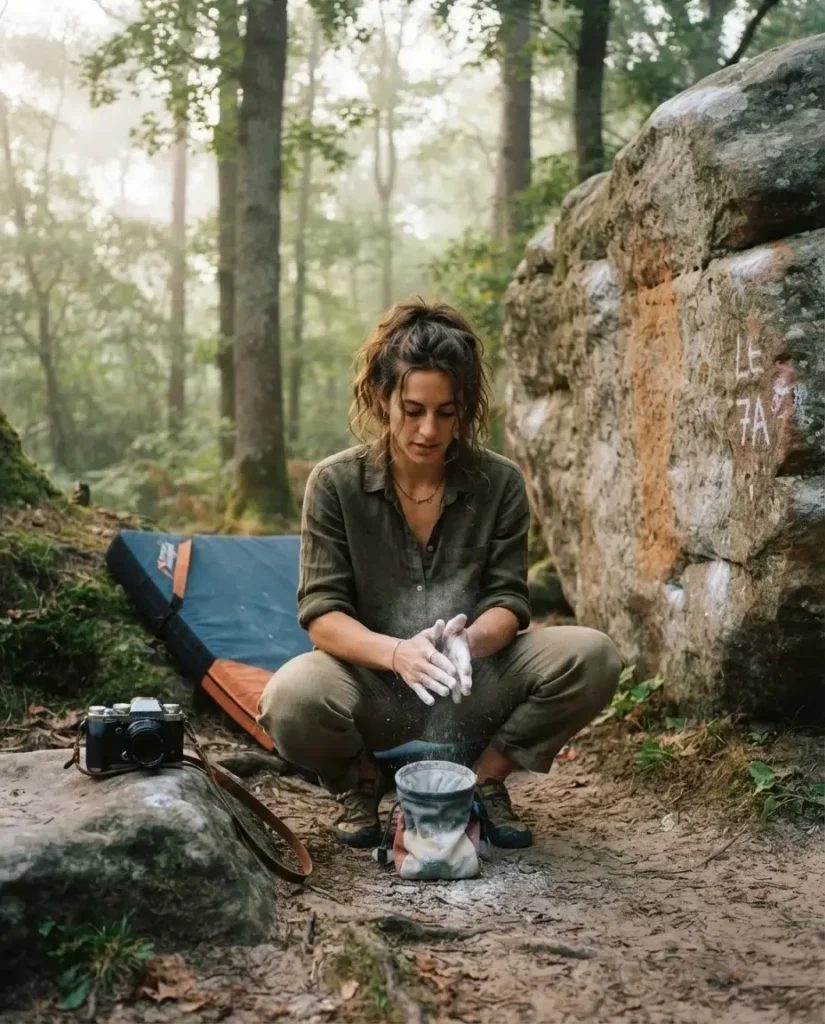
If you want the lowest pressure way to try outdoor climbing in Europe, Fontainebleau is where I’d point you first. It’s a forest just south of Paris, easily reached by a short train ride, filled with sandstone boulders instead of tall roped routes. Because bouldering here rarely puts you more than a few feet off soft sandy ground, and because the forest has hundreds of marked circuits color coded by difficulty, it’s an unusually forgiving place to learn how your body moves on real rock.
What makes Fontainebleau special beyond the beginner friendliness is the sheer scale and history of it. Climbers have been bouldering in this forest since the 1870s, and it remains one of the most significant bouldering areas on the planet. The official Fontainebleau tourism office guide is genuinely useful for planning, since it lays out which sectors suit beginners and which are better left for once you’ve built up some skin and confidence. Bring a crash pad if you can rent one locally, wear shoes you don’t mind getting sandy, and expect to spend a full day just wandering between boulders without ever climbing the same problem twice. For food, skip the touristy cafes right in town and grab something from a local boulangerie to eat trailside, it’s cheaper and honestly more satisfying after a few hours of climbing.
Costa Blanca and El Chorro, Spain: Warm Rock and a Genuine Winter Escape
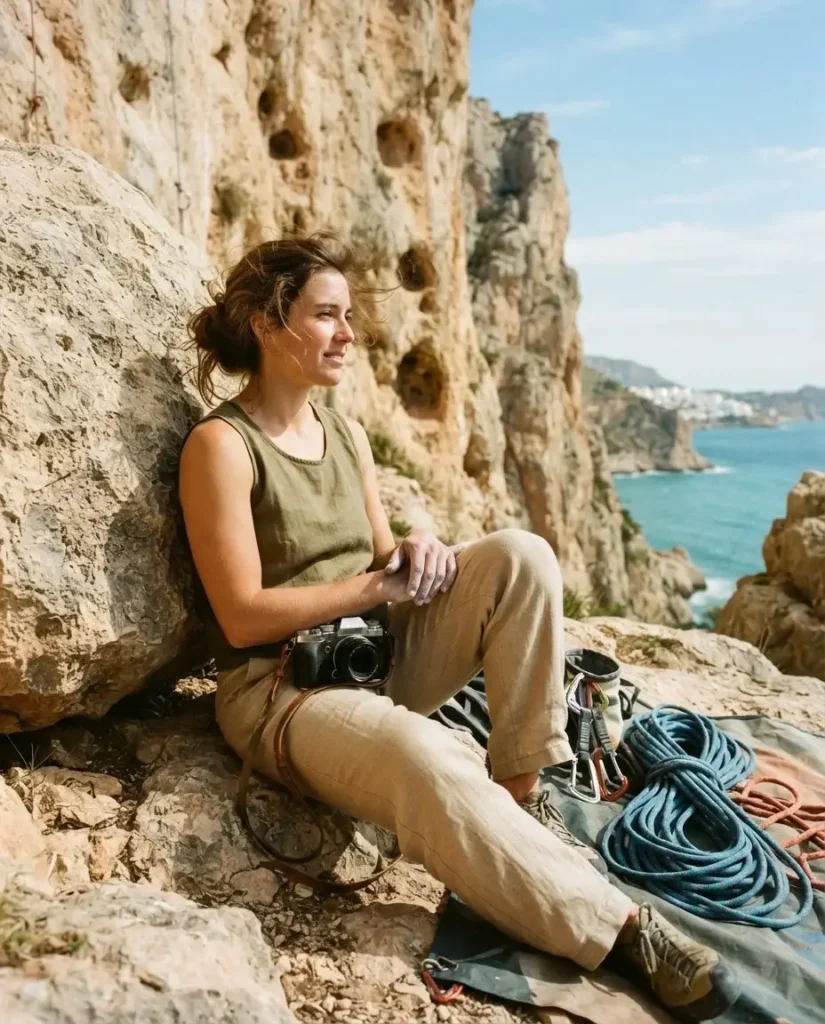
Spain’s Mediterranean coast, especially the Costa Blanca region around Alicante, solves a very specific problem: what do you do in winter when most of Europe’s crags are wet, cold, or under snow. The climbing season here runs comfortably from late September through May, with mild winter temperatures that make it one of the only places on the continent where you can reliably plan a January or February climbing trip. Summer is a different story though, since daytime heat makes the limestone genuinely uncomfortable to touch by midmorning, so if you’re picturing a July trip here, I’d steer you toward early mornings only or a different destination entirely.
Costa Blanca is enormous, with thousands of routes spread across dozens of crags, and it has a real reputation for being welcoming to a wide range of abilities, from easy multi pitch routes for people still building confidence to seriously technical test pieces for advanced climbers. Nearby, El Chorro adds a different flavor with its dramatic gorge setting and a mix of sport and longer routes, plus the added bonus of the Caminito del Rey walkway if you want a non climbing day mixed in. Budget wise, this region tends to be one of the more affordable options in Europe, especially if you’re comfortable with hostel or apartment style stays rather than resort hotels, and local tapas bars make eating well after a climbing day both easy and cheap.
Frankenjura, Germany: Where Technical Climbing Culture Runs Deep
Frankenjura doesn’t get talked about as often outside serious climbing circles, but it deserves a spot on this list because it represents something genuinely different from the sunny coastal crags. This is Germany’s largest sport climbing area, a rolling landscape of limestone towers and crags spread across a huge region, and it has a well earned reputation for technical, sometimes intimidating routes that reward precise footwork over brute strength.
What I appreciate about recommending Frankenjura to readers is that it forces a more honest conversation about skill level. This isn’t the easiest place to cut your teeth outdoors, and a lot of the historically significant routes here are genuinely hard, but there are also plenty of moderate lines tucked among the harder test pieces, and the region’s deep climbing culture means you’ll find climbers of every level. The UKClimbing regional guide to Frankenjura does a good job explaining why this area became such a landmark in sport climbing history, and it’s worth reading before you go so you understand the etiquette and grading quirks specific to German limestone. Spring and autumn are your best bets for weather, since summer can get surprisingly humid and winter shuts most of the rock down.
The Peak District, England: Climbing History You Can Actually Touch
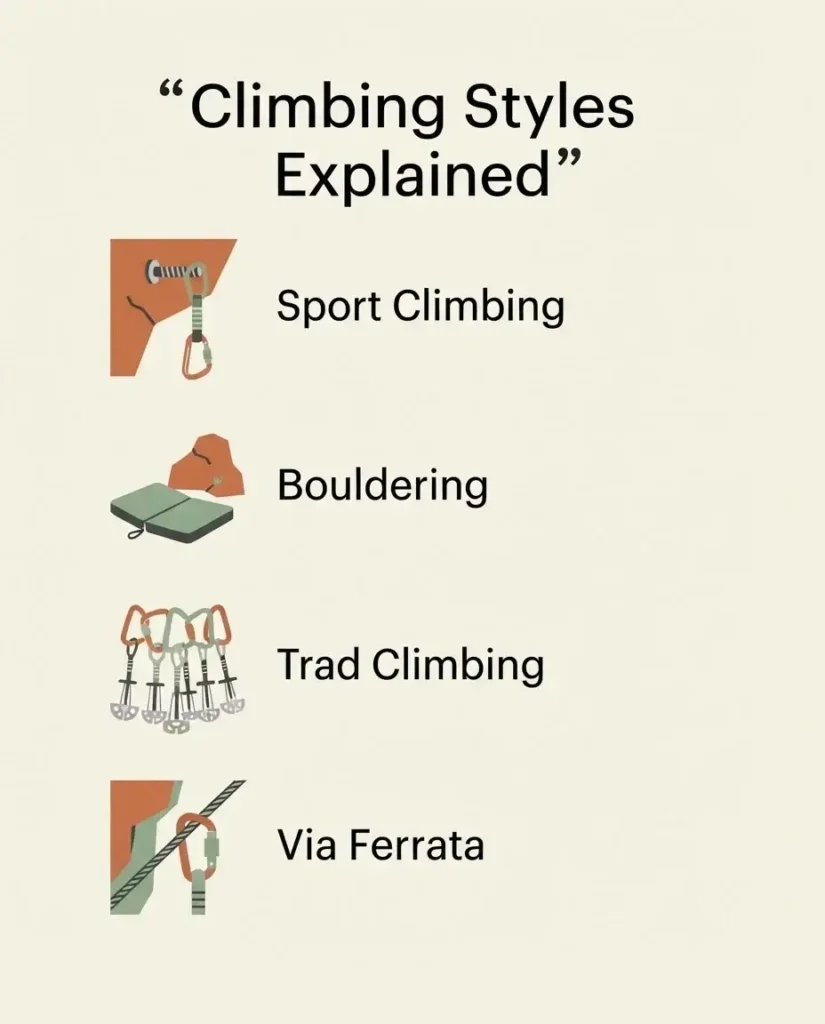
I have a soft spot for destinations where the sport’s history is still visible in how people climb today, and the Peak District delivers that in a way few places do. Stanage Edge alone has thousands of documented routes, and the wider national park is credited as one of the birthplaces of British trad climbing culture, the older, gear placement heavy style that predates most modern sport climbing. The Peak District National Park’s official page on climbing is a genuinely helpful starting point, since it covers access rules, seasonal restrictions around nesting birds, and the general etiquette expected at these historic crags.
If you’re coming from a mostly sport climbing background, be aware that a lot of what’s here is traditional gear climbing, which means you’ll either need to already know how to place your own protection or hire a local guide to teach you, which I’d genuinely recommend for your first visit. This is also a good reminder that not every European destination on a list like this is beginner friendly in the same way, and part of planning well is being honest with yourself about which style of climbing you’re actually equipped for right now.
Kalymnos, Greece: The Island That Built Its Identity Around Climbing
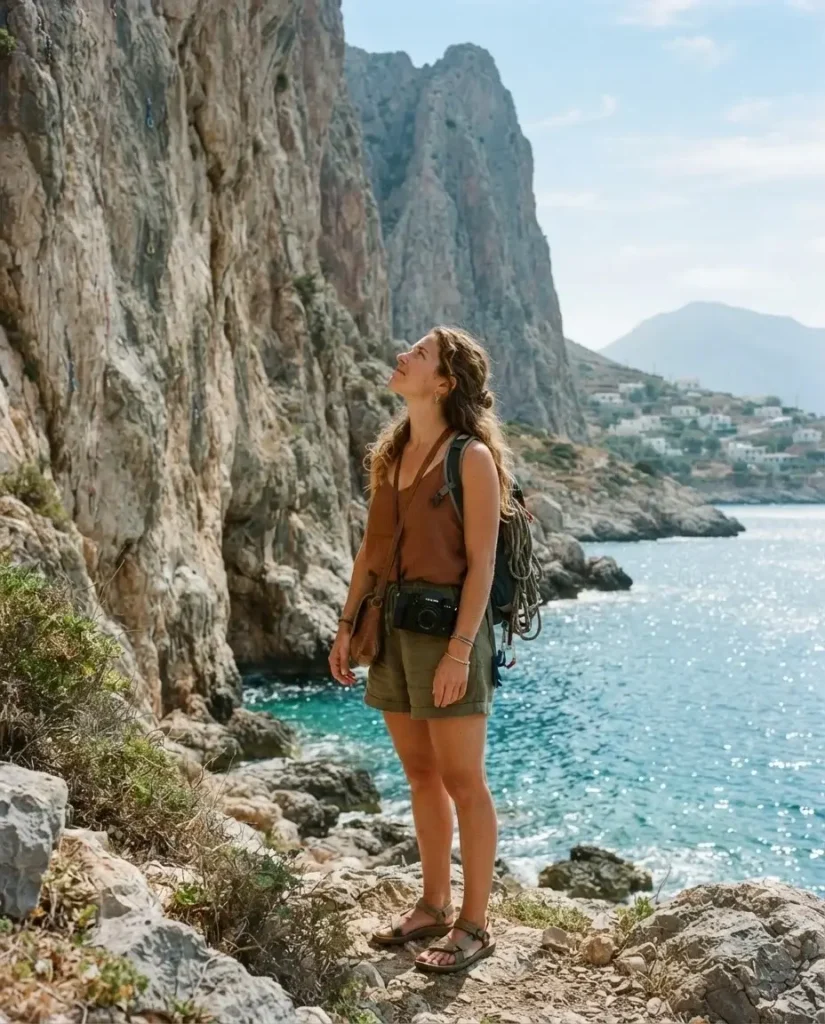
If you ask a room full of sport climbers to name their favorite European destination, Kalymnos comes up constantly, and for good reason. This small Greek island reinvented its economy around climbing tourism after its sponge diving industry declined, and it now has thousands of bolted routes across dramatic sea cliffs, many with stunning views over the Aegean. The rock is limestone, generally featured with pockets and tufas that make for spectacular, photogenic climbing even at moderate grades, which is part of why it’s so beloved by climbers who don’t necessarily want to push their hardest grade on vacation.
Getting there does take some planning, and this is exactly the kind of logistics detail that gets glossed over elsewhere. Most travelers fly into Kos and then take a ferry over, and Blue Star Ferries’ route information shows sailings from Piraeus that can run around ten hours or longer depending on the specific route and stops, so many people choose to fly to Kos first and take a much shorter hop from there instead. The climbing season runs roughly from spring through autumn, with the busiest and warmest months being summer, though many climbers actually prefer the slightly cooler shoulder seasons. As for food, don’t skip the small tavernas in Massouri, the main climbing village, where you can get a full Greek dinner for a very reasonable price after a long day on the rock, and it’s an easy place to meet other solo travelers and climbers looking for a partner for the next day.
Chamonix and the Dolomites: When You’re Ready to Go Vertical and Alpine
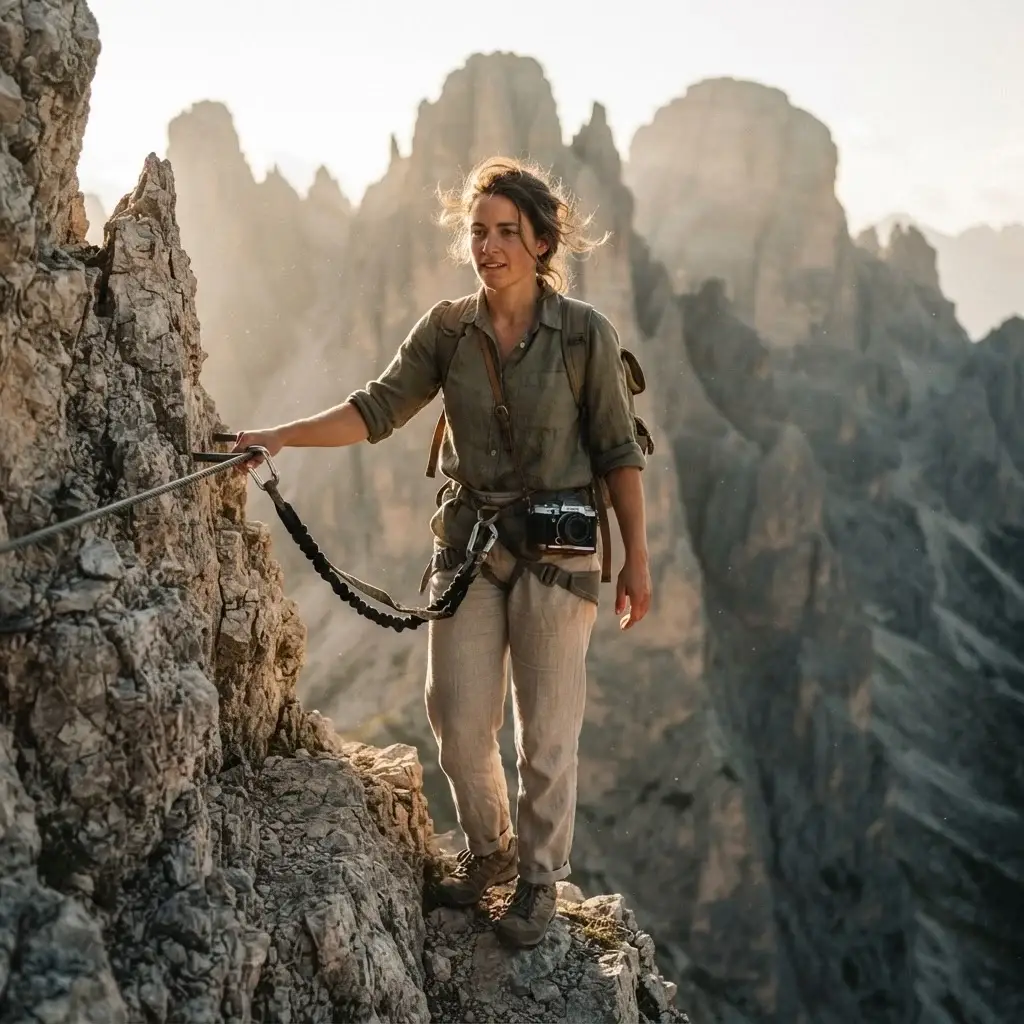
Once you’ve built some outdoor mileage, the alpine regions of France and Italy open up an entirely different kind of climbing experience, one that blends technical rock skills with mountaineering, exposure, and genuine adventure. Chamonix, sitting beneath Mont Blanc, is legendary among alpinists and offers everything from via ferrata routes suitable for confident beginners to committing multi pitch alpine rock climbs that require serious experience and often a certified mountain guide.
The Dolomites in northern Italy offer something similarly dramatic but with a different character, jagged limestone spires that earned the range UNESCO World Heritage status. According to the official UNESCO World Heritage listing for the Dolomites, the site covers nearly 142,000 hectares across five Italian provinces, recognized for its exceptional natural beauty and geological significance. Climbing here often takes the form of via ferrata, protected routes with fixed cables and ladders that let you experience genuinely exposed alpine terrain without needing full mountaineering skills, which makes the Dolomites a surprisingly good option for an intermediate climber who wants to feel the scale of the Alps without committing to a full alpine climbing course. I’d still recommend hiring a local guide for your first via ferrata outing here, both for safety and because they’ll help you understand which routes match your comfort with heights and exposure.
Arco, Italy: Where Climbing Culture Becomes a Festival
I wanted to include Arco specifically because it shows a different side of climbing travel, one built around community and celebration rather than just the rock itself. This small town on the edge of Lake Garda has hosted the Rock Master Festival, one of the oldest and most respected competition climbing events in the world, for decades. The official Rock Master Festival site lists the 2026 edition for October 2 through 4, and if your trip timing lines up, attending even as a spectator is a genuinely fun way to feel connected to the global climbing community, watching elite athletes compete while surrounded by climbers who’ve traveled from every corner of the world.
Beyond the festival dates, Arco itself has excellent limestone sport climbing right at the edge of town, with routes suited to a wide range of abilities, plus easy access to swimming in Lake Garda on rest days, which is a small but meaningful detail if you’re planning a longer trip and want built in recovery days that don’t feel wasted.
Solo Travel Logistics Nobody Talks About Enough
Here’s the part I think most climbing destination guides skip entirely, and it’s the part I get asked about most. If you’re planning to do this alone, without a climbing partner already lined up, you are not as stuck as you might think. Places like Kalymnos and Arco have such dense visiting climber populations that finding a partner at the local climbing shop, hostel, or even just chatting at the crag base is genuinely normal and expected. Facebook groups specific to each destination, often searchable by the crag or town name, are also a reliable way to connect with other solo travelers before you even arrive. I’d encourage you to reach out a week or two ahead of your trip rather than waiting until you land, since the good partners tend to get snapped up fast during peak season.
On the safety side, the core rules that apply to solo travel generally apply here too: tell someone your general plan for the day, carry a way to call for help even in remote crag areas, and don’t push your grade limits when you’re climbing with someone you just met that morning. Confidence in climbing, like confidence in travel, gets built one honest, slightly uncomfortable step at a time, not by pretending the nerves aren’t there.
What to Actually Pack
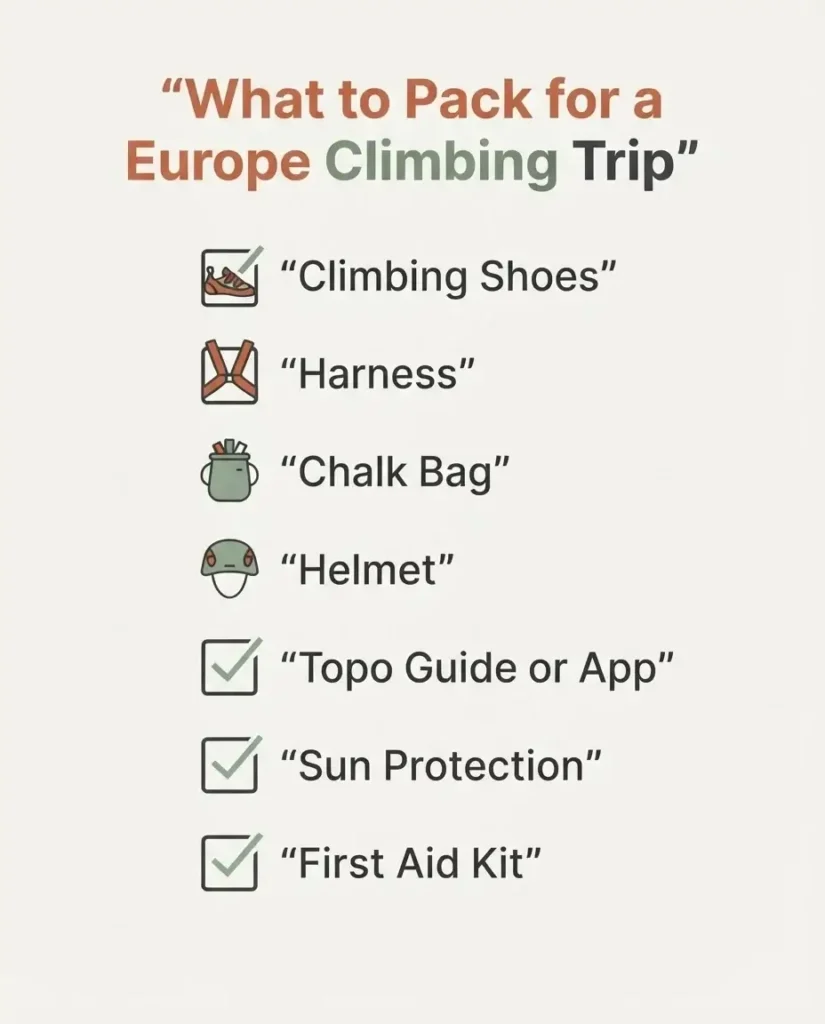
You don’t need to bring everything you own. A well fitted pair of climbing shoes, a harness, a chalk bag, and a helmet if you’re doing anything multi pitch or alpine will cover most of what these destinations require, since local shops in nearly every location on this list rent or sell ropes, quickdraws, and other hardware if you don’t want to fly with it. I’d add a lightweight guidebook or a downloaded topo app specific to wherever you’re headed, sun protection regardless of season, and a basic first aid kit sized for day trips rather than expeditions.
Choosing the Right One for You
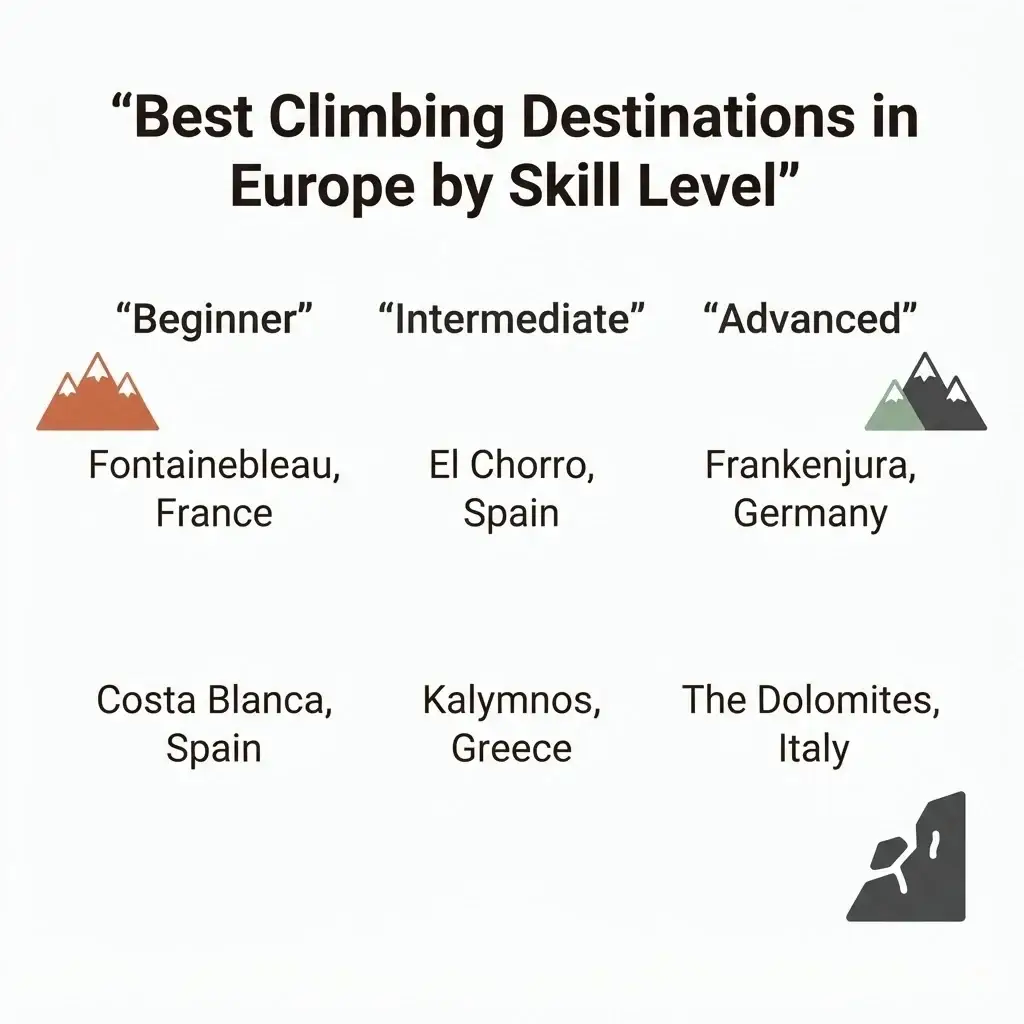
If I had to boil this down to a single piece of advice, it would be this: pick your destination based on honesty about your current skill level and comfort with logistics, not based on which name sounds most impressive to say out loud. Fontainebleau or Costa Blanca make far more sense for a first outdoor trip than Frankenjura or the Dolomites, and there’s no shame in that. Every serious climber I’ve ever met started somewhere gentle before working up to the intimidating stuff, and the version of this trip that actually gets you outside climbing is infinitely better than the perfect sounding version that stays stuck in a browser tab because it felt too advanced or too complicated to plan.