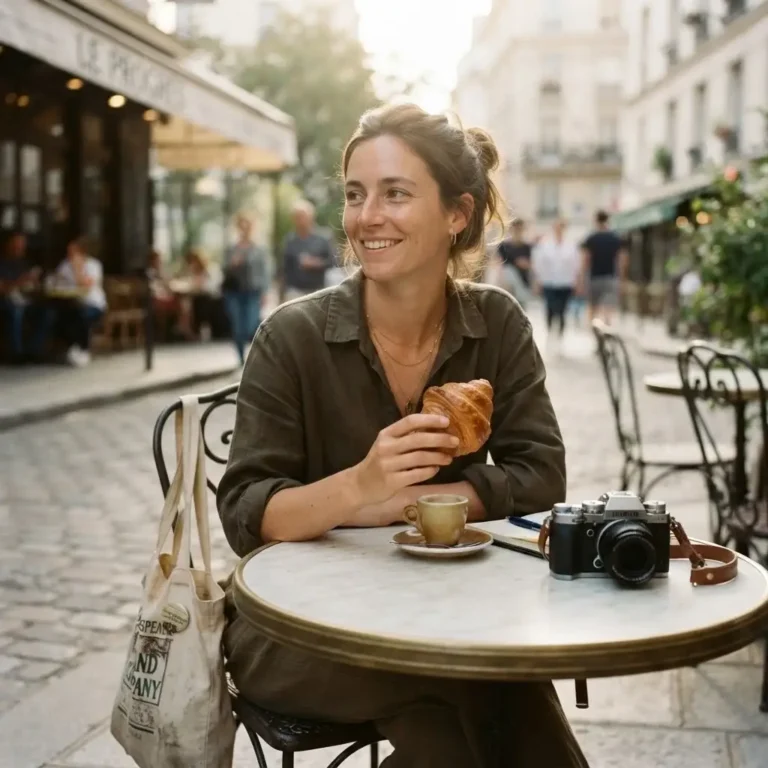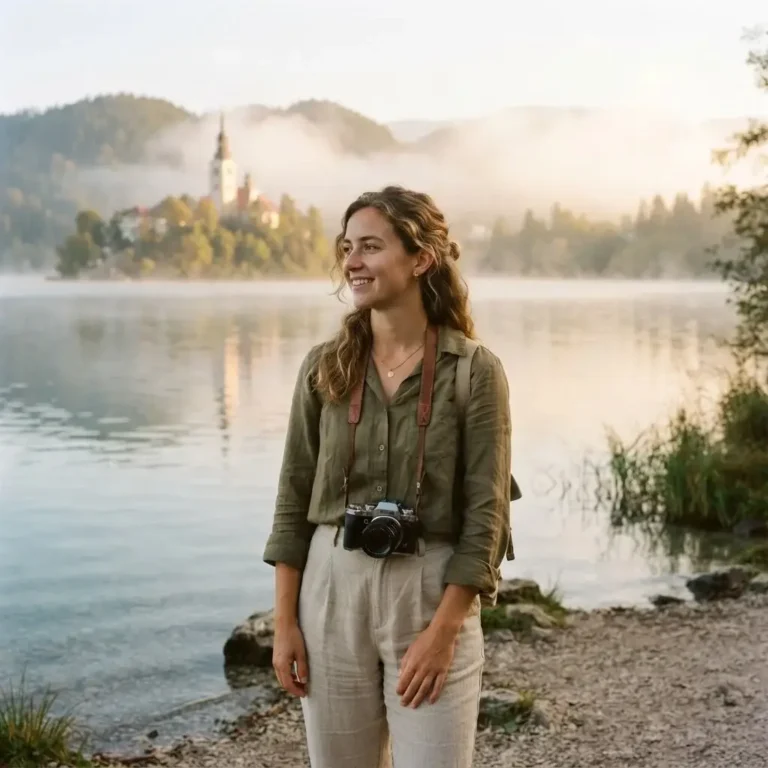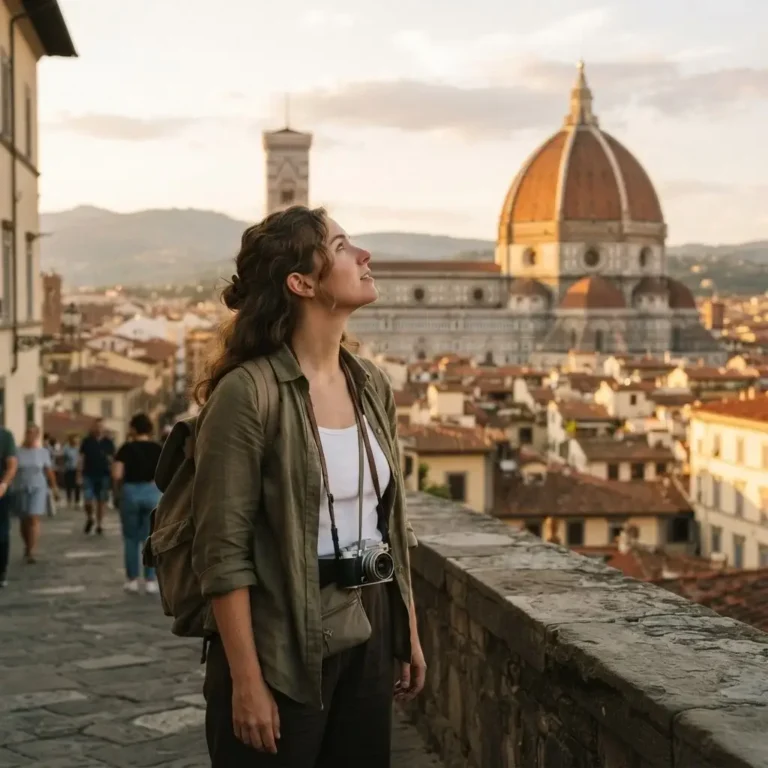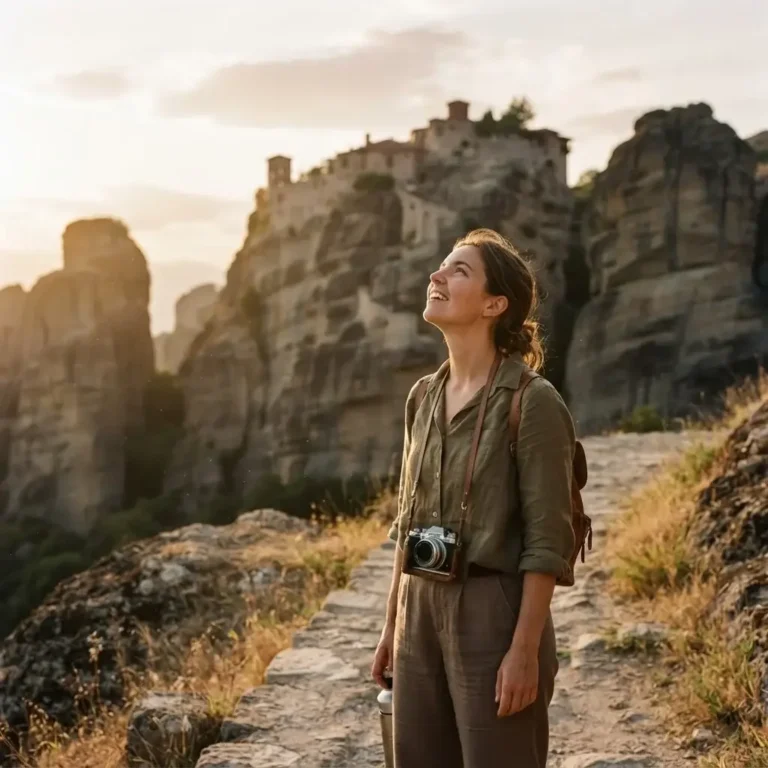
Peaceful Countryside Getaways in Europe for Nervous Beginners

The first time I chose quiet over busy on a trip, I almost felt guilty about it. I was backpacking solo across Europe, running on cheap train tickets and adrenaline, ticking off cities like they were homework. Then one afternoon I got off at a small stop by accident, sat on a stone wall while the wrong train left without me, and heard nothing but wind and a distant tractor. My shoulders dropped for what felt like the first time in weeks. That was the day I understood that the countryside was not the boring part of a trip. It was the part that put me back together.
So if you are the kind of traveler who wants calm but worries that “peaceful countryside” is code for “hard to reach, lonely, and only for couples with a rental car,” this guide is for you. I am going to walk you through the most peaceful countryside getaways in Europe, and I am going to be honest about how to actually do them alone, on a normal budget, without a driver’s license if you do not want one. Helpful first, dreamy second. Let’s plan something that lowers your heart rate instead of raising it.
What “peaceful” really means before you pick a place
Peaceful is not the same as remote. Some of the loveliest rural areas in Europe get swallowed by day-trippers at 11am and empty out by 5pm, which means the trick is often less about finding a secret place and more about choosing your timing. The clearest example is Hallstatt in Austria, a village so photogenic that peak-season crowds have been reported at well over 10,000 people a day. It is stunning, but if your goal is quiet, you either go mid-week and off-season and arrive before 9am, or you skip it and choose somewhere that stays calm all day. I mention this early because “most beautiful” and “most peaceful” are not always the same list.
Real peace in the countryside usually comes from three things: staying at least one night instead of day-tripping, choosing shoulder season, and picking a base you can settle into rather than racing between villages. Once you accept that slower is the whole point, everything else gets easier.
The Cotswolds, England: the gentlest place to start
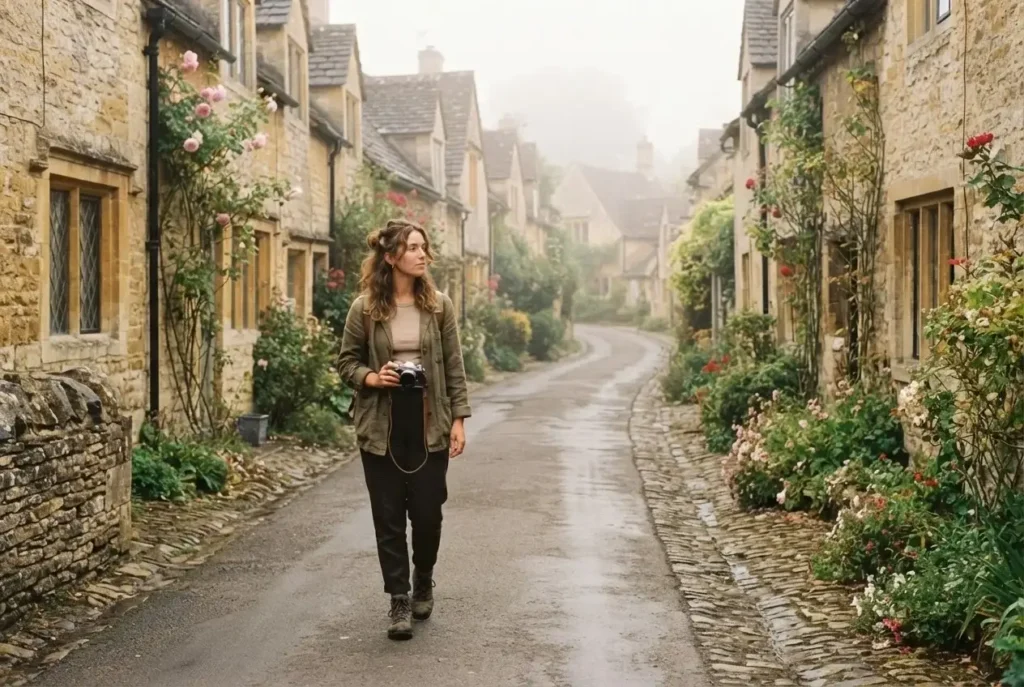
If this is your first solo countryside trip and you want an easy landing, the Cotswolds in England are hard to beat. Honey-colored stone villages, sheep on green hills, tea shops, and a language you probably already speak. That last part matters more than people admit when you are nervous about going alone.
You do not need a car here, which surprises a lot of first-timers. Trains from London reach gateway towns like Moreton-in-Marsh and Kingham in around 90 minutes to two hours, and from there local buses connect the villages with roughly four to eight services a day on the main routes at low single-digit fares. It takes a little planning, and the official Cotswolds pages on Britain’s national tourism site are genuinely useful for checking which villages link up. My honest advice is to base yourself in one walkable town, do slow day-walks between villages on the public footpaths, and not try to see all of it. Bourton-on-the-Water gets busy, so I would wander the quieter lanes of Stow-on-the-Wold or the Slaughters early in the morning instead.
What to eat: a proper cream tea (scones, clotted cream, jam), a Sunday roast in a village pub, and local cheeses. Pubs are a solo traveler’s best friend here. Sitting at the bar with a book and a cider is completely normal, and nobody will make you feel odd for being alone.
Val d’Orcia, Tuscany: rolling hills that feel like a painting
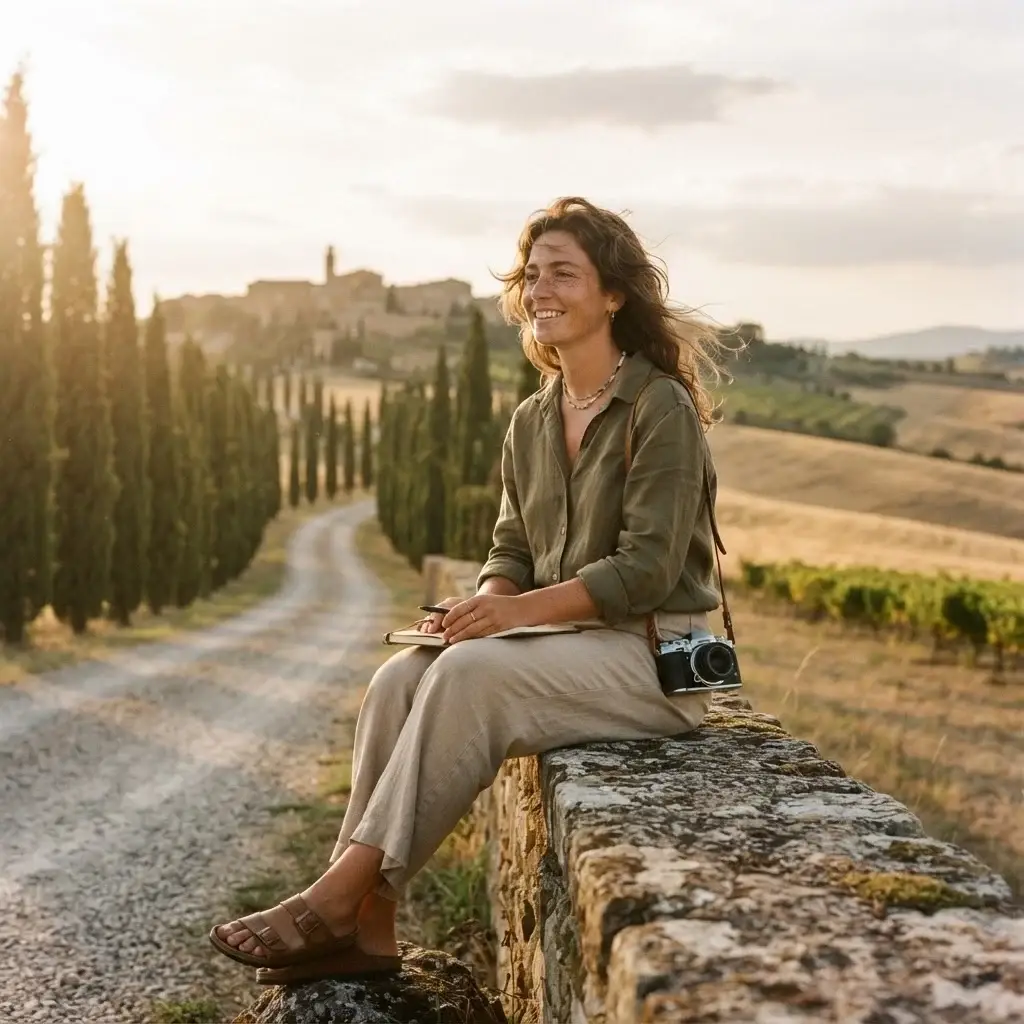
Tuscany is the countryside daydream a lot of us carry in our heads, and the Val d’Orcia is the part that actually delivers on it. Cypress trees lining gravel roads, hilltop towns, wheat fields turning gold. It is not a marketing invention. The whole valley is a protected UNESCO cultural landscape, recognized because its farms and villages have kept their Renaissance layout for centuries. That protection is part of why it still feels timeless instead of built-up.
Here is where I stay honest with you. I have not lived in Tuscany, so I am not going to hand you a fake memory. From what solo travelers consistently report, and from how the region is set up, the Val d’Orcia rewards a slow base-town approach. Pienza, Montalcino, and San Quirico d’Orcia make calm bases. Public transport exists but is limited, so if you do not drive, look at guided small-group day trips from Siena or a local driver for one big loop day, then spend the rest of your time on foot in one town. The official Italian tourism guide to Val d’Orcia lays out the main towns clearly so you can pick your anchor.
What to eat: pici pasta (thick hand-rolled spaghetti), pecorino cheese from Pienza, ribollita soup, and if you drink wine, a glass of Brunello in Montalcino. Solo dining in Tuscany is easy and warm. A midday meal at an agriturismo, where the family cooks what they grew, is one of the most quietly happy things you can do alone.
The Alentejo, Portugal: Europe’s slow-travel secret
If you want peaceful and uncrowded and affordable all at once, the Alentejo in southern Portugal deserves the top of your list. It sits roughly 80 miles southeast of Lisbon and it is all cork oak forests, olive groves, whitewashed hill towns, and long empty roads. People were slow-traveling here long before the phrase existed, mostly because life genuinely moves at that pace.
Monsaraz and Marvao are the kind of tiny walled towns where you can watch the whole valley change color at sunset with almost no one else around. Evora, the regional hub, is reachable by bus from Lisbon in around 90 minutes to two hours and makes a solid, safe base for a solo traveler. From what I have researched and what visitors report again and again, the Alentejo is where you go to do less on purpose. Read on a terrace, eat slowly, take one short drive or tour, and let the days blur together in a good way.
What to eat: this is comfort-food country. Try açorda (a garlic and bread soup), black pork from the local pigs, sheep’s cheese, and the almost dangerously good egg-and-sugar convent sweets. Portions are generous and prices are gentle, which makes eating alone here relaxed rather than expensive.

Slovenia’s Julian Alps: peaceful with a jolt of nature
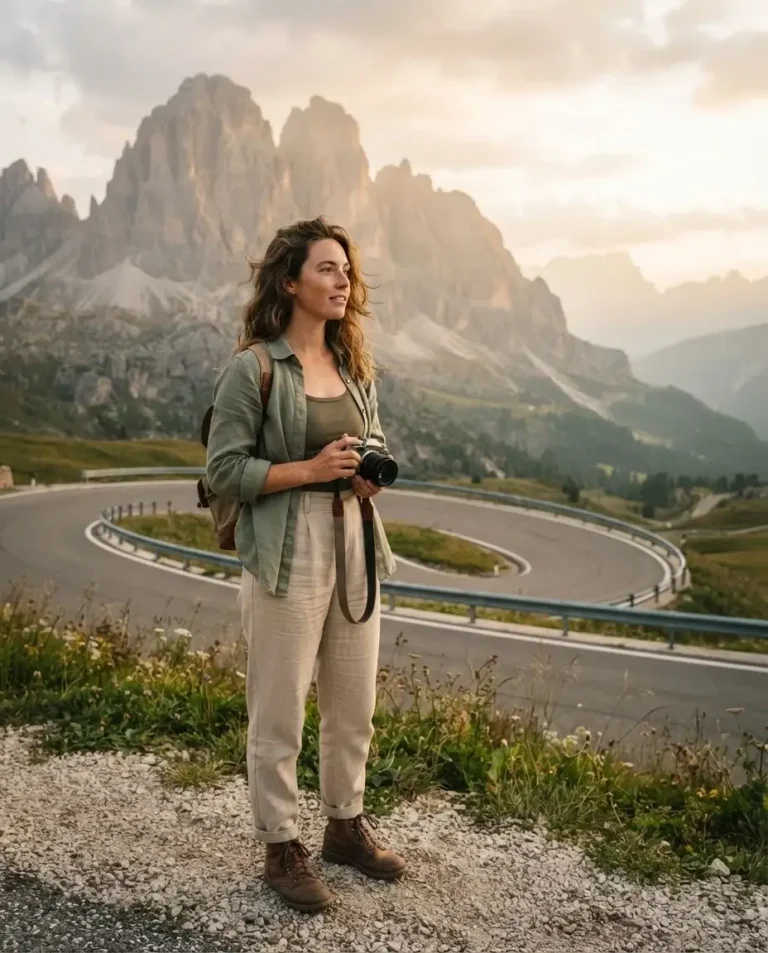
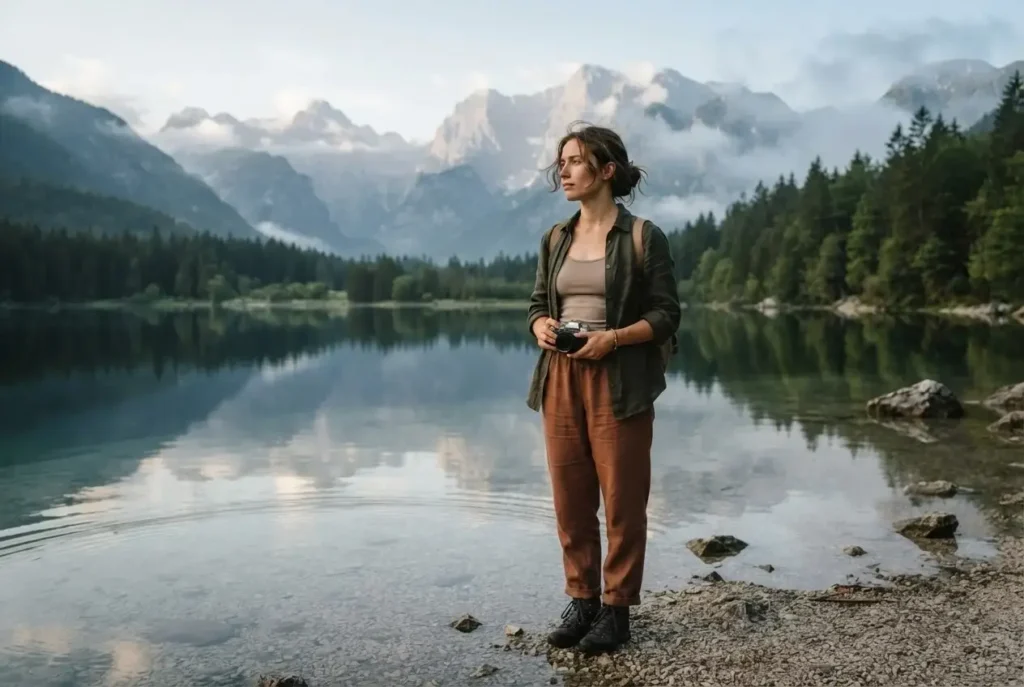
For readers who find total stillness a little too still, Slovenia is my pick. The Soca Valley and Lake Bohinj sit inside Triglav National Park, and the mix of turquoise rivers, alpine meadows, and quiet lakes is genuinely restorative without being sleepy. This is where “peaceful” meets “I still want to move my body.”
Slovenia has made it refreshingly easy to visit responsibly and without a car. The official Slovenian tourism guidance on how to visit Triglav National Park with respect is worth reading before you go, because the park has real rules that keep it calm: stay on marked trails, no wild camping, no swimming in the high mountain lakes, and dogs on a leash. They actively encourage arriving by public transport, and in summer there are seasonal buses to trailheads plus the lovely Bohinj car-train. Lake Bohinj, the quieter neighbor of famous Lake Bled, is where I would base a solo trip.
What to eat: Slovenian food is hearty mountain fare. Look for žlikrofi (little dumplings), fresh lake trout, buckwheat dishes, and if you have a sweet tooth, a slice of Bled cream cake. Small family guesthouses often serve their own produce, and eating at your accommodation is common and easy when you are traveling alone.
The Dordogne, France: castles, rivers, and long lunches
The Dordogne, also called the Perigord, is the countryside for people who want beauty with a bit of history stitched through it. Medieval villages, honey-stone castles above slow green rivers, prehistoric cave art, and a food culture that treats a two-hour lunch as normal. It is romantic, but do not let that scare you off as a solo traveler, because it is also deeply peaceful and used to quiet visitors wandering on their own.
The area is spread out, so this is one where a few days with a rental car or a couple of guided day trips will open it up more than buses alone. The official France tourism guide to the Perigord and Dordogne is a good starting point for mapping which villages and castles cluster together, so you can pick a walkable base like Sarlat-la-Caneda and do focused loops rather than exhausting drives. Sarlat’s old town is worth staying in overnight, because once the day-trippers leave, the lamplit stone streets are magic and calm.
What to eat: this is one of France’s great food regions. Walnuts turn up in everything, duck is a staple (confit de canard is the classic), and the Saturday markets are an event in themselves. Buy a picnic of bread, cheese, walnuts, and fruit, find a riverbank, and you have the perfect solo lunch that costs almost nothing.
The Douro Valley and rural Portugal, revisited
If the Alentejo is flat and dreamy, the Douro Valley in northern Portugal is dramatic and steep, with terraced vineyards carved into hillsides above a wide river. It is another UNESCO-listed wine landscape, shaped by around 2,000 years of human work, and it is one of the most beautiful river valleys in Europe. It also happens to be very doable without a car, which I love for solo travelers.
From Porto you can reach the valley by a scenic train along the river, which is one of the prettiest rides in the country and takes the driving stress off your plate entirely. Winery visits, called quintas, typically run about 18 to 45 euros and last one to two hours, often with the winemakers themselves pouring. Base yourself in Pinhao or Peso da Regua, take the train in, and let the river do the pacing.
What to eat: hearty northern Portuguese cooking, roasted meats, bacalhau (salt cod) prepared a dozen ways, and of course port wine tastings if that is your thing. Even if you do not drink, the terraces and river views are the real reward.
Transylvania’s Saxon villages, Romania: peaceful and affordable
For readers who want somewhere that still feels genuinely undiscovered, and who are watching their budget, the Saxon villages of Transylvania in Romania are special. Fortified churches, cobbled lanes, horse-drawn carts, and rolling hills dotted with wildflowers. Viscri, Biertan, and Saschiz are the names to know. This is deep rural Europe, and it is far cheaper than the Western options above.
I will be straight with you: this one takes more planning as a solo traveler, and having a local guide or joining a small tour from Brasov or Sibiu makes it much smoother, since public transport to the smallest villages is thin. But the payoff is real peace and warm hospitality. Guesthouses here often feel like staying with family, which quietly solves the loneliness worry that stops so many people from traveling alone.
What to eat: home-cooked Romanian food, sarmale (cabbage rolls), polenta with cheese and sour cream, fresh farm eggs and preserves at breakfast, and local plum brandy if you are offered it.
Getting there and the entry rules you actually need to know
Before you fall too deep into daydreaming, sort the boring-but-important part. If you hold a passport from a visa-exempt country like the US, Canada, Australia, or the UK, you have been able to enter the Schengen area for short stays without applying for anything in advance. That is changing. A new travel authorization called ETIAS is coming, and the best current information from the official EU ETIAS portal is that it is expected to launch in the last quarter of 2026, with a small fee and a simple online application. It is not required yet, but check the official site before you book, because these dates have shifted before and you want the current answer, not last year’s.
On getting around, my honest take after years of this: you can visit the Cotswolds, Slovenia, the Douro, and much of Portugal comfortably without a car if you plan around trains and seasonal buses. Tuscany, the Dordogne, and rural Transylvania are easier with a car or the occasional guided day, so budget for that or accept a slightly slower rhythm. There is no wrong choice, only trade-offs.

Solo, safe, and not lonely: the part nobody tells you
The question I get most from readers dreaming about this is not “where,” it is “will I be okay alone out there.” Here is the truth from my own solo years. Rural Europe is generally very safe, often safer-feeling than big cities, and the main risks are practical ones like missing the last bus or a shop being closed on Sunday. Plan your transport back before you head out, keep offline maps, and let one person at home know your rough plan.
As for loneliness, the countryside actually helps. Guesthouses, farm stays, pub bars, and small tours put you near people naturally, without the pressure of a party hostel. Some of my best travel conversations happened because I was alone and open, sitting at a bar in a village where a local struck up a chat. You are not hiding when you travel solo. You are more approachable. That took me years to understand, and it changed everything about how I move through the world.
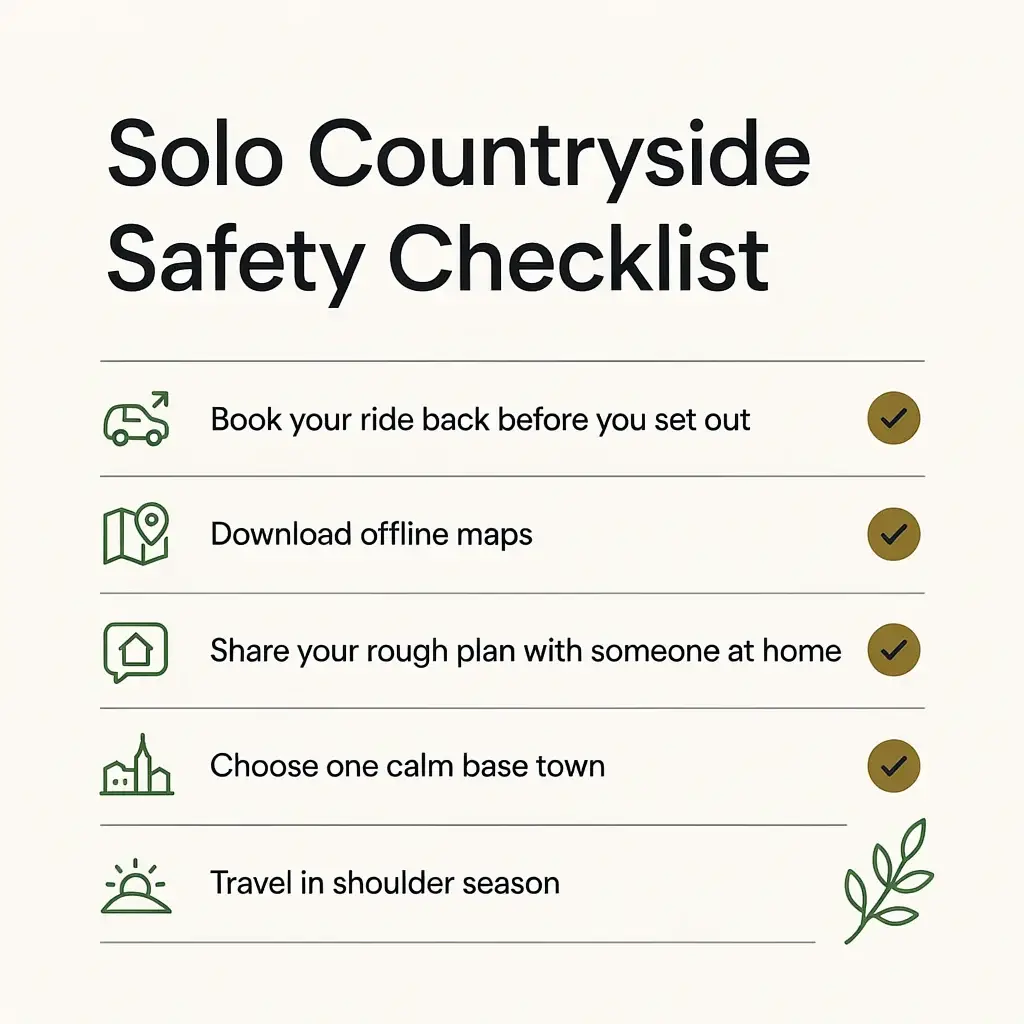
If you take one thing from all of this, let it be this: you do not need the perfect moment, a travel partner, or a big budget to give yourself a few genuinely peaceful days in the European countryside. You need a base town, a shoulder-season week, a rough plan, and the small spark of courage to book it. The quiet is out there waiting, and it is a lot closer than you think.