What Real Indigenous Cultural Experiences Actually Look Like

There is a moment that happens on certain trips. Not on every trip, and not in every place. But when it happens, you know it. Someone shares something with you that they did not have to share. A story, a skill, a meal, a laugh, a silence. And for a few minutes you are not a tourist and they are not a “cultural attraction.” You are just two people on the same earth, seeing each other clearly.
That is what the best indigenous cultural experiences around the world can give you. And it is also why the difference between a genuine experience and a packaged performance matters so much.
I have been traveling long enough to know that not everything sold as “authentic” actually is. Living with a family in Ghana taught me that real cultural immersion is uncomfortable sometimes, slow often, and far more rewarding than anything a three-hour tour bus can deliver. Teaching English in Thailand showed me that being a guest in someone’s community is a privilege that comes with responsibilities. And my time backpacking solo across Europe, country after country, made me understand that curiosity without respect is just voyeurism.
This guide is for travelers who want more than a photo opportunity. Here is what indigenous cultural experiences actually look like on the ground, where to find the real ones, and how to make sure your visit does more good than harm.
What “Authentic” Actually Means (and Why It Matters)
Before diving into destinations, it is worth pausing on what we mean when we say an indigenous cultural experience is “authentic.” This word gets thrown around so carelessly in travel marketing that it has nearly lost its meaning.
A genuine indigenous cultural experience is one that is created, owned, and led by the community itself. The community decides what to share, when, how, and at what price. The money stays with local people. And what you see is a living culture, not a performance frozen in time to match tourist expectations.
The UNESCO World Heritage program’s work with Indigenous peoples makes clear that Indigenous communities are not passive custodians of the past. They are active, evolving cultures with deep knowledge systems, contemporary challenges, and the right to determine how they engage with the wider world. That framing matters when you are booking a trip. You are not visiting a museum exhibit. You are visiting someone’s home culture.
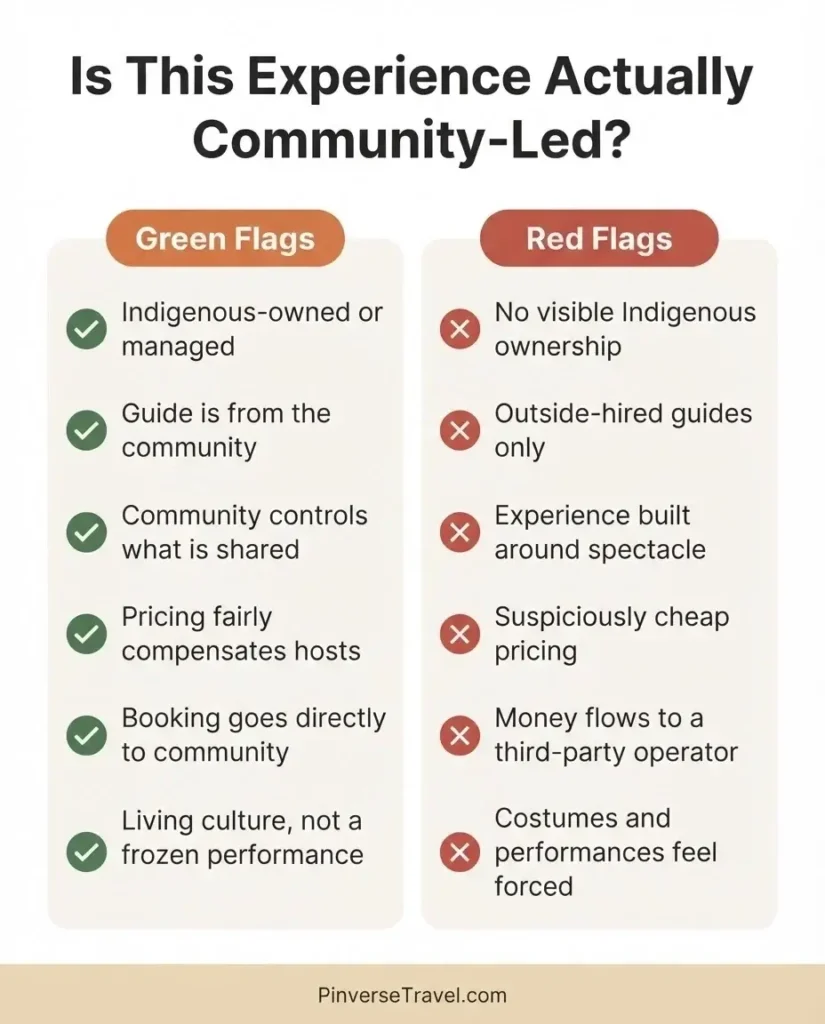
The red flags that an experience is extractive rather than community-led include: prices that seem suspiciously cheap, tour companies with no visible Indigenous leadership or ownership, experiences built around spectacle (watching people “perform” traditional dress and dances for 30 minutes then returning to your hotel), and no visible economic benefit flowing back to the community.
Solo travelers in particular tend to notice the difference quickly. When you are not traveling as part of a group tour moving on a fixed schedule, you have more time to slow down, ask questions, and feel the difference between a living moment and a staged one.
Aboriginal Australia: The World’s Oldest Living Culture
Few things in travel stop you in your tracks quite like standing on land that has been known, named, storied, and cared for by human beings for more than 60,000 years. Australia’s Aboriginal cultures are not a chapter from a history book. They are present, dynamic, and extraordinarily generous to curious visitors who approach them the right way.
The challenge in Australia has historically been separating genuine community-led experiences from commercial operators with only a superficial Indigenous connection. The best starting point is Discover Aboriginal Experiences, a collective of over 180 verified Aboriginal-guided tourism experiences across the entire country. Every operator in that collective is Aboriginal-owned or led, which takes a significant part of the guesswork out of your planning.
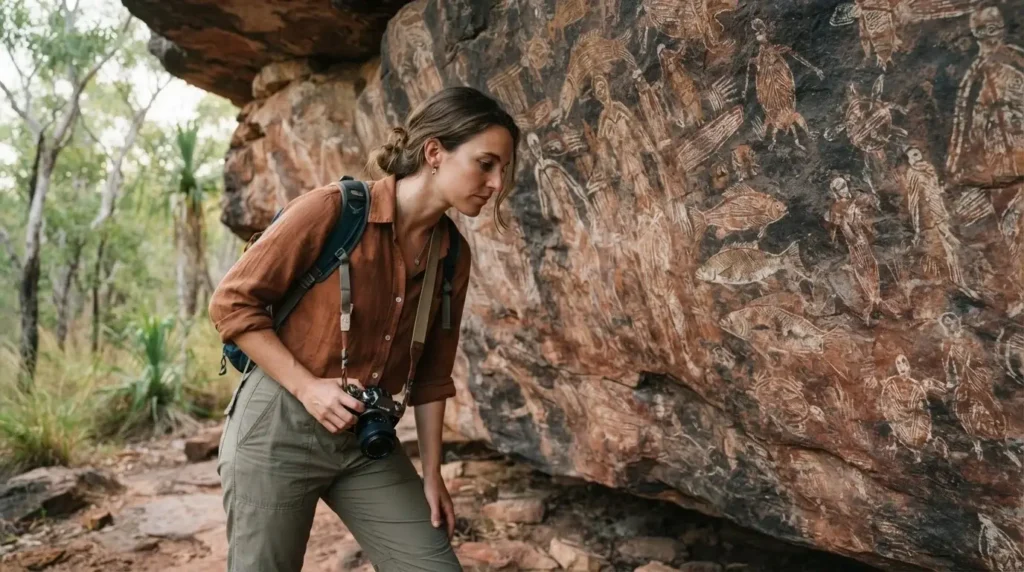
Experiences range considerably in depth and duration. At the lighter end, you can join a 1.5-hour Aboriginal culture tour at Stockton Beach in New South Wales, exploring the Worimi Conservation Lands with an Aboriginal guide while learning about the land’s history. At the deeper end, a day trip into Arnhem Land from Darwin brings you into one of Australia’s most remote and culturally intact regions, where you can meet artists at Injalak Arts Centre, view ancient rock art that pre-dates most recorded human civilization, and walk through billabongs with a guide whose family connection to that land stretches back millennia.
In terms of food, bush tucker is one of the most fascinating culinary traditions in the world. Expect to encounter native ingredients like wattleseed (used in everything from damper bread to desserts), lemon myrtle, kakadu plum, and quandong fruit. These ingredients are not just interesting to taste. They represent thousands of years of sustainable land management and plant knowledge.
From Darwin, day trips to Arnhem Land start around 250-300 AUD per person. Multi-day immersive stays in remote communities are available through several collective operators, ranging roughly from 800 to 2,000 AUD depending on length and remoteness. Uluru and the Red Centre offer strong options year-round, though the Australian summer (November through February) in the outback brings extreme heat. The dry season (May through September) is the most practical time for most visitors.
Practical note: some sacred sites in Australia are restricted to specific genders or entirely closed to non-Indigenous visitors. Your guide will always brief you clearly on what areas are open. Follow these instructions without question. This is not bureaucracy. It is respect for boundaries that have existed far longer than the concept of tourism.
Aotearoa New Zealand: Maori Culture in Every Region
New Zealand is one of the easiest places in the world to have a genuine, well-organized indigenous cultural experience as a solo traveler. Maori culture is not confined to one region or one tourist circuit. It is woven into the national identity and present across the entire country.
The hub that most travelers start with is Rotorua on the North Island. This is fair. Rotorua has the most concentrated collection of Maori cultural experiences in one place, including kapa haka (traditional song and dance), hangi meals (food slow-cooked in an earth oven), meeting house visits, and opportunities to learn basic te reo Maori language greetings. The experience is well-organized and welcoming, and even though it is a tourism product, the guides are deeply knowledgeable and the food at a proper hangi is genuinely wonderful. Expect slow-cooked lamb, chicken, kumara (sweet potato), and vegetables with a slightly smoky, earthy flavor unlike anything you have eaten before.
But if you want to go beyond the well-worn circuit, New Zealand Maori Tourism is the official body representing Maori tourism operators across all regions. Their website is an excellent planning tool because every operator listed is a genuine Maori business. You will find jet boating experiences led by Maori guides in Rotorua, deep-sea fishing operations in Northland, and cultural hiking experiences in the South Island that connect the landscape to specific iwi (tribal) histories in ways that no non-Maori guide can replicate.
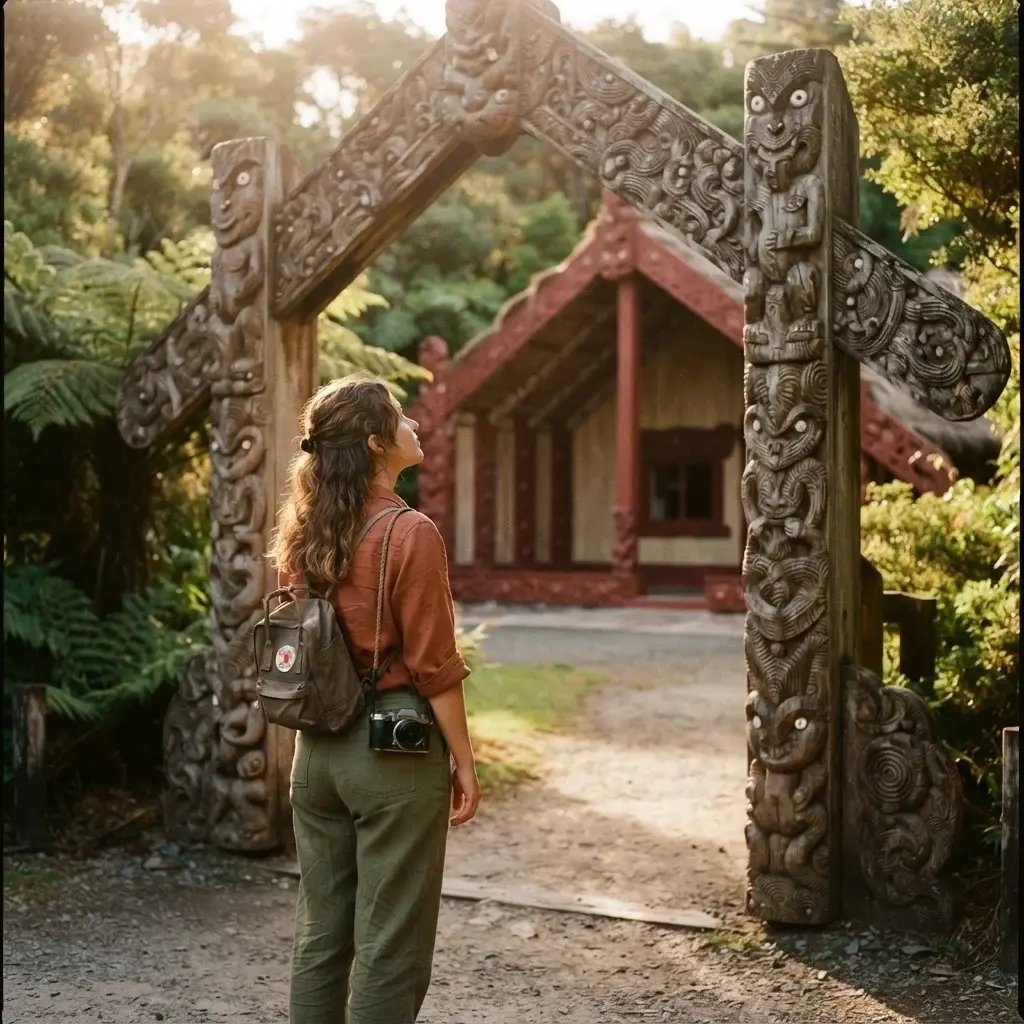
For solo travelers, one of the most approachable cultural entry points is visiting a marae (a Maori meeting ground). A powhiri, the formal welcoming ceremony onto a marae, is one of the most powerful cultural moments I have heard solo travelers describe. The protocol is specific and your guide will walk you through every step. You will be called onto the marae, greeted with a hongi (the pressing of noses and foreheads), and welcomed into a space that carries enormous spiritual significance. Bring genuine curiosity and willingness to participate rather than observe from the edges.
Photography etiquette on marae: always ask first. Some areas are tapu (sacred) and photography is not permitted. This is non-negotiable.
The Sami People of Northern Norway: Reindeer Herders of the Arctic
Northern Scandinavia is one of the most striking indigenous cultural travel destinations in the world, and one of the most underrated. The Sami are the indigenous people of Sápmi, a region that stretches across northern Norway, Sweden, Finland, and the Kola Peninsula of Russia. They have herded reindeer, read the Arctic landscape, and built a culture of extraordinary resilience across thousands of years.
Visit Norway’s Sami culture guide offers an excellent starting overview of what experiences are available, from day tours to multi-day immersions. The Sami heartland in Norway is concentrated around Finnmark, particularly the towns of Kautokeino and Karasjok, though you can access shorter Sami cultural experiences more easily from Tromso, which is well-connected by air from most European hubs.
Here is what solo travelers consistently report about Sami experiences: the pace is slow, the landscape is staggering, and the food is unexpectedly good. A traditional Sami lavvo (a conical tent similar to a tipi) becomes your gathering point, where you sit on reindeer hides around an open fire, hear stories from a Sami guide, and eat.
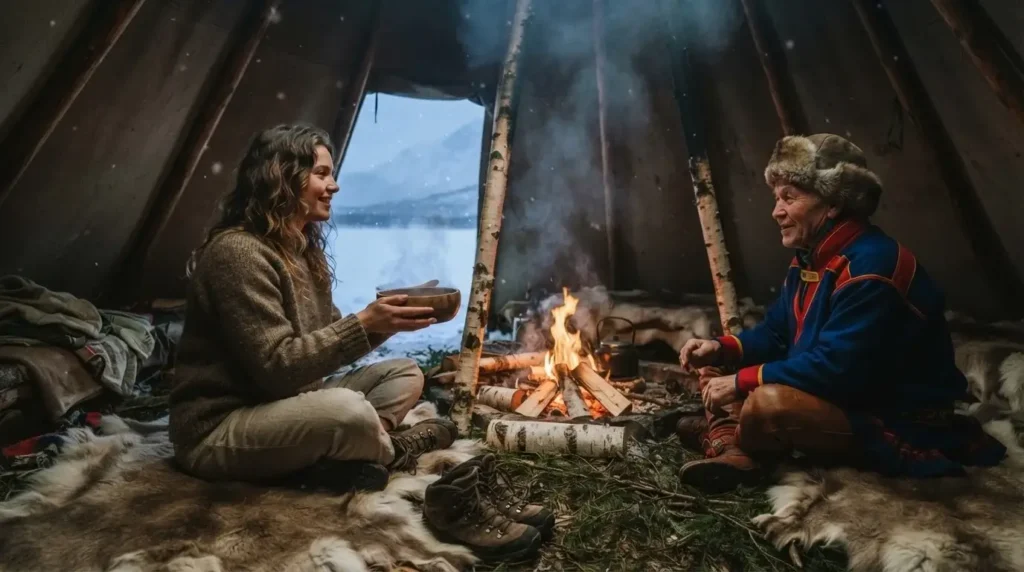
The signature dish is bidus, a thick reindeer stew cooked slowly with root vegetables, served with lefse, a soft flatbread. It is hearty, warming, and completely right for the environment you are sitting in.
Day tours out of Tromso start around 1,695 NOK per person (approximately 150 USD at current exchange rates). Multi-day reindeer herding immersions in Kautokeino, where you actually participate in herd migration alongside a Sami family, run around 2,390 EUR for four days and three nights including accommodation and meals. For solo travelers, a single supplement of around 200 EUR typically applies for the multi-day option. These are not cheap experiences, but the money flows directly to Sami families, which is exactly the point.
Best season: winter (November through February) for a full Arctic experience including northern lights and snow-covered landscapes. Summer (June through July) brings the midnight sun and a completely different atmosphere. Spring migration season (April through May) is considered by many repeat visitors to be the most genuinely immersive time to visit, when herding families are at their most active.
The Navajo Nation, USA: 27,000 Square Miles of Living History
For travelers already in North America, the Navajo Nation offers one of the most accessible and richly rewarding indigenous cultural experiences on earth. Spanning 27,000 square miles across Arizona, New Mexico, and Utah, it is the largest Native American territory in the United States, and it is visited far less deeply than its significance deserves.
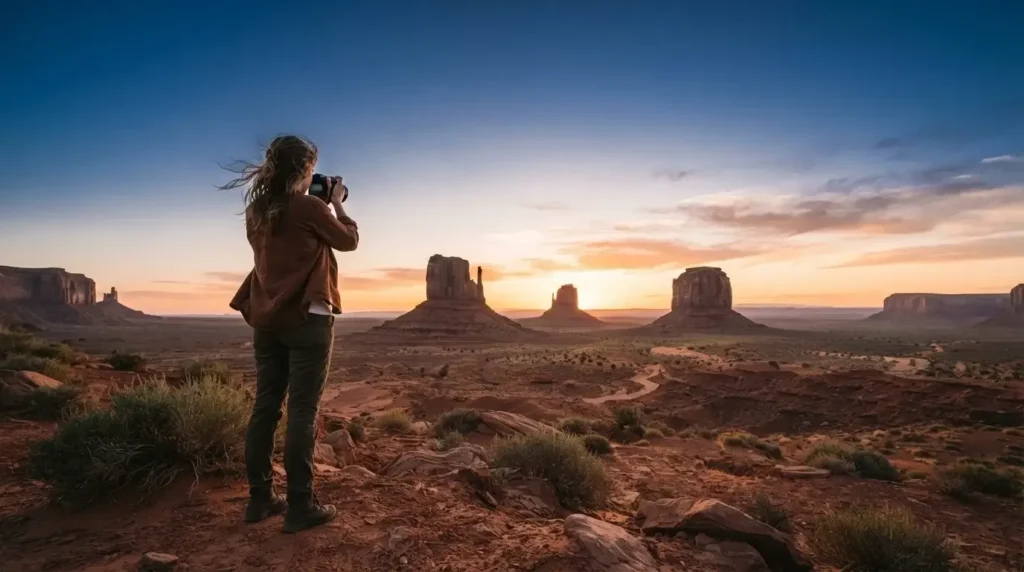
Most travelers passing through the Navajo Nation stop at Monument Valley for photographs and drive on. That is a real missed opportunity. Discover Navajo, the official tourism arm of the Navajo Nation, connects visitors with Navajo-led guides, cultural tours, and experiences that go well beyond the roadside photo stop. You can hire a Navajo guide to take you into restricted backcountry areas of Monument Valley ($10 entry fee for the park itself), learn traditional weaving techniques, participate in traditional cooking demonstrations, and visit communities where Navajo is still spoken as a primary language.
The food angle here is fascinating and underappreciated by most travel writers. Navajo fry bread is the most iconic offering and you will find it everywhere, topped with beans, meat, and vegetables as a Navajo taco. But the deeper culinary story is in traditional foods like blue corn mush, mutton stew, and roasted corn, all of which tie directly to agricultural and pastoral traditions that pre-date European contact by centuries. If you can find a community feast day or event during your visit, the food experience alone is worth the trip.
Solo travel logistics: the Navajo Nation is best explored by car. There is no public transit network across the territory. Flagstaff, Arizona, is the most practical base for visitors flying in. The drive from Flagstaff to Monument Valley is approximately 2.5 hours. Temperatures in the canyon landscape swing dramatically between seasons, so pack layers even in summer. The Navajo Nation observes daylight saving time (unlike the rest of Arizona), so if you are crossing state and tribal land borders, keep an eye on your clock.
First Nations Experiences in Canada: Where Wilderness Meets Living Culture
Canada offers some of the most varied indigenous cultural experiences in the world, spread across an enormous range of landscapes and cultural traditions. Parks Canada’s Indigenous-led experiences program connects visitors directly with First Nations, Inuit, and Metis guides at national parks and historic sites across the country.
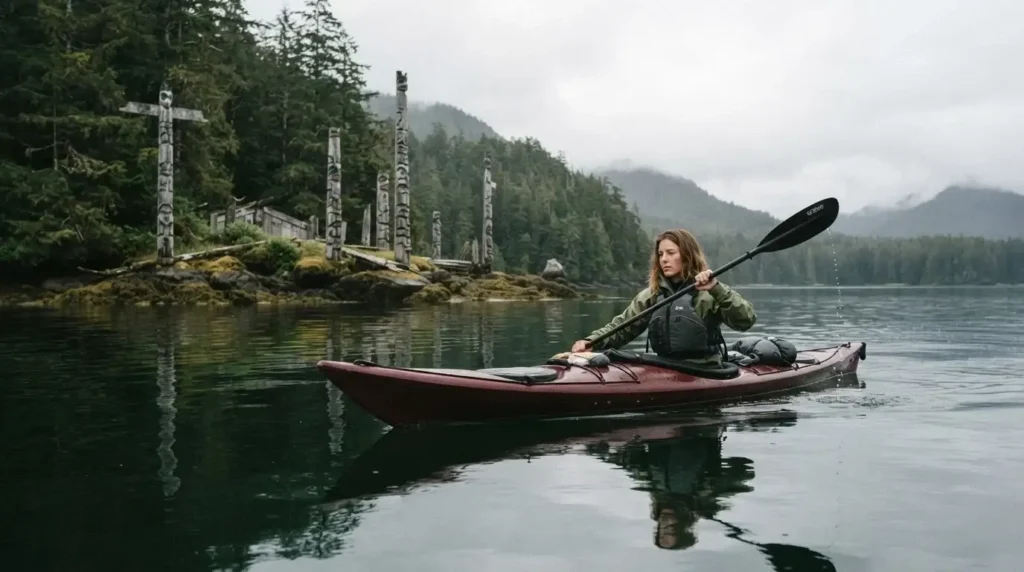
One of the most remarkable is the Haida Gwaii Watchmen experience in Gwaii Haanas National Park Reserve in British Columbia. The Watchmen are Haida people who live for the summer at the ancient village sites on the islands, protecting them and sharing their stories with visiting travelers. To reach Gwaii Haanas, you take a ferry or floatplane to Haida Gwaii and then travel the park itself by kayak or charter boat. The trip requires advance planning and a Parks Canada permit, but solo travelers who make the effort consistently describe it as one of the most profound experiences of their traveling lives.
For something more accessible, Indigenous tourism operators across British Columbia, Manitoba, and Ontario offer day programs and multi-day stays ranging from drumming and traditional plant knowledge walks to moose-hide tanning workshops and canoe journeys on Indigenous-named waterways. Book directly with the community-run operator rather than through a national travel agency, both for ethical reasons and because you will get a more personal experience.
How to Know You Are Booking the Right Experience
This is the question that almost every thoughtful traveler eventually asks, and it deserves a direct, practical answer.
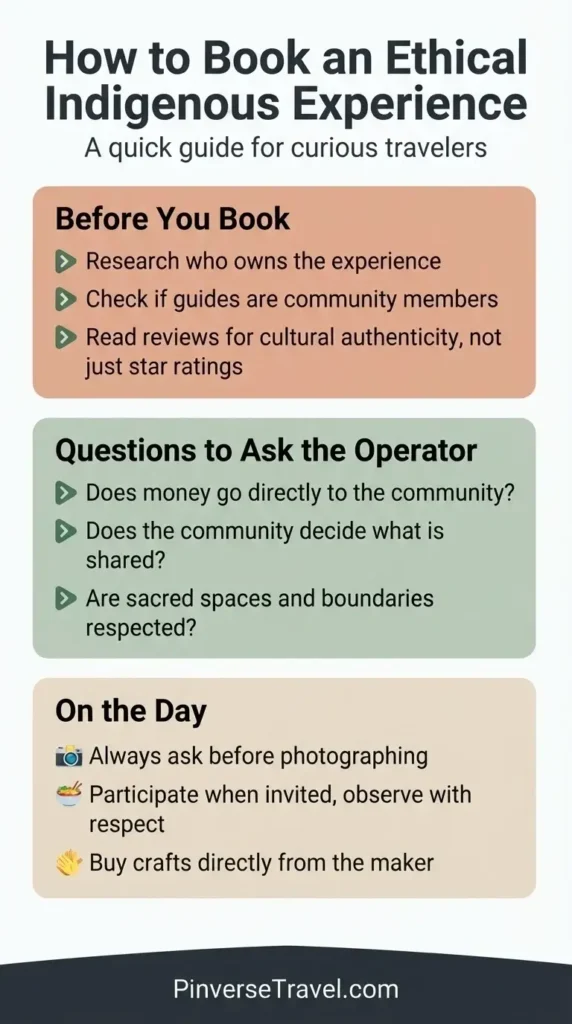
The most useful framework from Responsible Vacation’s indigenous tourism guide is this: ask who owns the experience. If the company running the experience is not Indigenous-owned or does not have a documented partnership where the community has meaningful control and economic benefit, that is a flag worth paying attention to.
Beyond ownership, ask these questions before booking:
Is the guide from the community itself, or hired from outside? Is the experience designed around what the community wants to share, or around what tourists expect to see? Does the operator have a visible relationship with community leadership? Is the price realistic, meaning high enough to fairly compensate hosts? (Suspiciously cheap indigenous experiences almost always mean someone in the chain is not being paid fairly.)
One pattern worth being aware of is what researchers and responsible travel operators call “cultural freezing,” where communities feel pressure to present themselves in a way that matches tourist expectations, rather than as they actually live today. The best experiences are ones where you encounter a living, evolving culture, not a tableau of what an outside observer imagines the community should look like. If your guide shows up in a traditional ceremony outfit for a photo but then drives home in a modern car, that is not inauthenticity. That is just a person’s life. Approach it with the same openness you would want from someone visiting your culture.
The Etiquette No One Talks About Enough
Every indigenous cultural experience has its own specific customs, and your guide will explain them. But there are some universal principles worth carrying with you.
Slow down before you arrive. Spend a few hours reading about the specific culture you are visiting, its history, its contemporary challenges, and its relationship to the land. You do not need to become an expert. You just need to arrive with something more than zero context.
Ask before you photograph. This comes up in every indigenous cultural destination in the world, and it matters everywhere. In New Zealand, certain spaces are tapu. In Australia, photographs of sacred sites may be restricted entirely. On the Navajo Nation, some individuals prefer not to be photographed. A simple, genuine “May I take a photo?” costs you nothing and says everything about who you are as a guest.
Participate when invited. The temptation for introverted or anxious solo travelers is to observe from the edges rather than participate. Resist that instinct. When you are invited to try weaving, taste a new food, attempt a greeting in the local language, or join a dance, say yes. Your willingness to be a student in someone else’s space is one of the most respectful things you can offer.
Buy directly. If there are handmade goods available, buy from the community member who made them. Not from a gift shop in the nearest city, not from Amazon. From the person whose hands made the thing. The markup on authentic handmade indigenous crafts is never unreasonable. The knowledge and skill behind them represents a living tradition that your purchase helps sustain.
What These Experiences Have in Common
Across Ghana, Thailand, Europe, and every destination I have researched and spoken to solo travelers about, the pattern holds: the experiences that stay with you are not the ones that matched your expectations. They are the ones that quietly challenged them.
Real indigenous cultural experiences do not look like the brochure. They look like sitting in a Sami lavvo while snow falls outside, eating stew and listening to a story you cannot fully translate but somehow understand. They look like a Maori elder pressing her forehead to yours and meaning it. They look like a Navajo weaver showing you the geometry in a rug pattern that maps her family’s history.
The world holds extraordinary depth if you are willing to travel slowly enough to find it.